THIS OBJECT WAS SOLD
Kongo Statue, Figure Of Power, Nkisi


Origin. Democratic Republic of the Congo
Tribe Name. Bakongo
Material. Wood, nails, iron
Dimensions. 94 cm
Shipping Method. Colissimo within 24–48 business hours.
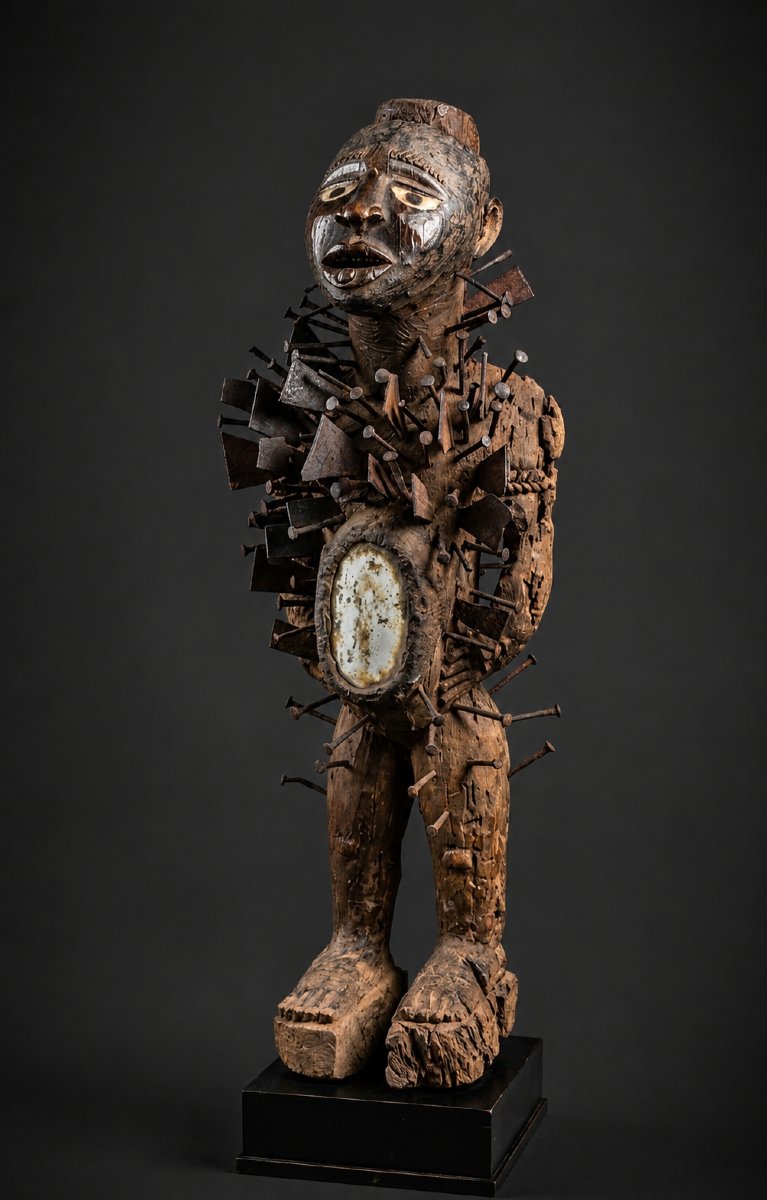
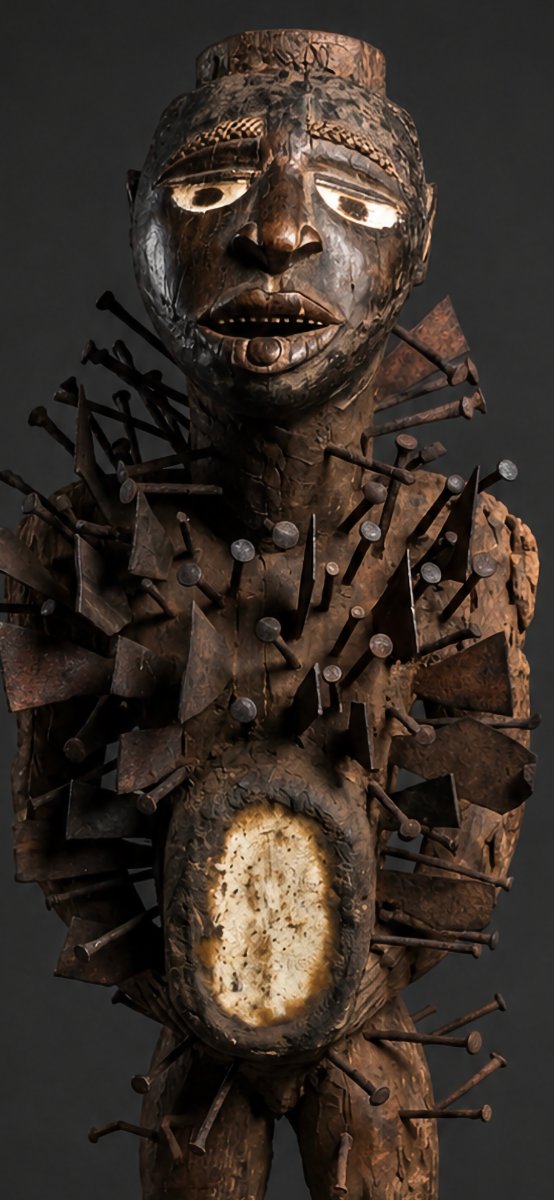
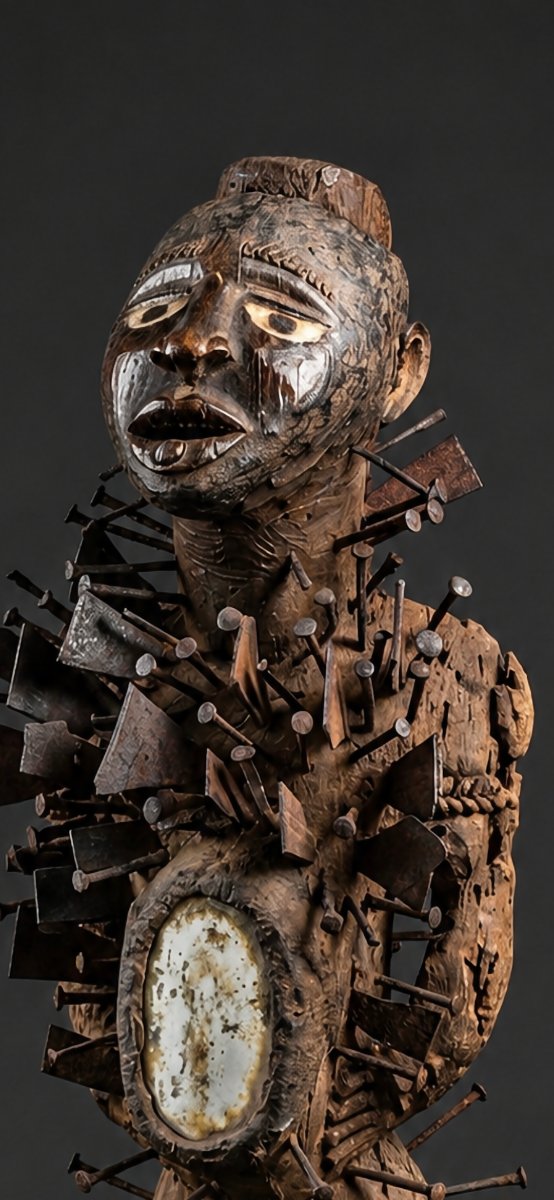
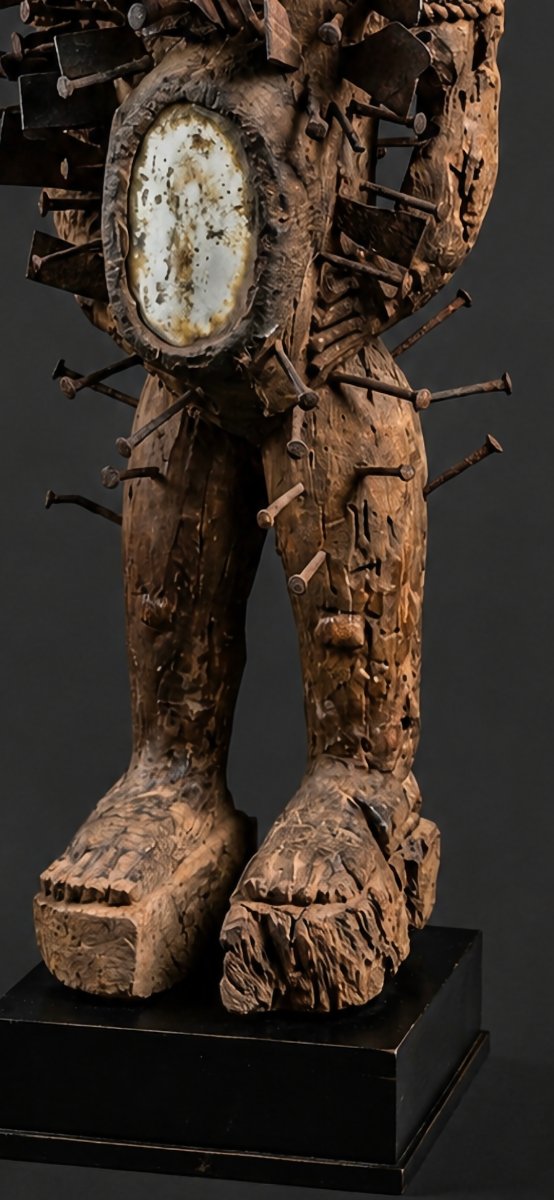
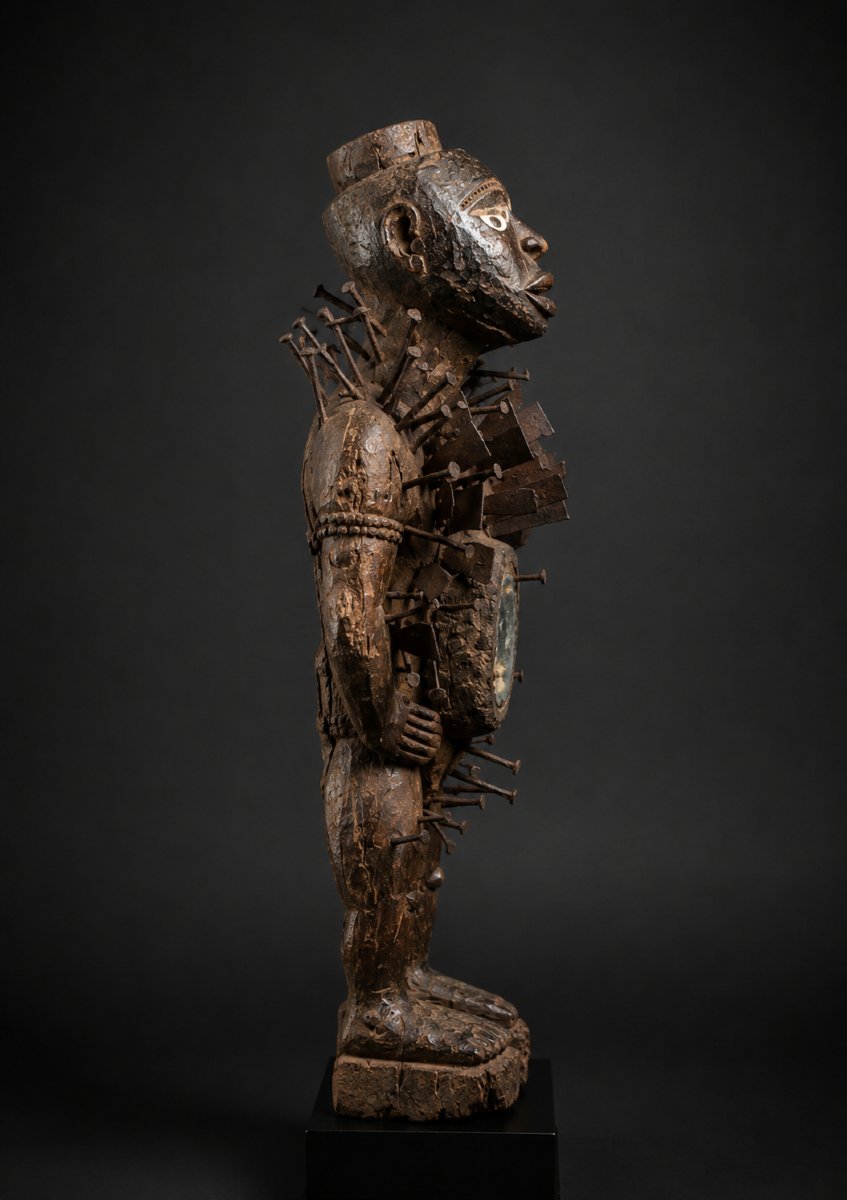
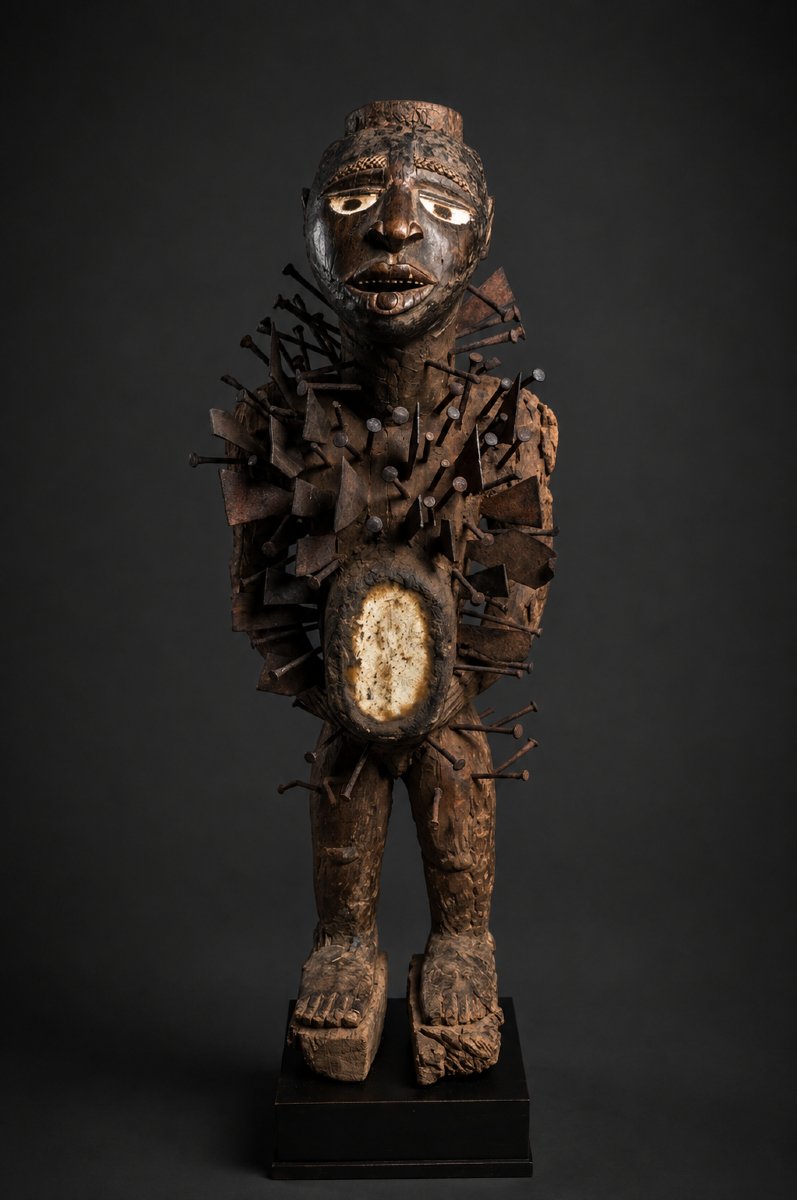
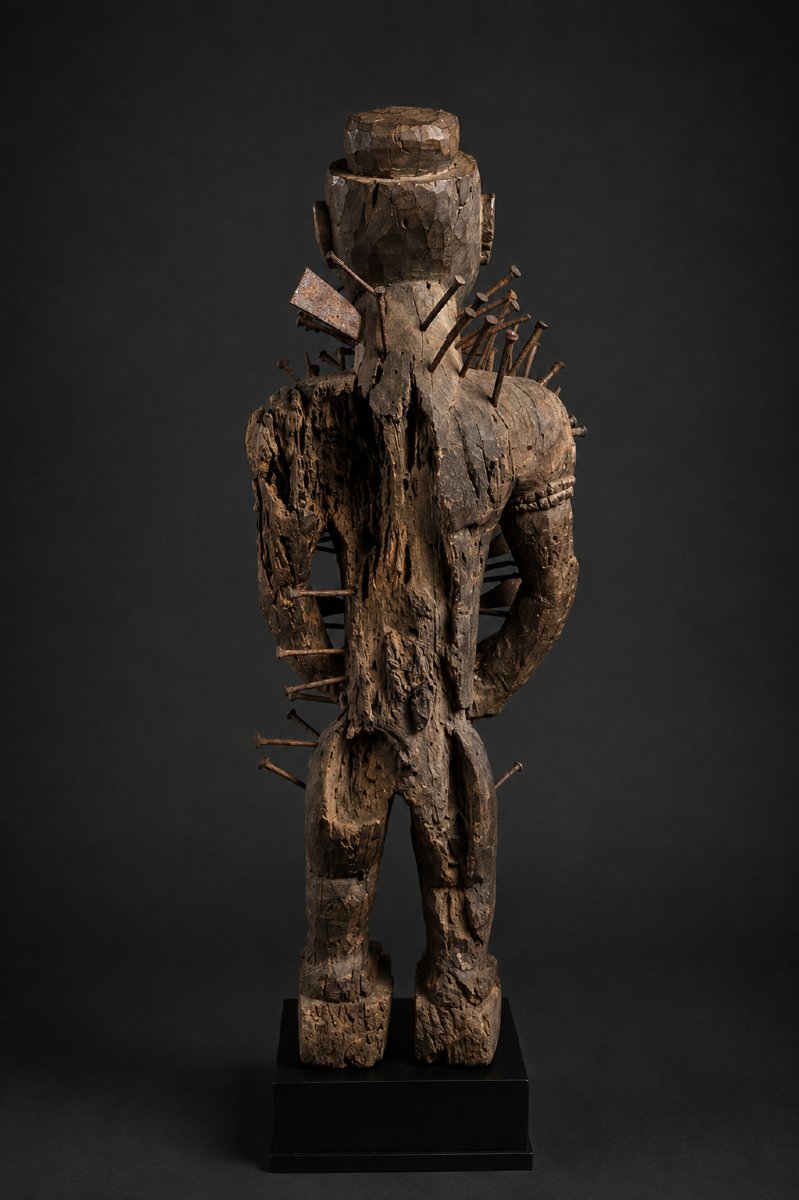
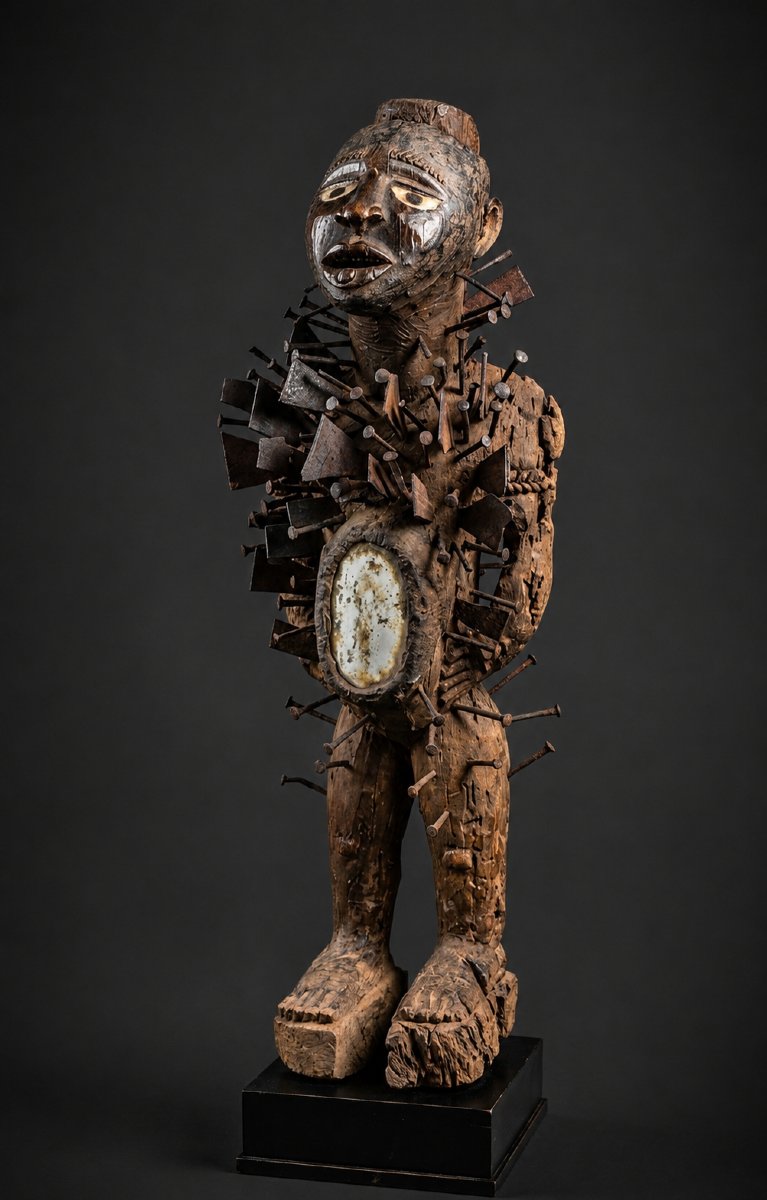
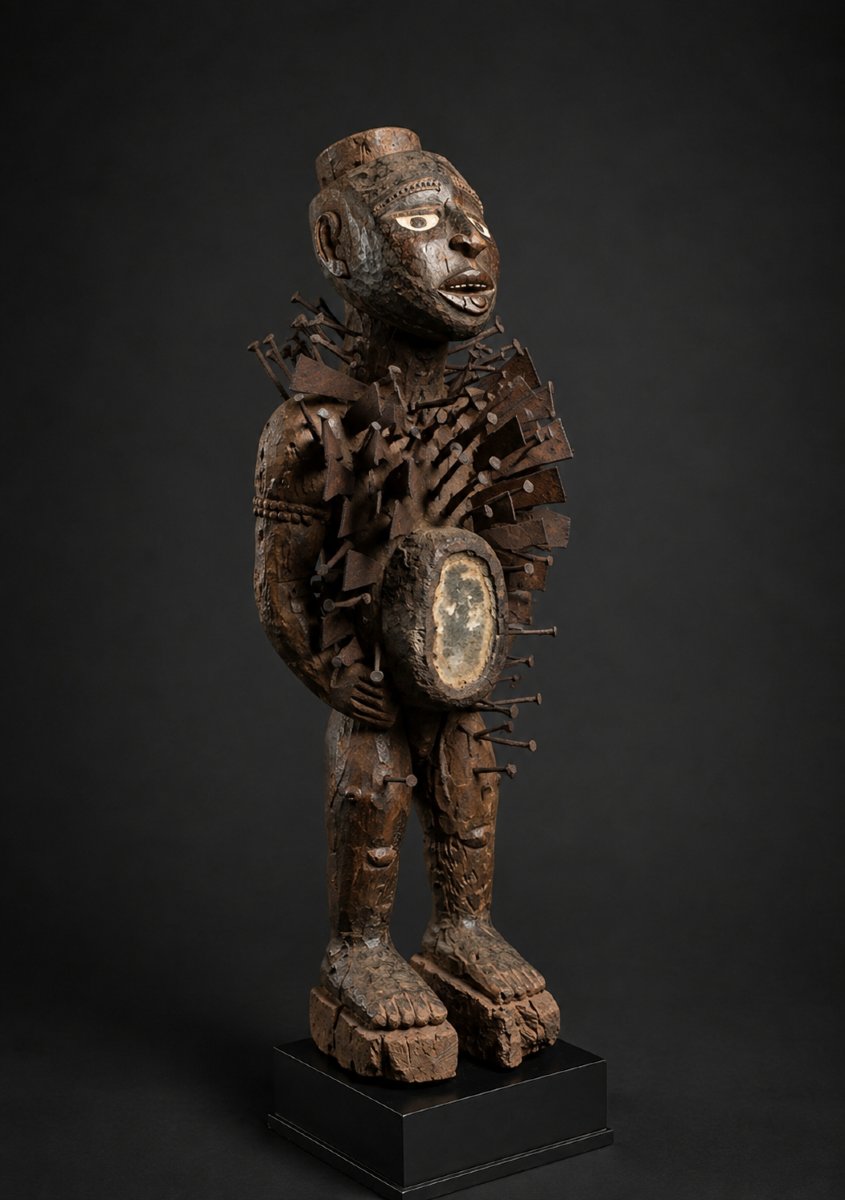
This figure represents an Nkisi Nkondi (fetish statue or power nail) from the Kongo culture (a region of Central Africa, primarily in the Democratic Republic of the Congo, the Republic of the Congo, and Angola).Here is a detailed description of this remarkable sculptural work:1. Structure and General FormMain materials: The statue is carved from a block of raw, weathered wood, combined with metal elements (iron, steel) and a glass mirror.Posture: The anthropomorphic figure stands on an integrated wooden base, its feet firmly planted and detailed with clearly visible toes. Its posture is rigid and frontal, exuding an authoritative and menacing presence.Facial Expression: The face conveys dramatic tension: the mouth is slightly open, revealing chiseled teeth, and the wide-open eyes (highlighted in white) stare intently at the viewer, reflecting the vigilance and clarity of the protective spirit.2. The Bristling Body (Nails and Blades)The torso, shoulders, and arms are densely studded with a multitude of metal objects: ancient blacksmith’s nails, iron blades, spikes, and wedges.Symbolic Meaning: In the Kongo tradition, each nail or piece of metal driven in by the diviner-healer (nganga) represents an agreement, a sealed oath, a plea for justice, or the activation of a power to ward off evil forces, punish criminals, or resolve a conflict. The impact of the metal awakened the spirit of the nkisi.3. The Abdominal Amulet (The Bischi or Bilongo)At the center of the belly is an oval cavity covered with a mirror (or a reflective surface weathered by time).Symbolic Meaning: This abdominal capsule contains magical and medicinal substances (bilongo). The mirror serves an essential spiritual function: it is used to ward off evil spirits, to see into the invisible world of the ancestors, and to seal the occult power contained within the statue’s abdomen.4. The Back and RearThe rear view reveals natural erosion of the wood along the spine, emphasizing the object’s age and authenticity.One can also see the tips of the nails piercing the wood, as well as a headdress carved in relief on the top of the head.Historical Note: Nkisi Nkondi are not merely decorative statues, but genuine dynamic legal and ritual objects, designed to mediate between the world of the living and that of the spirits in order to ensure order, protection, and healing for the community.
Provenance: Formerly in the Michel Huguenin collection
Tribe Name. Bakongo
Material. Wood, nails, iron
Dimensions. 94 cm
Shipping Method. Colissimo within 24–48 business hours.
This figure represents an Nkisi Nkondi (fetish statue or power nail) from the Kongo culture (a region of Central Africa, primarily in the Democratic Republic of the Congo, the Republic of the Congo, and Angola).Here is a detailed description of this remarkable sculptural work:1. Structure and General FormMain materials: The statue is carved from a block of raw, weathered wood, combined with metal elements (iron, steel) and a glass mirror.Posture: The anthropomorphic figure stands on an integrated wooden base, its feet firmly planted and detailed with clearly visible toes. Its posture is rigid and frontal, exuding an authoritative and menacing presence.Facial Expression: The face conveys dramatic tension: the mouth is slightly open, revealing chiseled teeth, and the wide-open eyes (highlighted in white) stare intently at the viewer, reflecting the vigilance and clarity of the protective spirit.2. The Bristling Body (Nails and Blades)The torso, shoulders, and arms are densely studded with a multitude of metal objects: ancient blacksmith’s nails, iron blades, spikes, and wedges.Symbolic Meaning: In the Kongo tradition, each nail or piece of metal driven in by the diviner-healer (nganga) represents an agreement, a sealed oath, a plea for justice, or the activation of a power to ward off evil forces, punish criminals, or resolve a conflict. The impact of the metal awakened the spirit of the nkisi.3. The Abdominal Amulet (The Bischi or Bilongo)At the center of the belly is an oval cavity covered with a mirror (or a reflective surface weathered by time).Symbolic Meaning: This abdominal capsule contains magical and medicinal substances (bilongo). The mirror serves an essential spiritual function: it is used to ward off evil spirits, to see into the invisible world of the ancestors, and to seal the occult power contained within the statue’s abdomen.4. The Back and RearThe rear view reveals natural erosion of the wood along the spine, emphasizing the object’s age and authenticity.One can also see the tips of the nails piercing the wood, as well as a headdress carved in relief on the top of the head.Historical Note: Nkisi Nkondi are not merely decorative statues, but genuine dynamic legal and ritual objects, designed to mediate between the world of the living and that of the spirits in order to ensure order, protection, and healing for the community.
Provenance: Formerly in the Michel Huguenin collection
Explore similar pieces and discover your ideal find:
Tribal Art