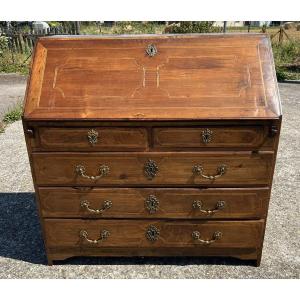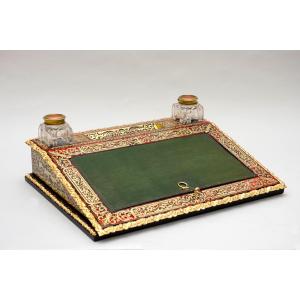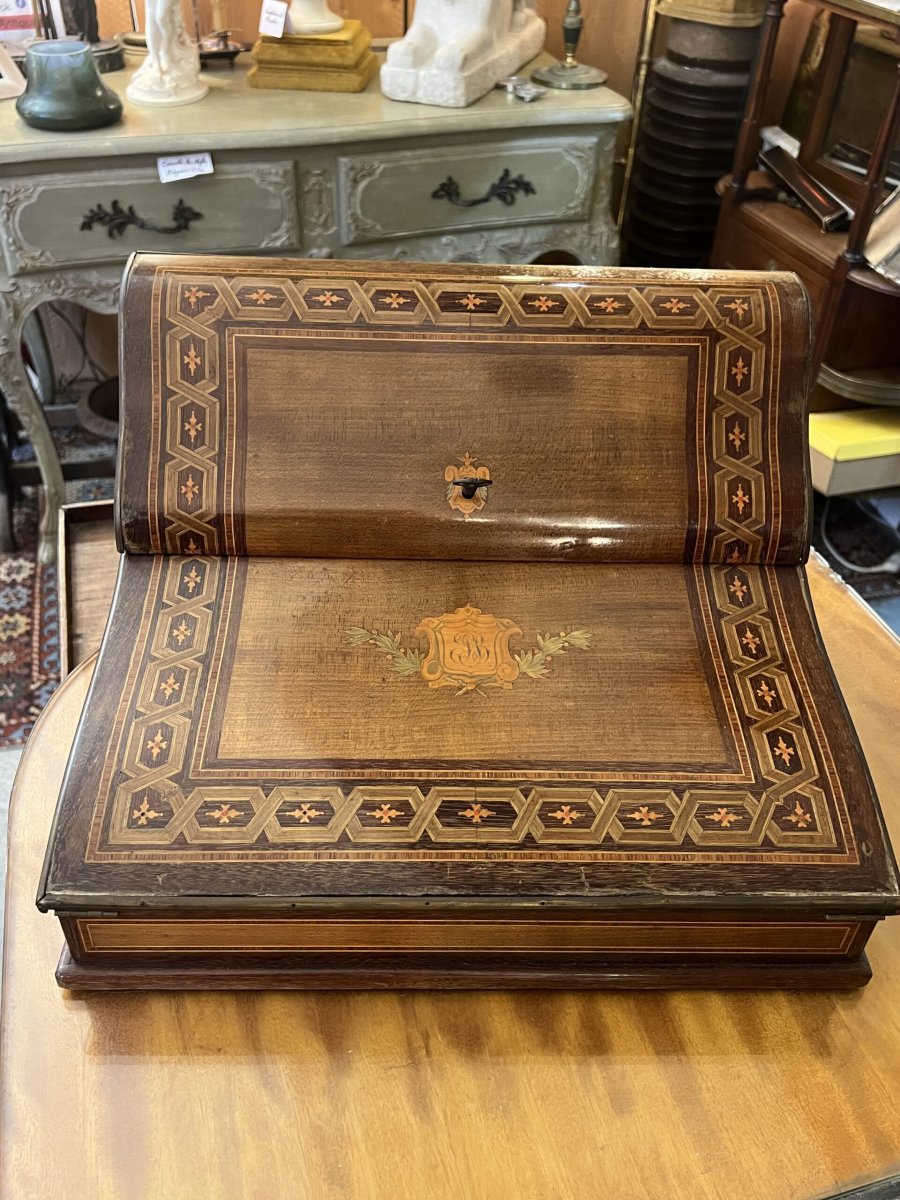
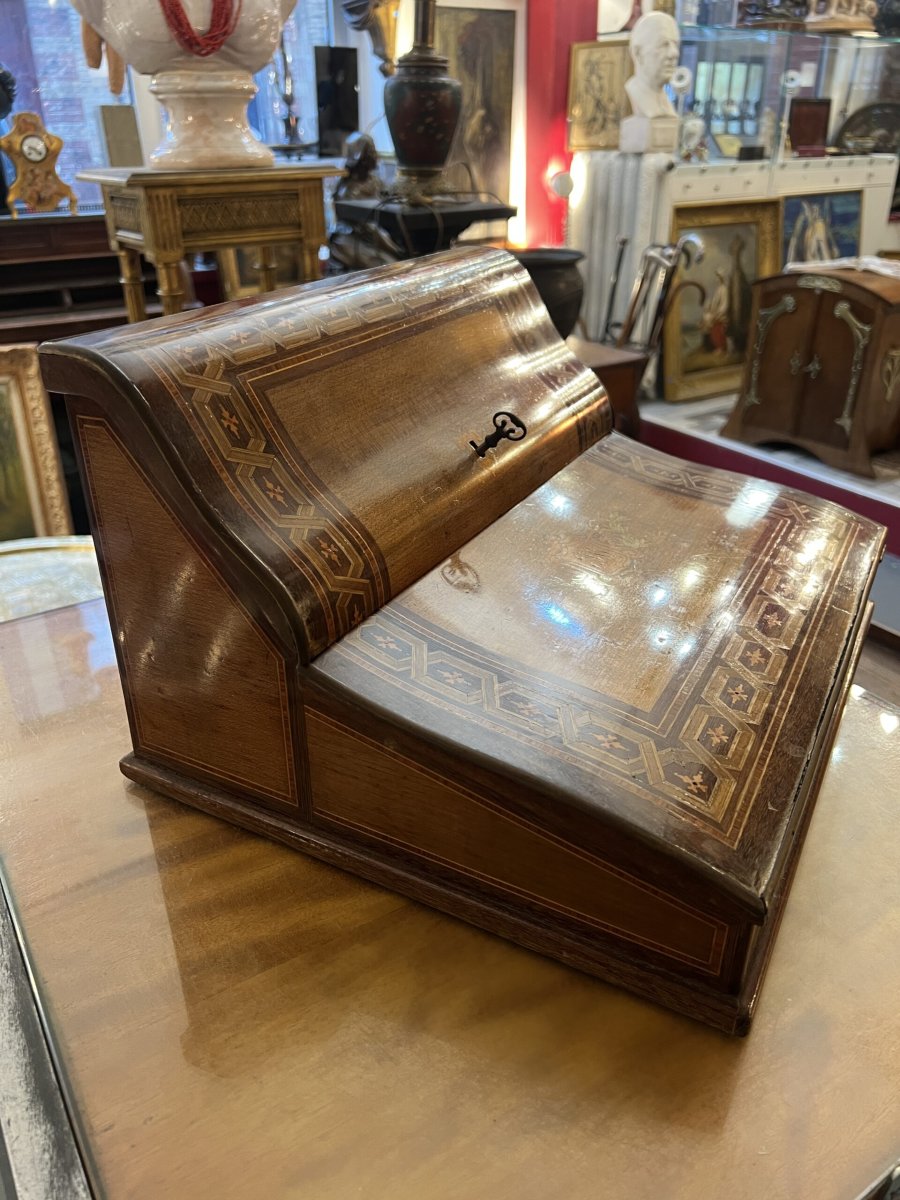
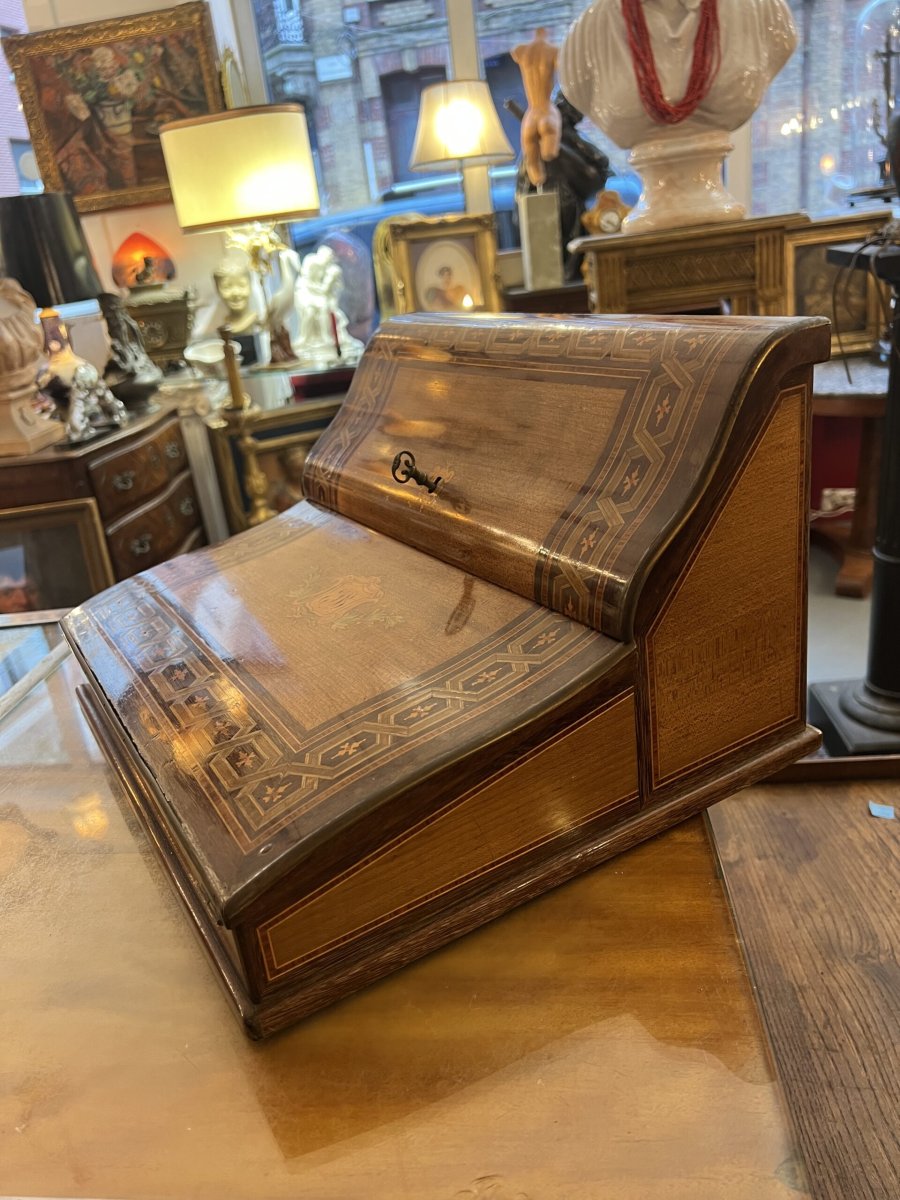
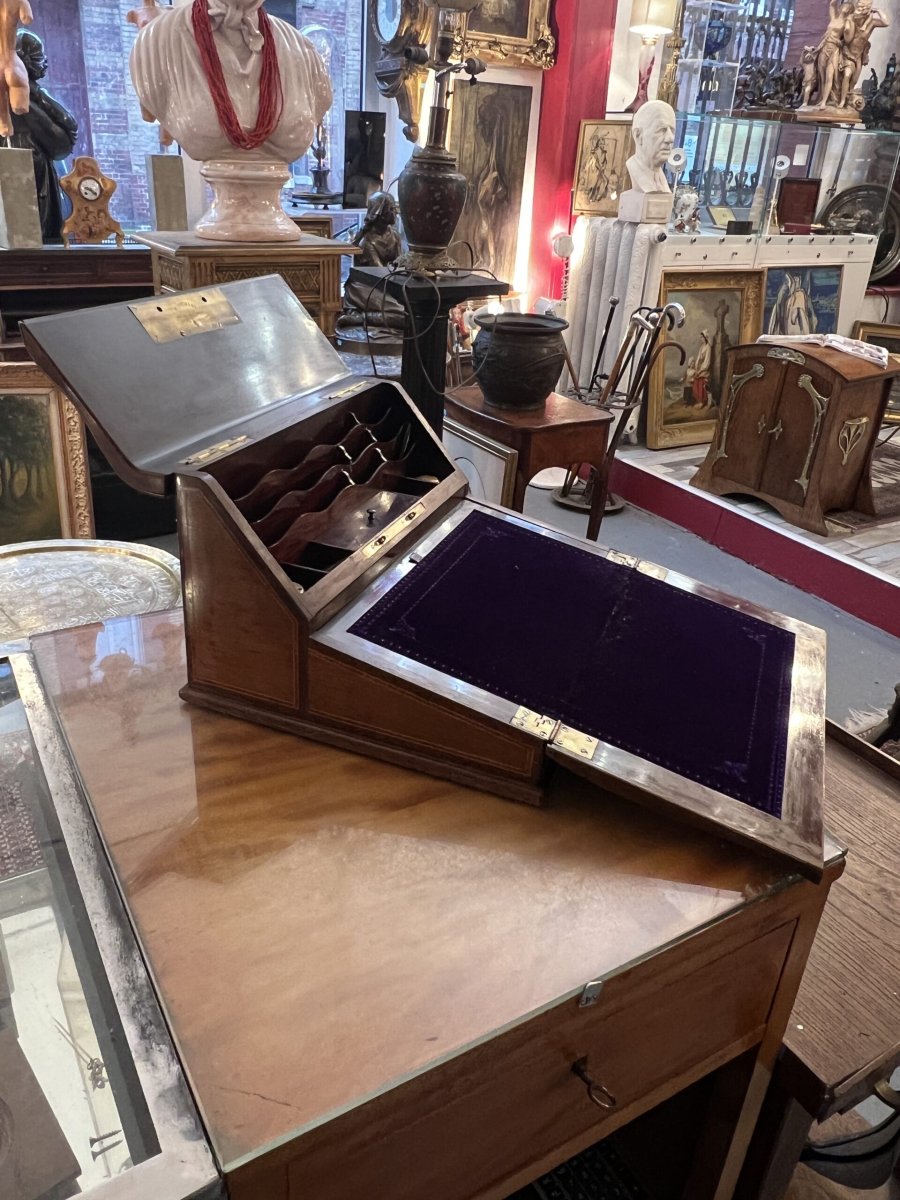
Today I’d like to introduce you to an exceptional piece: a writing desk designed by Paul Sormani, a symbol of the artisanal craftsmanship and refined elegance of the Napoleon III era.
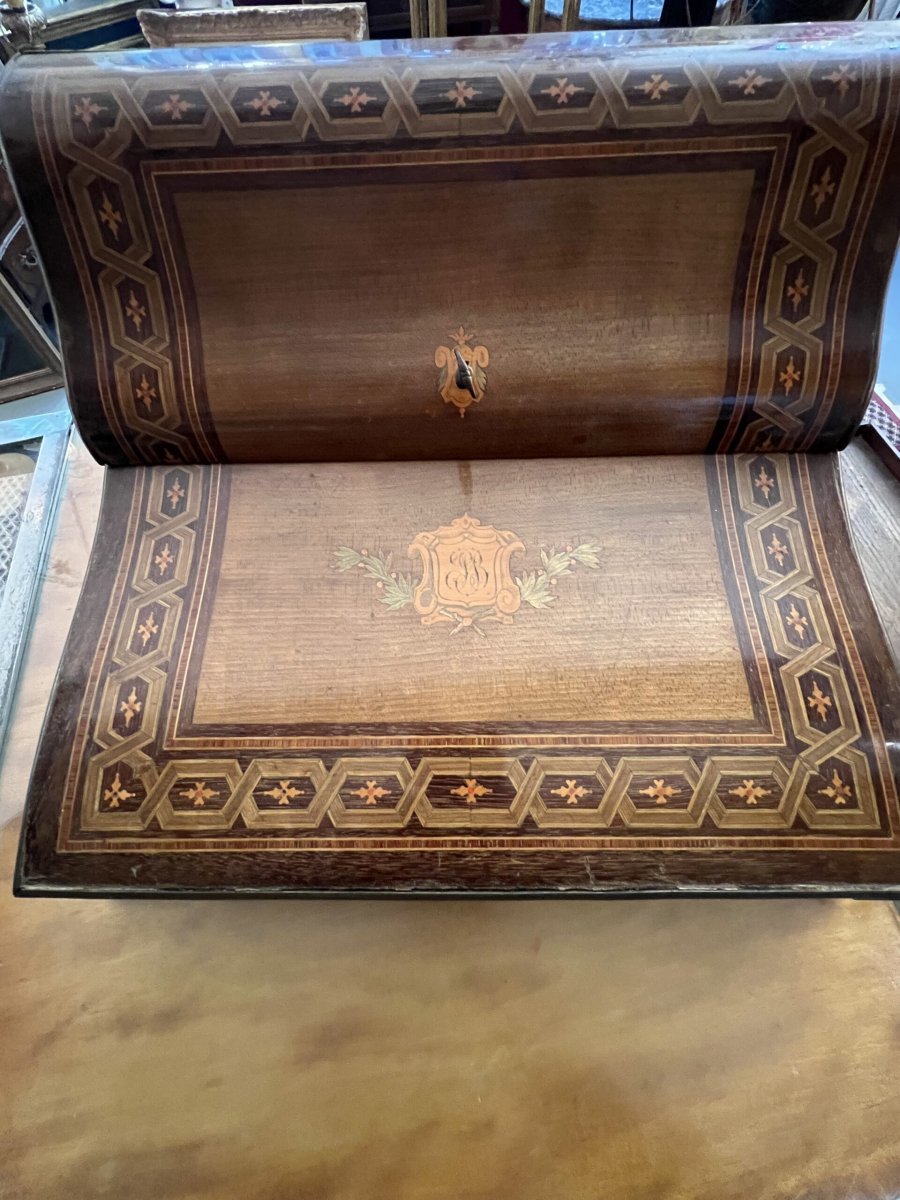
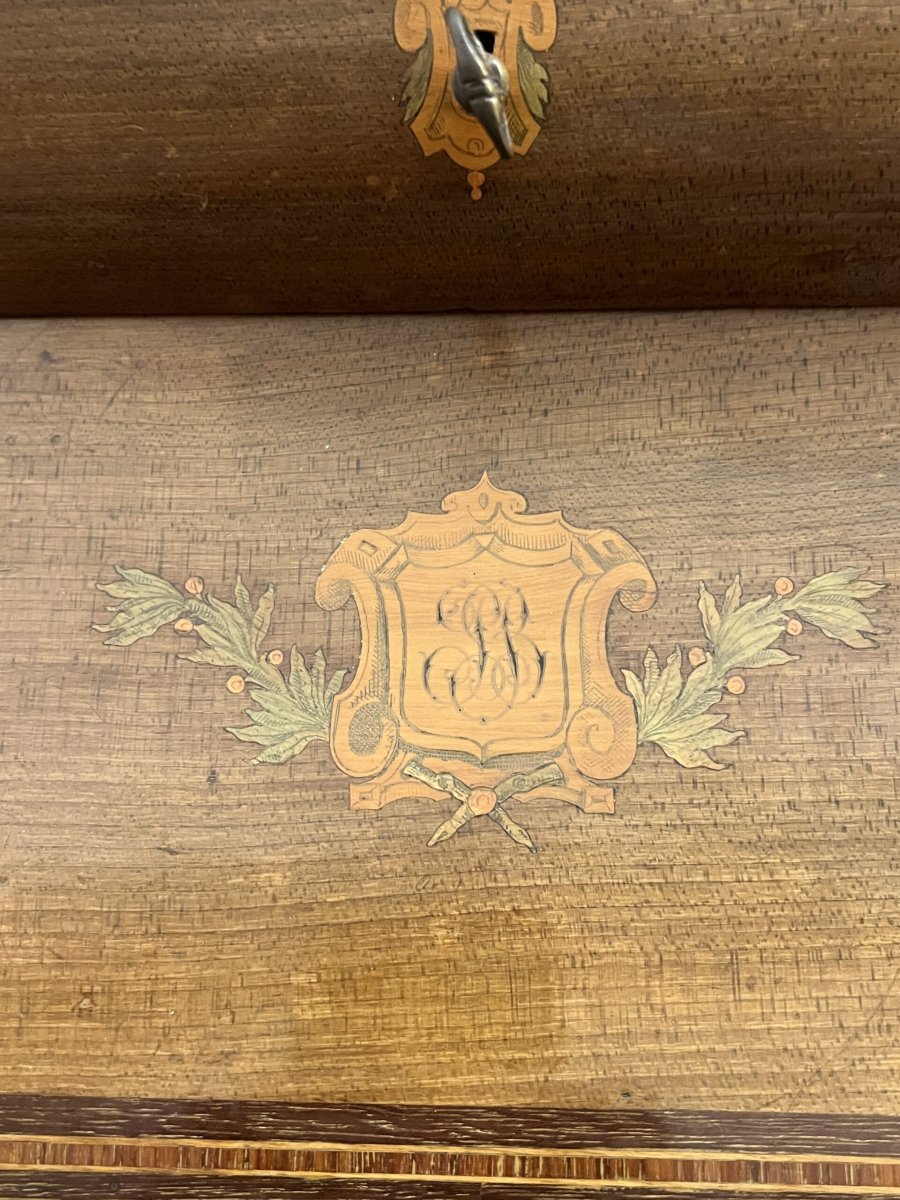
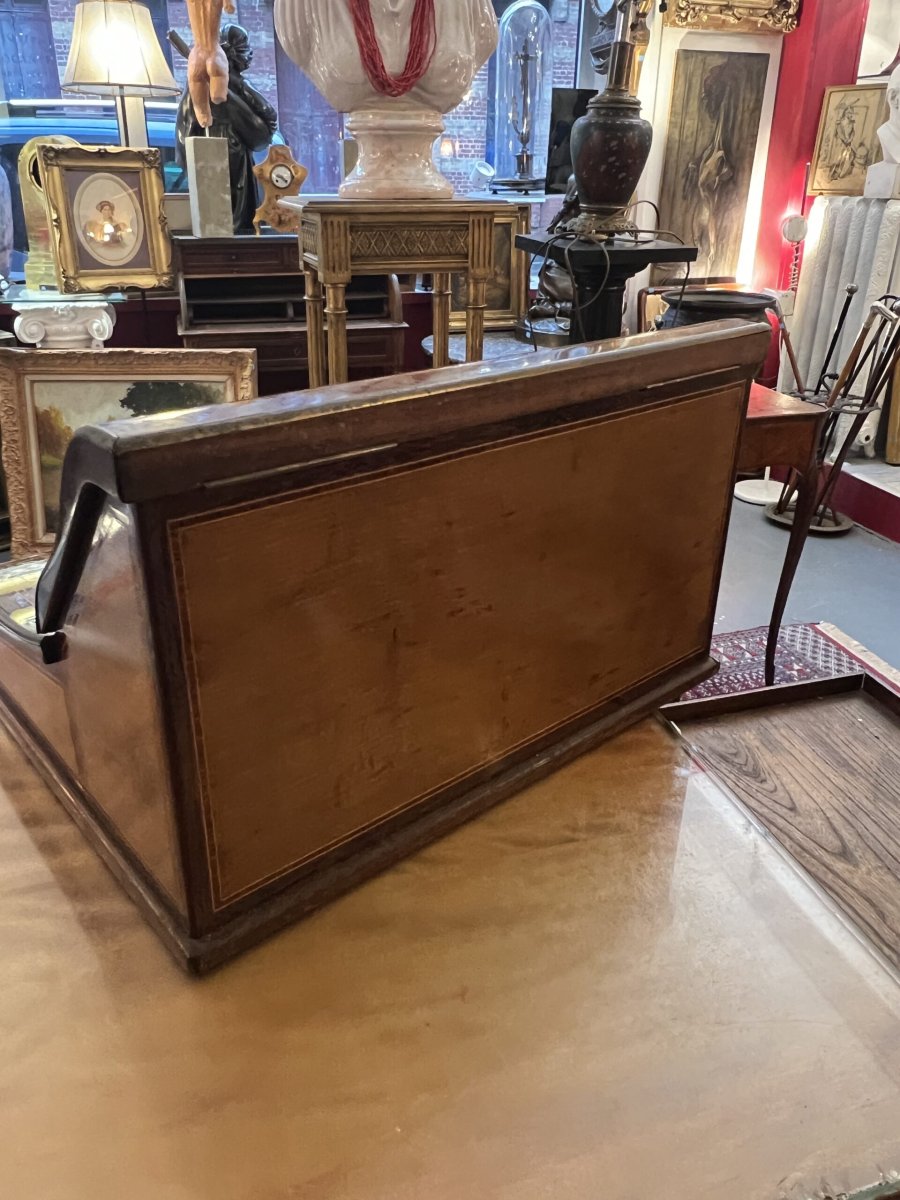
This writing desk stands out for its geometric marquetry—a masterful blend of rosewood and palisander—which gives it a look that is both majestic and timeless.
Every detail is meticulously crafted, such as the brass trim that surrounds the lid, adding a touch of luminosity and prestige. At the center of the writing desk, a monogrammed coat of arms immediately catches the eye.
It attests to the importance placed on personalization and luxury during the Second Empire.
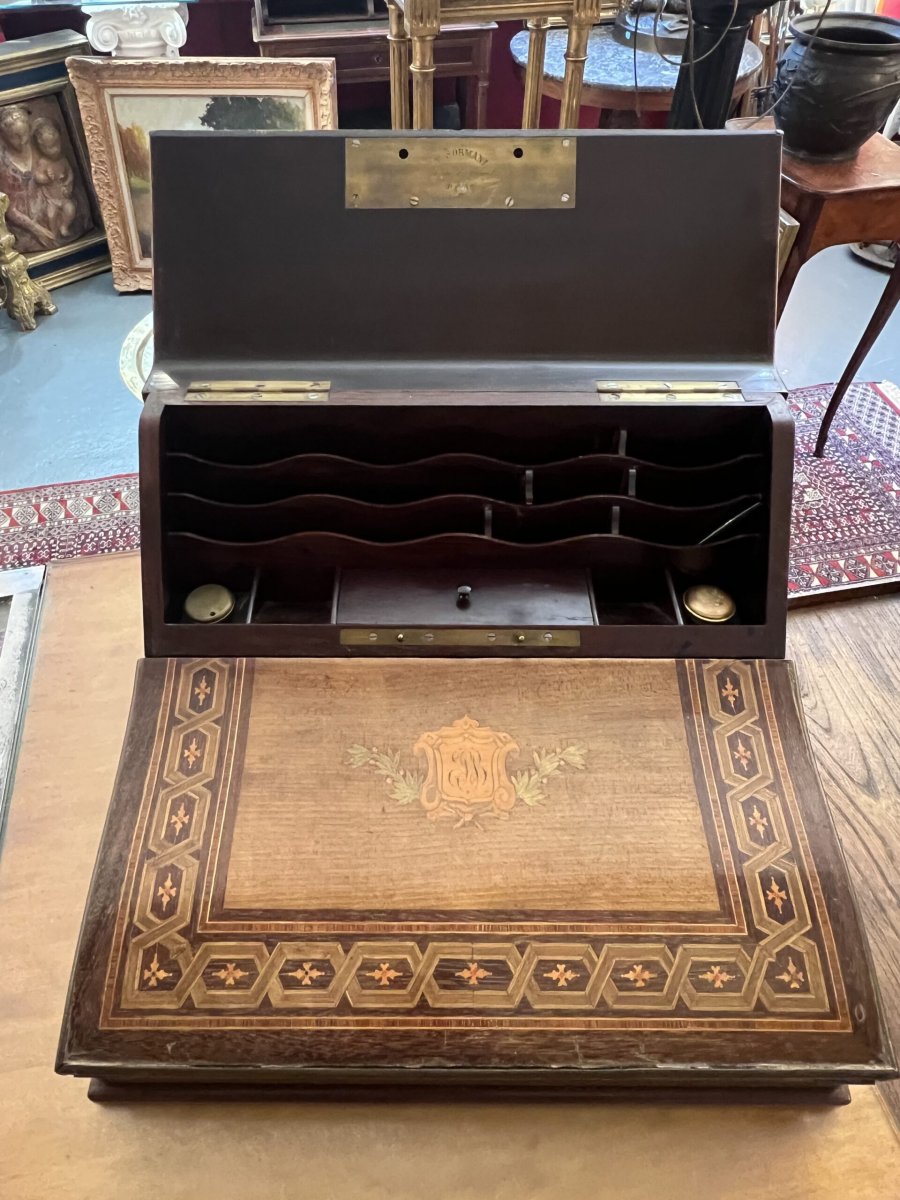
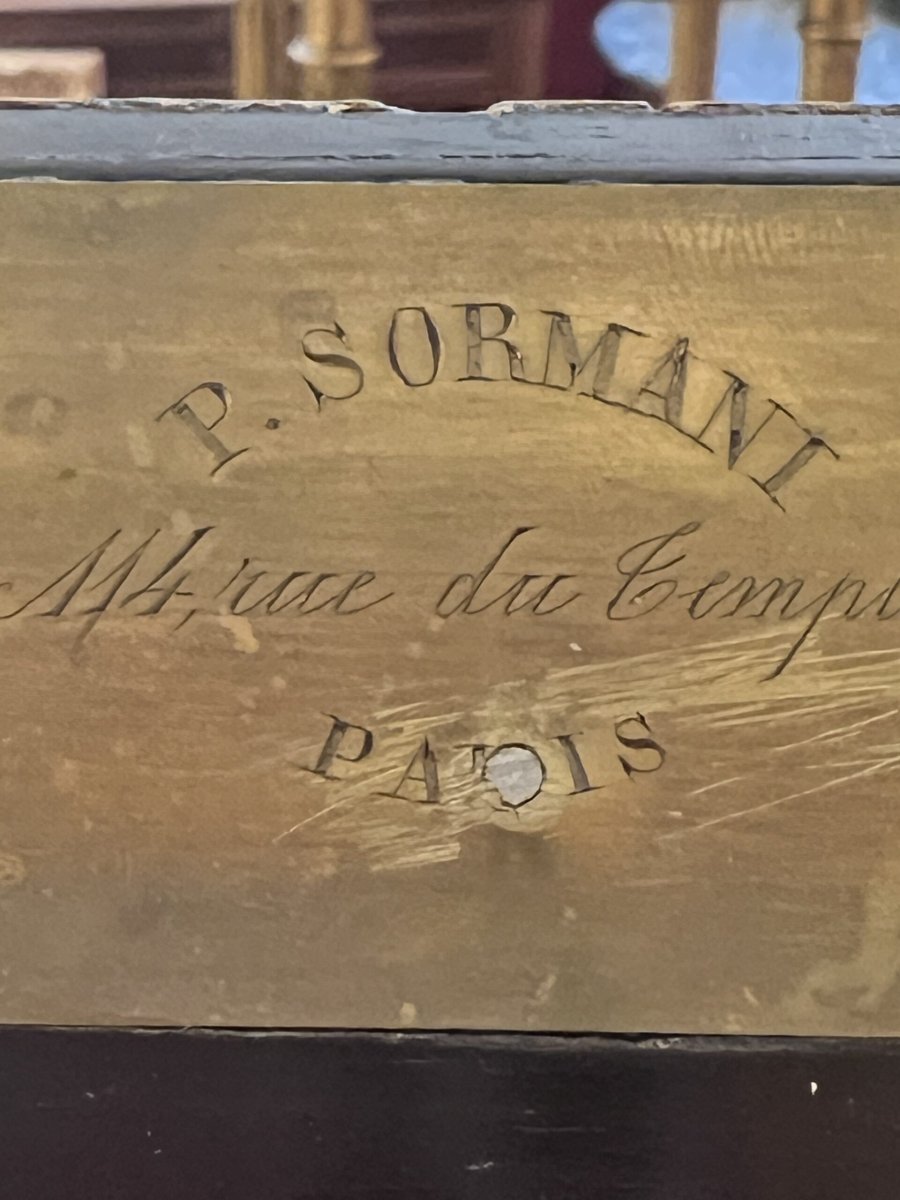
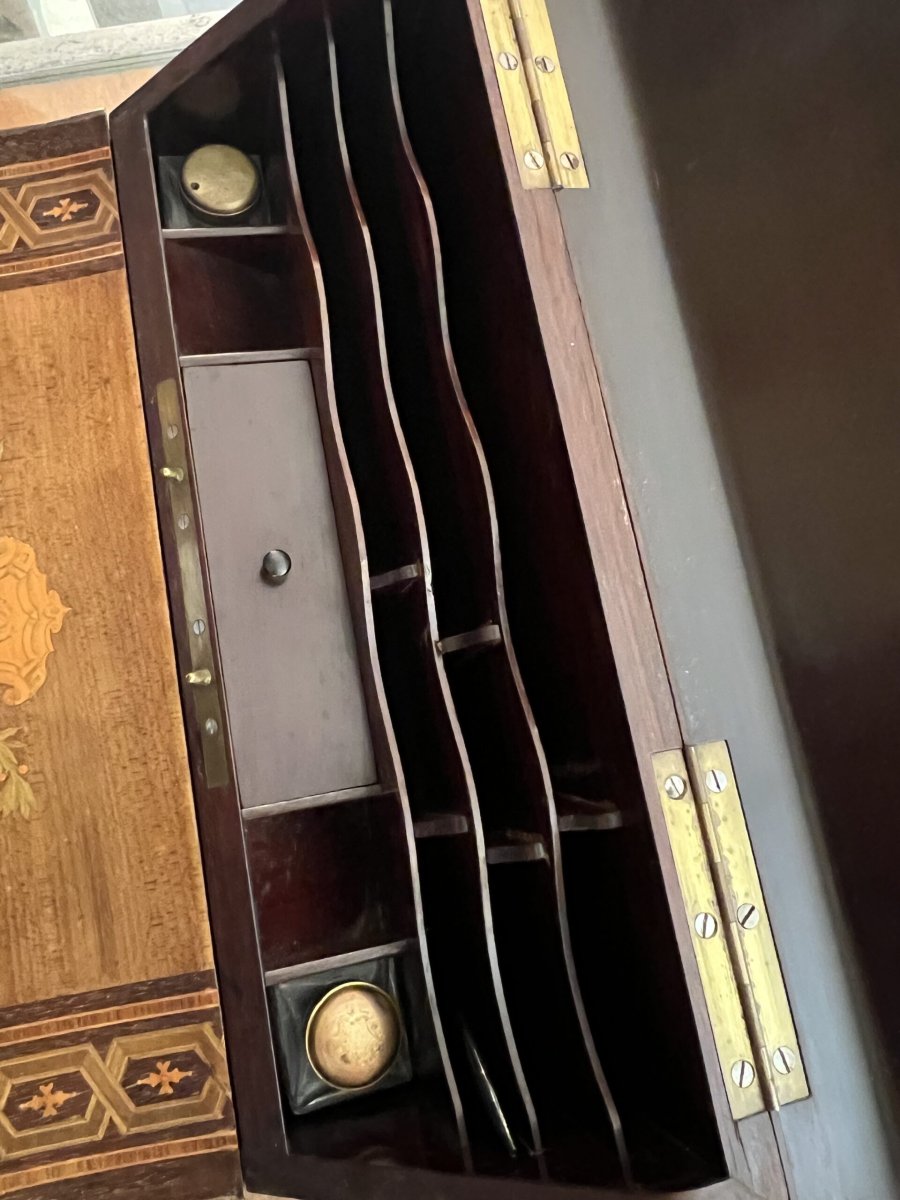
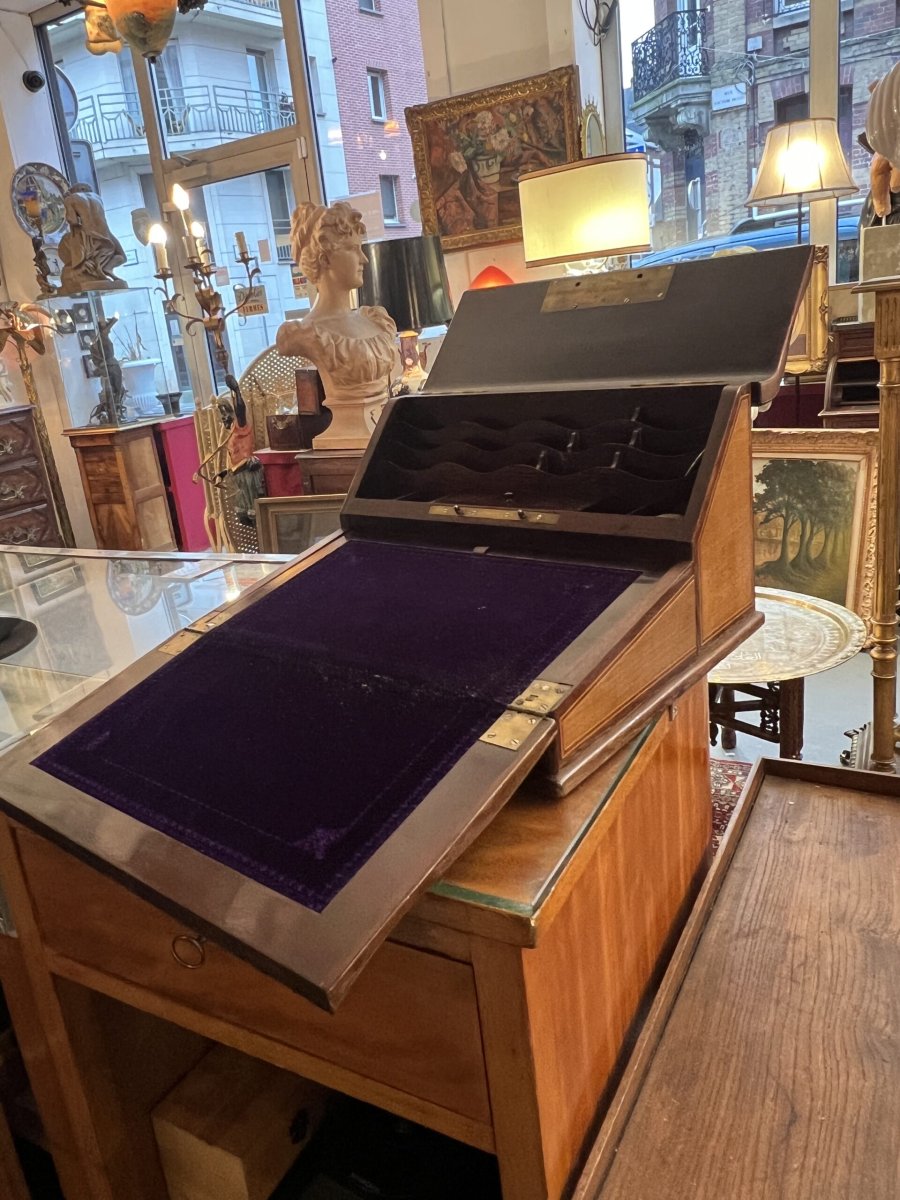
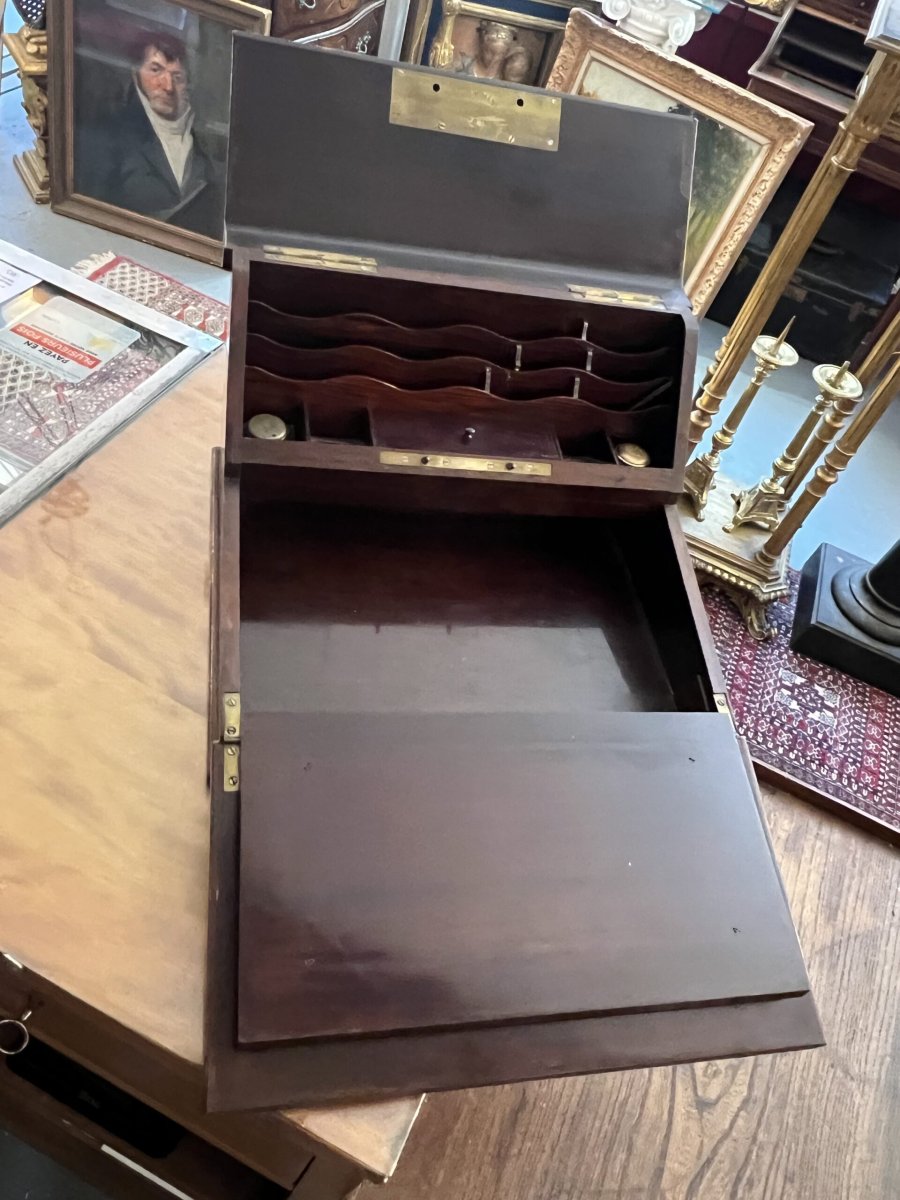
The gracefully curved upper section opens to reveal a mail compartment made of rosewood, a precious wood that enhances the object’s luxurious character. The lock, engraved with the name “P. SORMANI 114 R du Temple Paris,” is an authentic signature of the Sormani house.
It serves as a reminder that this writing desk is indeed a creation by one of the greatest cabinetmakers of the 19th century.
The lower section, meanwhile, features a writing surface covered in purple velvet, restored to like-new condition to preserve its original luster.
Two crystal inkwells, of remarkable transparency and purity, are built into it, ready to inspire the most beautiful letters. The lock still works with its original key, a rare detail that underscores the excellent condition of this piece.
In impeccable condition, this writing desk measures, when closed, 37.5 cm in length, 22.5 cm in height, and 32.5 cm in depth.
These dimensions make it both a practical and imposing piece, perfect for adorning a study or library. Paul Sormani (1817–1877) was a leading figure in French cabinetmaking.
Founded in 1847, his workshop experienced rapid growth after 1850, participating in the World’s Fairs beginning in 1849 and winning numerous medals there.
Sormani first set up shop at 7 Cimetière Saint-Nicolas, then moved to 114 Rue du Temple in 1854, before relocating to 10 Rue Charlot in 1867.
His talent and attention to detail even captivated Empress Eugénie, wife of Napoleon III, who greatly contributed to the firm’s reputation by decorating her palaces with his creations. Upon Paul Sormani’s death in 1877, his son and widow took over the business under the name “Sormani Veuve Paul et Fils,” thus continuing a legacy of excellence and refinement.
This writing desk is much more than a simple piece of furniture: it is a piece of history, a testament to French taste and luxury.
It embodies the 19th-century art of living, when every object was designed to combine beauty, functionality, and prestige. Treat yourself to this gem of our heritage—a one-of-a-kind piece that will enhance your home and delight lovers of art and history.
More photos on my website: https://abnantiquitesdenormandie.com/product/joli-ecritoire-xixe-siecle-estampille-de-paul-sormani-epoque-napoleon-iii-marqueterie/
You can follow me on Instagram by clicking this link: https://www.instagram.com/patrick.boussougant/
Back to the store: Online sales of antique items and furniture, secure shopping (abnantiquitesdenormandie.com)
PLEASE NOTE! For home deliveries handled by our carriers, feel free to request a quote!