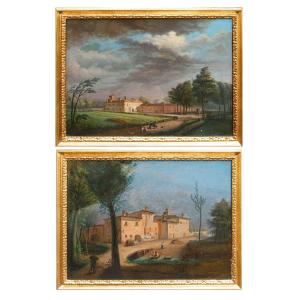
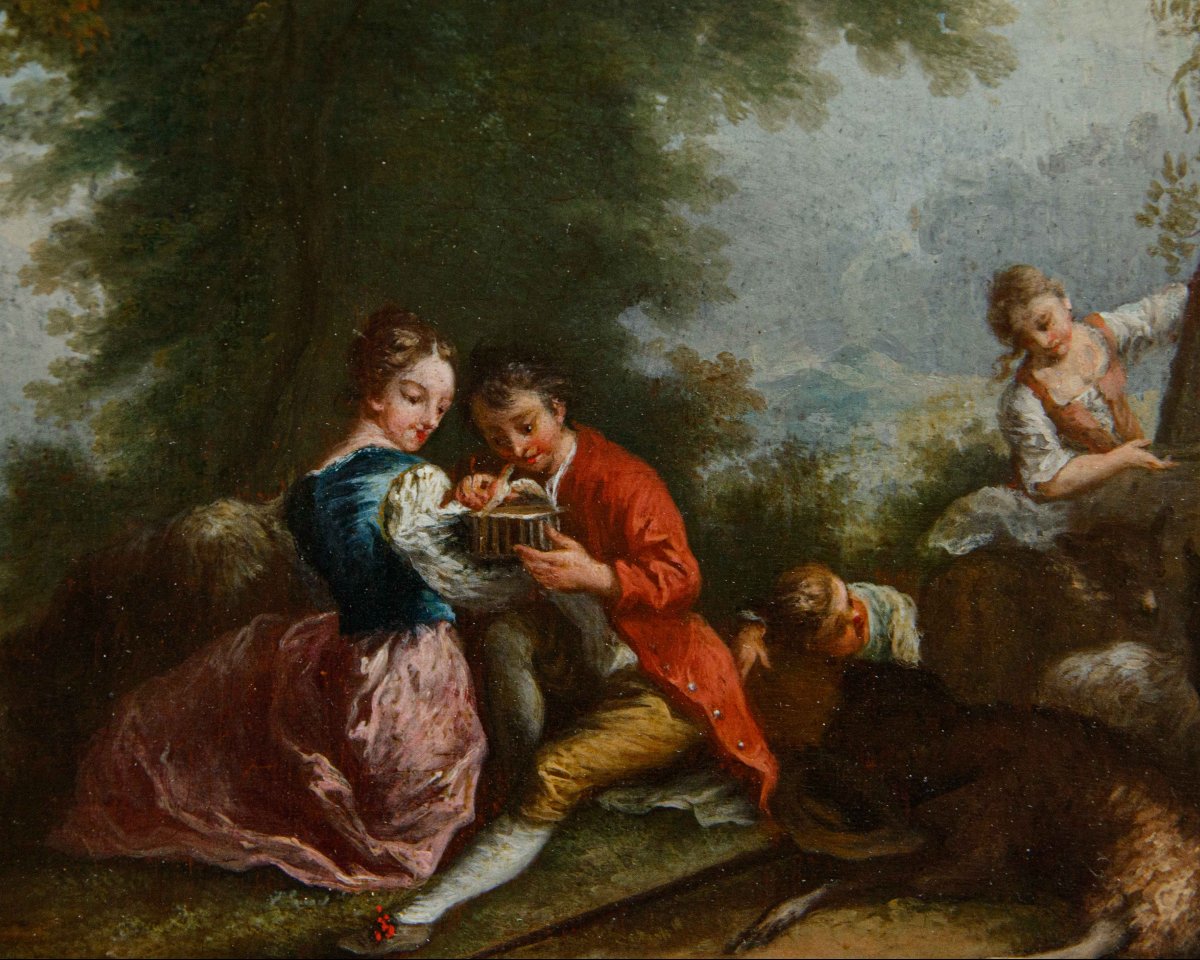
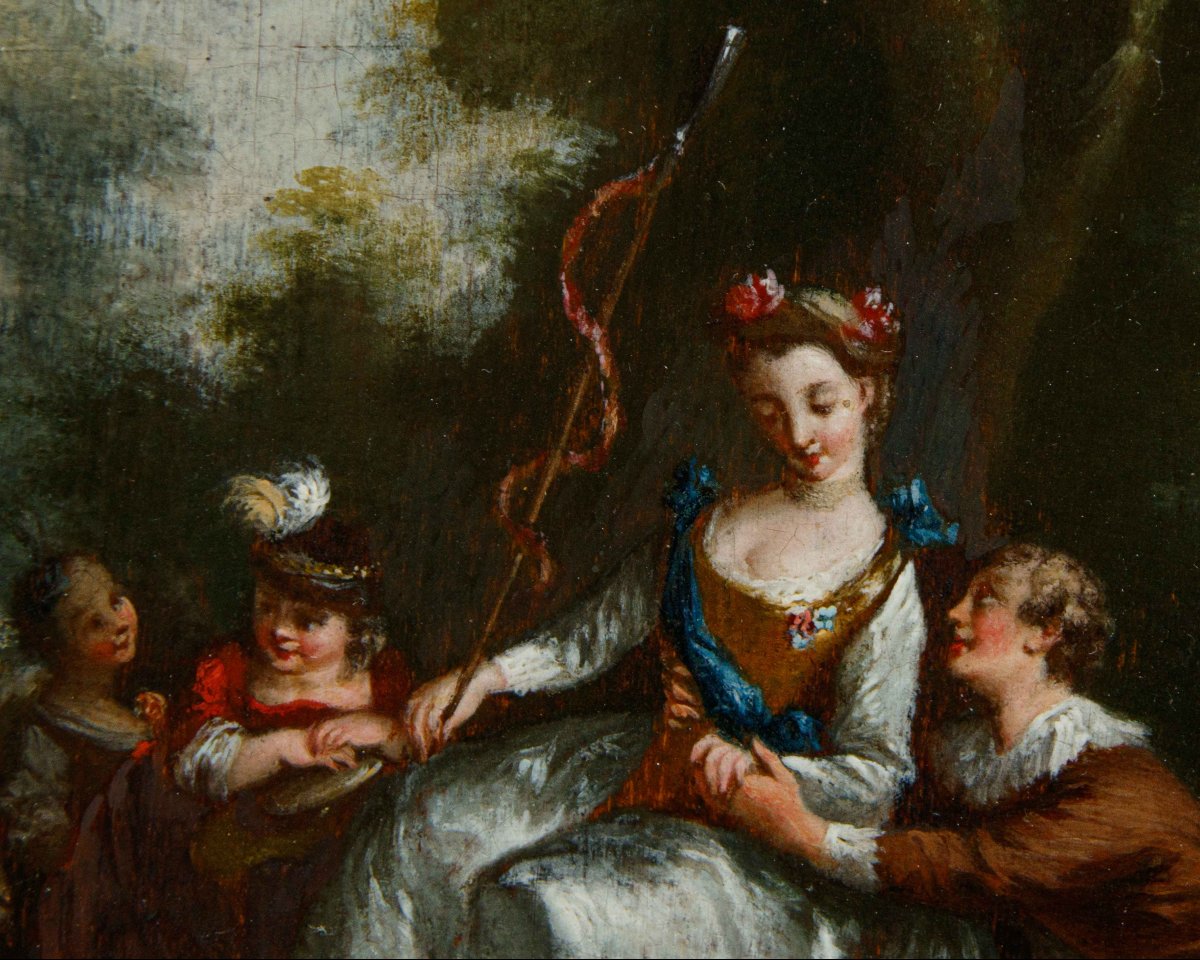
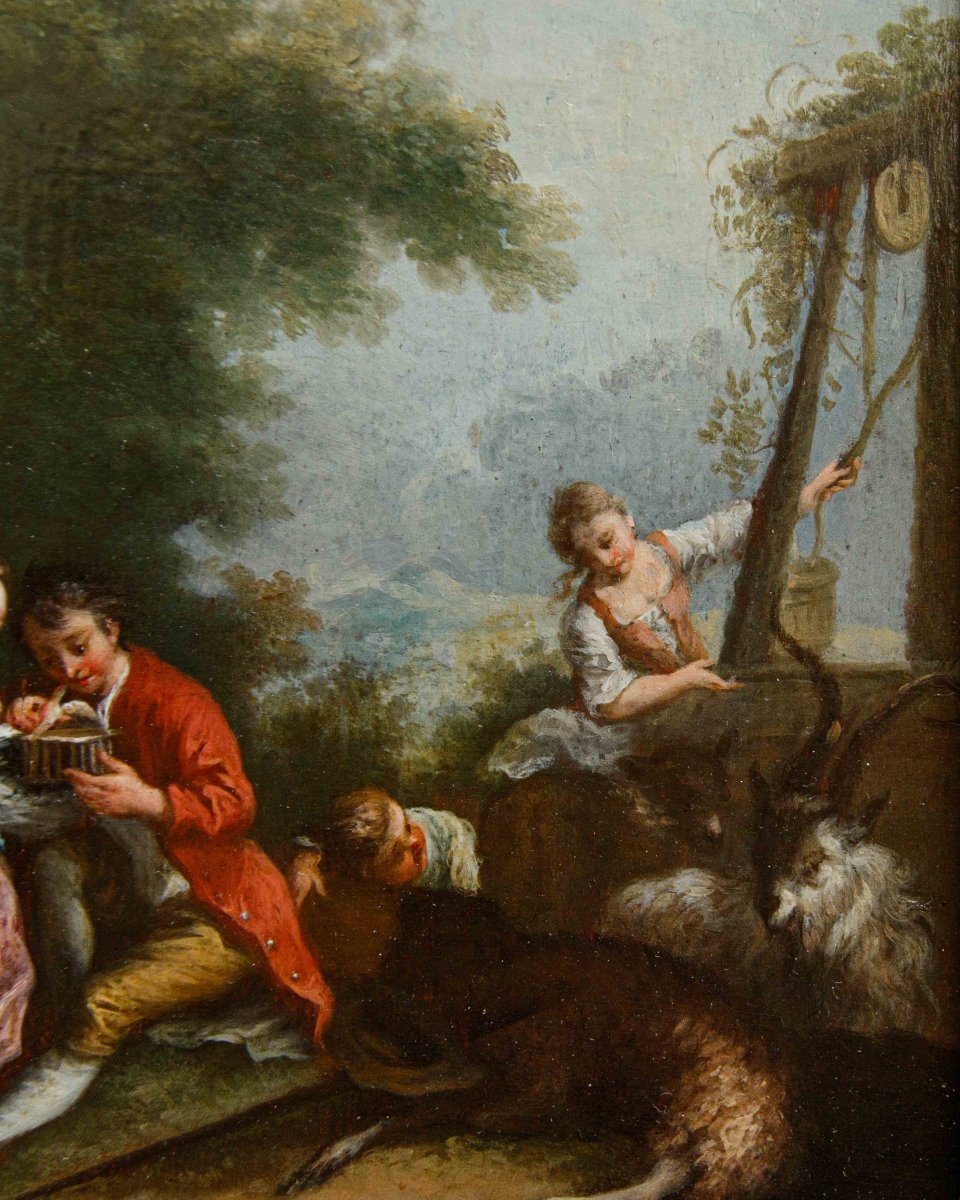
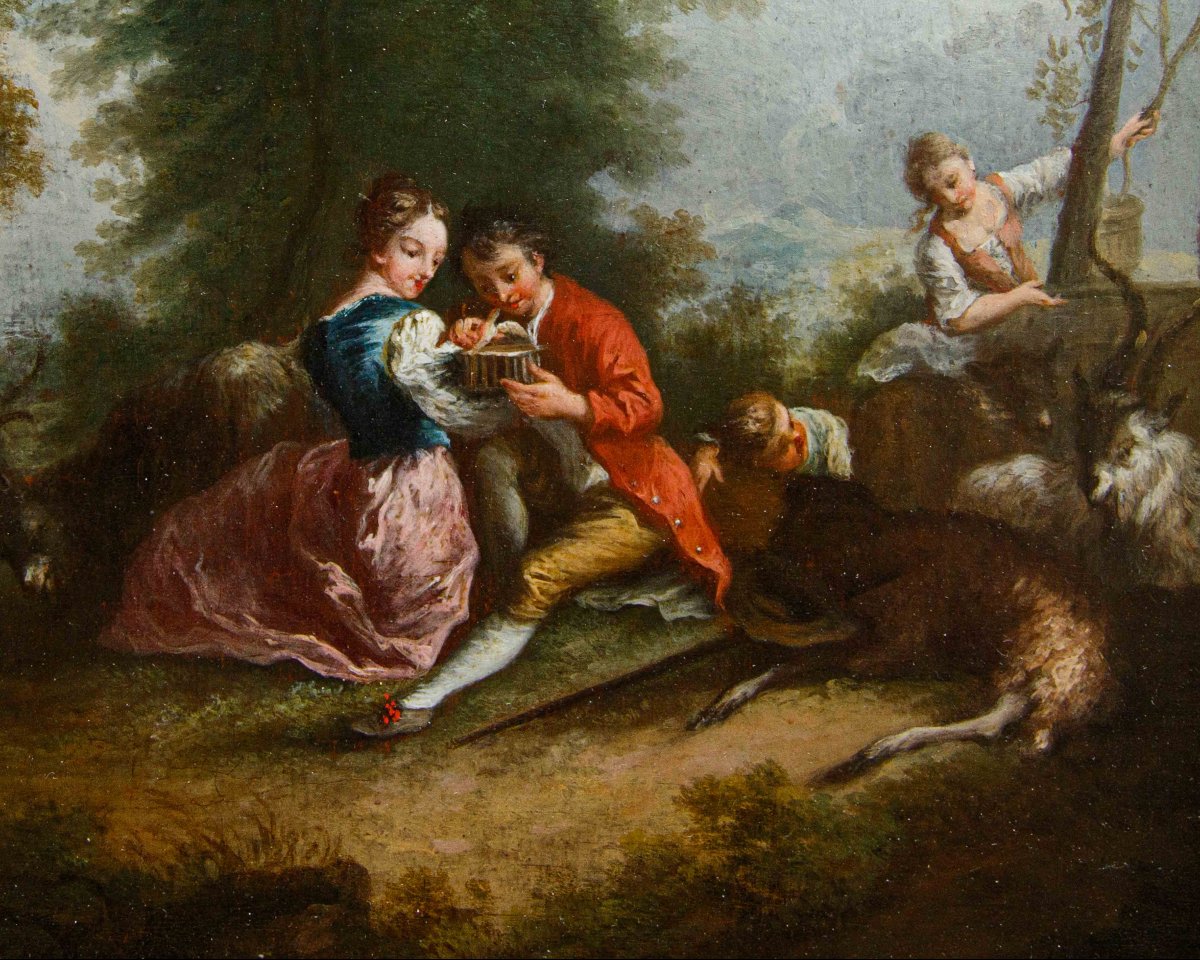
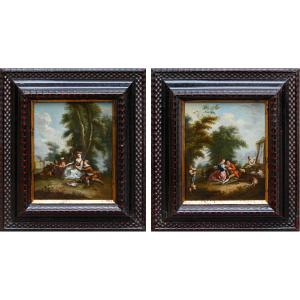


18th Century, French School, Gallant Scenes
18th century, French School
Romantic Scenes
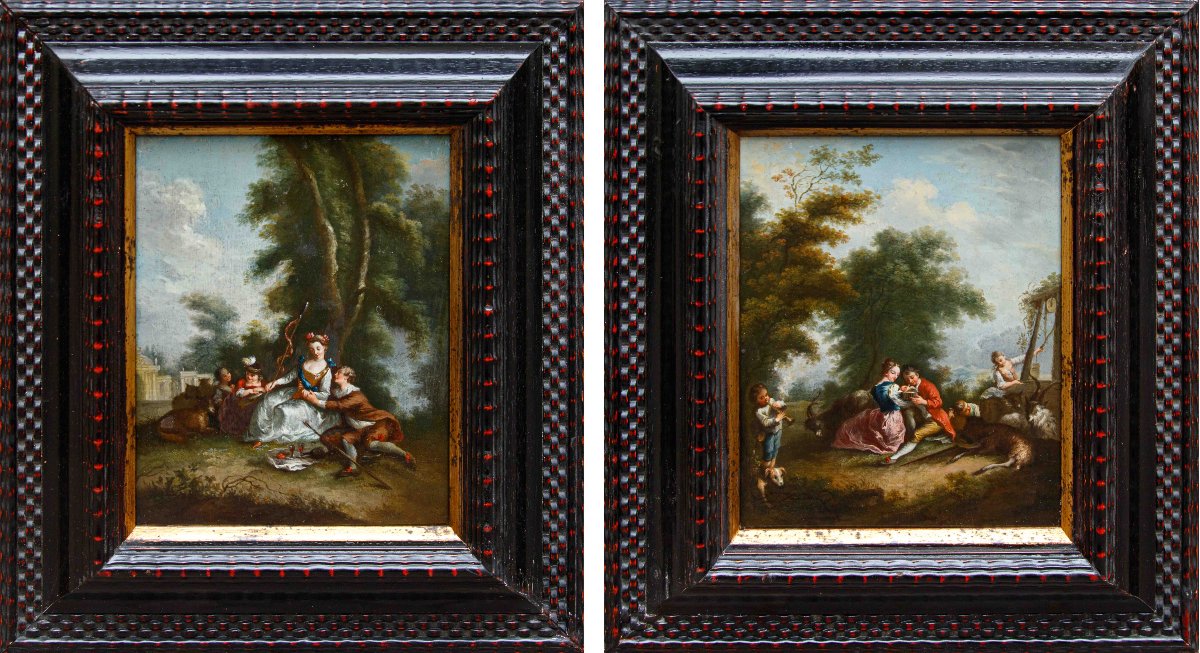
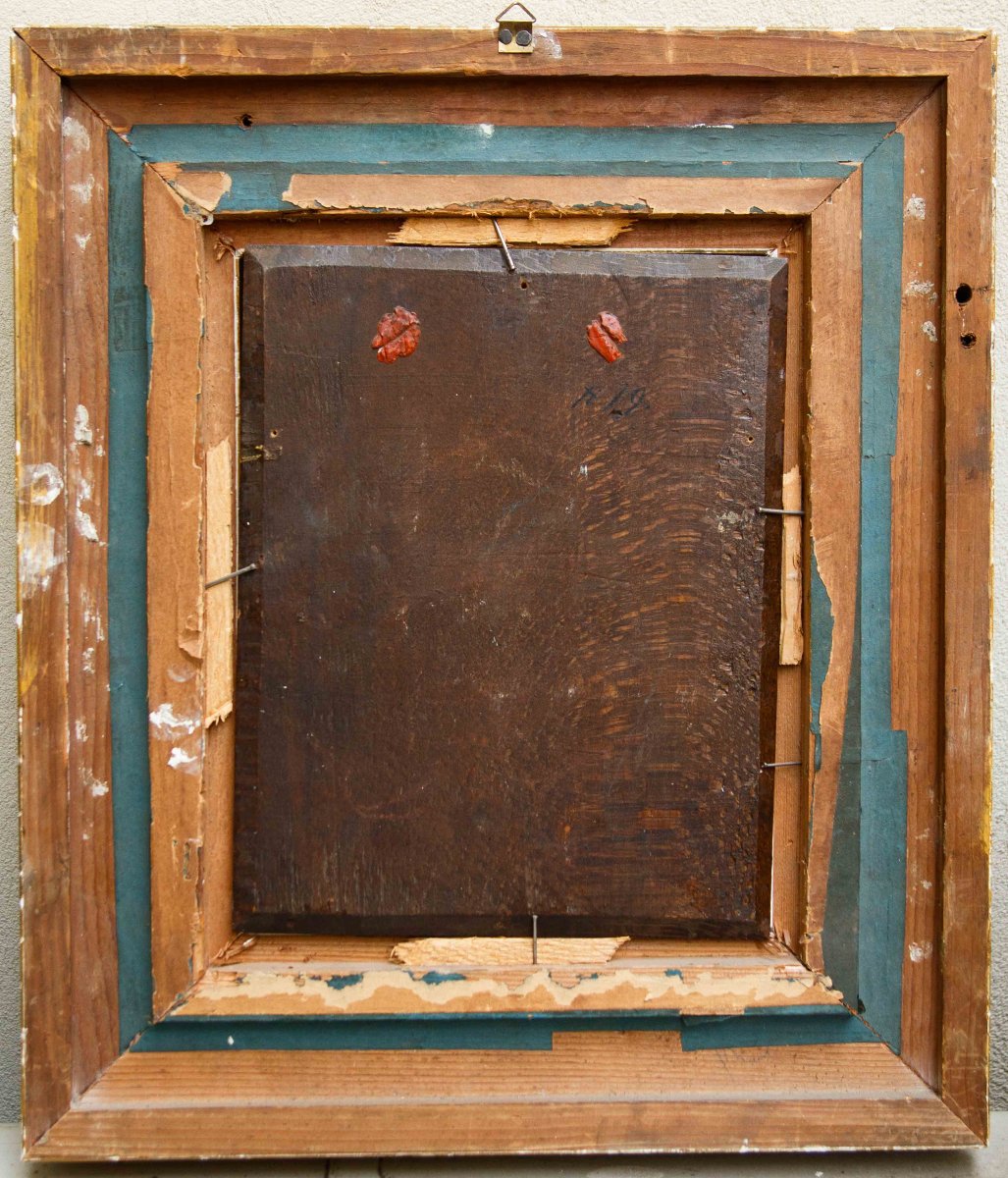
(2) Oil on panel, 24 x 19 cm
With frame, 44 x 36 cm
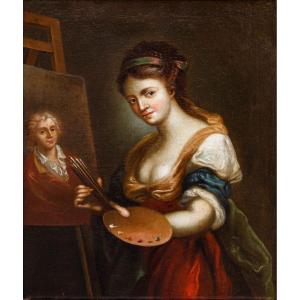
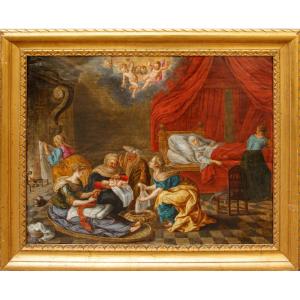
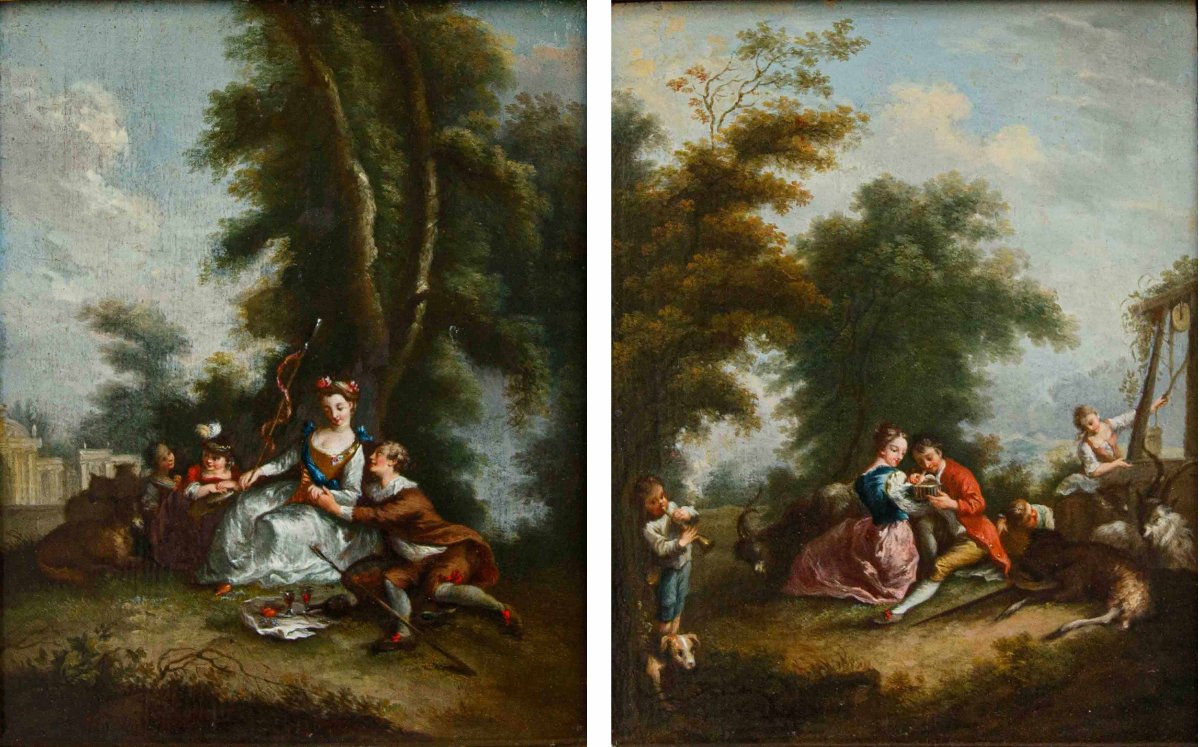
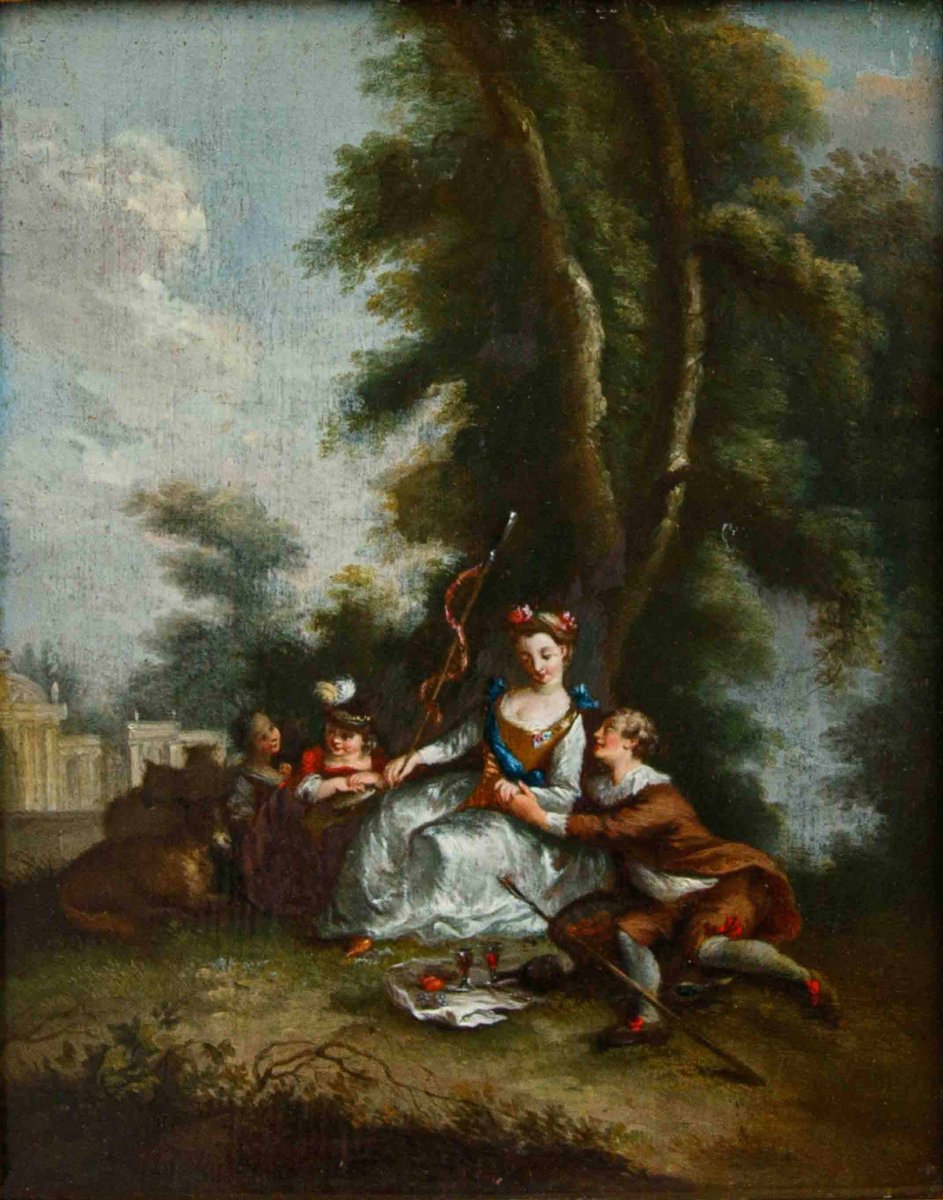
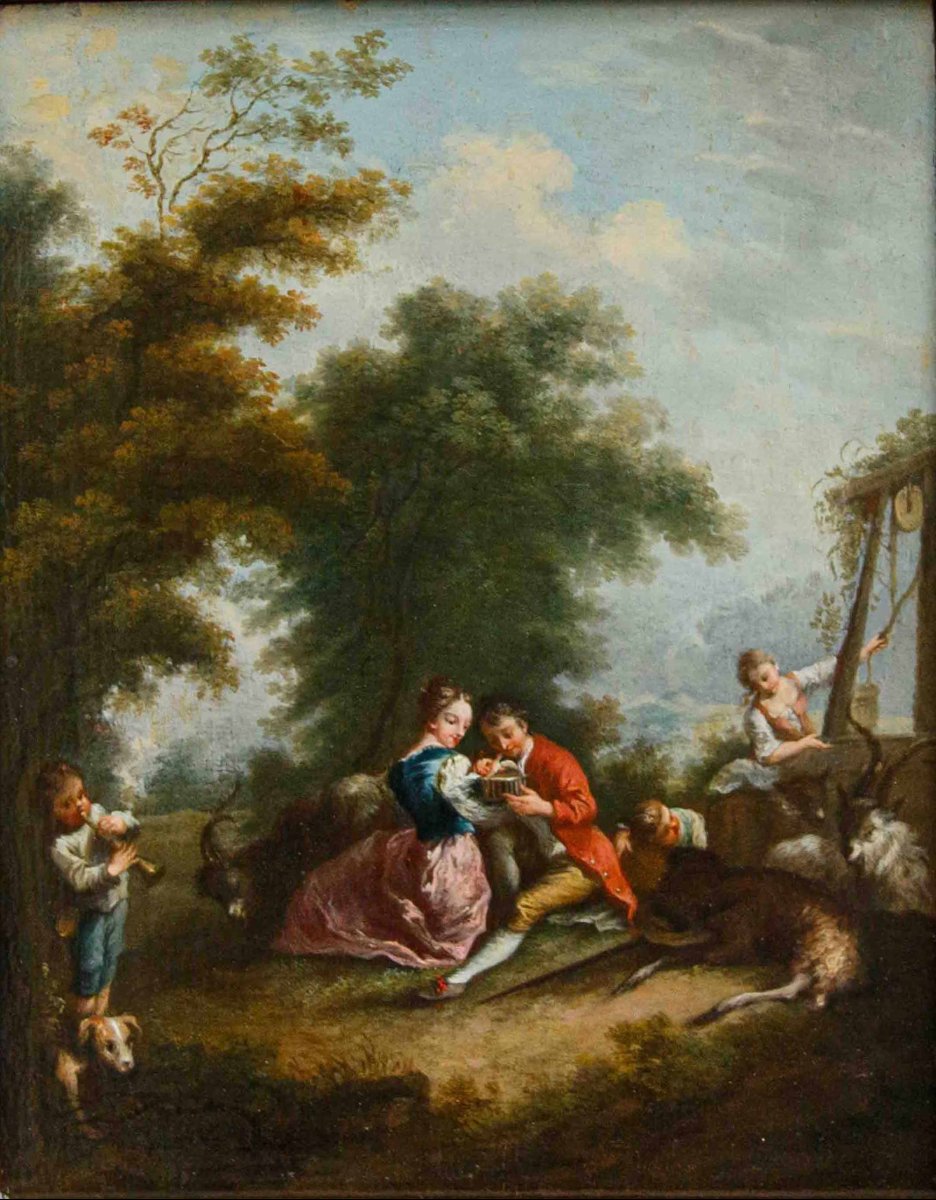
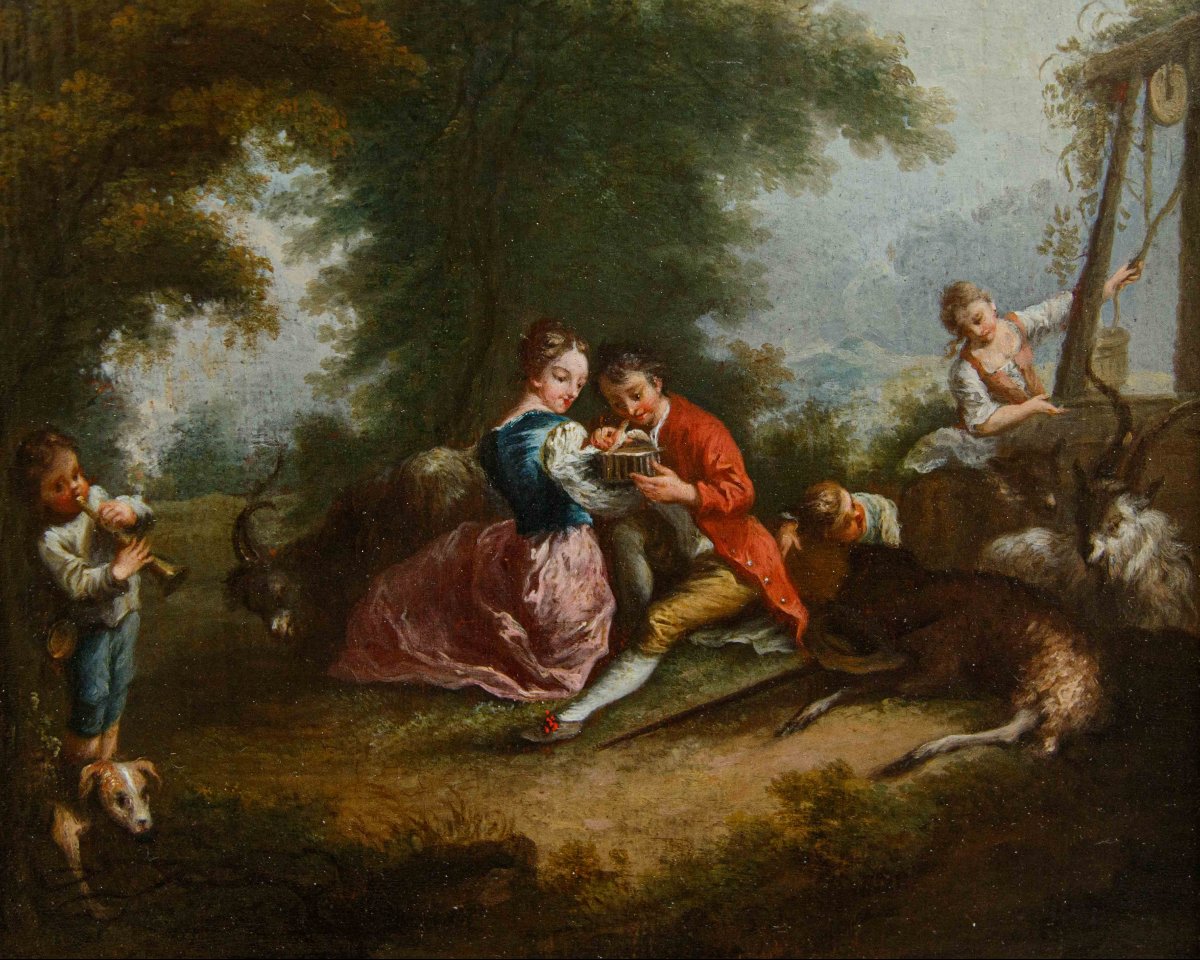
This pair of works, attributable to the artistic context of 18th-century France, celebrates the theme of courtly love and sensual pleasure, typical of Rococo painting: in fact, they depict two scenes of courtship that strictly adhere to the rituals of ancient courts. The festive and joyful atmosphere that emanates from the two canvases perfectly reflects the carefree and refined lifestyle of the aristocracy that gravitated toward the major European courts in the 18th century. The attention to detail—such as the precious fabrics, jewels, and ornaments of the highest quality—emphasizes the luxury and refinement of court life, in keeping with the taste and aesthetics of French Rococo. The two works in question are fully representative of the purely 18th-century painterly genre known as the “galant scene.” This movement stood in stark contrast to the imposing and solemn classicism of the previous century, seeking to convey an unmistakable sense of sensuality, frivolity, and inevitable decadence, in a sort of lost paradise. By this time, the nobility—having been almost entirely stripped of the power that had been firmly theirs until the 17th century—tried in vain, through these paintings—which captured the spirit of the age—to demonstrate their apparent wealth through their lavish parties. This school of painting, which enjoyed immense popularity around the middle of the century, was swept away by the events that followed the French Revolution. In these two small scenes of courtly life, the influence of the key figures of 18th-century French art—Watteau and Boucher—is strongly felt. Jean-Antoine Watteau was one of the pioneers of the Rococo style in France, with his scenes of courtly festivities and his marvelous bucolic landscapes populated by mythical figures or a courtly audience that is madly in love with life and its pleasures. Influenced by Rubens and the early 18th-century works of the flourishing Venetian school—particularly those of Tiepolo—the French artist favored a colorful, expressive, and vibrant palette, as well as the use of sharp, swift brushstrokes. Also aligned with Watteau’s teachings is François Boucher, who devoted himself primarily to perfecting perspective—a skill he learned from the Baroque masters—and to the pursuit of a lively color palette, drawn from the models of Rubens and Correggio, whom he regarded as absolutely illustrious. The French artist’s courtly and gallant scenes have a bucolic and pastoral air, which also seems to be evident in these two paintings, reflecting the French artistic climate of the second half of the 18th century.
Period: 18th century
Style: Other Style
Condition: Good condition
Material: Oil painting
Width: 19
Height: 24
Reference (ID): 1804284
Availability: In stock