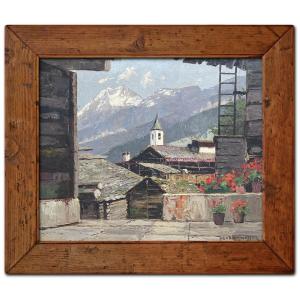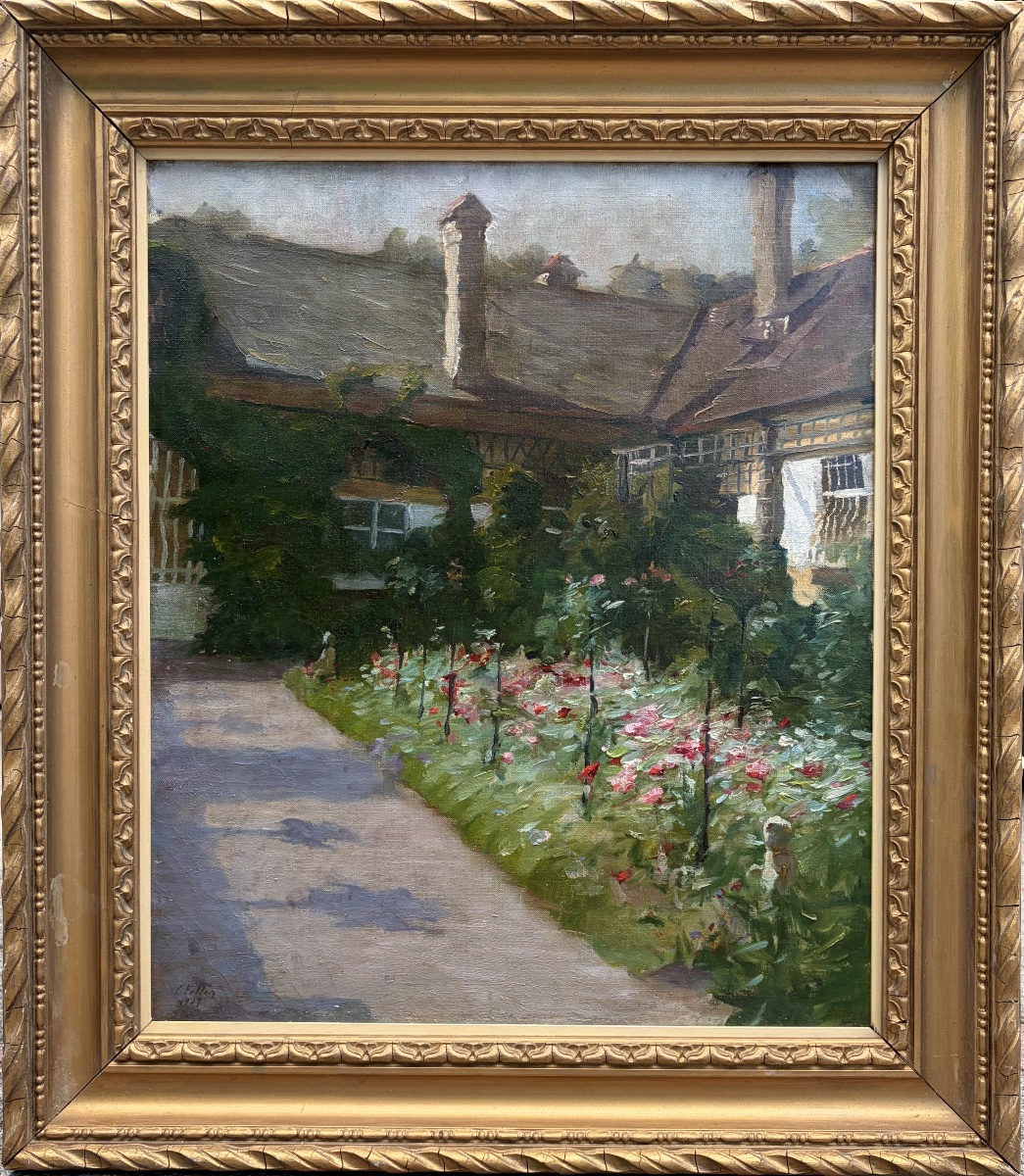
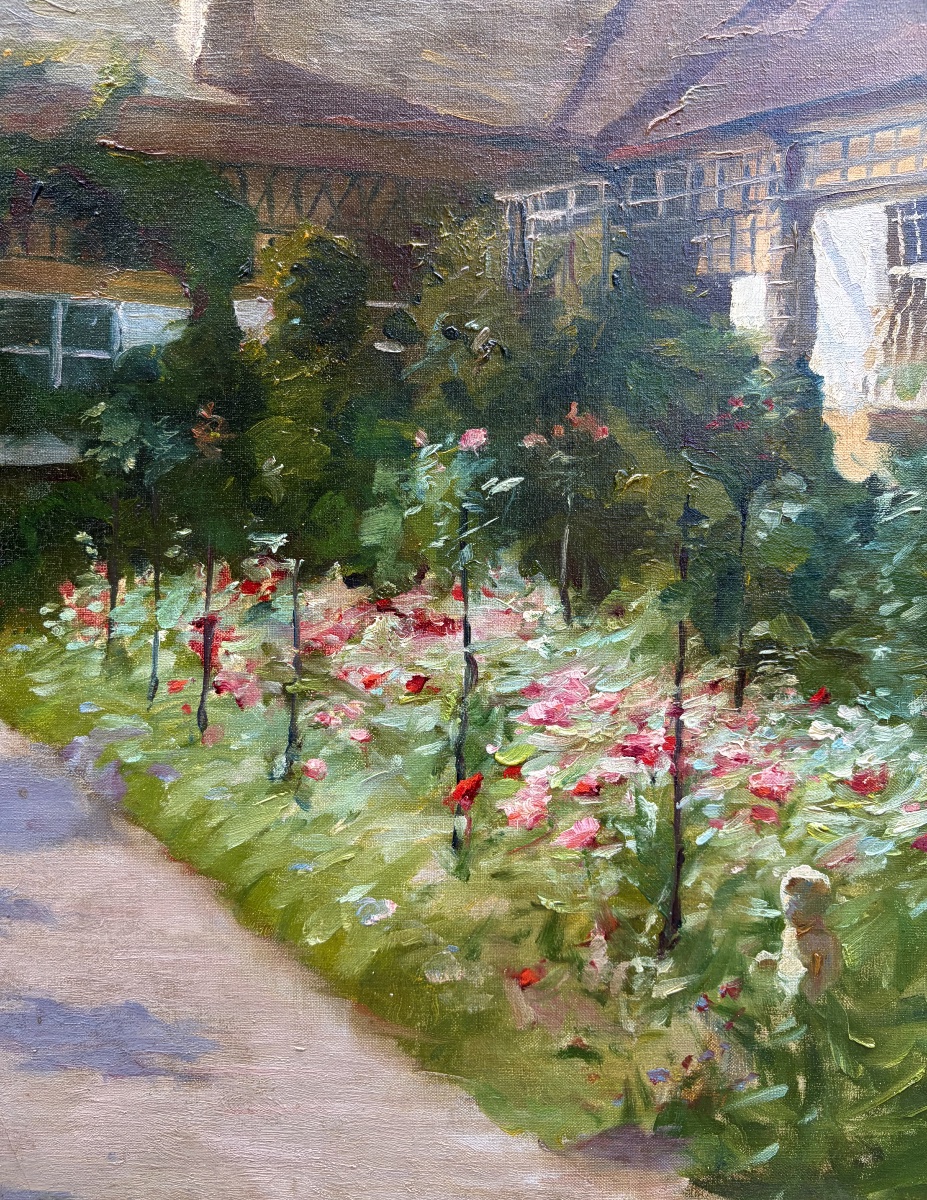
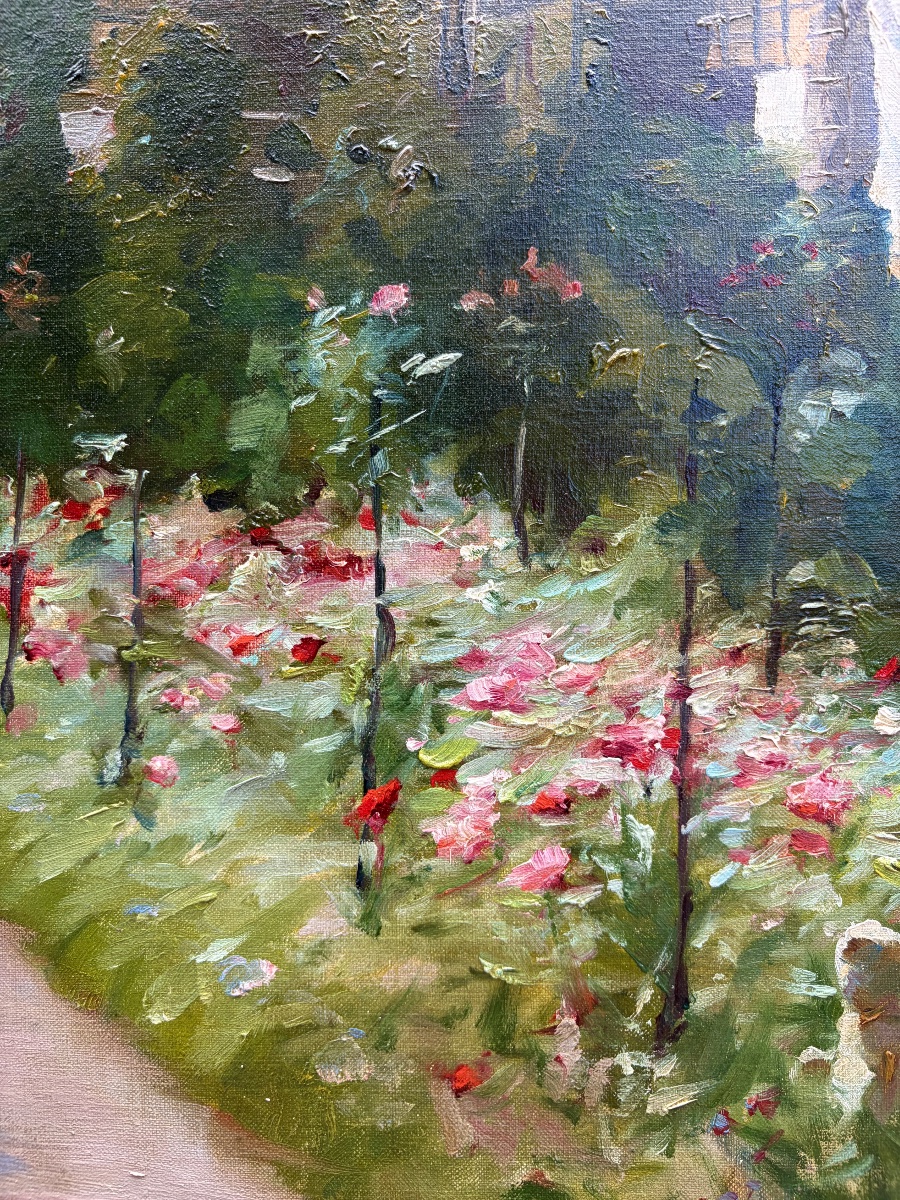
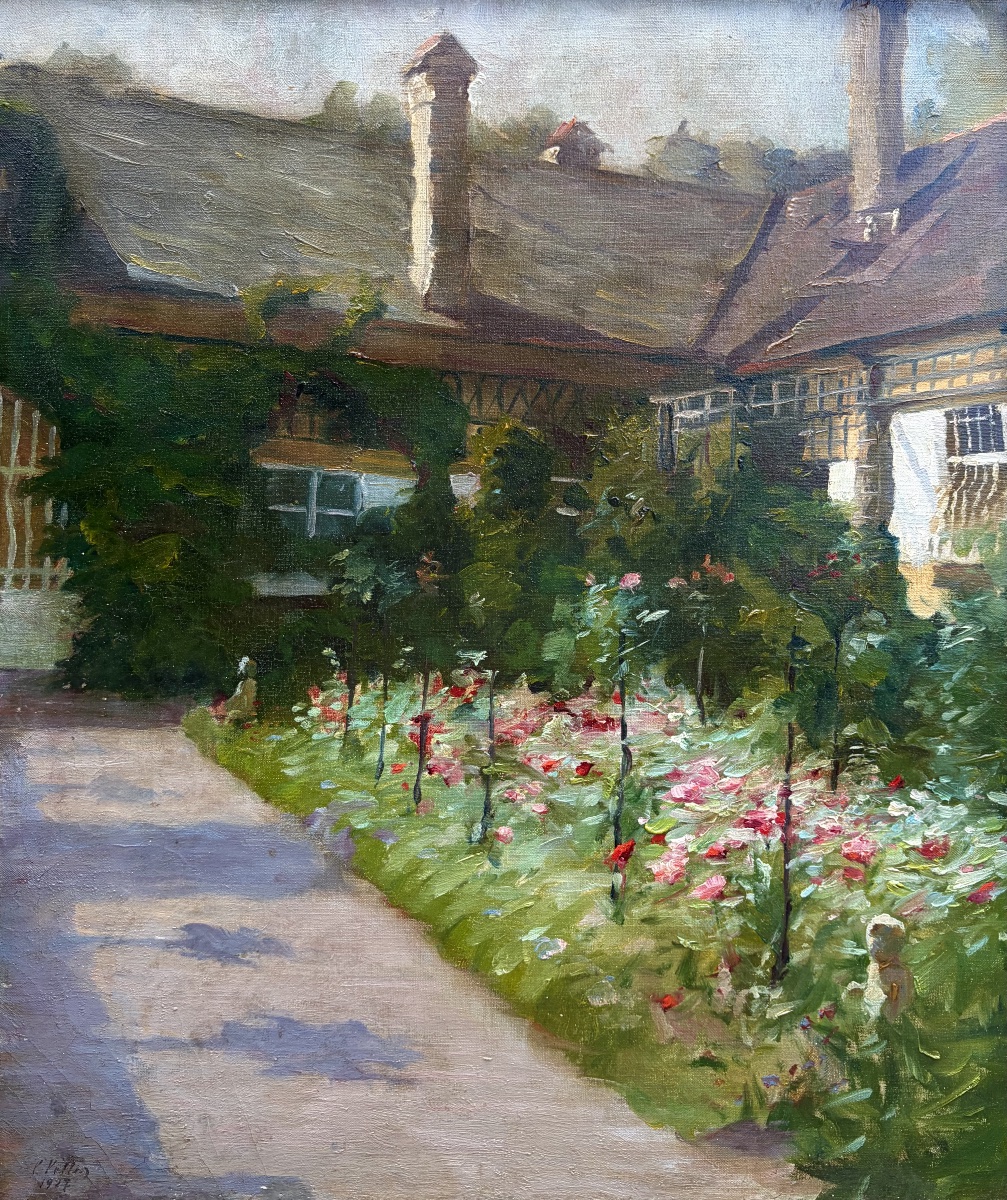
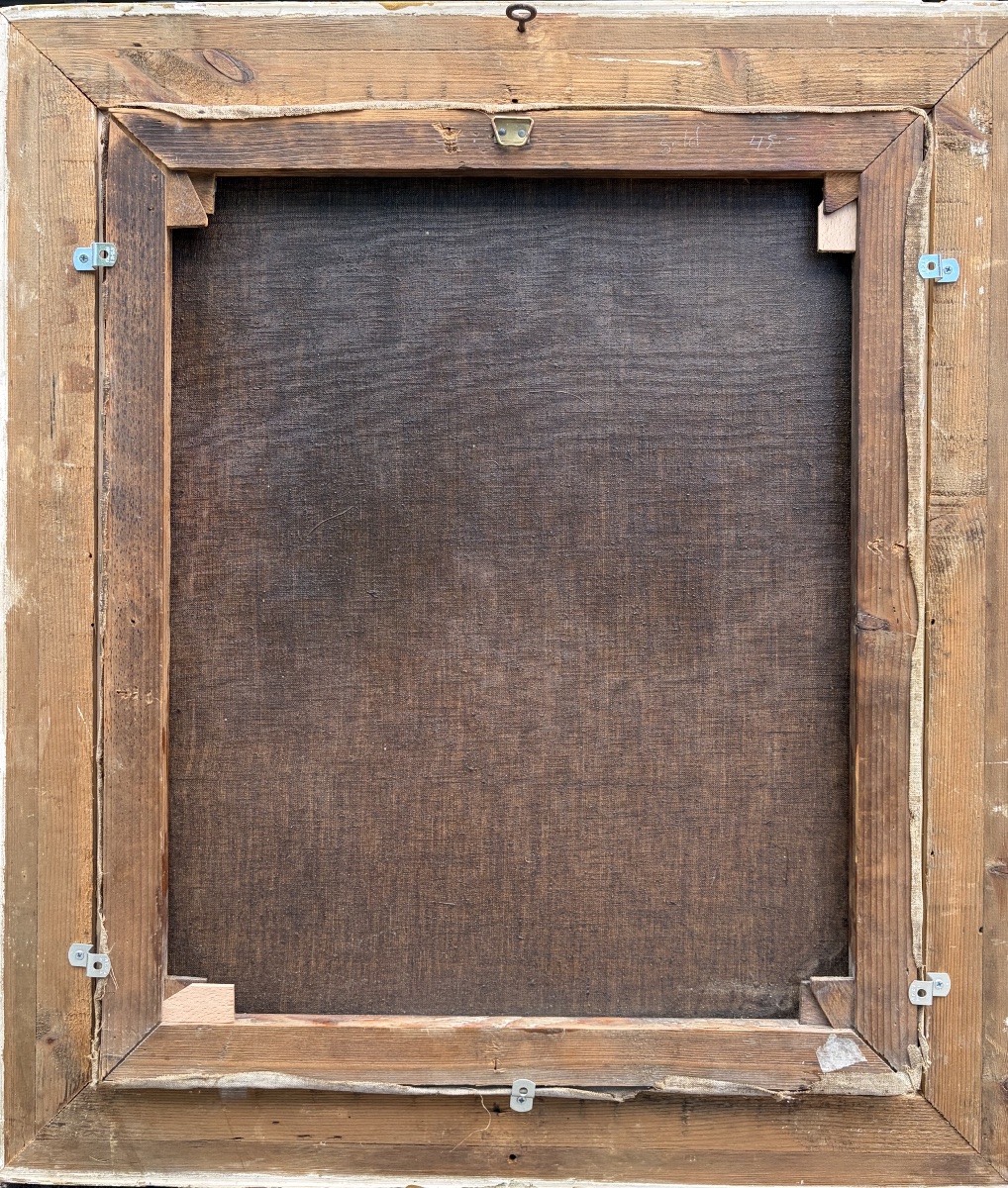
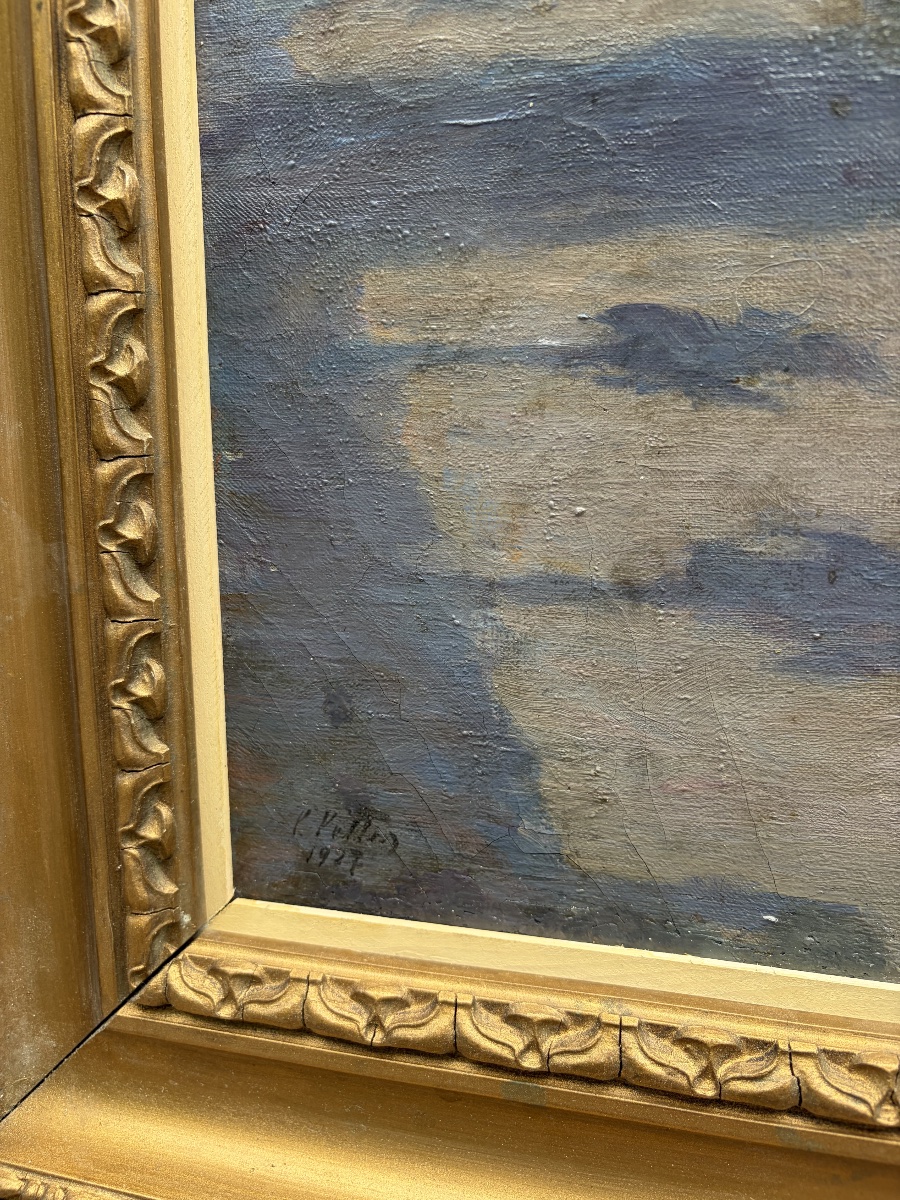
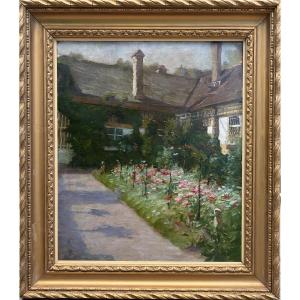


Charles Vetter (1858–1941) Spring Day
Artist: Charles Vetter (1858 Kahlstädt –1941 Munich)
Charles Vetter (May 1, 1858 – March 21, 1941) was a German Impressionist painter and draftsman, best known for his atmospheric depictions of the streets, squares, and everyday life in Munich. Through his sensitive treatment of light, weather conditions, and the changing seasons, he became one of the leading chroniclers of Munich in the late 19th and early 20th centuries.
Born in Kahlstädt (now Węglewo, Poland), then in the Province of Posen, Vetter spent his childhood in East Prussia before moving to Munich in 1881 to study at the Royal Academy of Fine Arts. There he studied under several eminent professors, including Alexander Strähuber, Alois Gabl, Johann Caspar Herterich, and Franz von Seitz, thereby acquiring a solid academic foundation that he later adapted to an increasingly Impressionist style.
After brief stays in Leipzig, Merseburg, and then Dachau, Vetter settled permanently in Munich, a city that became both his home and his primary source of artistic inspiration. His first major public success came in 1889, when he exhibited “A Religious Procession” (Eine Kirchenprocession) at the prestigious Glaspalast in Munich. He subsequently exhibited there regularly and became one of the founding members of the Munich Secession, an artists’ association created to promote progressive artistic ideals, independent of official academic institutions.
Vetter’s mature work focused on the city of Munich, which was then undergoing rapid modernization. Rather than focusing on major historical events or portraits, he captured the rhythm of everyday urban life: bustling marketplaces, elegant shopping streets, snow-covered rooftops, rain-soaked boulevards, and evening scenes lit by gas and electricity. His compositions often employ elevated viewpoints that transform crowds into dynamic patterns while highlighting the surrounding architecture. Around 1900, he also produced numerous charcoal and pastel drawings documenting the evolution of Munich’s urban landscape.
Born in Kahlstädt (now Węglewo, Poland), then in the Province of Posen, Vetter spent his childhood in East Prussia before moving to Munich in 1881 to study at the Royal Academy of Fine Arts. There he studied under several eminent professors, including Alexander Strähuber, Alois Gabl, Johann Caspar Herterich, and Franz von Seitz, thereby acquiring a solid academic foundation that he later adapted to an increasingly Impressionist style.
After brief stays in Leipzig, Merseburg, and then Dachau, Vetter settled permanently in Munich, a city that became both his home and his primary source of artistic inspiration. His first major public success came in 1889, when he exhibited “A Religious Procession” (Eine Kirchenprocession) at the prestigious Glaspalast in Munich. He subsequently exhibited there regularly and became one of the founding members of the Munich Secession, an artists’ association created to promote progressive artistic ideals, independent of official academic institutions.
Vetter’s mature work focused on the city of Munich, which was then undergoing rapid modernization. Rather than focusing on major historical events or portraits, he captured the rhythm of everyday urban life: bustling marketplaces, elegant shopping streets, snow-covered rooftops, rain-soaked boulevards, and evening scenes lit by gas and electricity. His compositions often employ elevated viewpoints that transform crowds into dynamic patterns while highlighting the surrounding architecture. Around 1900, he also produced numerous charcoal and pastel drawings documenting the evolution of Munich’s urban landscape.
2 300 €
Period: 19th century
Style: Art Deco
Condition: Excellent condition
Material: Oil painting
Length: 45 cm
Width: 55 cm
Reference (ID): 1803254
Availability: In stock
Print