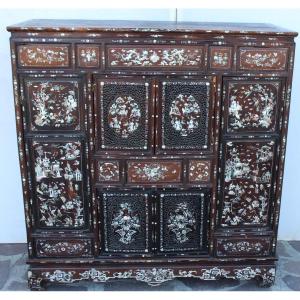
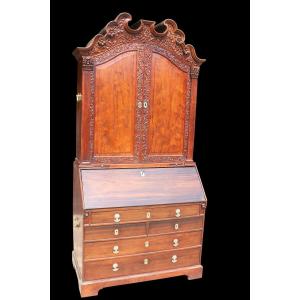


Chinese Huanghuali Bureau Bookcase, Guangzhou Late 18th Century.
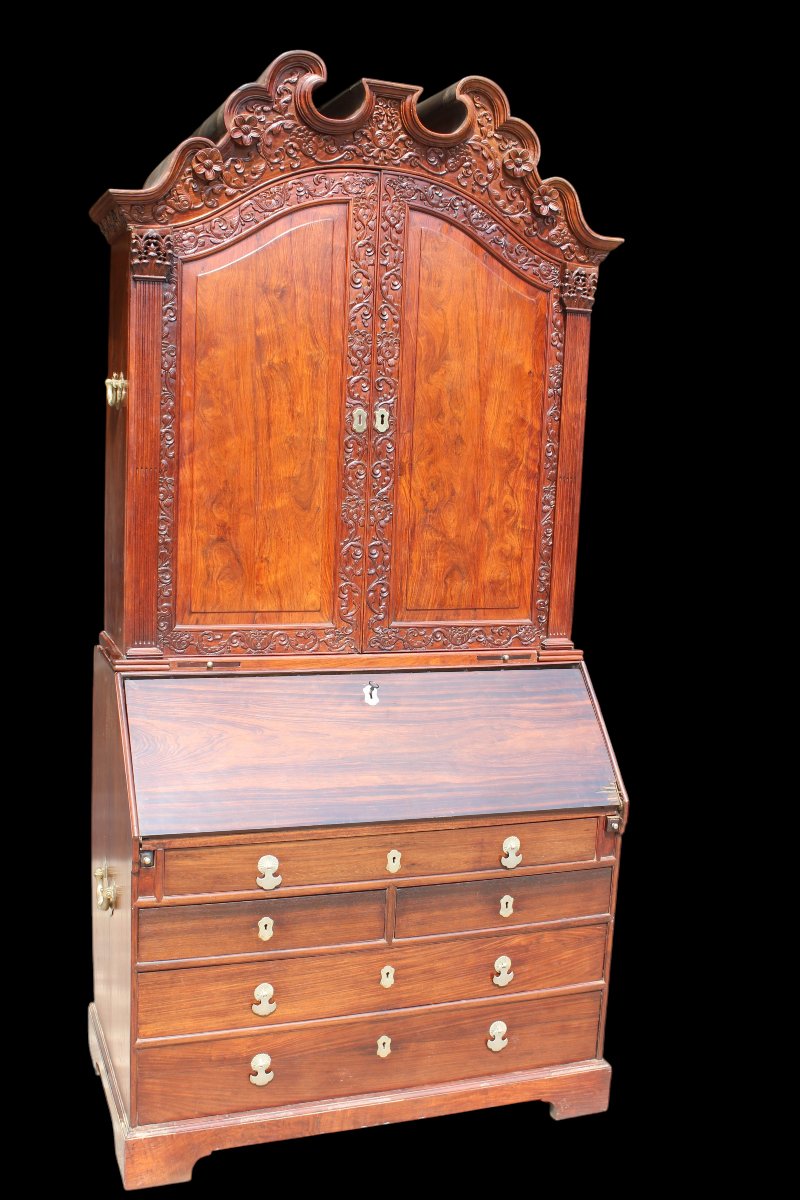
RARE CHINESE BUREAU DISPLAY CABINET , OF HUANGHUALI AND HARDWOOD, CRAFTED BY CHINESE CABINETMAKERS IN GUANGZHOU TOWARD THE END OF THE 18TH CENTURY.
This type of furniture was produced in Guangzhou, China, where artisanal production for the Western market flourished in the 18th and 19th centuries, primarily for the famous porcelain, but also for furniture, silverware, and other objects.
English-style furniture was crafted from fine Chinese woods (huanghuali and hardwoods) using techniques and processes typical of Qing Dynasty cabinetmaking.
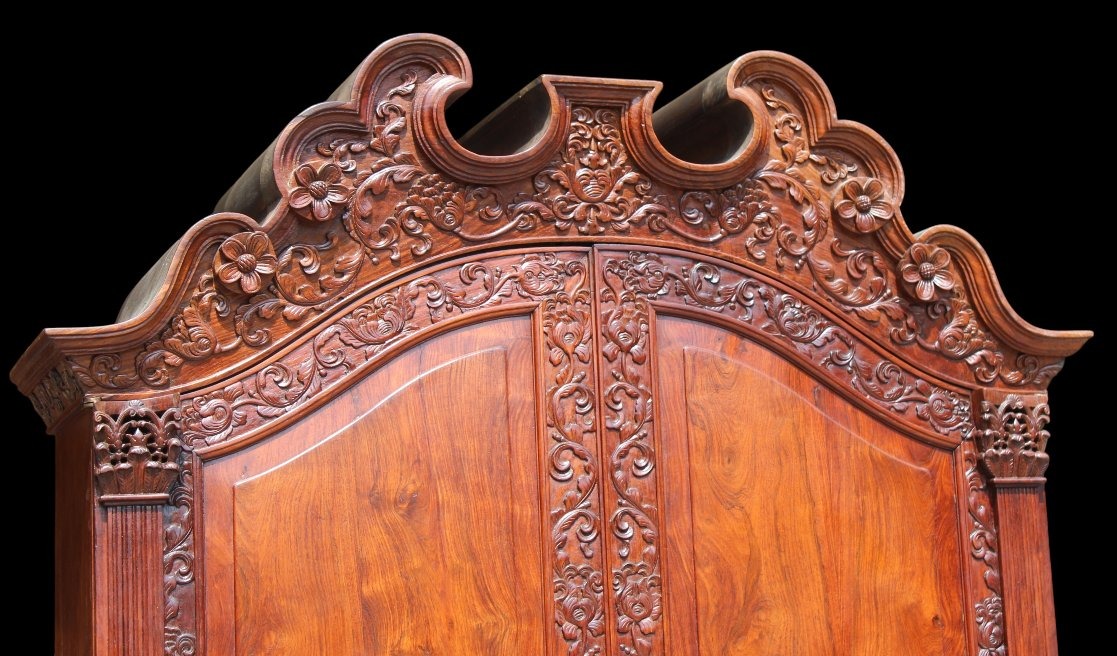
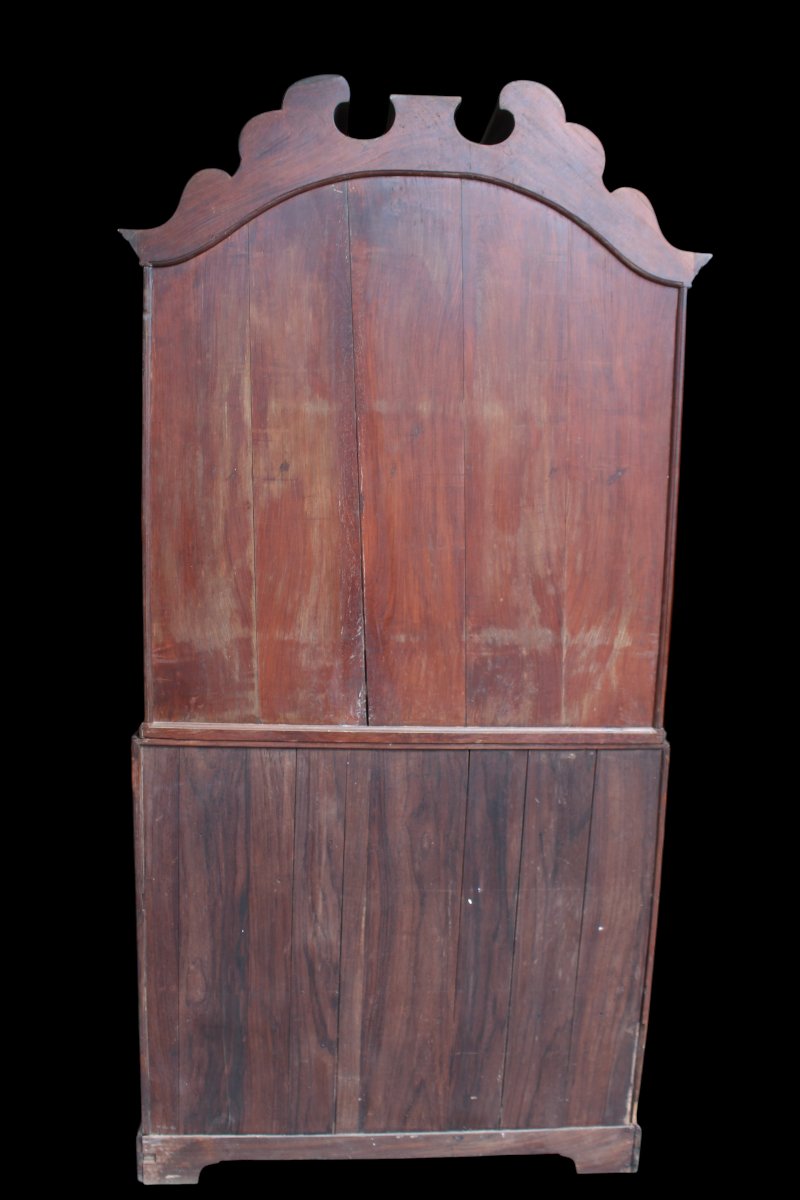
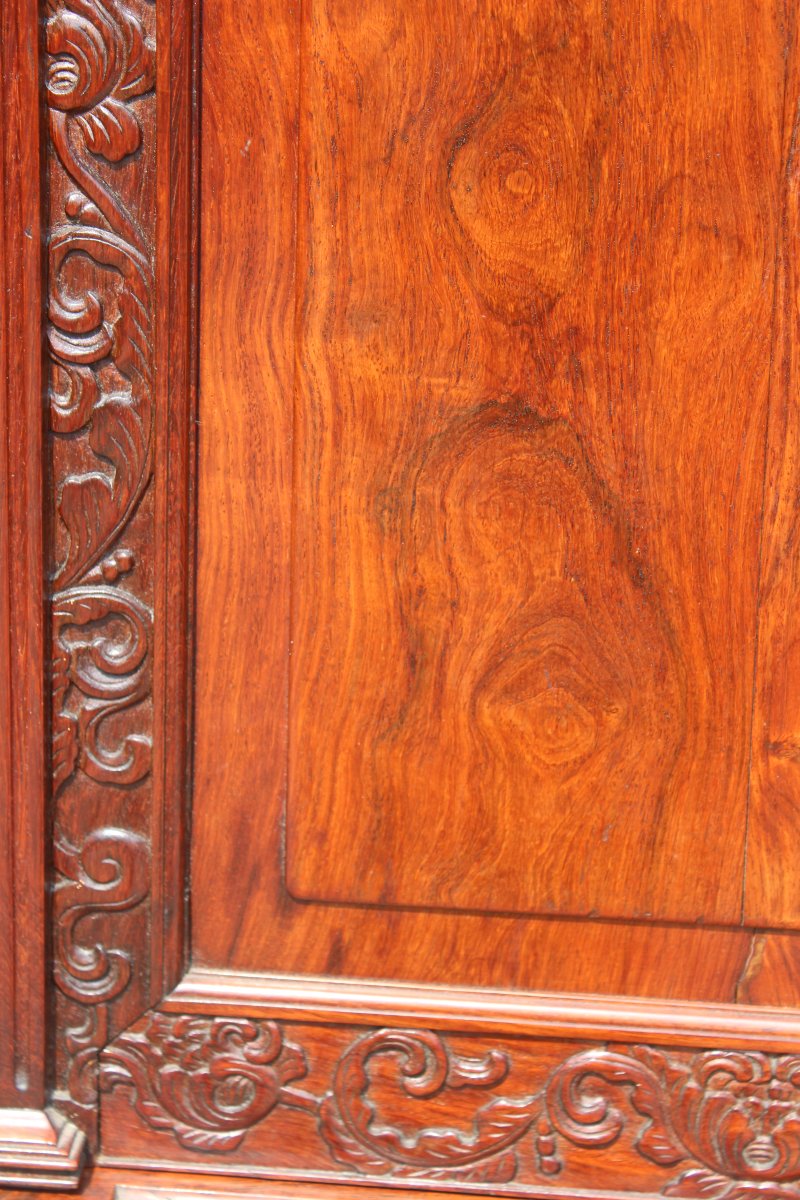
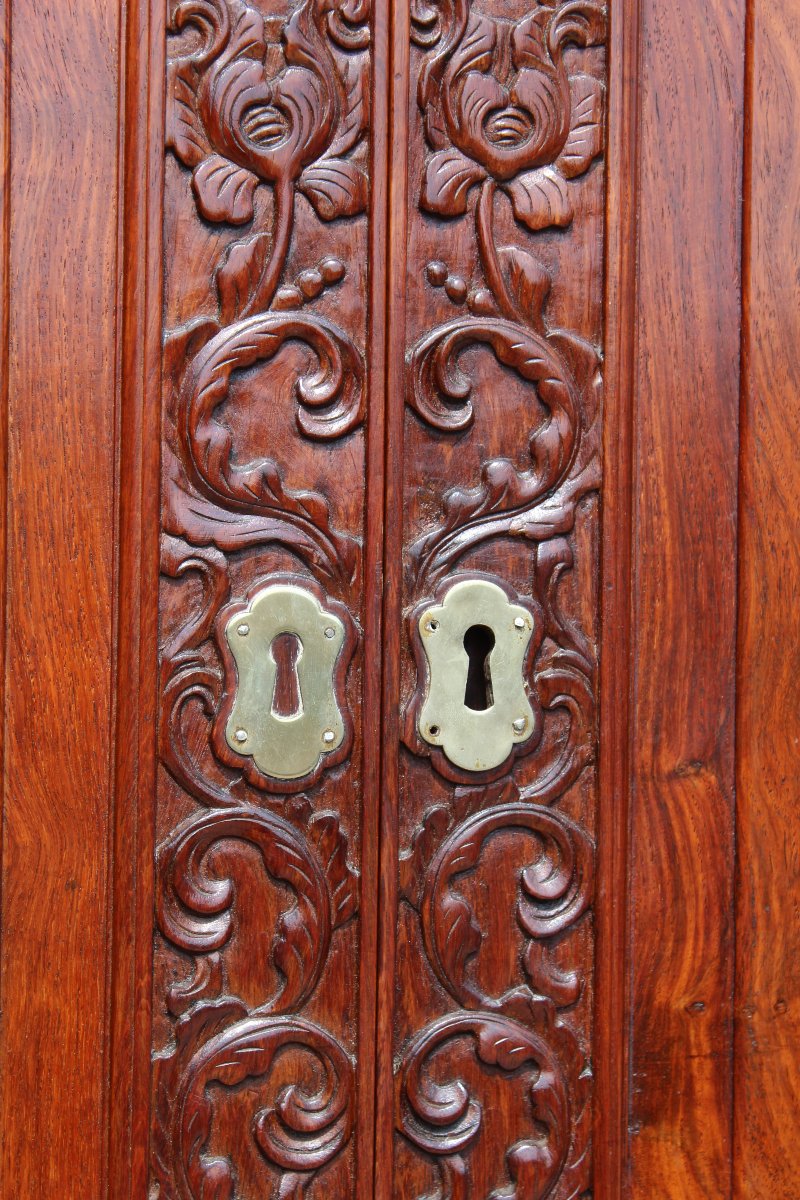
The upper section, made entirely of huanghuali wood (including the back panel), features two large doors whose panels are finely carved with floral motifs typical of the Qing Dynasty during the reign of Qianlong.
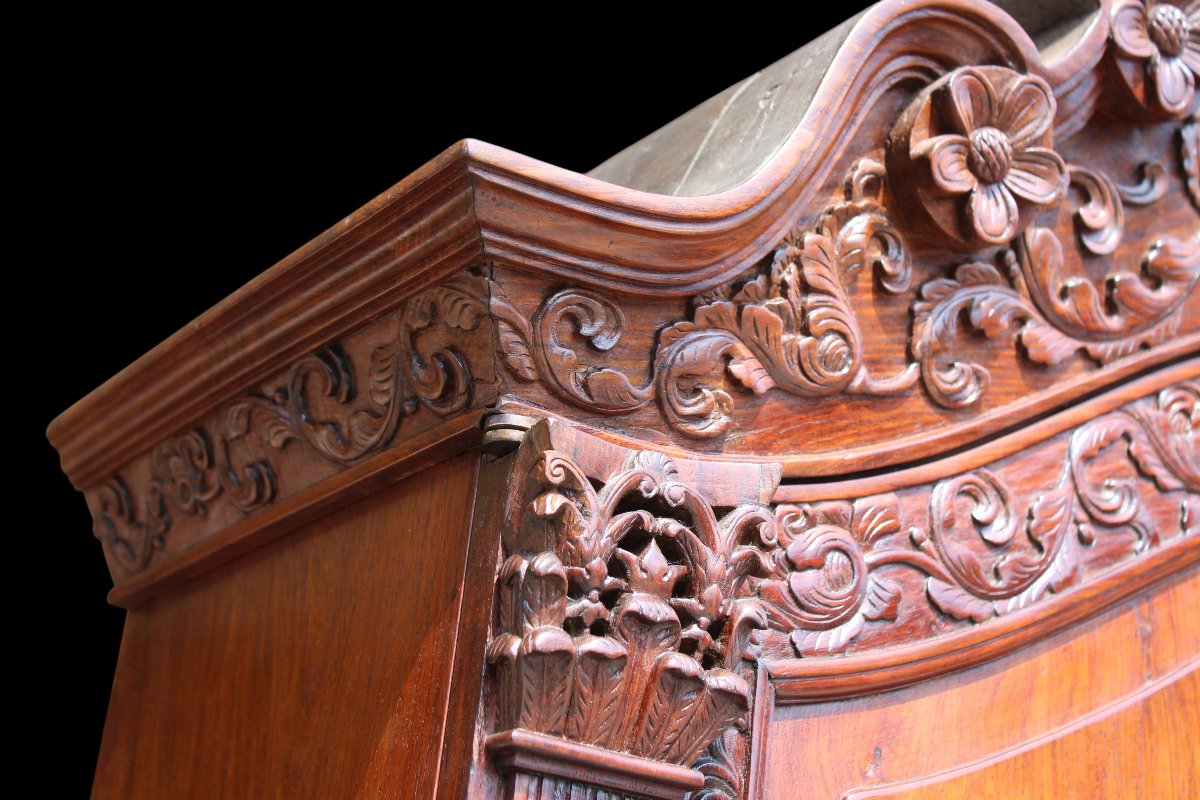
At the outer ends are two tapered pilasters, surmounted by Chinese-style carved capitals in the English George III style.
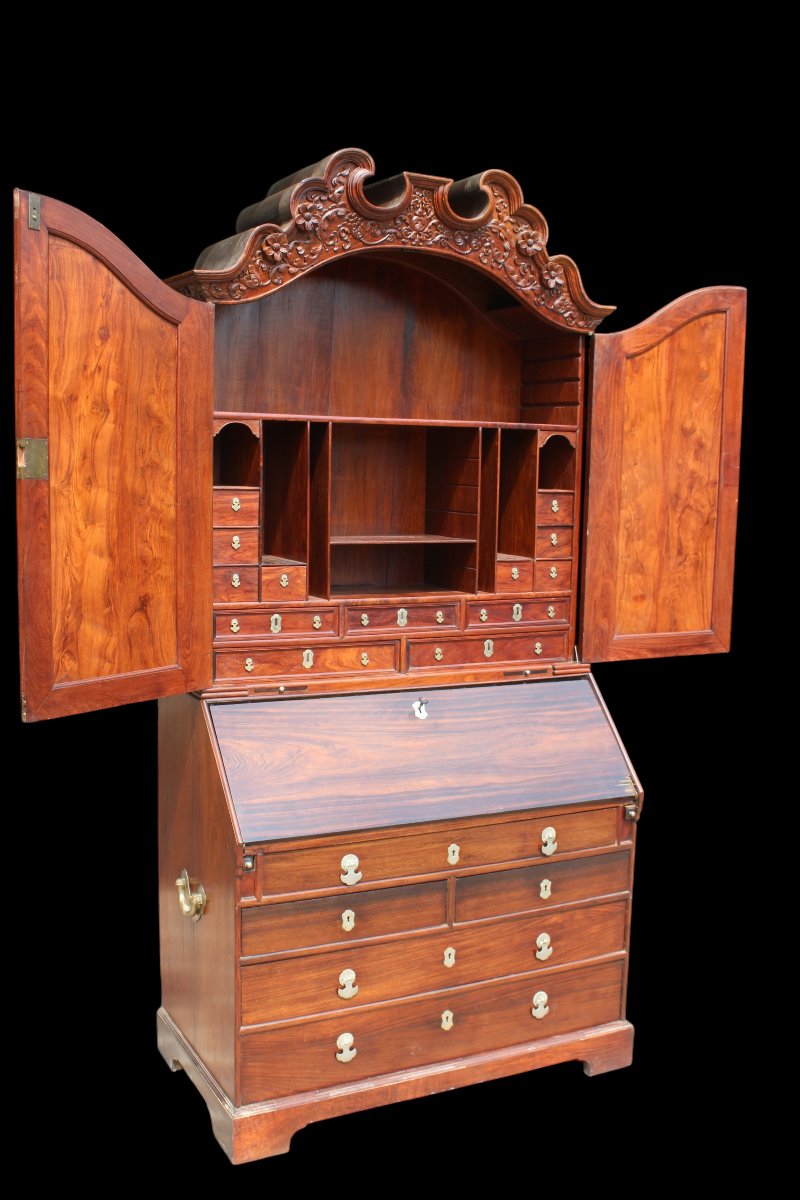
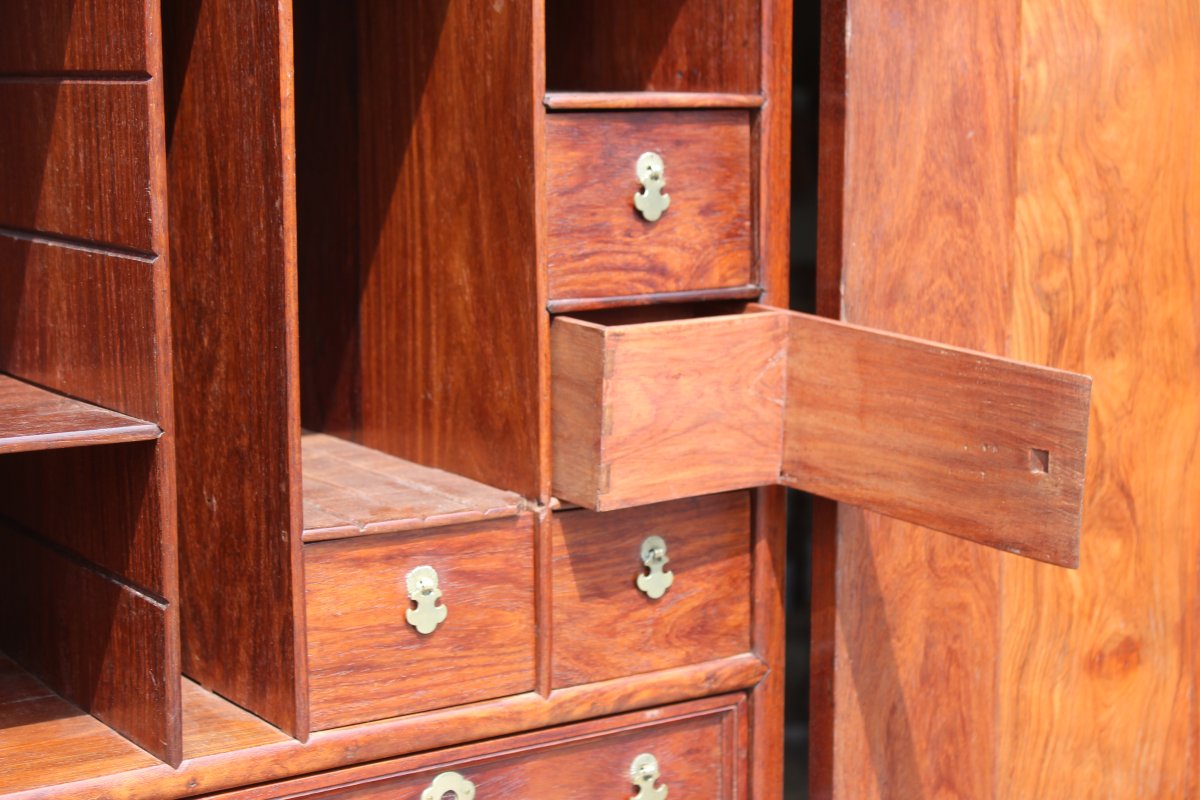
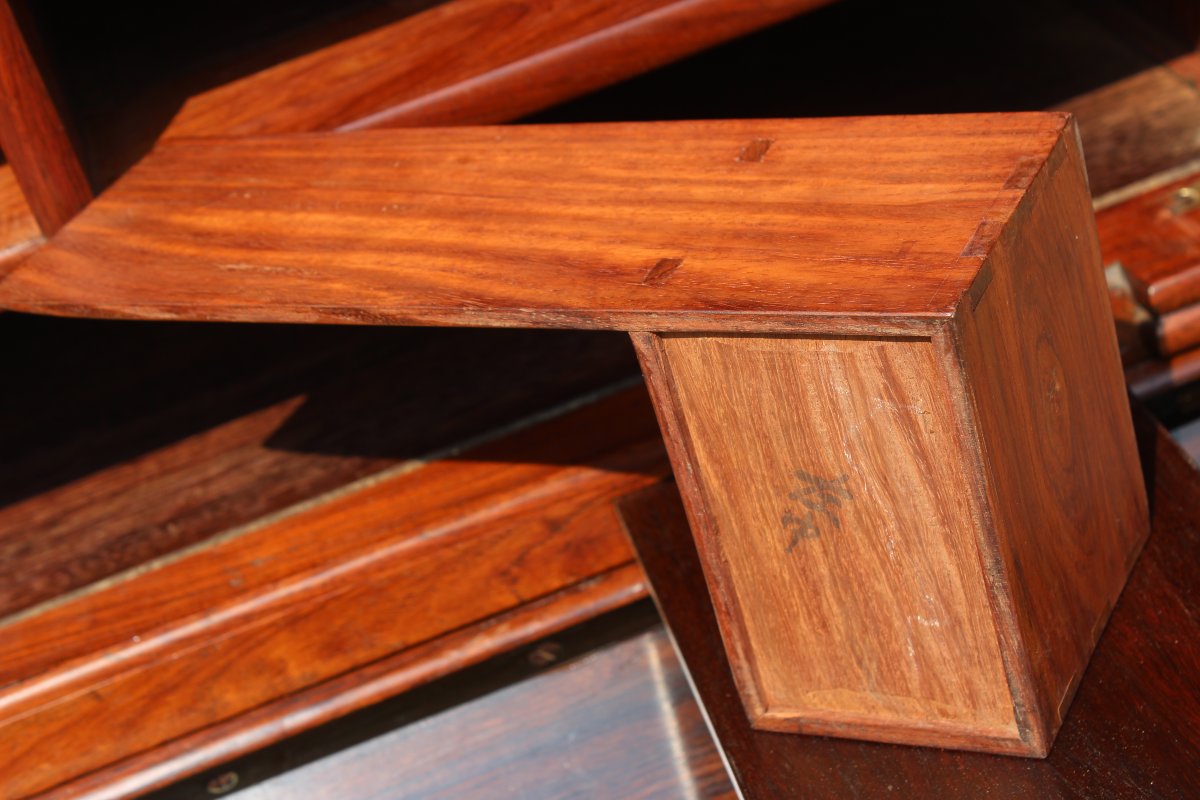
Inside are several compartments and drawers (many of which bear Chinese characters on the bottom) containing additional secret compartments.
The upper scroll-shaped frame is finely carved with floral decorations typical of the Qianlong period.
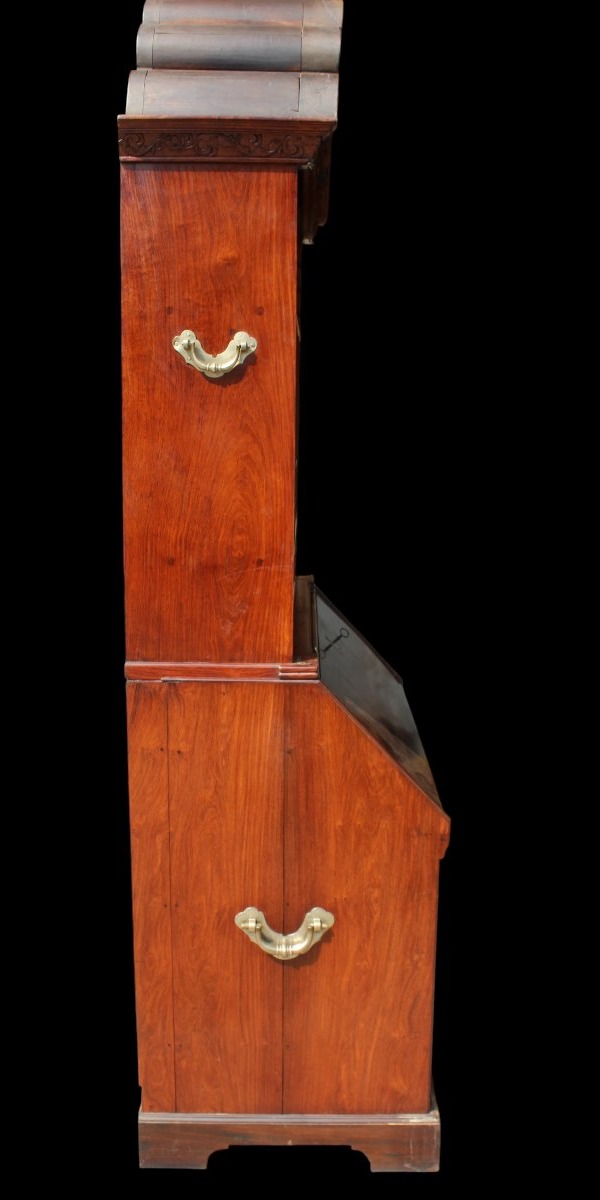
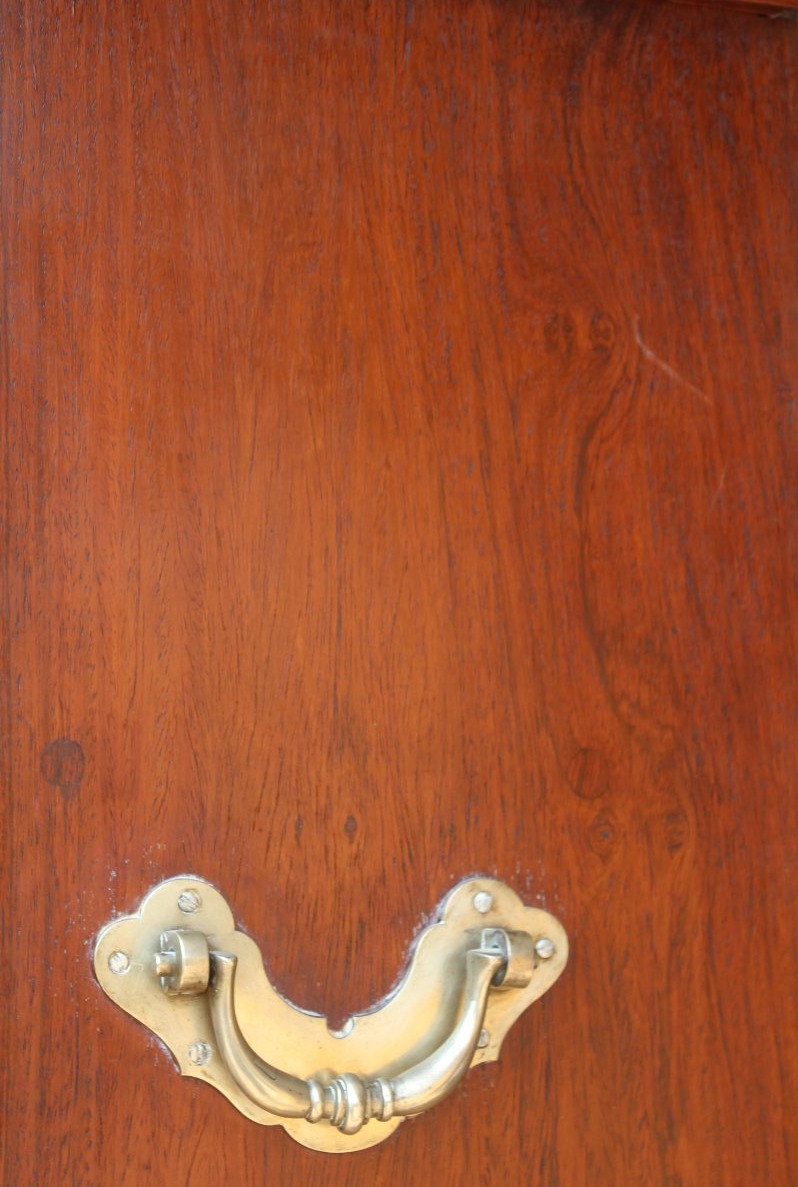
On the sides are two large handles made of Paktong (a Chinese metal alloy).
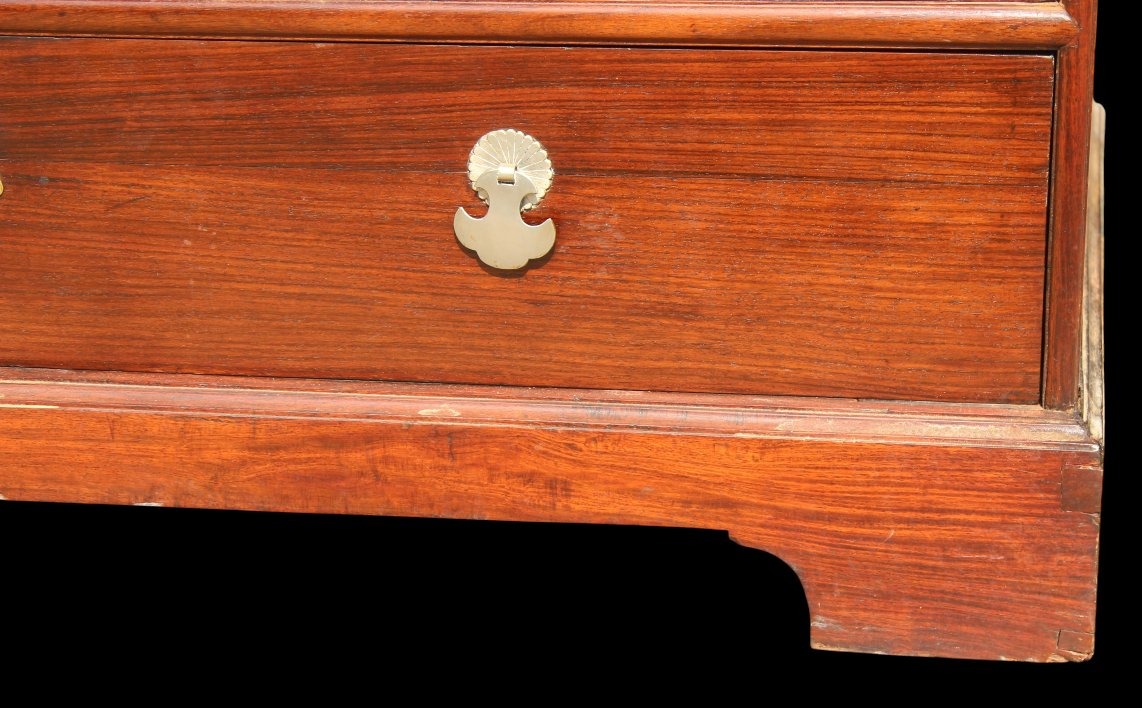
The lower section features five drawers and a drop-down door.
Inside are several drawers (some with hidden compartments) and various other compartments.
The drawers, doors, and interior are made of hardwood, while the two side panels are entirely of Huanghuali.
The metal fittings (handles, plates, pendants, etc.) are made of Paktong, a specific Chinese alloy of copper, nickel, and zinc, with a color similar to silver.
The drop-down door with raised panel is in good overall condition, considering its age.
It has some missing parts and cracks.
18th- and 19th-century Huanghuali furniture made for export is preserved in several museums and major collections in China and Hong Kong.
A similar piece was sold at auction by Doyle Auctions in the United States for $60,800 on March 20, 2024.
This type of furniture was produced in Guangzhou, China, where artisanal production for the Western market flourished in the 18th and 19th centuries, primarily for the famous porcelain, but also for furniture, silverware, and other objects.
English-style furniture was crafted from fine Chinese woods (huanghuali and hardwoods) using techniques and processes typical of Qing Dynasty cabinetmaking.
The upper section, made entirely of huanghuali wood (including the back panel), features two large doors whose panels are finely carved with floral motifs typical of the Qing Dynasty during the reign of Qianlong.
At the outer ends are two tapered pilasters, surmounted by Chinese-style carved capitals in the English George III style.
Inside are several compartments and drawers (many of which bear Chinese characters on the bottom) containing additional secret compartments.
The upper scroll-shaped frame is finely carved with floral decorations typical of the Qianlong period.
On the sides are two large handles made of Paktong (a Chinese metal alloy).
The lower section features five drawers and a drop-down door.
Inside are several drawers (some with hidden compartments) and various other compartments.
The drawers, doors, and interior are made of hardwood, while the two side panels are entirely of Huanghuali.
The metal fittings (handles, plates, pendants, etc.) are made of Paktong, a specific Chinese alloy of copper, nickel, and zinc, with a color similar to silver.
The drop-down door with raised panel is in good overall condition, considering its age.
It has some missing parts and cracks.
18th- and 19th-century Huanghuali furniture made for export is preserved in several museums and major collections in China and Hong Kong.
A similar piece was sold at auction by Doyle Auctions in the United States for $60,800 on March 20, 2024.
26 000 €
Period: 18th century
Style: Asian art
Condition: Some scratches and chips
Material: Solid wood
Width: 113 cm
Height: 240 cm
Depth: 62 cm
Reference (ID): 1802949
Availability: In stock
Print