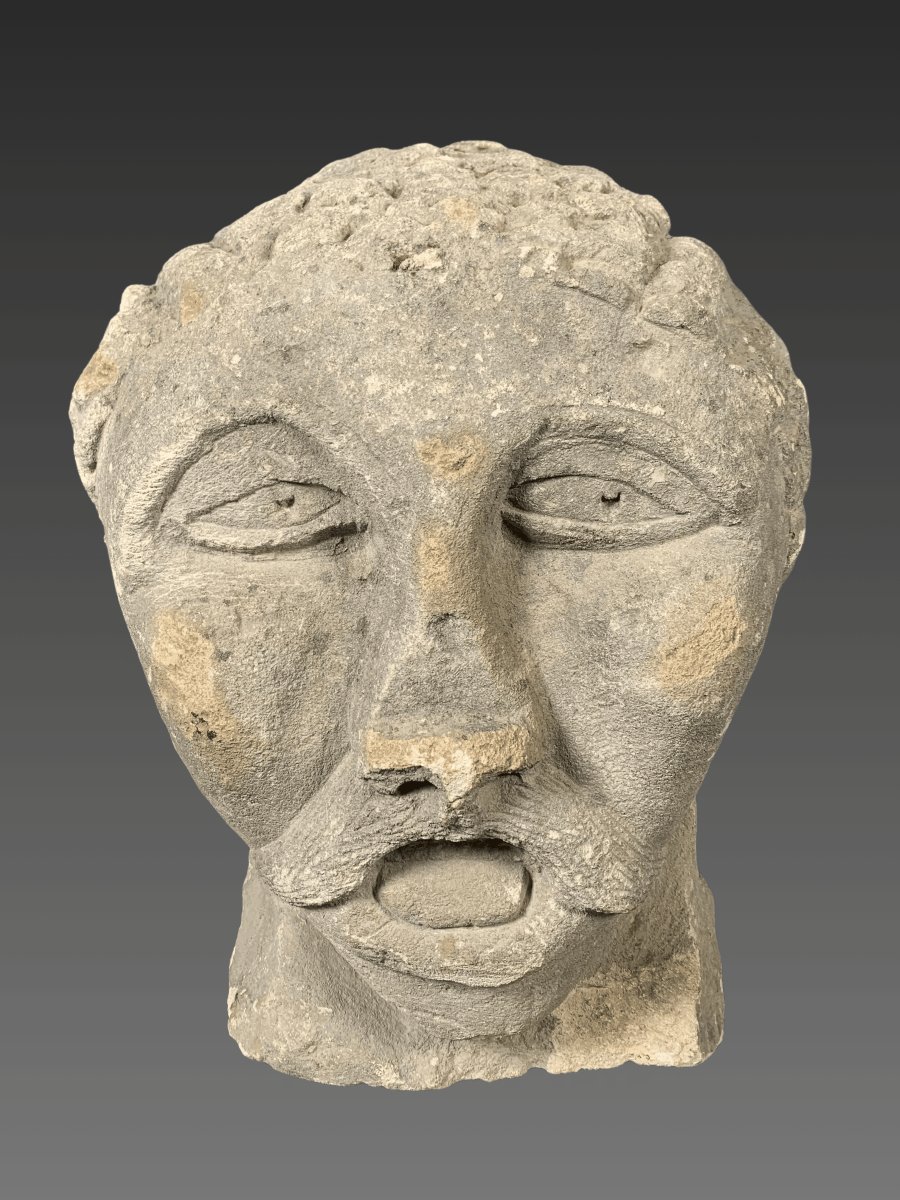
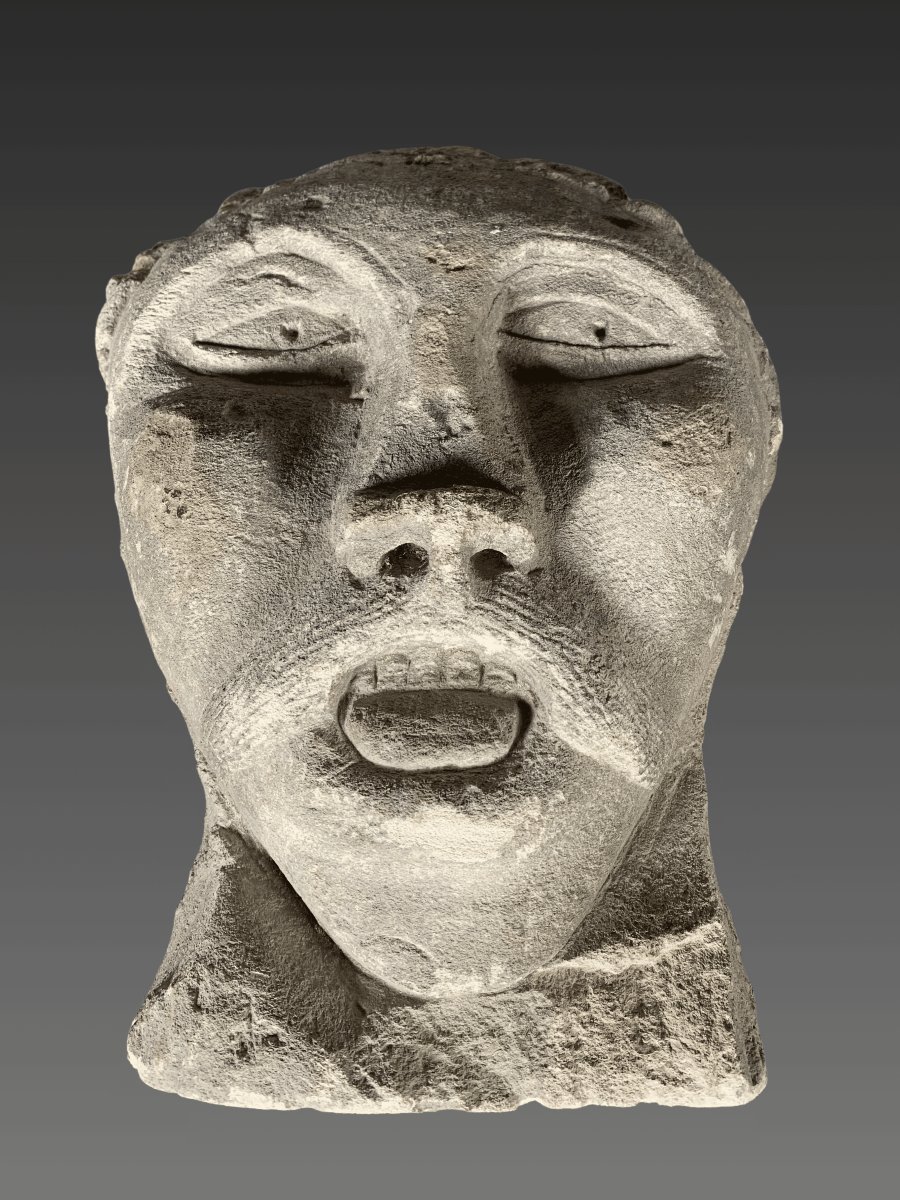


Gallic Sculpture: Celtic Votive Head In Limestone, 2nd–1st Century Bc, Archaeology
Late La Tène period / 2nd–1st century B.C.
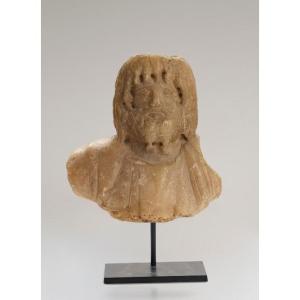
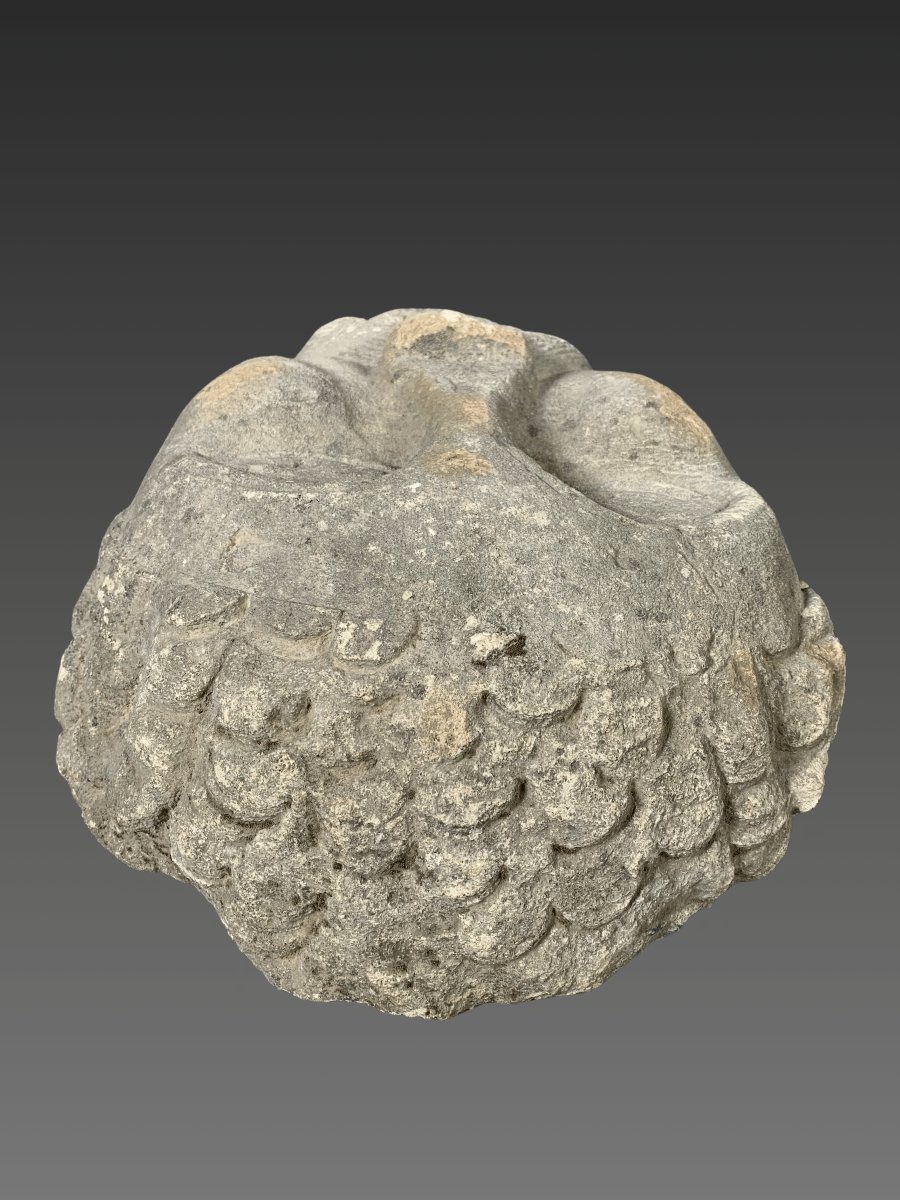
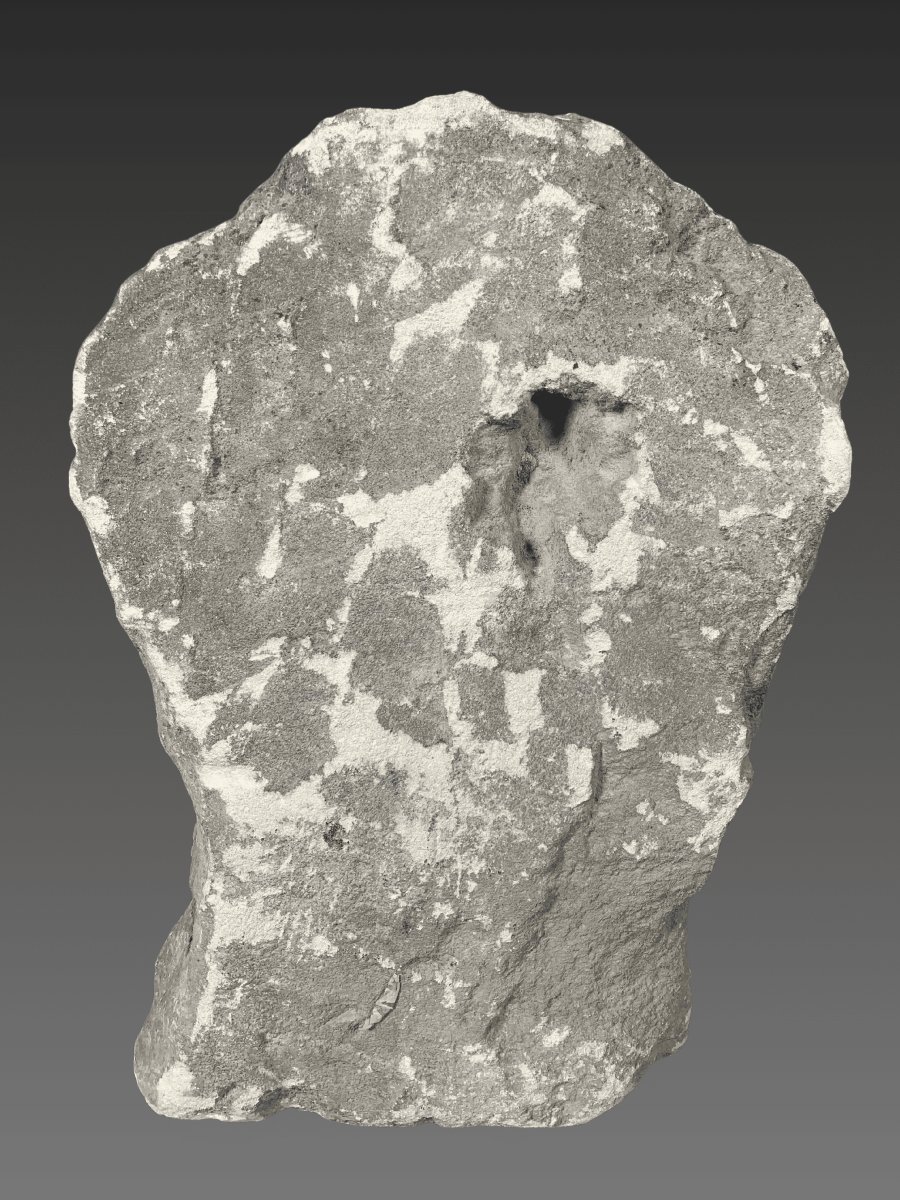
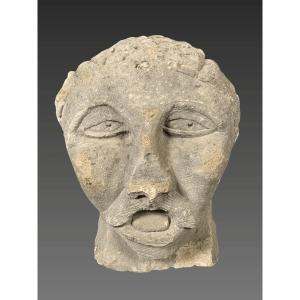
The face features a full, drooping mustache, very pronounced almond-shaped eyes, a prominent nose, and curly or braided hair. These characteristics form the stylistic stereotypes of depictions of Gallic warriors or high-ranking dignitaries.
The open mouth: This rare detail in Gallic sculptures is interpreted by archaeologists as either an expression of the breath of life, ritual speech or song, or a war cry.
The Symbolism of the Head Among the Celts: The severed or sculpted head held major symbolic and religious significance.
It was the seat of the soul.
The head was not considered a mere body part, but rather the receptacle of the individual’s life force, wisdom, memory, and spiritual power.
Depictions of ancestors or heroes: These sculptures often served as votive figures in sanctuaries (such as those discovered at Entremont or Roquepertuse in southern France) to honor a heroic chieftain, a deceased ancestor, or a protective deity.
A piece of this size (around 45–50 cm) was not a personal or decorative household object
It was incorporated into a stele, a sanctuary pillar, or an architectural niche at the entrance to a Gallic place of worship.
This type of work is all the more unique given that Celtic art was predominantly aniconic (avoiding direct human representation) until the end of the Iron Age, when Greco-Roman and Mediterranean influences fostered the emergence of life-size stone statuary.
Dimensions: 45 x 33 x 26 cm
Provenance: - French private collection, excavated in Belgium.
A certificate of authenticity will be provided to the buyer.
Taxes and customs duties are included in the shipping costs for international shipments
Period: Before 16th century
Style: Rome and Antic Greece
Condition: Excellent condition
Material: Stone
Reference (ID): 1801241
Availability: In stock