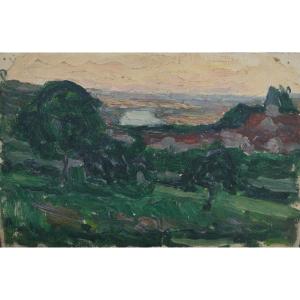
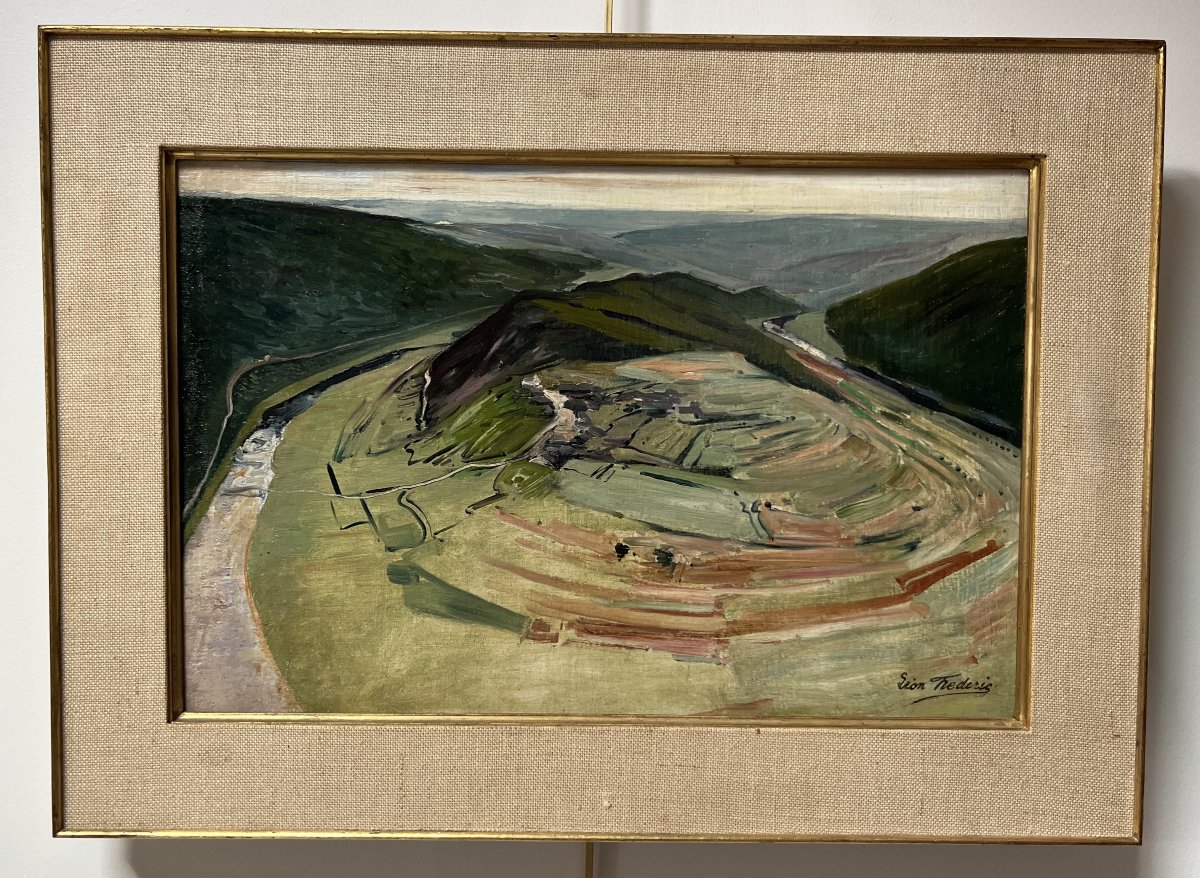
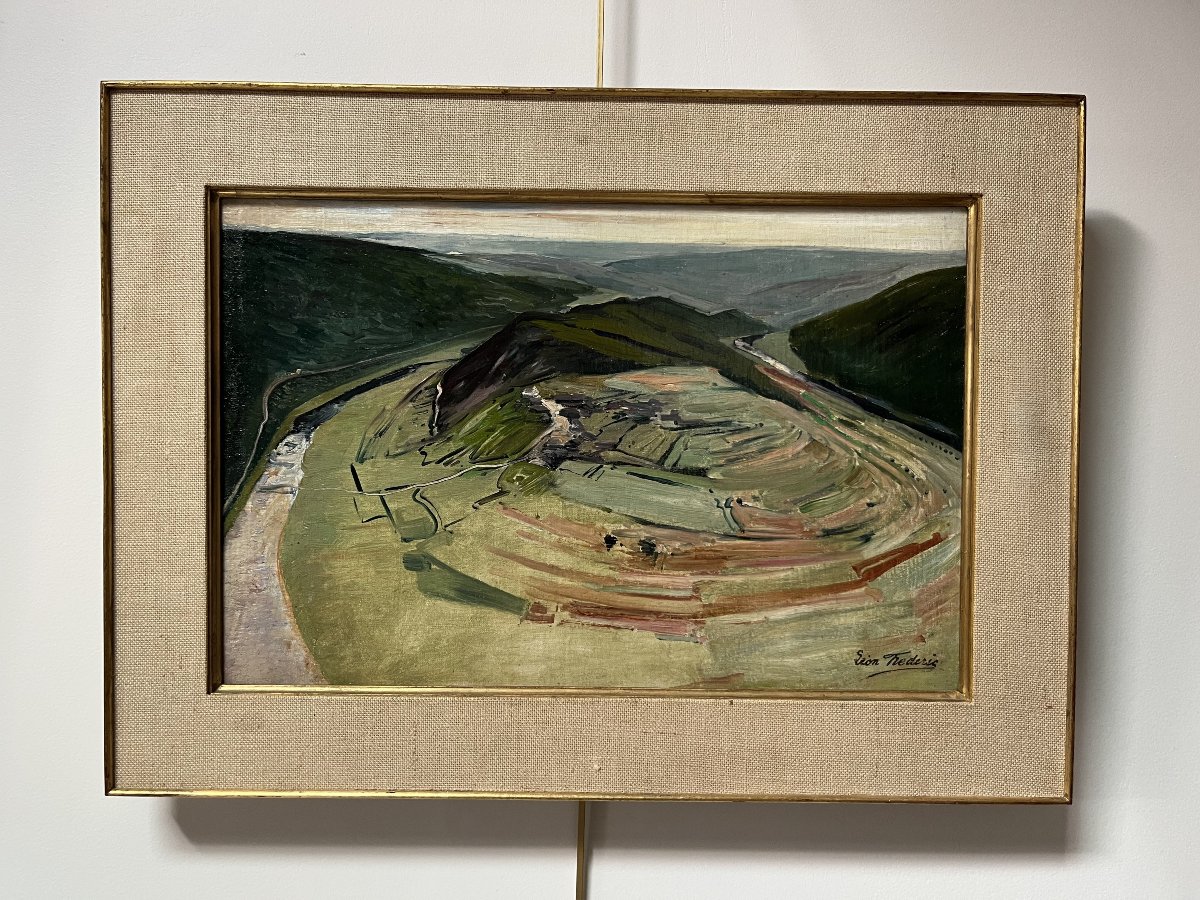
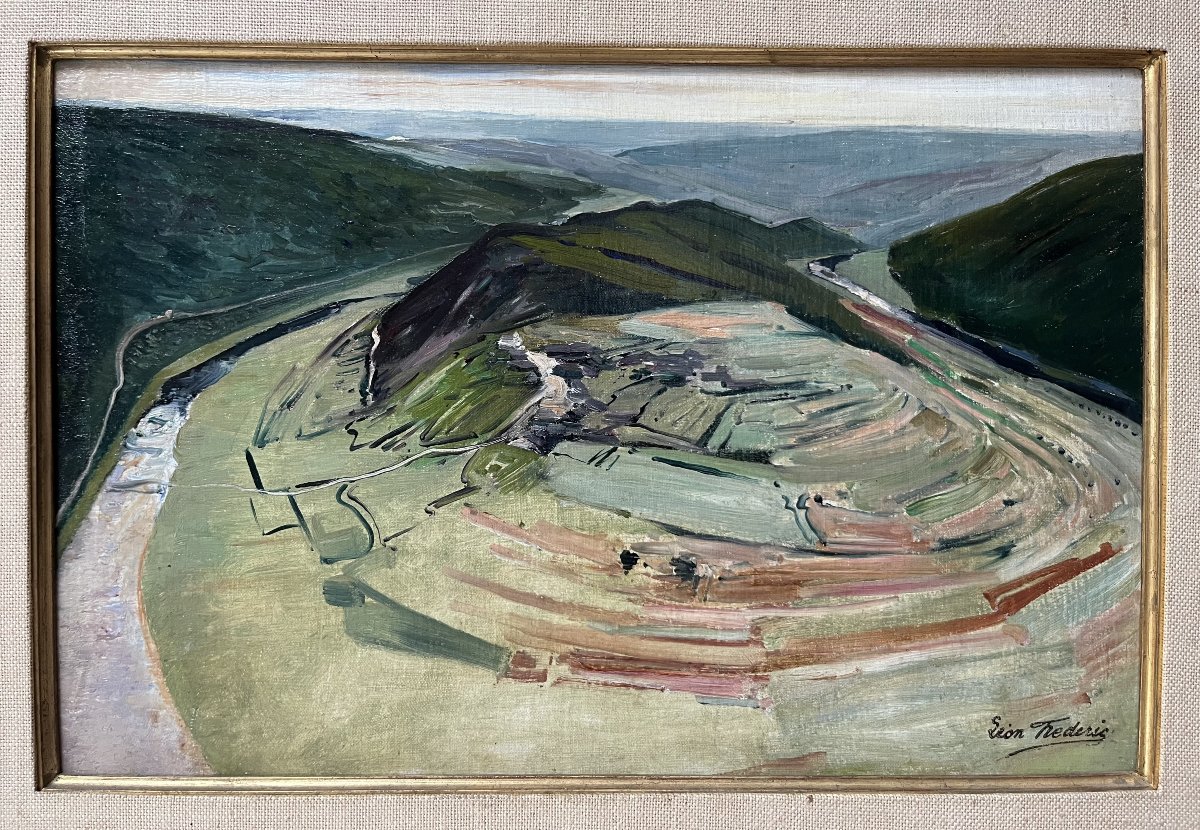
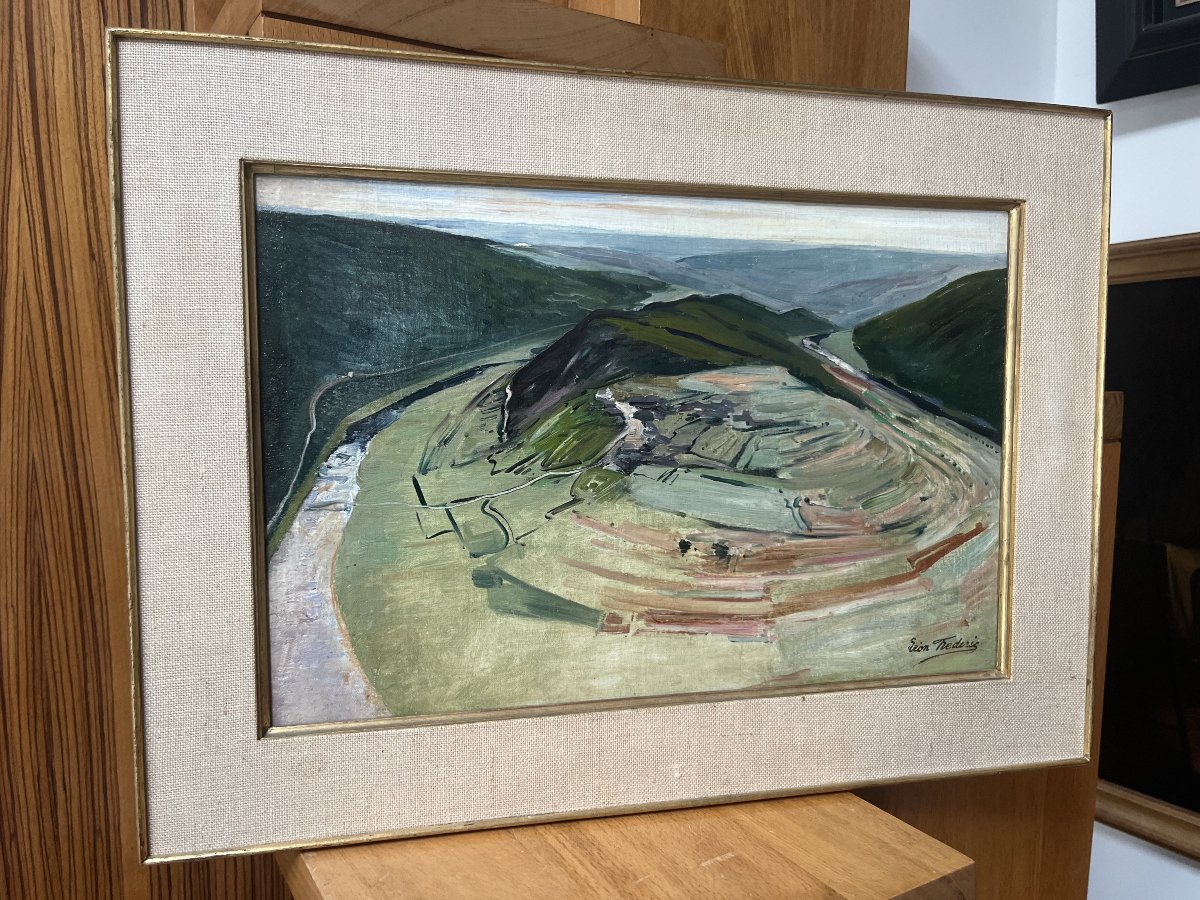
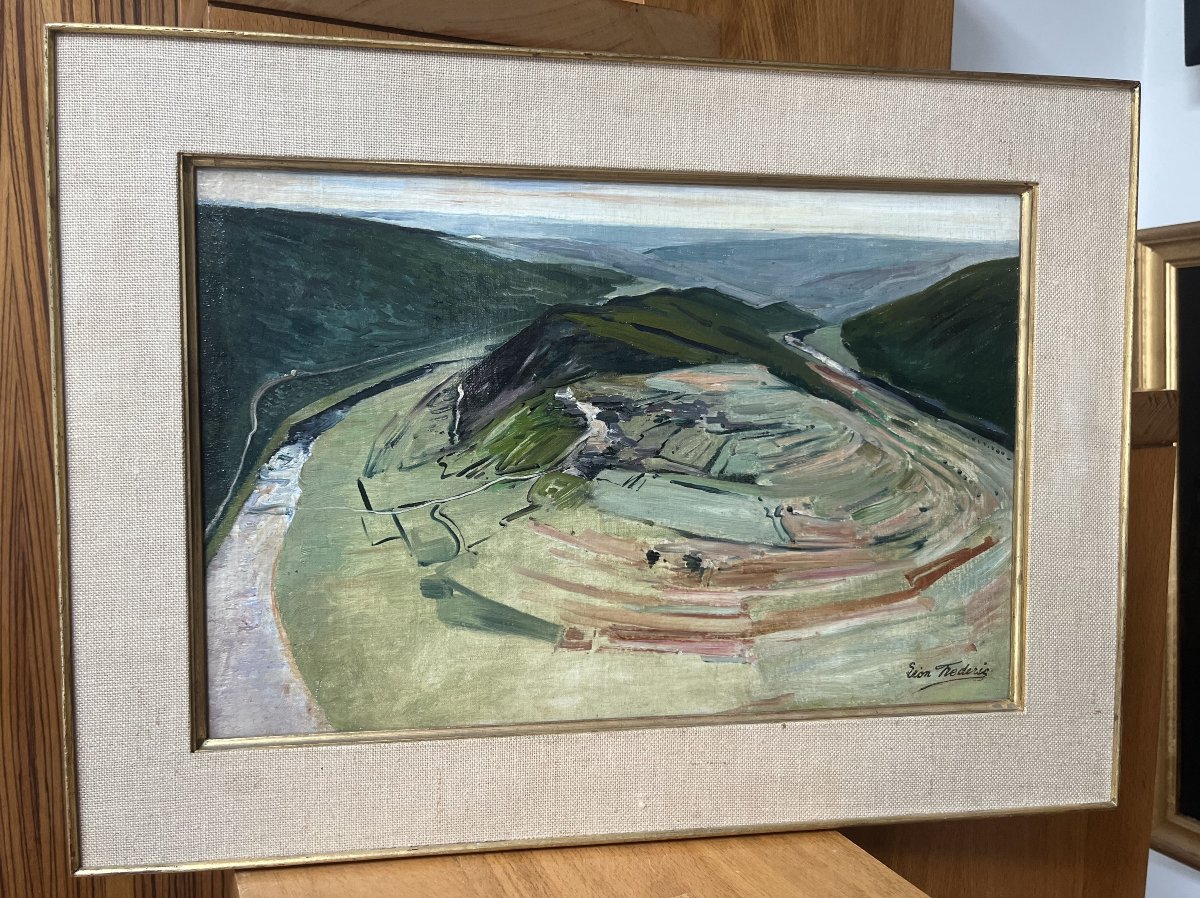


Léon Frédéric (1856–1940) *the Giant's Tomb*, Ca. 1910 Oil On Panel, Signed
Léon Frédéric (Brussels, 1856 –Schaerbeek, 1940)
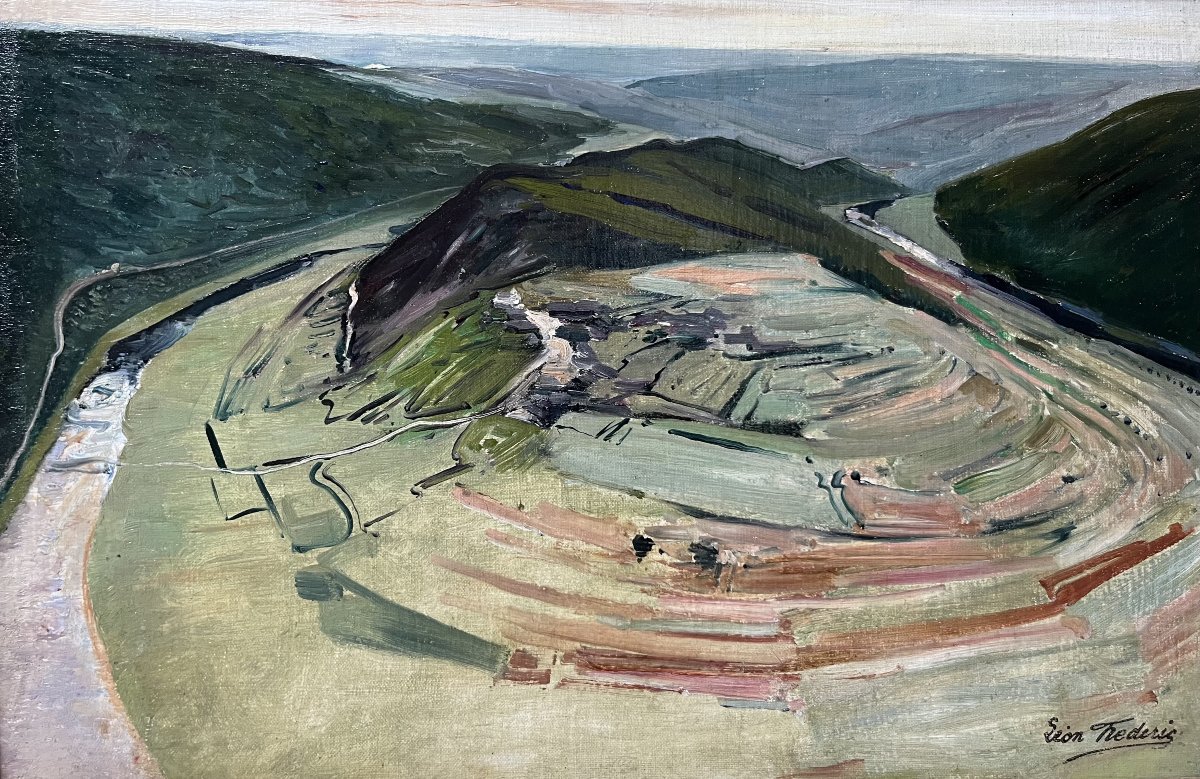
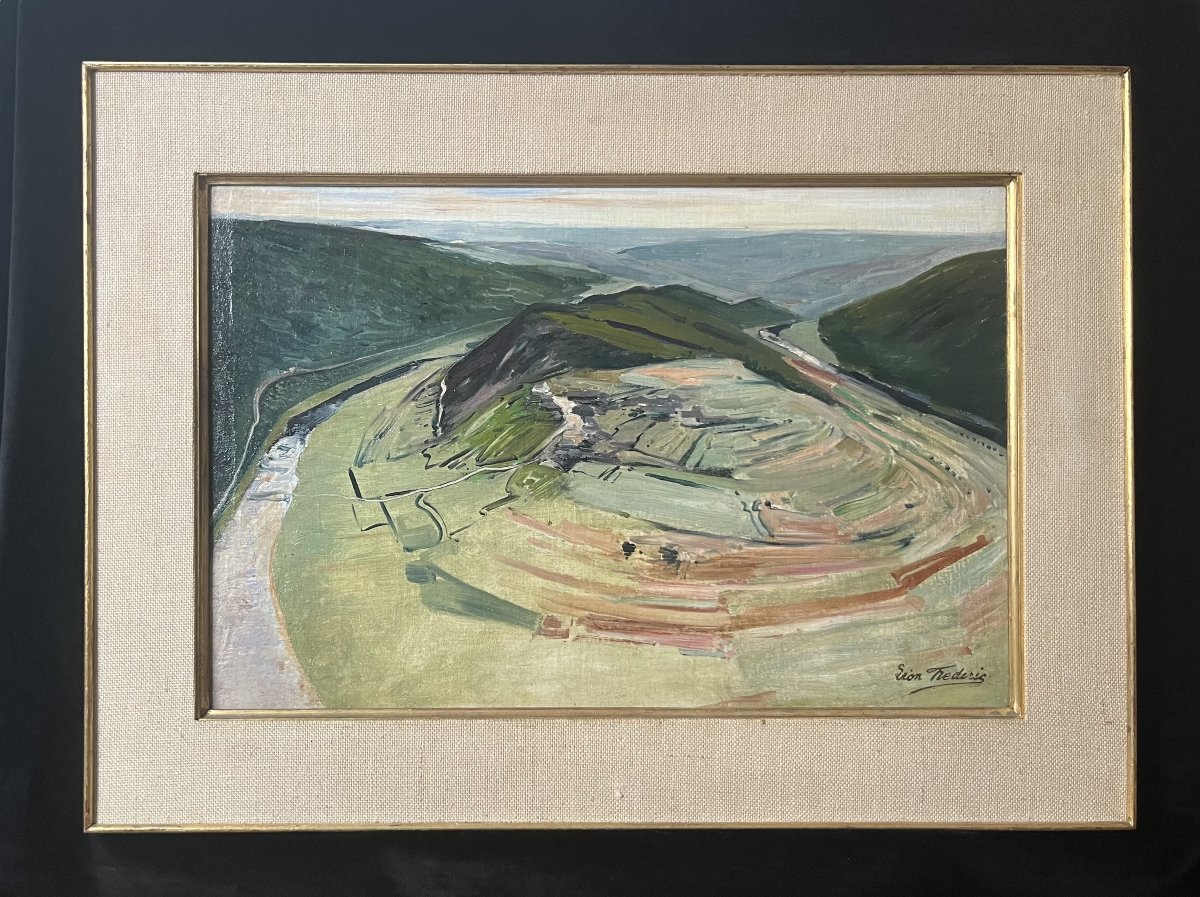
The Giant’s Tomb, ca. 1910
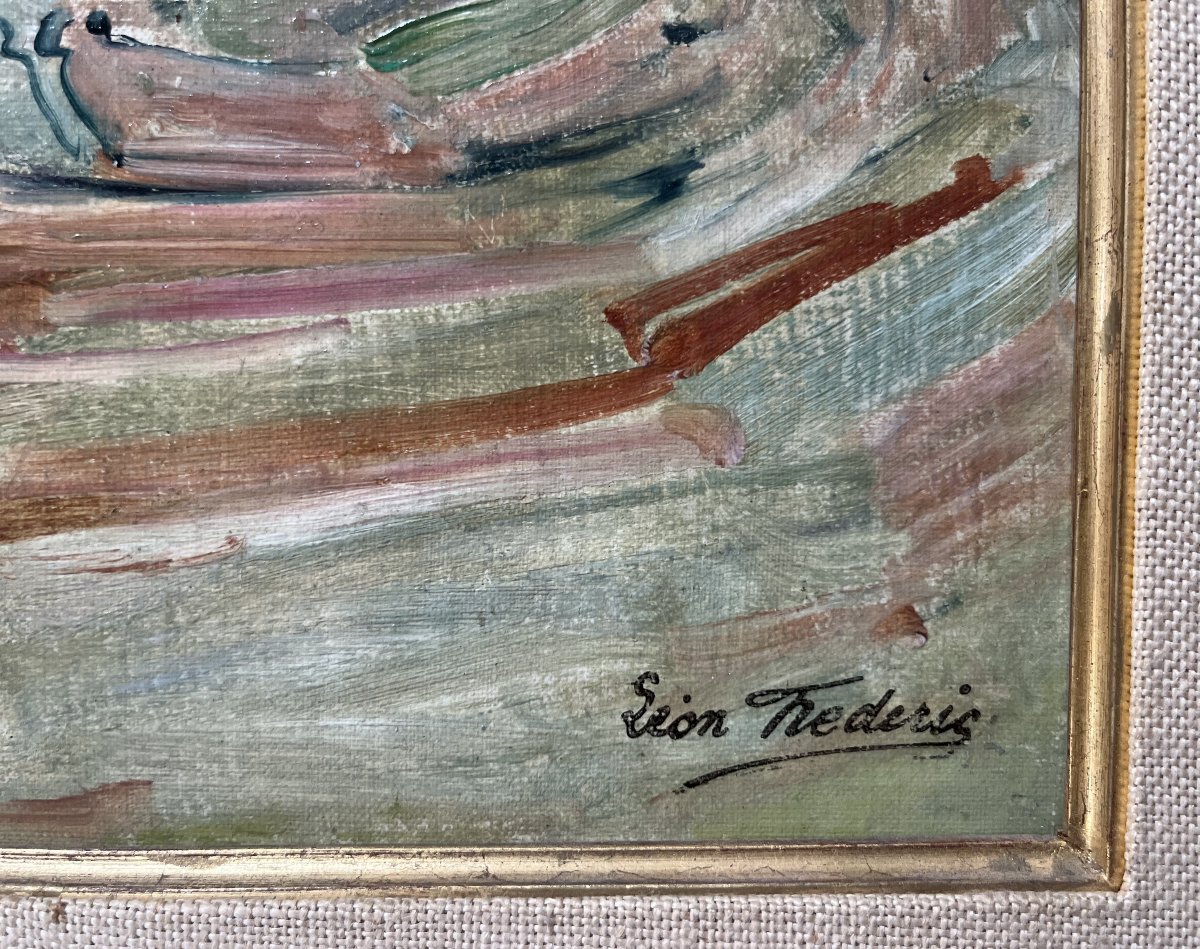
Signed lower right
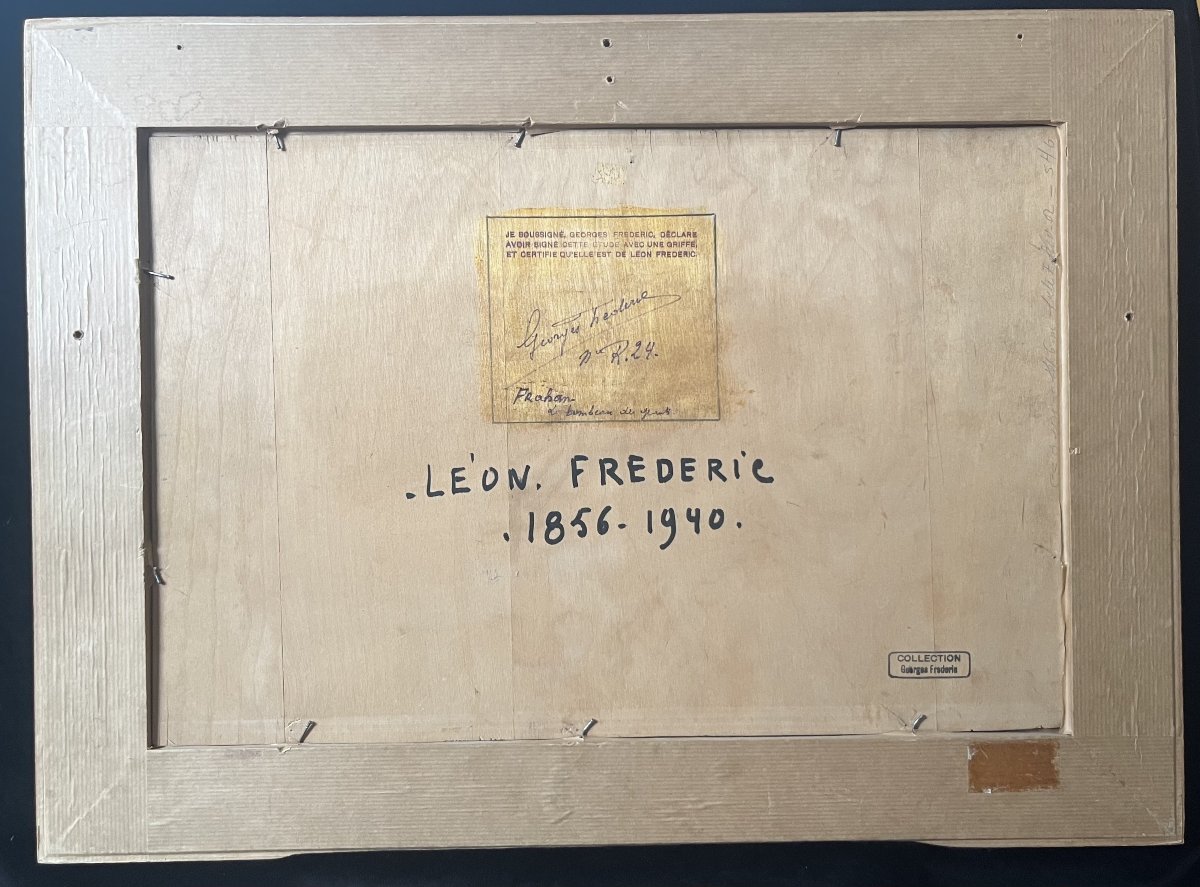
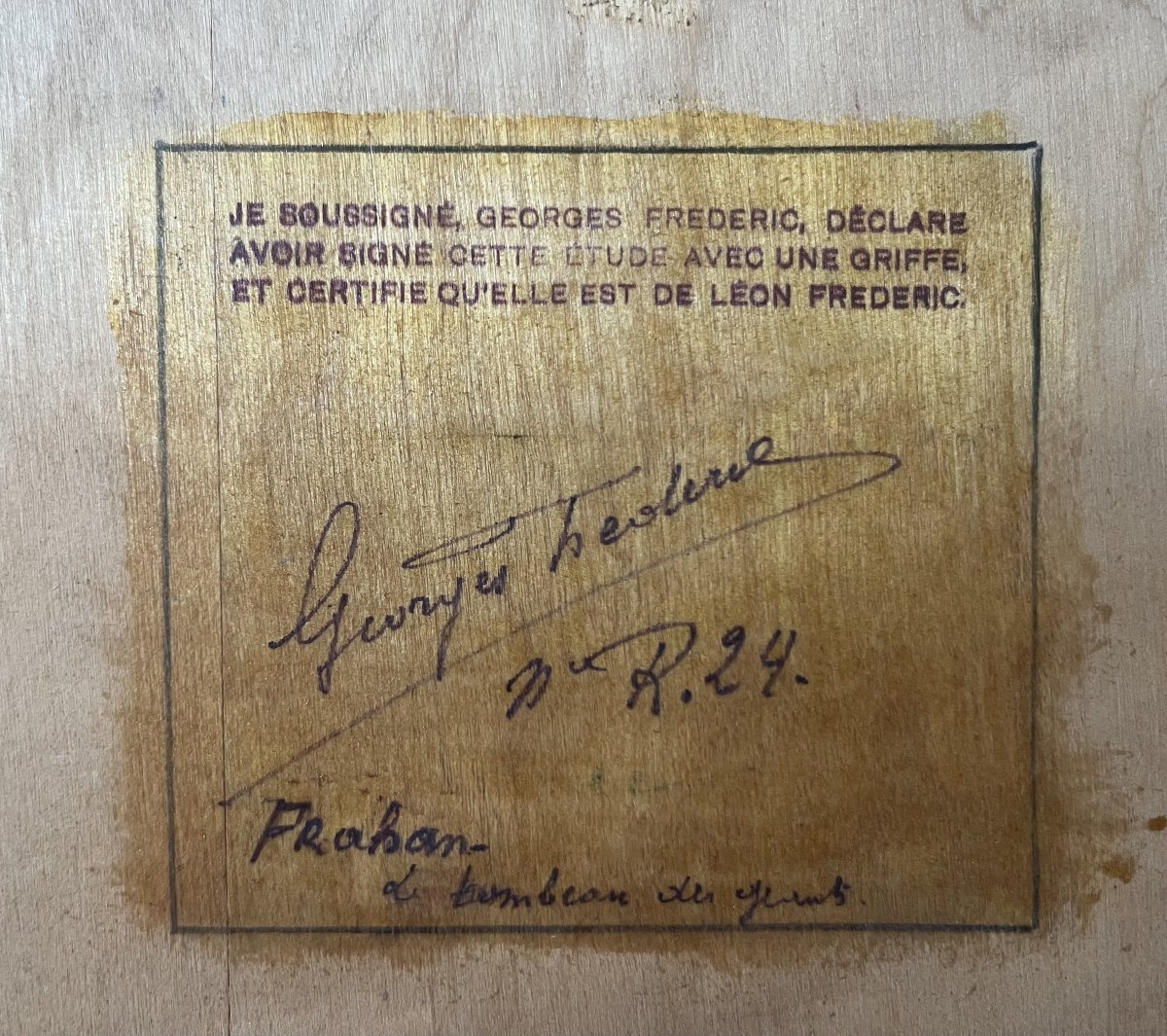
Certificate by Georges Frédéric, the artist’s sonof the artist, on the reverse of the panel
Oil on wood panel
29.5 × 44 cm
40.5 × 55 cm(framed)
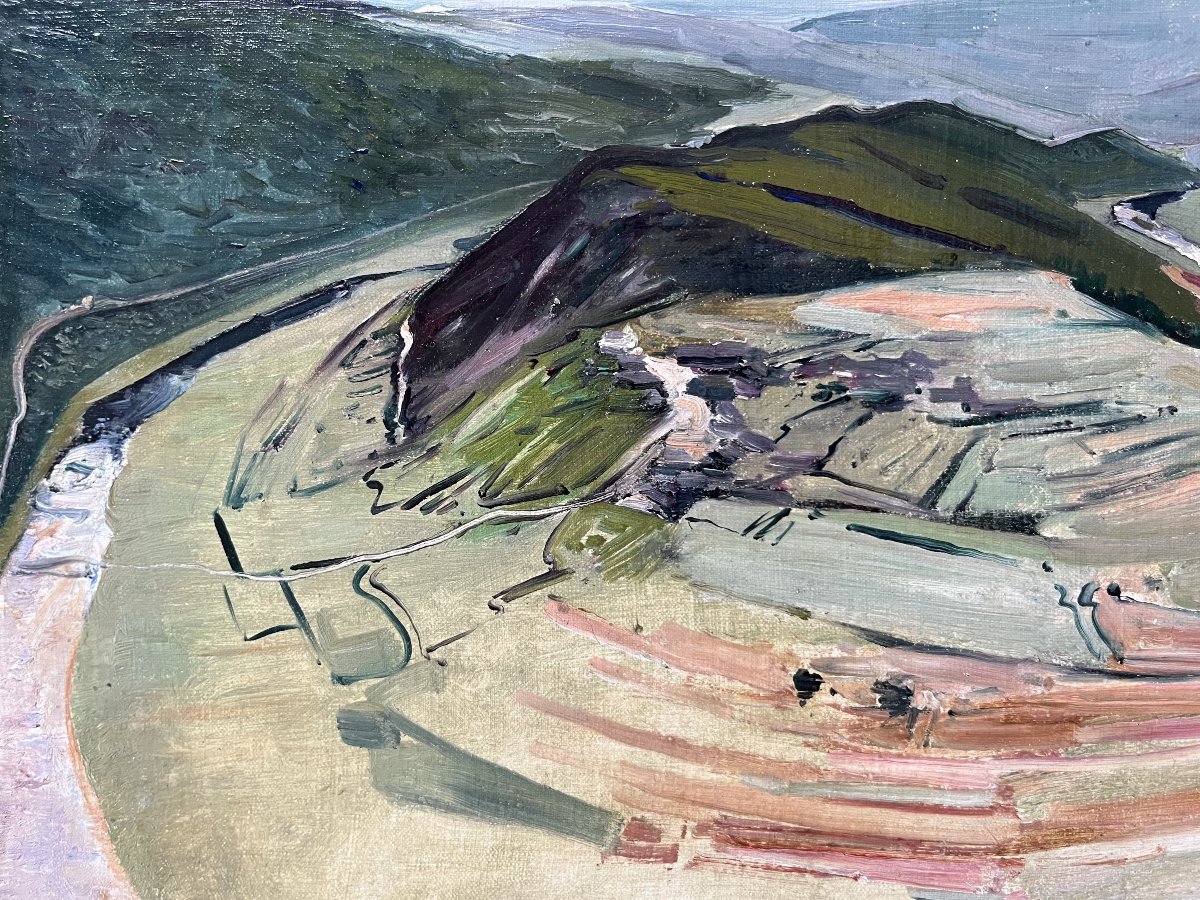
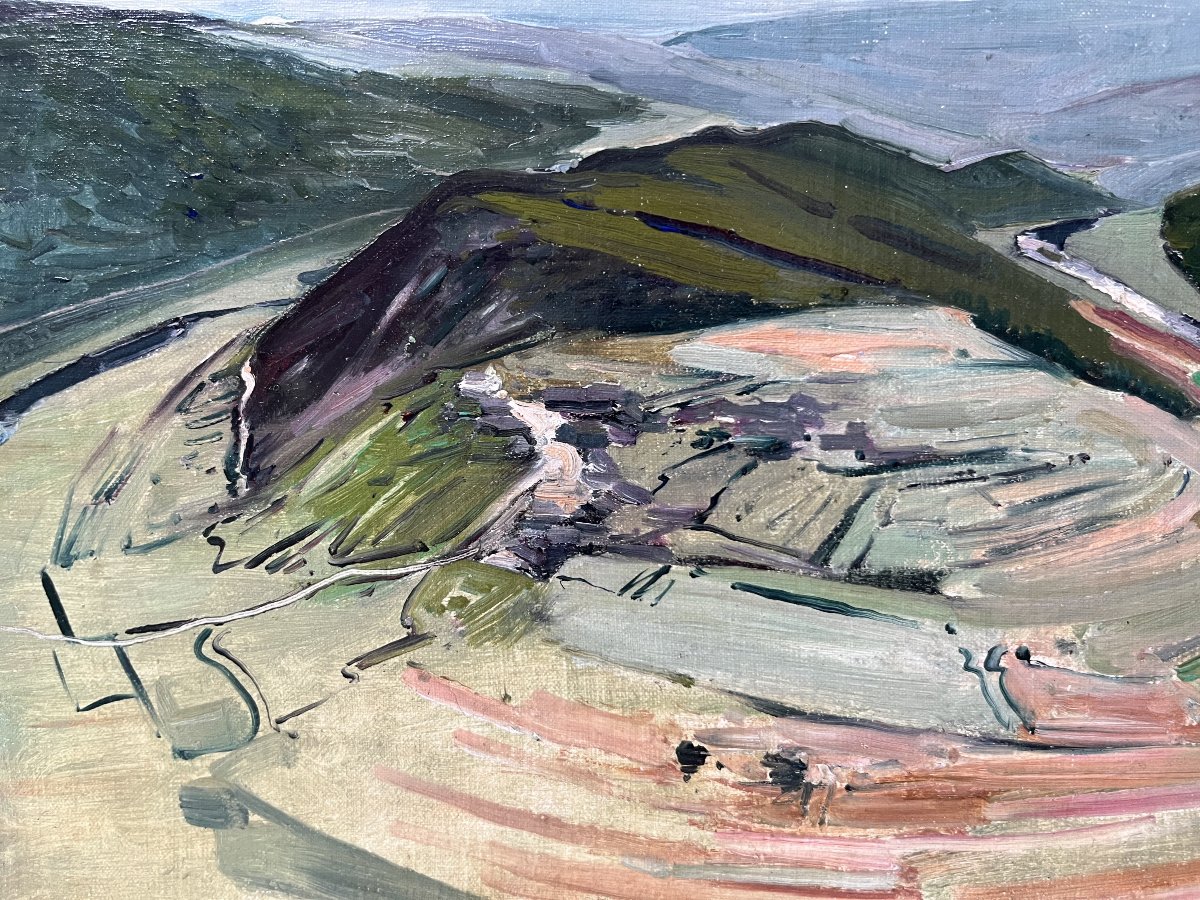
The Giant’s Tomb is a hillformed by a meander of the Semois River in Belgium, in the municipality ofBouillon (Province of Luxembourg). Léon Frédéric chose a vantage point therecharacteristic of his style: a high horizon pushing the skyto the upper third of the composition, allowing thevegetation and earthen mass that dominates the viewer’s gaze to come into full force. This small-format work,executed with a direct and sensitive touch, belongs to the intimate veinthat runs parallel to his Symbolist work: that of apainter contemplating nature with rapt attention, closeto the naturalist tradition of Jules Bastien-Lepage, whose work he discoveredat the Brussels Salon in 1882.
A student of Jean-François Portaels and lateran independent artist in Italy (1878–1879), Léon Frédéric made a name for himselfas early as 1883 with his triptych *Les Marchands de craie* (*The Chalk Sellers*), combiningmodernity with references to the Flemish Primitives. He became oneof the leading figures of Belgian Symbolism, alongside ConstantinMeunier and Eugène Laermans. His large triptych *Les Âges del’ouvrier* is housed at the Musée d’Orsay; his worksare also on view at the Royal Museums of Fine Arts of Belgium andthe Metropolitan Museum of Art in New York. On April 24, 1929, KingAlbert I conferred upon him the title of baron, at the same time asJames Ensor
Period: 20th century
Style: Art Nouveau
Condition: Good condition
Material: Oil painting on wood
Width: 44
Height: 29.5
Reference (ID): 1800434
Availability: In stock