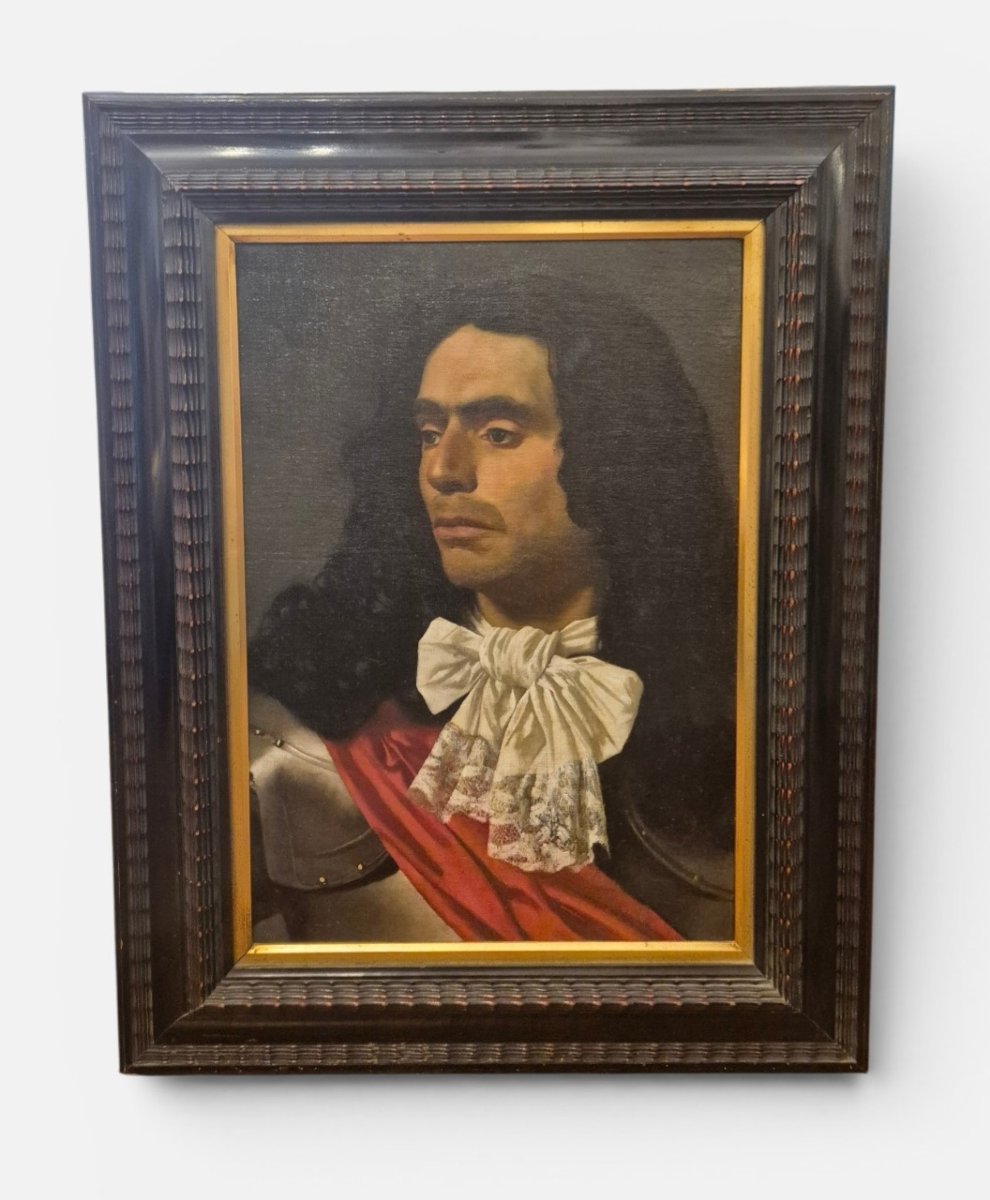
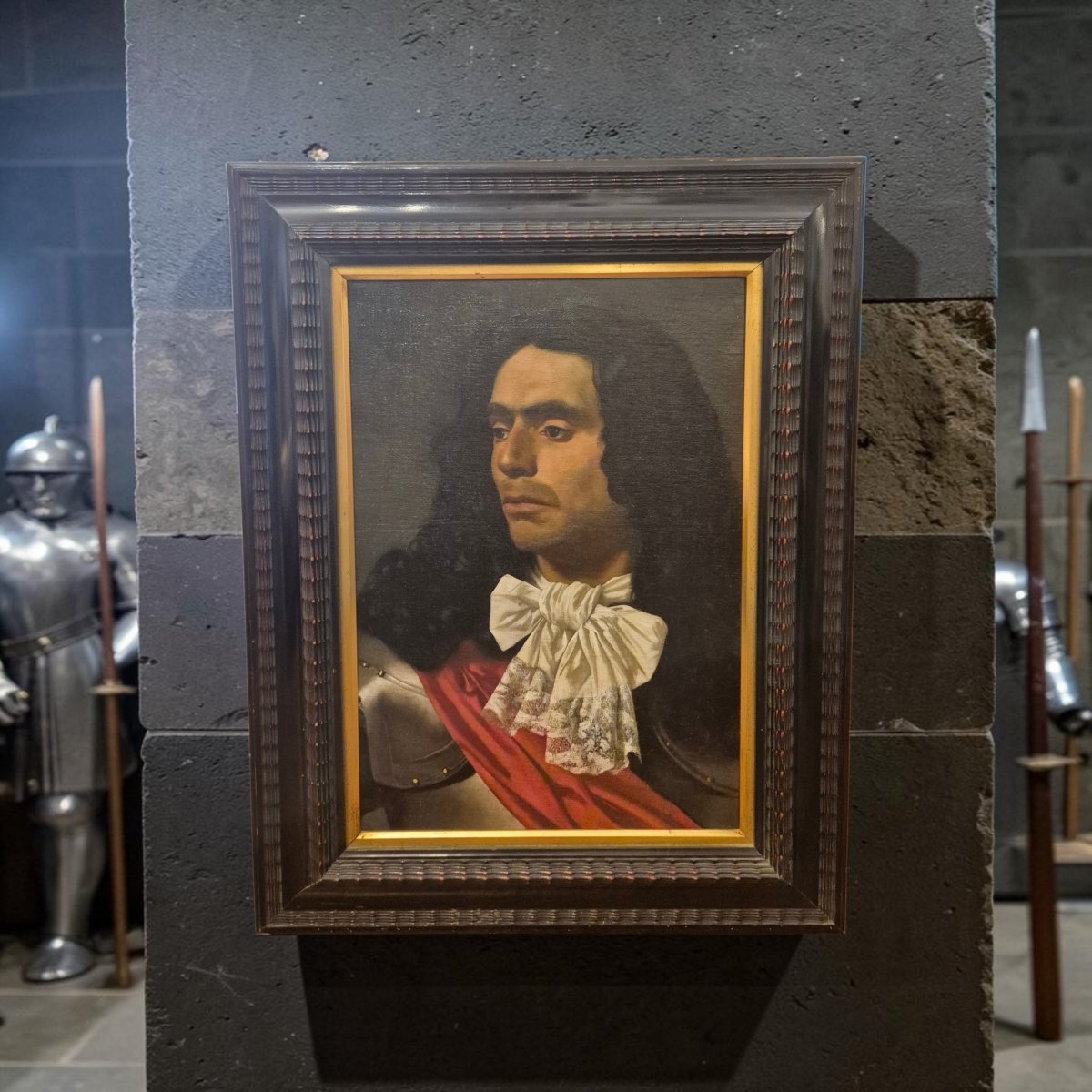
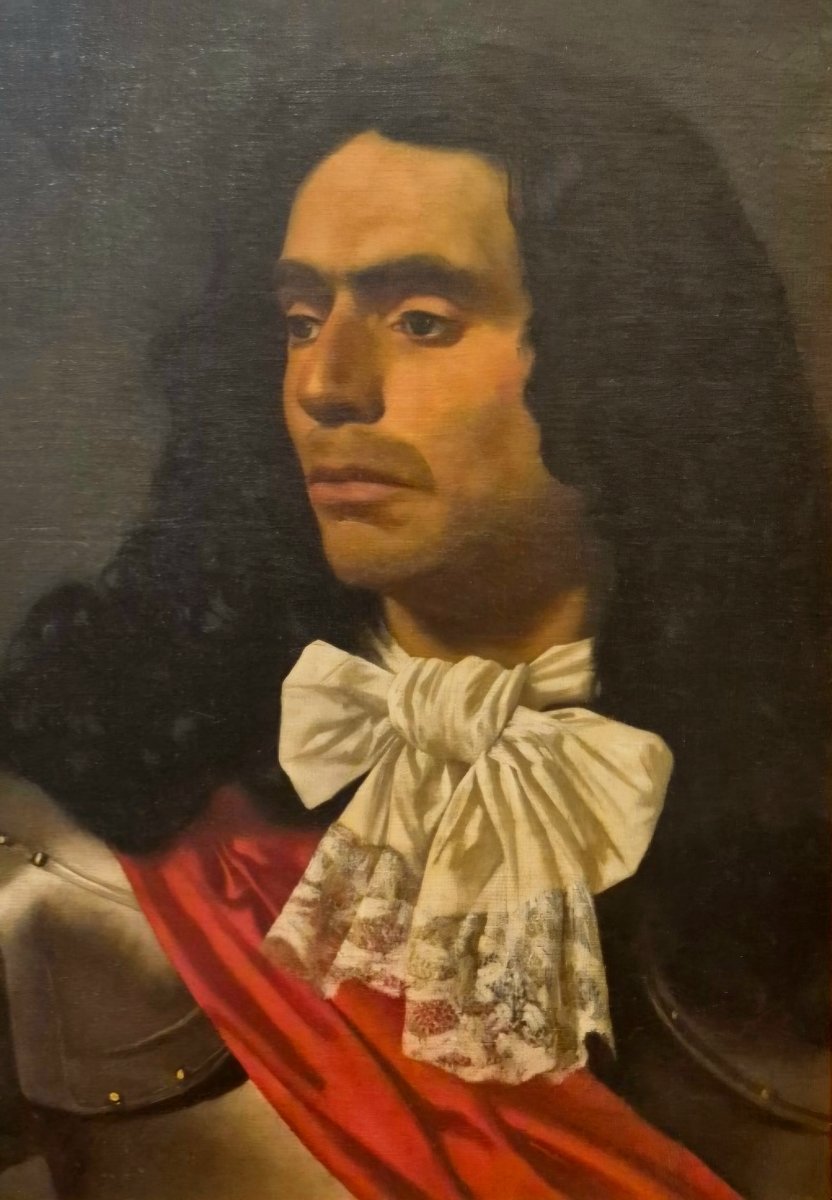
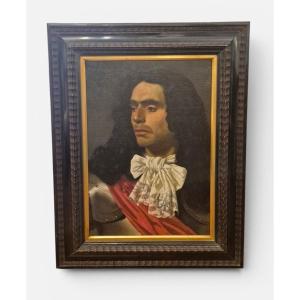


Portrait Of A Man In Armor, By G. Lucchesi, Italy, 19th Century
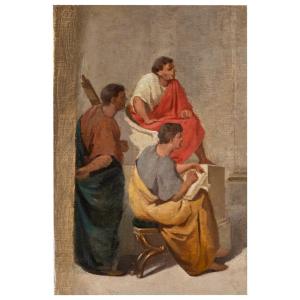
Portrait of a Man in Armor, by G. Lucchesi, Italy, 19th century
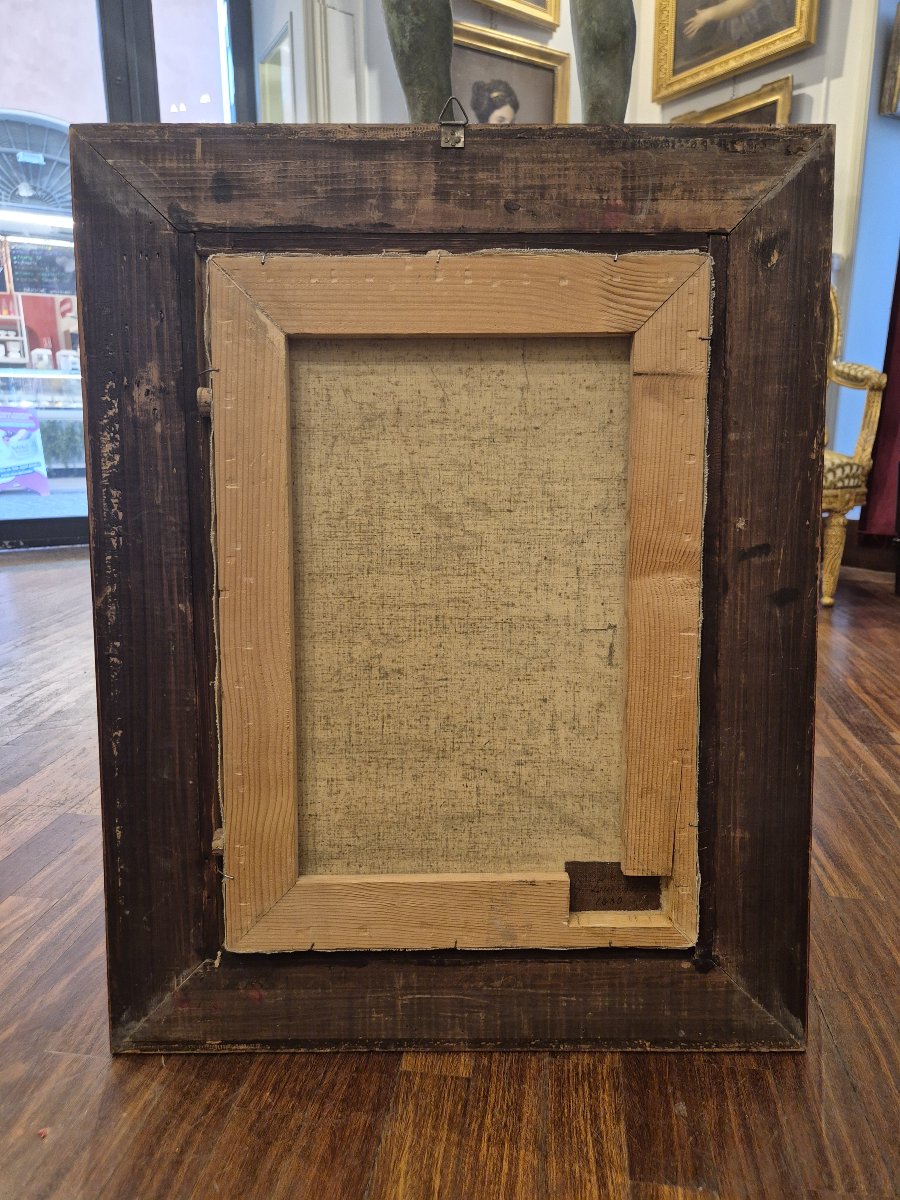
Painting on panel, signed on the reverse “G. Lucchesi 1890”
Giorgio Lucchesi trained at the Academy of Fine Arts in Lucca, where he was a student and assistant to the director, Luigi Norfini. An exponent of academic Neoclassicism, in line with the movement that spread throughout Lucca in the early nineteenth century, Giorgio Lucchesi remained outside the Macchiaioli movement. A master of painting technique, he demonstrated, even in his early works, a clear aptitude for observing from life, as is also evident in the painting that Antonio Borgogna purchased at the Esposizioni Riunite in Milan in 1894. In addition to still lifes, Lucchesi devoted himself to scenes in 18th-century costume, genre scenes linked to the social ideologies of the time featuring humble subjects, landscapes, and portraits. Beginning in 1883, his artistic path began to diverge from academicism as he began exhibiting works depicting fruit and trees that were closely linked to his studies of landscape. Influenced by the 17th-century Flemish masters, in 1885 he began painting true still lifes of dried flowers, favoring the thistle flower associated with “canneggiole,” Chinese, Art Nouveau, or Etruscan vases, juxtaposed with soft drapery of velvets and satins to which he gave an almost tactile effect, as in the “Borgogna” canvas. Alongside his evocative paintings of fruit in the open air and still lifes—which the Pisani Gallery in Florence sold at exorbitant prices worldwide—came still lifes featuring game, the so-called “Cacce grosse” (large game hunts), arranged in apparent disorder. It was the 17th-century Utrecht school that particularly favored these compositions, often set outdoors, reinterpreting nature as Filippo Palizzi had already done with his depictions of live animals in fields and woods.
Painting on panel, signed on the reverse “G. Lucchesi 1890”
Giorgio Lucchesi trained at the Academy of Fine Arts in Lucca, where he was a student and assistant to the director, Luigi Norfini. An exponent of academic Neoclassicism, in line with the movement that spread throughout Lucca in the early nineteenth century, Giorgio Lucchesi remained outside the Macchiaioli movement. A master of painting technique, he demonstrated, even in his early works, a clear aptitude for observing from life, as is also evident in the painting that Antonio Borgogna purchased at the Esposizioni Riunite in Milan in 1894. In addition to still lifes, Lucchesi devoted himself to scenes in 18th-century costume, genre scenes linked to the social ideologies of the time featuring humble subjects, landscapes, and portraits. Beginning in 1883, his artistic path began to diverge from academicism as he began exhibiting works depicting fruit and trees that were closely linked to his studies of landscape. Influenced by the 17th-century Flemish masters, in 1885 he began painting true still lifes of dried flowers, favoring the thistle flower associated with “canneggiole,” Chinese, Art Nouveau, or Etruscan vases, juxtaposed with soft drapery of velvets and satins to which he gave an almost tactile effect, as in the “Borgogna” canvas. Alongside his evocative paintings of fruit in the open air and still lifes—which the Pisani Gallery in Florence sold at exorbitant prices worldwide—came still lifes featuring game, the so-called “Cacce grosse” (large game hunts), arranged in apparent disorder. It was the 17th-century Utrecht school that particularly favored these compositions, often set outdoors, reinterpreting nature as Filippo Palizzi had already done with his depictions of live animals in fields and woods.
2 850 €
Period: 18th century
Style: Napoleon 3rd
Condition: Fully restored
Material: Oil painting
Width: cm 32
Height: cm 56
Reference (ID): 1800293
Availability: In stock
Print