THIS OBJECT WAS SOLD
Bargeman’s Cross Featuring The Instruments Of The Passion – Late 19th Century
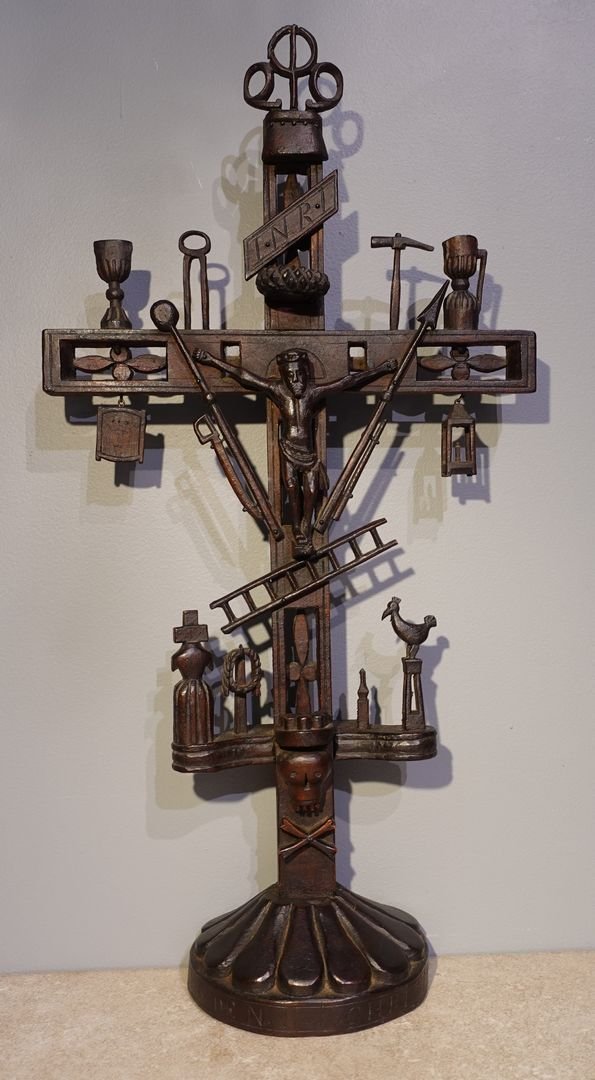
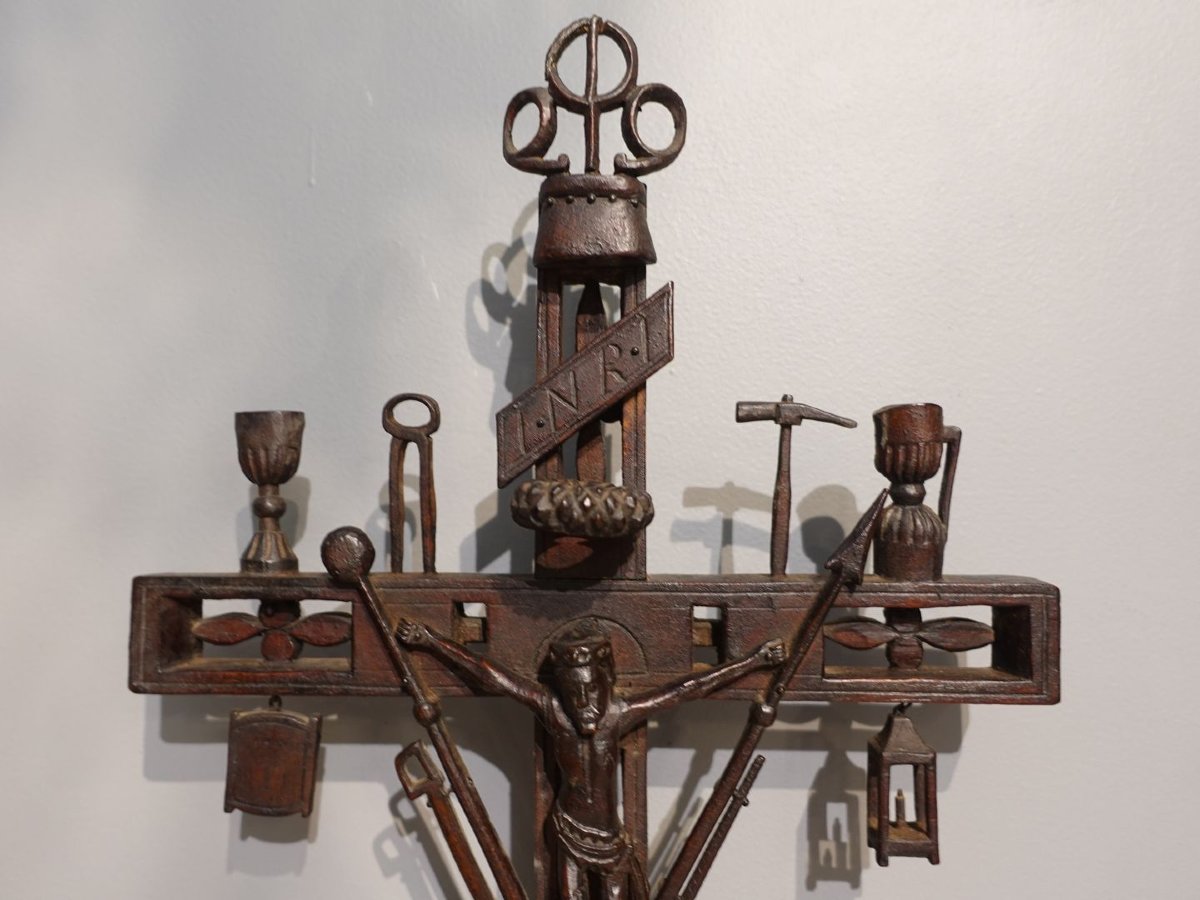
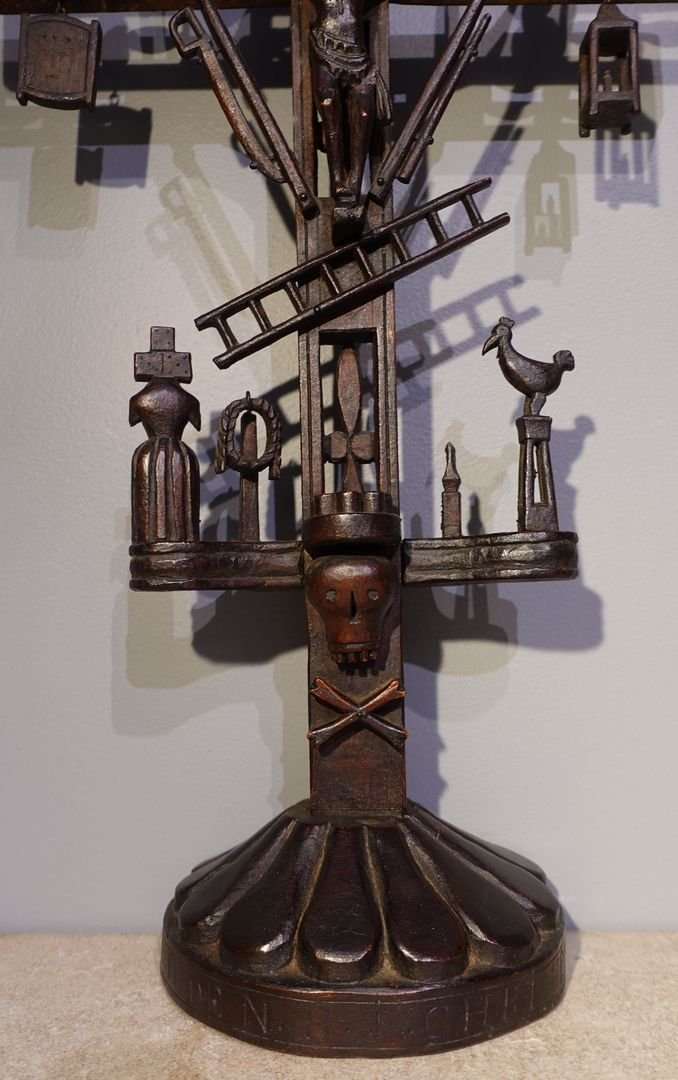
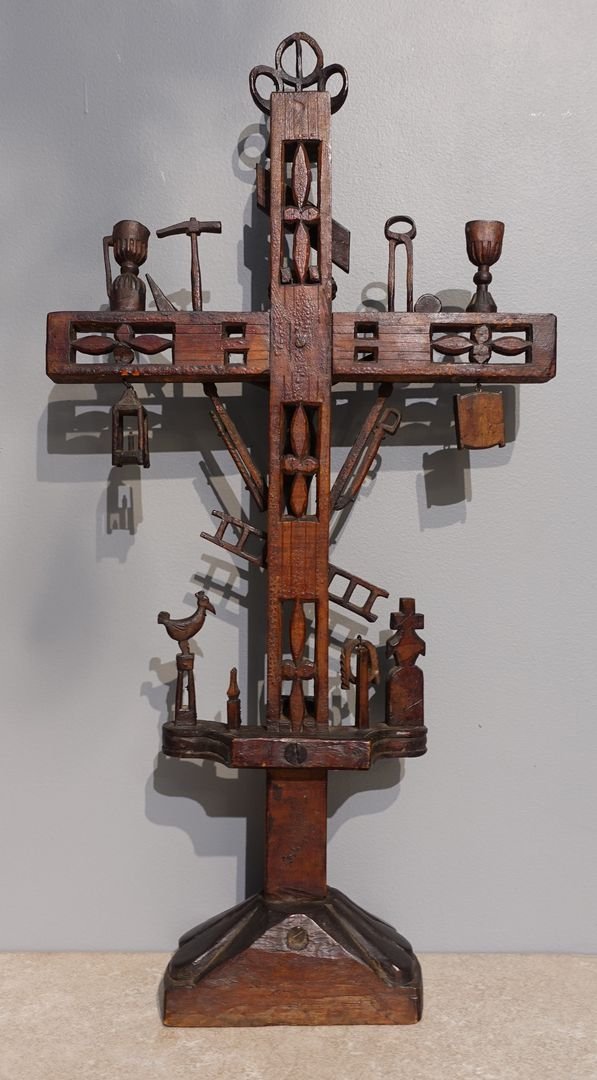


A form of folk art, "bargeman’s crosses" were found on vessels used for river transport. These religious crosses, erected at the bow of the boats, were intended to protect the crew during their voyages.
Crafted by the bargemen themselves, they were carved during their spare time using driftwood or timber found in the river or along its banks.
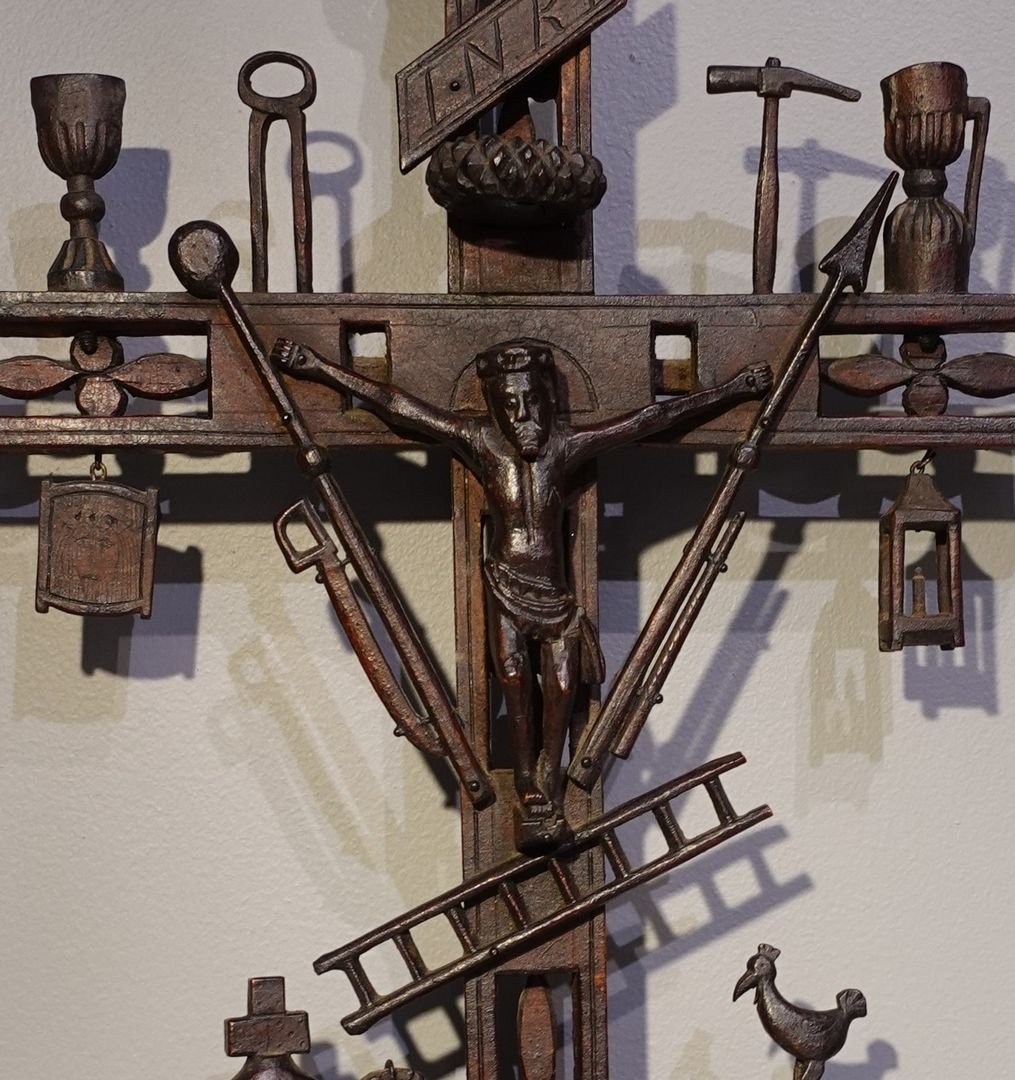
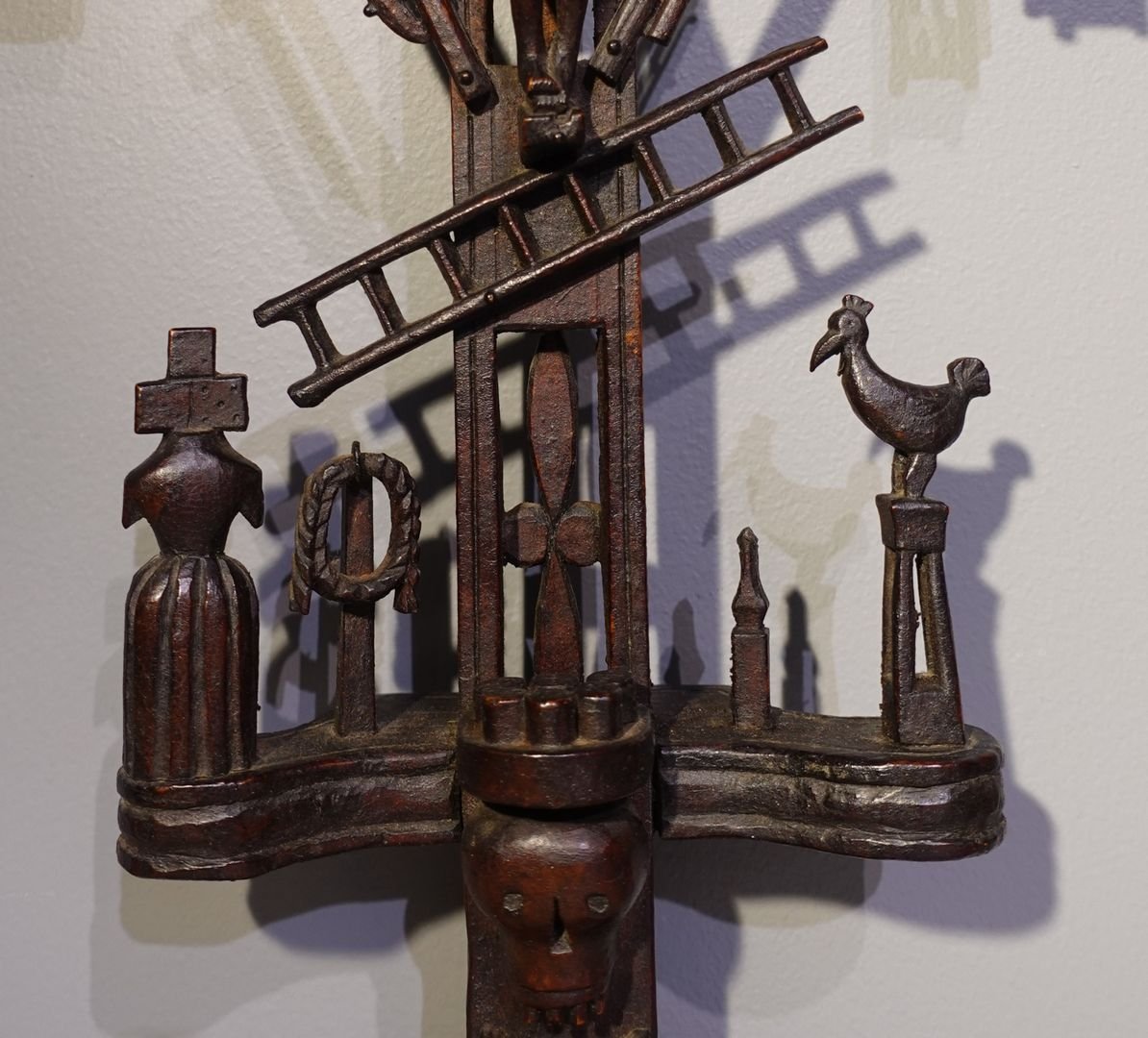
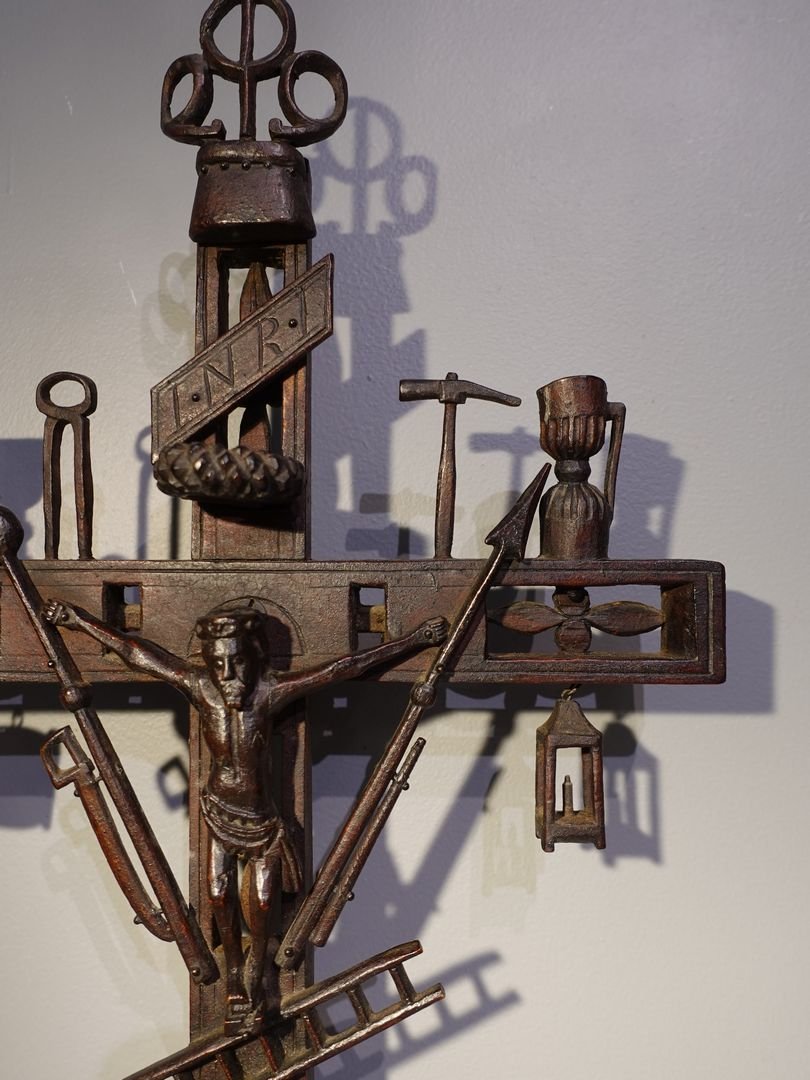
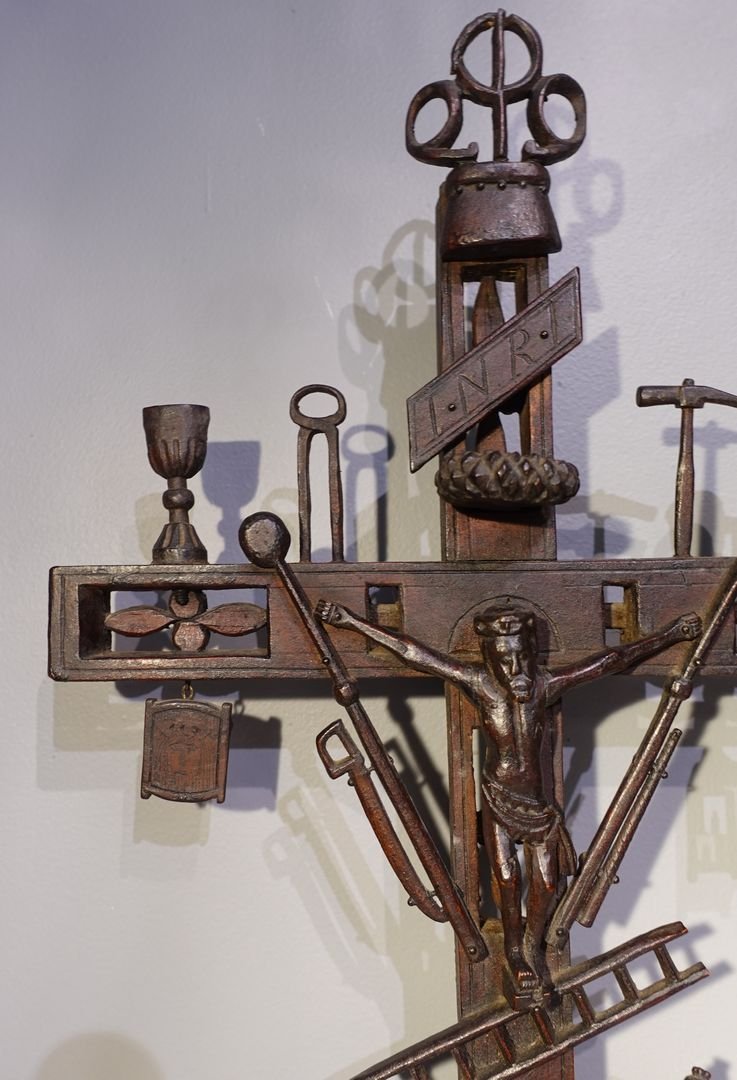
They are distinguished by their ornamentation with the *Arma Christi*—the instruments of Christ's Passion. In the 20th century, many enthusiasts attributed a dual meaning—both religious and secular—to these elements. Religious, because they faithfully illustrated the Gospel narrative; secular, because certain objects (such as the hammer, ladder, or pincers) could also refer to the bargemen's own work, as well as to the trades of various craftsmen who operated alongside the river crews: carpenters, farriers, blacksmiths, and so on.
Examples include:
The rooster, which crows three times during Christ's denial, but is also a symbol of virility;
The pincers and hammer, used to crucify Jesus but also indispensable tools for carpenters and farriers working on the riverbanks;
The carter's whip;
The lance that pierced Christ's side;
Ship's lanterns, used to light the boats at night;
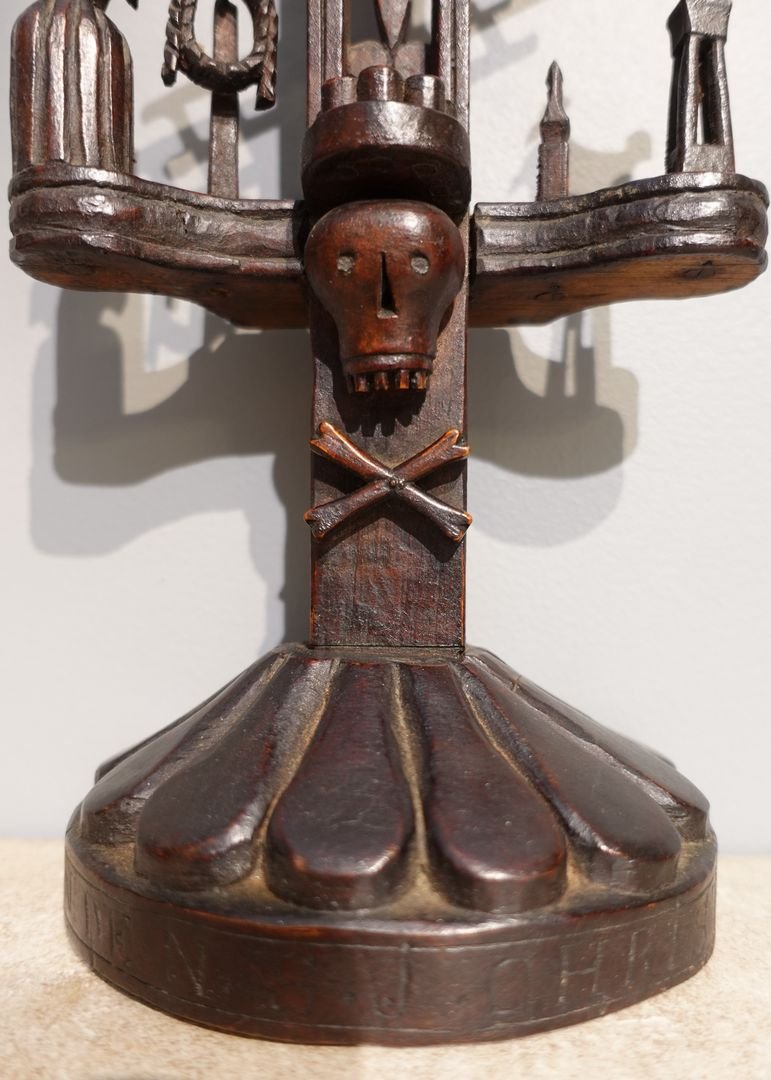
The skull and crossbones, to ward off bad luck;
The *poulain* (a type of ladder used for unloading cargo)...
Bargemen’s crosses were blessed by a priest before the boats set off to travel up or down the river.
Tradition dictated that bargemen retiring from the trade would permanently deposit their crosses at the church.
For centuries, the bargeman’s cross—a true piece of folk art—has proudly embodied the spirit of an entire profession. This legendary cross evokes deep emotion today.
Dimensions: H. 50 cm x W. 26 cm
France (Rhône?)
Inscription and date on the base: Passion of Our Lord Jesus Christ – 1890
waxed wood
Explore similar pieces and discover your ideal find:
Folk Art