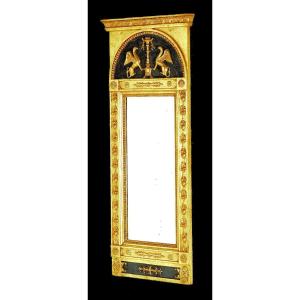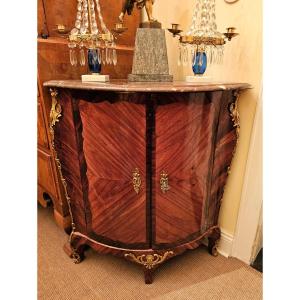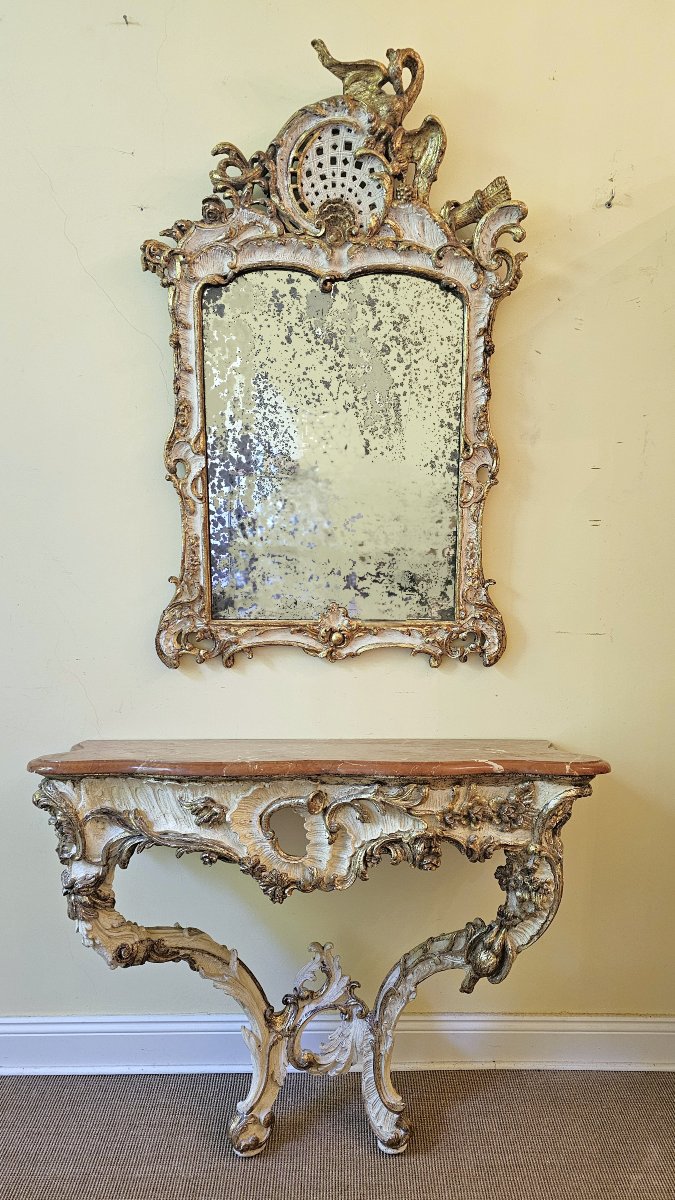
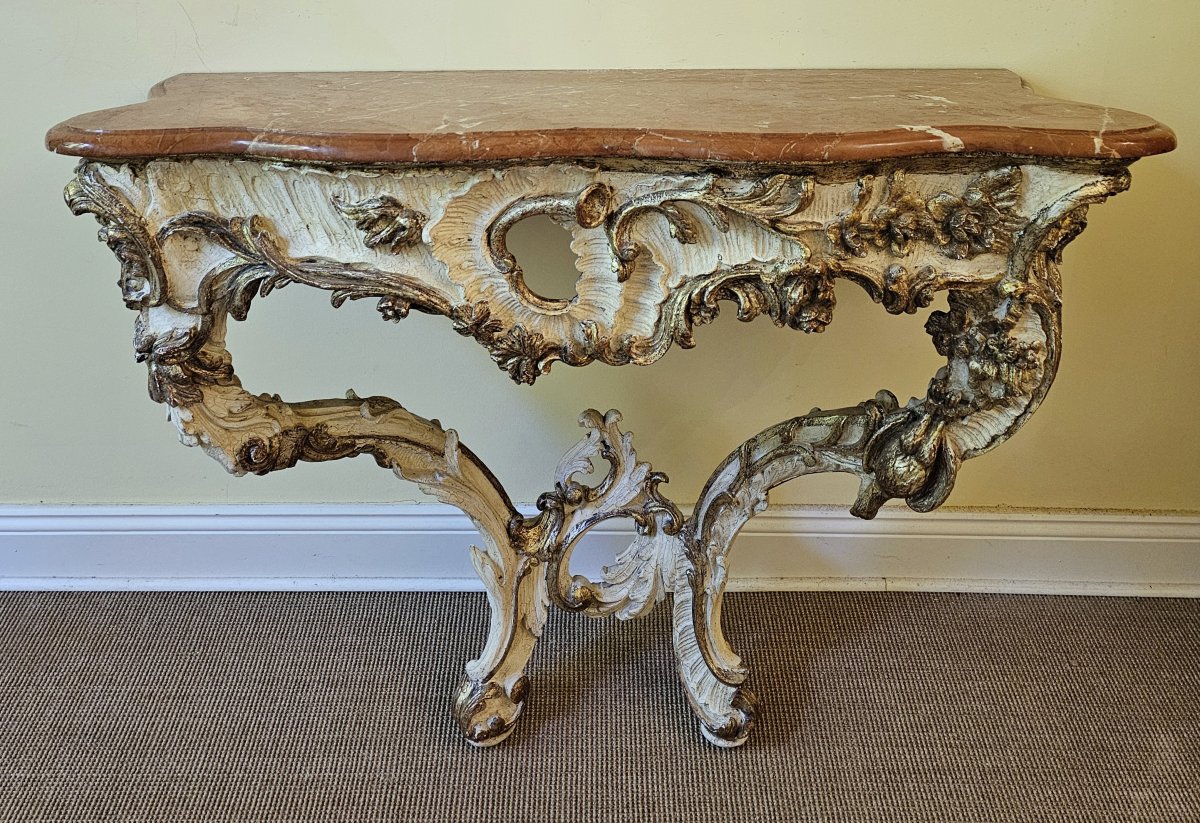
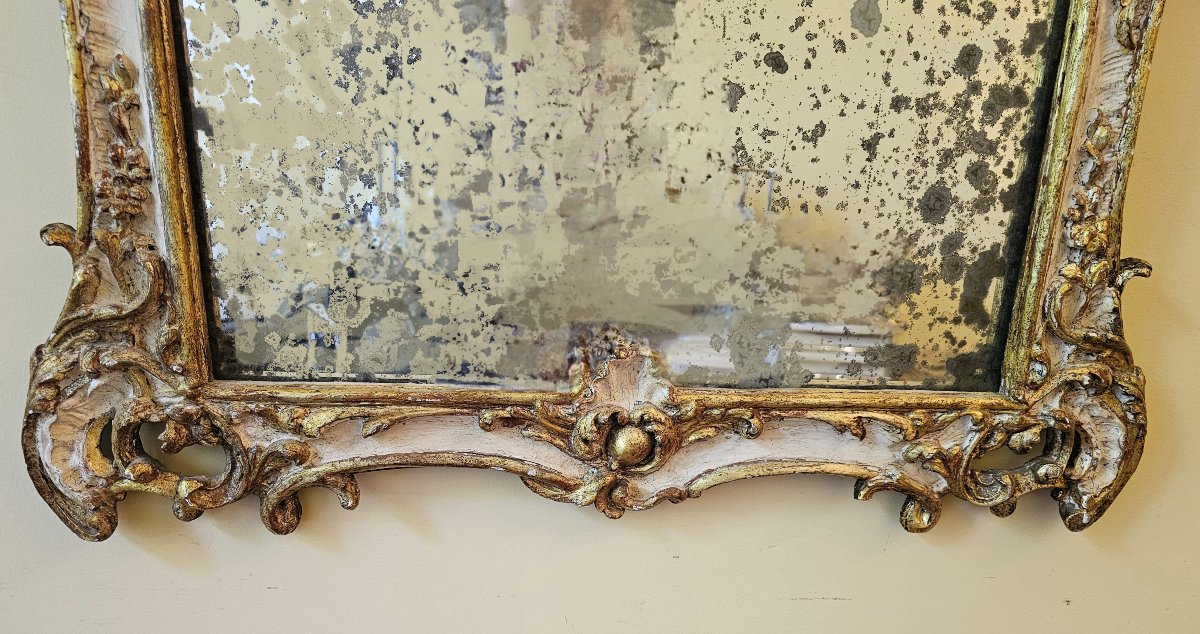
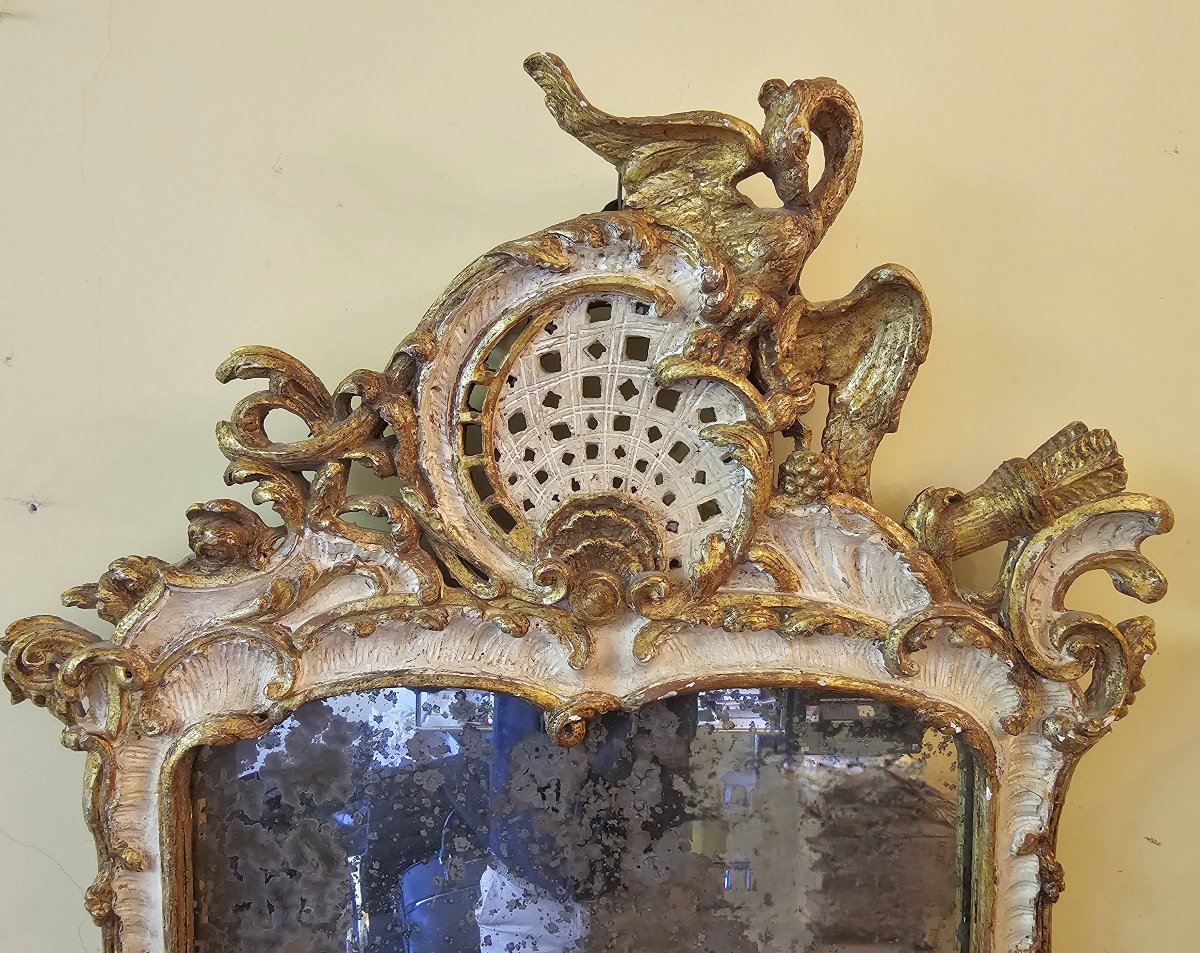
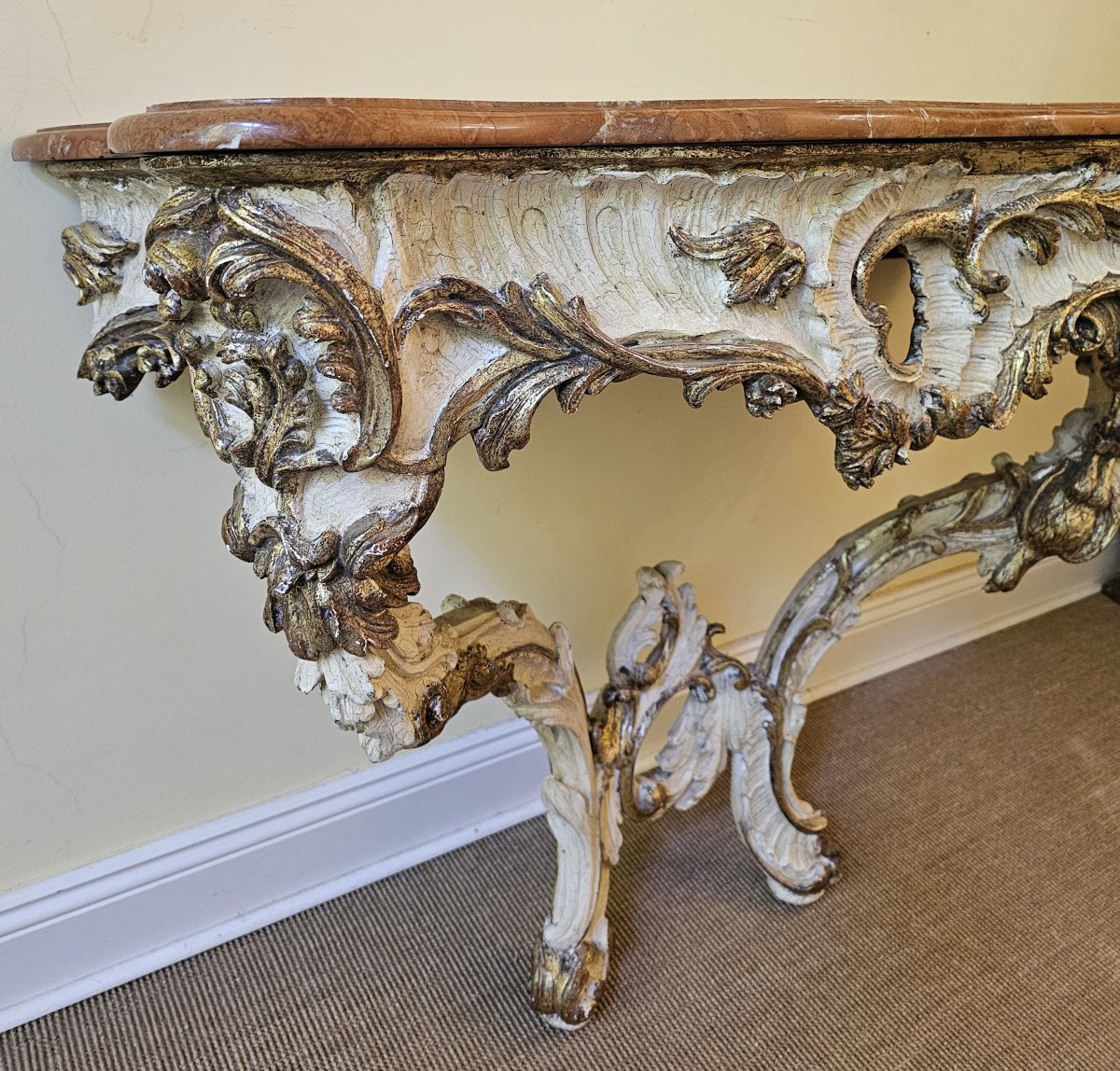
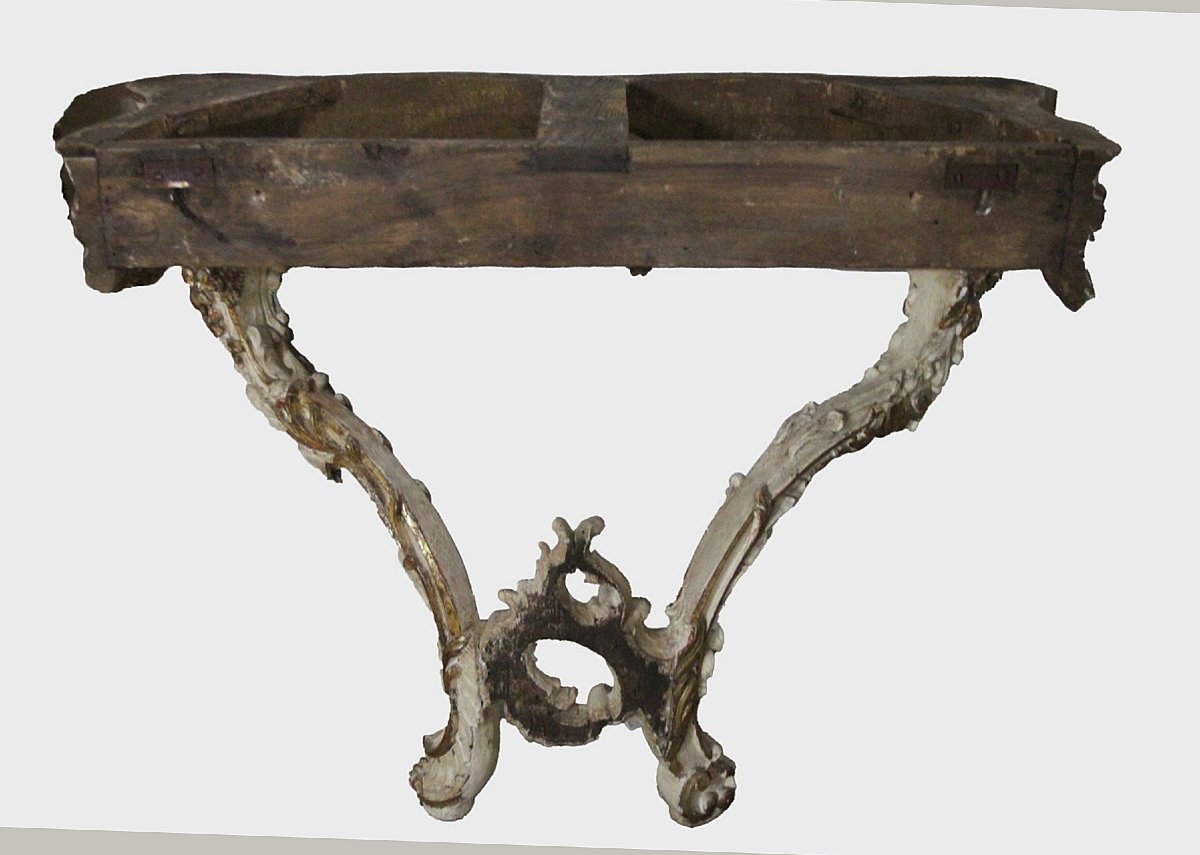
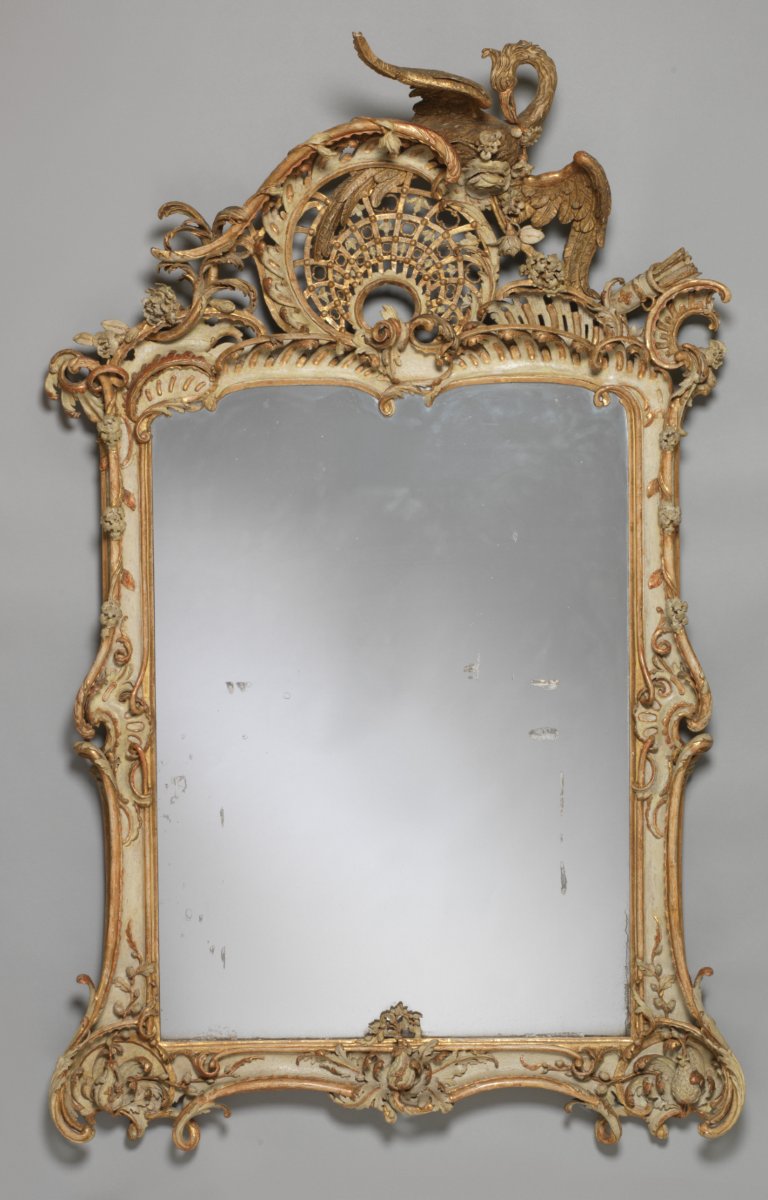
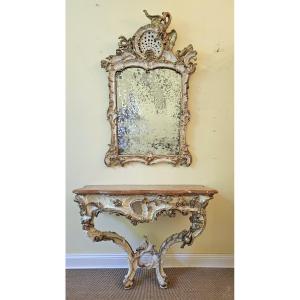


Mirror Console By Johann Michael Hoppenhaupt The Elder (1709–1769), Berlin/potsdam, Ca. 1755
Artist: Johann Michael Hoppenhaupt L'ancien (1709 – 1769)
Mirror Console Table
Johann Michael Hoppenhaupt the Elder (1709–1769)
Berlin/Potsdam, ca. 1755/60
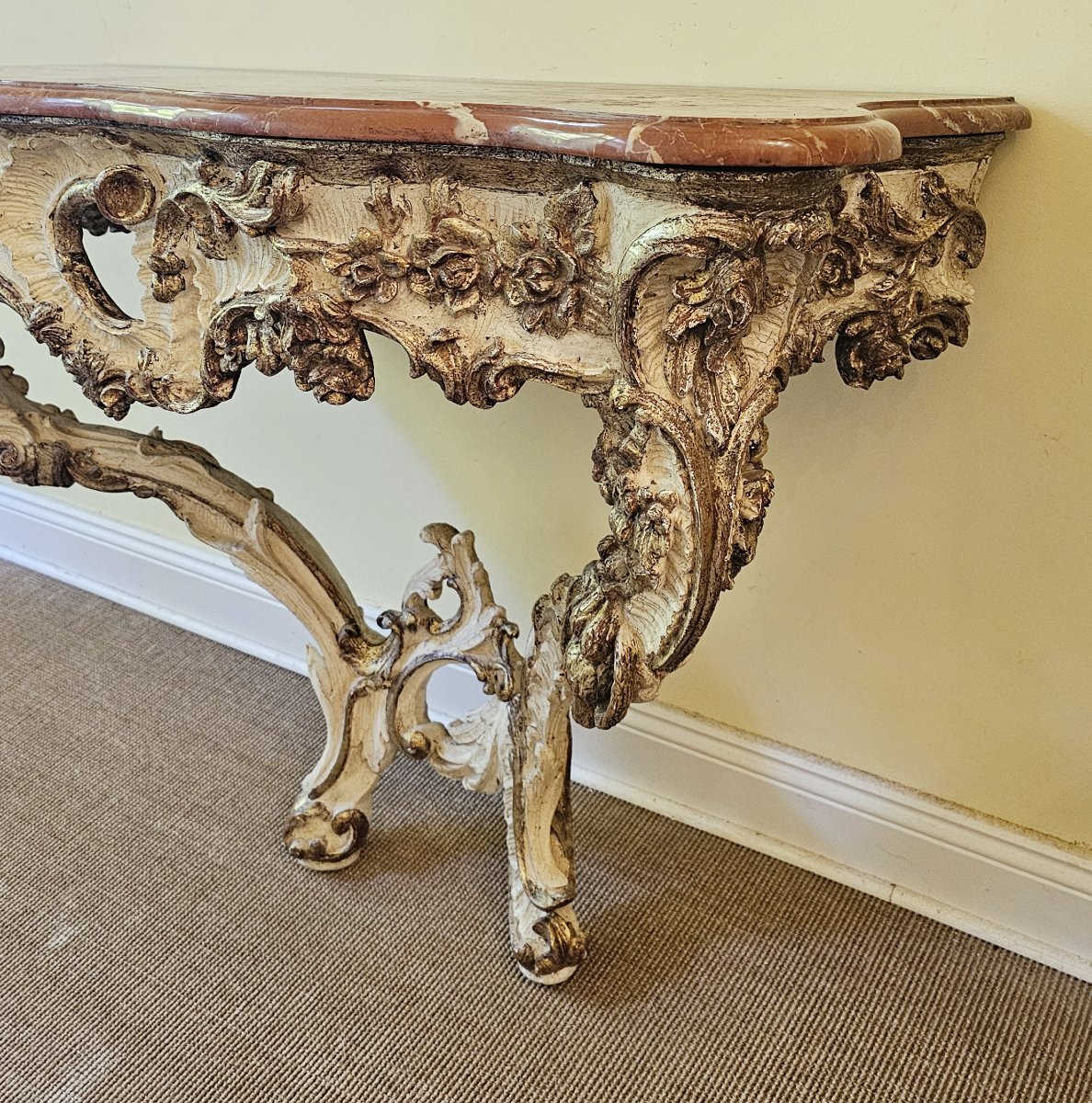
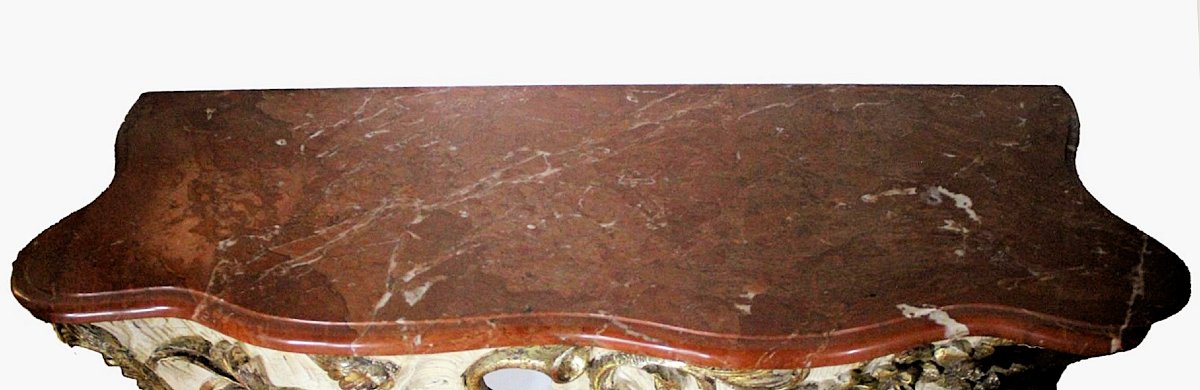
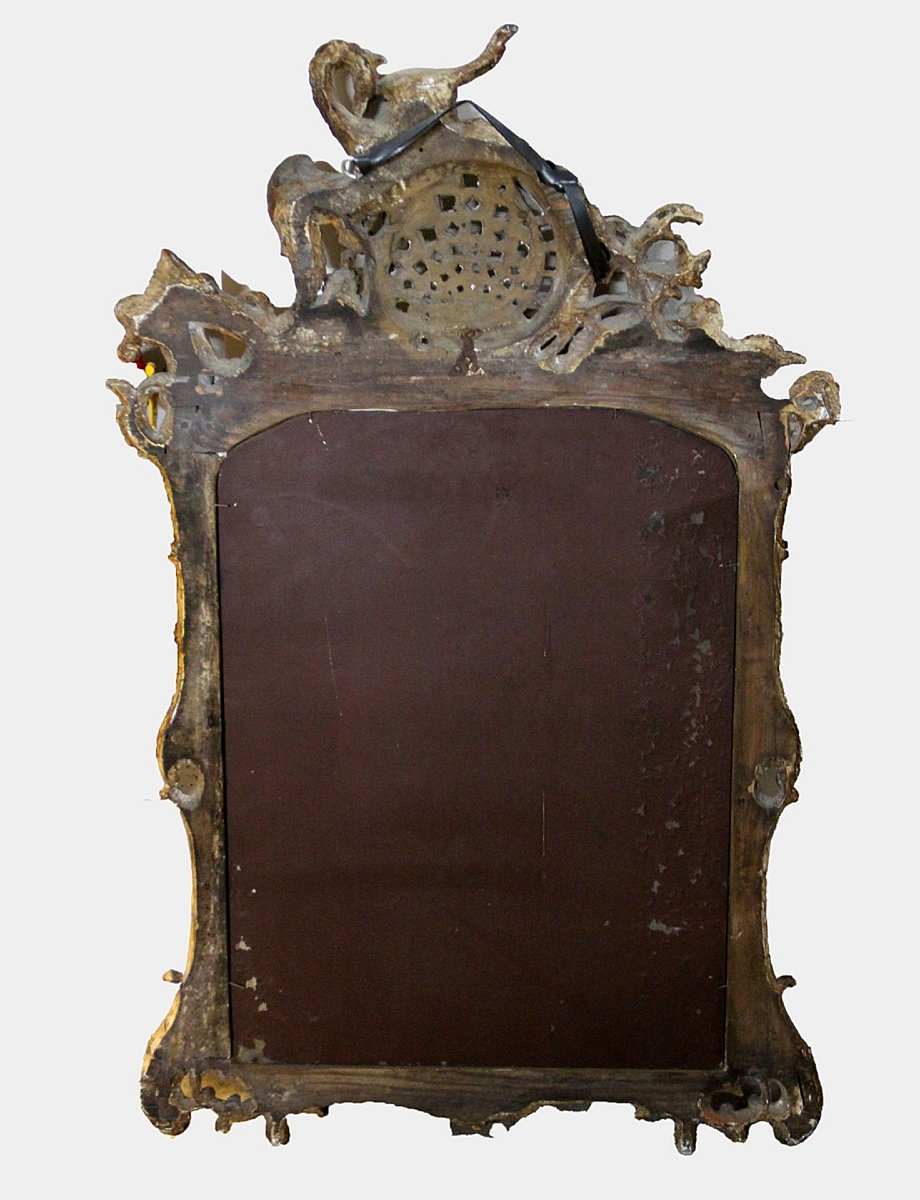
Carved linden wood, originally painted gray-white and gilded, original mirror, red marble top.
last image
Console: H 80, W 100, D 40; mirror: H 115, W 73.
See also:
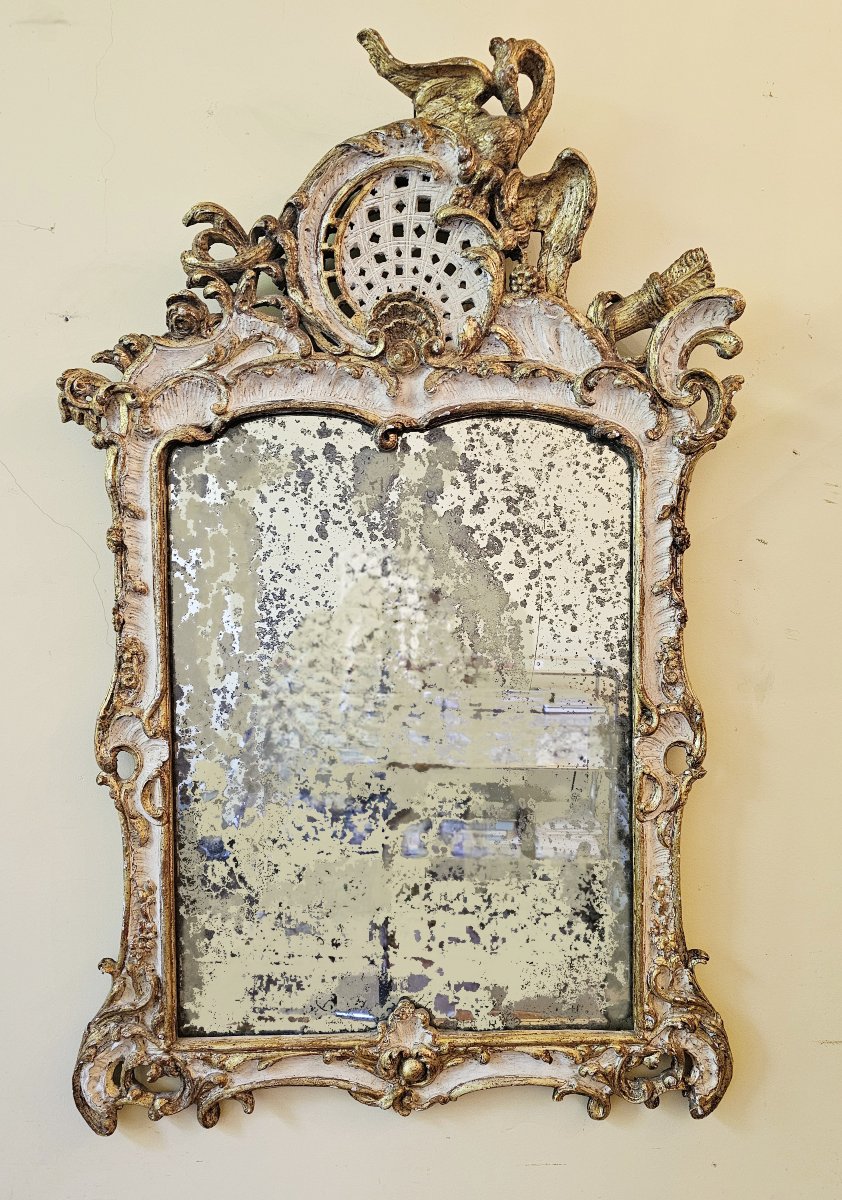
The identical gilded mirror on display at the Metropolitan Museum of Art in New York.
Johann Michael Hoppenhaupt was one of the most important sculptors and interior designers at the court of Frederick the Great. In 1740, he began working as a court sculptor at Berlin Palace under the direction of the court architect von Knobelsdorff and the sculptor J. A. Nahl, who was also in the service of the court.
Frederician Rococo emphasized lightness and elegance—the lush flower buds and pomegranates are rendered so vividly and naturalistically that one is tempted to touch them. Johann Michael Hoppenhaupt’s most striking signature feature is, above all, the crane that extends into the mirror from the upper left corner of the frame. This highly distinctive formal language recurs repeatedly in his works, such as in Frederick the Great’s study and bedroom at Sanssouci Palace in Potsdam.
This Rococo mirror epitomizes Frederickan Rococo in all its perfection.
Lit.: E. A. Seemann: “Preußische Königsschlösser in Berlin und Potsdam,” p. 135; Hans Huth: “Friderizianische Möbel,” ill. 5; Lydia-Lida Dewiel: “Möbel-Stilkunde.”
Inv. No. 11.351
€28,000
Johann Michael Hoppenhaupt the Elder (1709–1769)
Berlin/Potsdam, ca. 1755/60
Carved linden wood, originally painted gray-white and gilded, original mirror, red marble top.
last image
Console: H 80, W 100, D 40; mirror: H 115, W 73.
See also:
The identical gilded mirror on display at the Metropolitan Museum of Art in New York.
Johann Michael Hoppenhaupt was one of the most important sculptors and interior designers at the court of Frederick the Great. In 1740, he began working as a court sculptor at Berlin Palace under the direction of the court architect von Knobelsdorff and the sculptor J. A. Nahl, who was also in the service of the court.
Frederician Rococo emphasized lightness and elegance—the lush flower buds and pomegranates are rendered so vividly and naturalistically that one is tempted to touch them. Johann Michael Hoppenhaupt’s most striking signature feature is, above all, the crane that extends into the mirror from the upper left corner of the frame. This highly distinctive formal language recurs repeatedly in his works, such as in Frederick the Great’s study and bedroom at Sanssouci Palace in Potsdam.
This Rococo mirror epitomizes Frederickan Rococo in all its perfection.
Lit.: E. A. Seemann: “Preußische Königsschlösser in Berlin und Potsdam,” p. 135; Hans Huth: “Friderizianische Möbel,” ill. 5; Lydia-Lida Dewiel: “Möbel-Stilkunde.”
Inv. No. 11.351
€28,000
28 000 €
Period: 18th century
Style: Louis 15th - Transition
Condition: Excellent condition
Material: Painted wood
Length: 100 cm
Height: 195 cm
Depth: 40 cm
Reference (ID): 1798513
Availability: In stock
Print