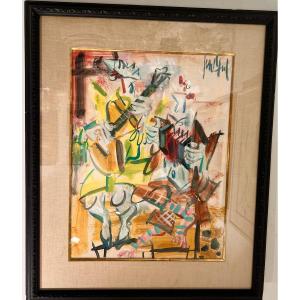

Gen Paul
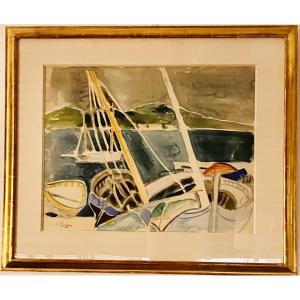
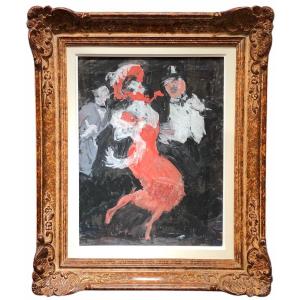
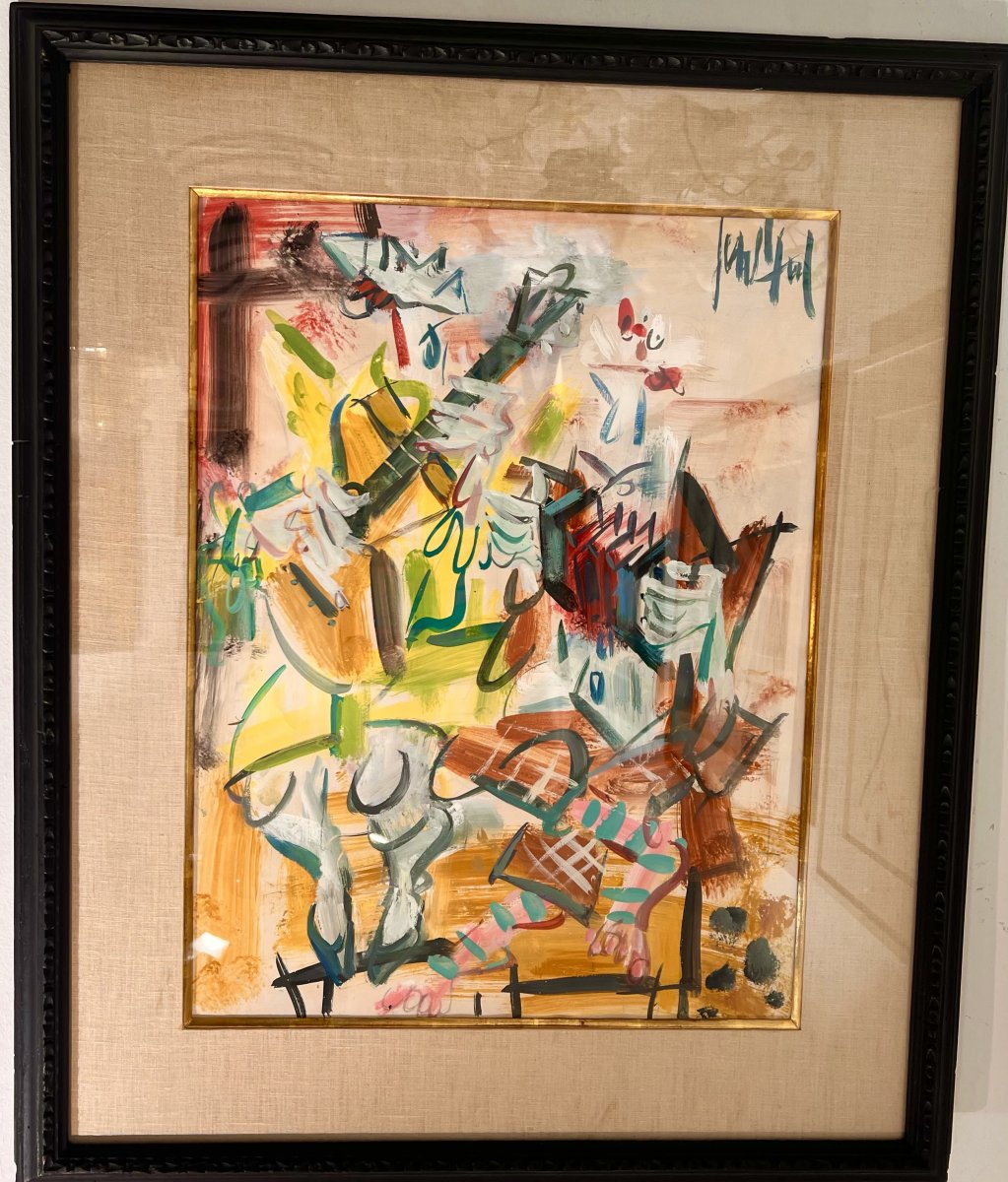
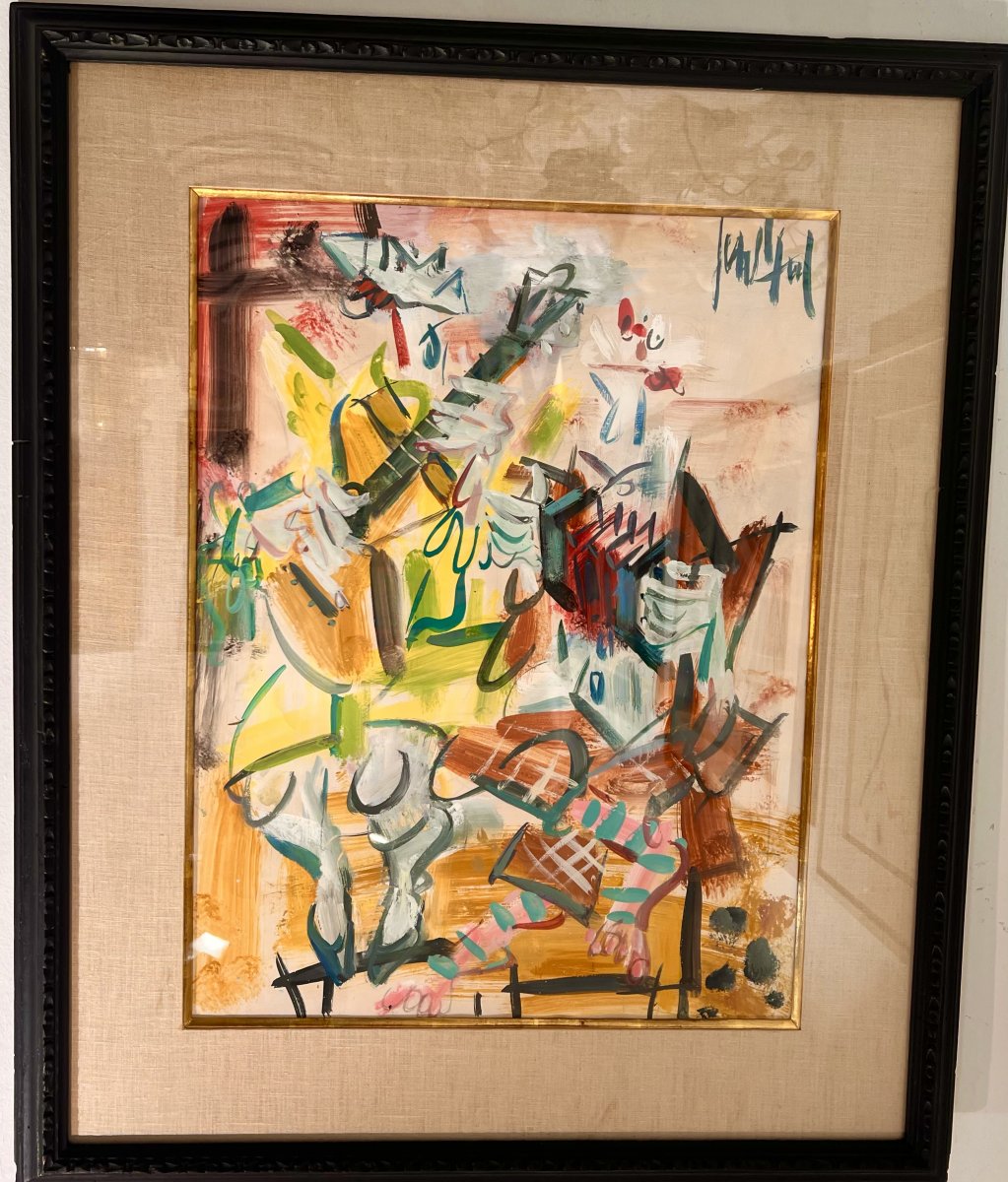
The Great Clown—Signed in the upper right corner
62 x 49 cm—framed 90 x 75 cm
EXPRESSIONISM IN MOTION
Born on Rue Lepic in 1895 and remaining faithful to Montmartre until his death in 1975,
Eugène Paul, known as Gen Paul, is one of the most distinctive figures of
French Expressionism. Initially an apprentice upholsterer, he was seriously wounded
during World War I and had his right leg amputated. Upon his return to Paris,
unable to resume his trade, he turned to painting as his calling.
Self-taught, he developed his skills through contact with the artists of the Butte, notably Juan Gris,
Maurice Utrillo, Maurice de Vlaminck, and André Derain. His travels to Spain
also revealed to him the power of El Greco, Velázquez, and above all, Goya. Beginning in the
mid-1920s, he moved away from the Montmartre scenes of his early years and developed
a highly personal style: distorted perspectives, dynamic diagonals,
distorted silhouettes, and rapid brushstrokes give his compositions an intensity
that is almost musical.
The period from 1925 to 1929, often considered his “great period,” fully embodies
fully embodies this expressionism of movement. Musicians, clowns, horsemen,
street scenes, and landscapes of Paris or the Basque Country become the protagonists of a world captured
in the heat of the moment. In 1928, the Bing Gallery exhibited his works alongside those of
Picasso, Braque, Rouault, and Soutine.
After 1930, his palette lightened and drawing took on greater importance. His work
on paper—gouaches, watercolors, drawings, engravings, and lithographs—therefore
a central place in his creative practice. The flexibility of these techniques was
particularly well-suited to the speed of his line, his sense of composition, and his penchant for
rhythm. Close to writers and musicians, in 1942 he illustrated *Journey to the End of
the Night* and *Death on Credit* by Louis-Ferdinand Céline, then devoted numerous
works to jazz, orchestras, and horse racing.
Made a Knight of the Legion of Honor in 1934 and celebrated through several retrospectives during his
lifetime, Gen Paul nevertheless remained a fiercely independent artist. To reduce his
body of work solely to Montmartre folklore would be to overlook his true contribution: a style of painting
that is free, instinctive, and carefully constructed, in which the brushstroke does not merely describe the world, but
captures its very pulse.
SELECTED BIBLIOGRAPHY
• André Roussard, Gen Paul: A Biography, Éditions André Roussard, 2006.
• Jacques Lambert, Gen Paul: A Cursed Painter Among His Own, La Table Ronde, 2007.
• Chantal Le Bobinnec, Gen Paul in Montmartre, Chalmin & Perrin, 1995; reprinted by Les Éditions de Paris,
2007.
• Gen Paul, catalog of the centennial exhibition, Couvent des Cordeliers, Paris, 1995.
- Gen Paul, exhibition catalog, Palais de l’Europe, Menton, 1993.
Period: 20th century
Style: Modern Art
Condition: Perfect condition
Material: Paper
Width: 49cm
Height: 66cm
Reference (ID): 1798207
Availability: In stock