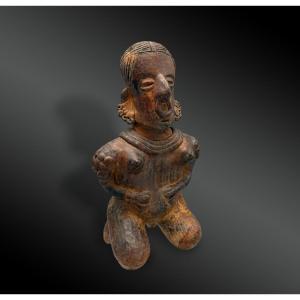


Female Statuette, Maternity “parturientes” — Nayarit Culture, Western Mexico
FEMALE STATUETTE, MATERNITY ‘parturientes’
Nayarit culture, western Mexico
San Sebastián style
Proto-Classical period, 100 BC – 250 AD
Terracotta and pigments
H.: 25; W.: 15 cm
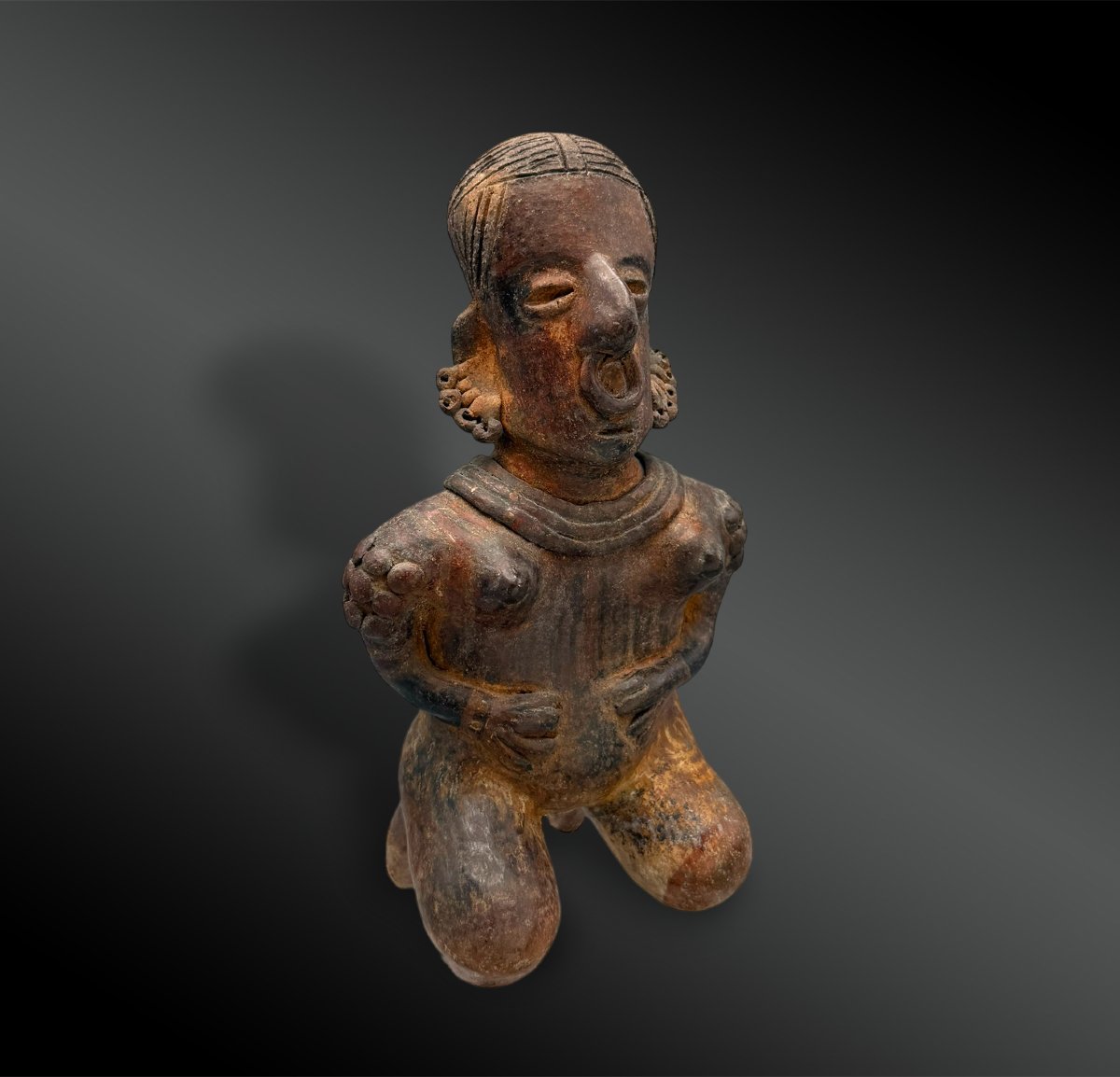
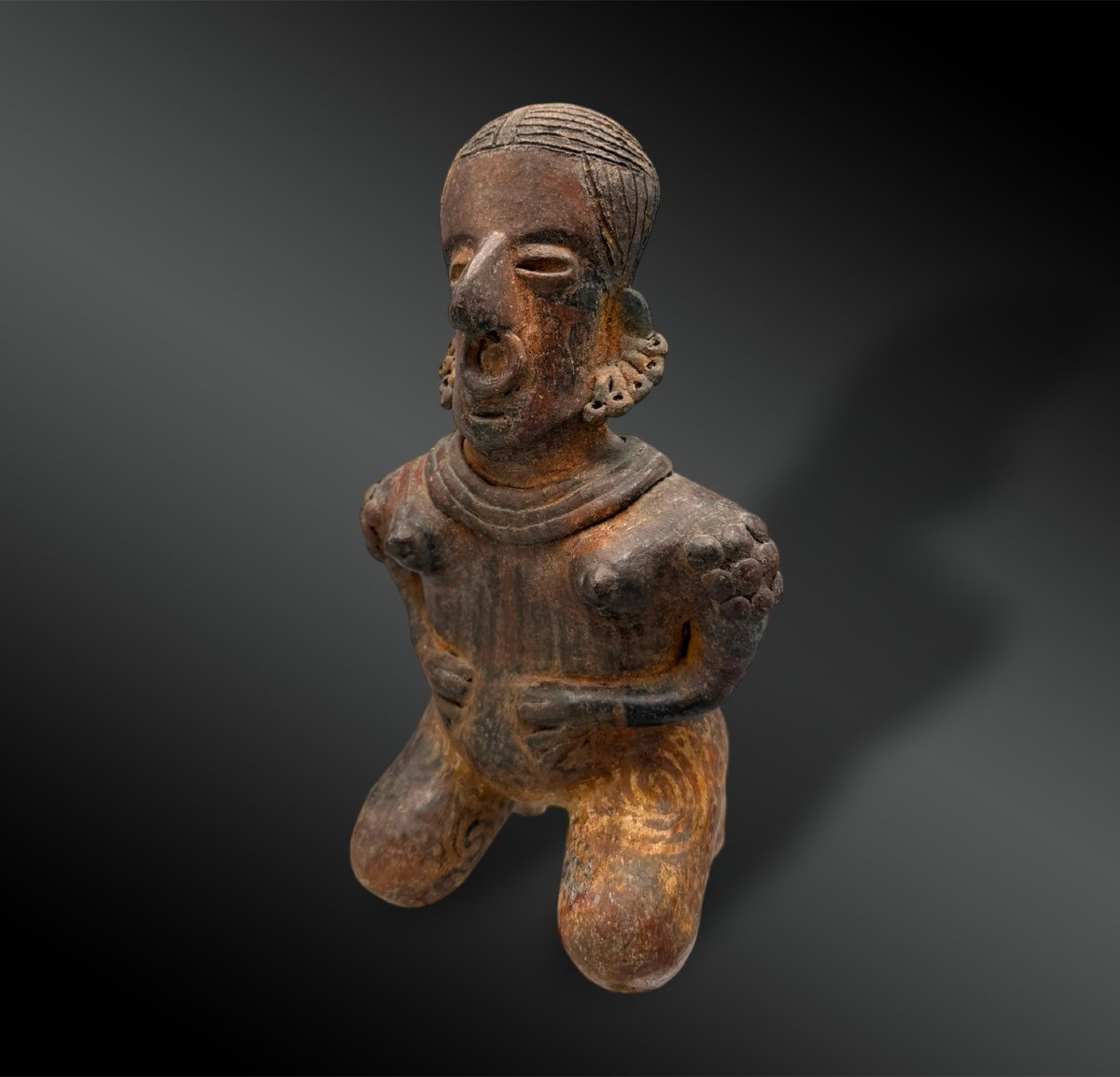
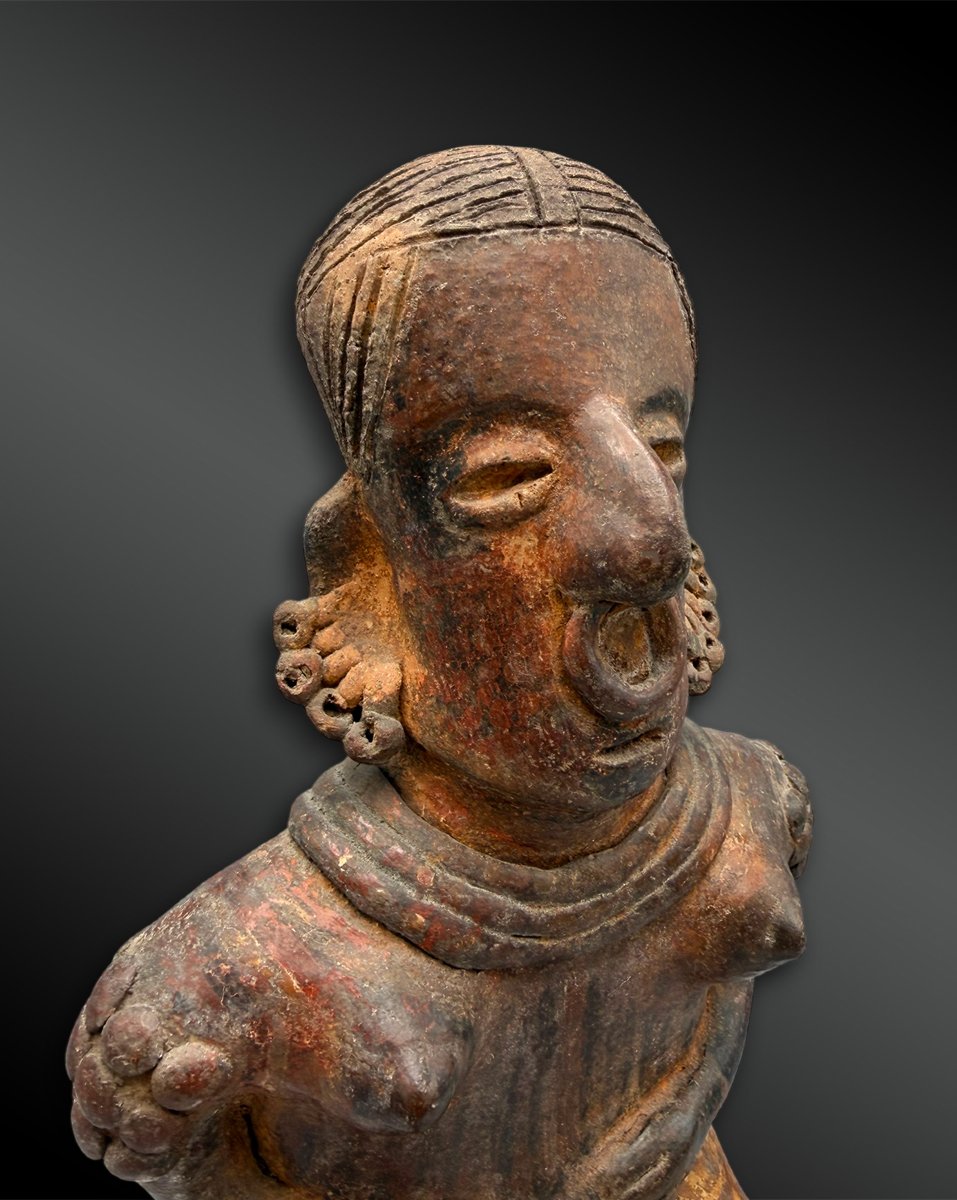
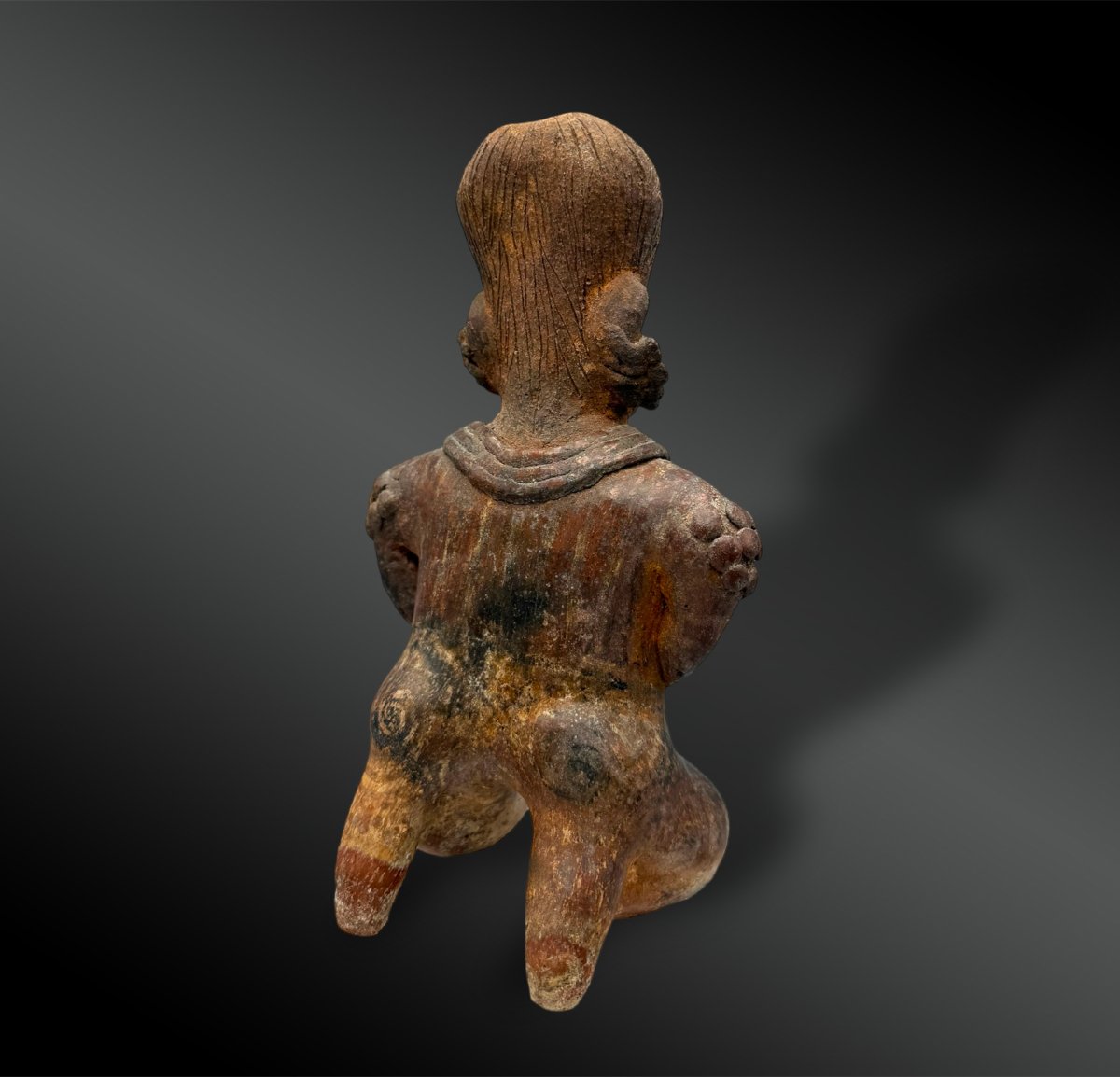
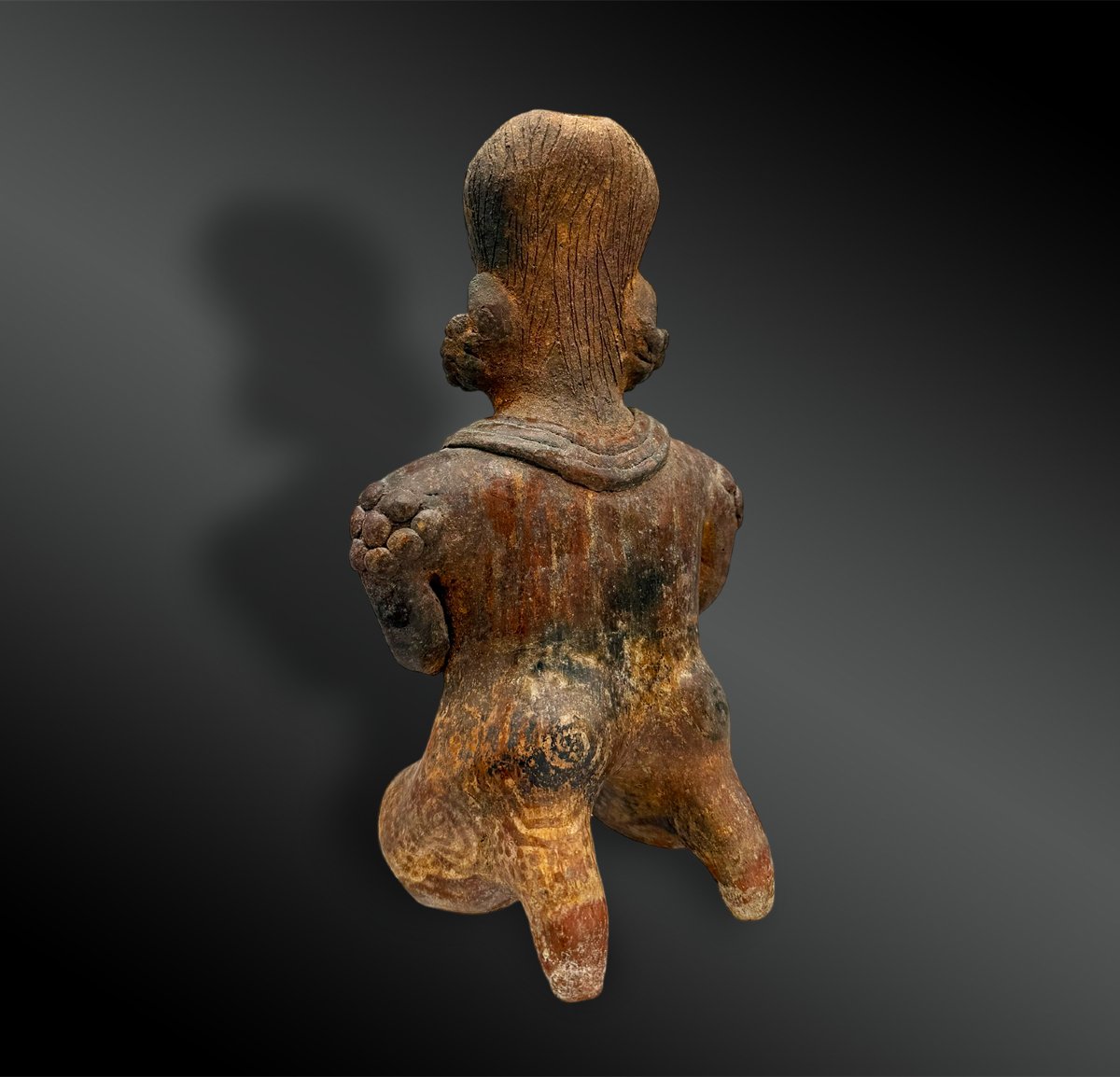
An anthropomorphic statuette depicting a kneeling woman, made of terracotta with a cream-brown ochre slip. Her body, entirely adorned with numerous red ochre body paintings of lines and spirals, is richly adorned with jewellery: a three-row torque necklace, shoulder ornaments, multiple hoop earrings, bracelets and a large nose ring.
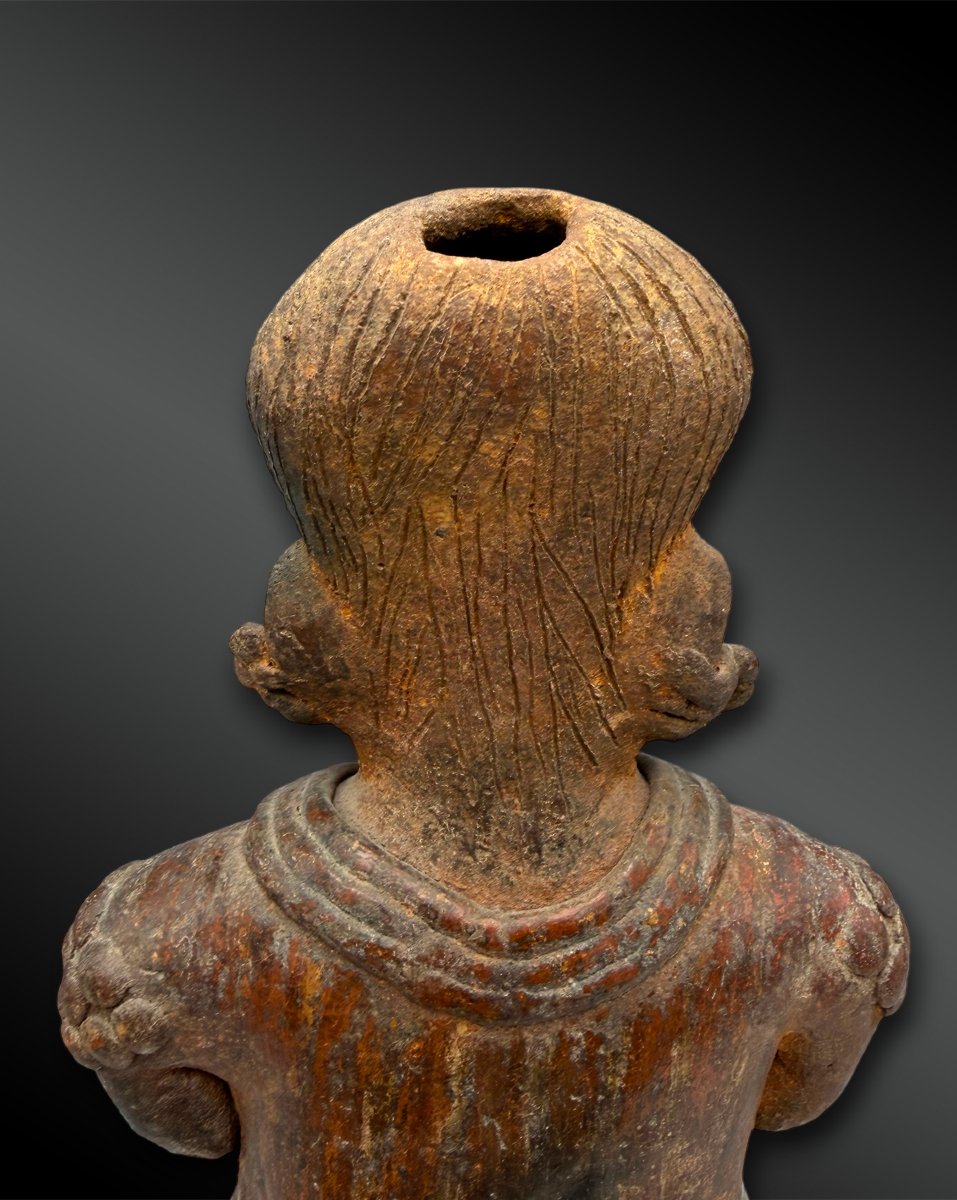
Her hands rest on her protruding abdomen, thus alluding to her motherhood; her hair features a precisely defined pattern of incisions arranged around a central parting; her eyes are shaped like coffee beans, her nose is aquiline, and the top of her skull is deformed to form a piercing.
These statuettes are known as ‘parturientes’ because their stylised depiction appears to have sought to capture the act of childbirth.
As funerary companions, they were placed alongside the deceased to accompany them into the afterlife.
Bibliography: It is reproduced in the catalogue for the exhibition ‘Childhood and Motherhood’, organised by the KeramioN gallery from 11 February to 5 March 2011, p. 38.
Text and photos © FCP CORIDON
Ref.: 7305
Nayarit culture, western Mexico
San Sebastián style
Proto-Classical period, 100 BC – 250 AD
Terracotta and pigments
H.: 25; W.: 15 cm
An anthropomorphic statuette depicting a kneeling woman, made of terracotta with a cream-brown ochre slip. Her body, entirely adorned with numerous red ochre body paintings of lines and spirals, is richly adorned with jewellery: a three-row torque necklace, shoulder ornaments, multiple hoop earrings, bracelets and a large nose ring.
Her hands rest on her protruding abdomen, thus alluding to her motherhood; her hair features a precisely defined pattern of incisions arranged around a central parting; her eyes are shaped like coffee beans, her nose is aquiline, and the top of her skull is deformed to form a piercing.
These statuettes are known as ‘parturientes’ because their stylised depiction appears to have sought to capture the act of childbirth.
As funerary companions, they were placed alongside the deceased to accompany them into the afterlife.
Bibliography: It is reproduced in the catalogue for the exhibition ‘Childhood and Motherhood’, organised by the KeramioN gallery from 11 February to 5 March 2011, p. 38.
Text and photos © FCP CORIDON
Ref.: 7305
4 280 €
Period: Before 16th century
Style: Other Style
Condition: Excellent condition
Reference (ID): 1797061
Availability: In stock
Print