THIS OBJECT WAS SOLD
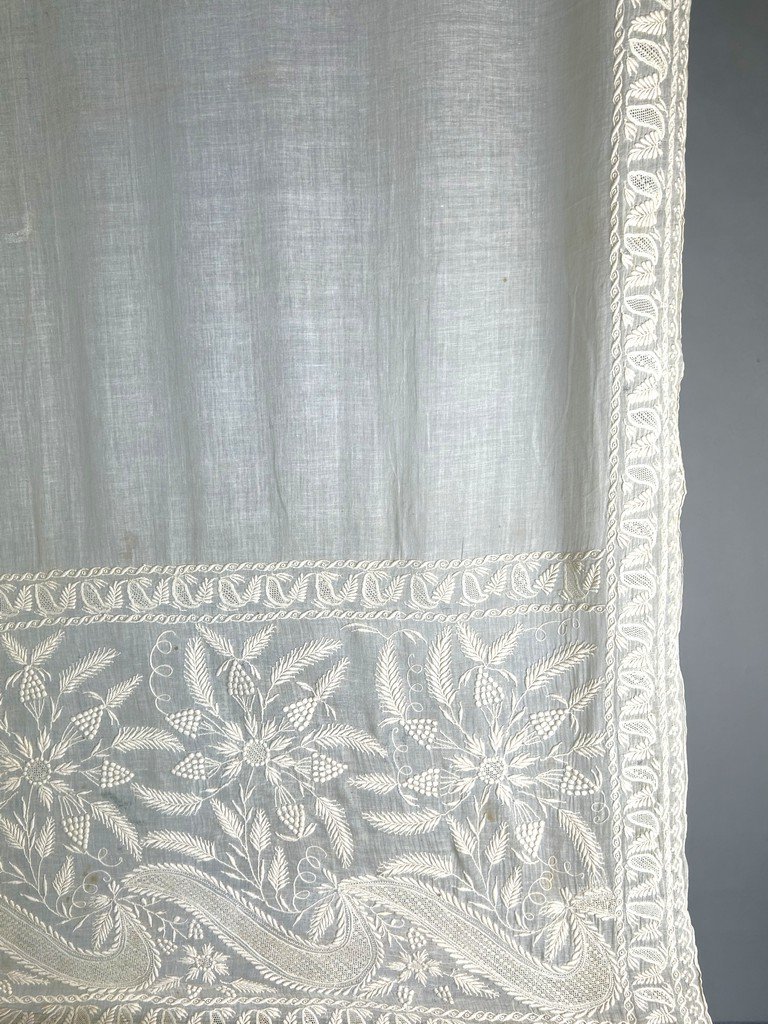
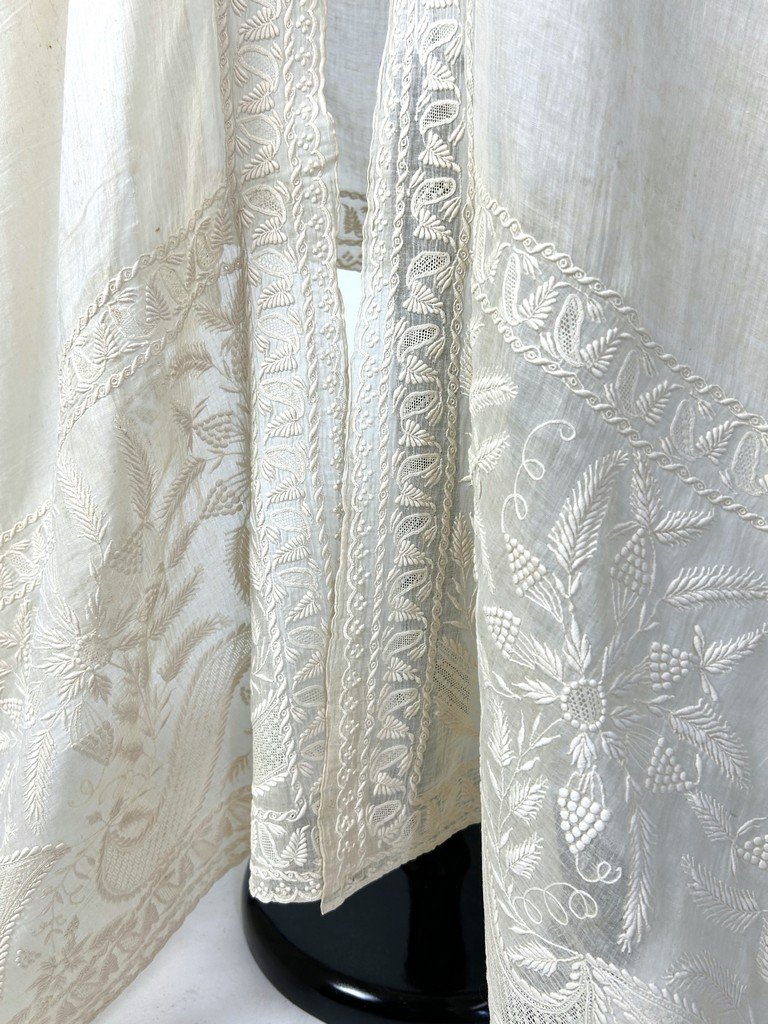
Embroidered Muslin Shawl Known As "chikan Work"—lucknow, India, For The European Fashion Market—early 19th Century



Circa 1800–1825
Lucknow, India, for European fashion
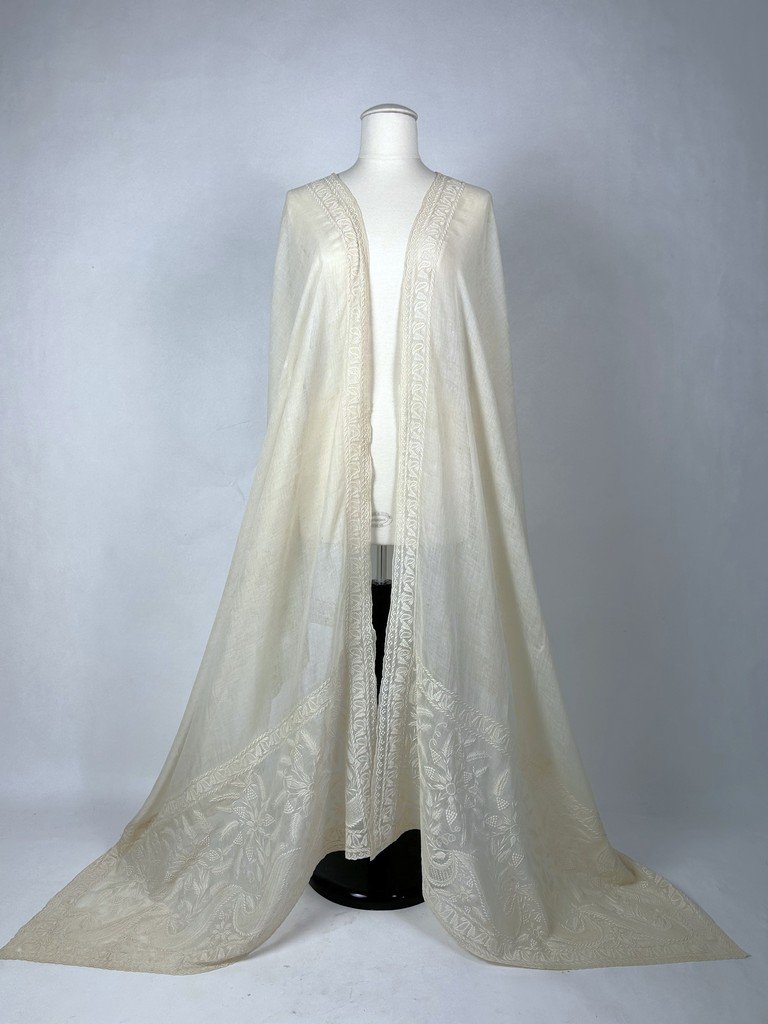
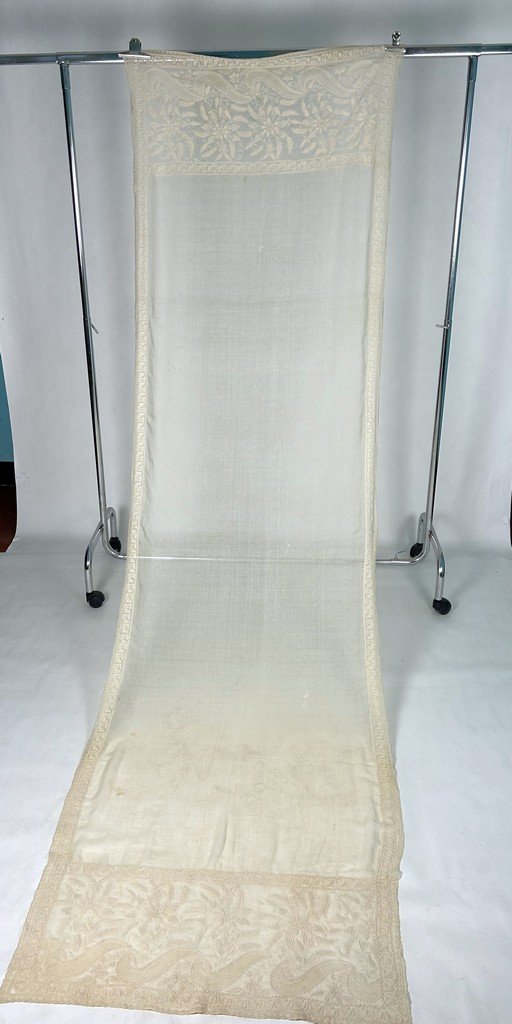
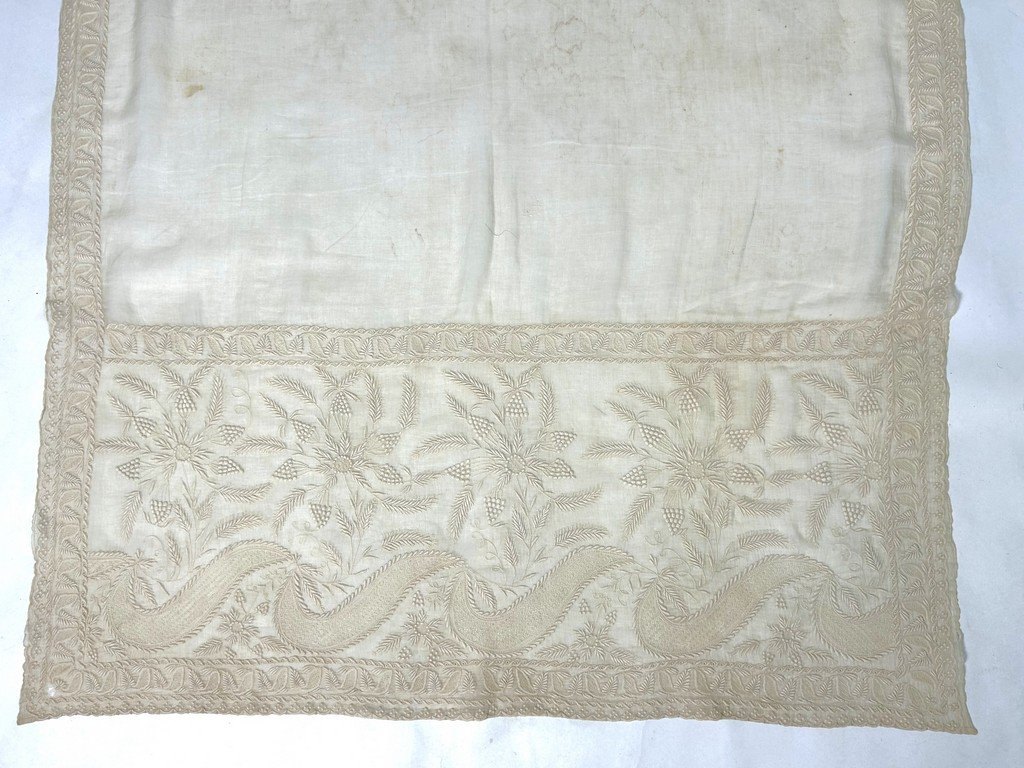
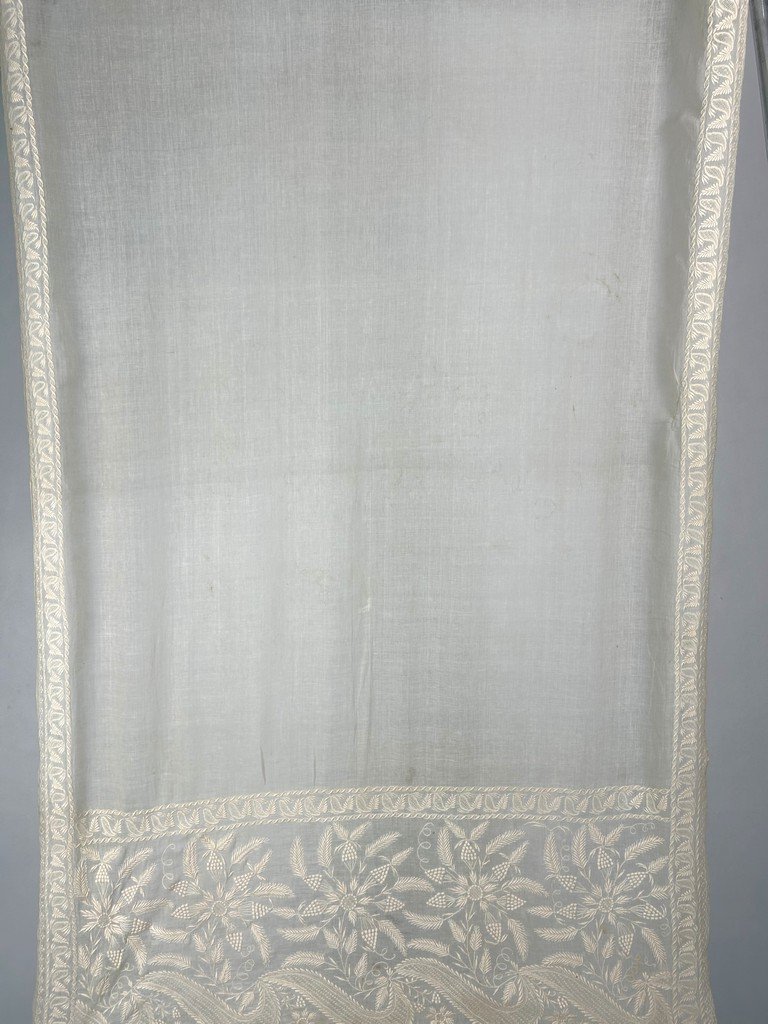
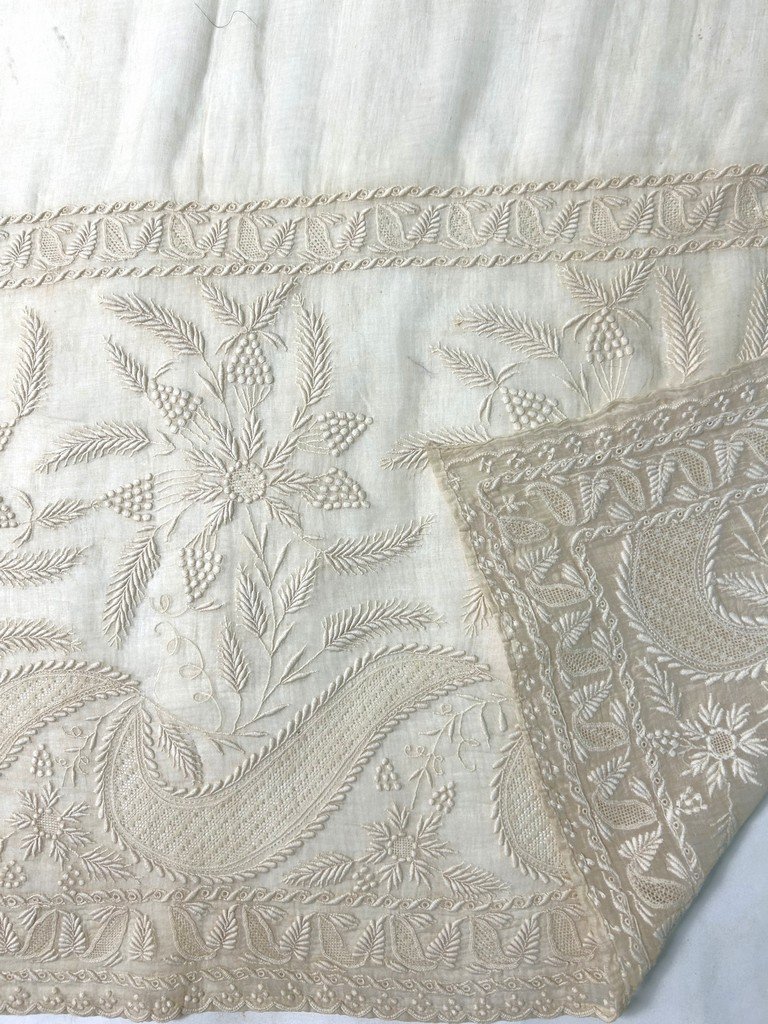
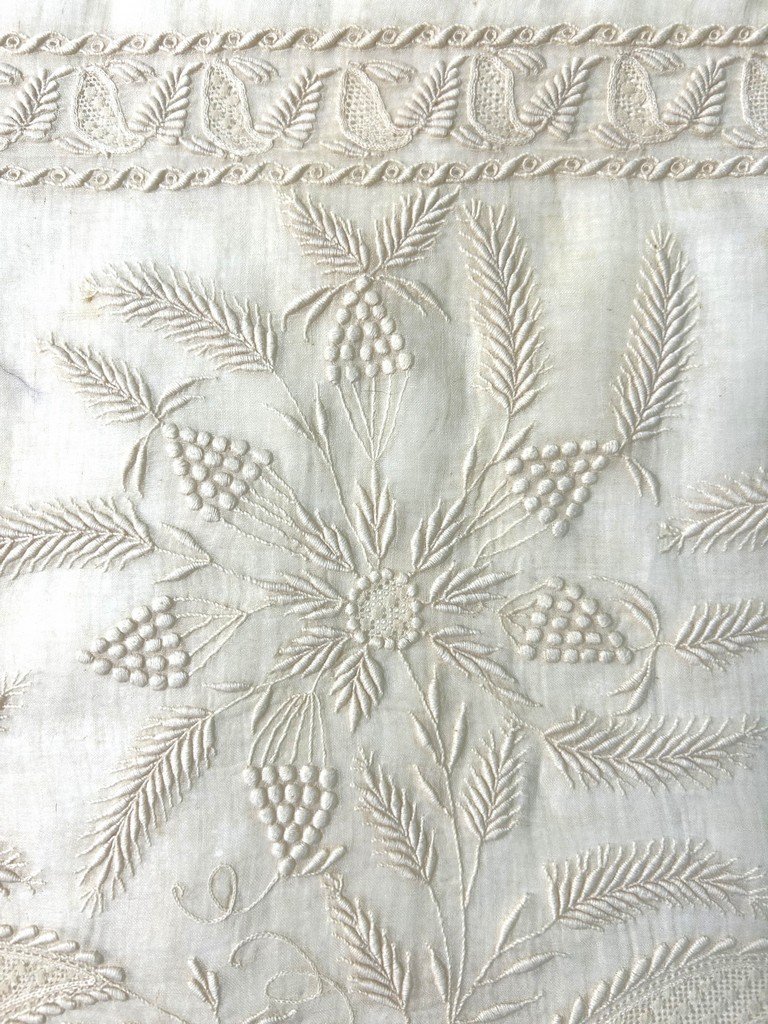
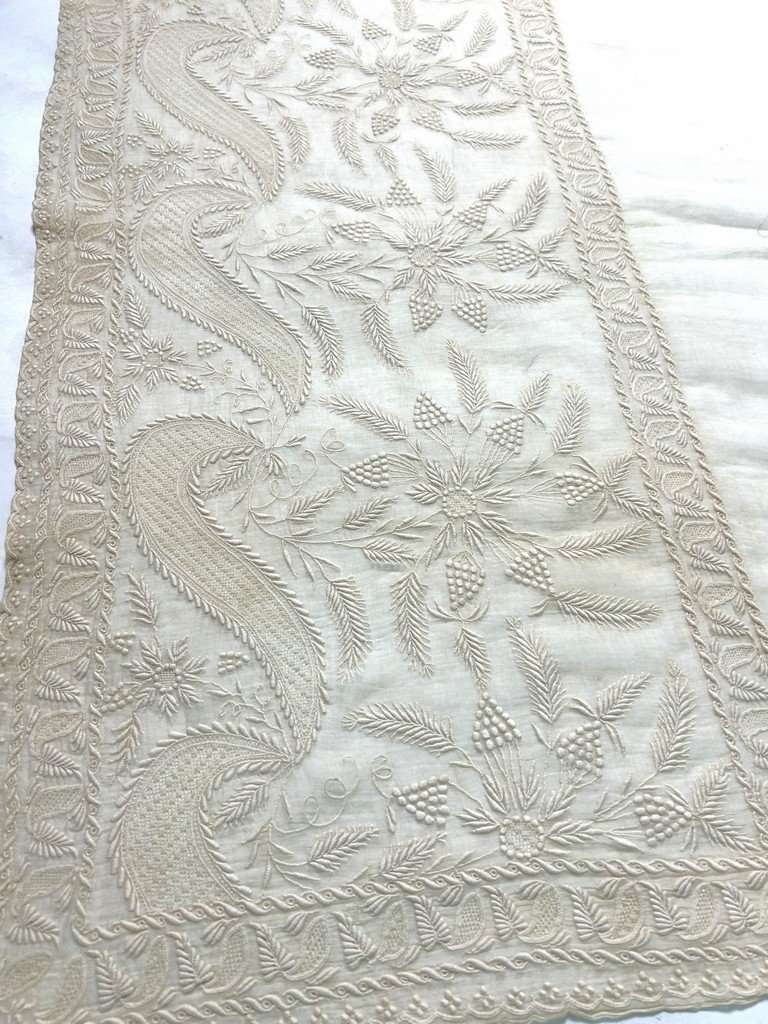
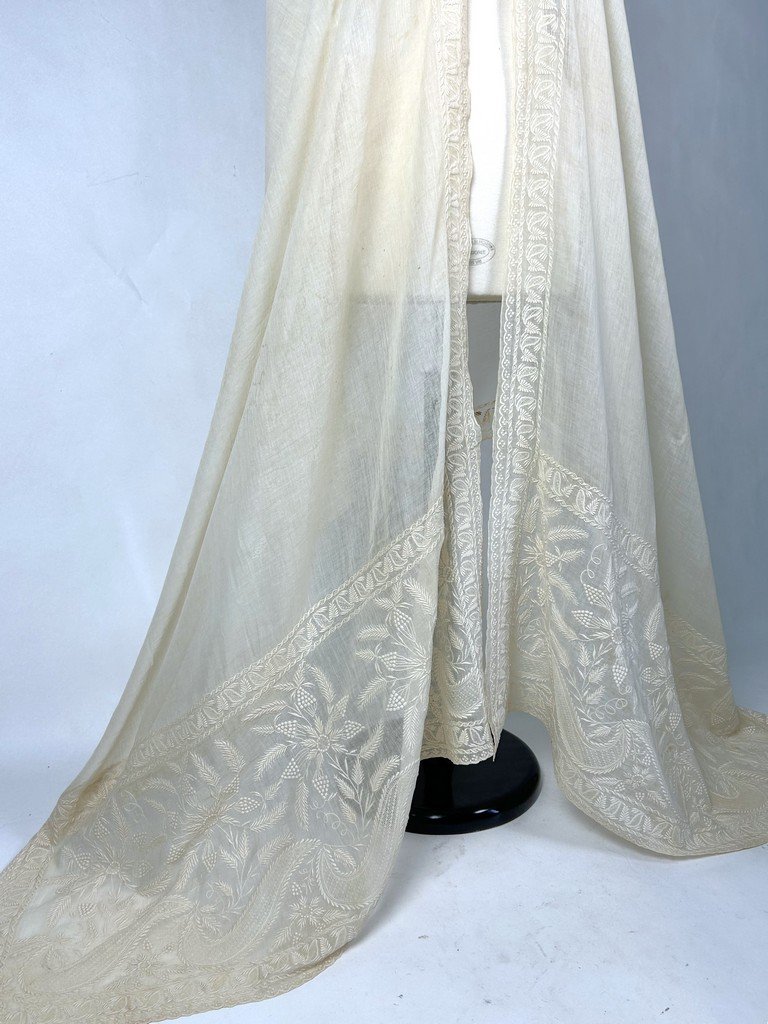
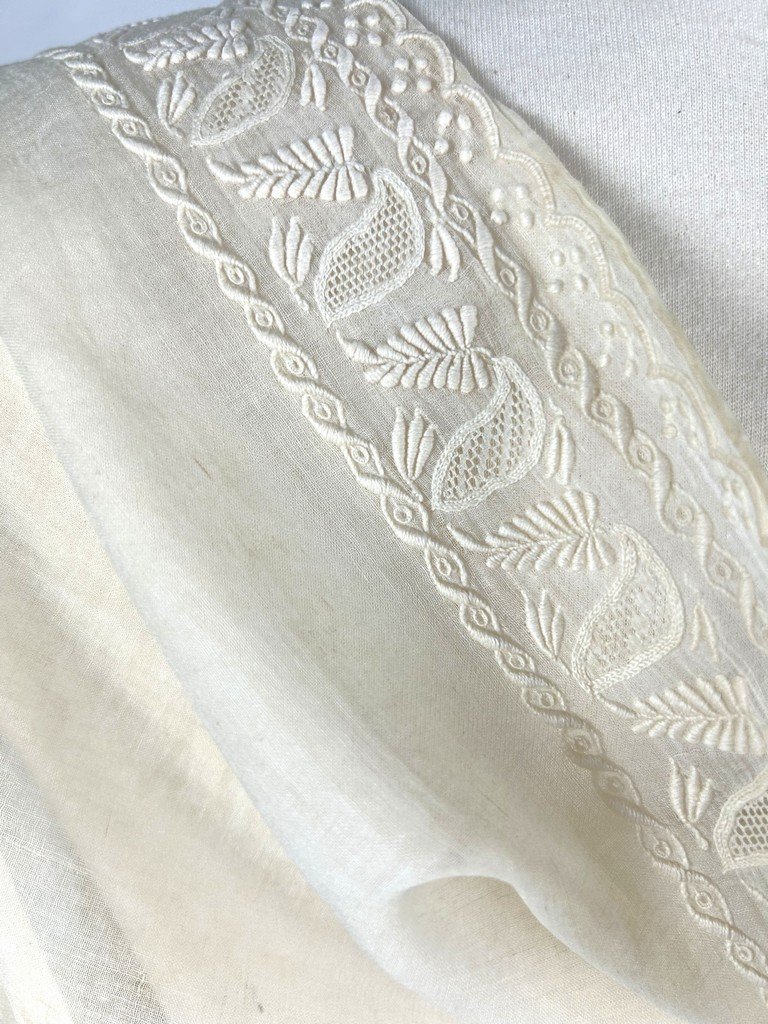
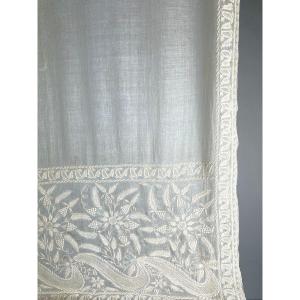
Long embroidered shawl made of cream-colored cotton muslin, known as Chikan Work, originating from the city of Lucknow in Uttar Pradesh, India. This type of highly refined embroidery was exported to Europe by the British East India Company. This trend for summer shawls corresponds to the Neoclassical fashion under Napoleon I in France and the Regency fashion in England. The design, created in India, is based on illustrations from European herbariums.Each end features five large, slanted motifs with broad flowers adorned with ears of wheat, framed by a frieze of stylized palm leaves reminiscent of cornucopias. The tone-on-tone embroidery is remarkably fine, featuring openwork stitches (drawn threads) in the solid areas. Of note are a few rare and discreet water stains in the central field and two or three tiny repairs at the corners—the only flaws to be noted. In good overall condition. Can be hung and handled without issue.
Dimensions: 297 cm x 83 cm.
Lucknow, India, for European fashion
Long embroidered shawl made of cream-colored cotton muslin, known as Chikan Work, originating from the city of Lucknow in Uttar Pradesh, India. This type of highly refined embroidery was exported to Europe by the British East India Company. This trend for summer shawls corresponds to the Neoclassical fashion under Napoleon I in France and the Regency fashion in England. The design, created in India, is based on illustrations from European herbariums.Each end features five large, slanted motifs with broad flowers adorned with ears of wheat, framed by a frieze of stylized palm leaves reminiscent of cornucopias. The tone-on-tone embroidery is remarkably fine, featuring openwork stitches (drawn threads) in the solid areas. Of note are a few rare and discreet water stains in the central field and two or three tiny repairs at the corners—the only flaws to be noted. In good overall condition. Can be hung and handled without issue.
Dimensions: 297 cm x 83 cm.
Explore similar pieces and discover your ideal find:
embroidery and lace