THIS OBJECT WAS SOLD
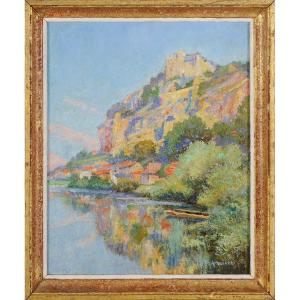
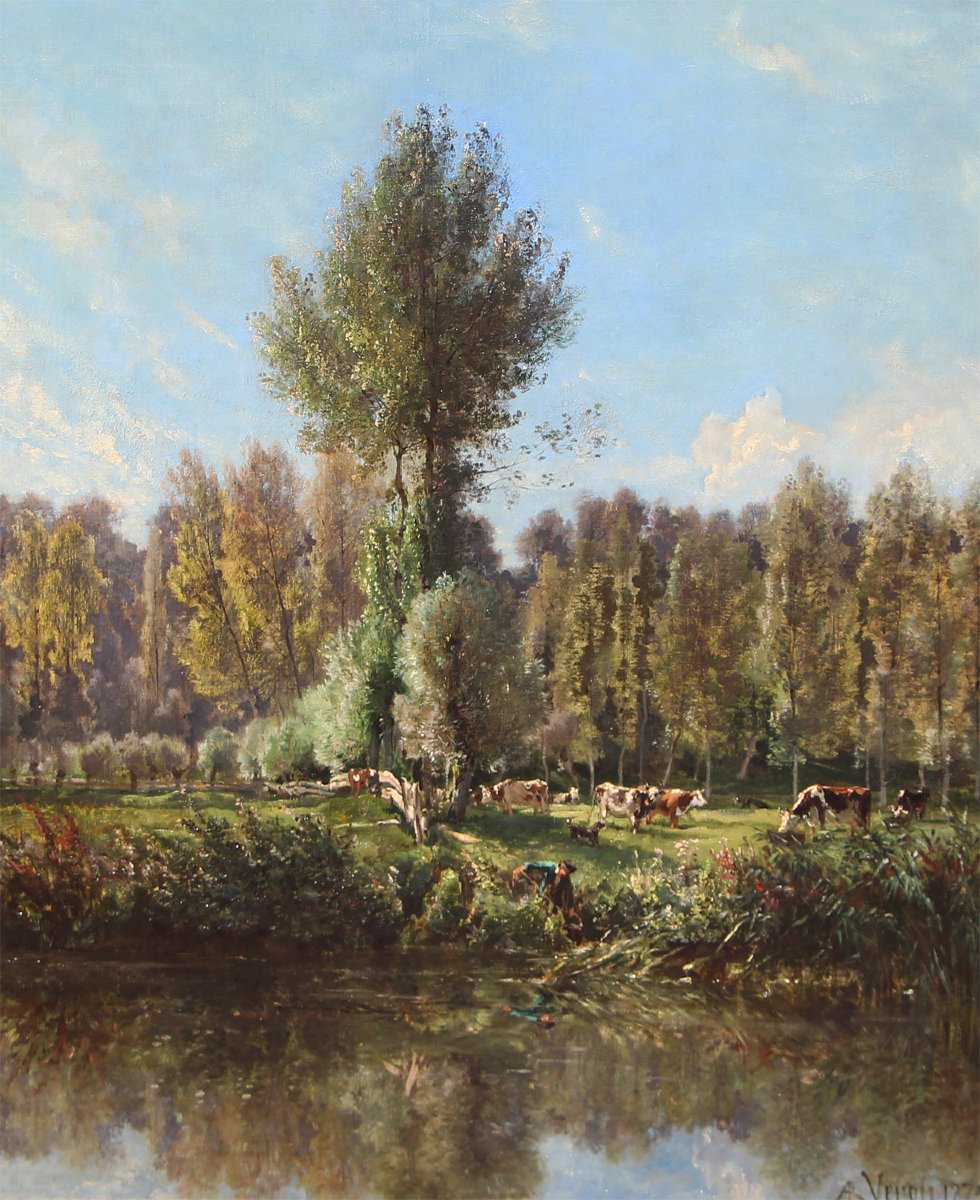
Alexandre René Veron (1826–1897) The Banks Of The Morin At Crécy-en-brie, 1873


Alexandre René VERON (1826–1897)
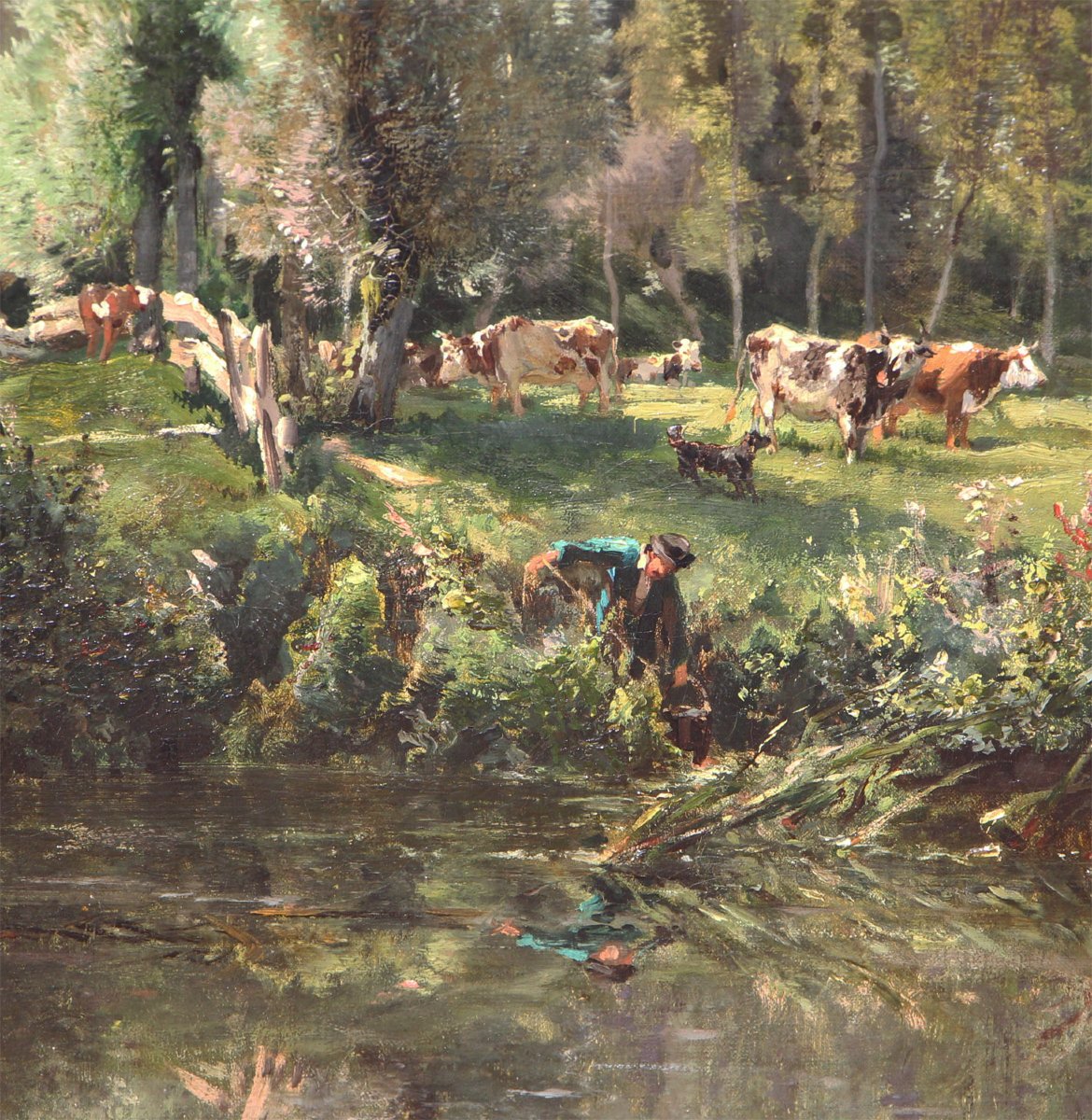
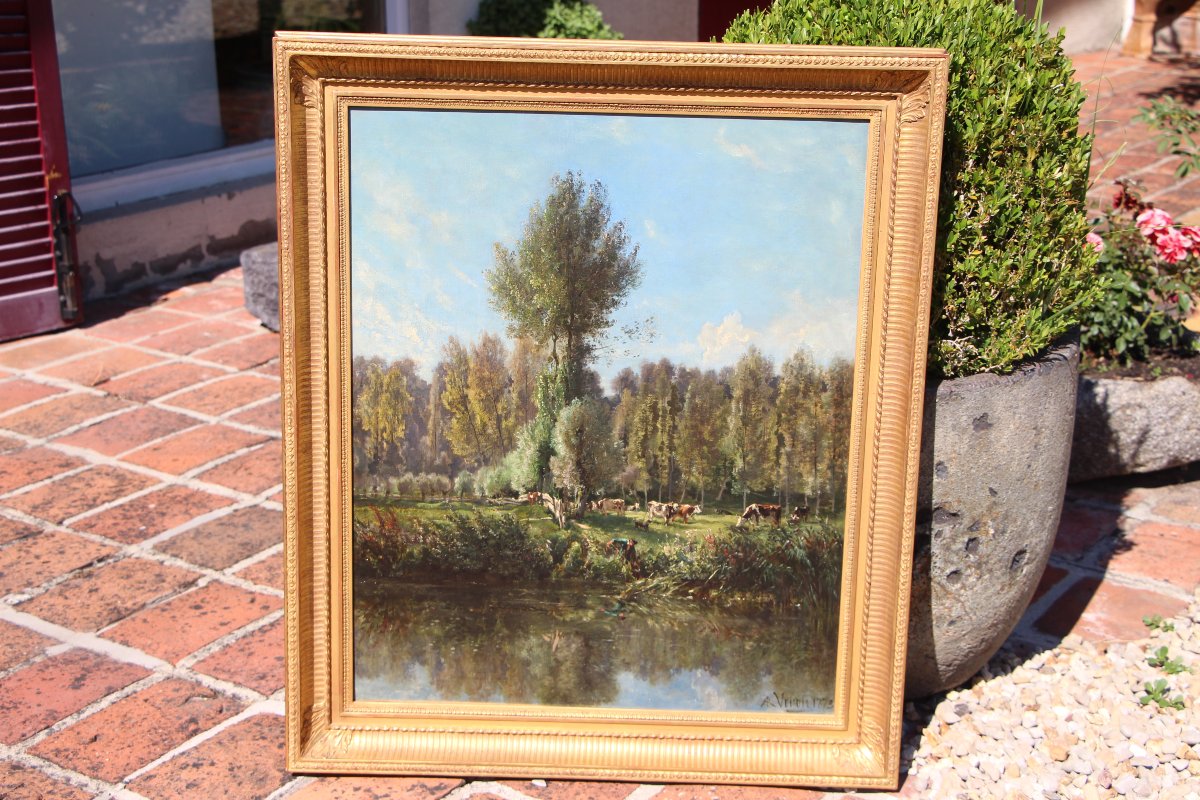
The Banks of the Morin at Crécy-en-Brie, 1873
Oil on canvas,
Signed and dated lower right
73x60cm
Eleven paintings by Alexandre René Véron (1826–1897) depicting Crécy were previously known. Here is the twelfth, previously unpublished, which we now rediscover as if it were a letter tucked behind a piece of furniture.
A student of Delaroche and part of the Marlotte circle, in which Corot moved, Véron came in 1871 and 1873 to seek out, along the banks of the Grand Morin, that veiled light of the Brie plateau that Corot deemed “good for painting.”
He found it here: In the meadow by the green path at the foot of Voulangis, seen from the Crécy riverbank (near the fairgrounds)
It was there that Cinot, a local native and Véron’s student, would set up his easel; it is this very lower part of Voulangis that Corot painted in the summer of 1873, while staying just a few meters away at Chatelain’s house, at 32 Rue Dam’Gilles.
Nothing happens there, and that is the whole point. The Morin River no longer flows; it breathes. Cows still graze there today, as if the meadow had refused to change its purpose for the past 150 years. This is what a rediscovered painting can do: reveal the permanence of a place that art history had ceased to notice.
The Banks of the Morin at Crécy-en-Brie, 1873
Oil on canvas,
Signed and dated lower right
73x60cm
Eleven paintings by Alexandre René Véron (1826–1897) depicting Crécy were previously known. Here is the twelfth, previously unpublished, which we now rediscover as if it were a letter tucked behind a piece of furniture.
A student of Delaroche and part of the Marlotte circle, in which Corot moved, Véron came in 1871 and 1873 to seek out, along the banks of the Grand Morin, that veiled light of the Brie plateau that Corot deemed “good for painting.”
He found it here: In the meadow by the green path at the foot of Voulangis, seen from the Crécy riverbank (near the fairgrounds)
It was there that Cinot, a local native and Véron’s student, would set up his easel; it is this very lower part of Voulangis that Corot painted in the summer of 1873, while staying just a few meters away at Chatelain’s house, at 32 Rue Dam’Gilles.
Nothing happens there, and that is the whole point. The Morin River no longer flows; it breathes. Cows still graze there today, as if the meadow had refused to change its purpose for the past 150 years. This is what a rediscovered painting can do: reveal the permanence of a place that art history had ceased to notice.
Explore similar pieces and discover your ideal find:
Landscapes