

Orthodox Triptych Depicting The Crowned Virgin And Child – Balkan School, 18th Century
Artist: école Balkanique, Xviiie Siècle
Devotional Triptych of the Virgin Queen of Heaven and the Royal Child — Tempera on panel – Post-Byzantine Balkan School – Late 18th century
Description
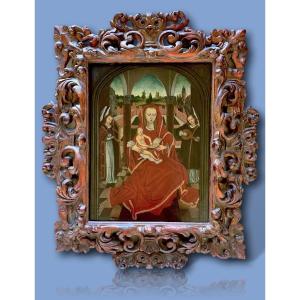
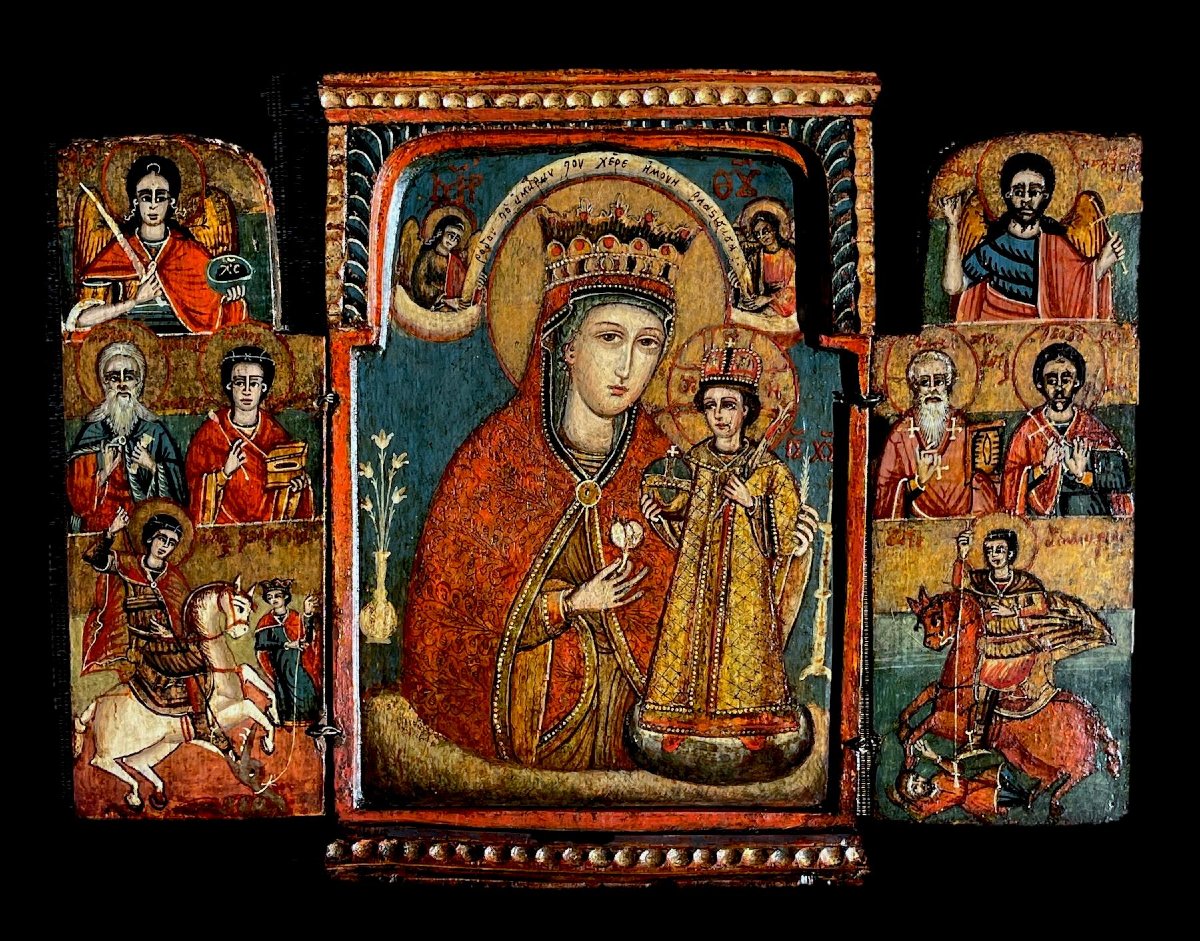
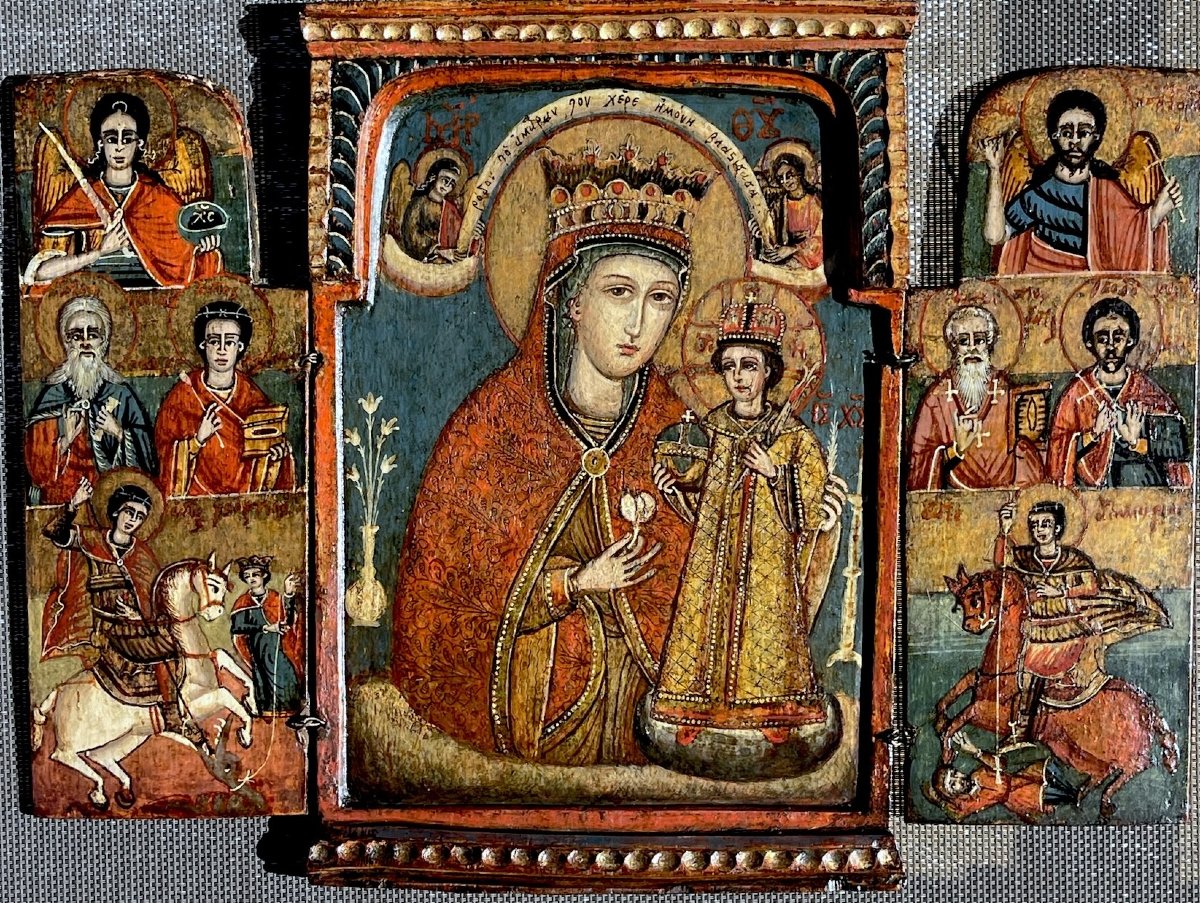
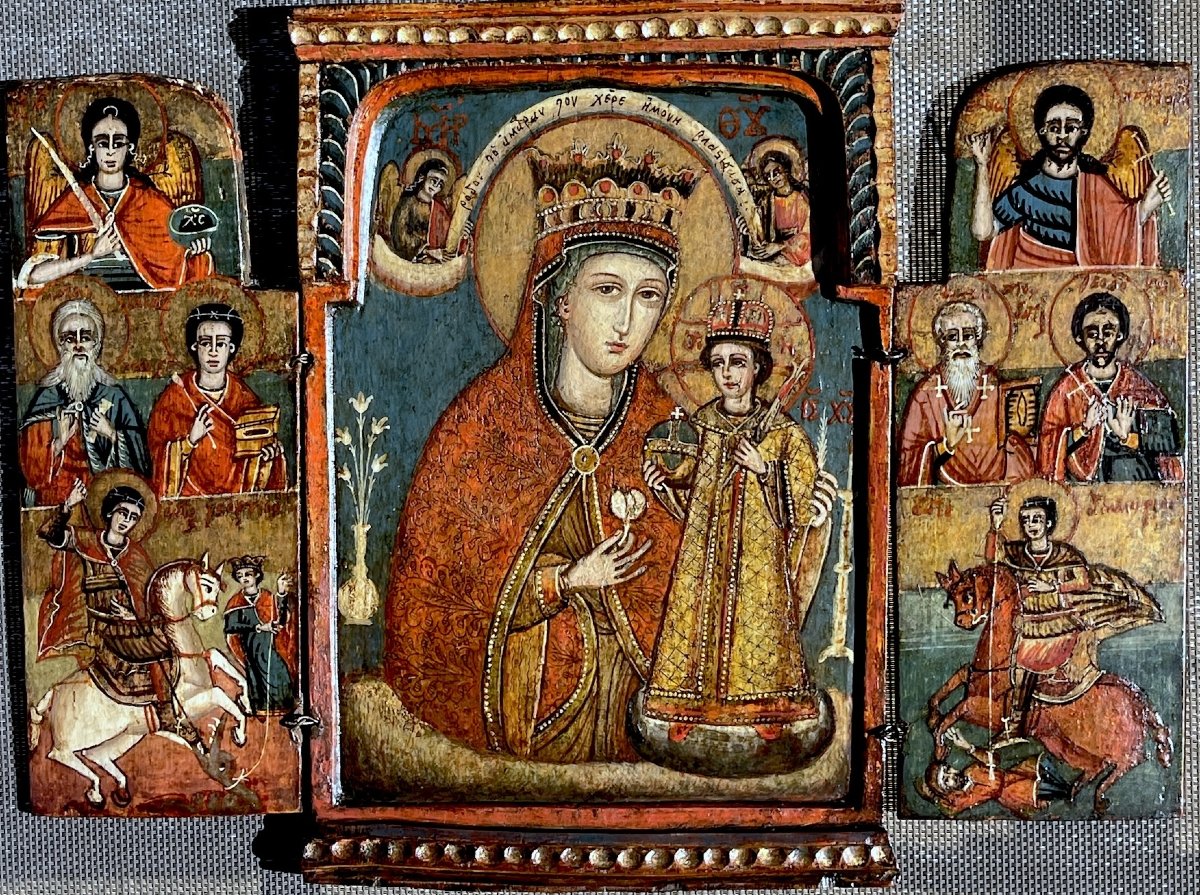
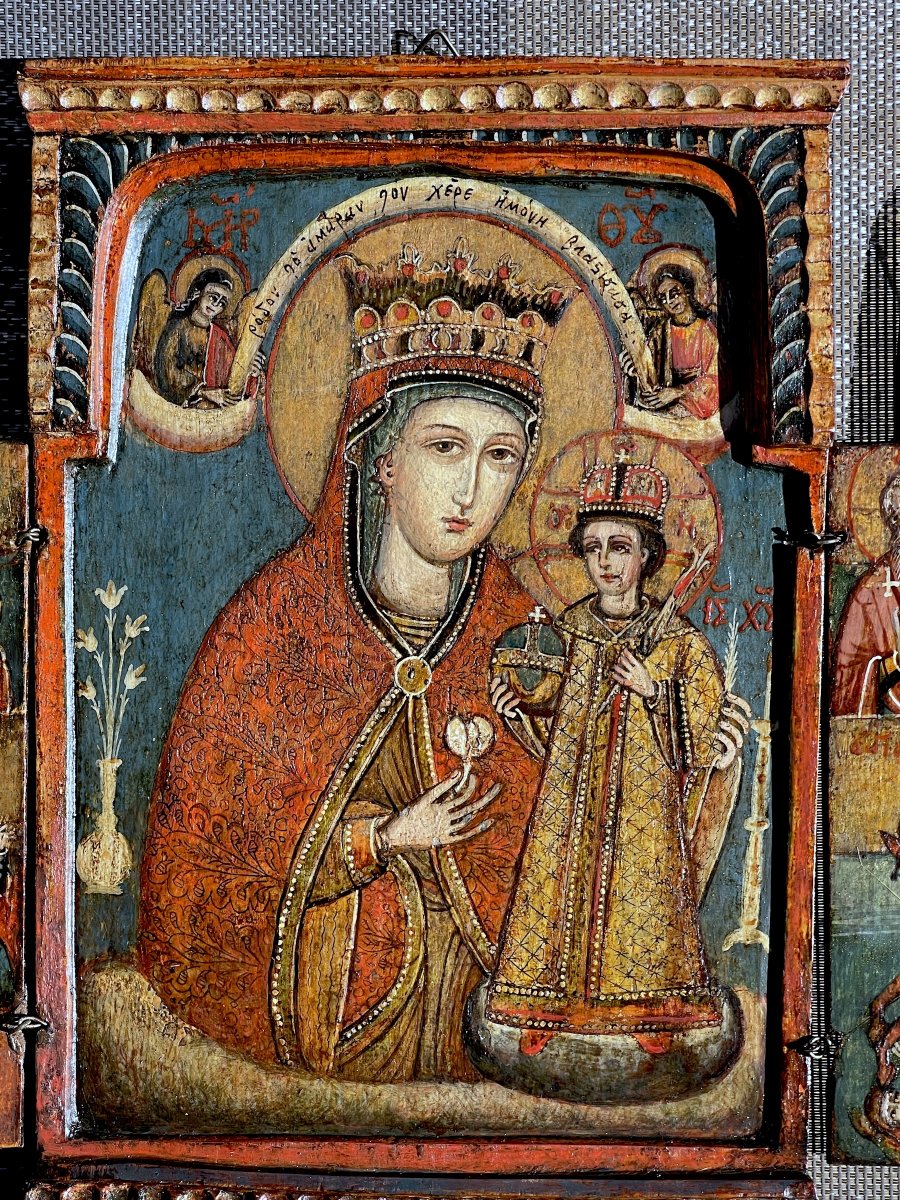
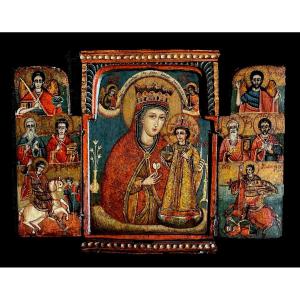
A rare and remarkable Orthodox devotional triptych, painted in tempera on *levkas*-prepared wood panels. The central panel depicts the crowned Most Holy Mother of God (Theotokos) holding the likewise crowned Christ Child, surrounded by a rich array of patron saints distributed across the two side wings.
With its high-quality painting, elegant facial features, excellently preserved polychromy, and rich iconographic program, this work represents the finest output of the post-Byzantine workshops active in the Balkans during the final decades of the 18th century.
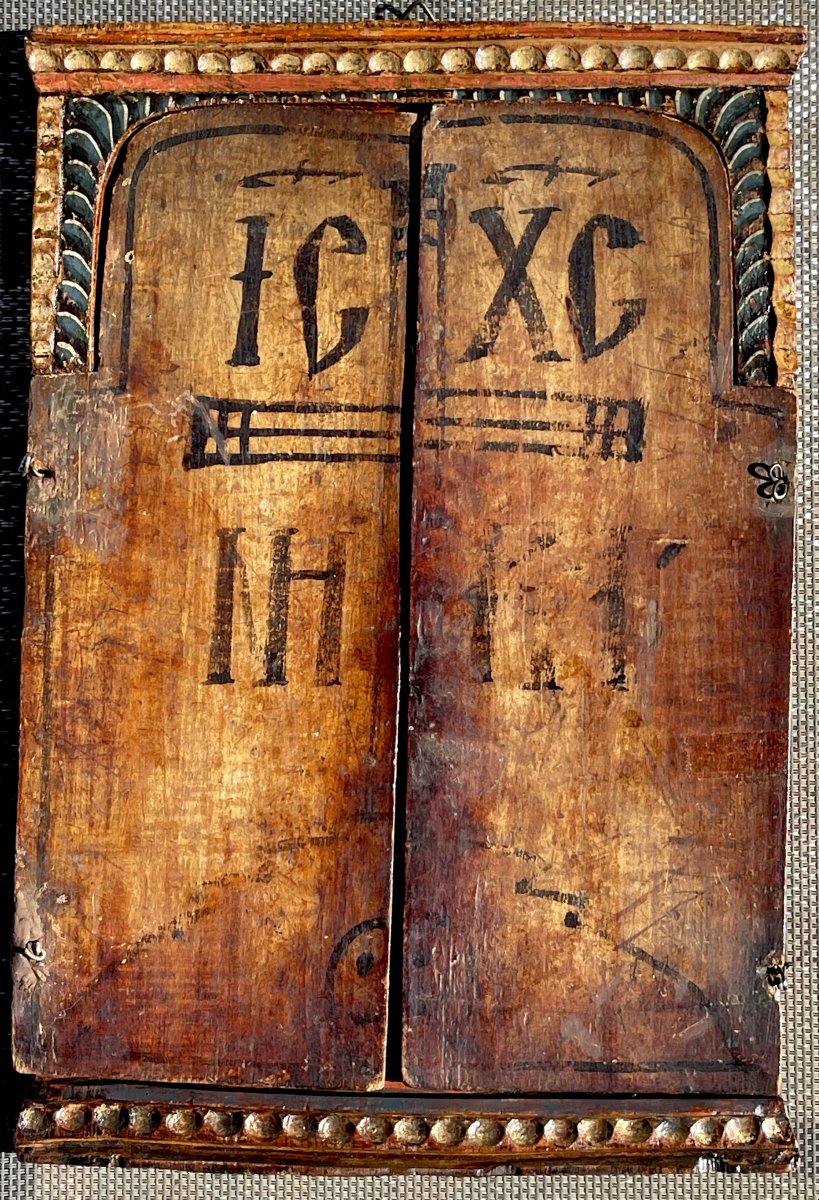
Designed to accompany the daily prayers of an Orthodox family, this triptych was intended to be opened on a home altar and closed after private devotions, thus serving as a true portable shrine.
Iconography of great theological richness
The central panel concentrates the composition's entire spiritual power.
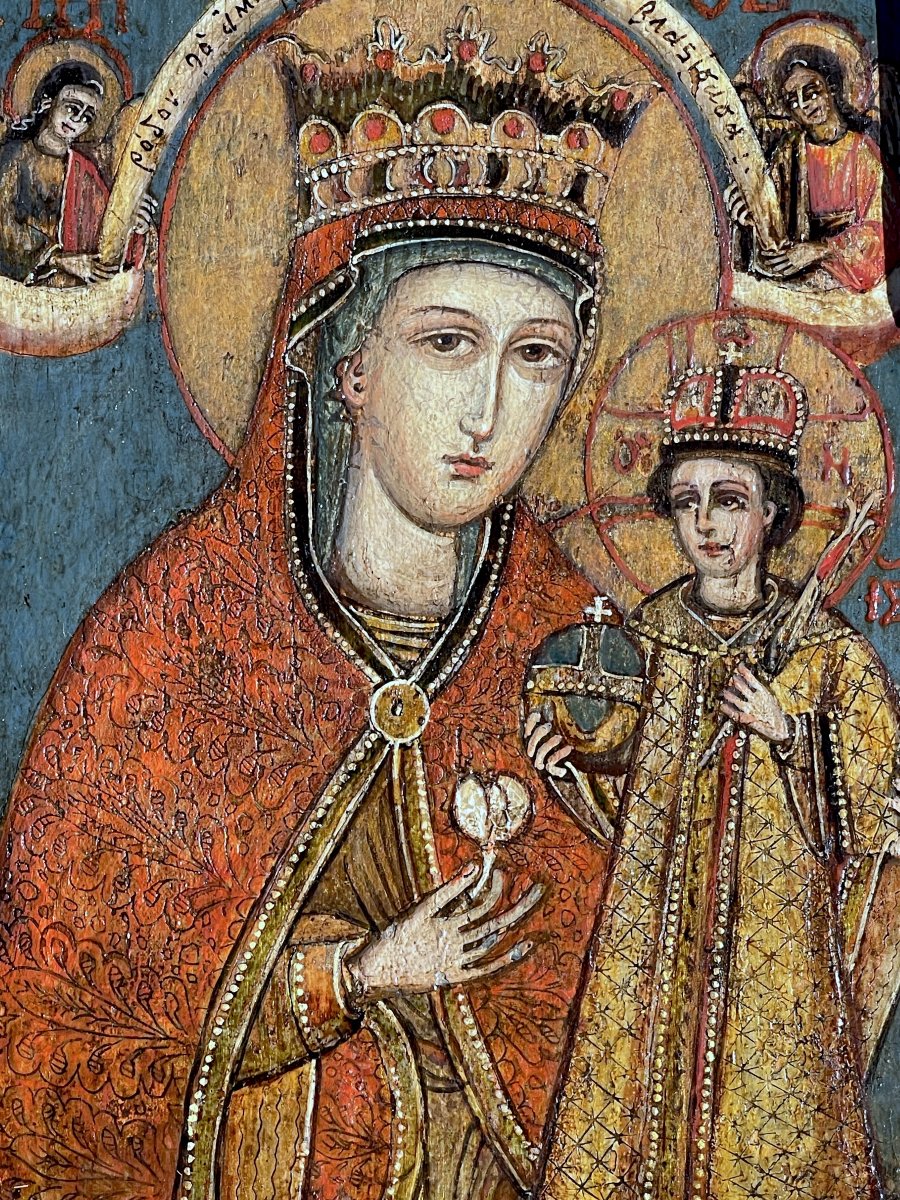
The Virgin is depicted in majesty under the title of Queen of Heaven, wearing an imposing imperial crown.
Her face, remarkably gentle, retains the nobility inherited from the Byzantine tradition.
Her long, slightly inclined gaze directly invites the faithful to meditation.
She wears the traditional deep-red *maphorion*, delicately embellished with engraved floral motifs highlighted in gold.
A white lily—a rare symbol in the Orthodox tradition—appears in her right hand.
This flower simultaneously evokes:
Mary's absolute purity,
the Incarnation,
the victory of Life over Death,
and her role of intercession between the earthly world and the Heavenly Kingdom.
The Christ Child is shown standing, clad in a finely decorated gold mantle. He holds:
the orb of the world,
the royal scepter,
while blessing the faithful.
The dual crown worn by Mary and Christ affirms their cosmic sovereignty.
Two angels flank the monumental halo and appear to support the celestial realm in which the sacred figures move.
The entire scene is set against a magnificent, intense blue background that lends great depth to the composition.
The wings: a veritable procession of heavenly protectors
The choice of saints is by no means arbitrary.
It constitutes a genuine spiritual program.
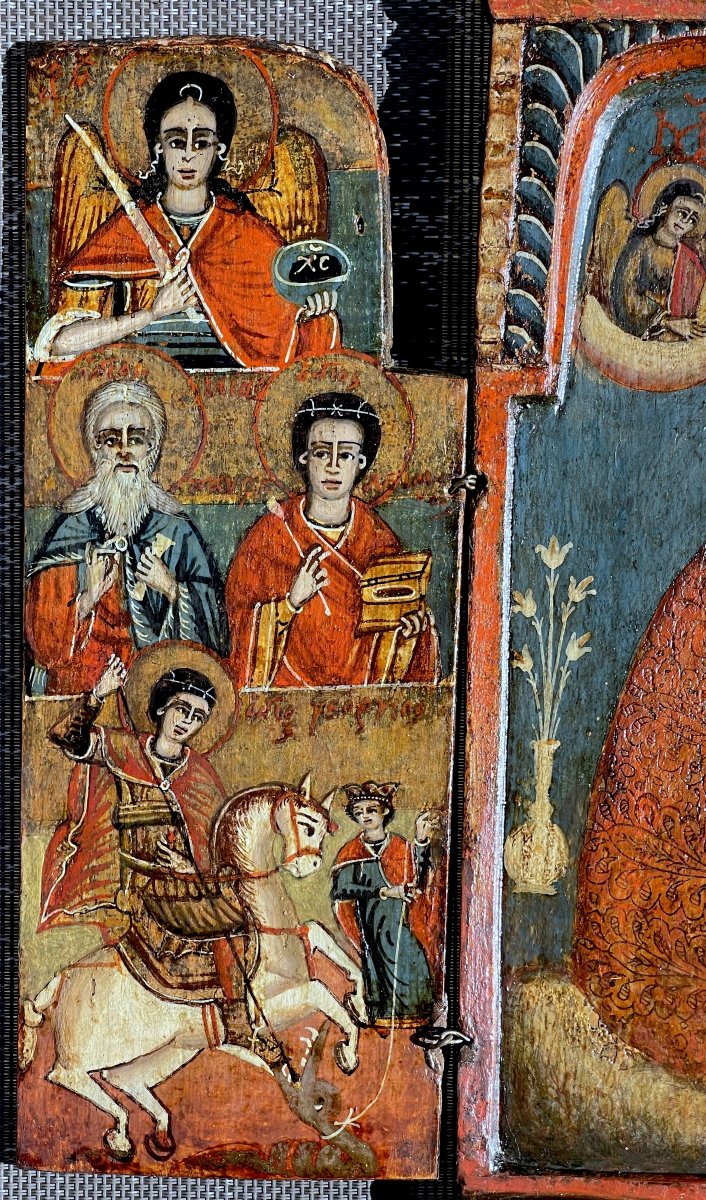
Left wing
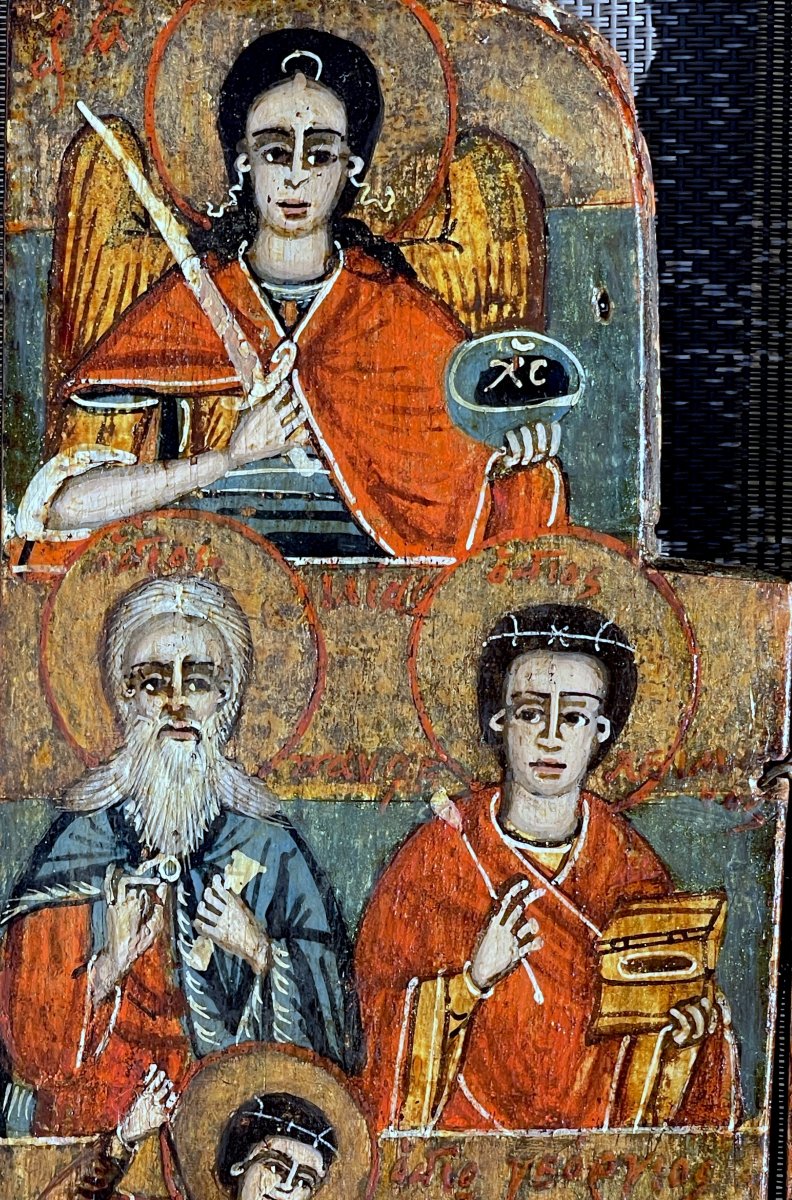
In the upper section appears the Archangel Michael, leader of the heavenly hosts.
His raised sword recalls his role as defender of the Christian people against the forces of evil.
The middle register brings together two great ascetic saints, likely:
Saint Elijah,
Saint Elisha,
or two Desert Fathers particularly venerated in the Balkans.
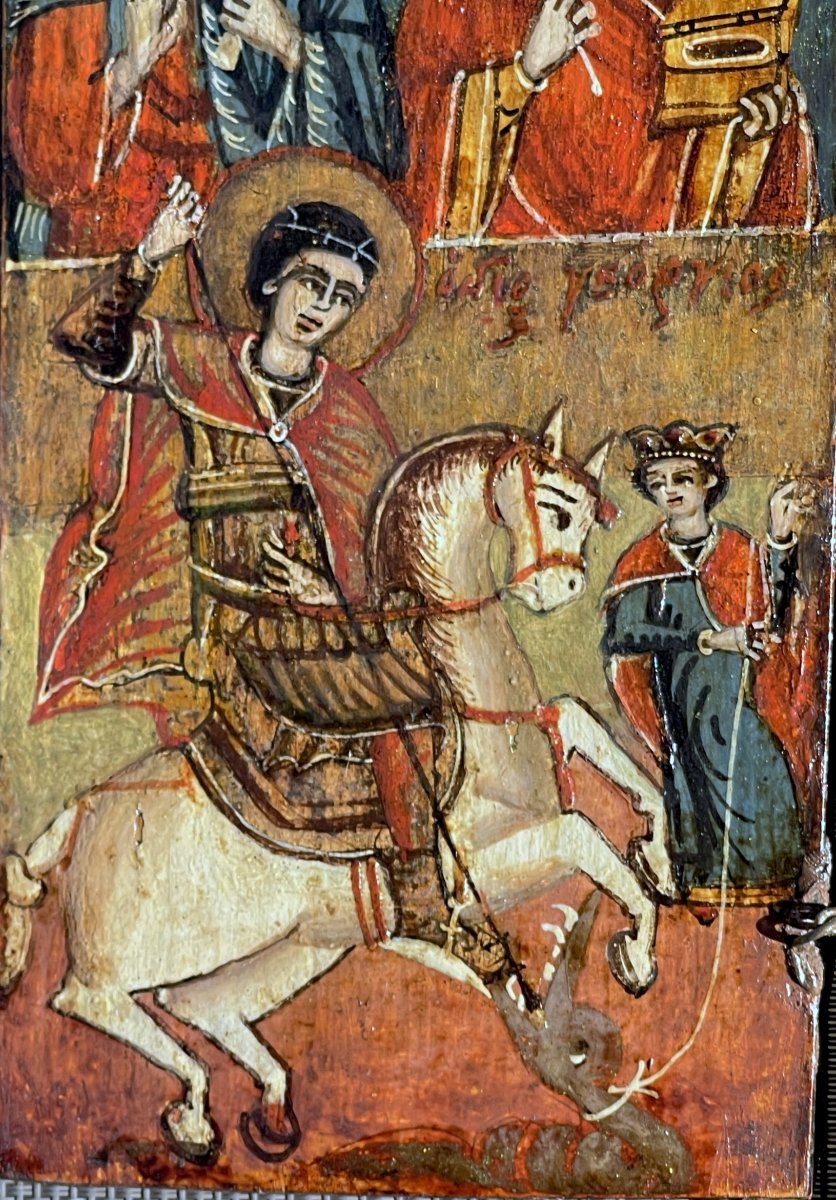
Finally, the lower section is dedicated to Saint George, the victorious horseman slaying the dragon.
This scene—one of the most popular in all Byzantine art—symbolizes the victory of Faith over paganism and all demonic powers.
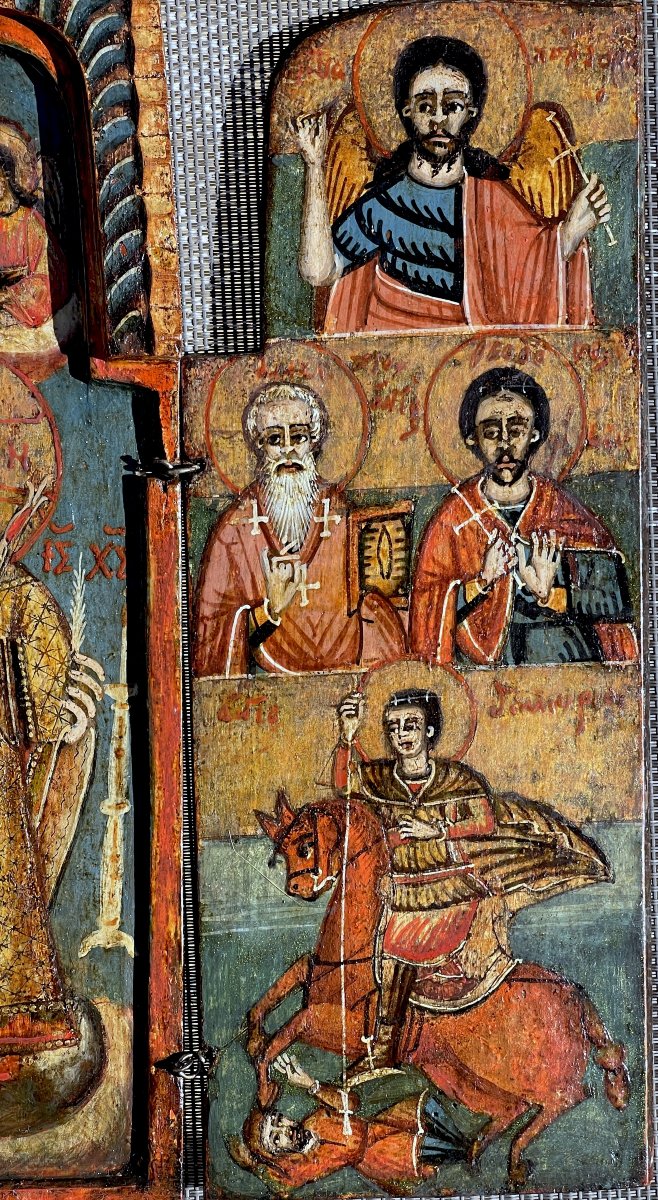
Right wing
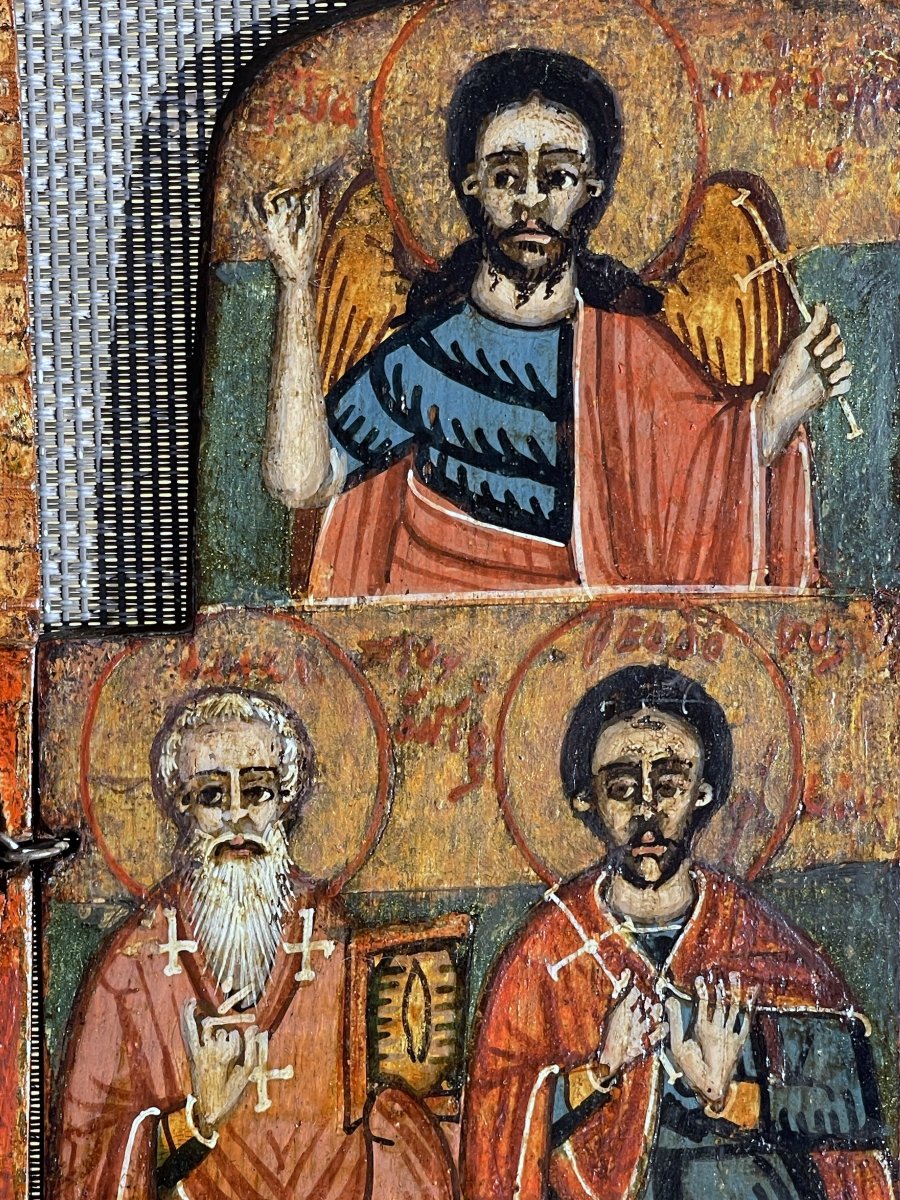
The upper register presents Saint John the Baptist, the Forerunner of Christ.
He is depicted in his traditional iconography, holding the scroll of his prophecy.
The middle register features two great bishops of the Eastern Church.
All indications suggest they are:
Saint Basil the Great,
Saint Nicholas of Myra,
two of the most important Doctors of Orthodoxy.
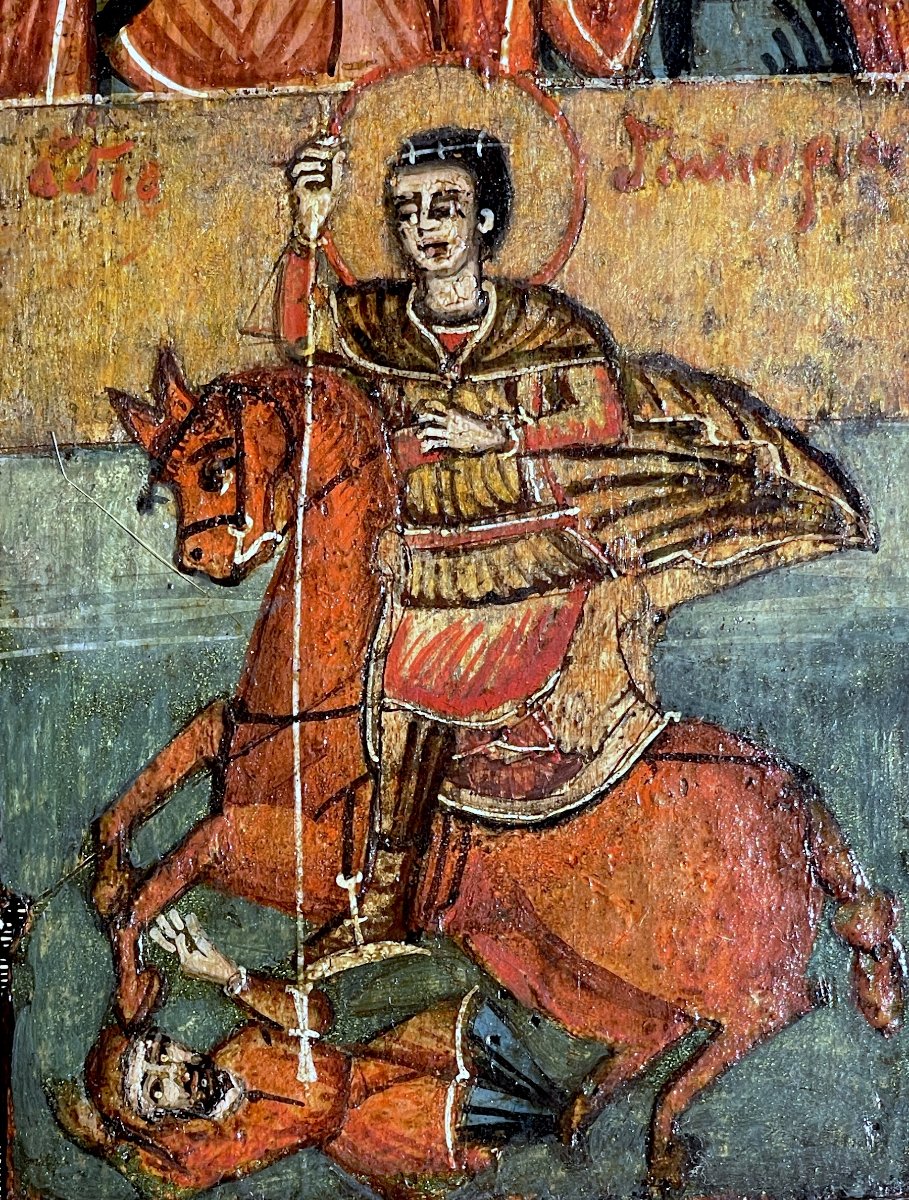
Finally, Saint Demetrius of Thessaloniki appears—another great military saint—depicted vanquishing an enemy.
The pairing of Saint George and Saint Demetrius is extremely common in Balkan workshops and here reinforces the triptych's protective purpose.
A painting directly descended from Byzantium
Although created in the 18th century, this work remains entirely faithful to the great aesthetic principles inherited from Constantinople. The figures remain deliberately hieratic.
Their motionless gazes draw the worshiper into contemplation.
The faces are rendered according to Byzantine tradition:
a prominent forehead,
large almond-shaped eyes,
a narrow nose,
a small, understated mouth,
and modeling achieved through extensive white hatching.
The painting never seeks naturalism;
it conveys a spiritual presence.
A particularly refined palette
The richness of the color scheme deserves special attention.
The painter strikes an exquisitely harmonious balance between:
the cinnabar reds of the Virgin’s mantle,
the luminous golds of Christ’s garments,
the azure blues of the background,
the deep greens of the landscapes,
the reddish-earth tones of the horses,
and the pure whites of the flesh tones.
The luminous highlights are executed with great mastery.
They literally sculpt the forms without ever disrupting the sacred frontality characteristic of Orthodox iconography.
A work of exceptional quality
This triptych far surpasses the popular works usually encountered.
Notable features include:
highly confident draftsmanship,
elegant proportions,
remarkable delicacy in the rendering of hands,
excellent mastery of facial features,
meticulously executed ornamental detailing,
and beautiful Greek calligraphy.
The molded frame, accented with bead-and-reel ornamentation, further enhances the piece's prestigious character.
Proposed attribution:
Post-Byzantine Balkan school
Likely origin:
Northern Greece (Macedonia)
Epirus
Southern Serbia
or Southern Wallachia
Date:
c. 1770–1800
Technique:
Egg tempera on *levkas*-prepared panels.
Museum comparisons
This work can be compared to several ensembles held in major European collections:
domestic triptychs at the National Museum of Art of Romania in Bucharest;
Balkan icons at the Byzantine and Christian Museum in Athens;
triptychs held at the Benaki Museum in Athens;
various works from the workshops of Kastoria and Ohrid;
triptychs featured in Manolis Chatzidakis’s *L'Art post-byzantin*;
and studies by Robin Cormack (*Painting the Soul*) regarding the continuity of the Byzantine tradition following the fall of Constantinople.
In terms of execution quality, this piece compares favorably with works held in these institutions.
Place in art history
Domestic triptychs represent one of the last great direct legacies of Byzantine painting.
While Western Europe fully embraced the languages of the Baroque and subsequently Neoclassicism, Orthodox workshops continued to faithfully transmit models established centuries earlier in Constantinople.
This stylistic continuity stands today as one of the most fascinating survivals of medieval art in modern Europe. Each triptych was intended to accompany a family over several generations, becoming a true object of spiritual transmission as well as an artistic testament.
Condition
Excellent overall condition.
Polychromy largely preserved.
Wear consistent with age.
Small, localized losses.
Natural craquelure.
Uniform patina.
Structurally perfectly stable.
Functional wings.
Technical Specifications
Title: Devotional Triptych of the Celestial Queen and the Royal Child
Period: Late 18th century
School: Post-Byzantine (Balkans)
Probable origin: Macedonia – Epirus – Northern Greece – Southern Serbia
Technique: Egg tempera on *levkas*-prepared wood panels
Subject: Crowned Theotokos surrounded by patron saints
Dimensions:
Height: 31 cm
Width (open): 40 cm
Expert Assessment
Based on the stylistic characteristics visible in your photographs, this work can reasonably be attributed to a high-quality Balkan Orthodox workshop active during the last quarter of the 18th century. The quality of the drawing, the refinement of the highlights, the consistency of the Greek inscriptions, and the richness of the iconographic program attest to a meticulously crafted piece, intended for a high-ranking clientele rather than for mass-market production.
#OrthodoxTriptych #AntiqueIcon #Theotokos #CrownedVirgin #ChristChild #PostByzantineArt #BalkanSchool #TemperaOnWood #SacredArt #OrthodoxIcon #SaintGeorge #SaintDemetrius #SaintMichael #SaintJohnTheBaptist #ByzantineArt #OrthodoxArt #Balkans #18thCentury #ReligiousHeritage #Collector #Proantic #ArteCollection
Description
A rare and remarkable Orthodox devotional triptych, painted in tempera on *levkas*-prepared wood panels. The central panel depicts the crowned Most Holy Mother of God (Theotokos) holding the likewise crowned Christ Child, surrounded by a rich array of patron saints distributed across the two side wings.
With its high-quality painting, elegant facial features, excellently preserved polychromy, and rich iconographic program, this work represents the finest output of the post-Byzantine workshops active in the Balkans during the final decades of the 18th century.
Designed to accompany the daily prayers of an Orthodox family, this triptych was intended to be opened on a home altar and closed after private devotions, thus serving as a true portable shrine.
Iconography of great theological richness
The central panel concentrates the composition's entire spiritual power.
The Virgin is depicted in majesty under the title of Queen of Heaven, wearing an imposing imperial crown.
Her face, remarkably gentle, retains the nobility inherited from the Byzantine tradition.
Her long, slightly inclined gaze directly invites the faithful to meditation.
She wears the traditional deep-red *maphorion*, delicately embellished with engraved floral motifs highlighted in gold.
A white lily—a rare symbol in the Orthodox tradition—appears in her right hand.
This flower simultaneously evokes:
Mary's absolute purity,
the Incarnation,
the victory of Life over Death,
and her role of intercession between the earthly world and the Heavenly Kingdom.
The Christ Child is shown standing, clad in a finely decorated gold mantle. He holds:
the orb of the world,
the royal scepter,
while blessing the faithful.
The dual crown worn by Mary and Christ affirms their cosmic sovereignty.
Two angels flank the monumental halo and appear to support the celestial realm in which the sacred figures move.
The entire scene is set against a magnificent, intense blue background that lends great depth to the composition.
The wings: a veritable procession of heavenly protectors
The choice of saints is by no means arbitrary.
It constitutes a genuine spiritual program.
Left wing
In the upper section appears the Archangel Michael, leader of the heavenly hosts.
His raised sword recalls his role as defender of the Christian people against the forces of evil.
The middle register brings together two great ascetic saints, likely:
Saint Elijah,
Saint Elisha,
or two Desert Fathers particularly venerated in the Balkans.
Finally, the lower section is dedicated to Saint George, the victorious horseman slaying the dragon.
This scene—one of the most popular in all Byzantine art—symbolizes the victory of Faith over paganism and all demonic powers.
Right wing
The upper register presents Saint John the Baptist, the Forerunner of Christ.
He is depicted in his traditional iconography, holding the scroll of his prophecy.
The middle register features two great bishops of the Eastern Church.
All indications suggest they are:
Saint Basil the Great,
Saint Nicholas of Myra,
two of the most important Doctors of Orthodoxy.
Finally, Saint Demetrius of Thessaloniki appears—another great military saint—depicted vanquishing an enemy.
The pairing of Saint George and Saint Demetrius is extremely common in Balkan workshops and here reinforces the triptych's protective purpose.
A painting directly descended from Byzantium
Although created in the 18th century, this work remains entirely faithful to the great aesthetic principles inherited from Constantinople. The figures remain deliberately hieratic.
Their motionless gazes draw the worshiper into contemplation.
The faces are rendered according to Byzantine tradition:
a prominent forehead,
large almond-shaped eyes,
a narrow nose,
a small, understated mouth,
and modeling achieved through extensive white hatching.
The painting never seeks naturalism;
it conveys a spiritual presence.
A particularly refined palette
The richness of the color scheme deserves special attention.
The painter strikes an exquisitely harmonious balance between:
the cinnabar reds of the Virgin’s mantle,
the luminous golds of Christ’s garments,
the azure blues of the background,
the deep greens of the landscapes,
the reddish-earth tones of the horses,
and the pure whites of the flesh tones.
The luminous highlights are executed with great mastery.
They literally sculpt the forms without ever disrupting the sacred frontality characteristic of Orthodox iconography.
A work of exceptional quality
This triptych far surpasses the popular works usually encountered.
Notable features include:
highly confident draftsmanship,
elegant proportions,
remarkable delicacy in the rendering of hands,
excellent mastery of facial features,
meticulously executed ornamental detailing,
and beautiful Greek calligraphy.
The molded frame, accented with bead-and-reel ornamentation, further enhances the piece's prestigious character.
Proposed attribution:
Post-Byzantine Balkan school
Likely origin:
Northern Greece (Macedonia)
Epirus
Southern Serbia
or Southern Wallachia
Date:
c. 1770–1800
Technique:
Egg tempera on *levkas*-prepared panels.
Museum comparisons
This work can be compared to several ensembles held in major European collections:
domestic triptychs at the National Museum of Art of Romania in Bucharest;
Balkan icons at the Byzantine and Christian Museum in Athens;
triptychs held at the Benaki Museum in Athens;
various works from the workshops of Kastoria and Ohrid;
triptychs featured in Manolis Chatzidakis’s *L'Art post-byzantin*;
and studies by Robin Cormack (*Painting the Soul*) regarding the continuity of the Byzantine tradition following the fall of Constantinople.
In terms of execution quality, this piece compares favorably with works held in these institutions.
Place in art history
Domestic triptychs represent one of the last great direct legacies of Byzantine painting.
While Western Europe fully embraced the languages of the Baroque and subsequently Neoclassicism, Orthodox workshops continued to faithfully transmit models established centuries earlier in Constantinople.
This stylistic continuity stands today as one of the most fascinating survivals of medieval art in modern Europe. Each triptych was intended to accompany a family over several generations, becoming a true object of spiritual transmission as well as an artistic testament.
Condition
Excellent overall condition.
Polychromy largely preserved.
Wear consistent with age.
Small, localized losses.
Natural craquelure.
Uniform patina.
Structurally perfectly stable.
Functional wings.
Technical Specifications
Title: Devotional Triptych of the Celestial Queen and the Royal Child
Period: Late 18th century
School: Post-Byzantine (Balkans)
Probable origin: Macedonia – Epirus – Northern Greece – Southern Serbia
Technique: Egg tempera on *levkas*-prepared wood panels
Subject: Crowned Theotokos surrounded by patron saints
Dimensions:
Height: 31 cm
Width (open): 40 cm
Expert Assessment
Based on the stylistic characteristics visible in your photographs, this work can reasonably be attributed to a high-quality Balkan Orthodox workshop active during the last quarter of the 18th century. The quality of the drawing, the refinement of the highlights, the consistency of the Greek inscriptions, and the richness of the iconographic program attest to a meticulously crafted piece, intended for a high-ranking clientele rather than for mass-market production.
#OrthodoxTriptych #AntiqueIcon #Theotokos #CrownedVirgin #ChristChild #PostByzantineArt #BalkanSchool #TemperaOnWood #SacredArt #OrthodoxIcon #SaintGeorge #SaintDemetrius #SaintMichael #SaintJohnTheBaptist #ByzantineArt #OrthodoxArt #Balkans #18thCentury #ReligiousHeritage #Collector #Proantic #ArteCollection
3 300 €
Period: 18th century
Style: Louis 14th, Regency
Condition: Good condition
Material: Other
Width: 40 cm ouvert, 20 cm fermé
Height: 31 cm
Reference (ID): 1790603
Availability: In stock
Print