

Blind Belisarius Giving Alms, In Lorraine, Louis XVI Period
Blind Belisarius Giving Alms, in Lorraine earthenware from the Louis XVI period
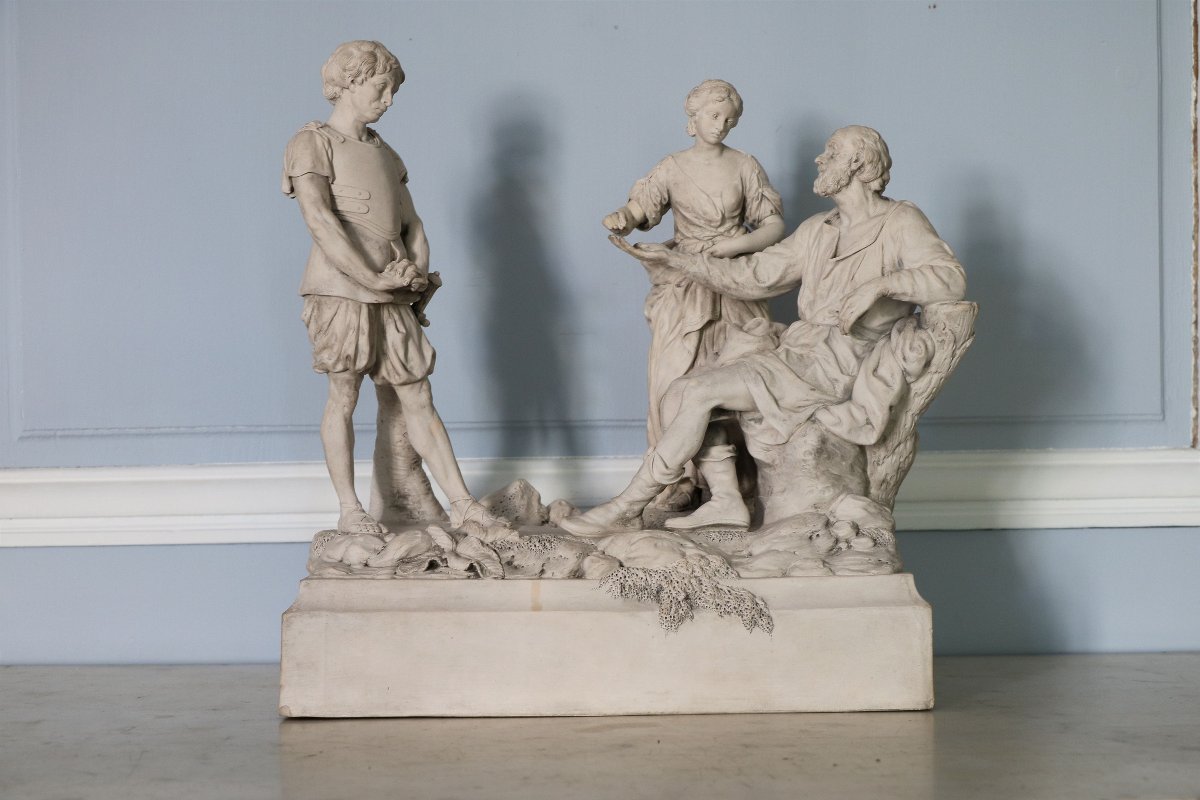
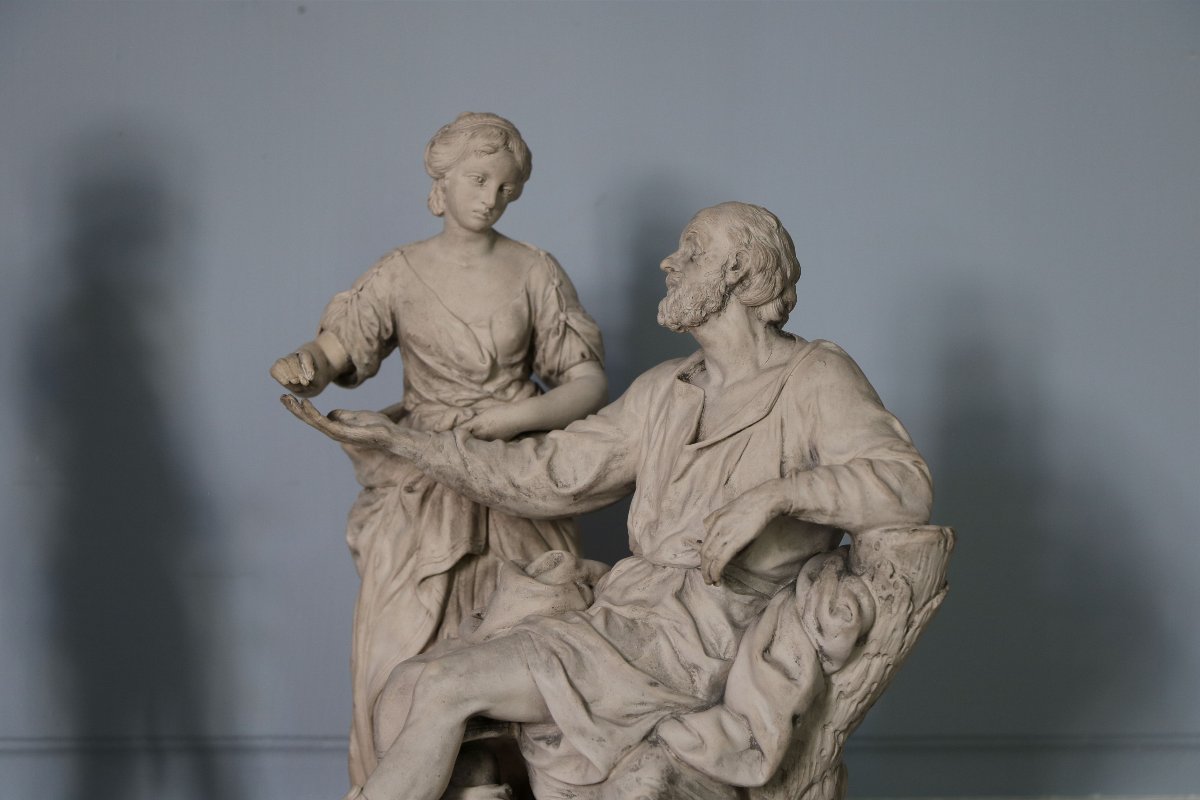
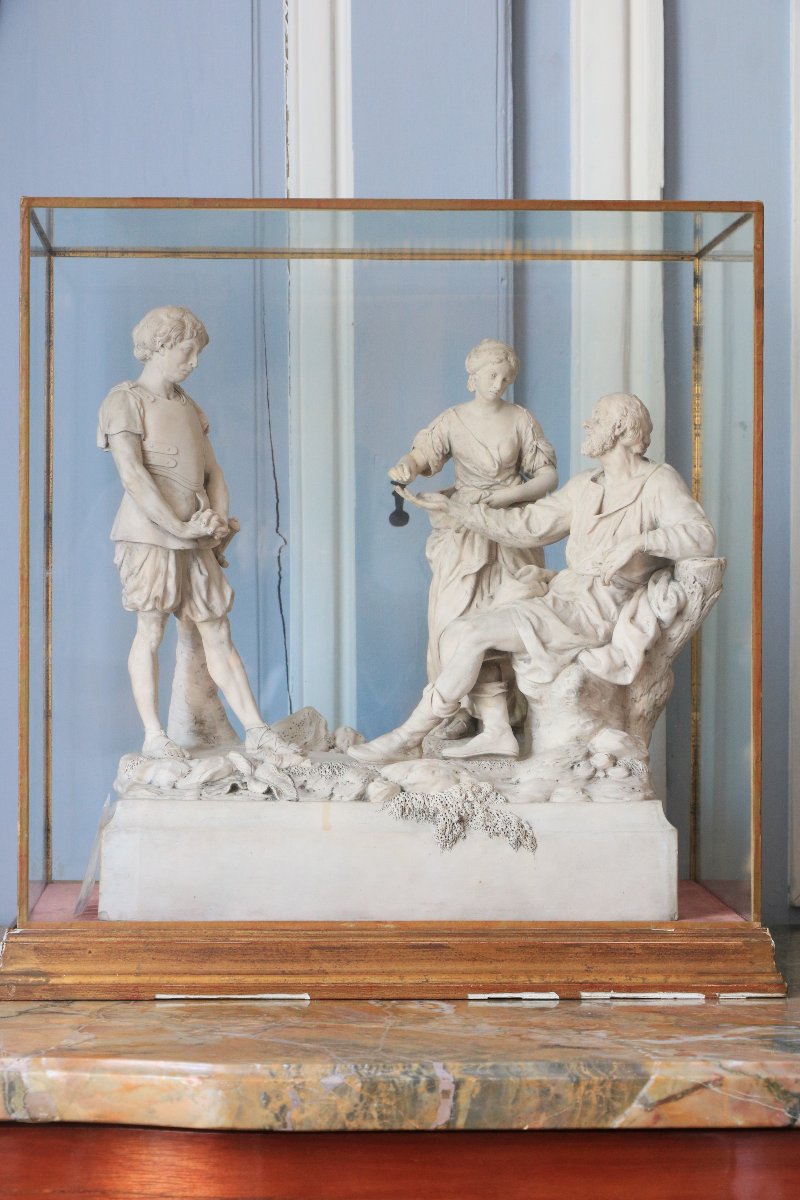
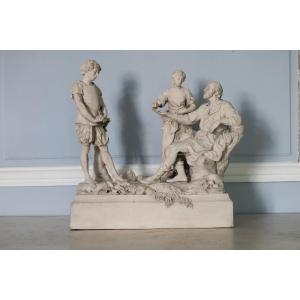
A significant group of three figures in Lorraine earthenware, depicting Blind Belisarius giving alms, on a rectangular pedestal. Based on a model by Paul-Louis Cyfflé (1724–1806). The group also comes with a protective display case.
H. 34 x W. 31 x D. 19 cm
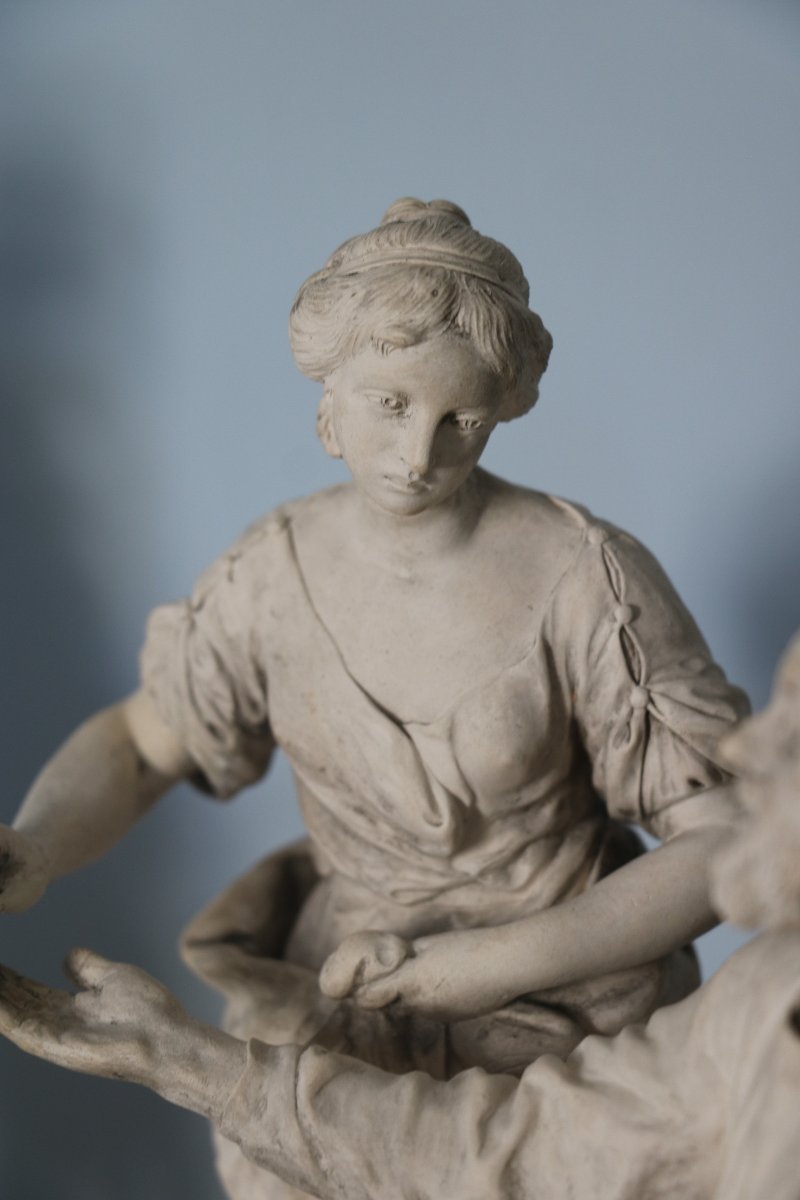
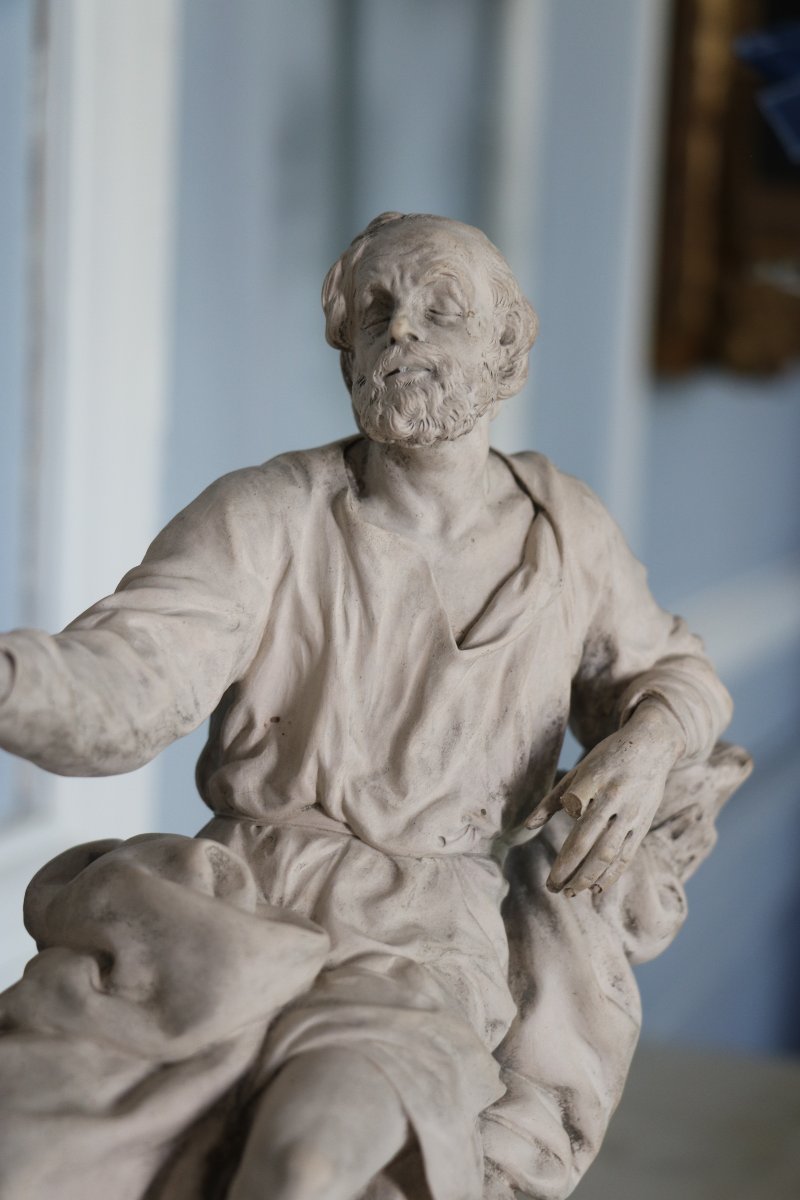
Restorations: the forearm and hand of the young woman and Belisarius’s hands; one finger has been reattached
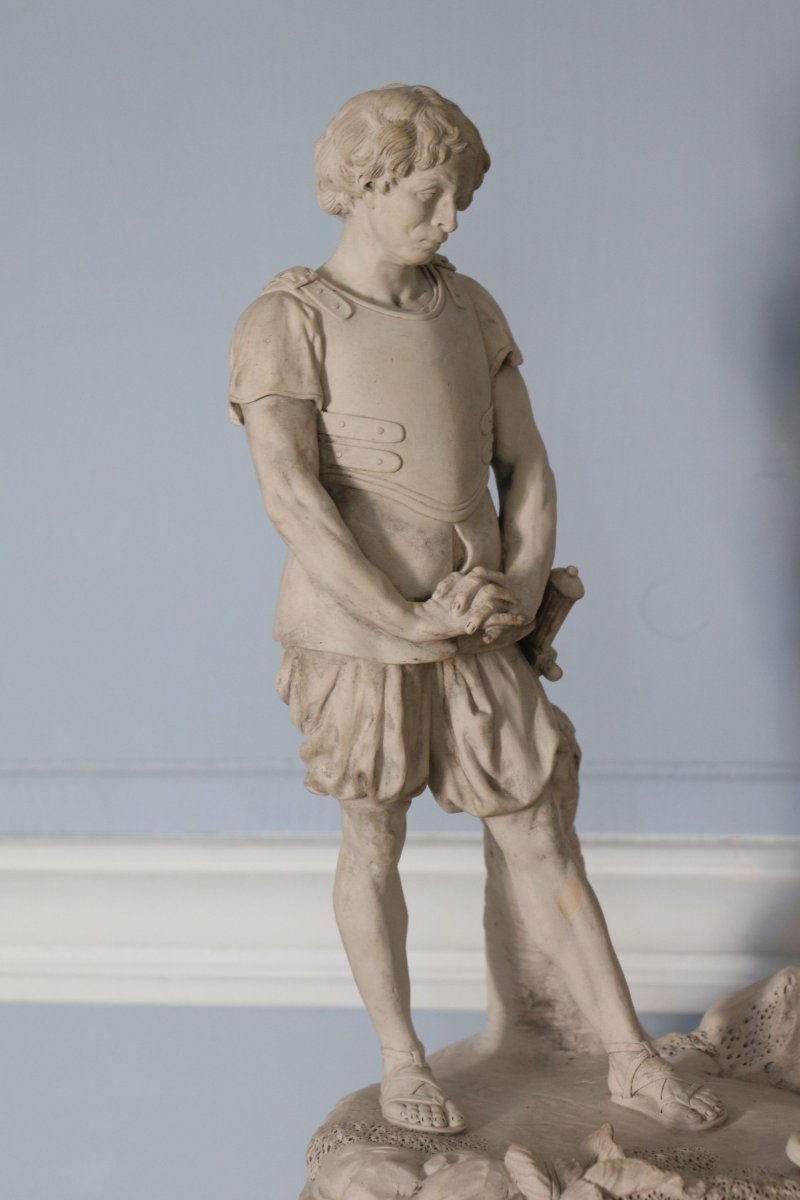
This group sculpted in Lorraine clay depicts Belisarius receiving alms. This 18th-century work is directly in the tradition of Pierre-Louis Cyfflé (1724–1806). It depicts a blind and weary Belisarius seated on a tree stump and leaning toward a young woman who is slightly bent forward, extending her hand to him in a gesture of compassionate almsgiving. To the left, a young legionnaire standing in ancient-style attire—a short tunic, cuirass, and sandals—contemplates the scene with an attentive and respectful demeanor, his hands clasped and his gaze lowered. The entire composition rests on a naturalistic base featuring rocks and stylized vegetation. The highly narrative scene emphasizes facial expressions, the contrast in ages, and the exquisite rendering of the drapery... This scene is said to be inspired by an engraving, now in the British Museum in London, based on a painting by the Genoese artist Luciano Borzone (1590–1645), which was once attributed to Anton van Dyck. . In 1767, Jean-François Marmontel (1723–1799) made Belisarius the central character of his eponymous novel, contributing to the success of this iconography.
Belisarius was one of the great generals of the Byzantine Empire in the service of Emperor Justinian I around 530–540. He won numerous victories against the Persians and in North Africa, but after being falsely accused, he fell from grace. Blinded by order of the authorities, he was reduced to begging for food. In the 18th century, this episode became a moral symbol against the ingratitude of those in power and an exaltation of virtue in the face of adversity.
Lorraine stone was widely used during the 17th and 18th centuries, especially for the facades of mansions, royal squares, and sculptures or allegorical groups such as this one. It was prized by sculptors because it allowed for fine detail, polished well, and had a finish quite similar to marble.
Period: 18th century
Style: Louis 16th, Directory
Condition: Condition of use
Material: Terracotta
Reference (ID): 1788159
Availability: In stock