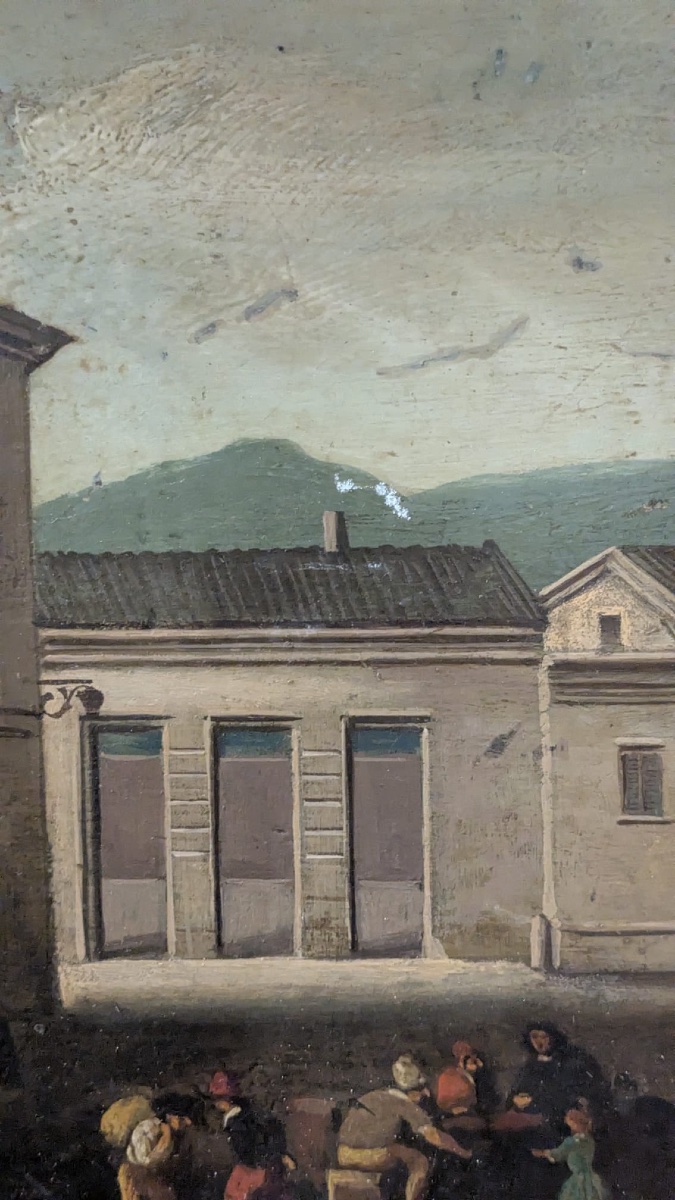
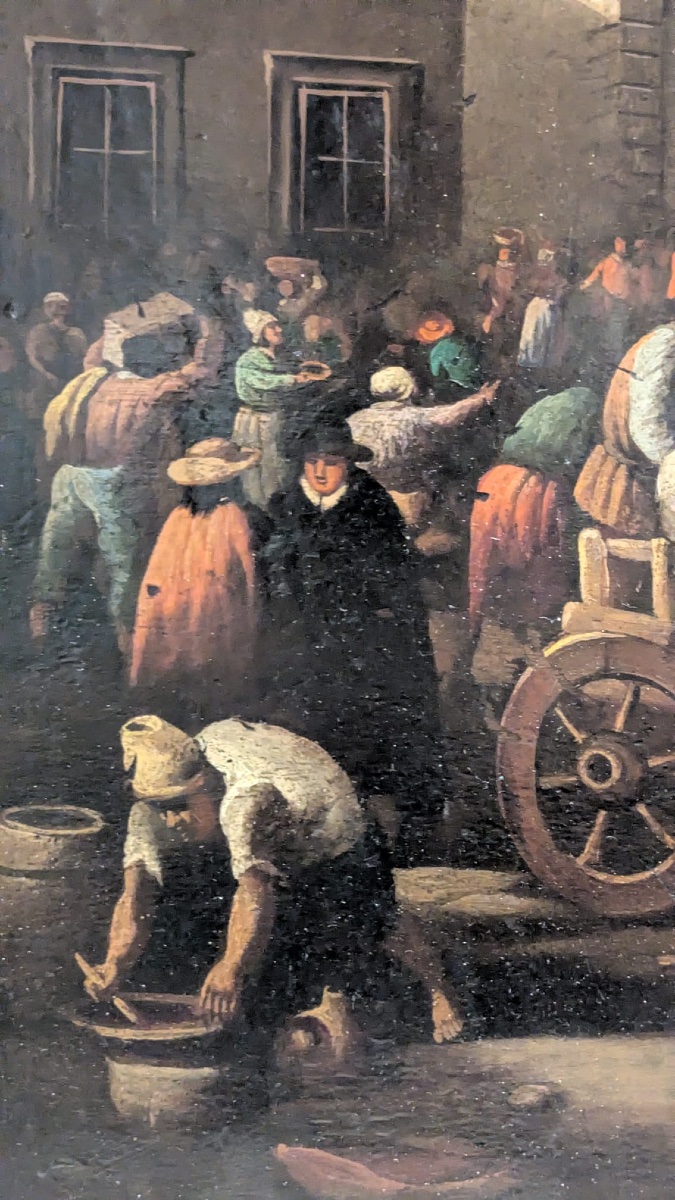
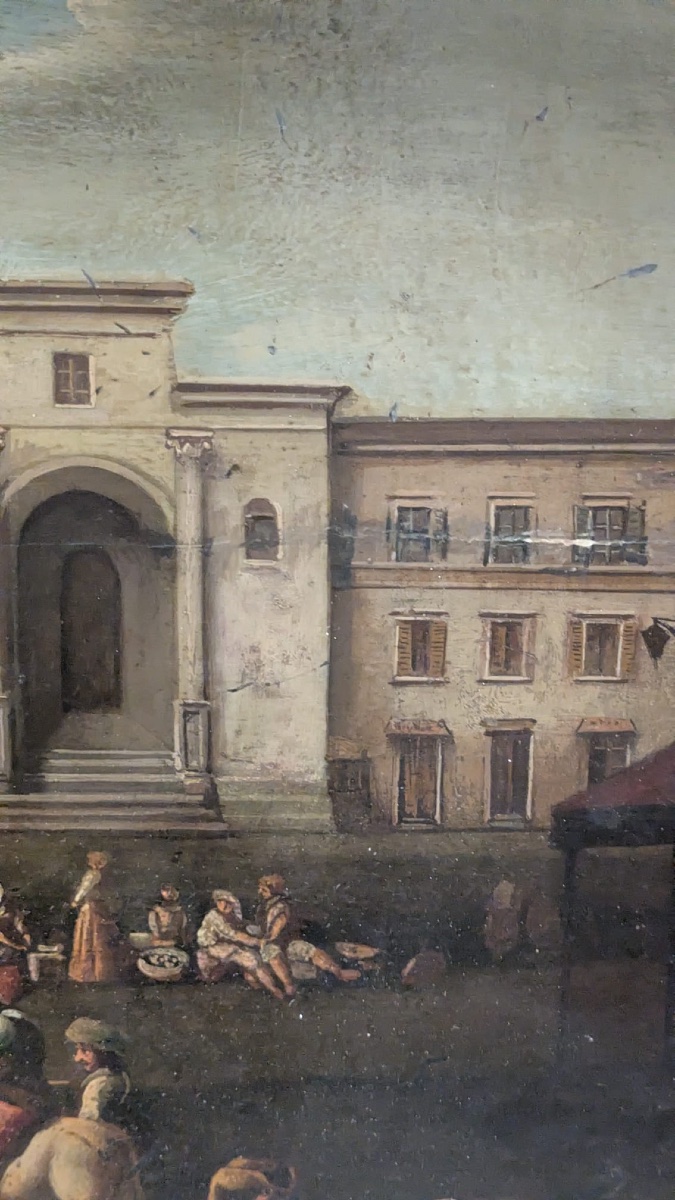
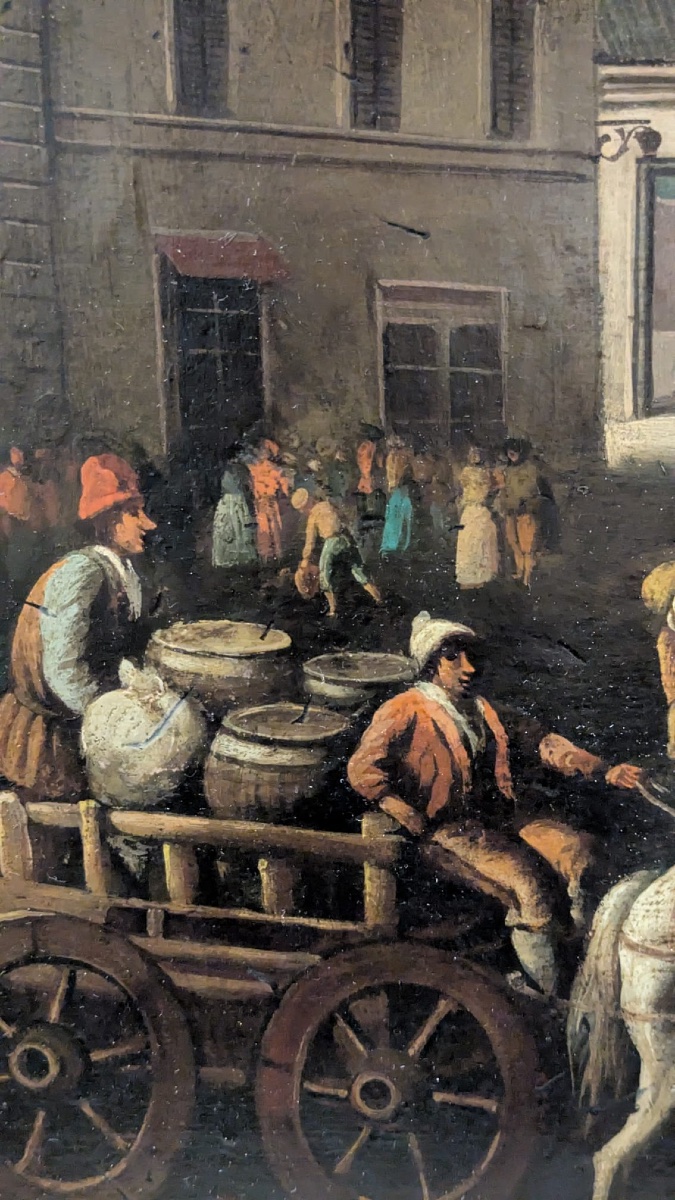


Italian Cityscape By Thomas Wijk (“tommaso The Flemish,” 1616–1677, Circle Of . Oil On Canvas
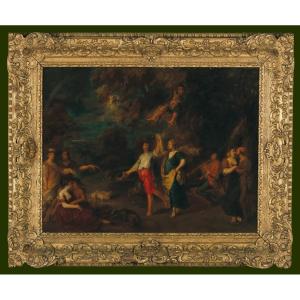
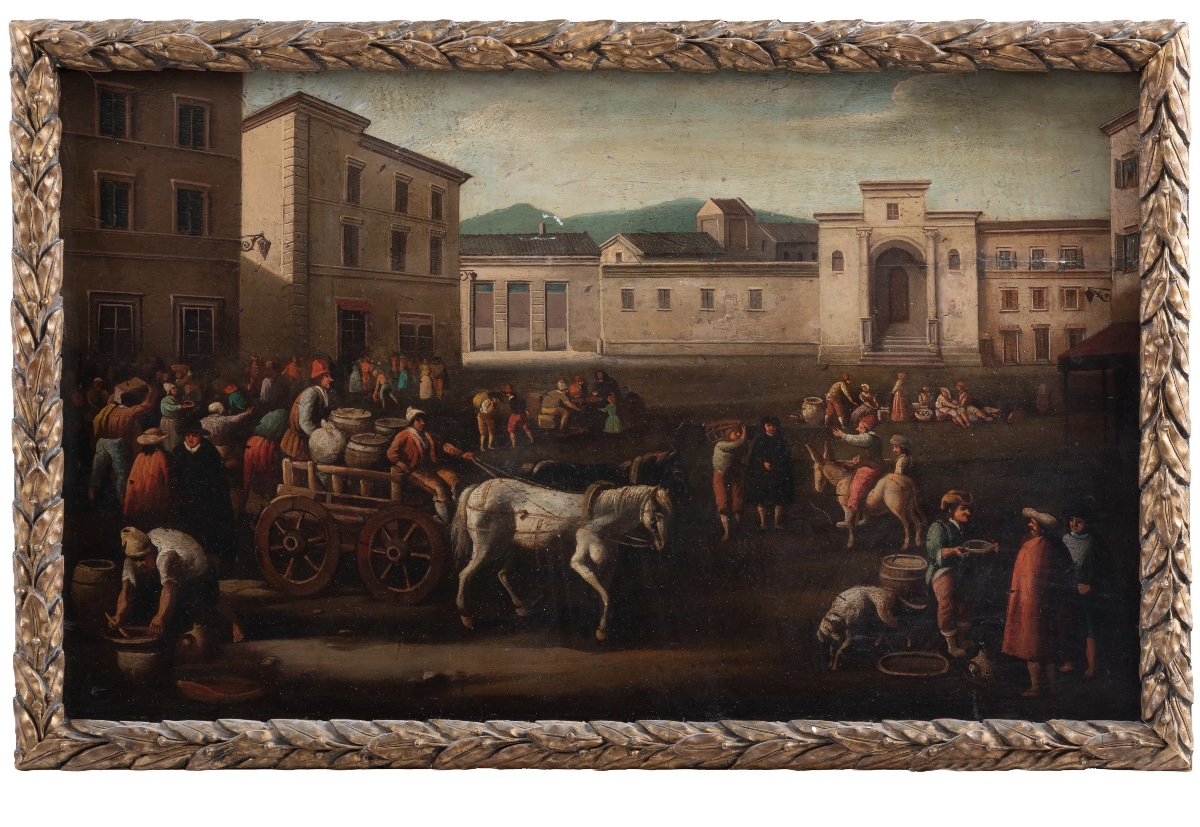
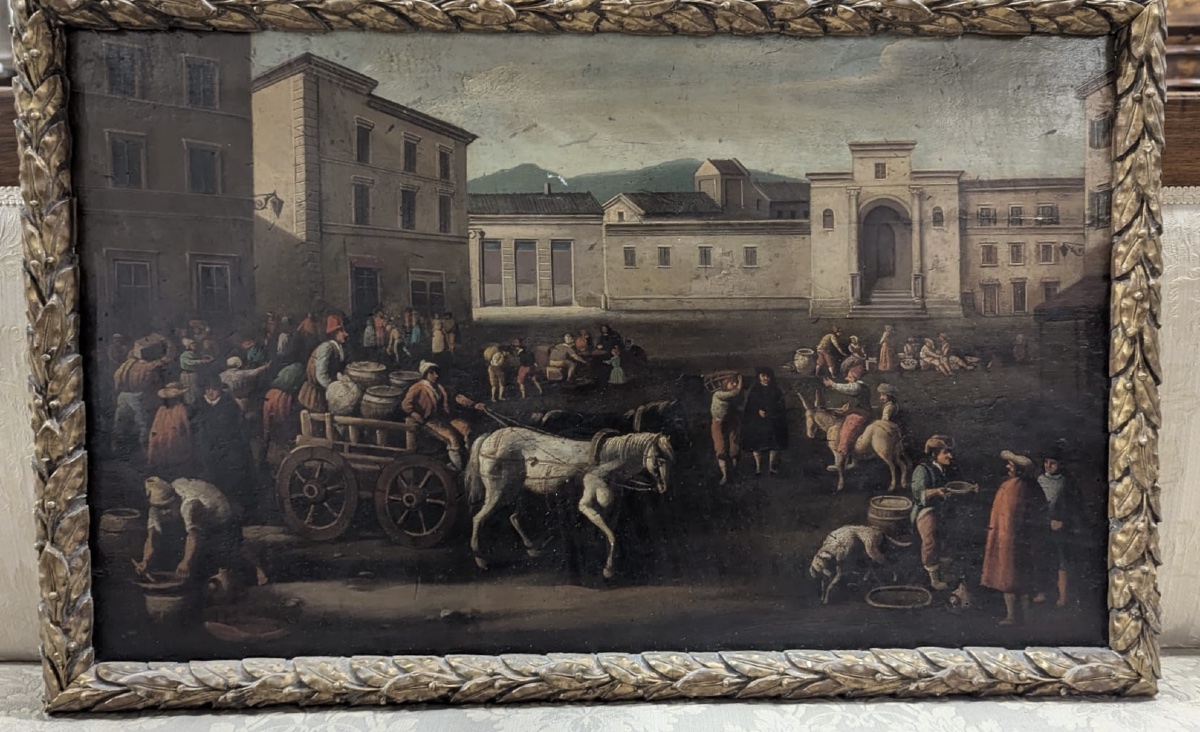
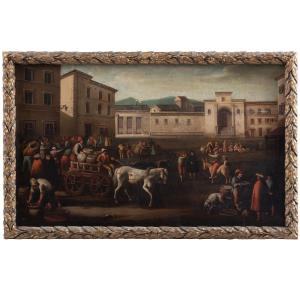
Subject: Lively Italian cityscape;
Artist: Thomas Wijk (“Tommaso the Flemish,” 1616–1677, circle of).
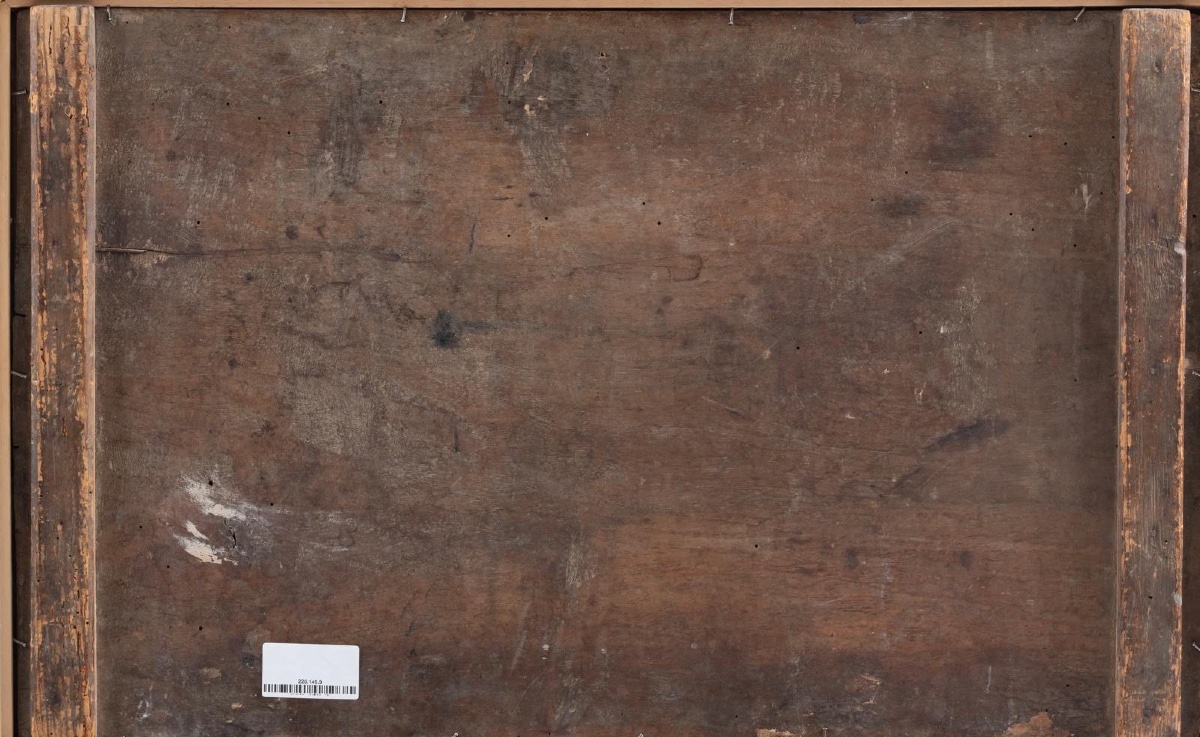
Technique: oil on panel.
Dimensions: 77 x 44 cm.
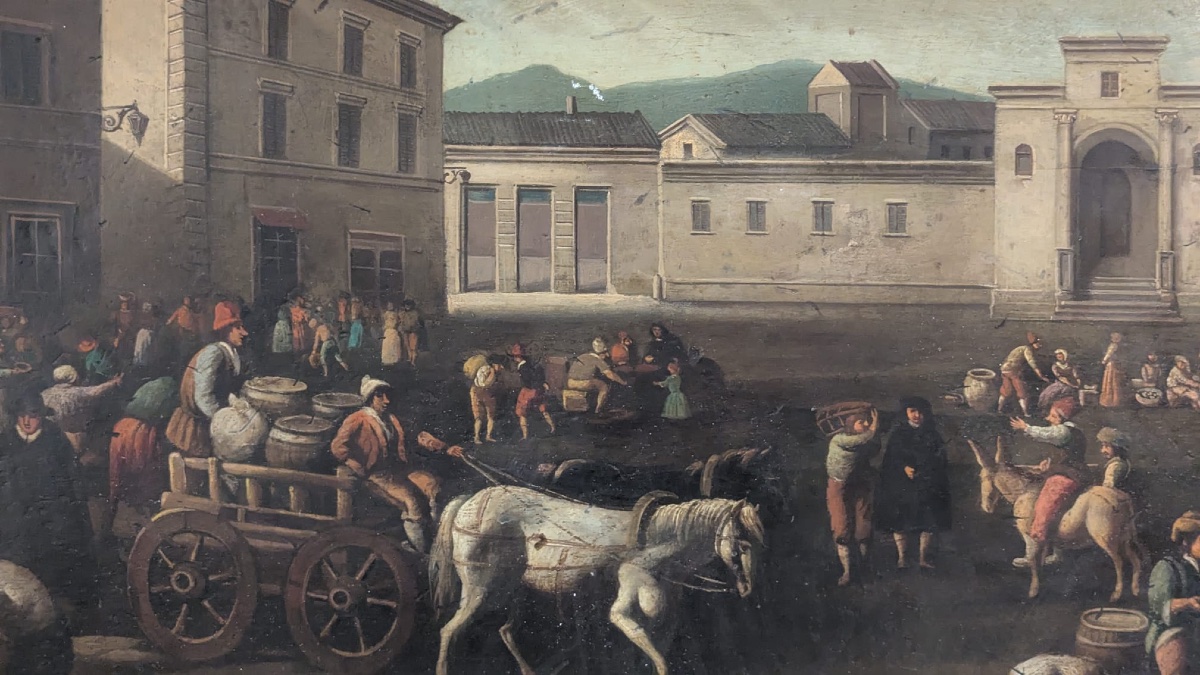
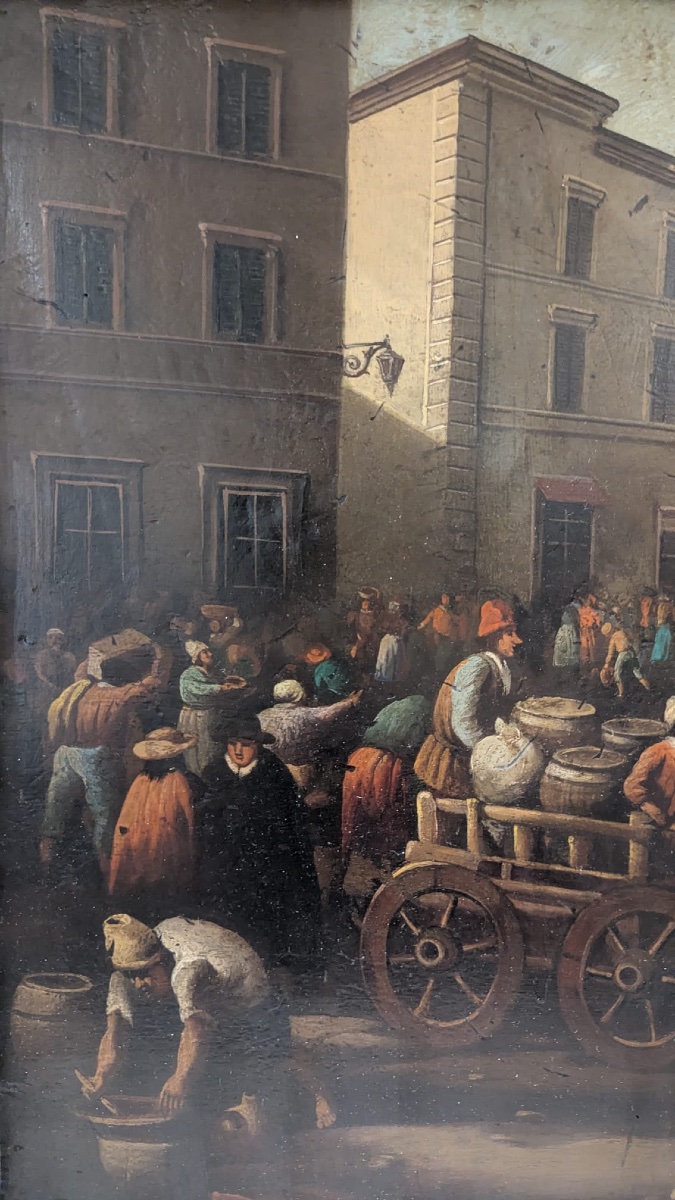
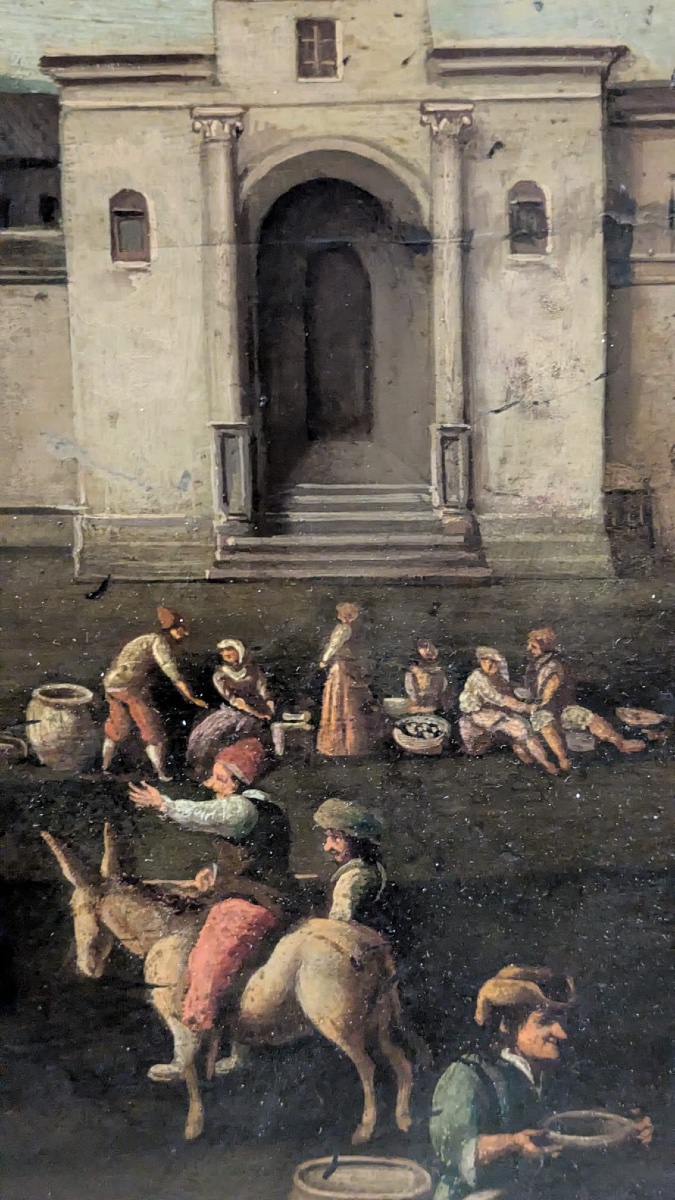
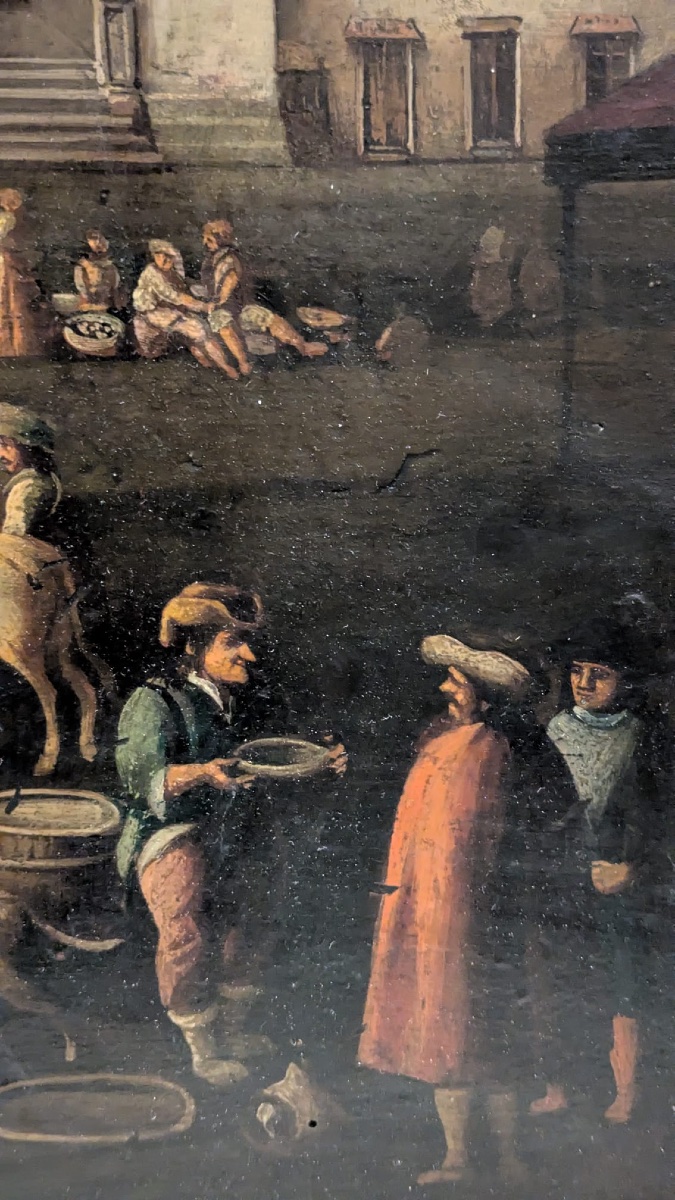
The crowded composition depicted in the oil on panel we are presenting here constitutes a remarkable, “polyphonic,” and multicolored example of that figurative trend—rooted in the Flemish-Dutch tradition but dominating the Roman scene— its true protagonist, beginning in the fourth decade of the seventeenth century, known as “bamboccianti” painting, characterized by genre scenes: popular subjects set in Rome—that is, episodes of urban and rural life animated by a considerable number of figures, especially peasants, merchants, and beggars—often depicted in a grotesque manner—features that form the basis of the term coined by Salvator Rosa (“Satire on Painting”) and by Andrea Sacchi (Letter of 1651 to Francesco Albani).
Very soon, this term would come to refer—even among contemporary art historians, and not without a negative connotation—to the followers of the Dutch painter Pieter van Laer (1599–1642) , nicknamed “bamboccio” for his boyish appearance, despite current scholarship (G. Briganti, L. Trezzani, L. Laureati, *I Bamboccianti. Pittori della vita quotidiana a Roma nel Seicento*, Ugo Bozzi Editore, 1983) has put van Laer’s contribution—though fundamental—to the genesis of this painterly movement into perspective (in the Dutch artist’s work we find, for the first time, depictions of morra players and beggars), identifying key figures in its development such as Andries Both (in Rome since 1634: great attention to the light contrasts of spaces within the urban setting) or his brother Jan Both (particularly interested in the atmospheric aspects of the urban landscape).
Our painting, which can be attributed to the circle of Thomas Wijck—who was recorded in 1640 as “Tommaso the Flemish, painter,” residing in Rome on Via della Fontanella—bears traces of this “mélange,” which began under the banner of the interdependence between landscape painting and caricature. is evidenced by our painting, attributable to the circle of Thomas Wijck, recorded in 1640 as “Tommaso the Flemish, painter,” residing in Rome on Via della Fontanella.
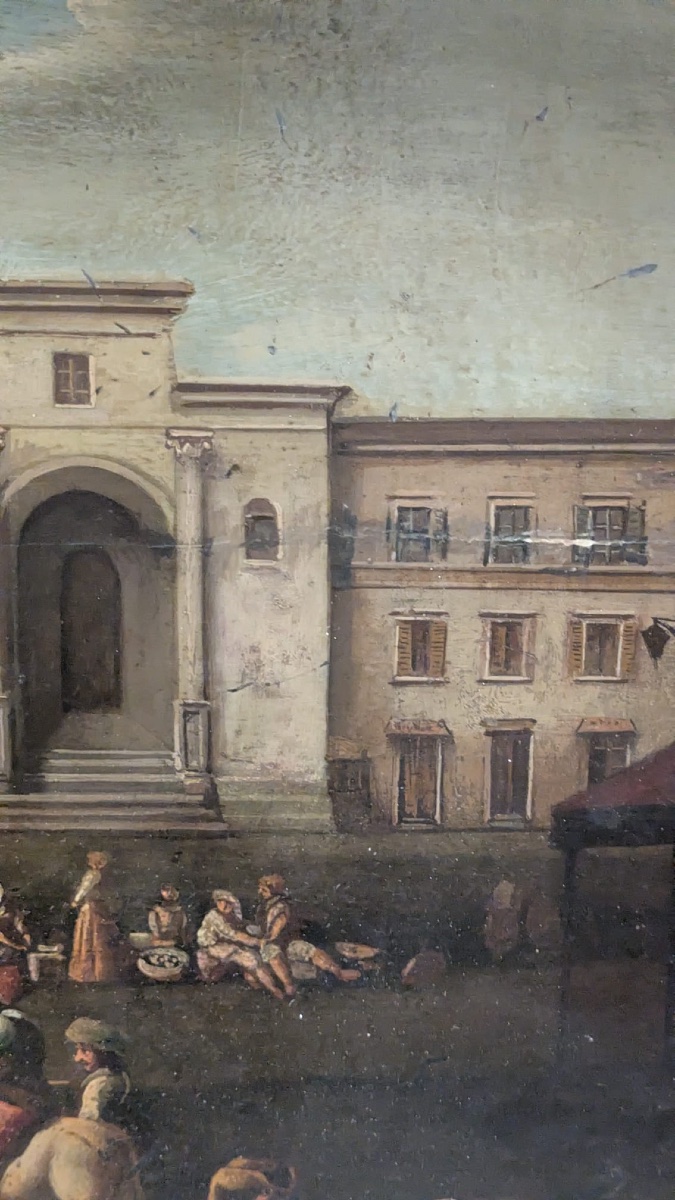
The general sense of immediacy combined with a touch of realistic attention to detail suggests a relevant connection to Wijck’s painterly style (for the attention to architecture, see View of the Aracoeli, Munich, Alte Pinakothek; Market Square with the Portico of Octavia; Roman Courtyard with a Blacksmith; Washerwomen in a Courtyard, National Museum in Warsaw; Port of Ripa Grande, Fabre Museum, Montpellier).
The presence of markets teeming with figures in Wijck’s paintings, along with the particular attention given to courtyards and squares—framed by arches and enclosed in the background by roofs and loggias—constitutes an objective trait d’connection between the style of our panel and that of the Flemish Tommaso, to the point of incorporating a certain dialogue with the monumental style of the Italian Michelangelo Cerquozzi (see *The Revolt of Masaniello*, Palazzo Spada, Rome), to whom our panel also alludes through its narrative vein—one not anchored to a single type but varied and articulated in a complex syntax of physical types, expressed through a more accurate perception of Roman settings.
In this sense, our painting represents a prime example of the highest quality of a painterly experimentalism—the “bambocciante” style—which has reached full and complete maturity, capable of gathering and reworking, in an original synthesis, all the finest artistic influences on landscape, architectural, and grotesque elements.
Last but not least, the monumentality of the subject enhances its value, making it an excellent piece of interior decor as well.
Period: 17th century
Style: Louis 14th, Regency
Condition: Excellent condition
Material: Oil painting on wood
Reference (ID): 1786323
Availability: In stock