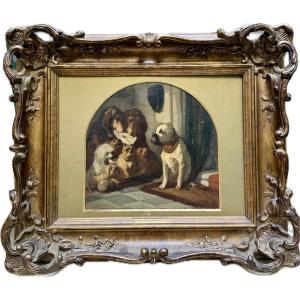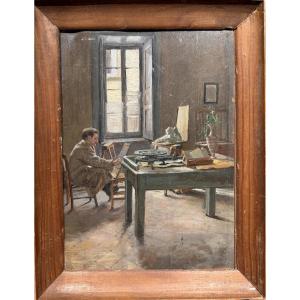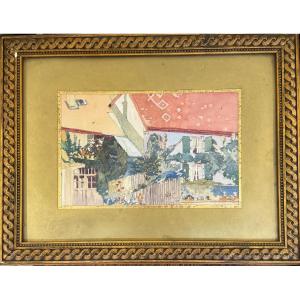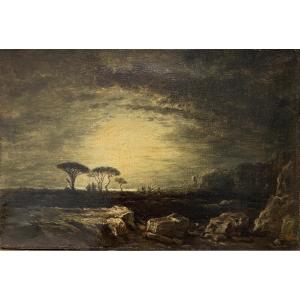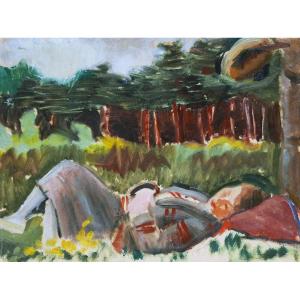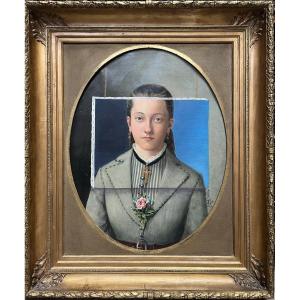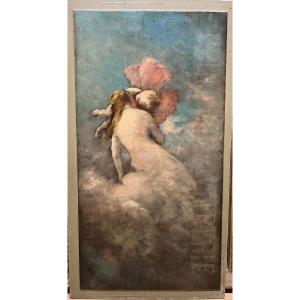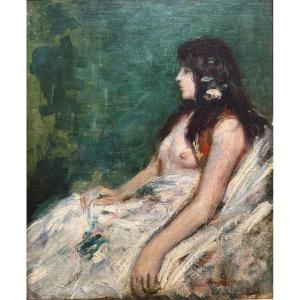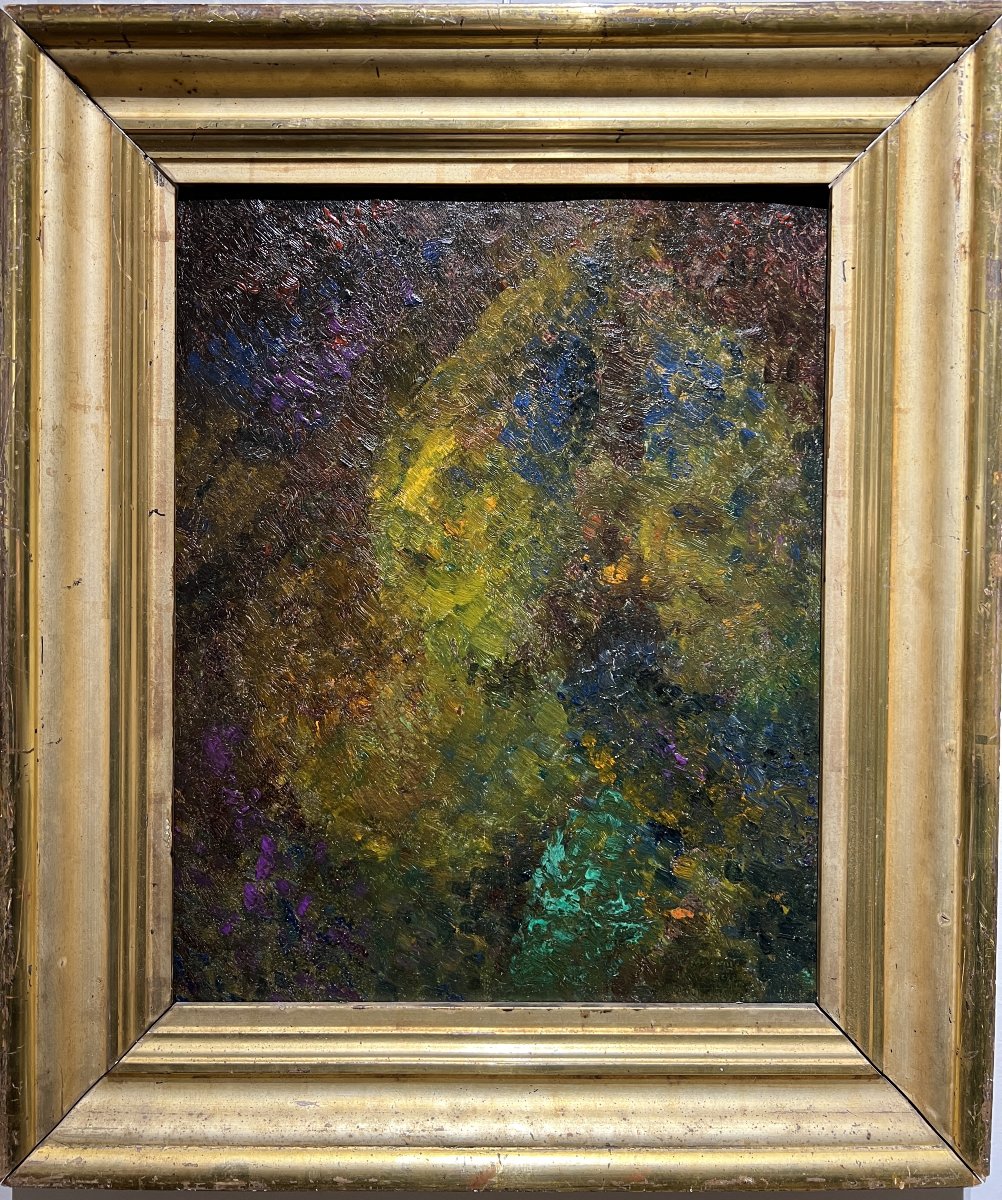
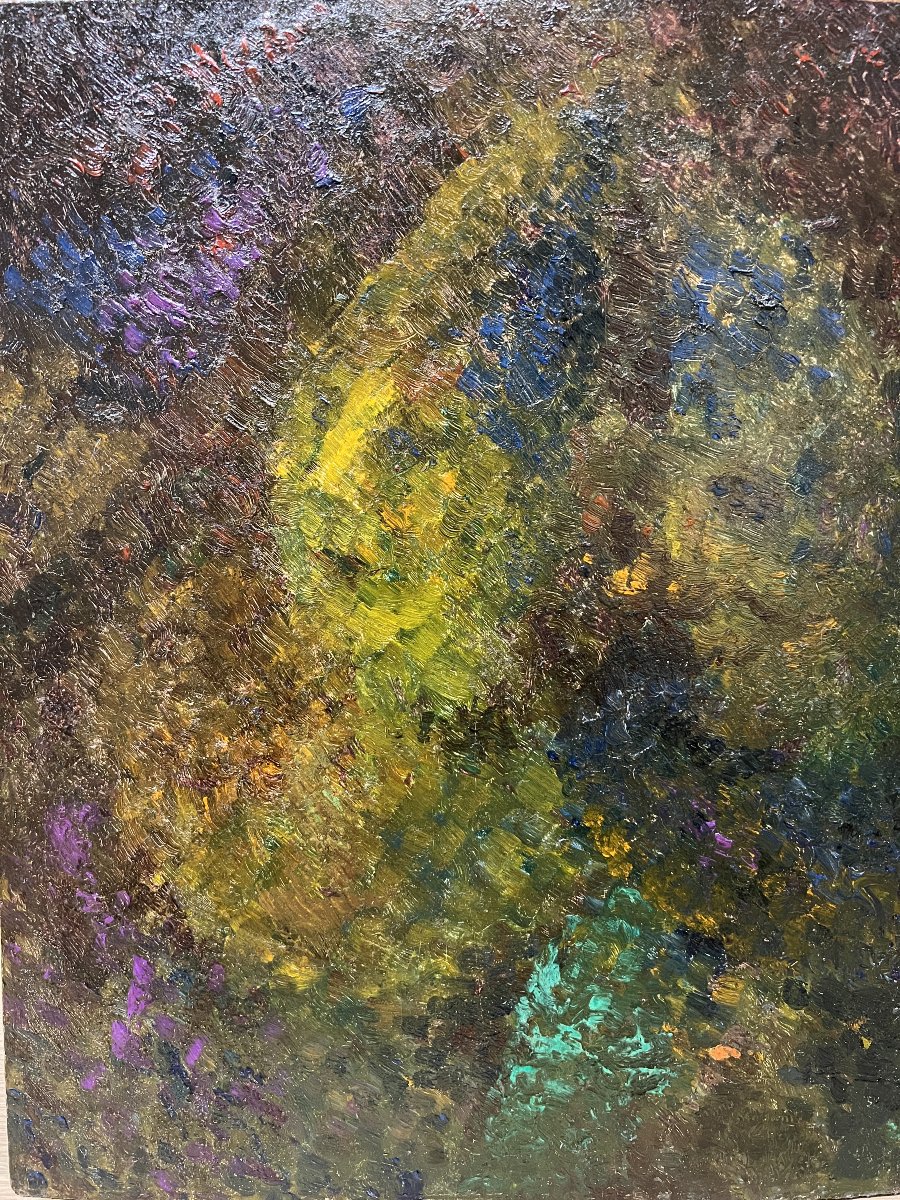
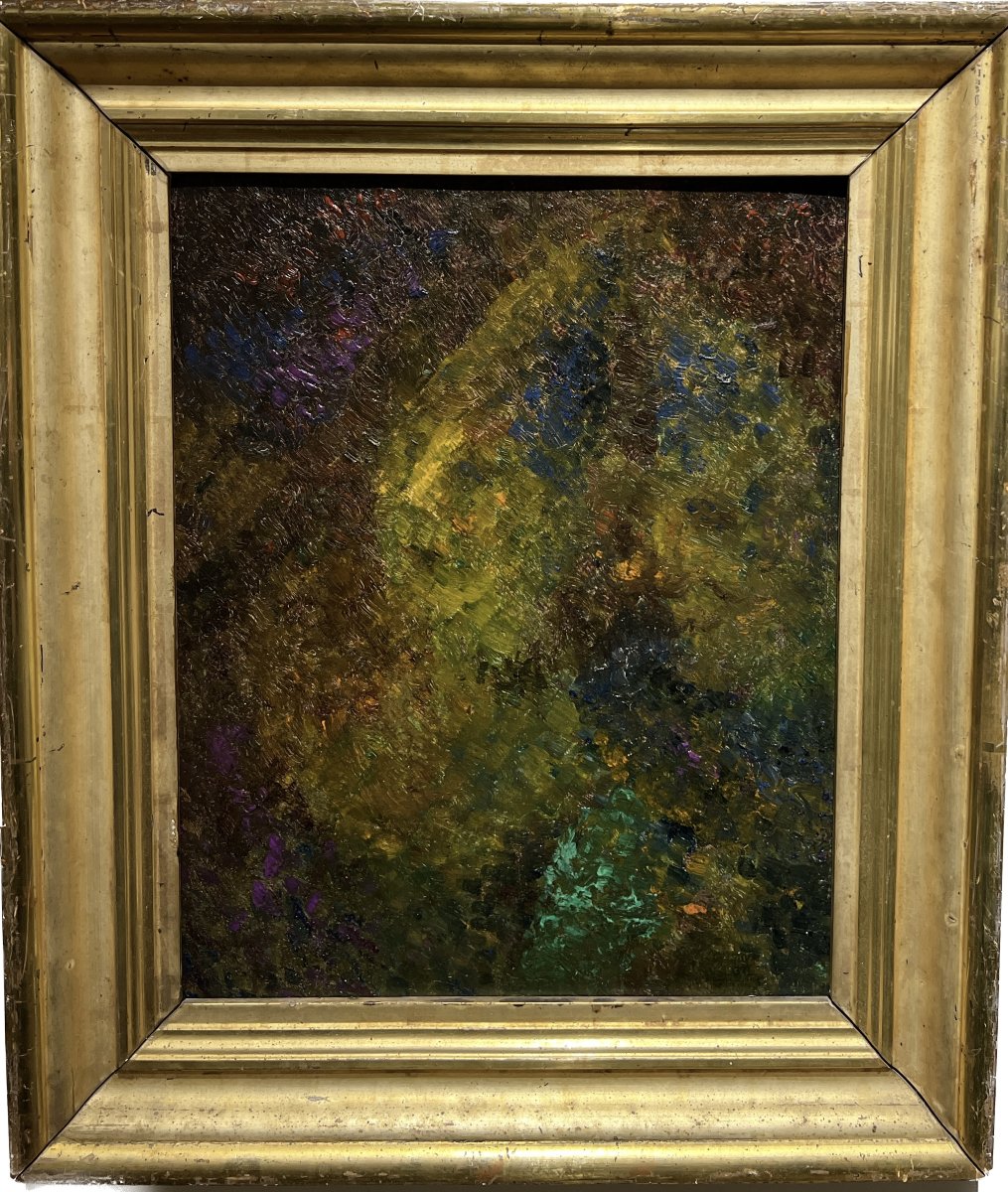
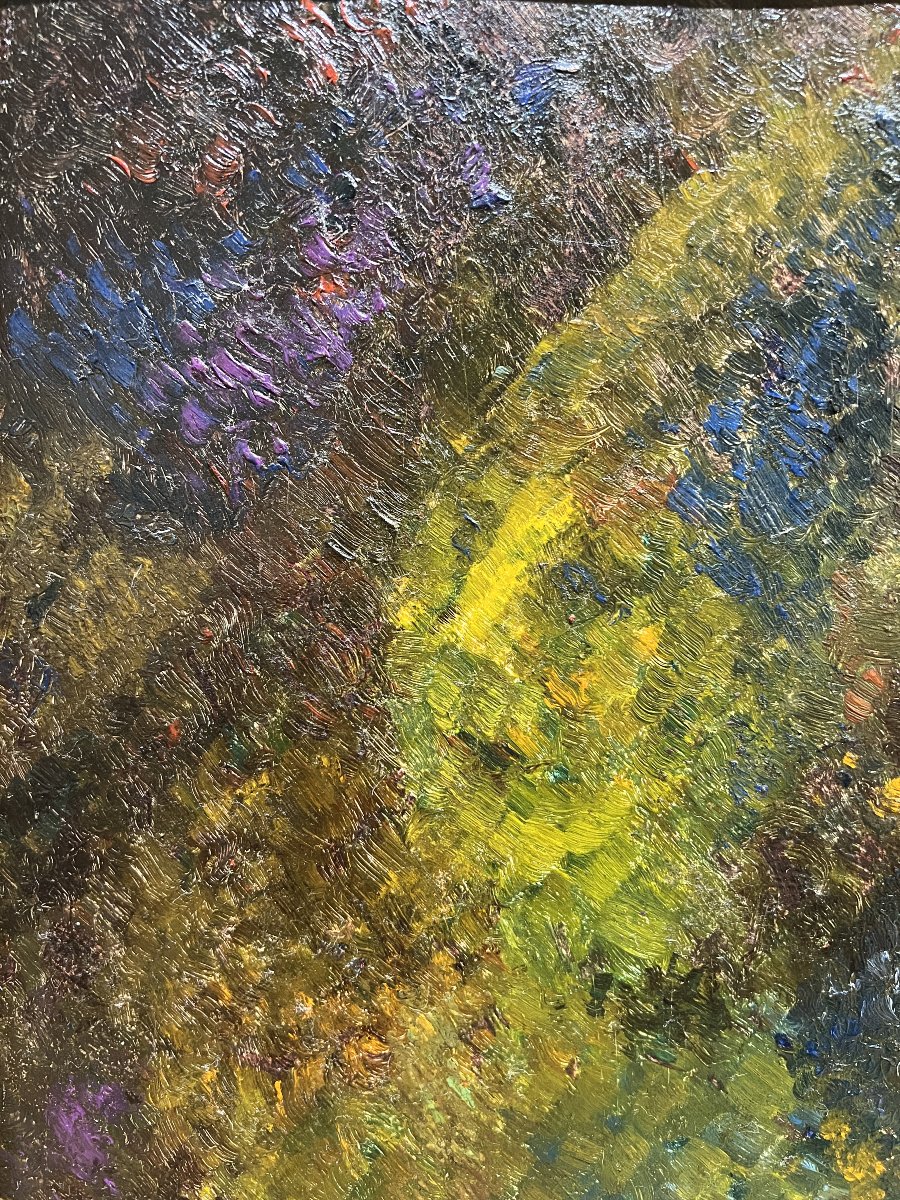
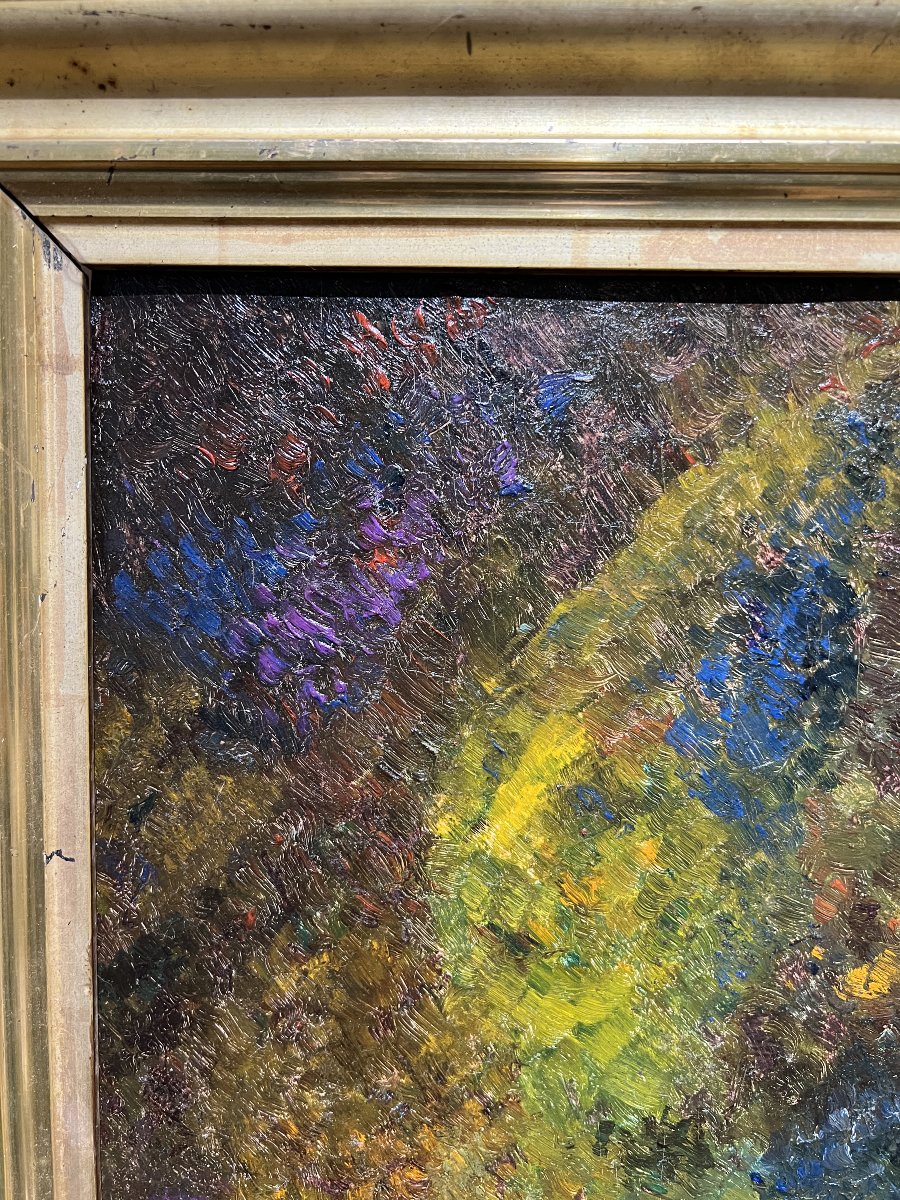
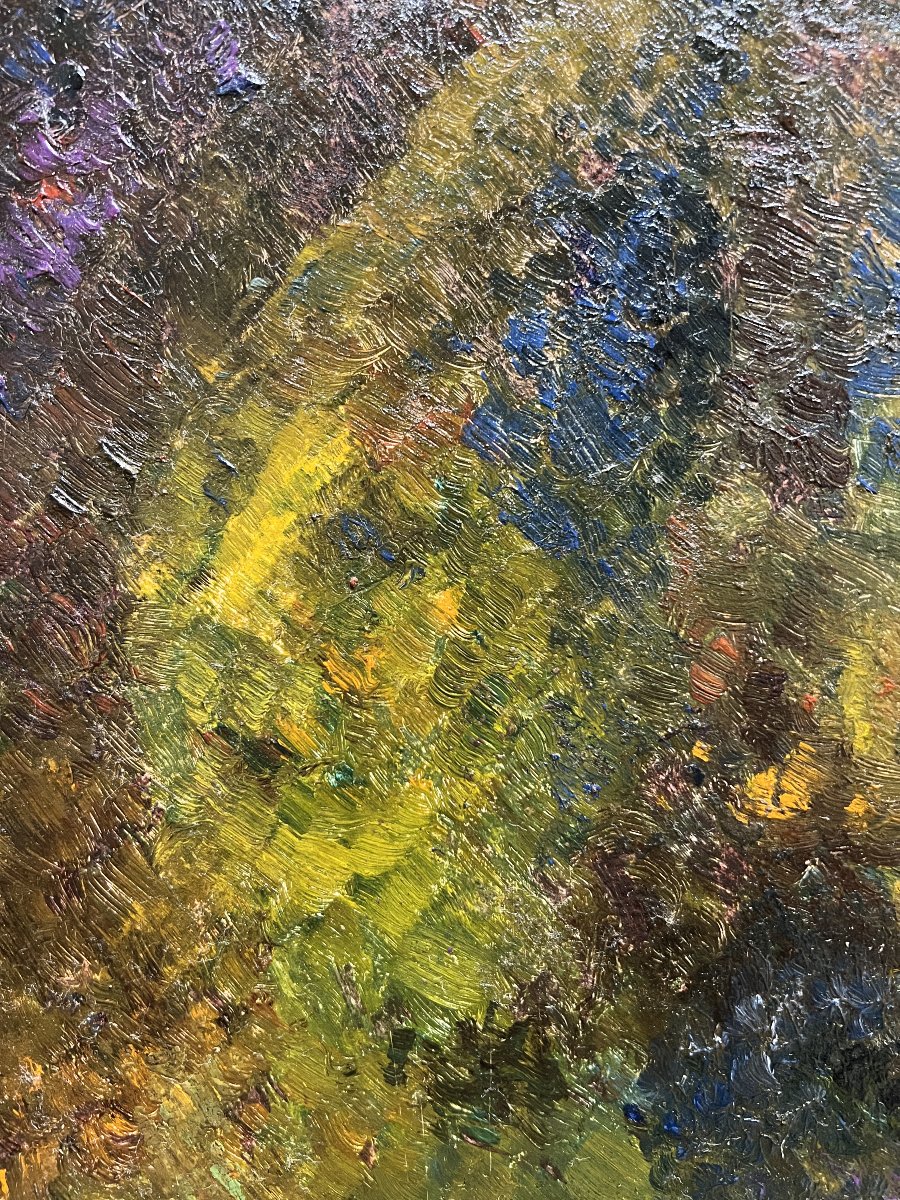

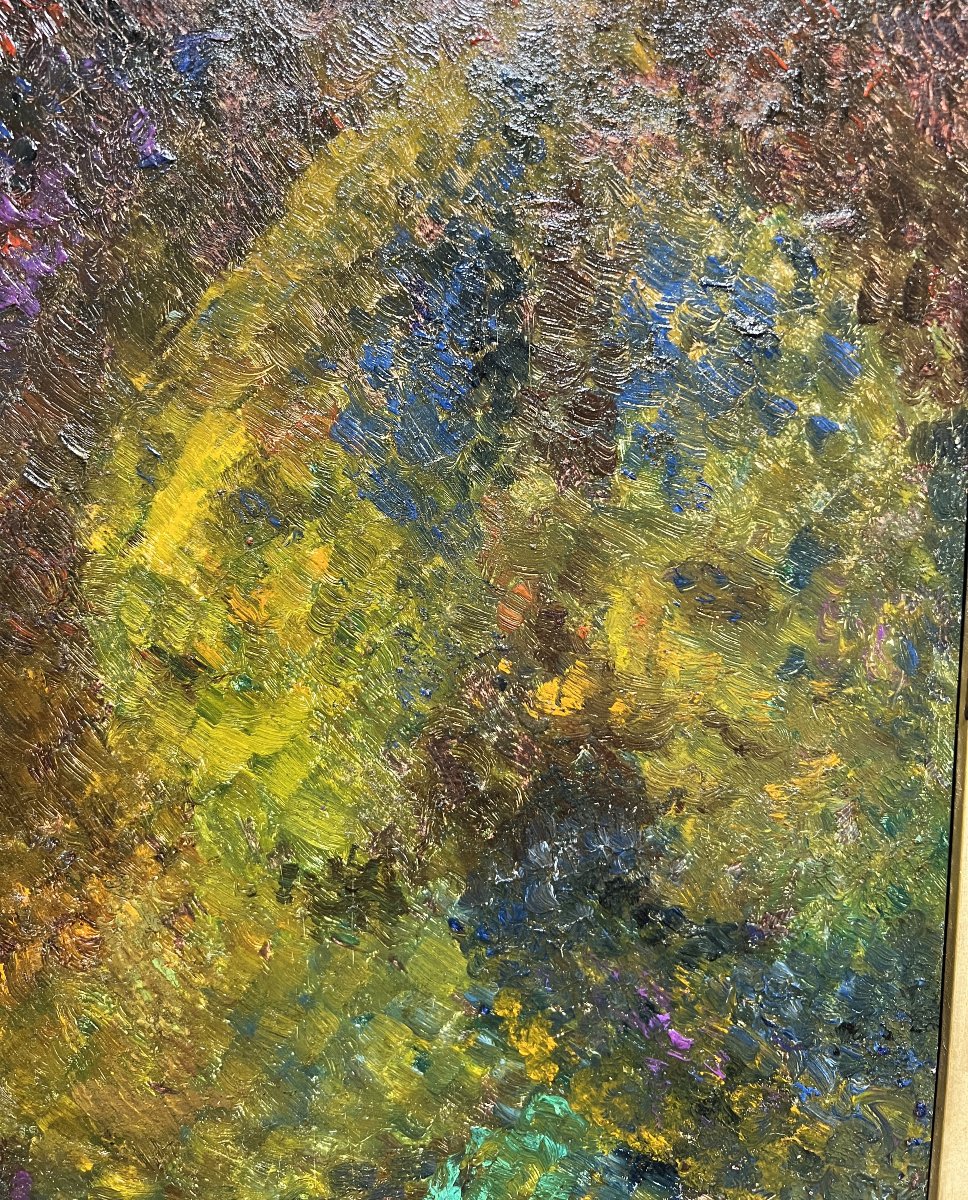
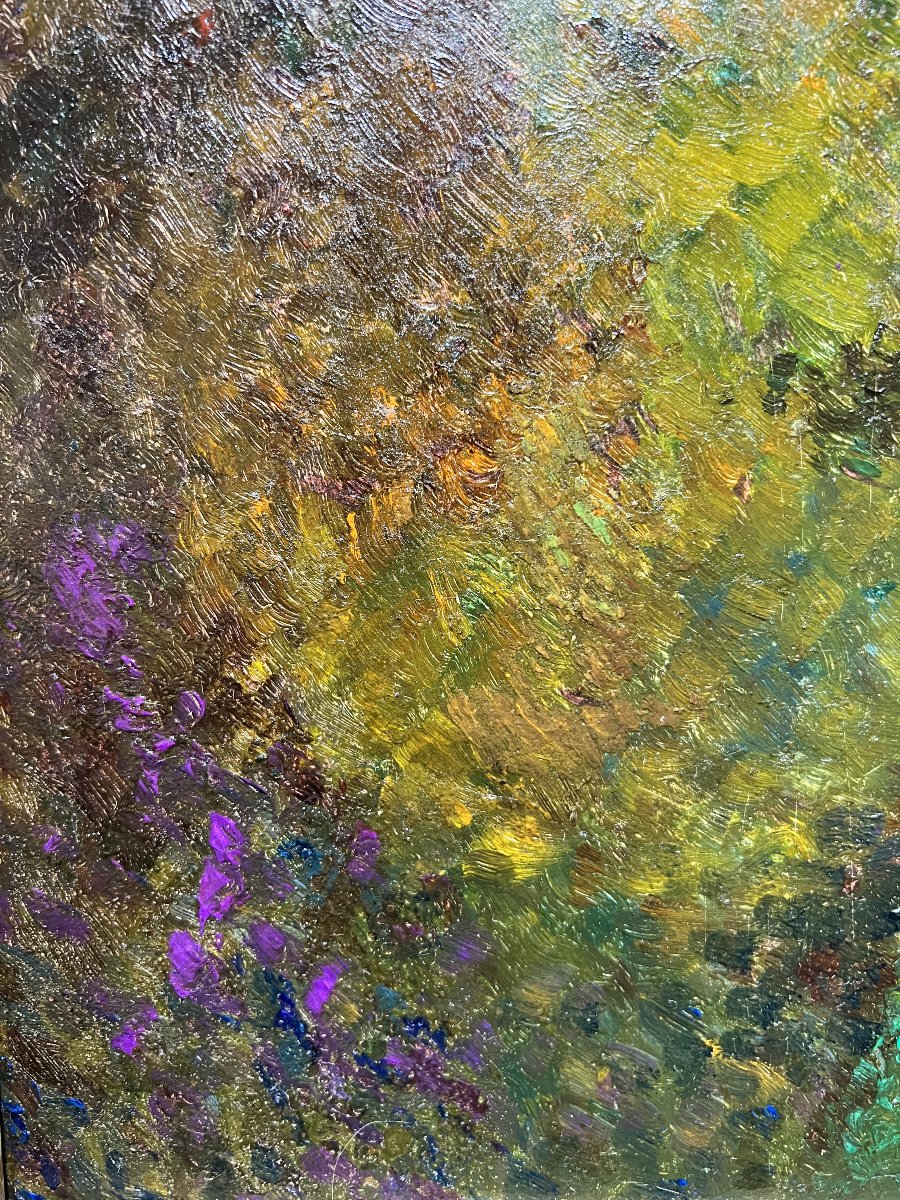


Louis Hayet (1864–1940) - The Three Clowns, Circa 1900
Artist: Louis Hayet (1864-1940)
Louis Hayet (1864–1940)
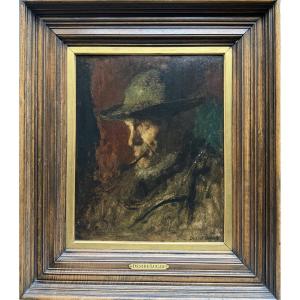
The Three Clowns, circa 1900
Oil on panel
41 x 31 cm
53.5 x 45 cm with frame
Signed and inscribed lower right
Careful this painting is naturally dark
Louis Hayet was a post--Impressionist and Pointillist painter, born in Pontoise on August 29, 1864, and died in Cormeilles-en-Parisis (not far from Pontoise) on December 27, 1940.
His parents, Calixte Hayet and Léontine Dufour, were very poor. At school, he was shy and reserved but was considered intelligent and gifted.
His aptitude for painting became apparent as early as age twelve. From 1877 to 1884, he traveled the roads with his father, a traveling salesman.
As a childhood friend of Lucien Pissarro, Hayet had the opportunity to show his work to Camille Pissarro in 1883.Around 1885, he became friends with the Pissarros—father and son—whom he met again in Paris. Hayet, a draftsman and painter, would join the Neo-Impressionist group, associating with Pissarro, as well as Signac and Seurat. In early May 1886, during a visit to Seurat’s studio, Lucien Pissarro and Hayet discovered “An Afternoon on the Island of La Grande Jatte.” This visit, one or two weeks before the 8th and final Impressionist exhibition, proved decisive.
Hayet’s Pointillist paintings are of excellent quality. Starting in 1887, he produced small-format works in which the Neo-Impressionist brushwork became whirling and dynamic.
At the 1889 Salon des Indépendants, Fénéon wrote: "... Mr. Hayet’s third painting is among the most beautiful the Impressionists have ever produced! In the afternoon, a valley with highly fragmented fields; a tall tree bursts forth against a sky of clouds and sun in a sudden bouquet of foliage; the foreground is superb. [...] Mr. Hayet, who, we believe, is exhibiting a series of solid and personal works for the first time... "
In 1890, however, he returned to a more classical style, and Paul Signac omitted all mention of Louis Hayet in the second edition of “From Eugène Delacroix to Neo-Impressionism” (the Pointillist manifesto).
After Seurat’s death, Louis Hayet withdrew from public life but nevertheless participated, between 1894 and 1897, in eight of the exhibitions held at Le Barc de Boutteville.
Hayet devoted the end of his career to scientific research on pigments and color, without ever ceasing to paint.
The Three Clowns, circa 1900
Oil on panel
41 x 31 cm
53.5 x 45 cm with frame
Signed and inscribed lower right
Careful this painting is naturally dark
Louis Hayet was a post--Impressionist and Pointillist painter, born in Pontoise on August 29, 1864, and died in Cormeilles-en-Parisis (not far from Pontoise) on December 27, 1940.
His parents, Calixte Hayet and Léontine Dufour, were very poor. At school, he was shy and reserved but was considered intelligent and gifted.
His aptitude for painting became apparent as early as age twelve. From 1877 to 1884, he traveled the roads with his father, a traveling salesman.
As a childhood friend of Lucien Pissarro, Hayet had the opportunity to show his work to Camille Pissarro in 1883.Around 1885, he became friends with the Pissarros—father and son—whom he met again in Paris. Hayet, a draftsman and painter, would join the Neo-Impressionist group, associating with Pissarro, as well as Signac and Seurat. In early May 1886, during a visit to Seurat’s studio, Lucien Pissarro and Hayet discovered “An Afternoon on the Island of La Grande Jatte.” This visit, one or two weeks before the 8th and final Impressionist exhibition, proved decisive.
Hayet’s Pointillist paintings are of excellent quality. Starting in 1887, he produced small-format works in which the Neo-Impressionist brushwork became whirling and dynamic.
At the 1889 Salon des Indépendants, Fénéon wrote: "... Mr. Hayet’s third painting is among the most beautiful the Impressionists have ever produced! In the afternoon, a valley with highly fragmented fields; a tall tree bursts forth against a sky of clouds and sun in a sudden bouquet of foliage; the foreground is superb. [...] Mr. Hayet, who, we believe, is exhibiting a series of solid and personal works for the first time... "
In 1890, however, he returned to a more classical style, and Paul Signac omitted all mention of Louis Hayet in the second edition of “From Eugène Delacroix to Neo-Impressionism” (the Pointillist manifesto).
After Seurat’s death, Louis Hayet withdrew from public life but nevertheless participated, between 1894 and 1897, in eight of the exhibitions held at Le Barc de Boutteville.
Hayet devoted the end of his career to scientific research on pigments and color, without ever ceasing to paint.
3 500 €
Period: 19th century
Style: Napoleon 3rd
Condition: En l'etat
Material: Oil painting on wood
Length: 31 (45) cm
Height: 41 (53,5) cm
Reference (ID): 1784617
Availability: In stock
Print