

Pair Of Large Neoclassical Landscape Paintings Depicting An Ancient Ruin With Figures, Featuring 18th-century French Architecture
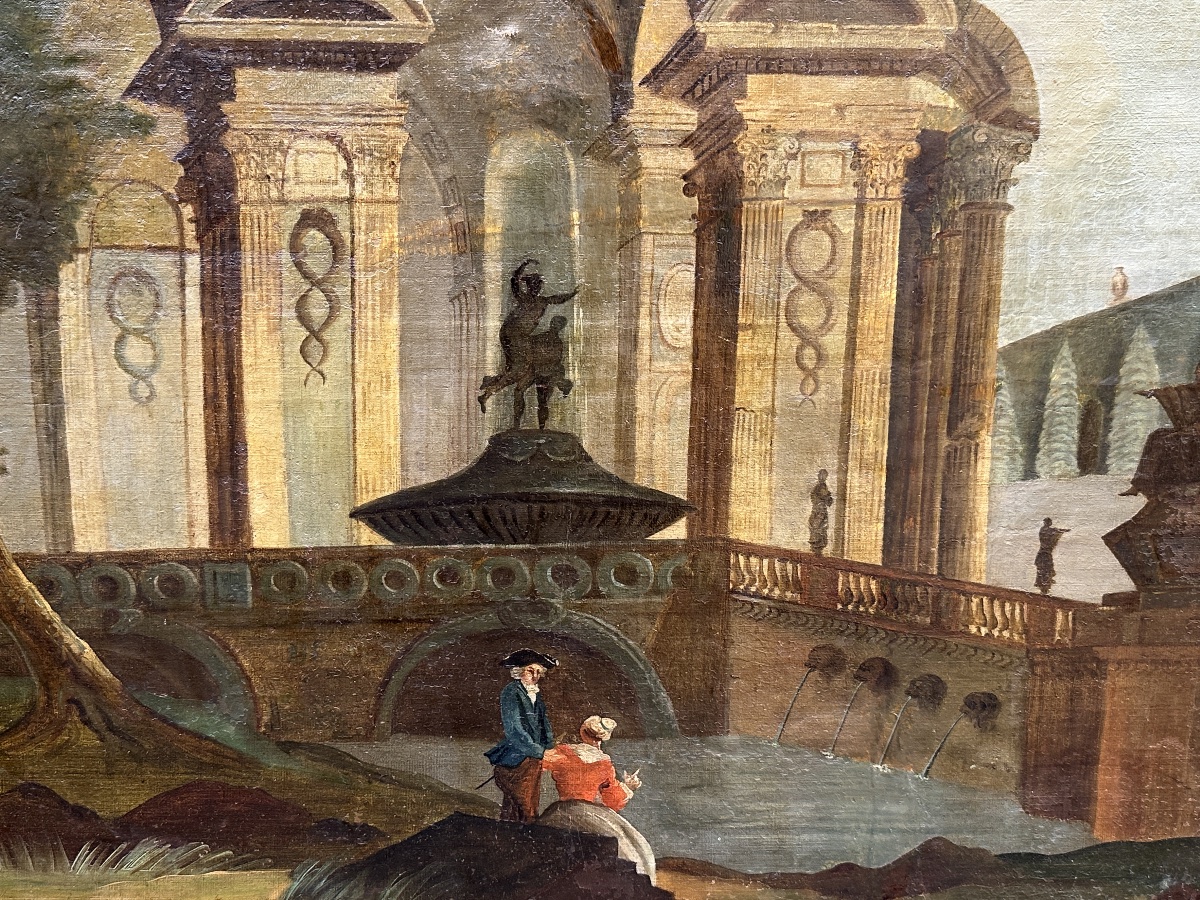
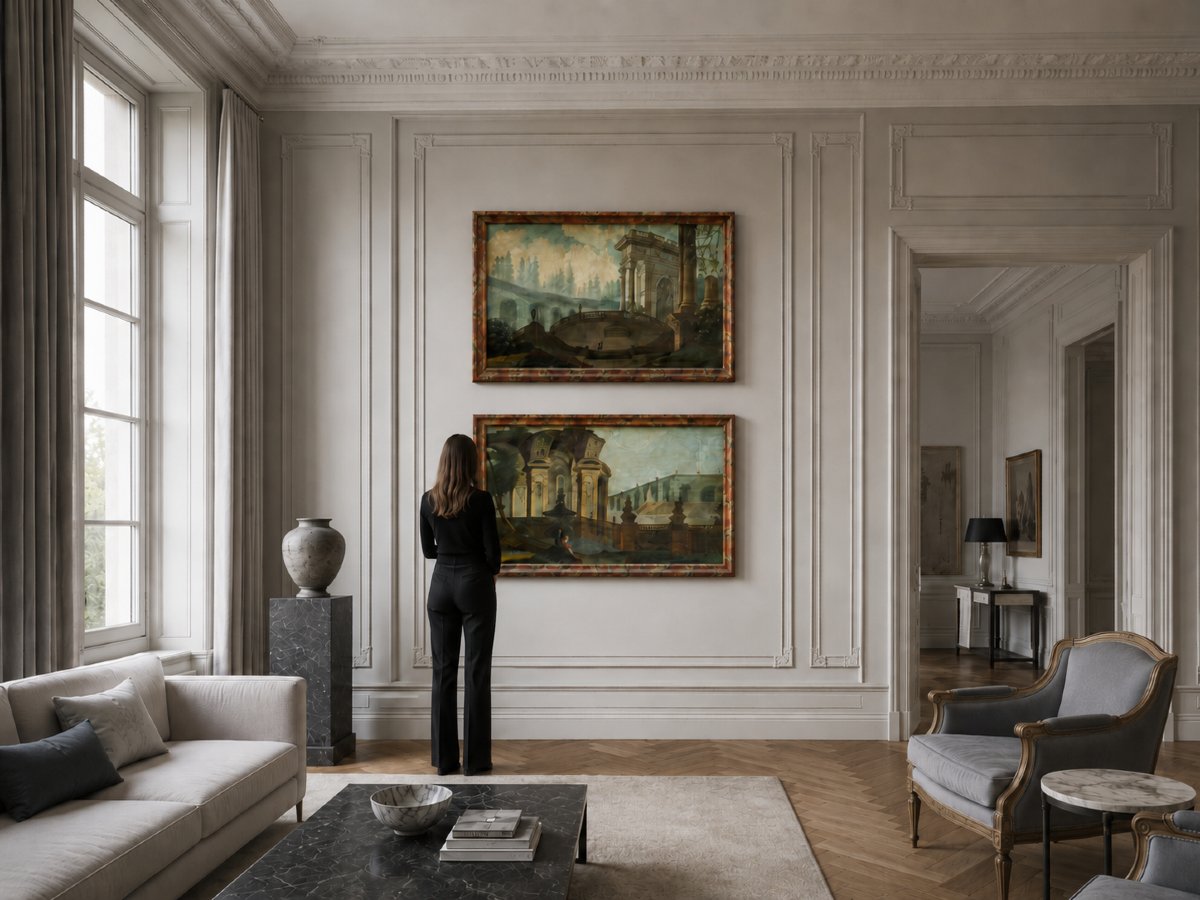
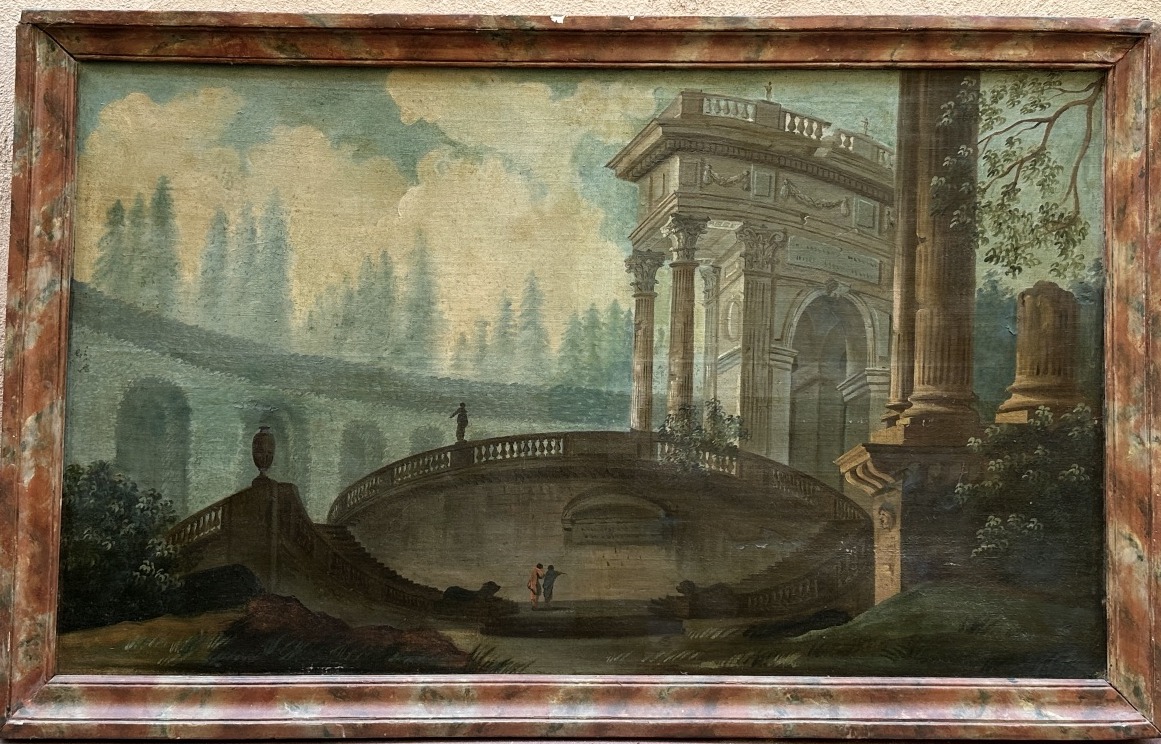
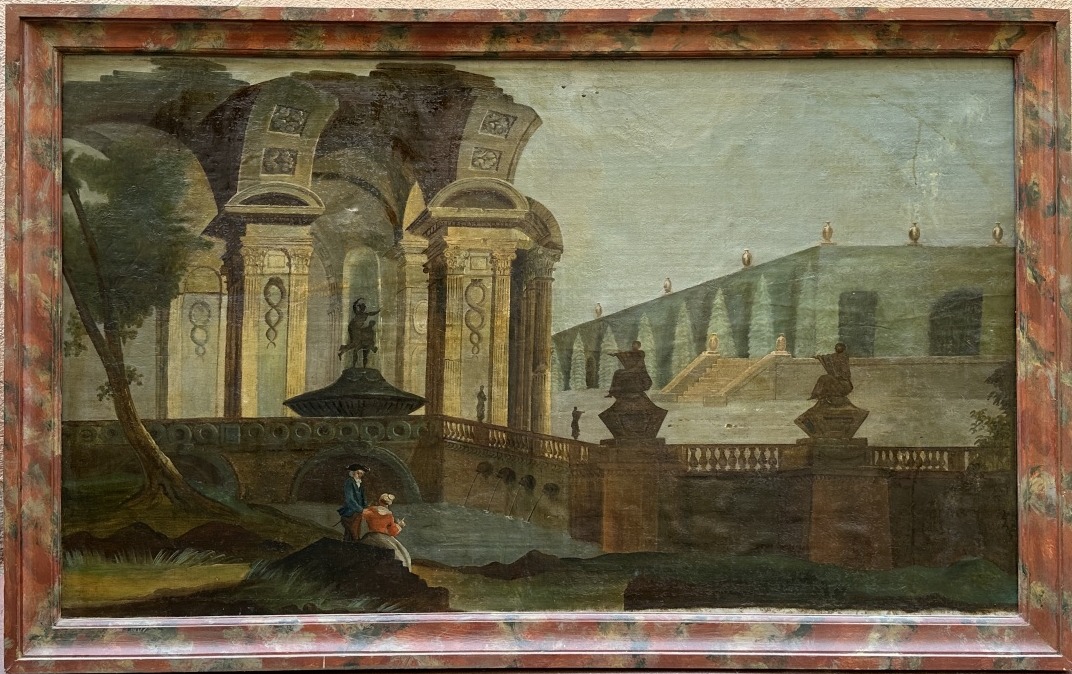
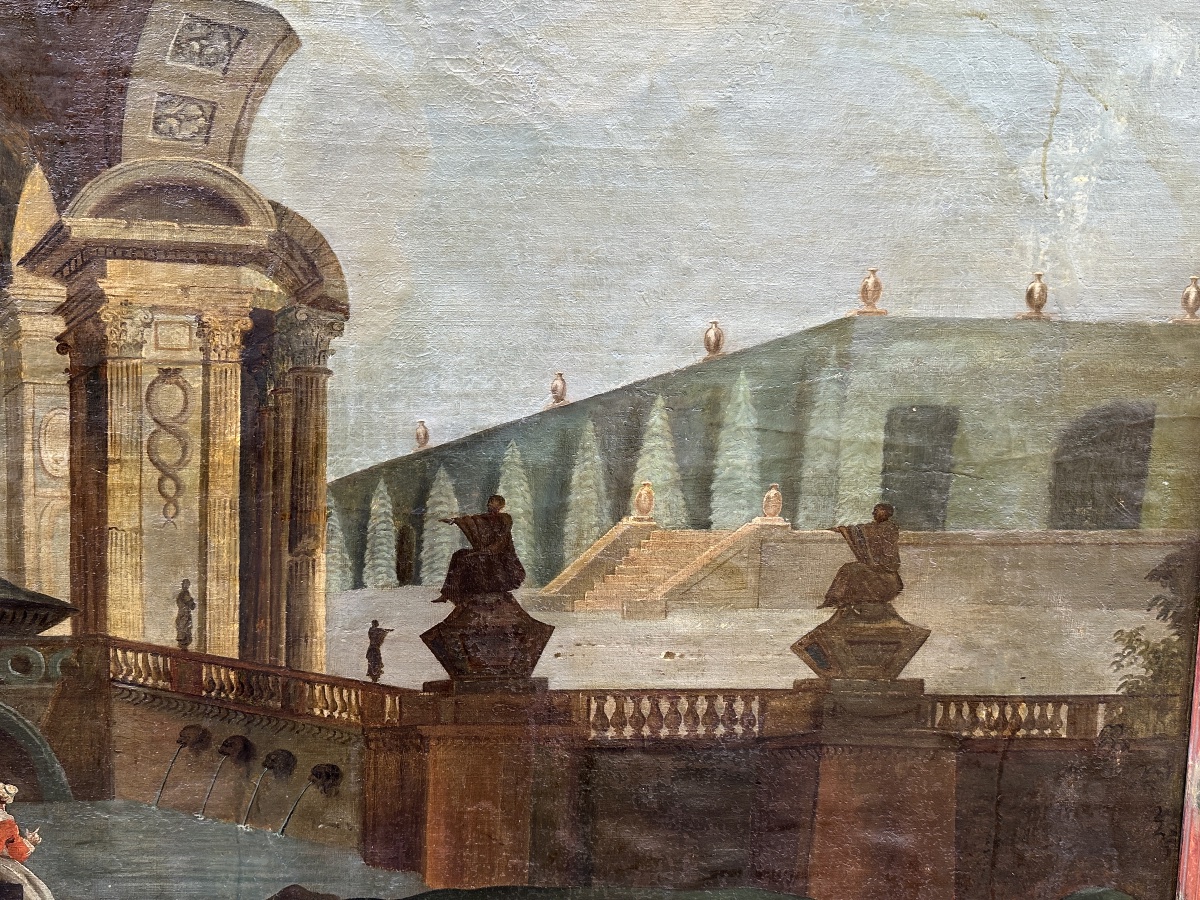
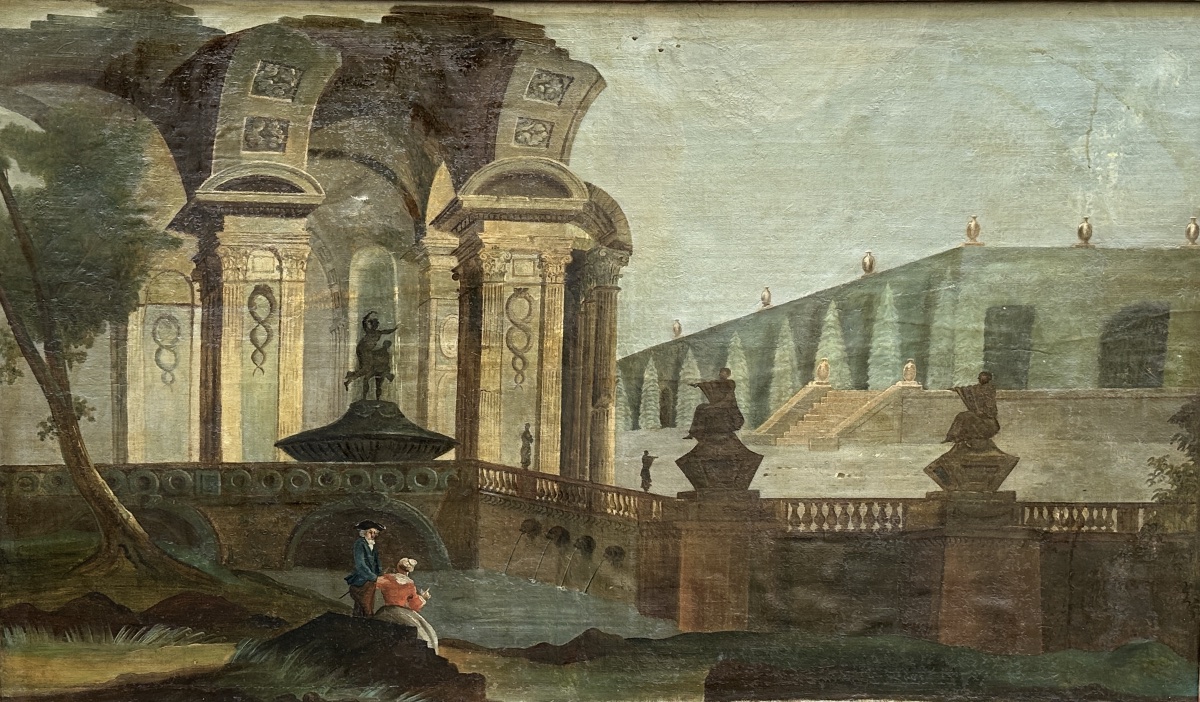
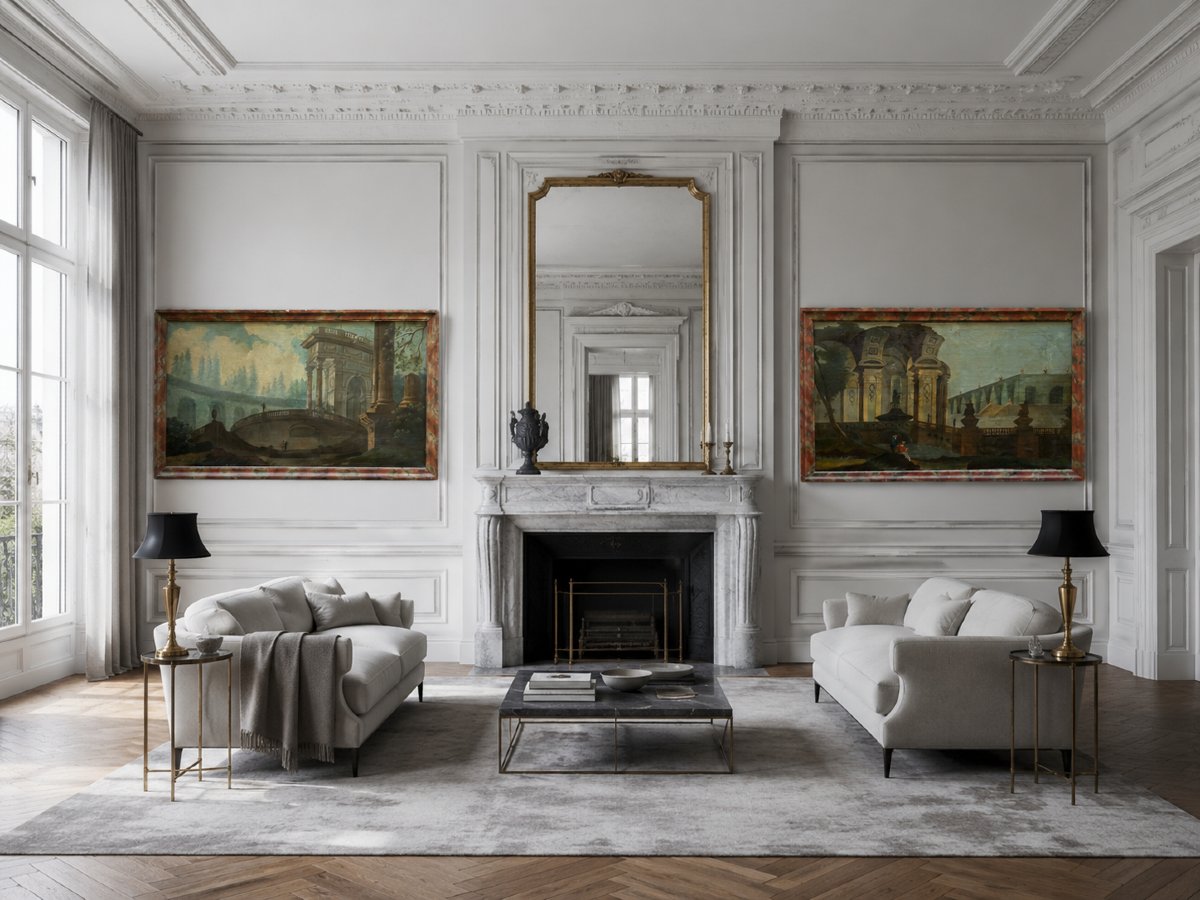
A pair of large decorative paintings from the 18th century, oils on canvas, depicting two architectural caprices animated by figures in a vast imaginary palace setting. The compositions reflect the Grand Tour aesthetic, blending ancient Rome, “fabrique” gardens, neoclassical palaces, fantastical architecture, and references to ancient Greece.
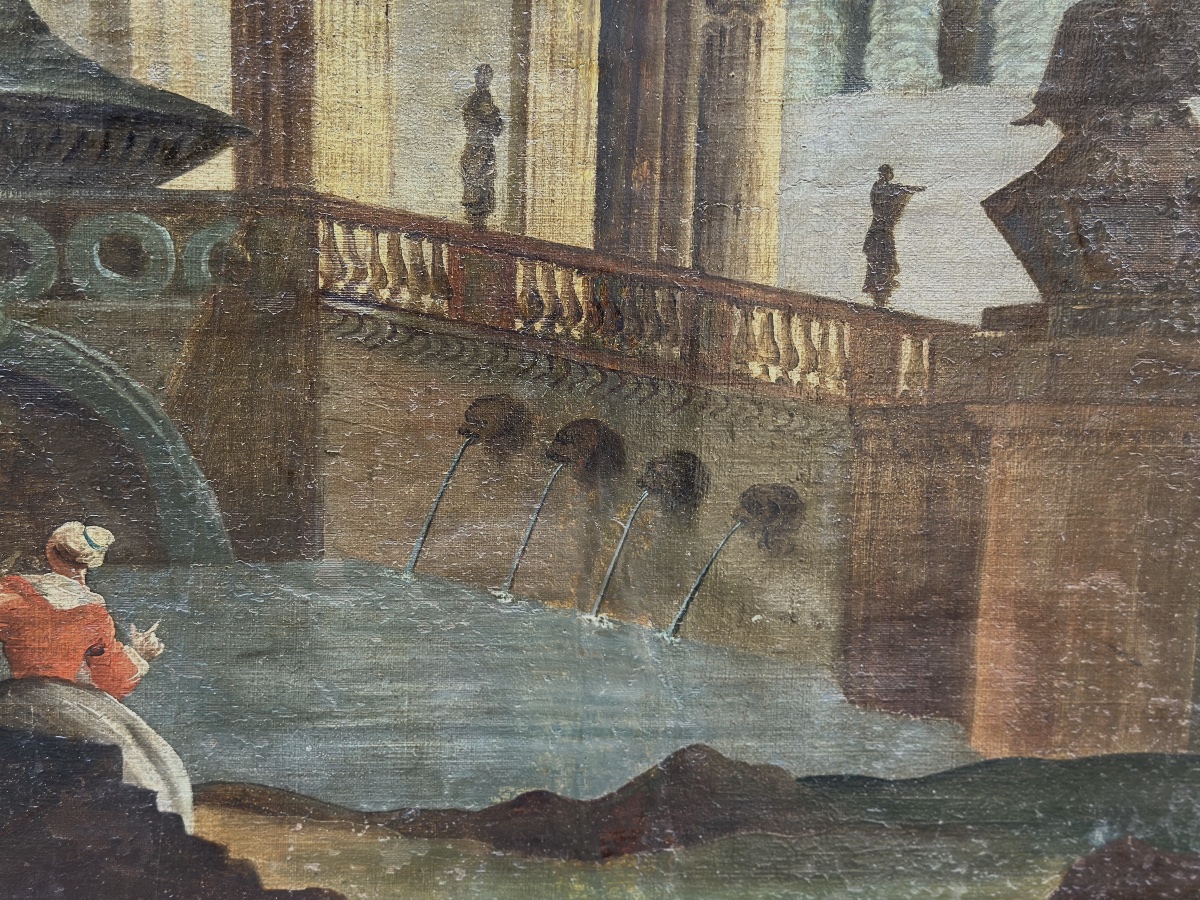
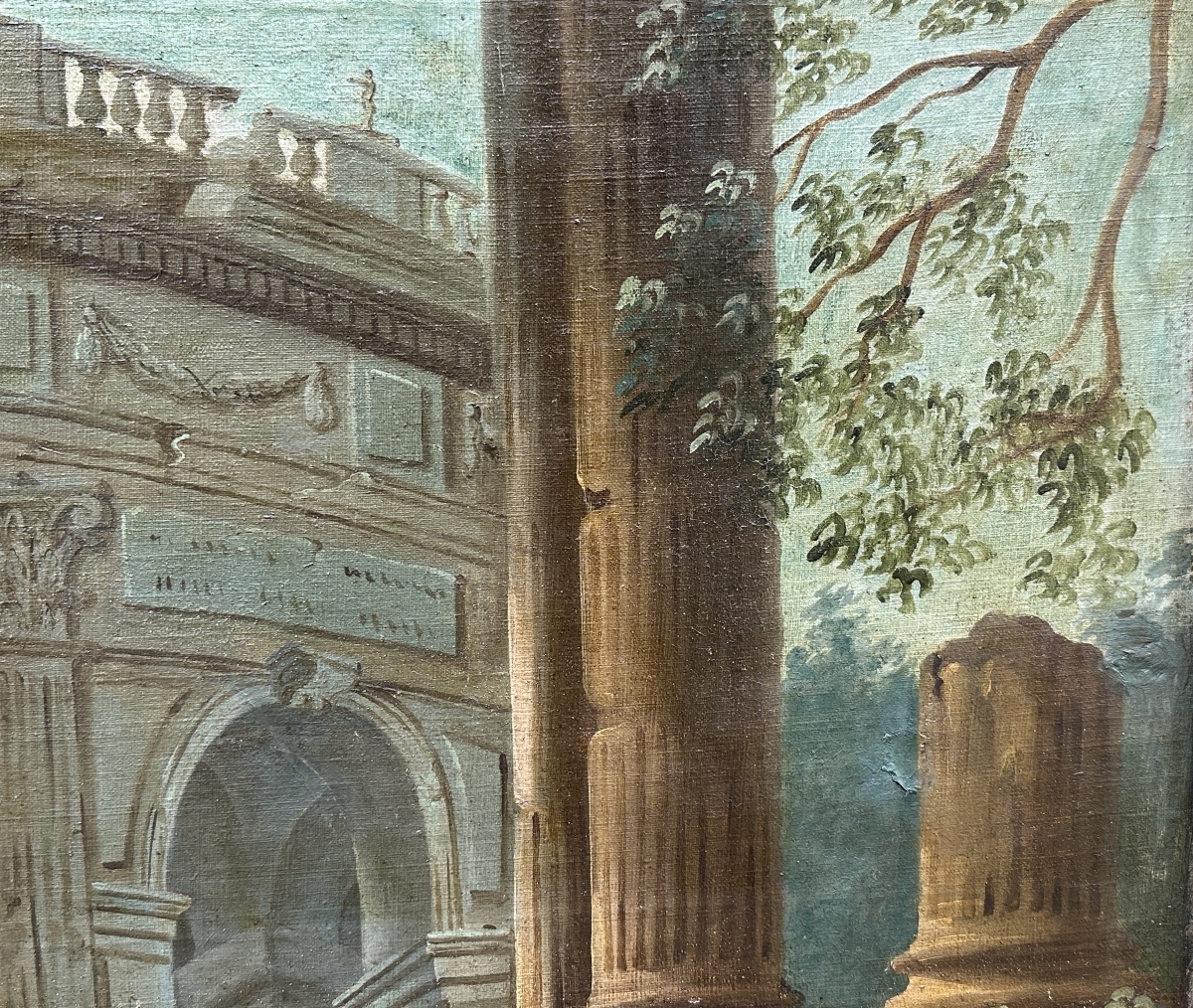
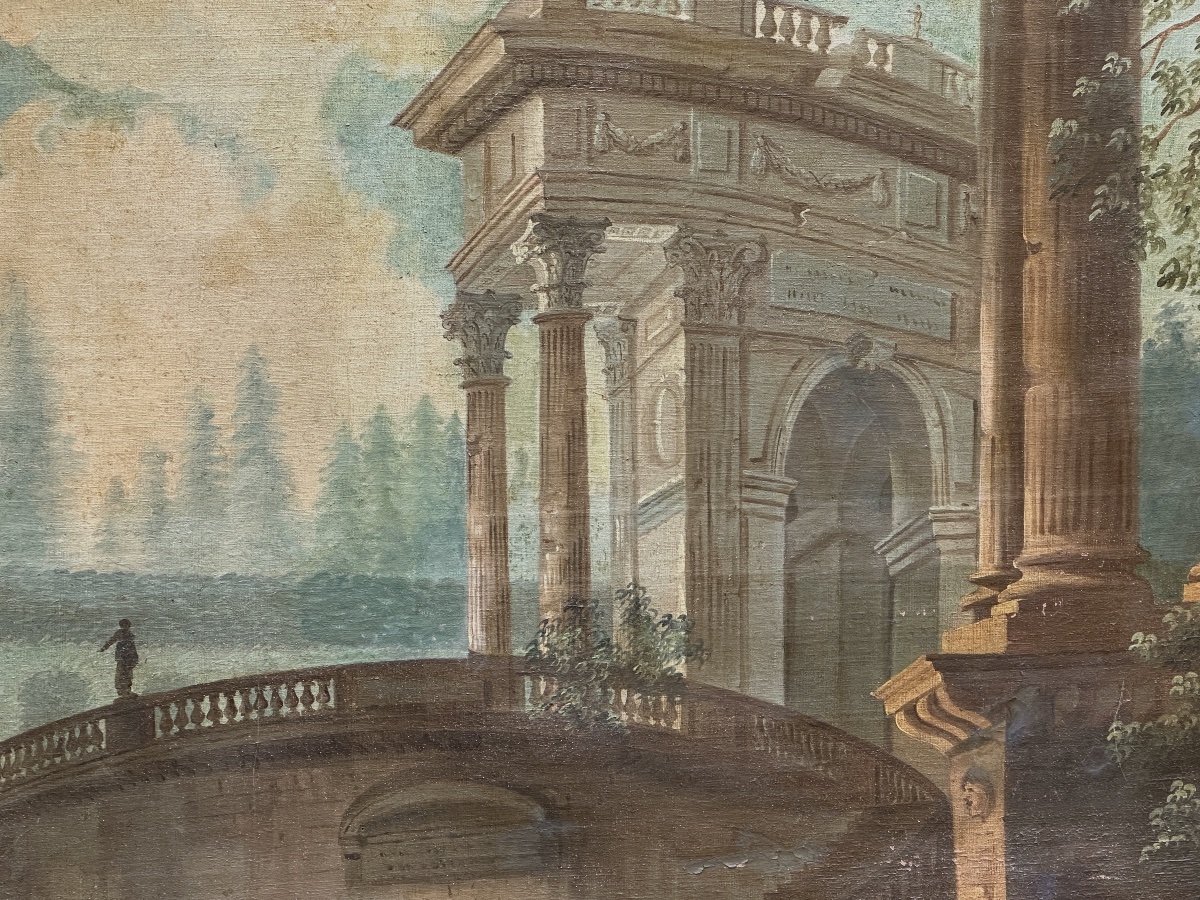
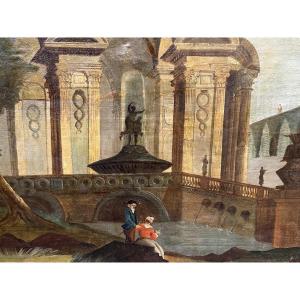
Both scenes unfold a theatrical architectural world: monumental porticos, columns, deep arches, balustrades, staircases, basins, fountains, statues, ornamental vases, terraced gardens, and topiaries. The ensemble evokes a Rome reimagined by the imagination, in keeping with the principle of architectural caprice so highly prized in the 18th century. The figures, scaled down to match the setting, bring the scene to life: strollers, contemplative silhouettes, costumed characters, a couple seated by the water’s edge, statues, and garden figures punctuate the space as if in a theatrical set or an ideal palace.
This pair reflects the French and European taste of the second half of the 18th century for idealized ancient architecture. They can be compared to the “caprices” of Hubert Robert, Pierre-Antoine Demachy, and Jacques de Lajoue. We see Robert’s taste for ruins, architectural fabrications, monumental architecture, and poetic gardens; Demachy’s taste for sophisticated architectural perspectives, large decorative compositions, and imaginary palaces; and Lajoue’s legacy in architectural fantasy, theatrical sets, and the play of perspectives.
The neoclassical character is defined by colonnades, pediments, statues, orderly staircases, and vast terraces that evoke Italian villas, Roman gardens, and idealized visions of Antiquity. The architectural designs blend Rome and ancient Greece into a decorative language befitting an aristocratic salon: a world of stone, water, statues, and artfully designed promenades, conceived to captivate as much through perspective as through atmosphere.
The color palette, muted by the passage of time, is based on deep greens, browns, ochres, bluish grays, and cool highlights. This antique tone gives the scenes a highly decorative presence, with the charm of a grand mural. The water effects, dark silhouettes, architecture bathed in diffused light, and garden backgrounds create a melancholic atmosphere, in the spirit of philosophical strolls and architecturally designed landscapes.
18th-century French or European school, circa 1750–1780
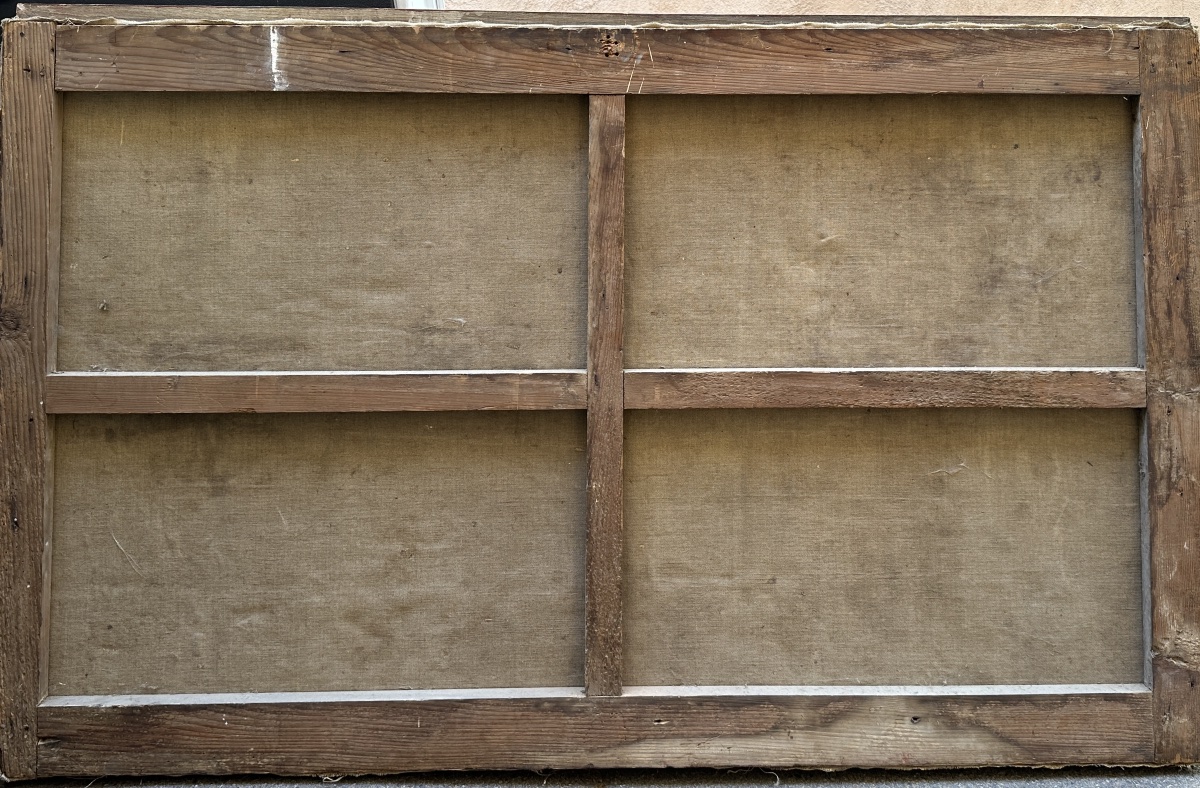
Oil on canvas. Dimensions: 140 x 90 cm each
Framing: antique painted wooden moldings, featuring trompe-l’œil decoration of faux red, green, and brown marble, are mounted directly onto the canvases in the style of grand wood paneling or salon decor. They reduce the width of the works by the width of the molding (6.5 cm)
Period: 18th century
Style: Rome and Antic Greece
Condition: Condition of use
Material: Oil painting
Width: 140
Height: 90
Reference (ID): 1784066
Availability: In stock