



The Triumph Of Ivan Iv
War spearhead commemorating the capture of Kazan (1552)
Second half of the 16th century (circa 1550–1600)
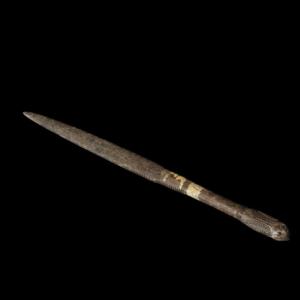
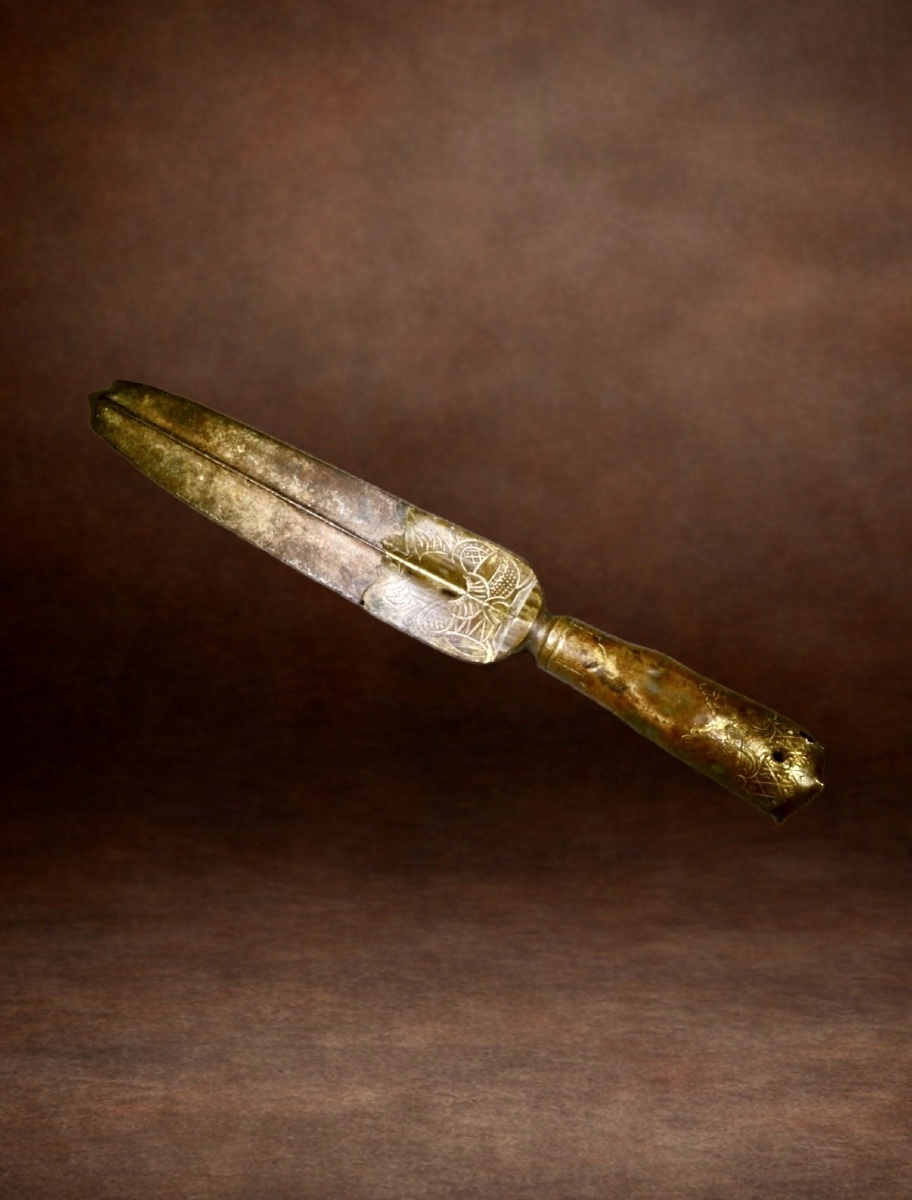
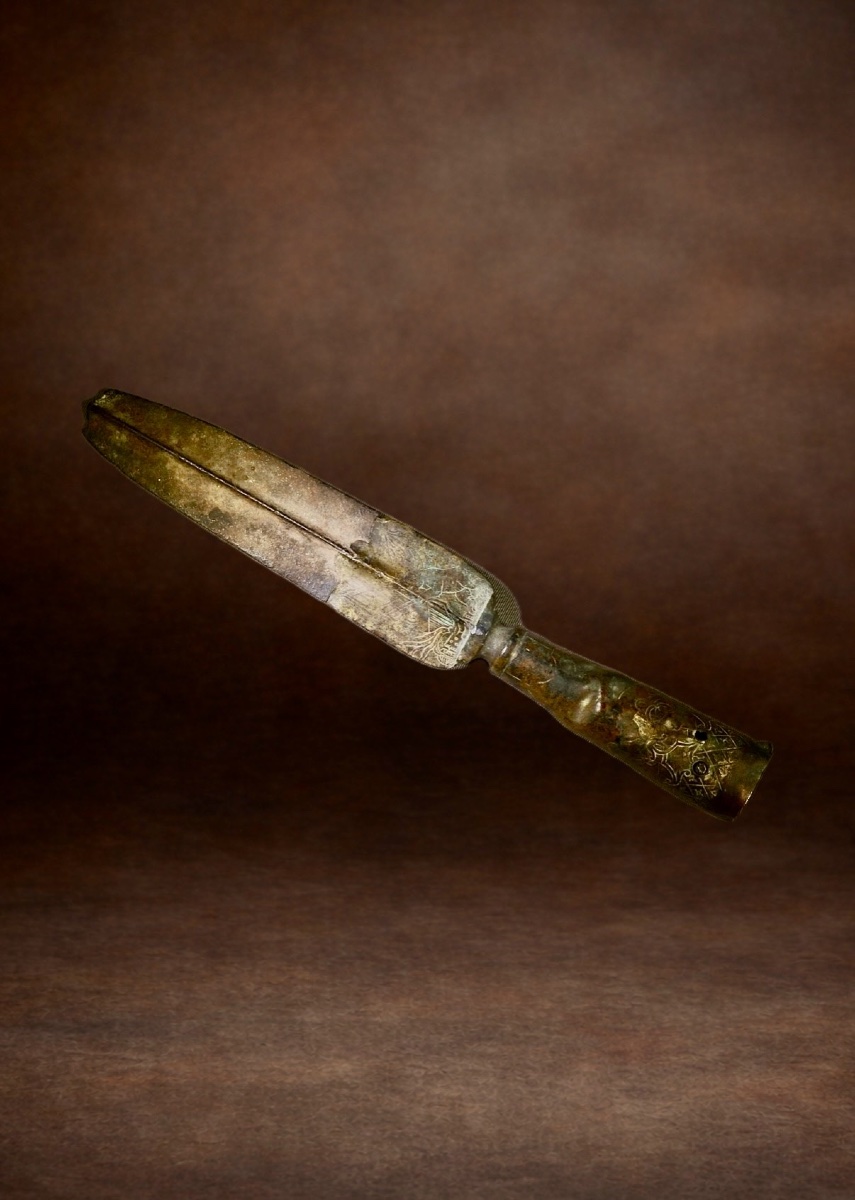
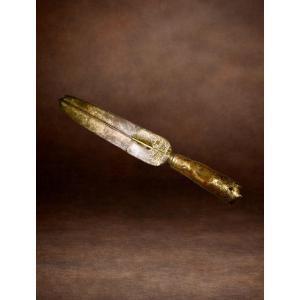
War spearhead made of iron, bronze, and bronze gilded with mercury-based gold, featuring elaborate iconography evoking a military epic that combines military trophies, individualized figures, and symbolic scenes.
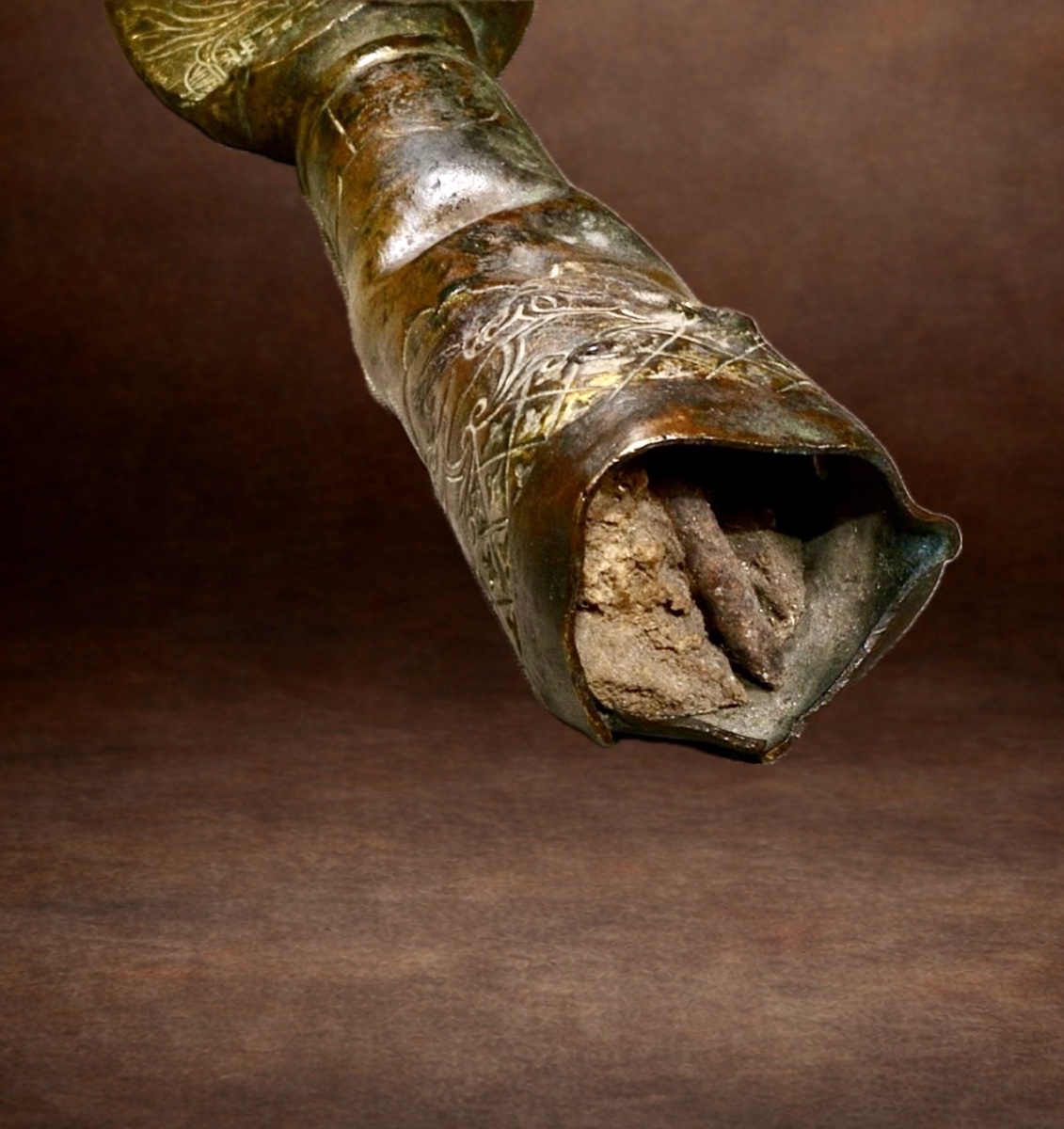
The object consists of a fully engraved cylindrical socket, an elongated tongue-shaped blade featuring a prominent central rib, and a bronze fitting covering the first third of the blade.
Traces of gilding with mercury-based gold remain on the socket and on this bronze inlay.
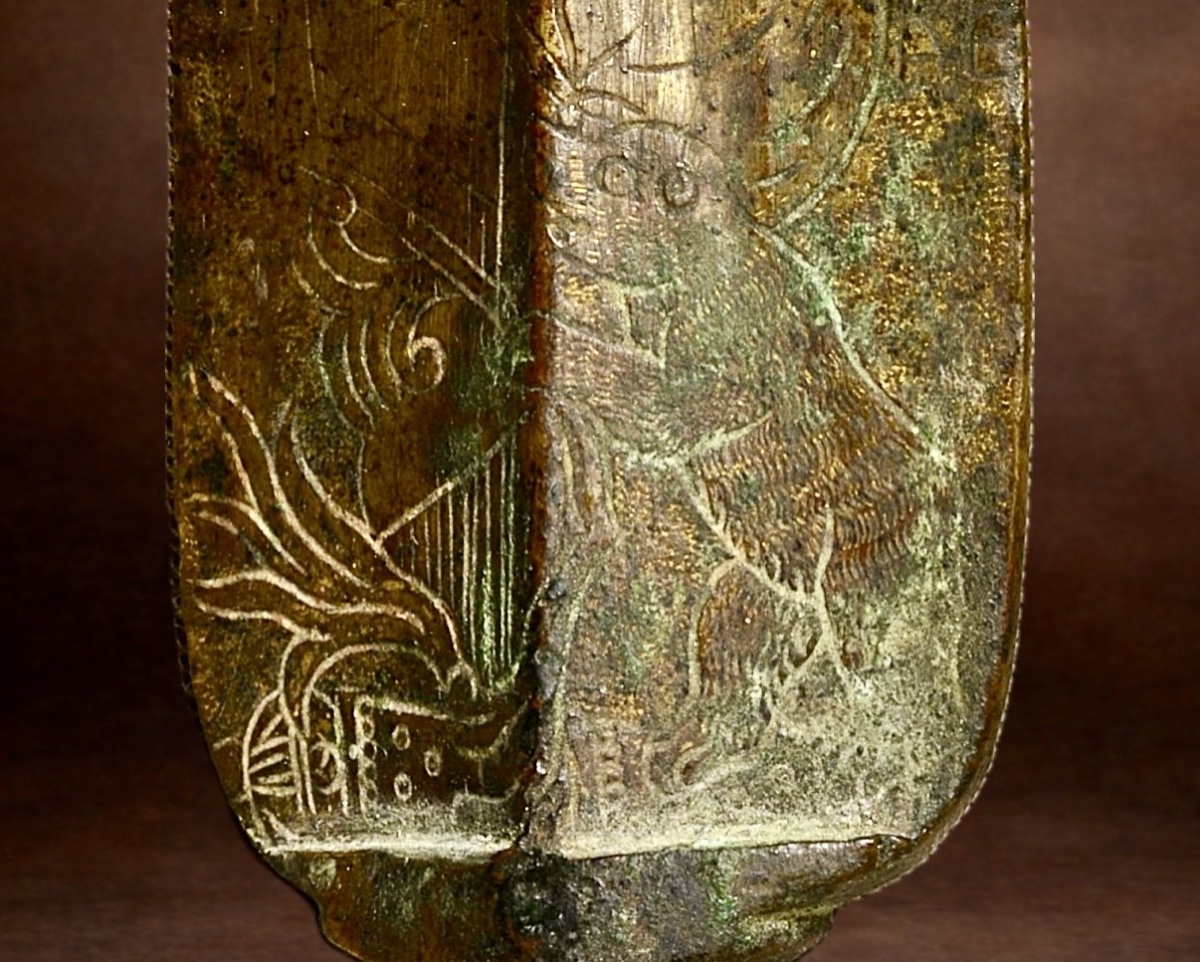
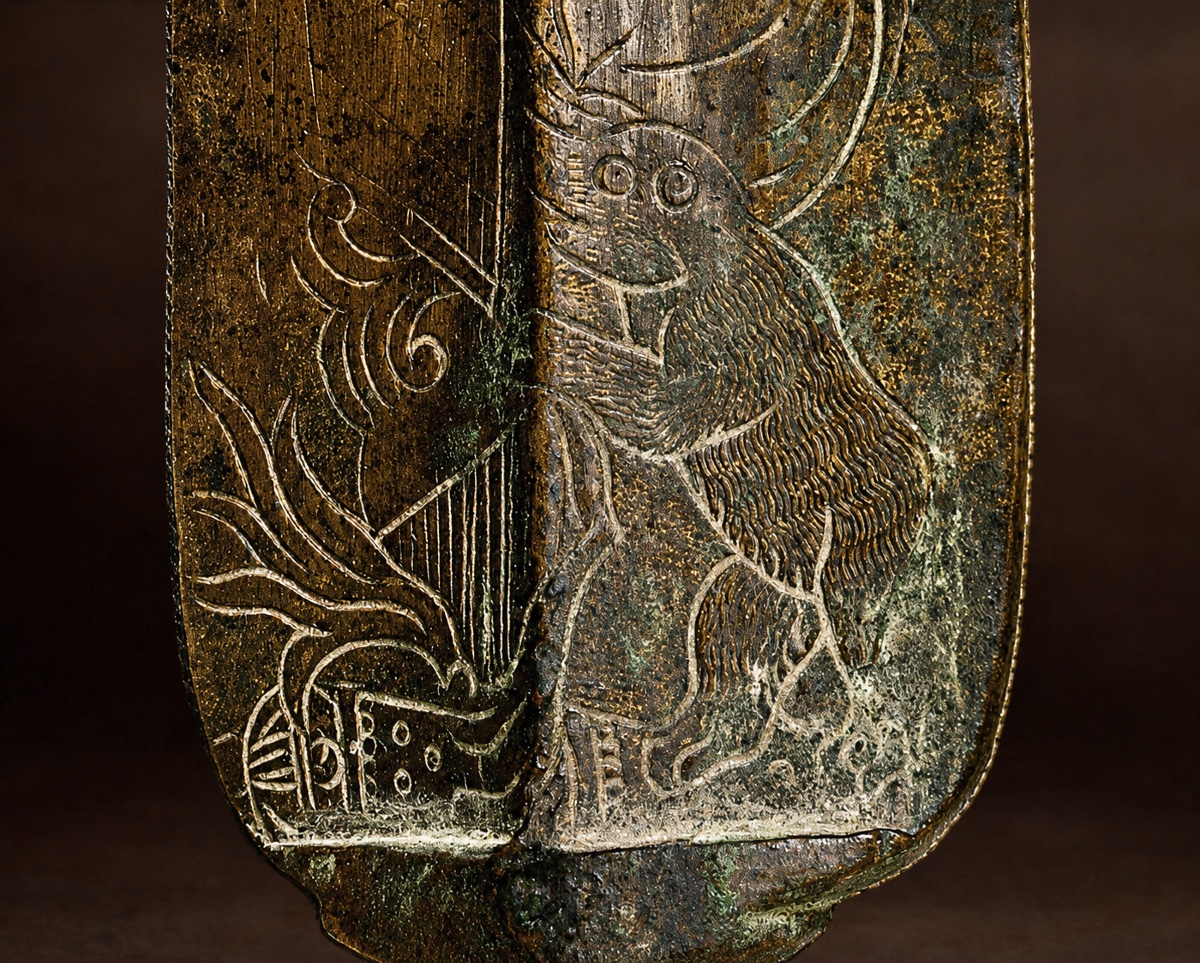
On one side of the blade, the decoration is arranged symmetrically around the central rib. It features kettledrums, banners, and several elements associated with cavalry, notably a saddle, a horse’s throat strap, and various pieces of tack. The ensemble constitutes a military trophy.
On the other side, a bear is depicted setting a fire within a city, with a mosque as its target. This building, identifiable by its dome topped with a crescent, is the main iconographic element referencing the Muslim world. The bear appears to play a central symbolic role in this composition.
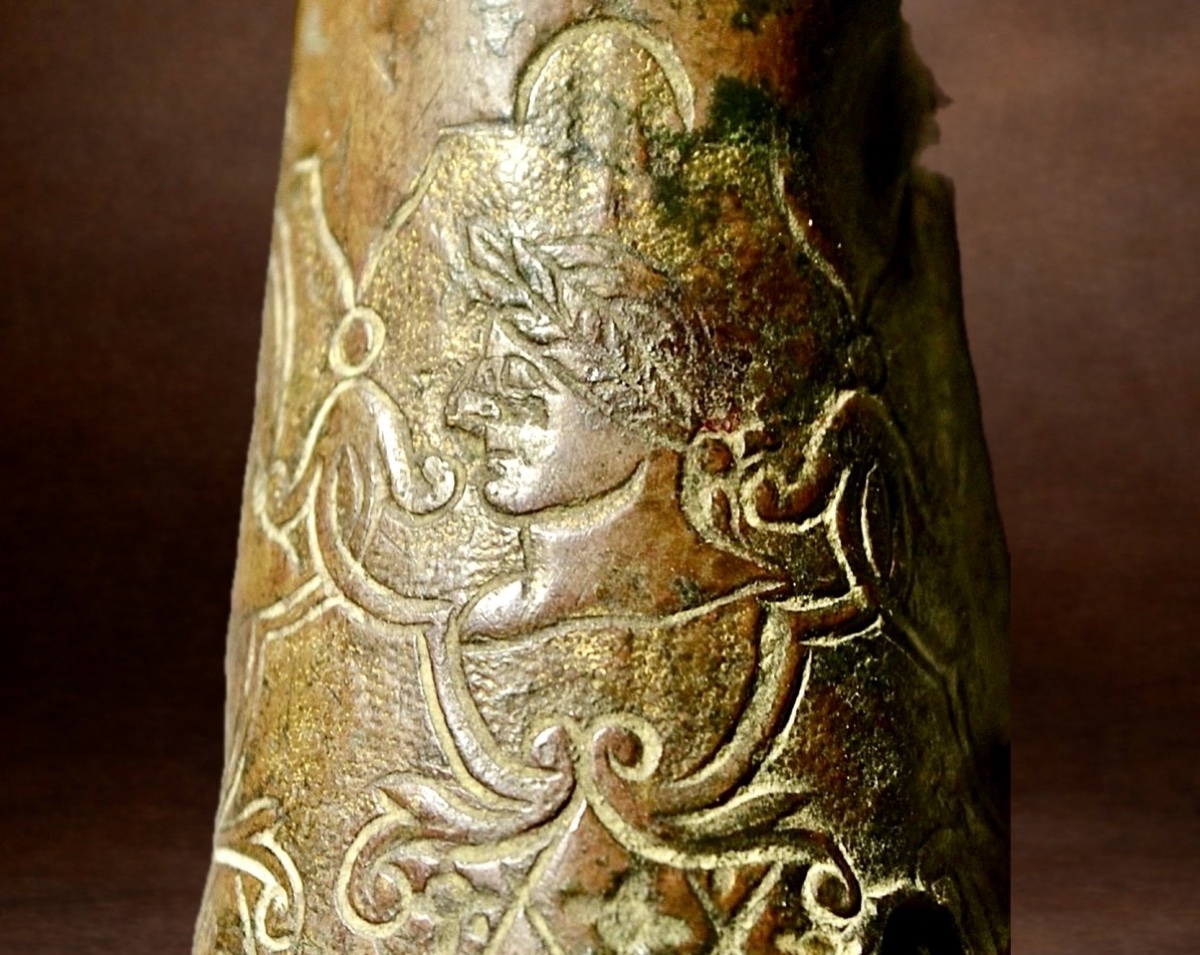
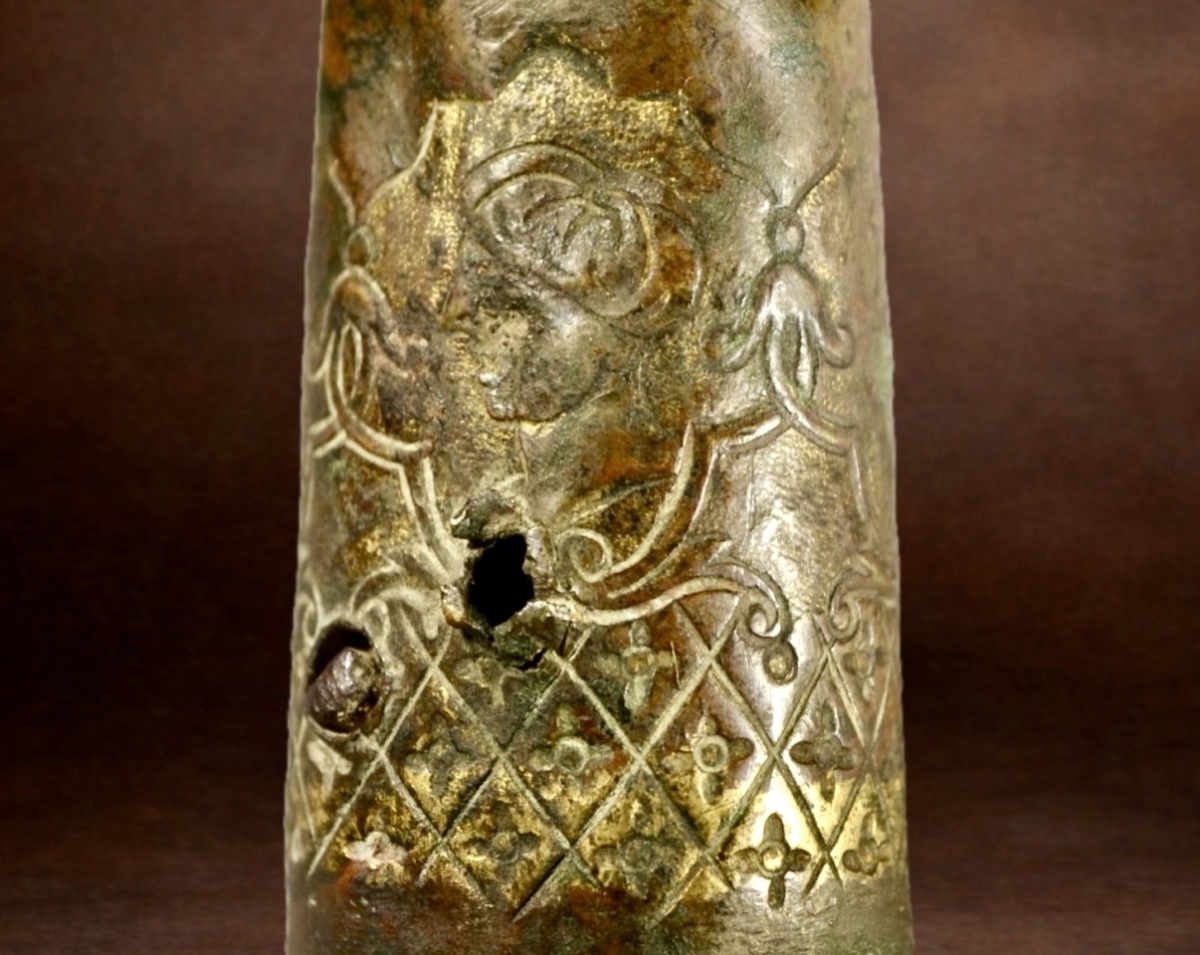
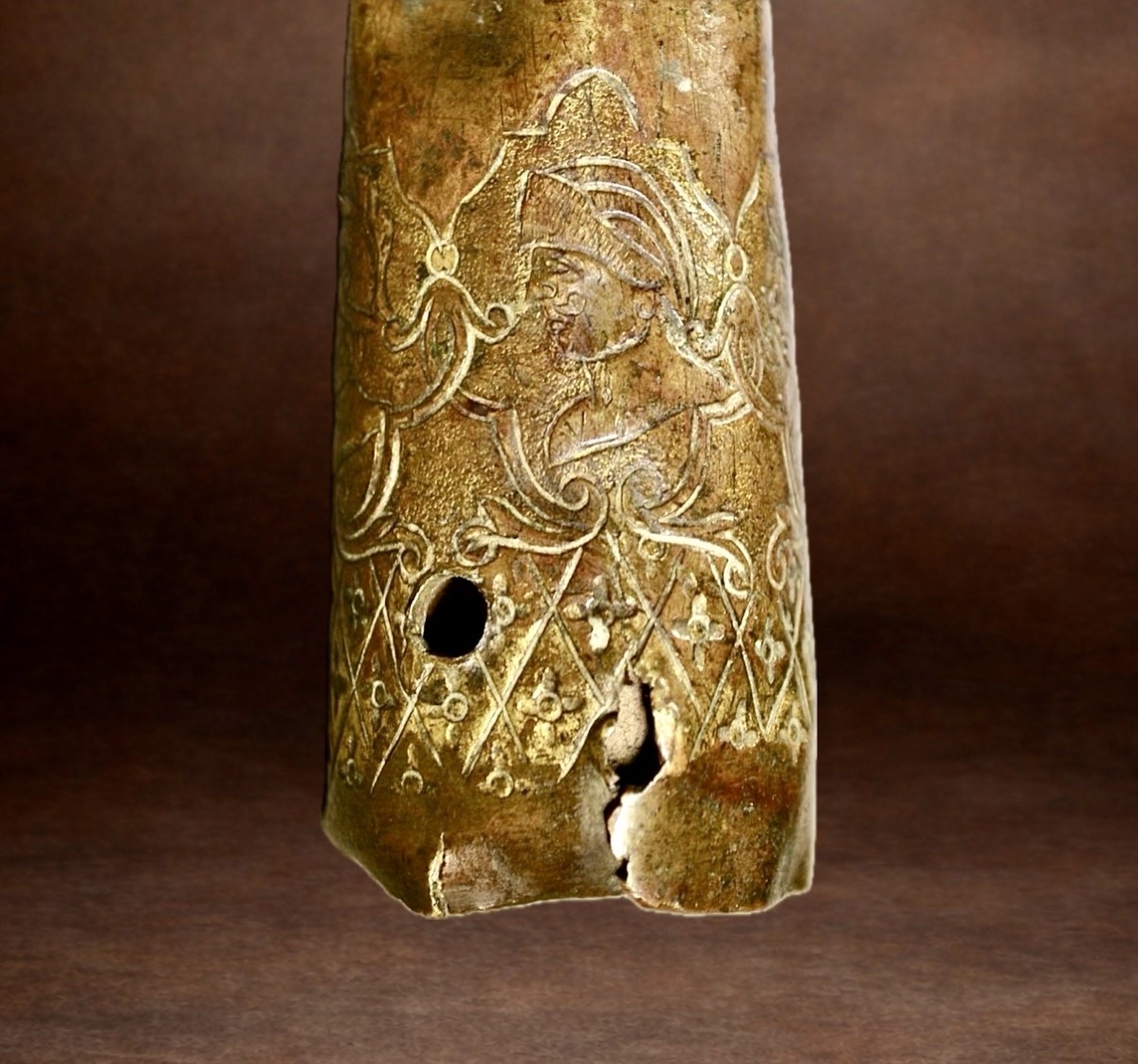
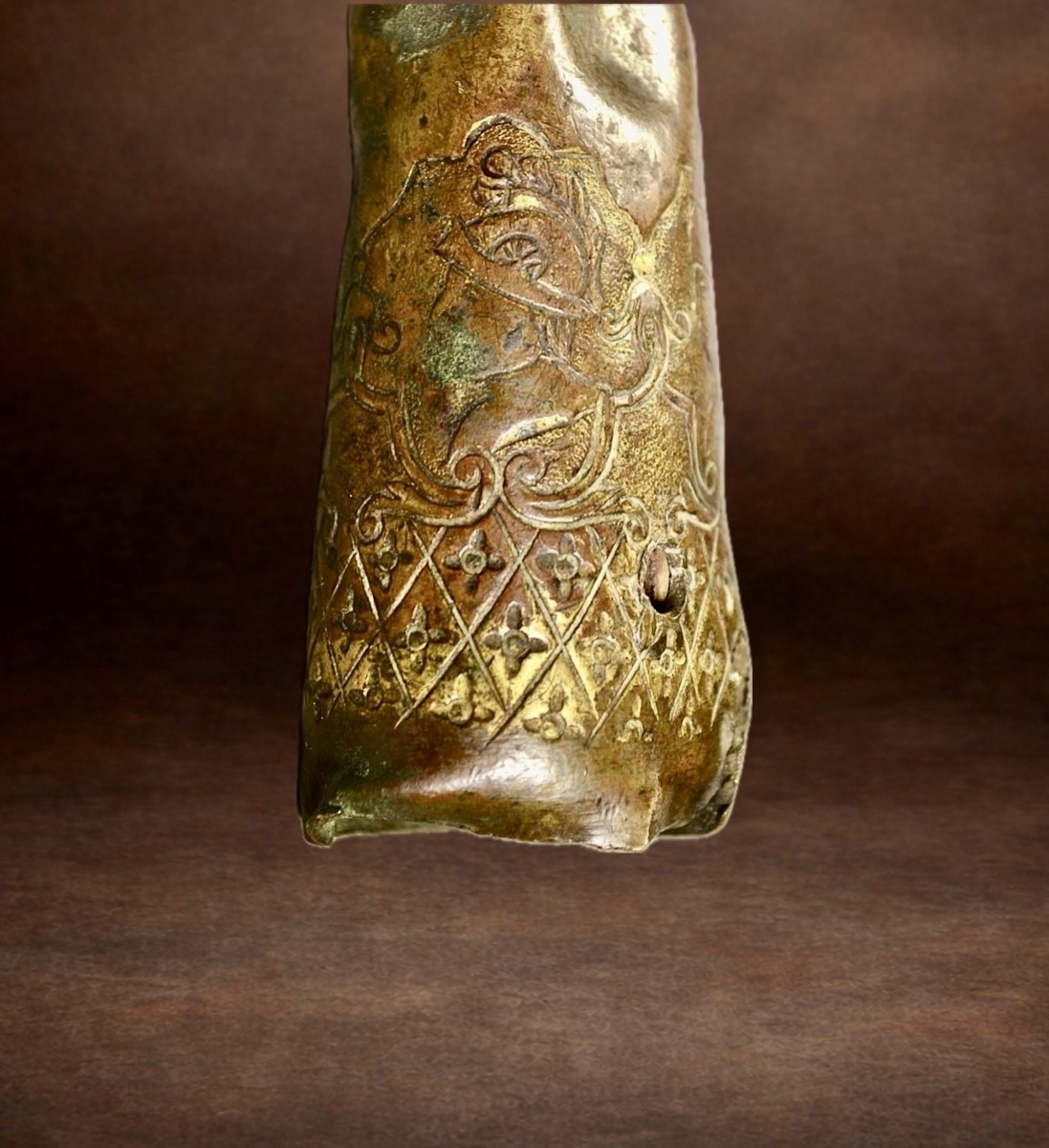
The cylindrical casing is entirely engraved and features several individual figures surrounded by scrollwork and foliage.
Among them are a male figure in profile wearing a laurel wreath—a symbol of victory—a mustached male figure wearing an oriental helmet, and a figure wearing a plumed helmet. Above these figures are cartouches shaped like coats of arms.
The lower part of the cartridge case is adorned with a network of lozenges punctuated by quatrefoil motifs. This decorative vocabulary bears certain similarities to ornamentation found in 16th-century Muscovite art.
The entire iconographic program appears to revolve around three major themes:
BATTLE – DESTRUCTION – VICTORS
A hypothesis long advanced by Mr. Daniel Ceresola and gradually corroborated by iconographic analysis of the object links this piece to the capture of Kazan by Ivan IV, known as Ivan the Terrible, in 1552.
According to this interpretation, the laureated figure symbolically represents the victorious sovereign, the helmeted figures represent the various protagonists, the military trophy represents the Muscovite campaign, and the fire-breathing bear represents the victorious power in action.
The capture of Kazan was one of the defining events in Muscovite Russia’s expansion eastward. The capital of the Muslim Khanate of Kazan in the 16th century, Kazan is today the capital of Tatarstan and one of Russia’s largest cities.
This piece was held in a private collection for about thirty years. Its owner had acquired it at an antiques fair in southern France.
The recent provenance is well-documented; the earlier provenance remains unknown.
The socket still retains remnants of the original wooden handle. The tip of the blade does not appear to have been broken off but rather gradually eroded by corrosion. This highly localized damage could be explained by the object having been stored for an extended period with its tip pointing toward the ground, in a damp environment or while previously buried.
Period: 16th century
Style: Other Style
Condition: En l'etat
Reference (ID): 1783976
Availability: In stock