THIS OBJECT WAS SOLD
The Apparition Of The Angel To Saint Joseph, Nicolas Mignard, C. 1670
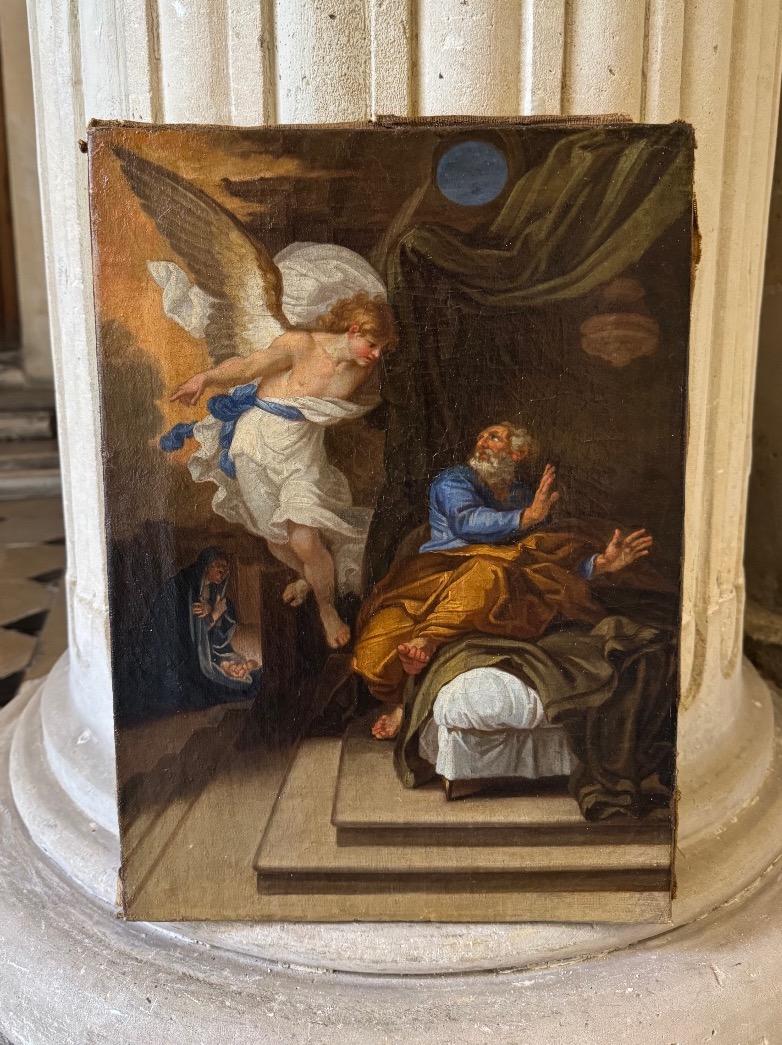
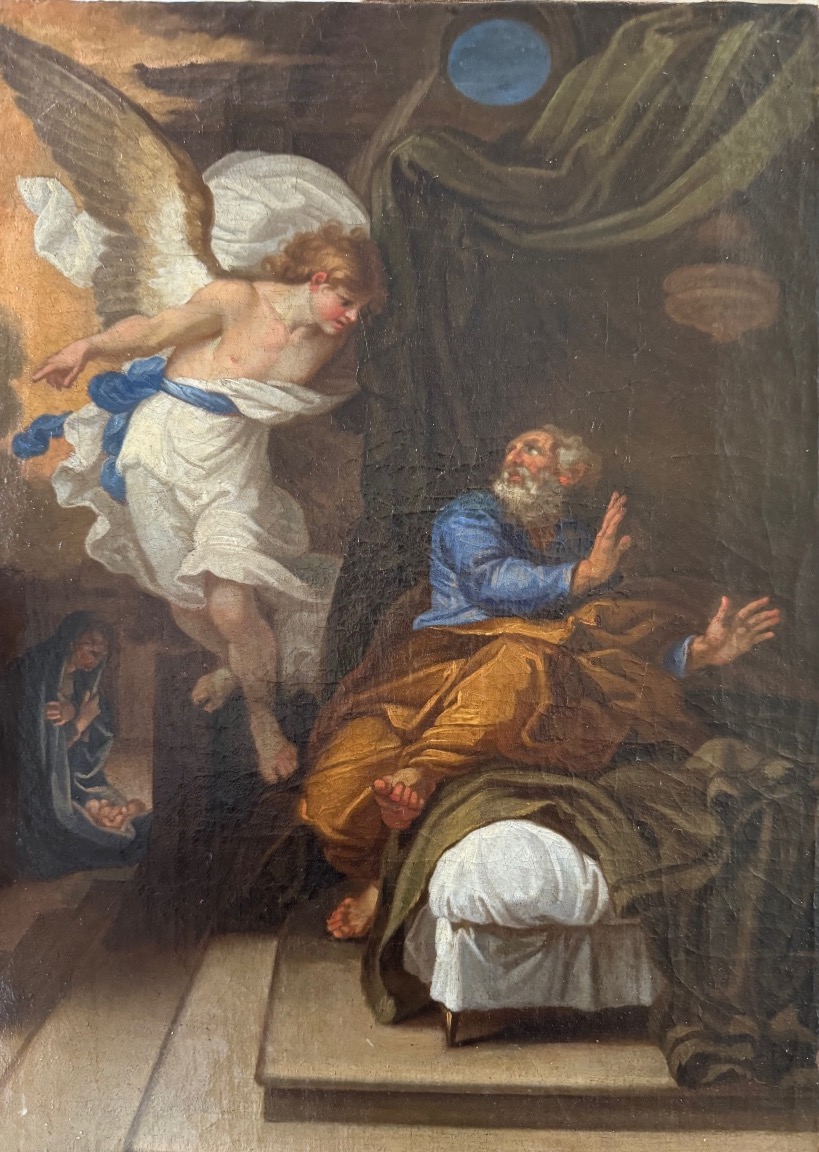
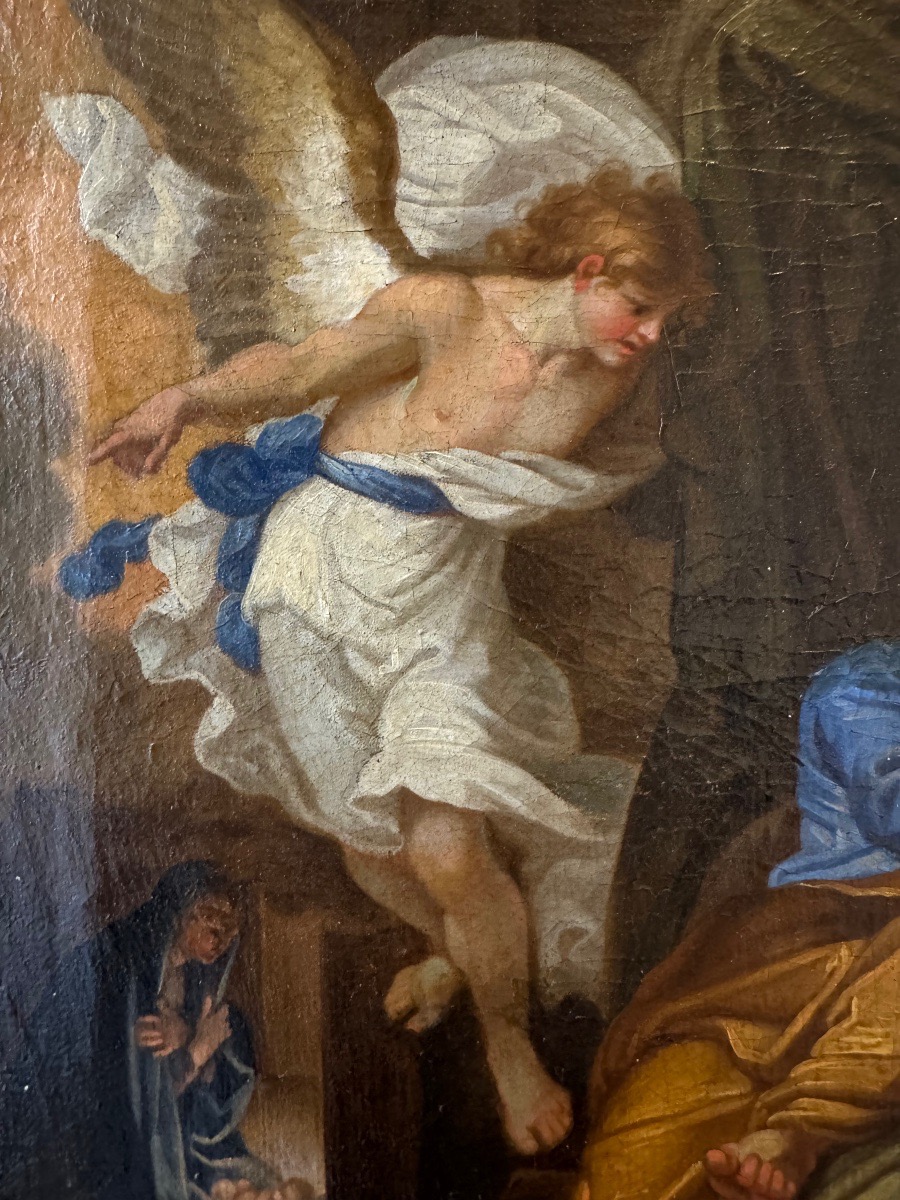
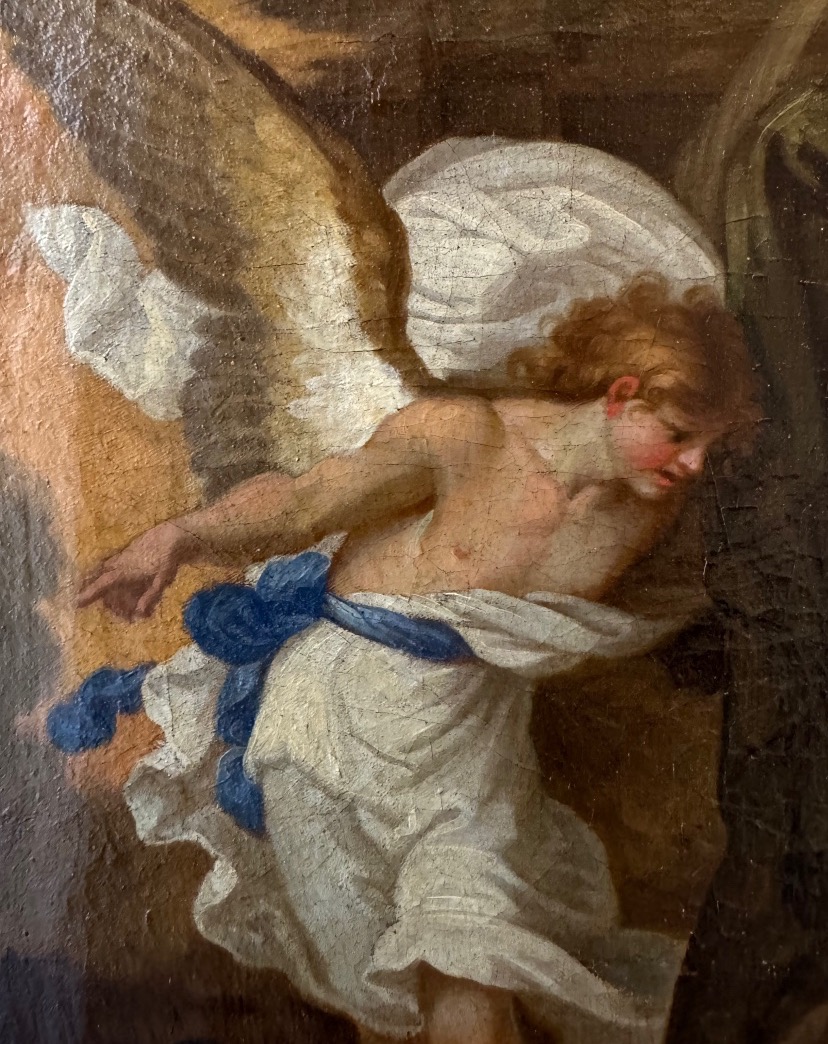
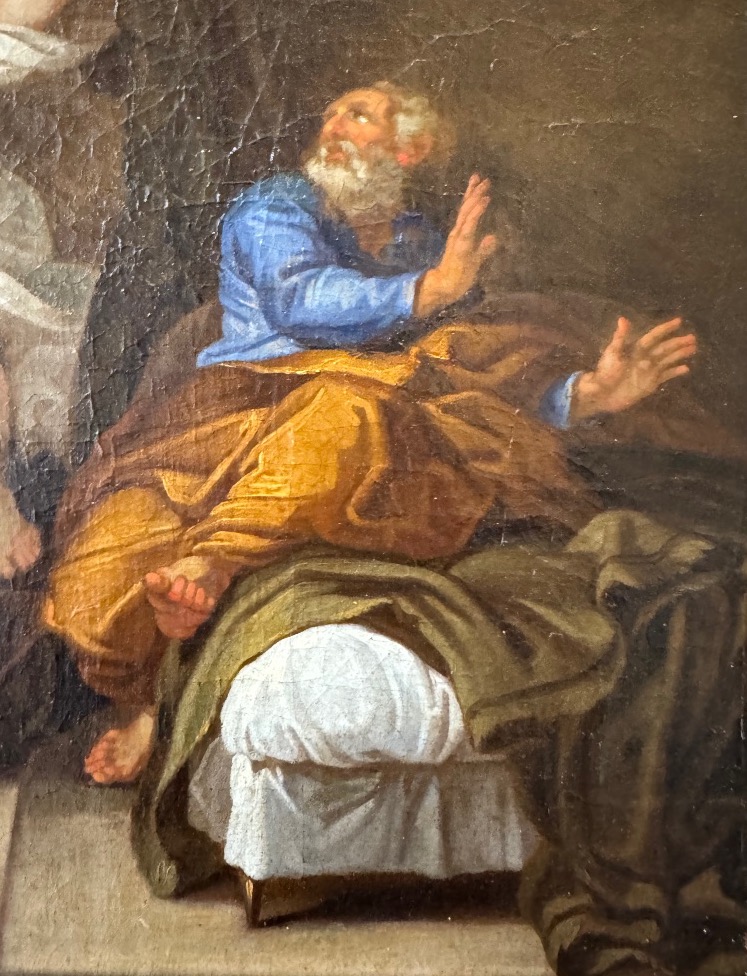
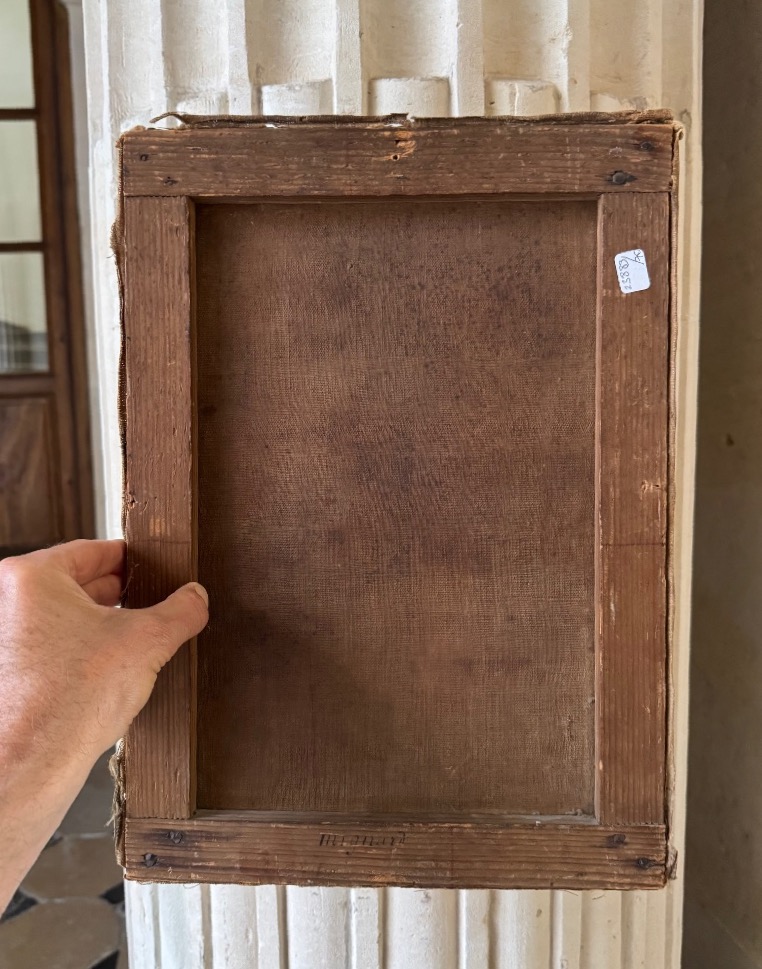
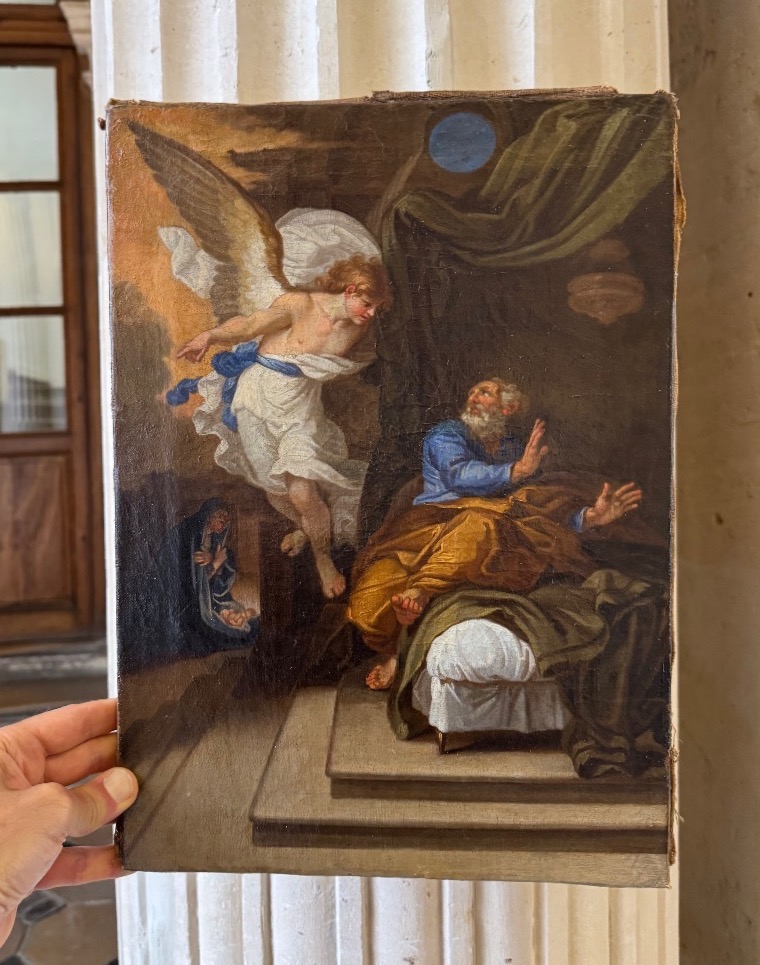


Nicolas MIGNARD (Troyes 1606–1668 Paris), attributed to
The Apparition of the Angel to Saint Joseph
Oil on canvas, 42.5 x 30 cm
Related work:
- Nicolas Mignard (1606–1668), The Apparition of the Angel to Joseph, 1664, oil on canvas, 3.00 × 2.40 m, Montpellier, Saint-Pierre Cathedral, Saint Joseph Chapel
- Antoine Ranc (1634–1716), The Apparition of the Angel to Joseph (copy), 1699, oil on canvas, 190 × 150 cm, Montpellier, Saint-Matthieu Church.
We reproduce here the comments kindly provided to us by Pierre-Antoine Martenet, an expert.
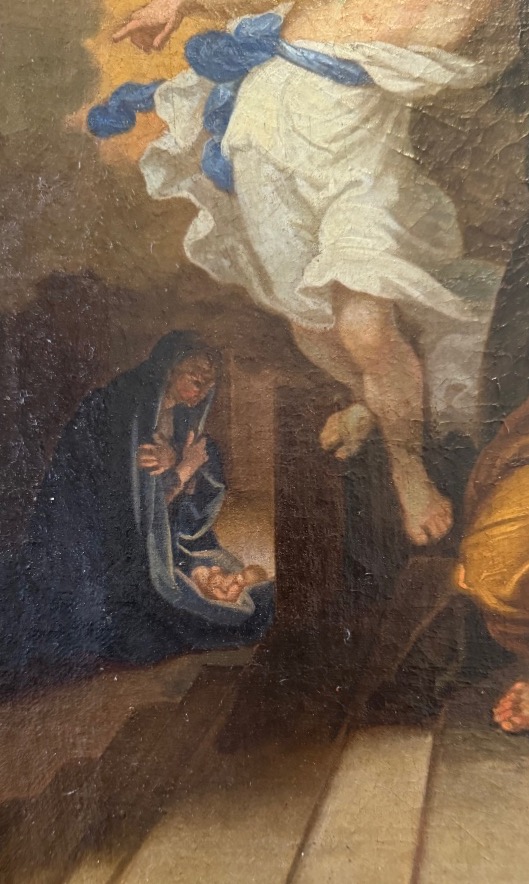
"Our small painting is directly related to one of the masterpieces of 17th-century French religious painting still preserved in situ in Montpellier. In the 17th century, the thirteen chapels of Saint-Pierre Cathedral were granted to the city’s notables to help offset the costs of their upkeep. They were then adorned with lavish decorations reflecting the lifestyle of their patrons. On April 6, 1643, Jean Deydé (1617–1687), a consul at the Court of Auditors, became the owner of a concession—the present-day Saint-Roch Chapel—and had a family tomb erected there with spectacular marble decoration, which today stands as the sole remnant of the cathedral chapels’ 17th-century splendor. In 1664, as a tribute to his father Joseph (1585–1637), he commissioned a large altarpiece from Nicolas Mignard (1606–1668) as a tribute to his father Joseph (1585–1637). The painting depicts the angel’s second appearance to Joseph—following the Nativity—urging him to flee Herod’s soldiers and go to Egypt. Mignard painted the subject in a very refined style. He creates a contrast between Joseph’s vigorous gestures and the angel’s natural grace. In the background, the Virgin Mary contemplates the Infant Jesus, who radiates a divine light. The restraint of the composition, the precise modeling, and the power of the drapery are reminiscent of the classicizing style of the Bolognese master Guido Reni (1575–1642), who was often held up as a model by French artists. When he completed this work, Mignard was in Paris and had just been admitted to the prestigious Royal Academy of Painting and Sculpture. His painting also influenced Antoine Ranc (1634–1716), who produced a copy of it in 1699 for the Church of Saint-Matthieu in Montpellier.
We would like to thank Ms. Jane Mac Avock, a specialist in Mignard’s work and editor of the catalogue raisonné, for confirming—after a firsthand examination—the connection to the composition in Montpellier. She mentioned several smaller versions of works by Nicolas Mignard, most likely executed by him, though it is not yet possible to determine whether these were “modelli di ricordi” or study pieces entrusted to students.”
Therefore, based on current knowledge, it is possible to attribute this painting to Nicolas Mignard.
The Apparition of the Angel to Saint Joseph
Oil on canvas, 42.5 x 30 cm
Related work:
- Nicolas Mignard (1606–1668), The Apparition of the Angel to Joseph, 1664, oil on canvas, 3.00 × 2.40 m, Montpellier, Saint-Pierre Cathedral, Saint Joseph Chapel
- Antoine Ranc (1634–1716), The Apparition of the Angel to Joseph (copy), 1699, oil on canvas, 190 × 150 cm, Montpellier, Saint-Matthieu Church.
We reproduce here the comments kindly provided to us by Pierre-Antoine Martenet, an expert.
"Our small painting is directly related to one of the masterpieces of 17th-century French religious painting still preserved in situ in Montpellier. In the 17th century, the thirteen chapels of Saint-Pierre Cathedral were granted to the city’s notables to help offset the costs of their upkeep. They were then adorned with lavish decorations reflecting the lifestyle of their patrons. On April 6, 1643, Jean Deydé (1617–1687), a consul at the Court of Auditors, became the owner of a concession—the present-day Saint-Roch Chapel—and had a family tomb erected there with spectacular marble decoration, which today stands as the sole remnant of the cathedral chapels’ 17th-century splendor. In 1664, as a tribute to his father Joseph (1585–1637), he commissioned a large altarpiece from Nicolas Mignard (1606–1668) as a tribute to his father Joseph (1585–1637). The painting depicts the angel’s second appearance to Joseph—following the Nativity—urging him to flee Herod’s soldiers and go to Egypt. Mignard painted the subject in a very refined style. He creates a contrast between Joseph’s vigorous gestures and the angel’s natural grace. In the background, the Virgin Mary contemplates the Infant Jesus, who radiates a divine light. The restraint of the composition, the precise modeling, and the power of the drapery are reminiscent of the classicizing style of the Bolognese master Guido Reni (1575–1642), who was often held up as a model by French artists. When he completed this work, Mignard was in Paris and had just been admitted to the prestigious Royal Academy of Painting and Sculpture. His painting also influenced Antoine Ranc (1634–1716), who produced a copy of it in 1699 for the Church of Saint-Matthieu in Montpellier.
We would like to thank Ms. Jane Mac Avock, a specialist in Mignard’s work and editor of the catalogue raisonné, for confirming—after a firsthand examination—the connection to the composition in Montpellier. She mentioned several smaller versions of works by Nicolas Mignard, most likely executed by him, though it is not yet possible to determine whether these were “modelli di ricordi” or study pieces entrusted to students.”
Therefore, based on current knowledge, it is possible to attribute this painting to Nicolas Mignard.
Explore similar pieces and discover your ideal find:
religious paintings