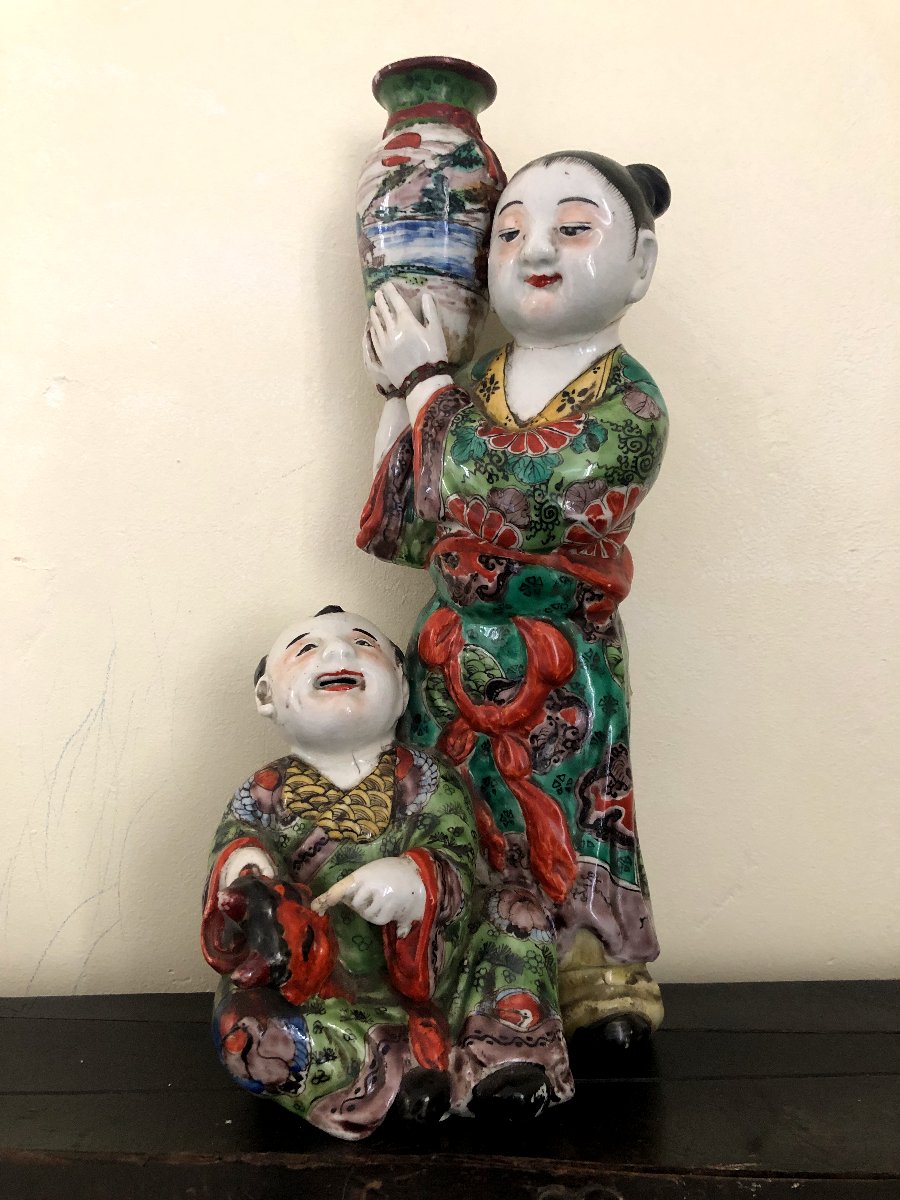
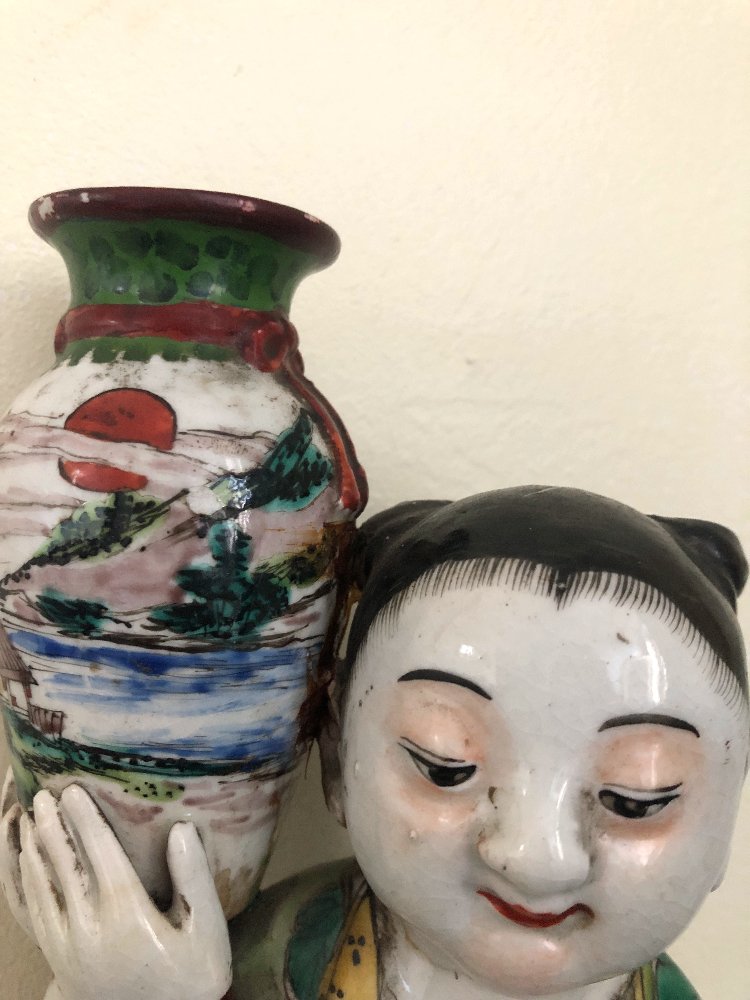
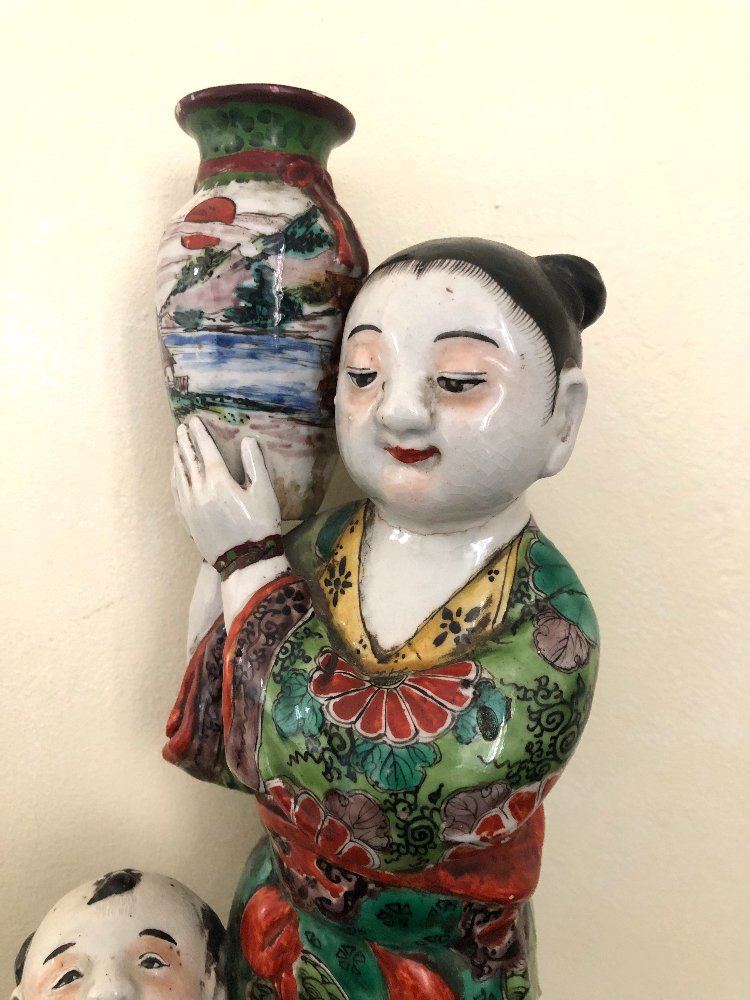
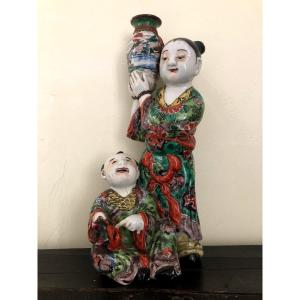


Woman And Child, Painted On Kutani Earthenware, Japan, Meiji Period (1868–1912)
This piece dates from the Meiji period (1868–1912) or the early Taishō period (1912–1926), roughly between the late 19th century and the very early 20th century.
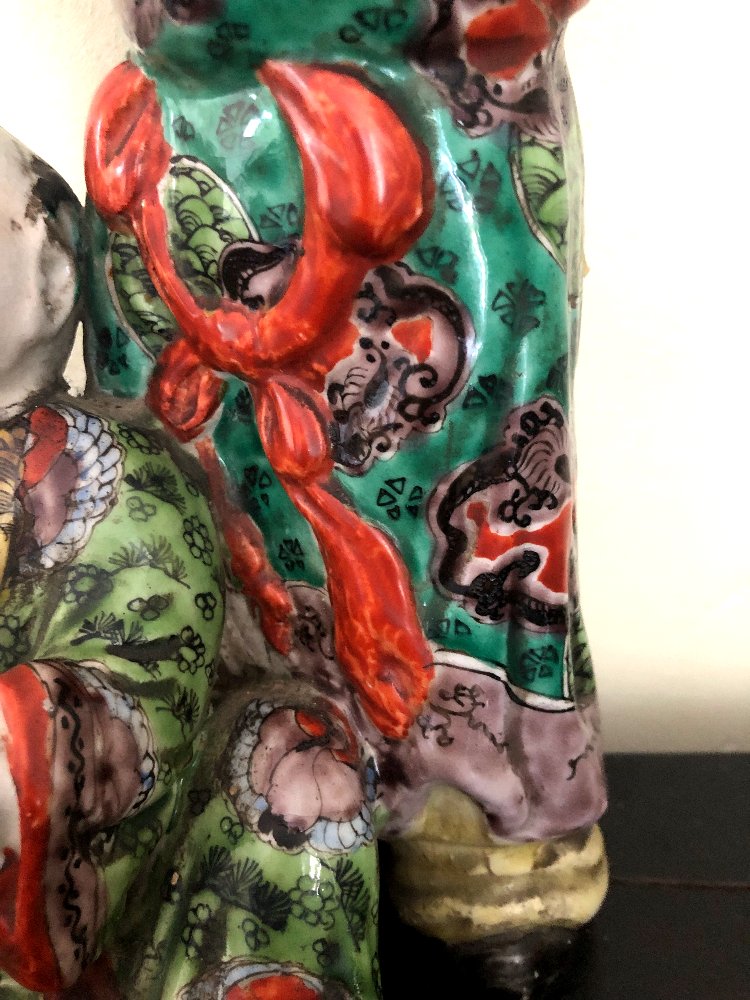
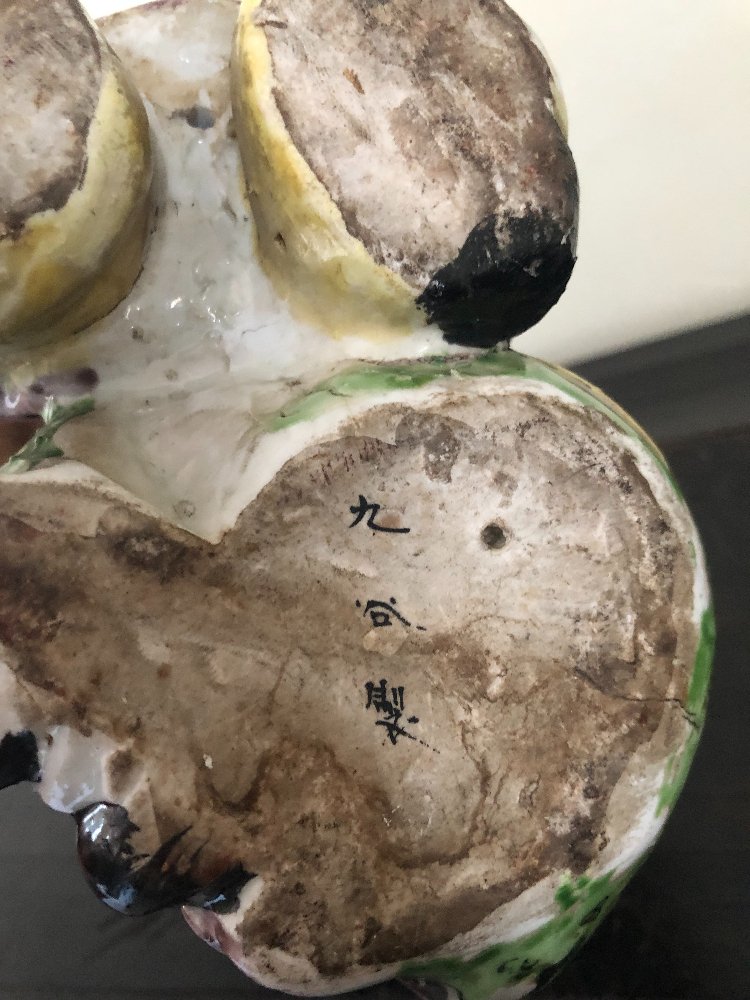
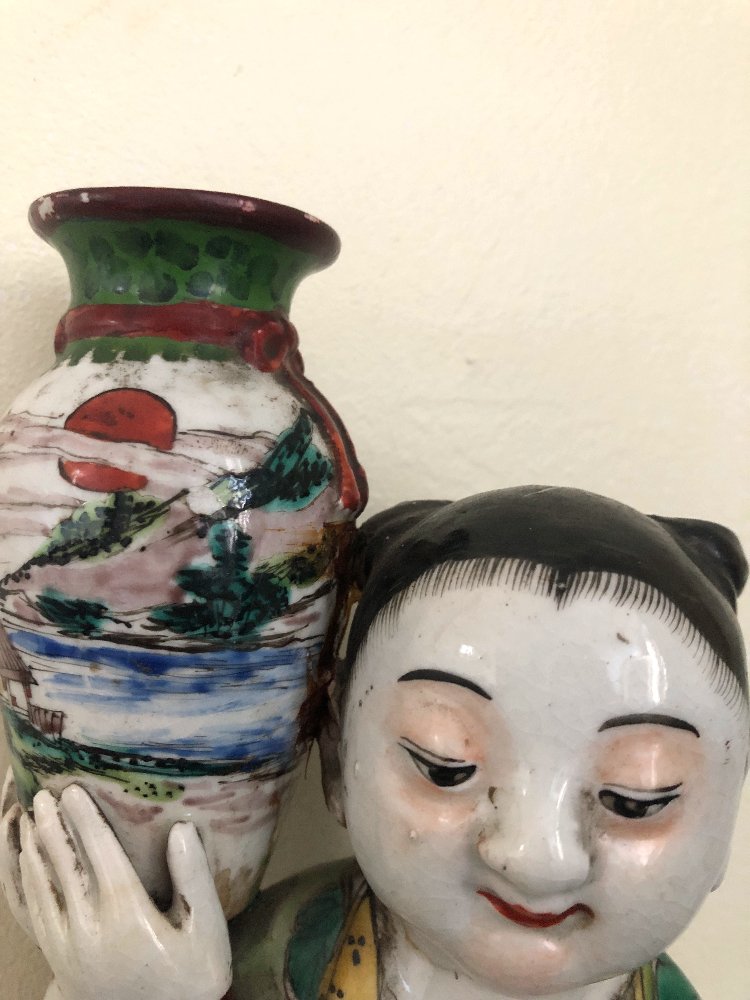
The crackled ceramic glaze visible on the face (glazed earthenware or stoneware of the Satsuma-style Kutani type) and the wear on the rough, unglazed base are highly characteristic of export or decorative objects from this period.
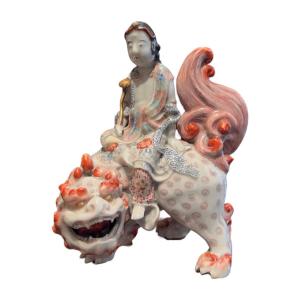
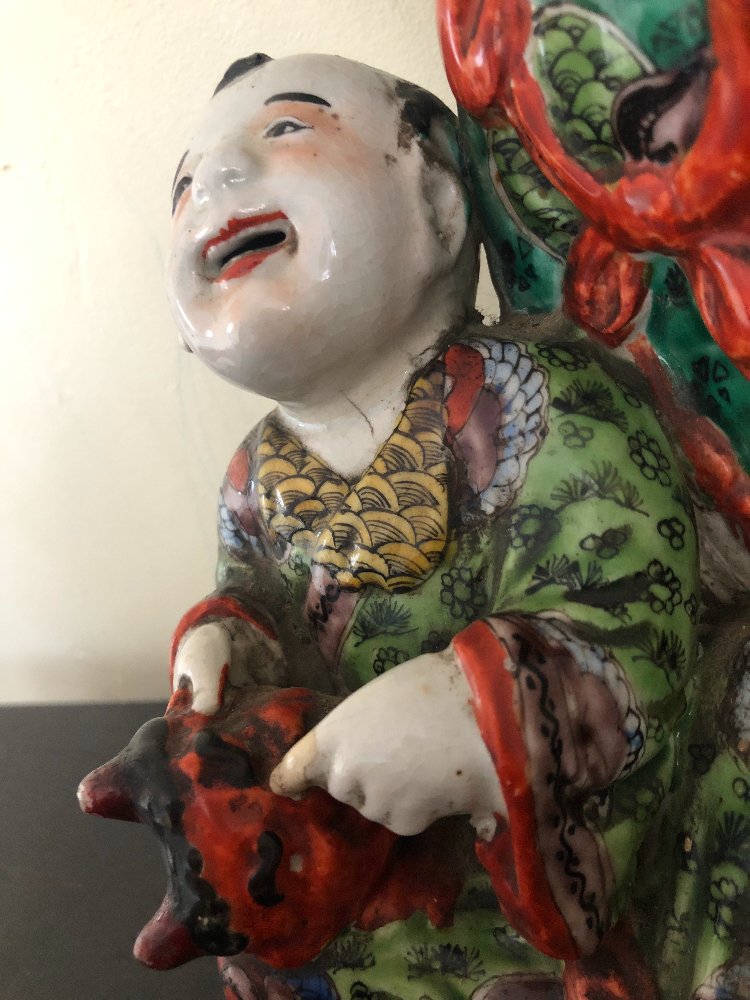
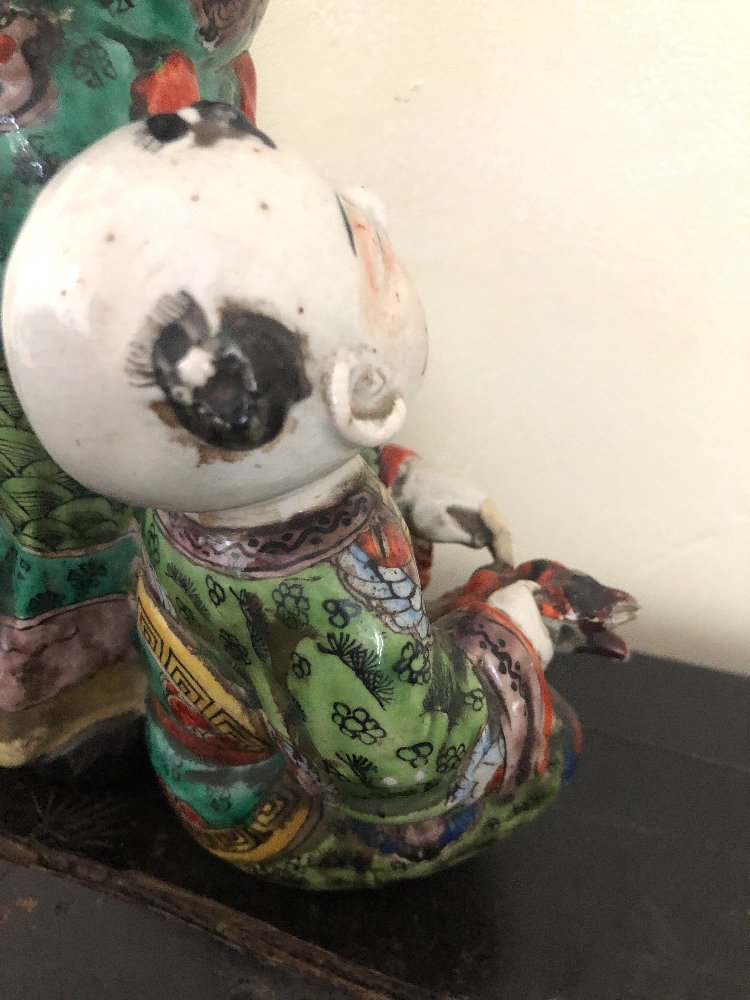
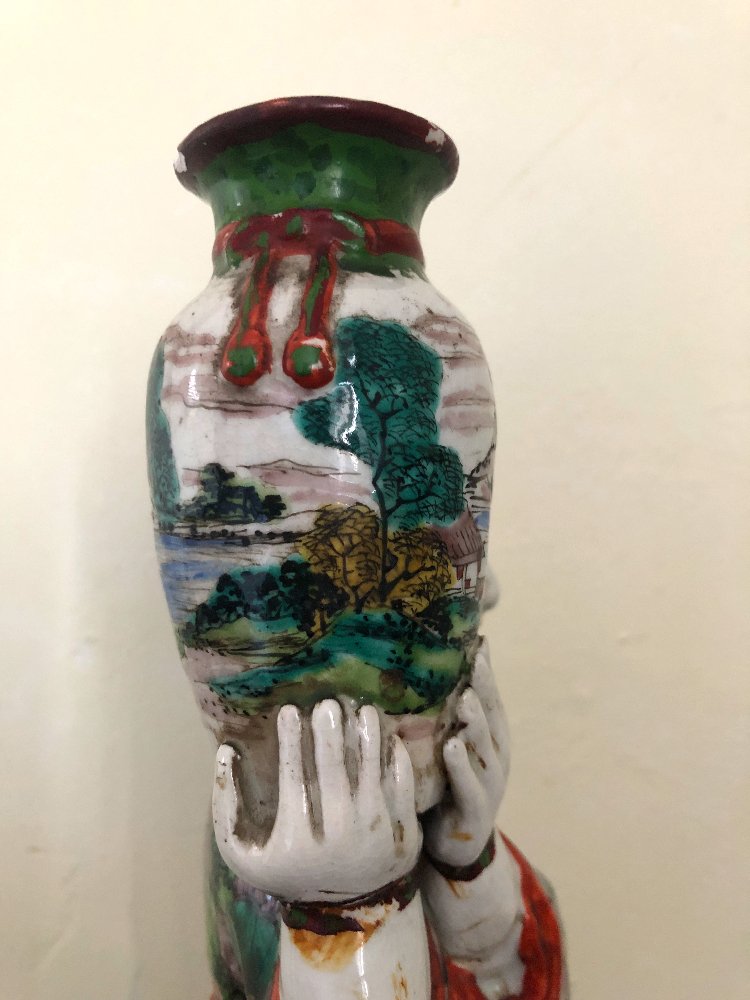
The subject depicts an auspicious scene from Asian folklore: a young woman (or deity/immortal) accompanied by a child (Karako).The woman carries a vase on her shoulder, decorated with a coastal landscape featuring a setting sun.The child at her feet holds what appears to be a traditional dance lion mask (Shishi) or a mythical creature. This is a classic motif symbolizing prosperity, a happy family lineage, celebration, and good fortune.
Several restorations
Period: 19th century
Style: Asian art
Condition: Some scratches and chips
Material: Earthenware
Length: 35 cm
Reference (ID): 1781640
Availability: In stock