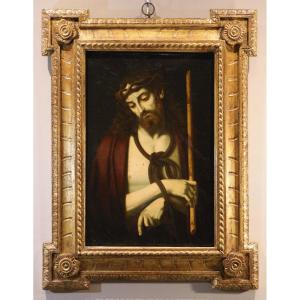
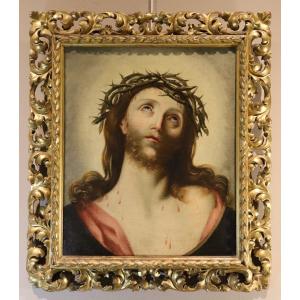


Ecce Homo, Guido Reni (bologna, 1575–1642), Workshop
Artist: Atelier De Guido Reni (bologne, 1575 - 1642)
Guido Reni (Bologna 1575–1642) workshop
Ecce Homo (LINK full details)
oil on canvas
59 x 47 cm. - framed (defects and minor losses) 76 x 66 cm.
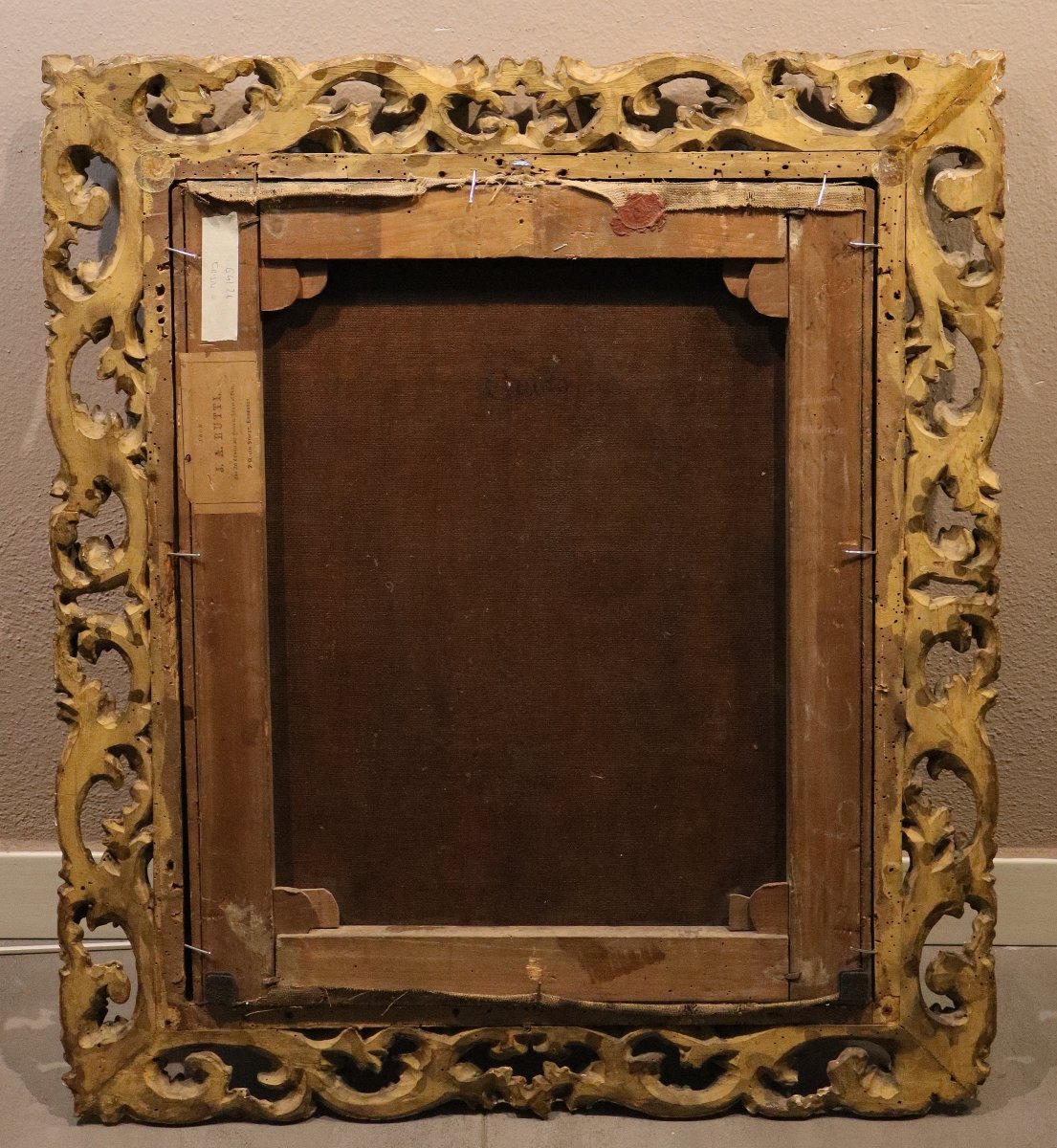
Provenance: The reverse bears the label “J. A. Butti & Son,” a historic art and antiques gallery based in Edinburgh (7 Queen Street), active between the 19th and early 20th centuries.
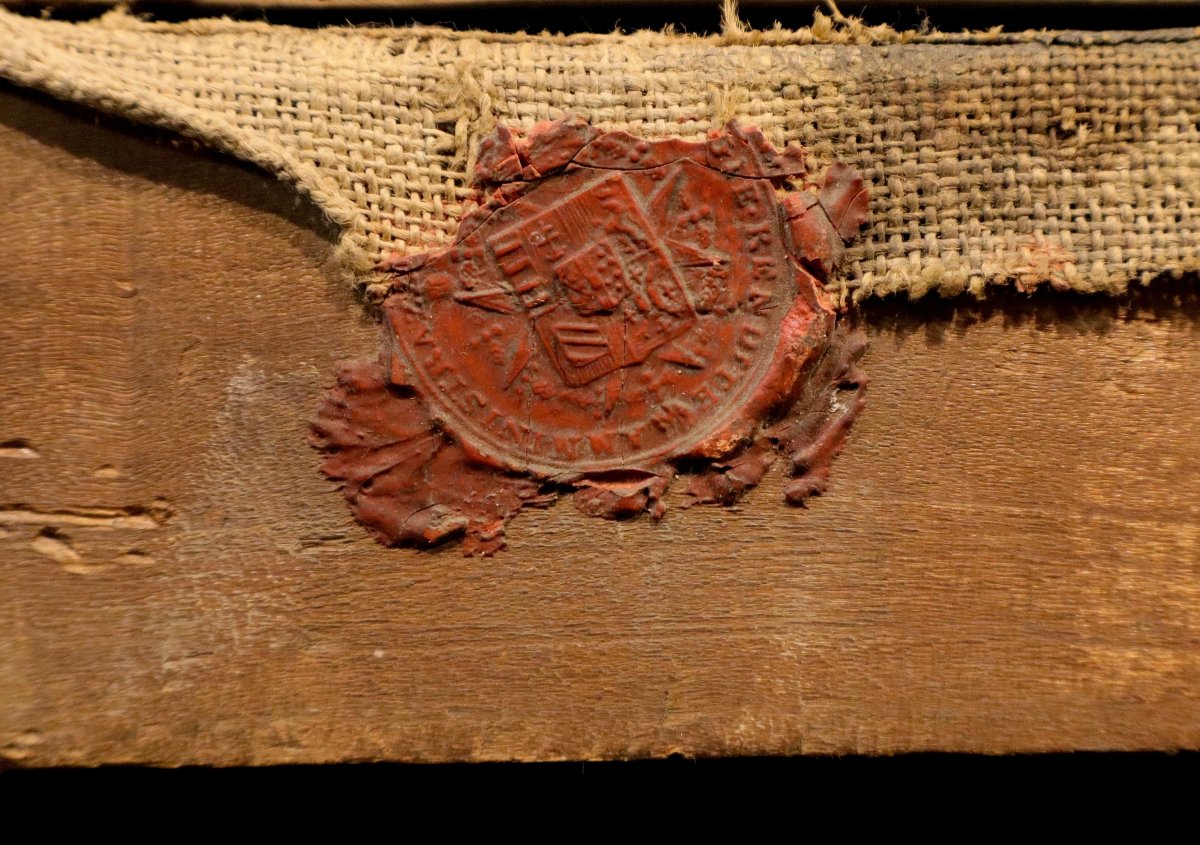
Notes: An interesting detail on the reverse is the wax seal of the Administration of the Royal Revenues of Florence, an important governmental body of the Grand Duchy of Tuscany active between 1786 and 1846, charged with managing assets confiscated by the State. Beginning in 1786, Grand Duke Pietro Leopoldo (and subsequently the French government during the Napoleonic era) decreed the suppression of numerous monasteries and convents, and all the paintings, panels, and valuable artistic assets of these structures were inventoried and marked on the reverse with this seal to certify state ownership before being sold.
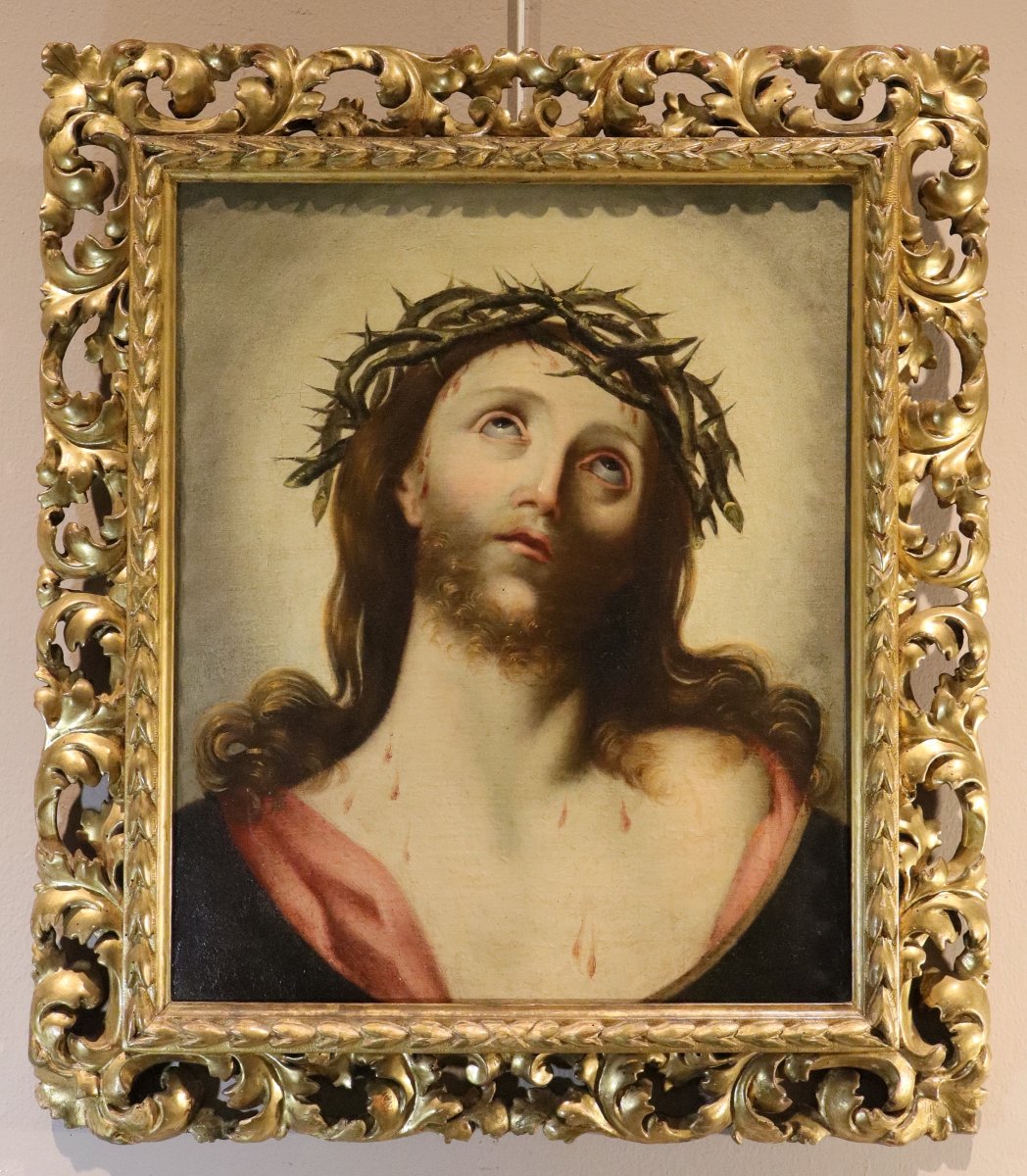
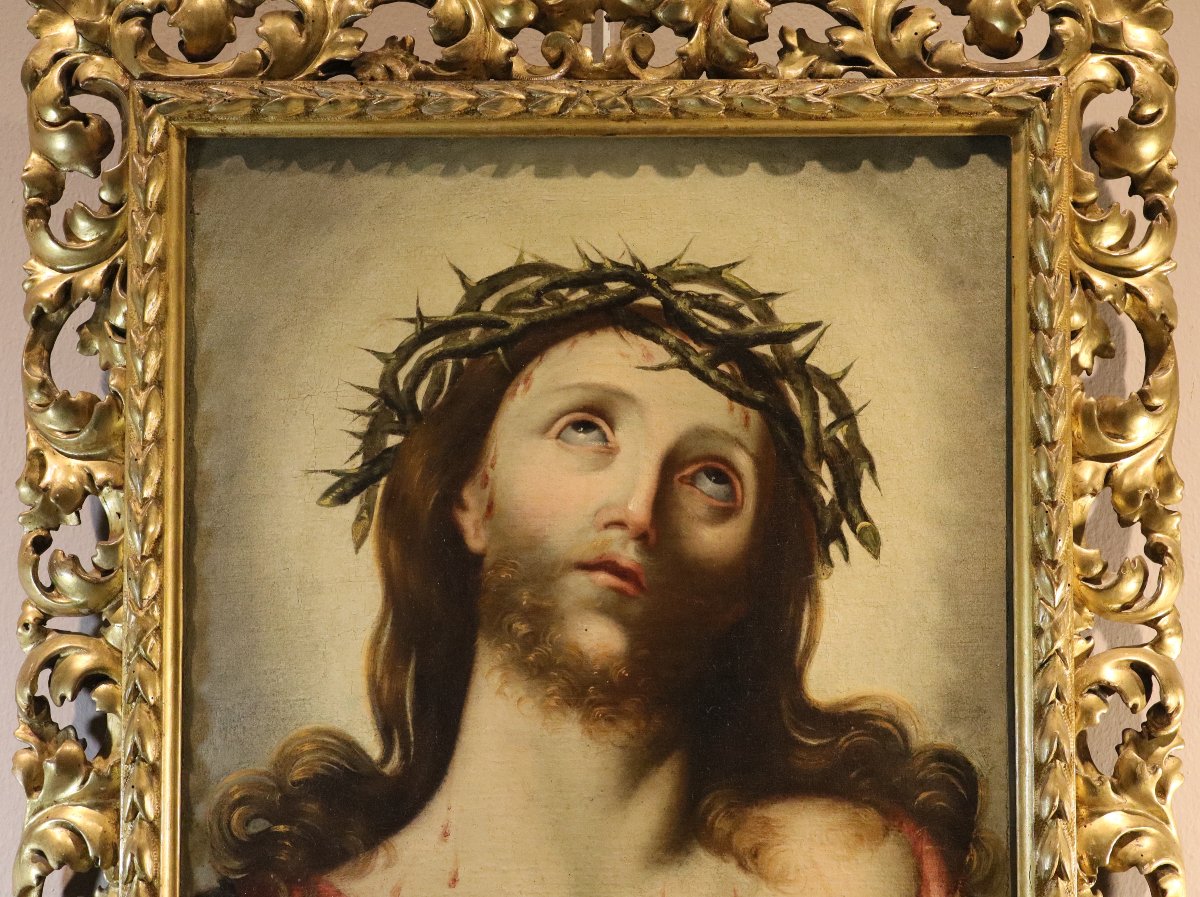
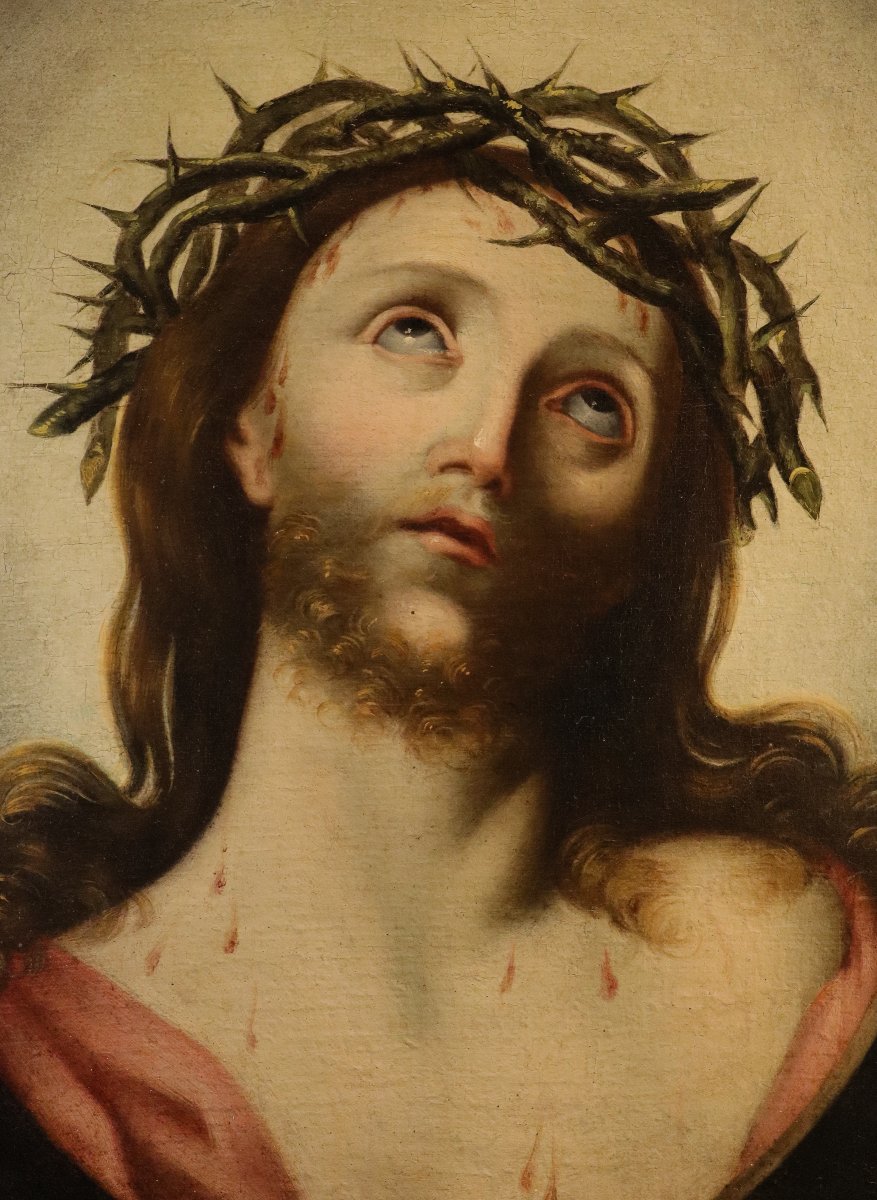
The work on offer, depicting the intense image of Christ crowned with thorns, draws on the iconography of the Ecce homo conceived by Guido Reni (Bologna 1575–1642), one of his most moving compositions, a subject so celebrated in the artist’s career as to attest to the enormous success he achieved. It is undoubtedly one of the masterpieces of Reni’s painting, bringing to light an immortal and ideal beauty, a work in which the ideal and poetic grandeur of his creative genius reached its highest and unsurpassable level.
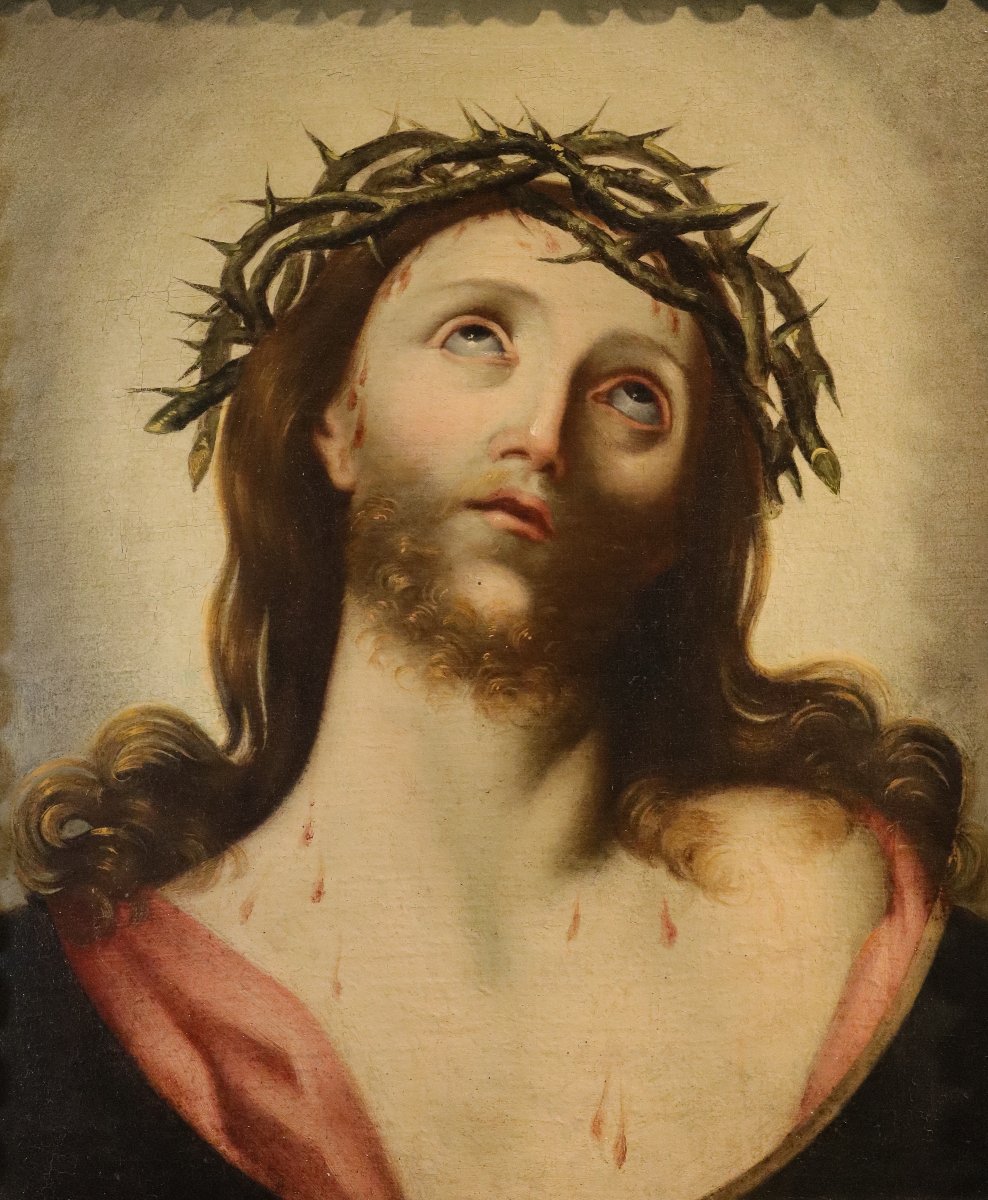
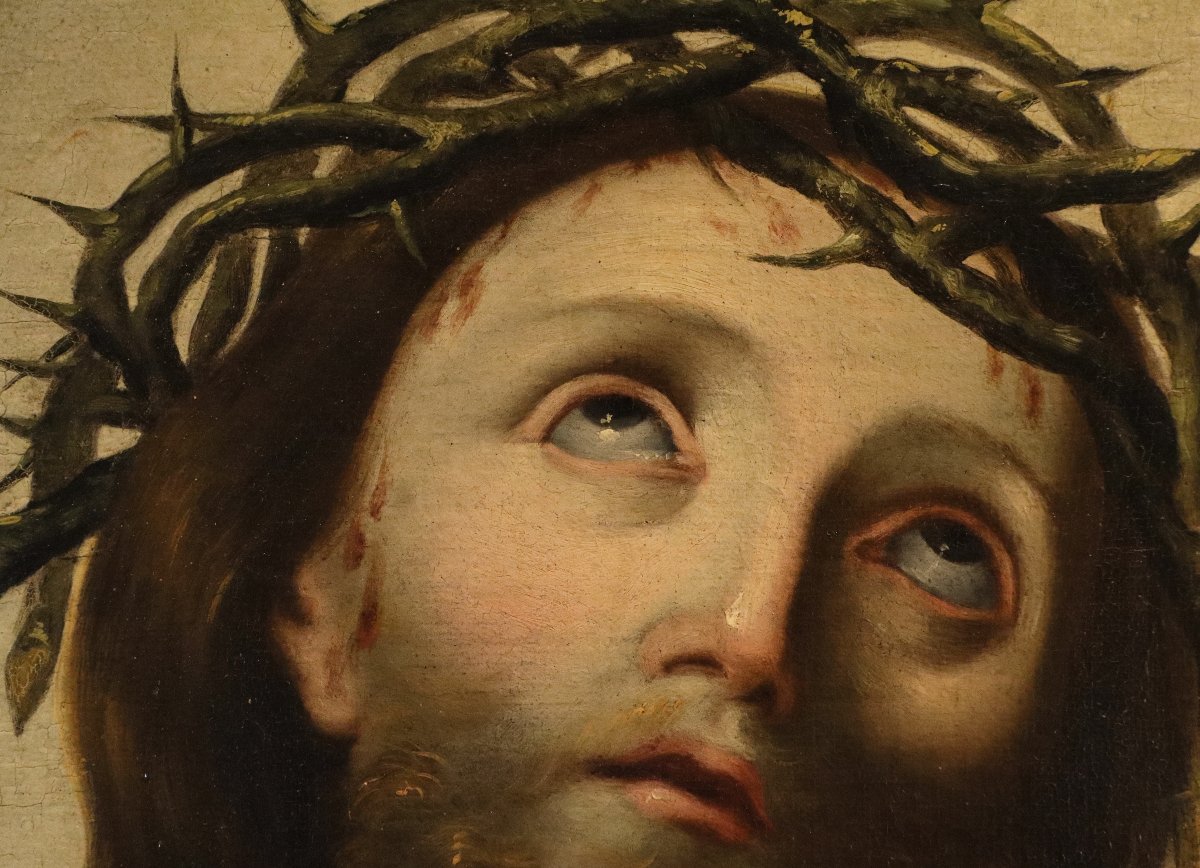
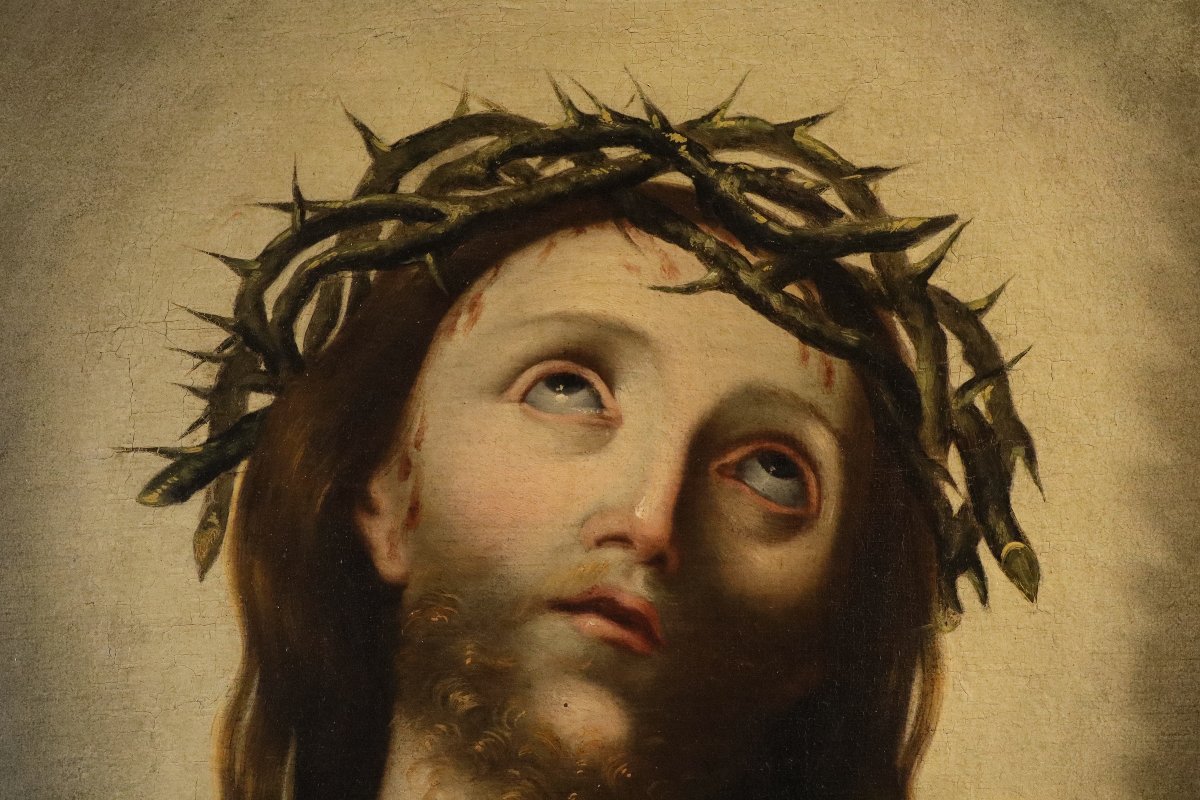
The figure of Christ is shown in a half-length portrait against a light background, wearing the crown of thorns, a symbol of royalty bestowed upon him by the soldiers to mock him during his imprisonment. By focusing here on the face of Christ, with his mouth slightly open and his eyes turned upward, Reni was able to create a prototype of this composition that is still very well known today, and which was later replicated by his workshop in numerous variations, each with slight differences from the others.
The closest iconographic parallels can be found with the Ecce Homo housed at the Louvre Museum (Fig. 1, URL: https://collections.louvre.fr/en/ark:/53355/cl010060765), the painting in the Gemäldegalerie Alte Meister in Dresden (Fig. 2, URL: https://skd-online-collection.skd.museum/Details/Index/356046), as well as with the one in the Corsini Gallery in Rome (Fig. 3) and the National Art Gallery of Bologna (Fig. 4).
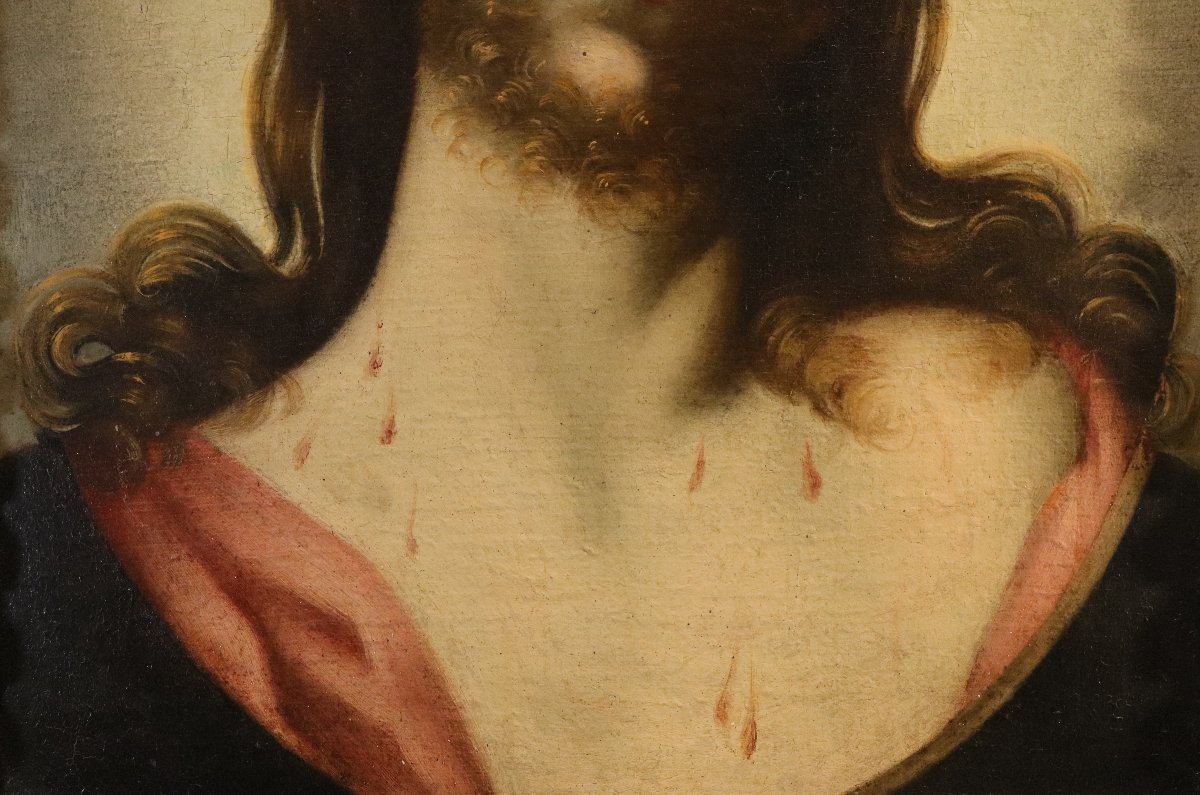
The canvas reveals the artist’s ability to portray not only the physical but also the psychological description of Christ, who, with his gaze turned upward, appears physically and emotionally exhausted and suffering. Nevertheless, his image is imbued with an indescribable grace, enhanced by the refinement of the palette and a soft, enveloping luminosity.
Regarding our version, it is a work executed with such painterly precision that its authorship can be traced to one of the many painters active in the 17th century who gravitated toward Reni’s circle, or to one of his followers active in the period immediately following.
In Rome, as in Bologna, Reni always had many students, managing one of the largest and most productive workshops in Europe to meet the large number of commissions. His academy is said to have had no fewer than two hundred students at any given time: among Reni’s pupils, the most famous are Gessi, Simone Contarini, Andrea Sirani and his daughter Elisabetta, Semenza, Domenico Maria Canuti, and Cignani. A characteristic of almost all the work by these students is a soft, delicate, and fragile painting style.
CONDITION:
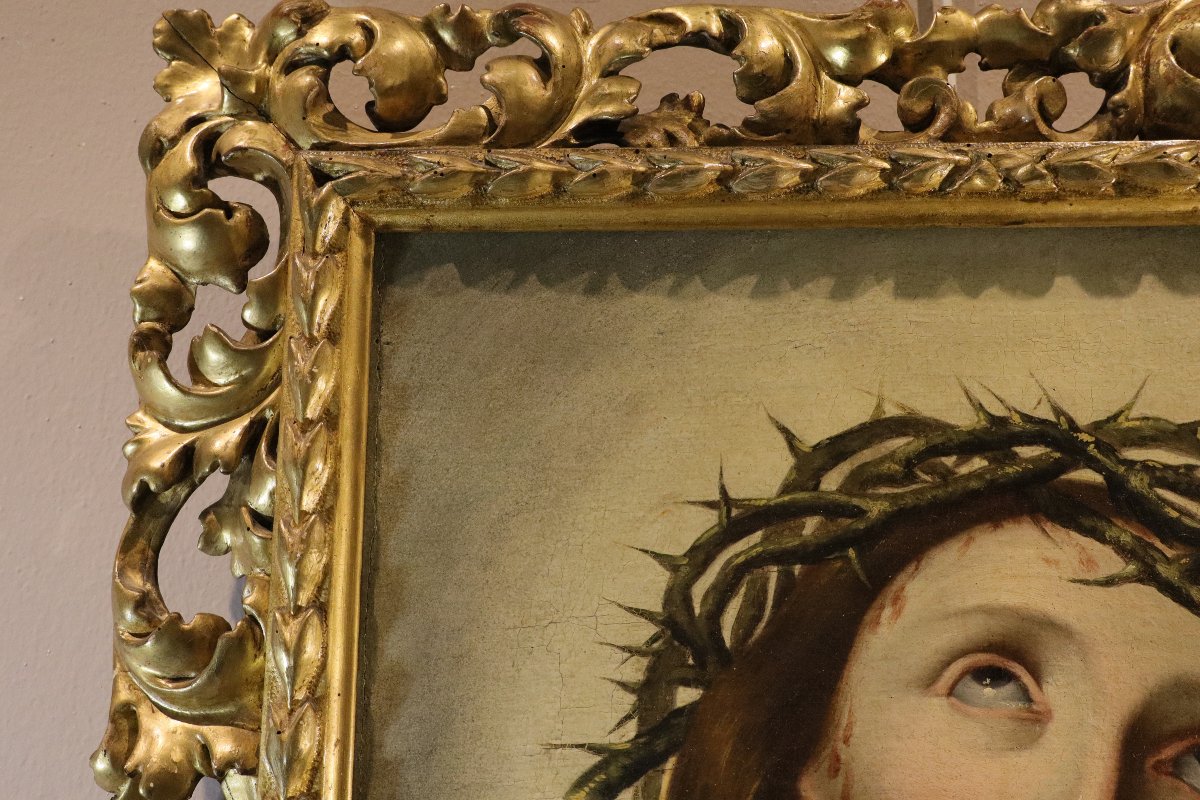
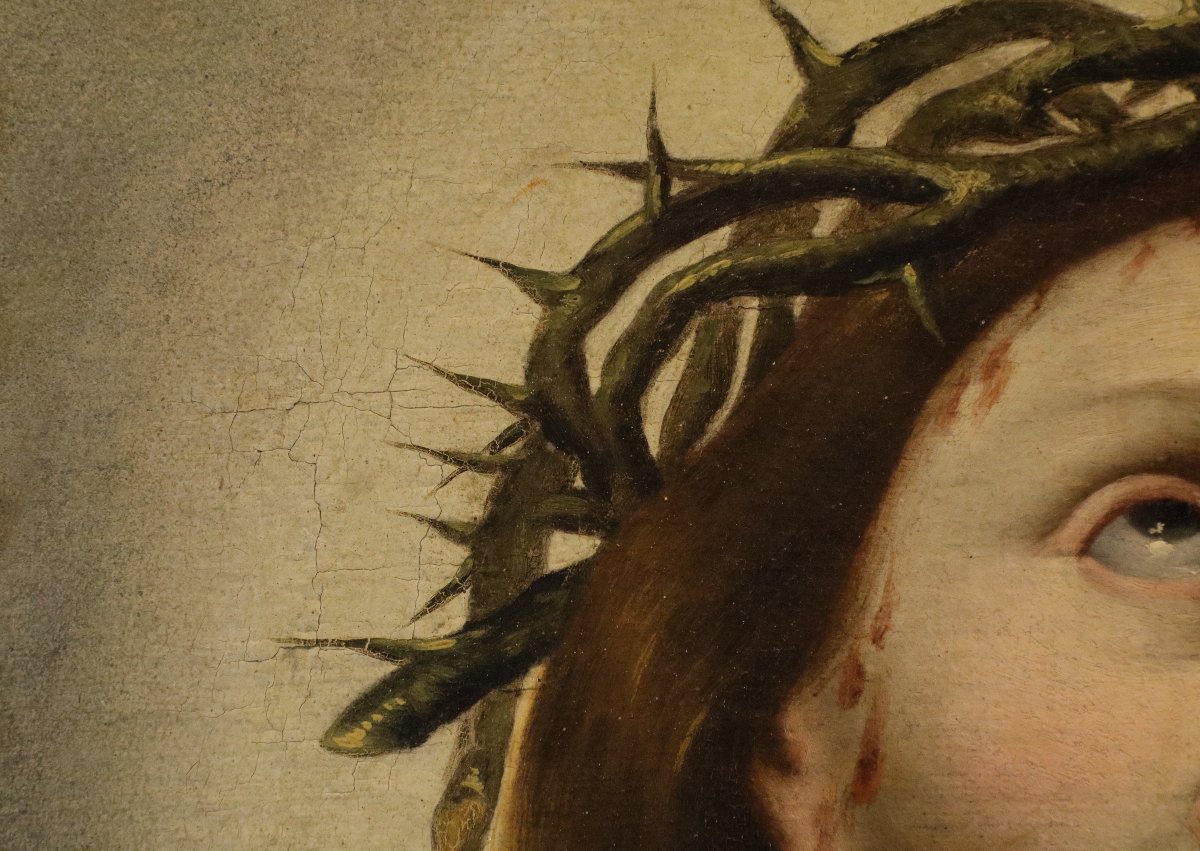
The work is in very good condition; the paint layer shows no issues, with scattered minor retouches typical of the period. The work comes with a beautiful carved and gilded wooden frame, in fair overall condition, with some defects and missing parts.
ADDITIONAL INFORMATION:
The work is accompanied by a certificate of authenticity and a descriptive iconographic sheet.
We handle and arrange the shipping of purchased works, both within Italy and internationally, using professional and insured carriers.
You can also view the painting at our gallery in Riva del Garda; we would be delighted to welcome you and show you our collection of works.
Please feel free to contact us for any additional information.
Follow us on:
https://www.instagram.com/galleriacastelbarco/?hl=it
https://www.facebook.com/galleriacastelbarco/
Ecce Homo (LINK full details)
oil on canvas
59 x 47 cm. - framed (defects and minor losses) 76 x 66 cm.
Provenance: The reverse bears the label “J. A. Butti & Son,” a historic art and antiques gallery based in Edinburgh (7 Queen Street), active between the 19th and early 20th centuries.
Notes: An interesting detail on the reverse is the wax seal of the Administration of the Royal Revenues of Florence, an important governmental body of the Grand Duchy of Tuscany active between 1786 and 1846, charged with managing assets confiscated by the State. Beginning in 1786, Grand Duke Pietro Leopoldo (and subsequently the French government during the Napoleonic era) decreed the suppression of numerous monasteries and convents, and all the paintings, panels, and valuable artistic assets of these structures were inventoried and marked on the reverse with this seal to certify state ownership before being sold.
The work on offer, depicting the intense image of Christ crowned with thorns, draws on the iconography of the Ecce homo conceived by Guido Reni (Bologna 1575–1642), one of his most moving compositions, a subject so celebrated in the artist’s career as to attest to the enormous success he achieved. It is undoubtedly one of the masterpieces of Reni’s painting, bringing to light an immortal and ideal beauty, a work in which the ideal and poetic grandeur of his creative genius reached its highest and unsurpassable level.
The figure of Christ is shown in a half-length portrait against a light background, wearing the crown of thorns, a symbol of royalty bestowed upon him by the soldiers to mock him during his imprisonment. By focusing here on the face of Christ, with his mouth slightly open and his eyes turned upward, Reni was able to create a prototype of this composition that is still very well known today, and which was later replicated by his workshop in numerous variations, each with slight differences from the others.
The closest iconographic parallels can be found with the Ecce Homo housed at the Louvre Museum (Fig. 1, URL: https://collections.louvre.fr/en/ark:/53355/cl010060765), the painting in the Gemäldegalerie Alte Meister in Dresden (Fig. 2, URL: https://skd-online-collection.skd.museum/Details/Index/356046), as well as with the one in the Corsini Gallery in Rome (Fig. 3) and the National Art Gallery of Bologna (Fig. 4).
The canvas reveals the artist’s ability to portray not only the physical but also the psychological description of Christ, who, with his gaze turned upward, appears physically and emotionally exhausted and suffering. Nevertheless, his image is imbued with an indescribable grace, enhanced by the refinement of the palette and a soft, enveloping luminosity.
Regarding our version, it is a work executed with such painterly precision that its authorship can be traced to one of the many painters active in the 17th century who gravitated toward Reni’s circle, or to one of his followers active in the period immediately following.
In Rome, as in Bologna, Reni always had many students, managing one of the largest and most productive workshops in Europe to meet the large number of commissions. His academy is said to have had no fewer than two hundred students at any given time: among Reni’s pupils, the most famous are Gessi, Simone Contarini, Andrea Sirani and his daughter Elisabetta, Semenza, Domenico Maria Canuti, and Cignani. A characteristic of almost all the work by these students is a soft, delicate, and fragile painting style.
CONDITION:
The work is in very good condition; the paint layer shows no issues, with scattered minor retouches typical of the period. The work comes with a beautiful carved and gilded wooden frame, in fair overall condition, with some defects and missing parts.
ADDITIONAL INFORMATION:
The work is accompanied by a certificate of authenticity and a descriptive iconographic sheet.
We handle and arrange the shipping of purchased works, both within Italy and internationally, using professional and insured carriers.
You can also view the painting at our gallery in Riva del Garda; we would be delighted to welcome you and show you our collection of works.
Please feel free to contact us for any additional information.
Follow us on:
https://www.instagram.com/galleriacastelbarco/?hl=it
https://www.facebook.com/galleriacastelbarco/
7 500 €
Period: 17th century
Style: Louis 15th - Transition
Condition: Good condition
Material: Oil painting
Width: encadré 66 cm.
Height: encadré 76 cm.
Reference (ID): 1777613
Availability: In stock
Print