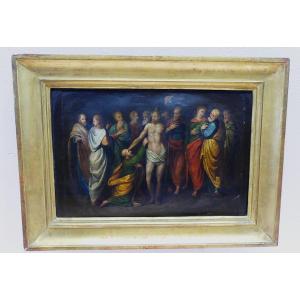
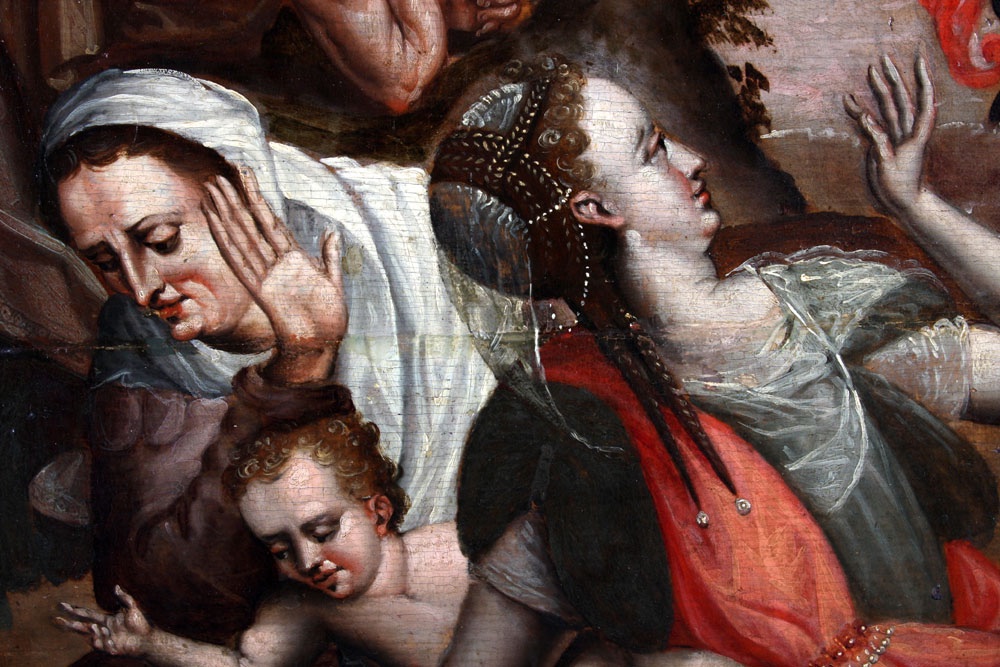
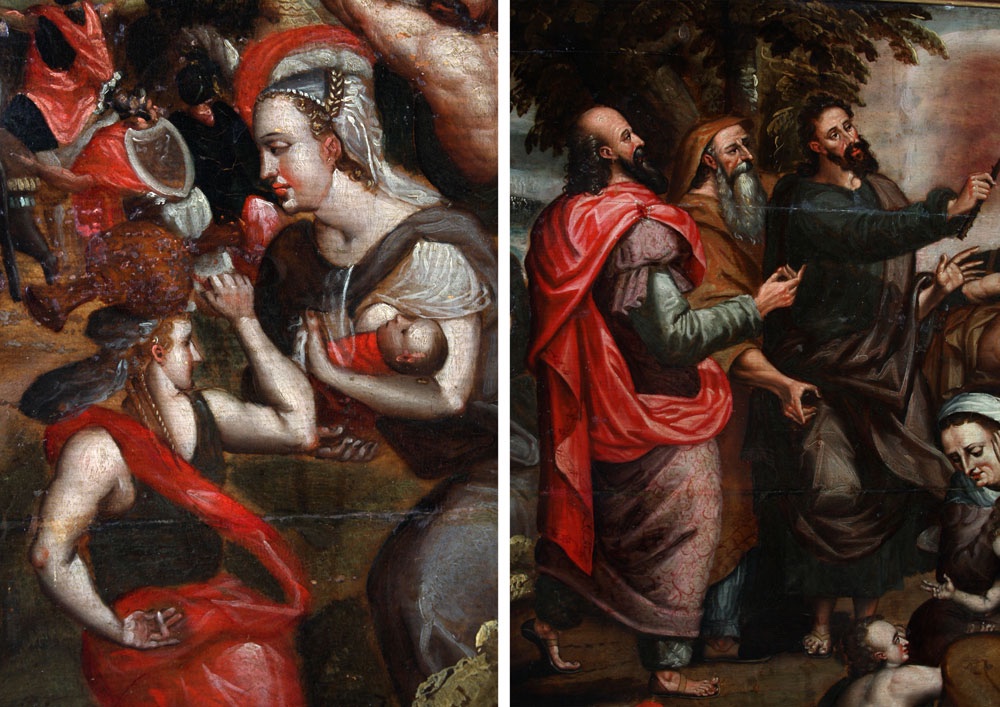
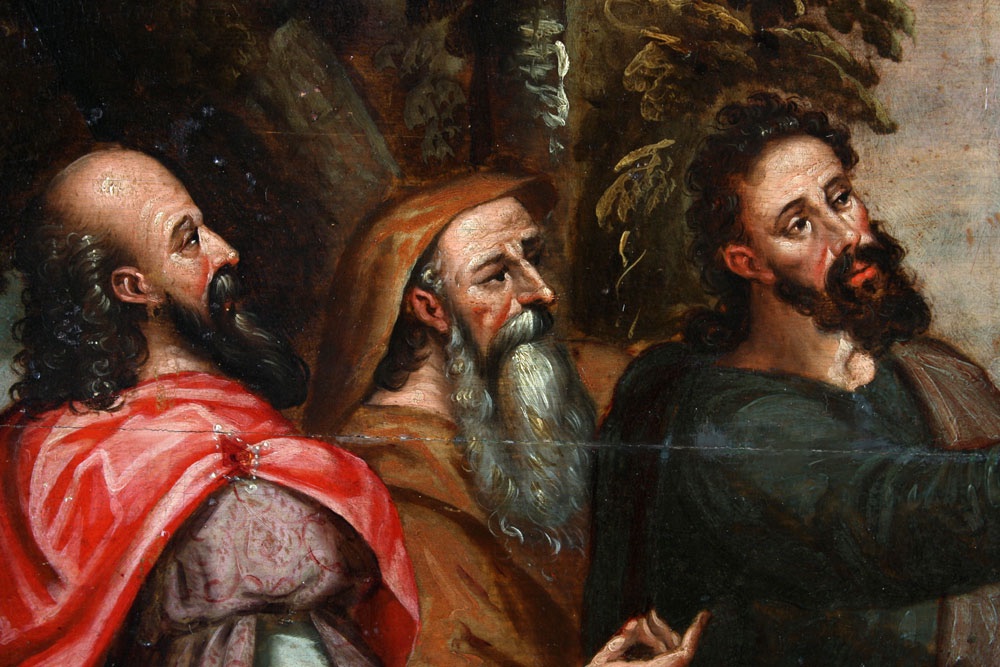
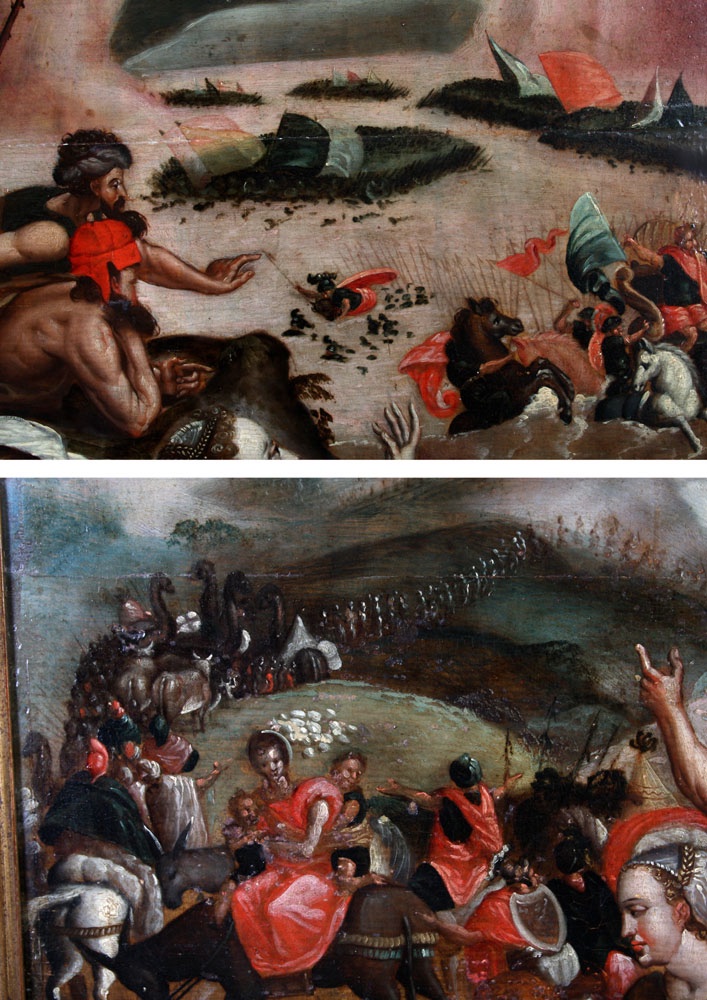
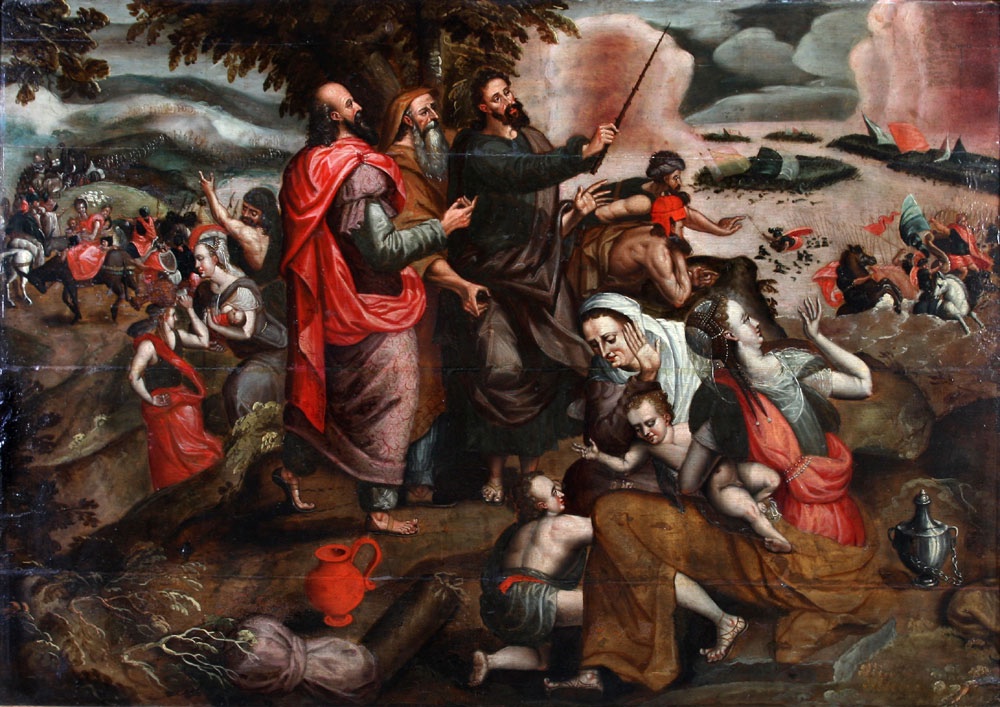


Flemish School 16th Century, 130cm, Atelier Maître Fils Prodigue 1530/1580, Passage Mer Rouge
Era: Flemish school of the 16th century, circa 1580
Signed: anonymous, this painting can be attributed to the Master of the Son of the Prodigal, an Antwerp artist.
Sold with Certificate
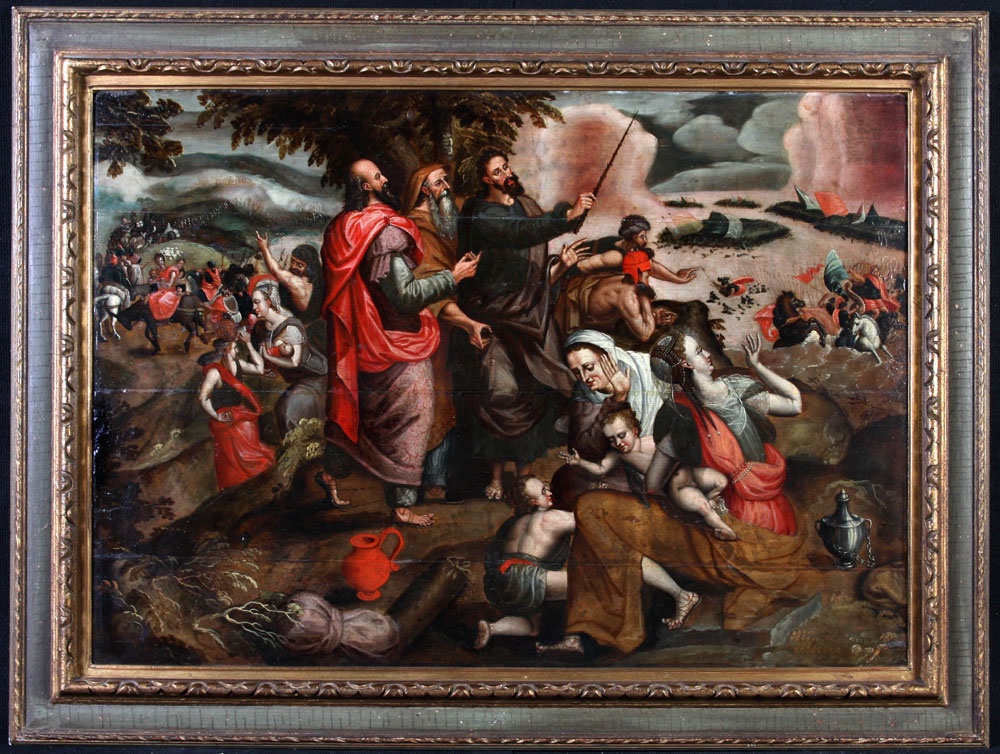
Theme: Religious, the passage of the Red Sea
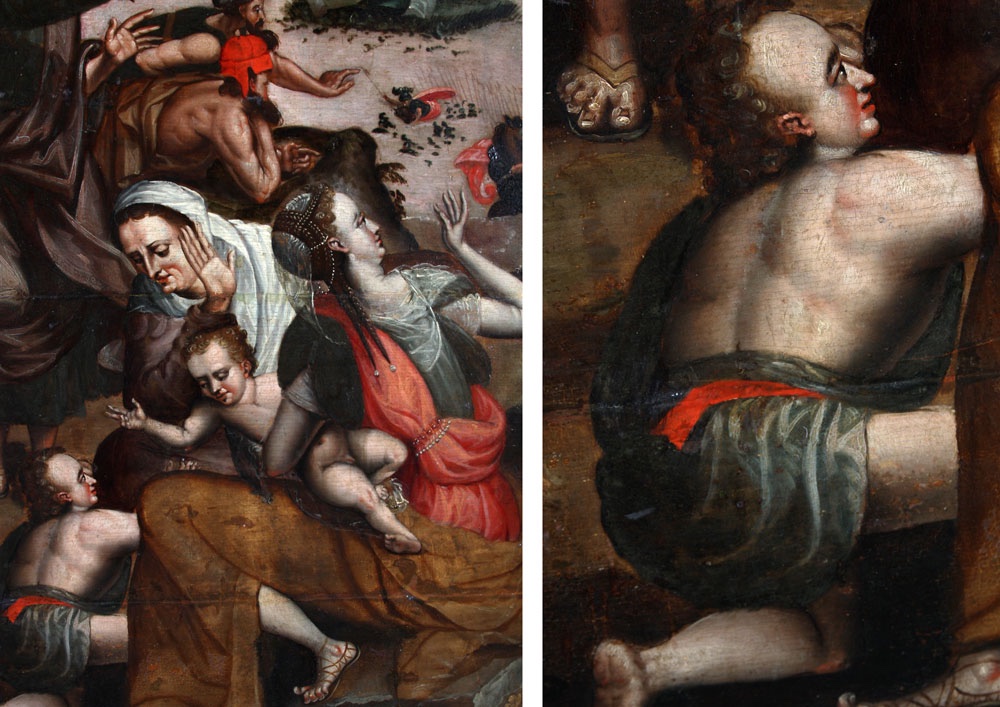
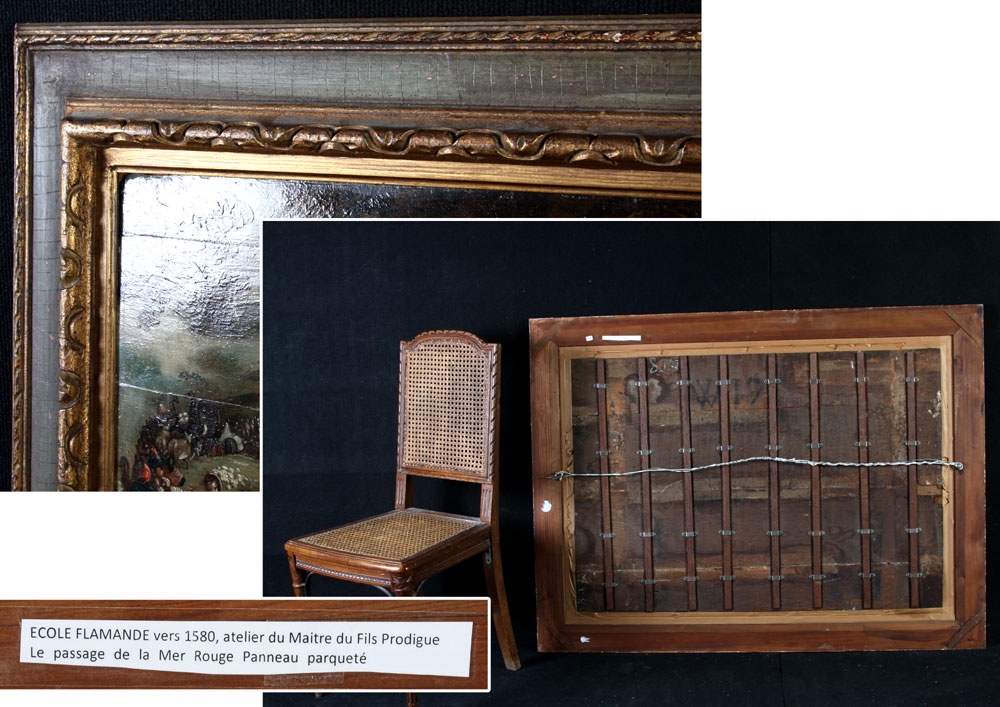
Technique: Oil on 4 oak panels with parquet flooring - old restorations - good condition
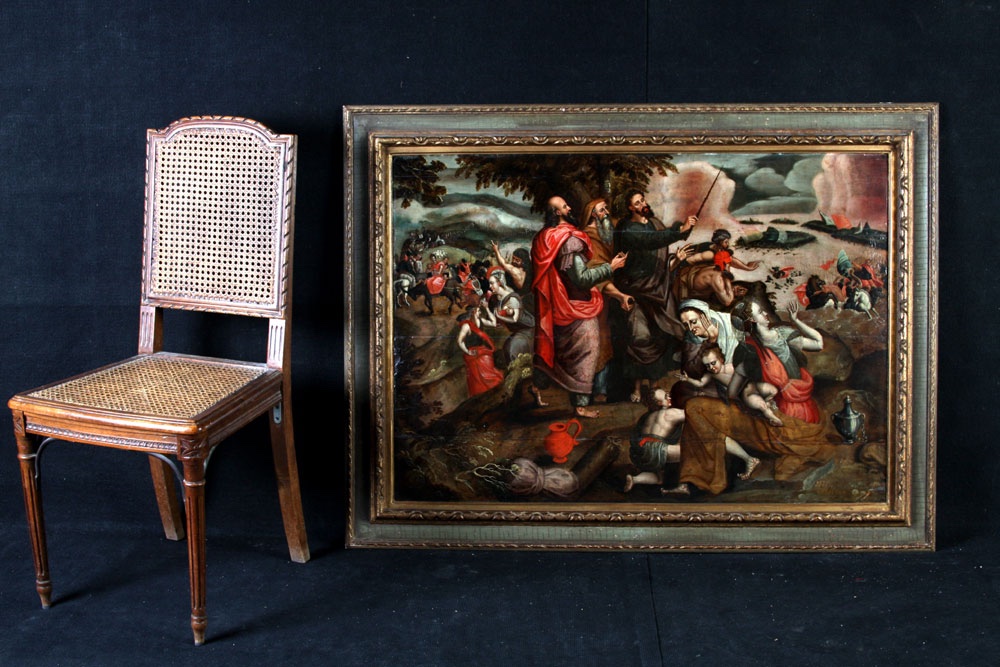
Size: Large format with frame 130 x 97 cm - unframed 100 x 76 cm
Frame: recent carved wood - good condition
This remarkable composition is set in a typically Flemish pictorial context, with a wealth of figures and details.
This painting can be attributed to the Master of the Son of the Prodigal, an Antwerp artist. This is often the name given to artists whose identities are unknown, who produced a number of works grouped around a painting preserved in Vienna's Kunsthistorisches Museum entitled The Prodigal Son among the Courtesans (successively attributed to Mandijn, van Palermo and then Kroes).
His style shows an influence from Roman painting and some borrowings from International Mannerism.
His feminine figures, with their dignified, even prim appearance, bring him closer to the work of Frans Floris (1520-1570), and his realism to that of Peter Aertsen (1508-1575).
The same atmosphere as in the paintings of the Master of the Prodigal Son can be found in this painting, with figures whose ample, exaggerated movements are accentuated by the improbable length of their limbs. The color palette is also characteristic of the Antwerp painter's work.
The Master of the Prodigal Son mainly illustrated religious themes from the Old and New Testaments. Some of his creations were mass-produced, suggesting that he ran a large workshop in the city of Antwerp.
About this faceless artist and his assistants, specialists group together some forty paintings to be found in several museums and churches, in Europe as well as in the USA (a Virgin and Child can be seen at the Cleveland Museum). Art historians attribute to him Christ and the Pilgrims from Emmaus in the Warsaw Museum, Satan sowing tares in the Antwerp Museum of Fine Arts, a Return of Tobias in the Ghent Museum, a Cour des Miracles in the Royal Museum of Fine Arts in Brussels, the painting Suzanne and the Old Men in the Porto Museum. Likewise, when we consult the Joconde database, the portal to the collections of France's museums, we find under the appellation of the Master of the Prodigal Son oil-on-wood paintings such as Virtue which rewards the Work and chastises Sloth from the Musée de Chambéry, The Marriage of Cana from the Musée de Rouen, The Virgin and Child with St. John theBaptist from the Musée de Pau, Les Oeuvres de Miséricorde from the Musée de Valenciennes, Le Vieillard amoureux from the Musée de Douai
The passage of the Red Sea is a biblical and Koranic tale according to which the sea that blocks the passage of the Israelites fleeing the Egyptian army, miraculously opens to let the Israelites through and closes again on their pursuers.
The Hebrews are facing the Red Sea or Sea of Reeds when the Egyptian troops set off in pursuit. Moses stretches out his hands towards the Sea, whose waters split to leave a passage. The people enter the corridor. In their turn, the Egyptians enter, but Moses causes the sea to return to its place, swallowing up Pharaoh's troops.
This story is considered one of the founding events of Judaism, grounding its faith in miraculous redemption by a personal God. It is traditionally read on the seventh day of Pesach.
The Red Sea exodus is the ancient mythical tale of a divine war (conflict between the Creator God and the primeval Ocean, like the Canaanite myth of Baal versus Yam), taken up by a priestly author who historicizes the myth by placing it in the biblical context of the deliverance of the Hebrew people from the Egyptians.
Sold with Invoice and Certificate
Painting visible at our gallery in L'Isle sur la Sorgue (France), on weekends.
Free shipping to France.
And on quotation for abroad
Leasing request with our financial partner,
answer within 24h.
Contact us ...
1415
Period: 16th century
Style: Renaissance, Louis 13th
Condition: Perfect condition
Material: Oil painting on wood
Width: 130 cm
Height: 97 cm
Reference (ID): 1776205
Availability: In stock