

Alexandre-albert Lenoir (1801, Paris – 1891, Paris), Winter Landscapes
Alexandre-Albert Lenoir (1801, Paris – 1891, Paris)
Winter Landscapes
Oil on panel, 8 x 10.5 cm
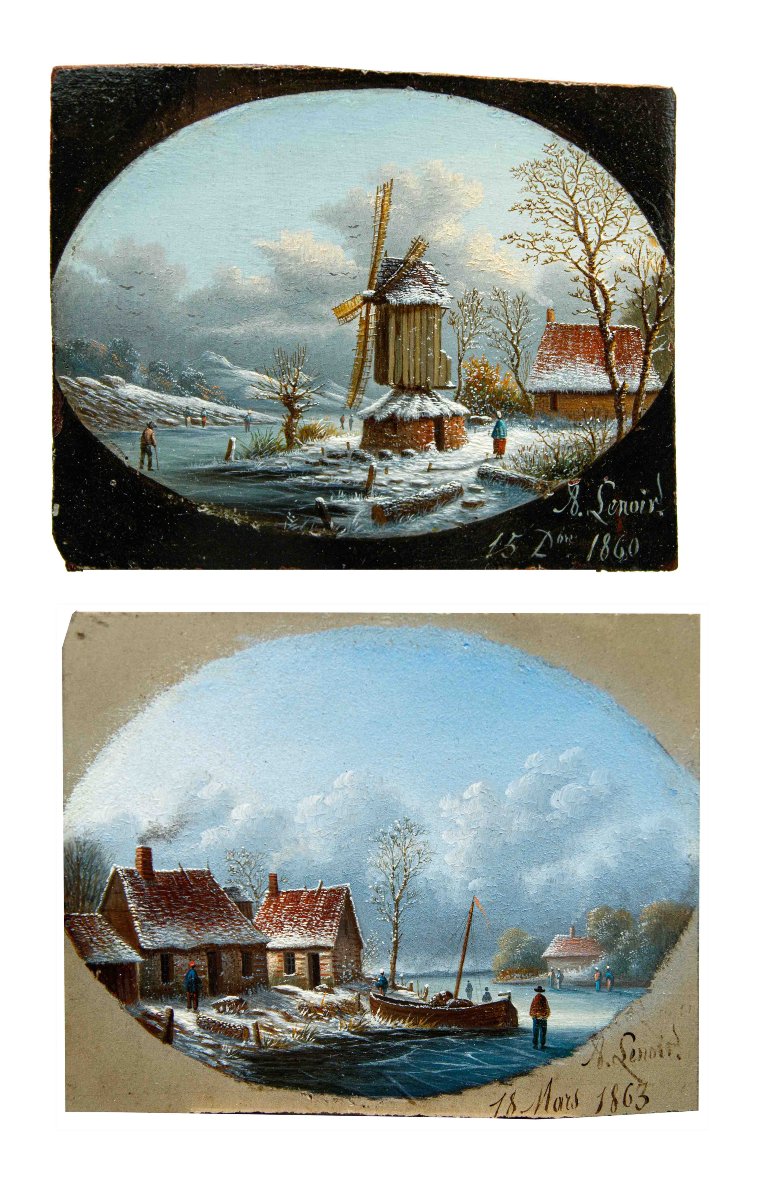
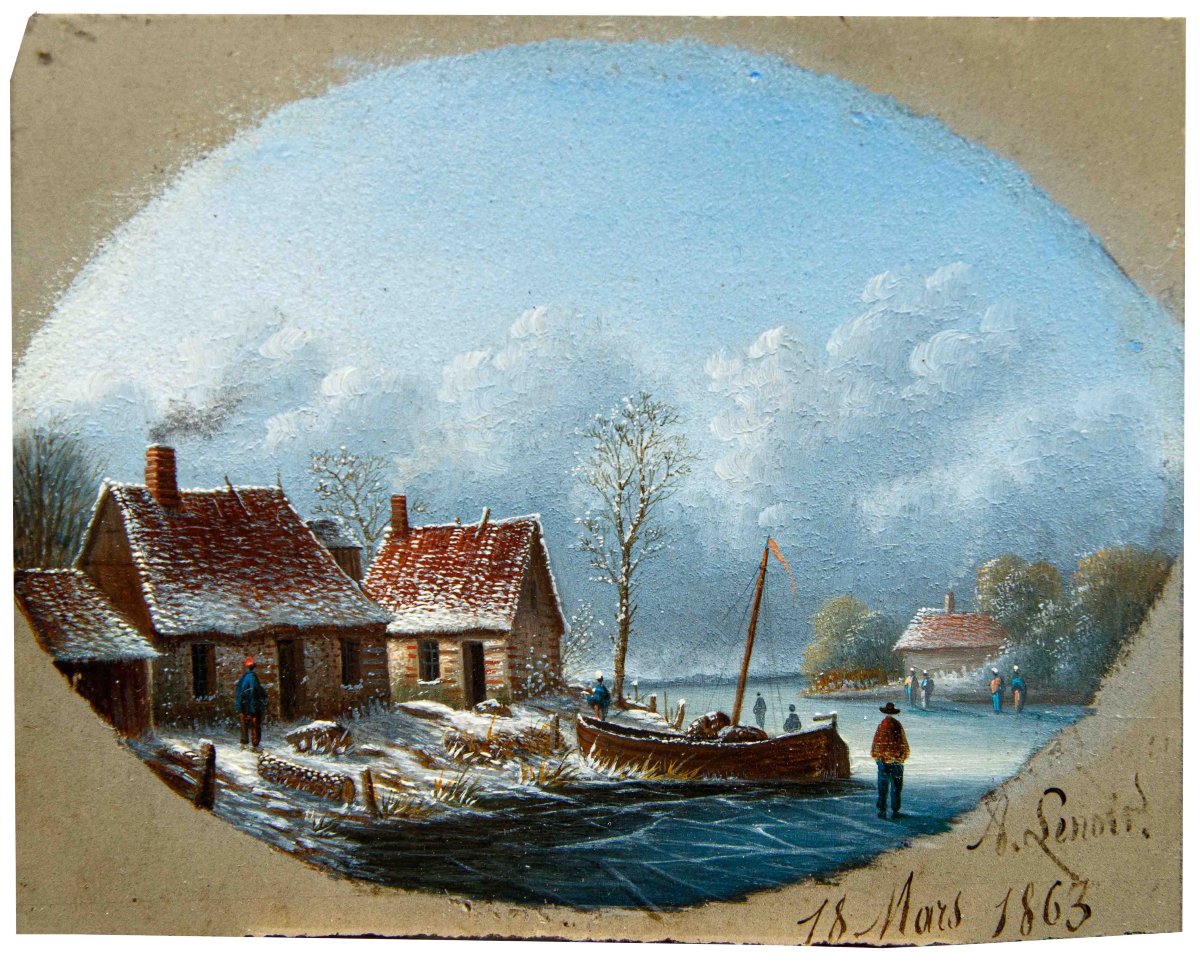
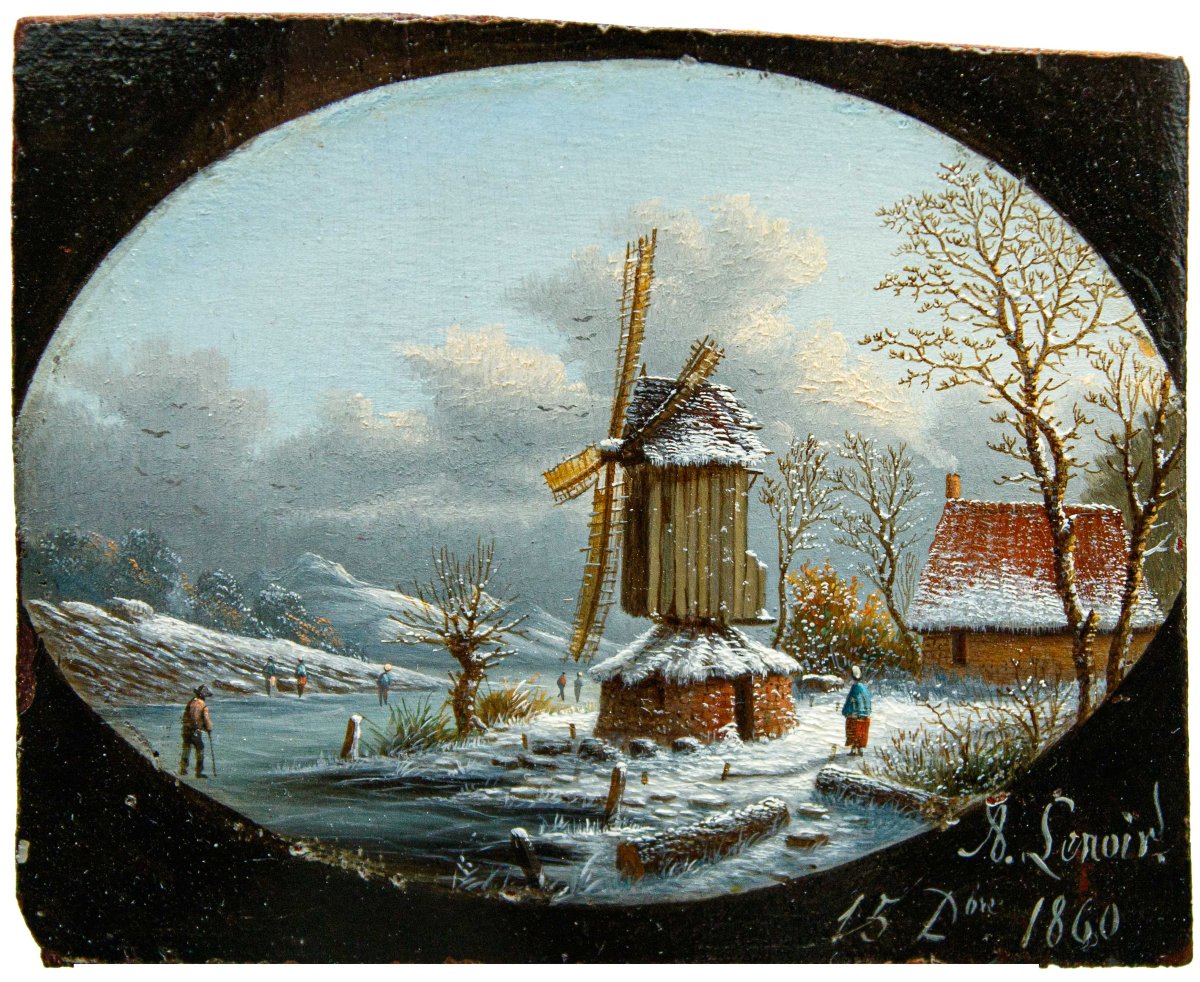
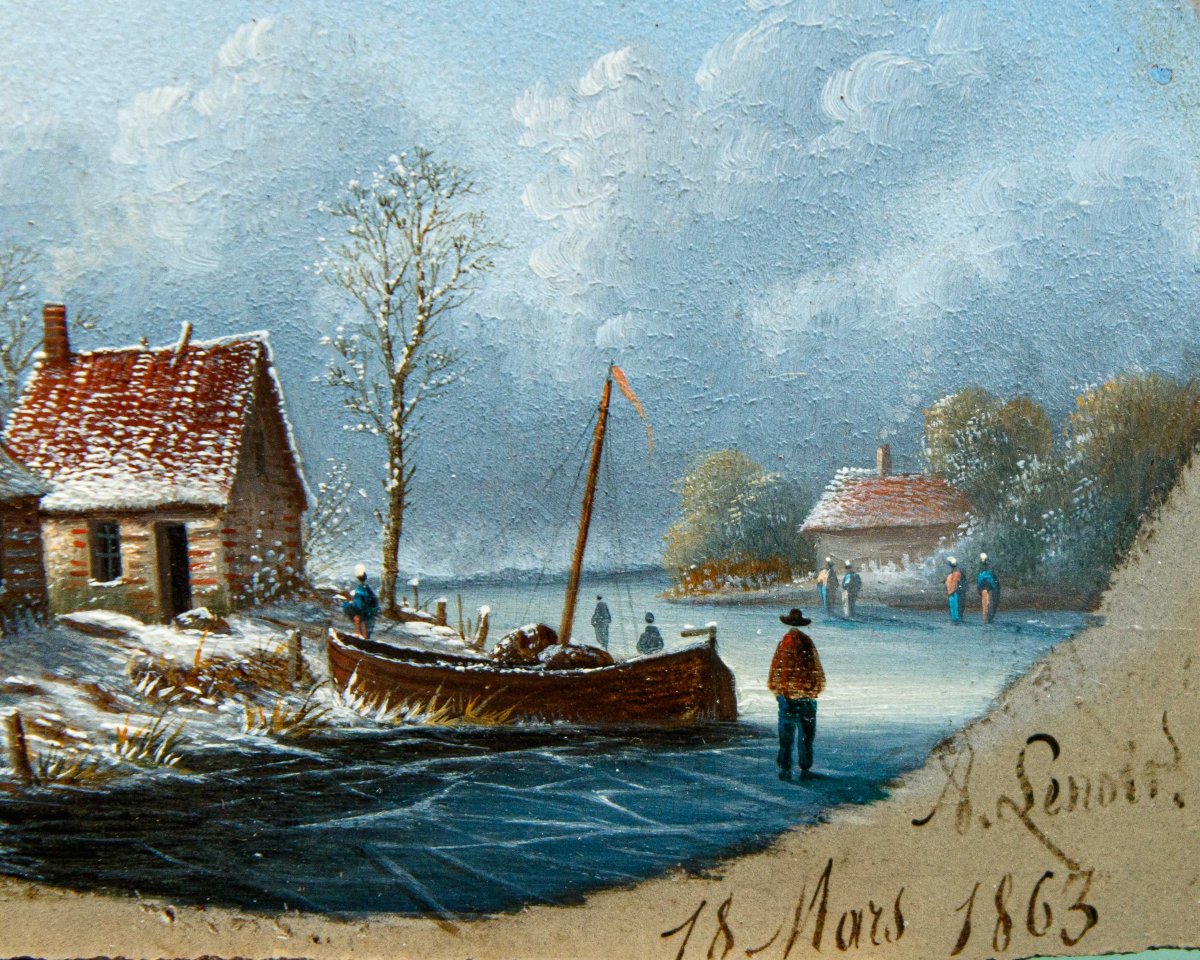
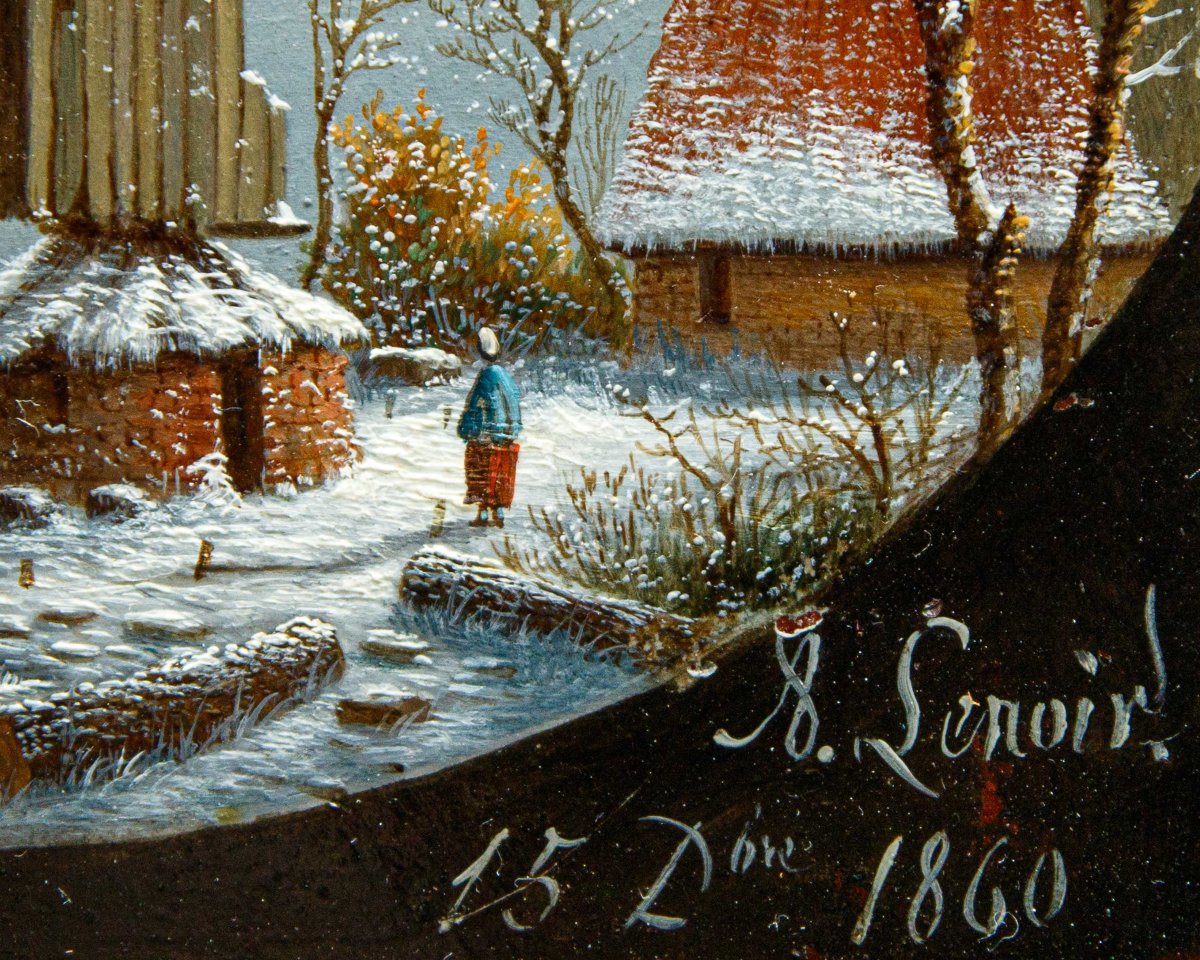
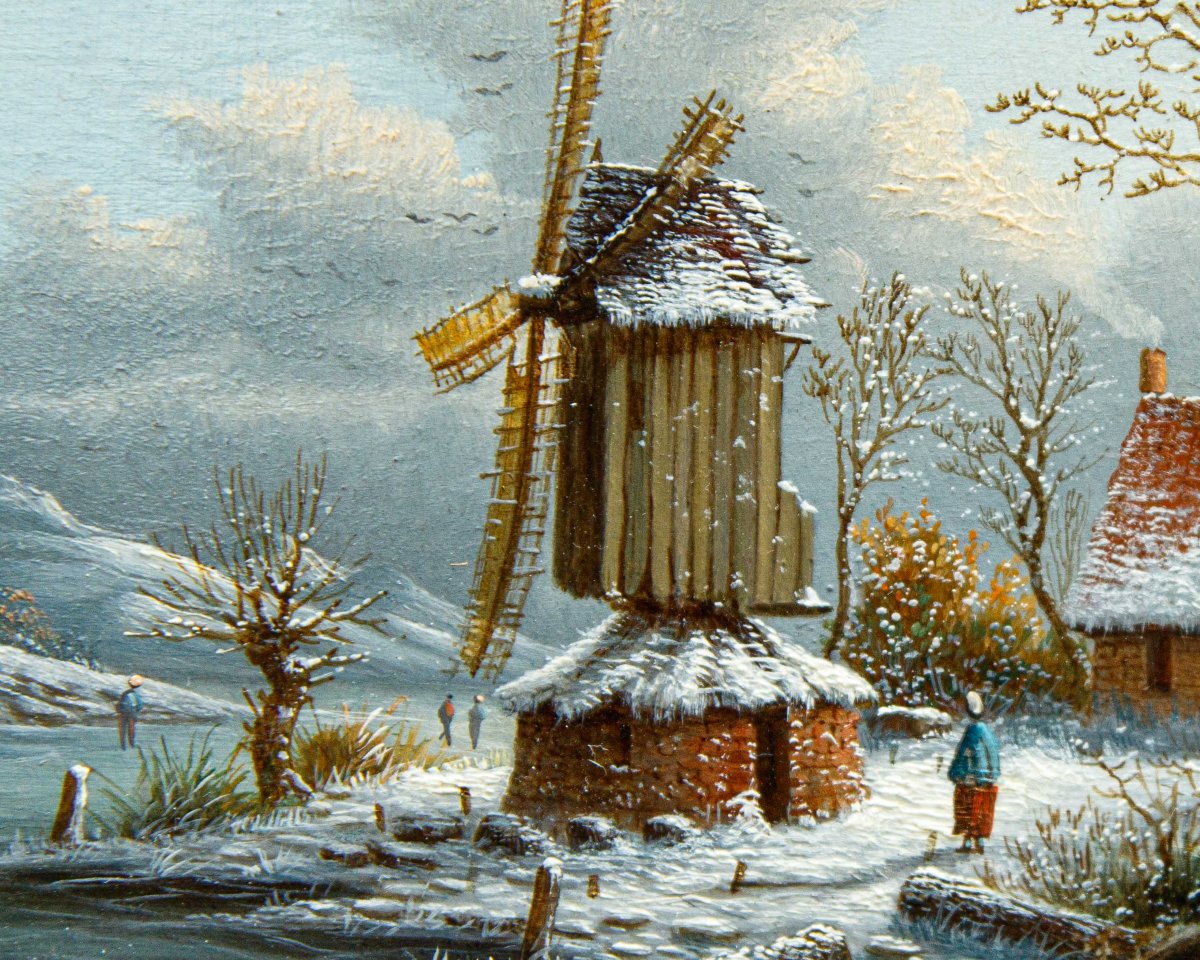
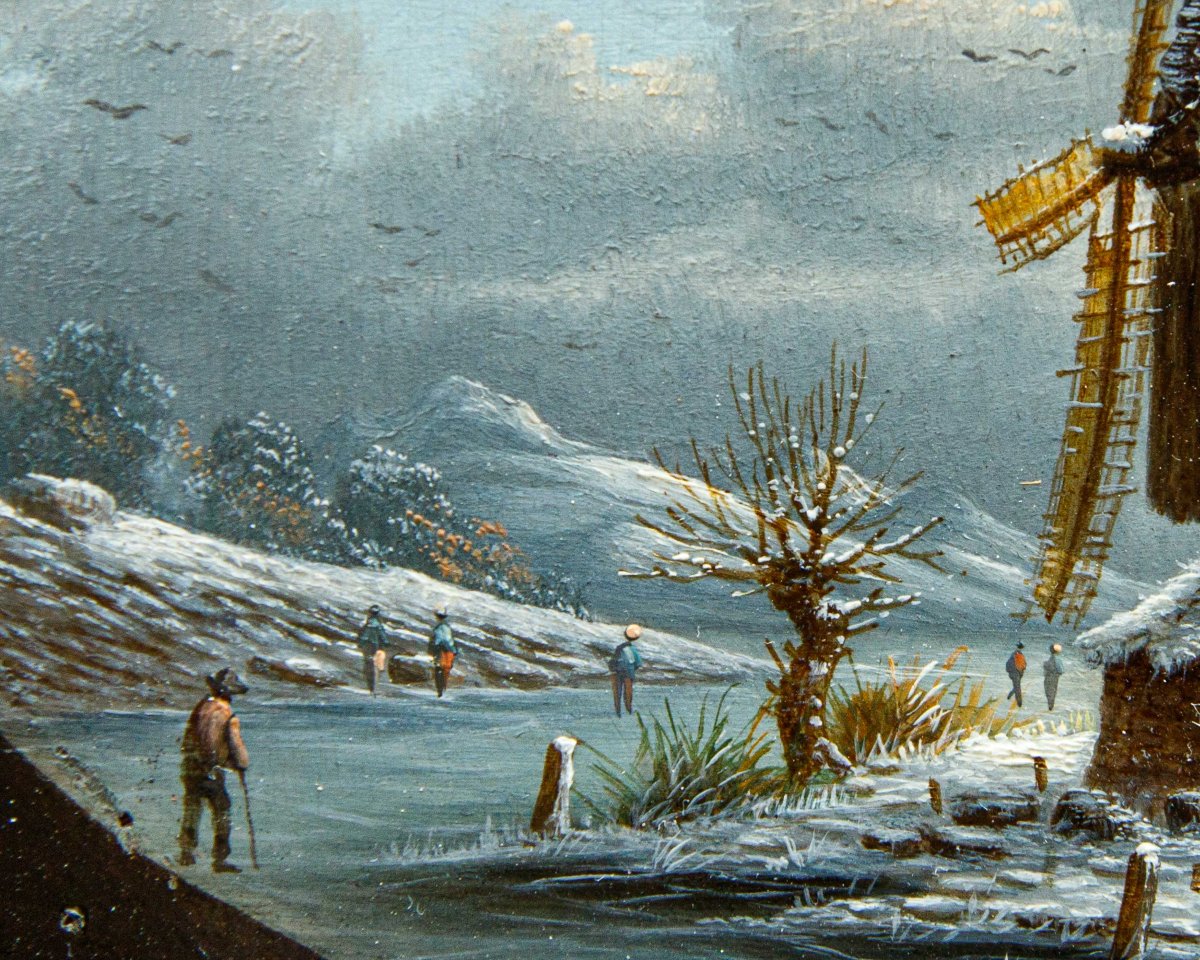
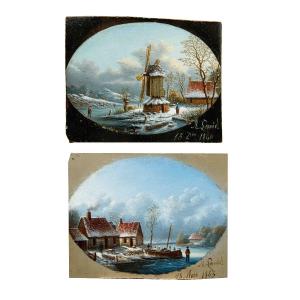
The two oval panels in question, dated 1860 and 1863 respectively, represent a testament to exquisite lyricism within the pictorial output of Alexandre-Albert Lenoir (1801–1891). Although art history primarily celebrates him as a renowned architect, archaeologist, and founder of the Musée de Cluny, these works reveal the more intimate and meditative side of an intellectual who was able to translate the rigor of his scientific training into genre painting of the highest atmospheric sensitivity.
The son of the famous Alexandre Lenoir—the man who saved French monuments from the fury of the Revolution—Alexandre-Albert grew up in an environment steeped in history and beauty. His career, dominated by the monumental work *Statistique monumentale de Paris*, did not prevent him from cultivating painting as a tool for investigating reality. In these winter scenes, the precision of the brushstroke reveals the architect’s eye: in the 1860 painting, the windmill is depicted with an almost analytical structural precision, yet the work never descends into cold technicality thanks to a chromatic rendering that lingers on the reflections of the snow and the density of a sky that seems heavy with fresh frost.
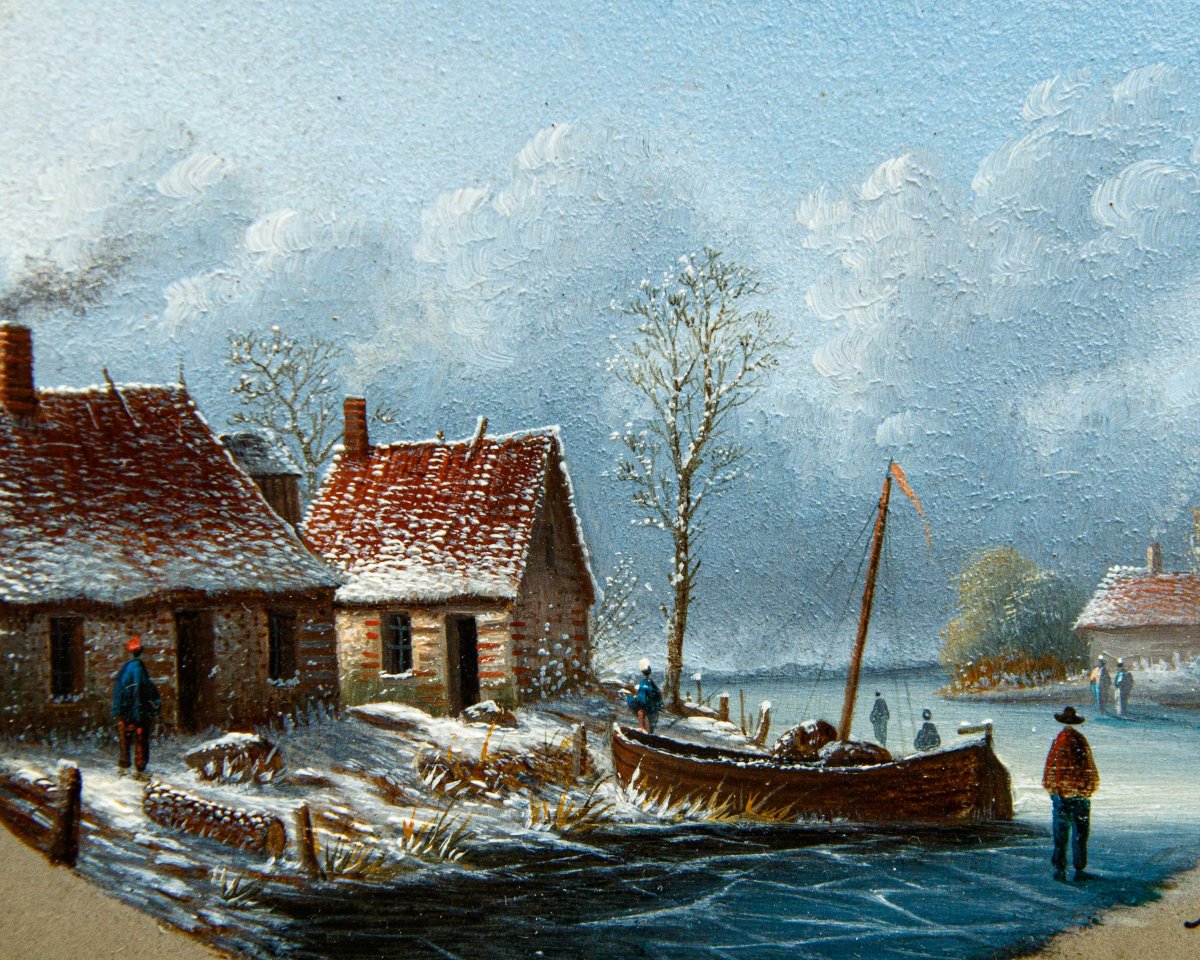
The transition to 1863, as evidenced by the second panel, shows a Lenoir even more aware of his expressive means. The scene, depicting a building lapped by water with a boat in the foreground, evokes an almost Flemish atmosphere, a nod to 17th-century masters such as Aert van der Neer, yet filtered through the lens of French Romanticism. The light, filtering through the clouds and resting on the brick walls, lends the composition a solemn dignity, transforming a fragment of rural daily life into a reflection on the persistence of time and the memory of places.
In terms of museum comparisons, Lenoir’s paintings find their most fitting counterparts in the collections of the Musée Carnavalet in Paris, where numerous examples of his urban and architectural views are preserved. While a documentary necessity prevails in those works, in the paintings presented here the artist seems to allow himself greater poetic freedom, stylistically aligning himself with the views of “historicist” landscape masters such as Achille-Etna Michallon or the early experiments of the Barbizon school, while maintaining a precision of execution that is his hallmark. A comparison with the drawings and watercolors at the Musée de Cluny also reveals the same attention to the texture of materials—wood, stone, water—which Lenoir treats with an almost tactile mastery.
In conclusion, these two signed and dated works are not merely precious antiques, but fragments of an era in which architectural culture and landscape painting were in constant dialogue. They represent the cultured pastime of a man who dedicated his life to preserving the past and who, in these small formats, was able to capture the enchantment of winter’s severity with a grace that transcends mere topographical documentation to become pure art.
Period: 19th century
Style: Other Style
Condition: Good condition
Material: Oil painting on wood
Width: 10
Height: 8
Reference (ID): 1775095
Availability: In stock