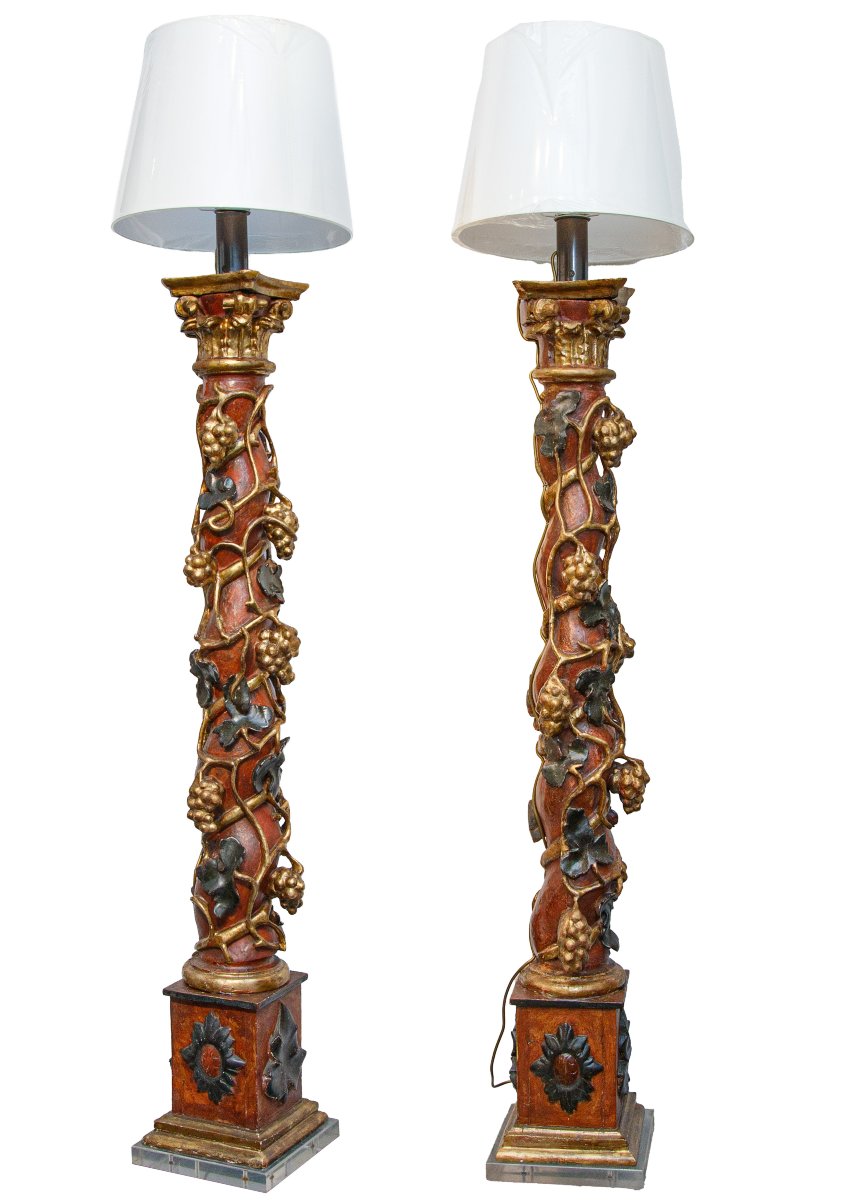
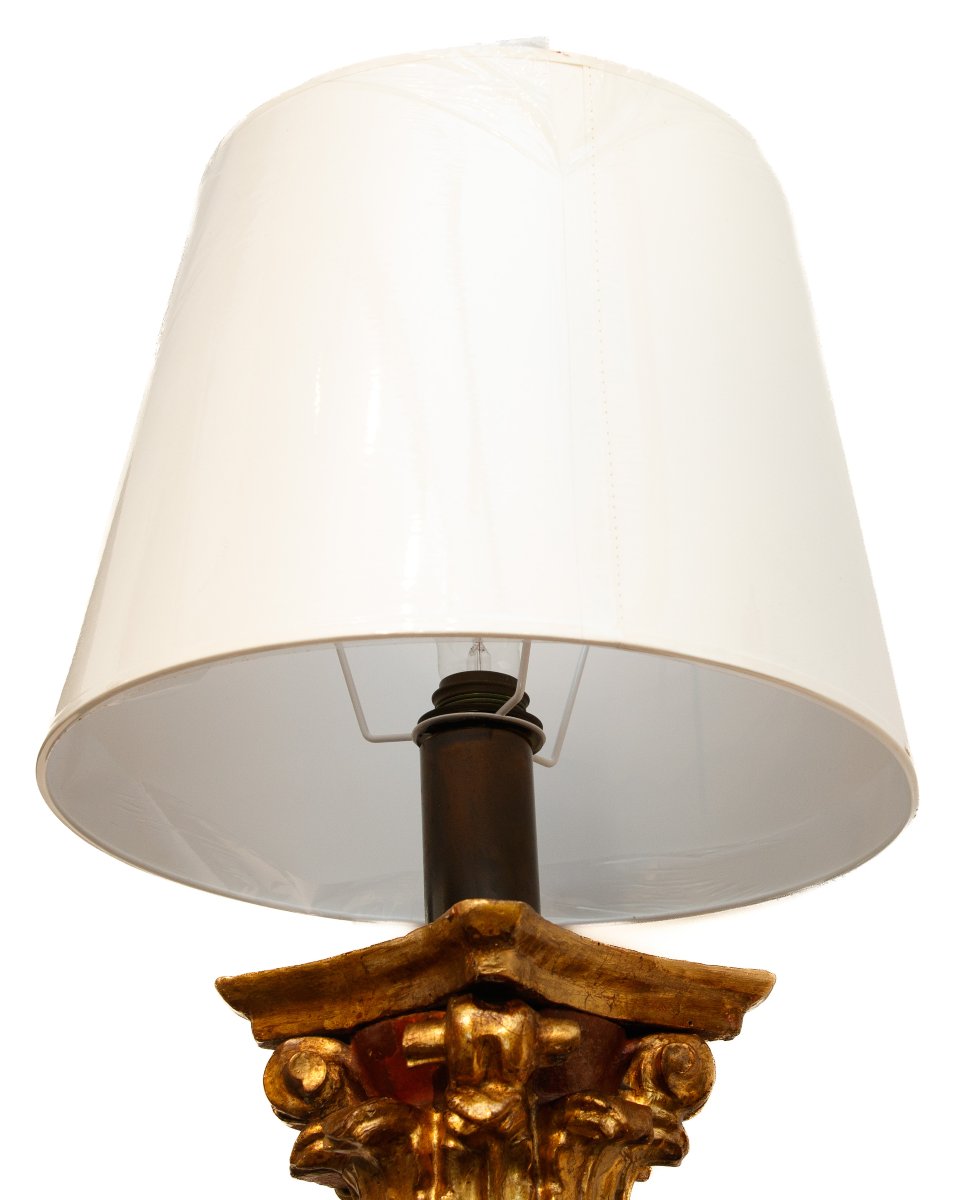
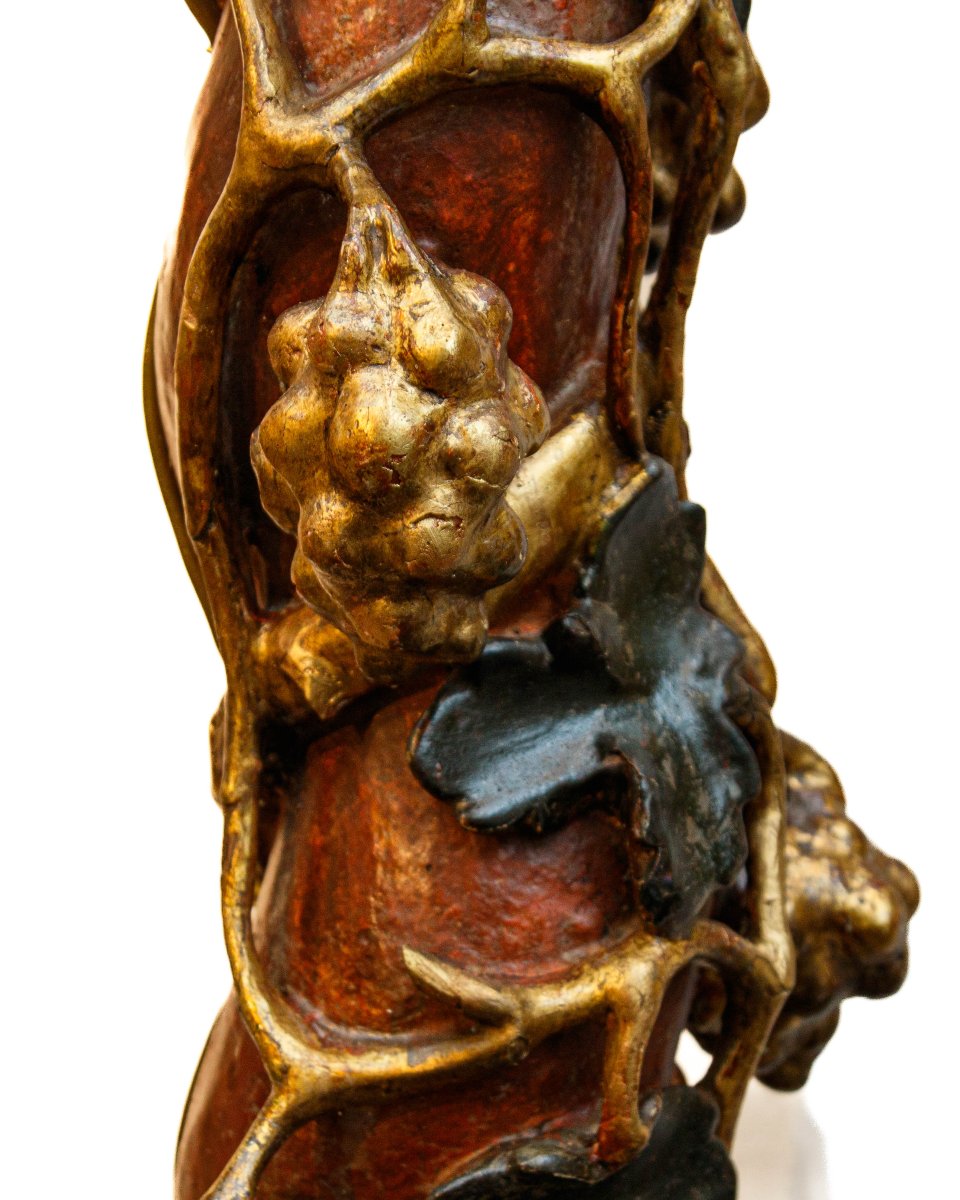
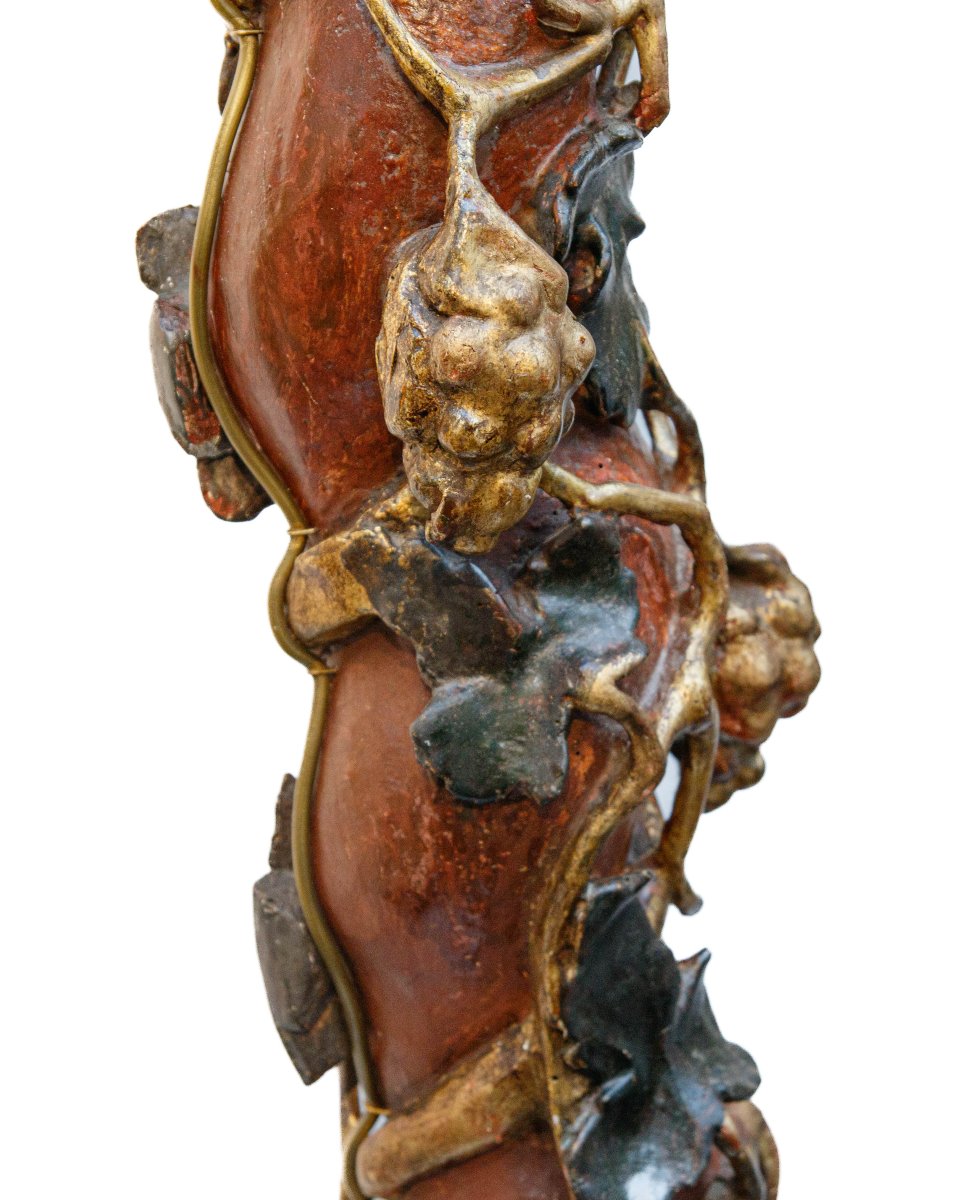
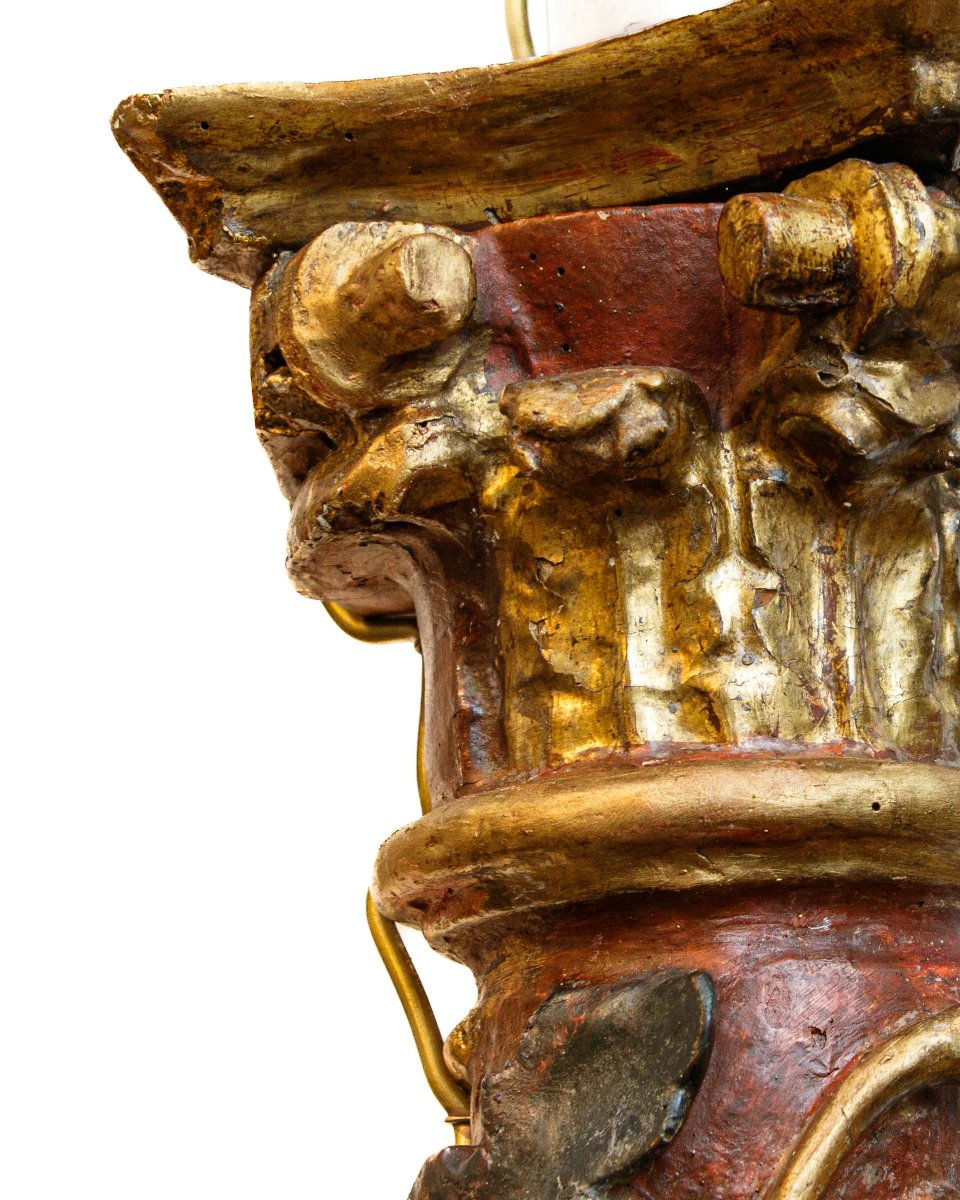



17th Century, Twisted Columns With Grapes And Leaves
17th century
Twisted columns with grapes and leaves
Painted and gilded wood, 183 x 23 x 22 cm
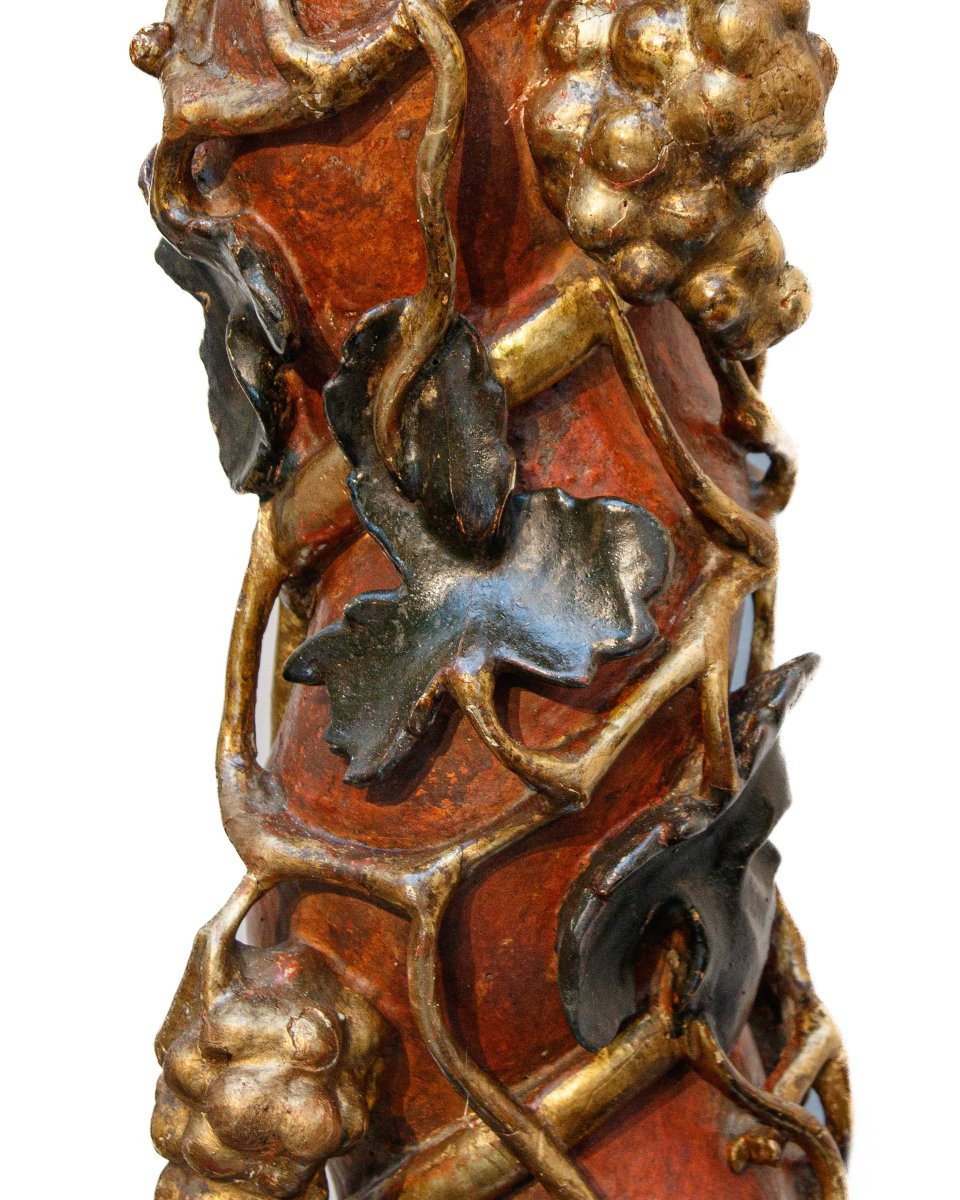
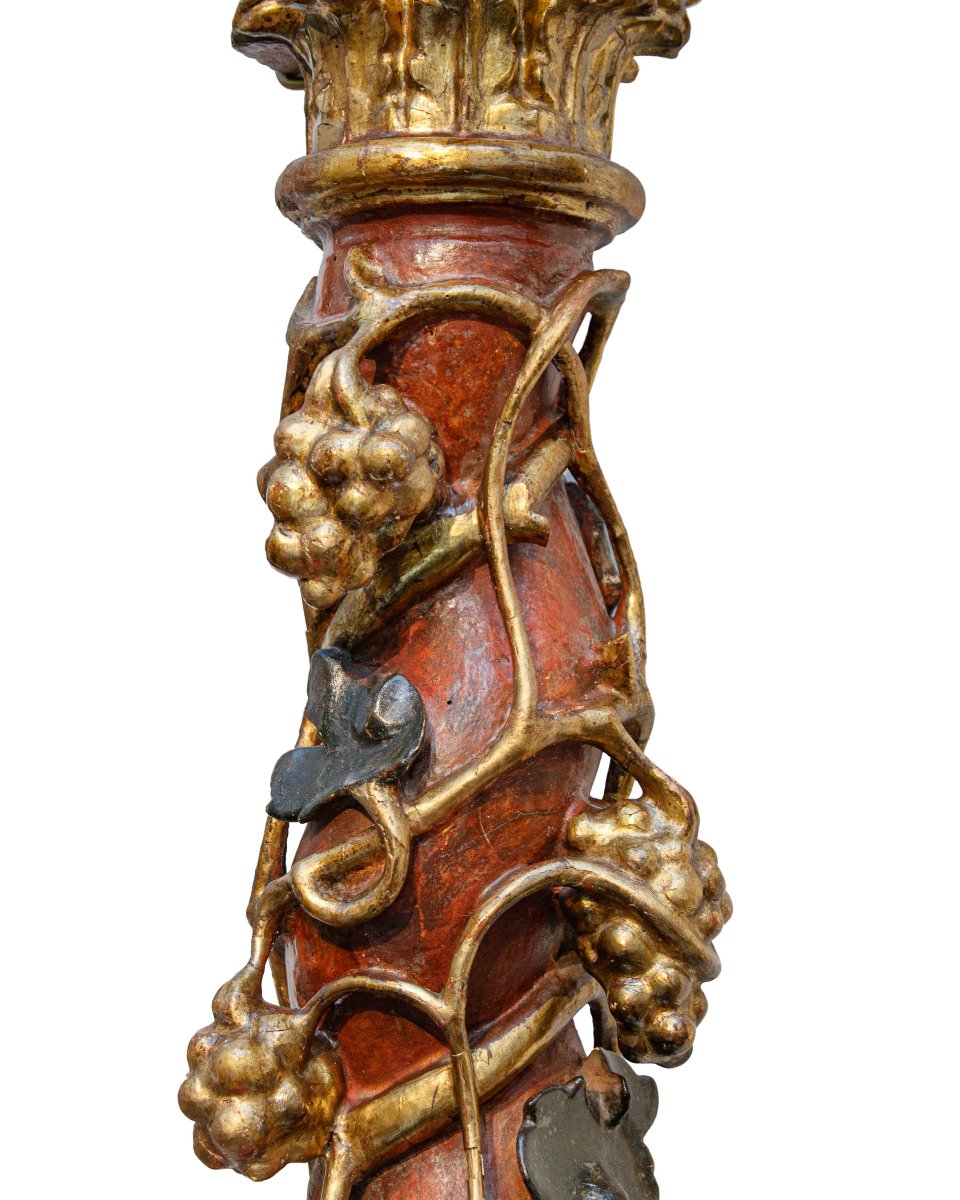
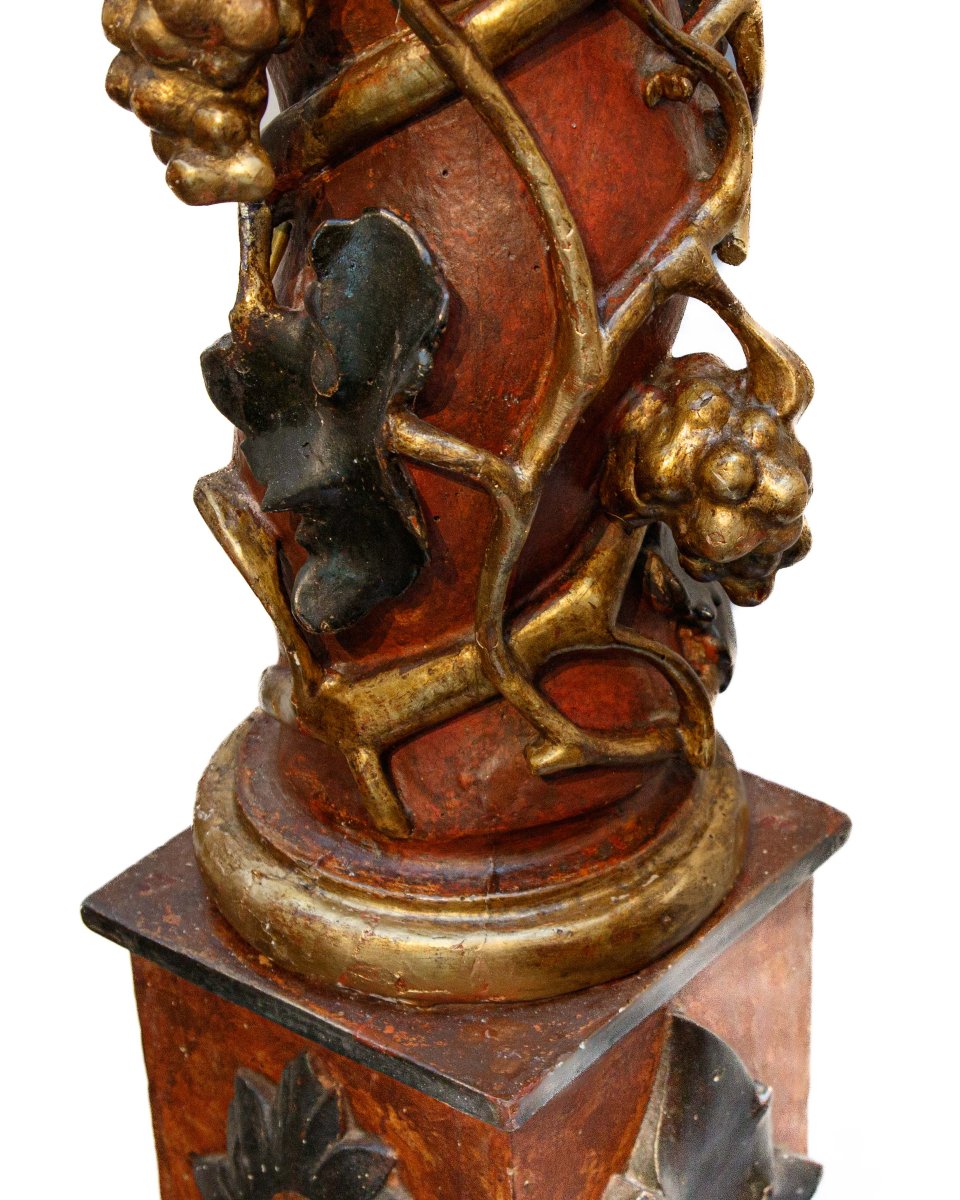
The evolution of the twisted column represents one of the most fascinating chapters in the history of architecture, embodying a plastic dynamism that challenges the static nature of the material. Artifacts such as the 17th-century pair in painted and gilded wood analyzed here bear witness to the exceptional skill achieved by Italian cabinetmakers, capable of translating a structure of complex technical workmanship into a vital momentum. The shaft that twists upon itself, lightened by a perpetual spiral, finds its legendary roots in the Temple of Jerusalem. Defined as “Solomonic” because Christian tradition held it to be the architectural element directly suggested by God to Solomon in the 10th century BCE, this form was imbued with an aura of divine architecture. Although already in use during the Roman Imperial era, especially in the decoration of sarcophagi as an expressive variation of the classic slender shaft, its symbolic consecration occurred after the destruction of the temple. It was Emperor Constantine who donated the famous Parian marble columns to St. Peter’s Basilica that would form the ancient Pergula, an original core later expanded to twelve elements by Pope Gregory III over the centuries. Throughout the Romanesque period, the twisted column remained widespread in cloisters and portals, only to undergo a partial eclipse during the Renaissance, when the rigorous revival of classicism once again imposed the predominance of the smooth or fluted shaft. However, the early 16th century marked its monumental revival in Rome, first manifesting itself in the pictorial innovations of Raphael and his school, and later finding its way into the opulent experiments of Mannerist architecture. The apogee of semantic complexity was finally reached with the Baroque, finding its highest expression in 1624 in Gian Lorenzo Bernini’s colossal bronze Baldachin at St. Peter’s. In this context, the column serves not only as a support but becomes a metaphor for the triumph of the spirit. The decoration of vine branches and grape clusters, visible in the polychromy of 17th-century wooden artifacts, enriches the work with allegorical layers: while in a secular sense it evokes Dionysian opulence, in the Gospel of John it symbolizes the mystical union between the faithful and Christ, the source of true life. The leaves and grapes, rendered with sculptural vigor, transform the architectural element into a vibrant entity where the gold of the capitals and vine branches interacts with the brown tones of the shaft, celebrating an ideal of well-being and blessing that spans the millennia.
Period: 17th century
Style: Other Style
Condition: Good condition
Material: Painted wood
Width: 23
Height: 183
Depth: 22
Reference (ID): 1775083
Availability: In stock