THIS OBJECT WAS SOLD
Burning Spheric Mirror
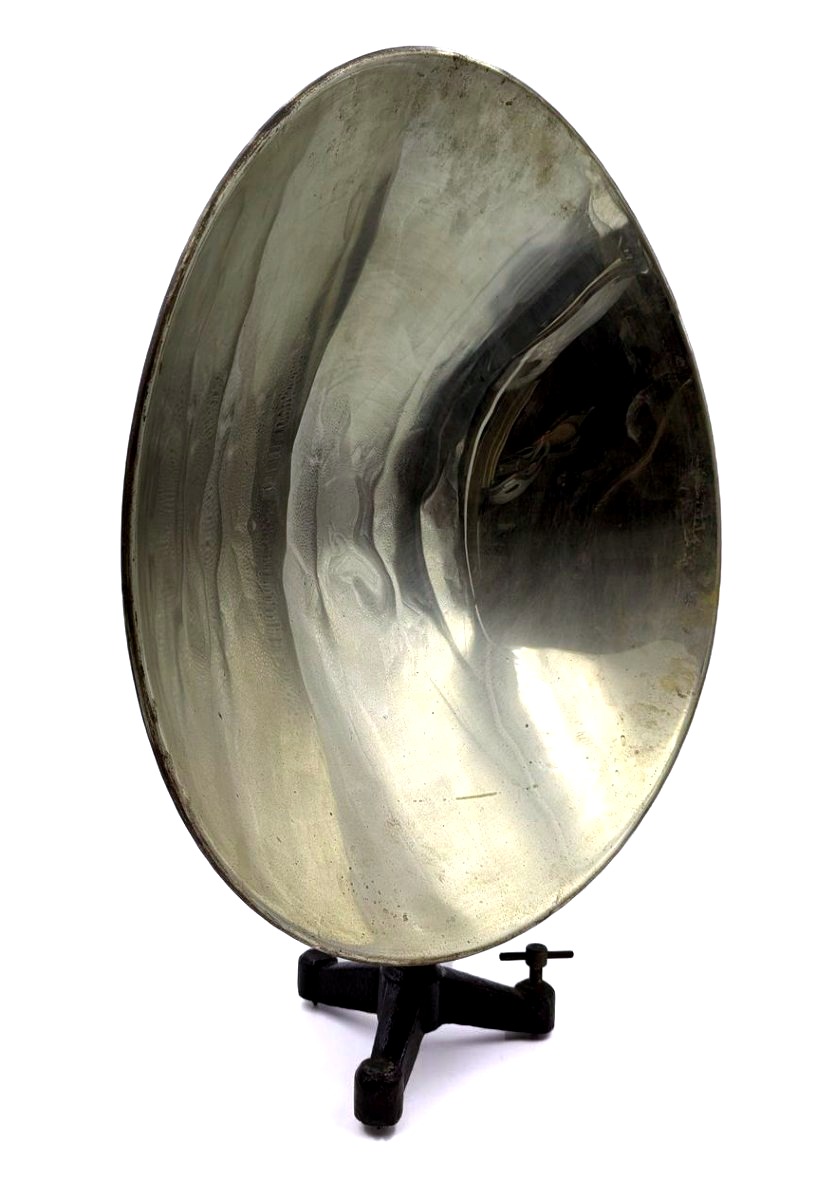
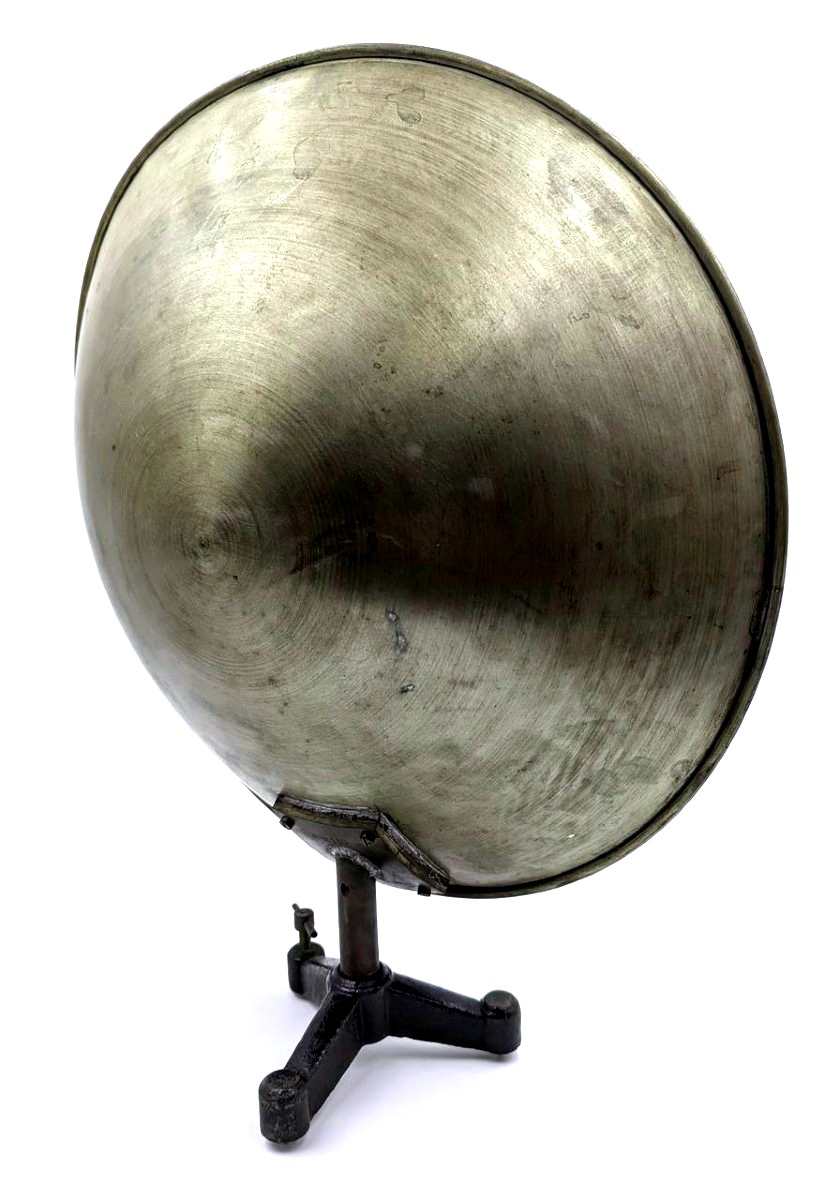
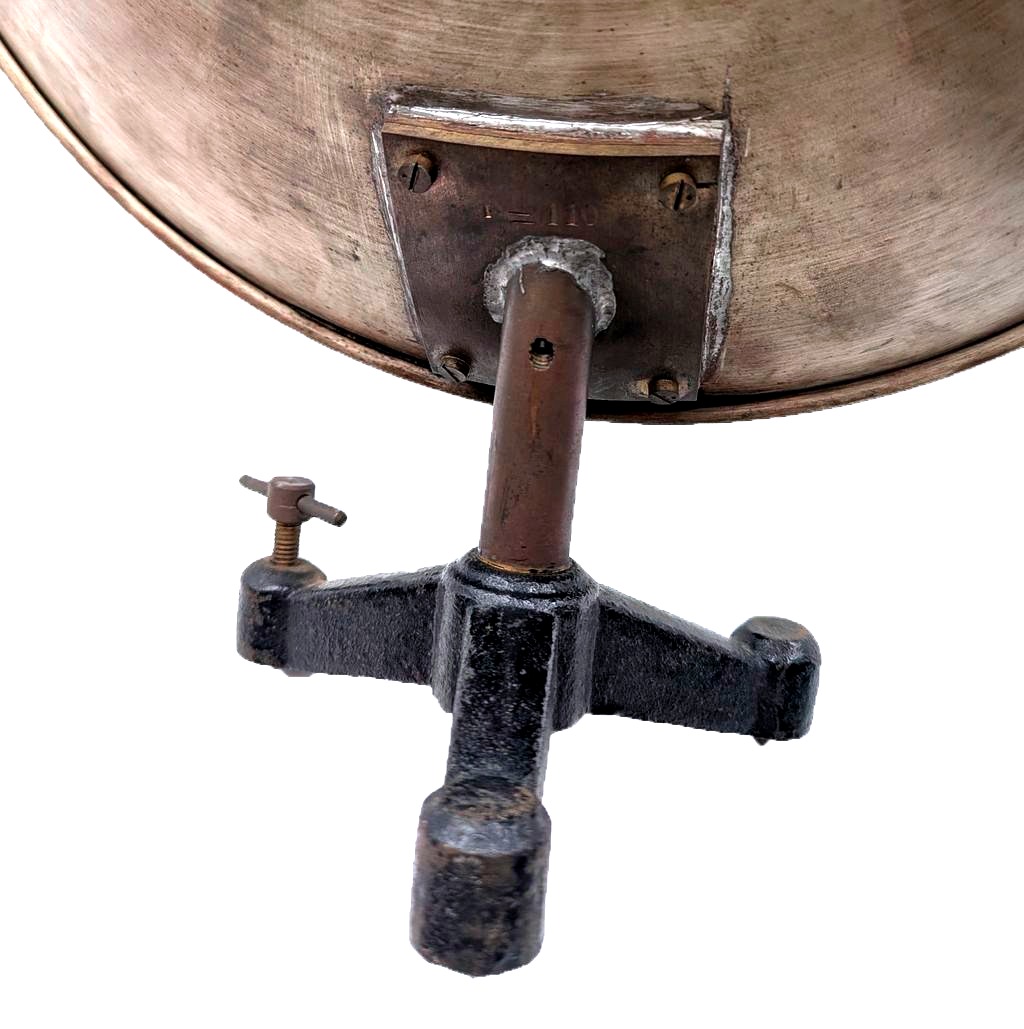
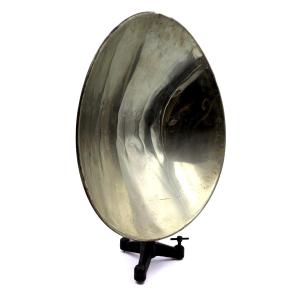


Brass concave mirror on cast-iron tripod. 1st half 20th century.
An optical instrument used in physics cabinets from the 17th century onwards, this burning mirror illustrates the propagation and focusing of light, heat and sound. By reflection, this instrument concentrates the beam of light received at one point. The best-known experiment involved placing the mirror in front of a light source and directing the beam towards a target to be ignited. Used in pairs, these burning mirrors are known as "conjugate mirrors".
An ancient legend credits Archimedes with setting fire to enemy galleys during the siege of Syracuse thanks to large concave mirrors.
From the late 20th century onwards, this type of mirror was also used as an emitter source for electrical resistors and to measure heat propagation.
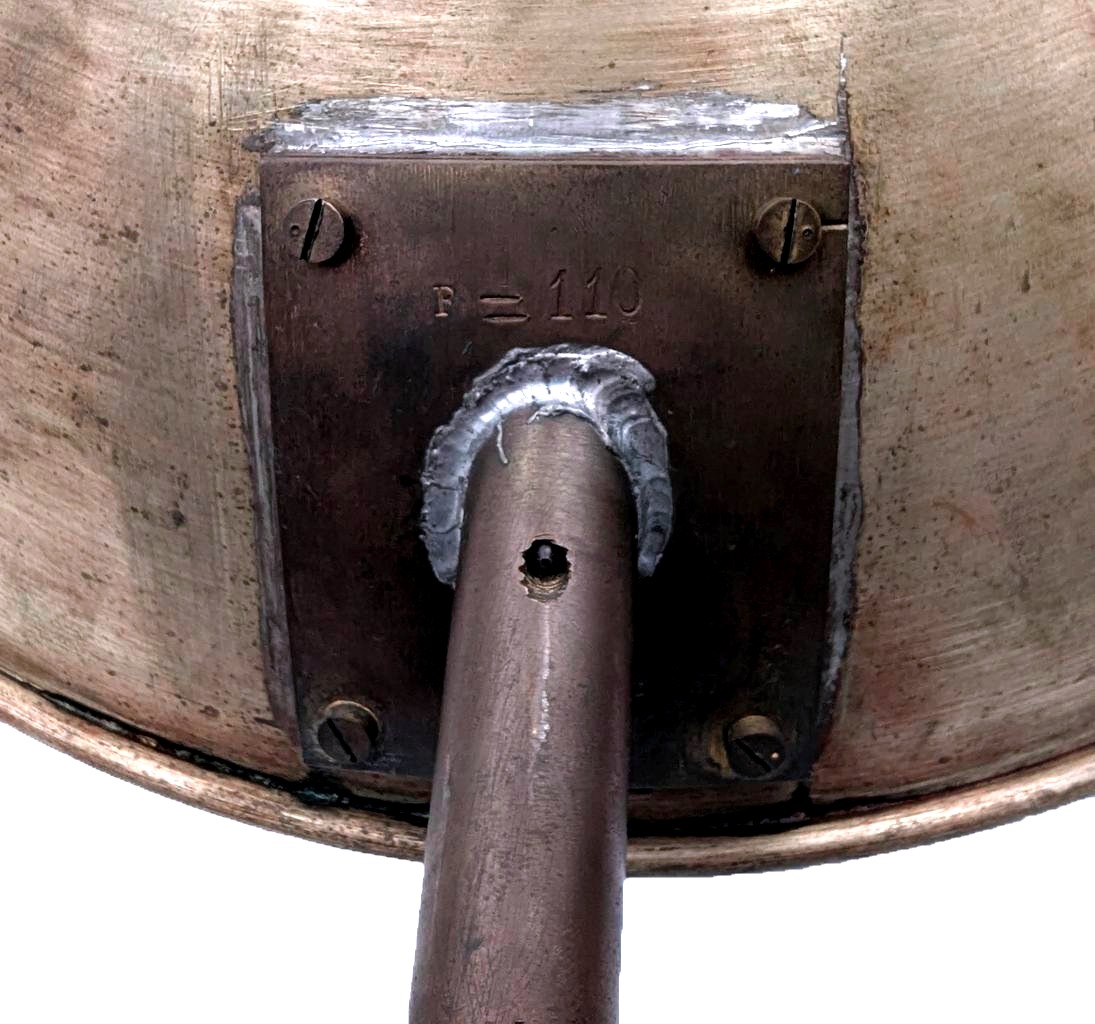
Beautiful model from a physics laboratory, bears the engraved inscription on the reverse "F = 110".
An optical instrument used in physics cabinets from the 17th century onwards, this burning mirror illustrates the propagation and focusing of light, heat and sound. By reflection, this instrument concentrates the beam of light received at one point. The best-known experiment involved placing the mirror in front of a light source and directing the beam towards a target to be ignited. Used in pairs, these burning mirrors are known as "conjugate mirrors".
An ancient legend credits Archimedes with setting fire to enemy galleys during the siege of Syracuse thanks to large concave mirrors.
From the late 20th century onwards, this type of mirror was also used as an emitter source for electrical resistors and to measure heat propagation.
Beautiful model from a physics laboratory, bears the engraved inscription on the reverse "F = 110".
Explore similar pieces and discover your ideal find:
scientific instruments