


The Entrance To The Tuileries Garden
Artist: Guillaume Gillet
Guillaume GILLET
Guillaume Gillet was not only a world-renowned architect but also a multifaceted artist whose paintings served as a structural study for his spatial visions. Guillaume Gillet (1912–1987)
Guillaume Gillet is a monumental figure in 20th-century French culture. Although universally known as the architect who “rebuilt” postwar France (a member of the Académie des Beaux-Arts), his body of work as a painter is essential to understanding his sense of volume.
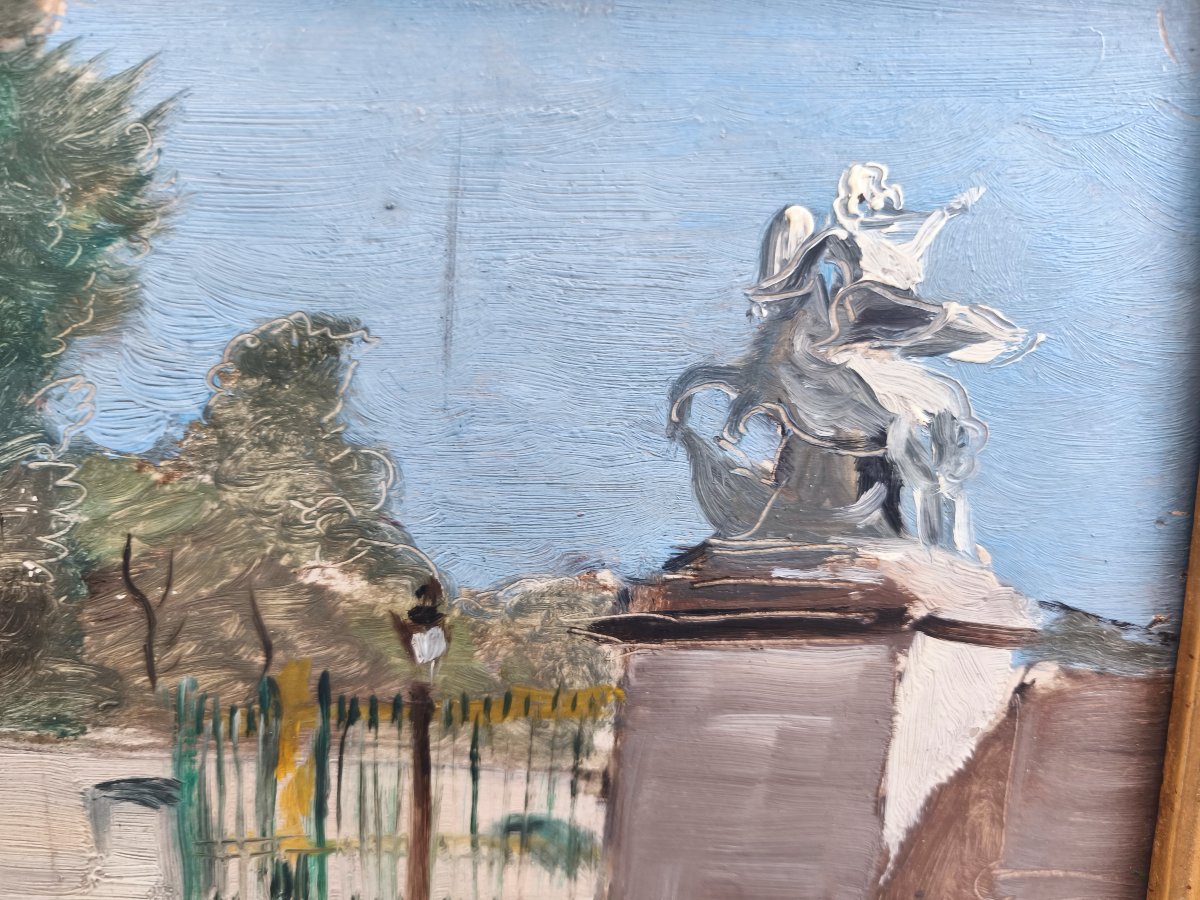
His approach is Post-Impressionist with Modernist influences. He uses bold, almost textural brushstrokes to define masses. He does not seek photographic detail, but rather the atmosphere and solidity of architectural elements.
Winner of the Premier Grand Prix de Rome in architecture (1946), he was able to blend the technical precision of drawing with the expressive freedom of oil painting. View of the Jardin des Tuileries
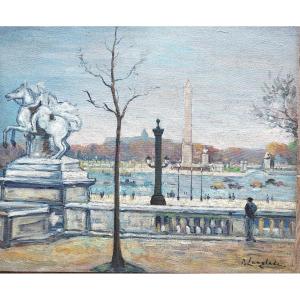
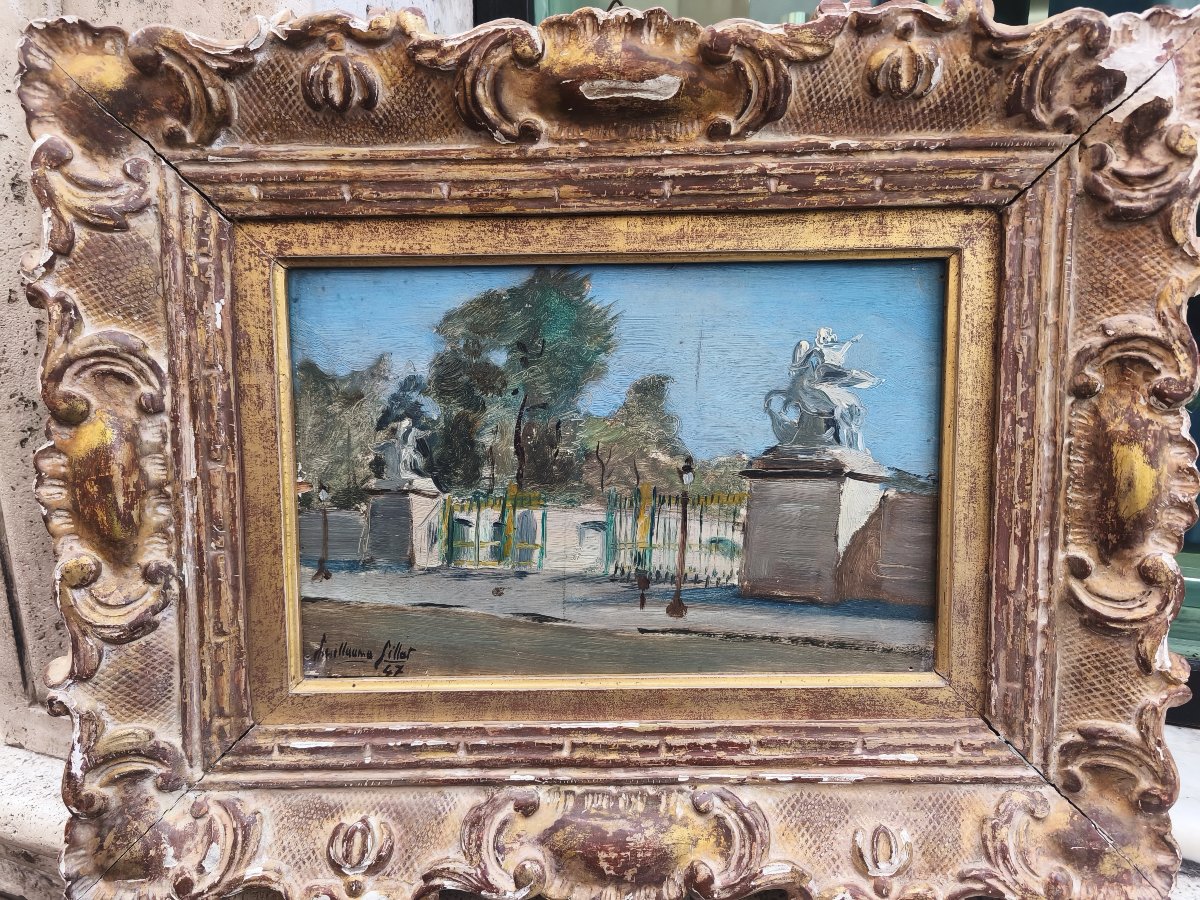
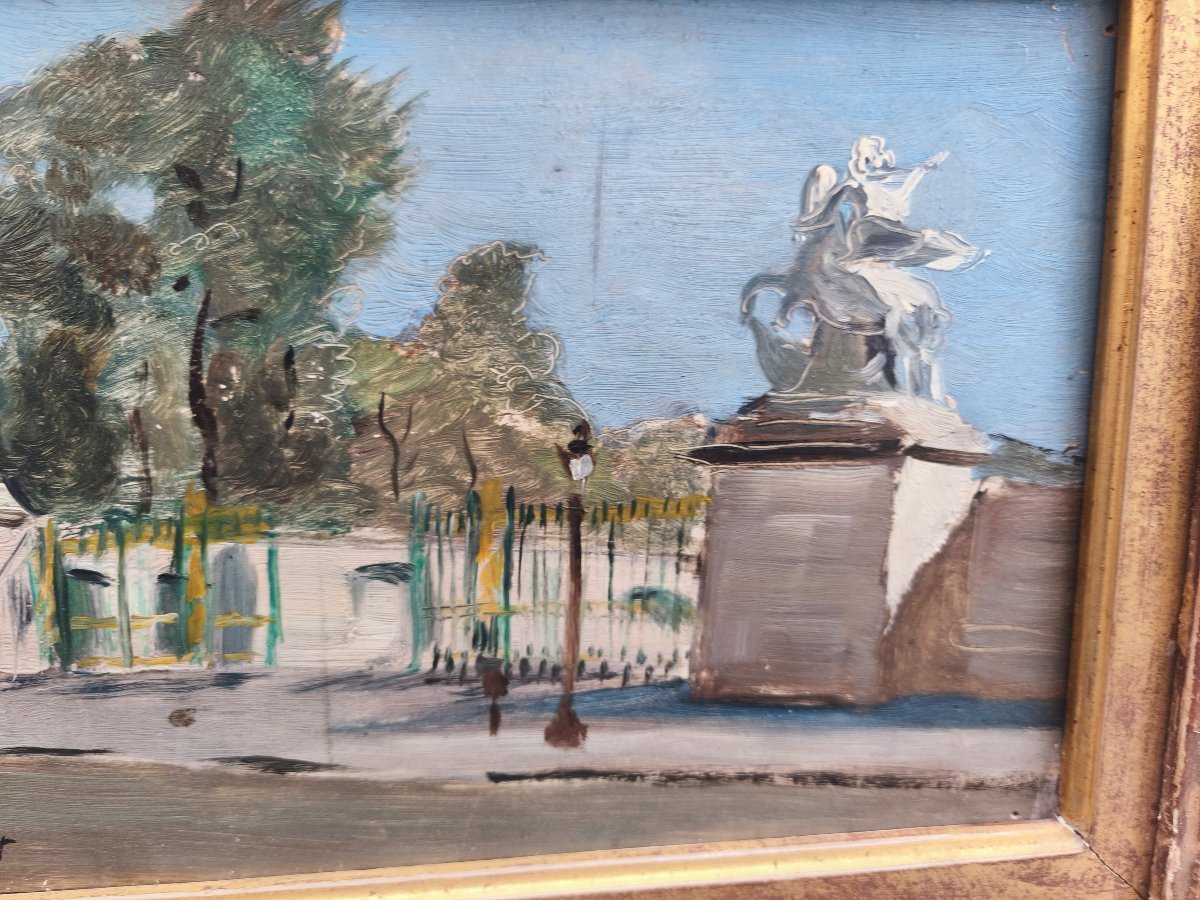
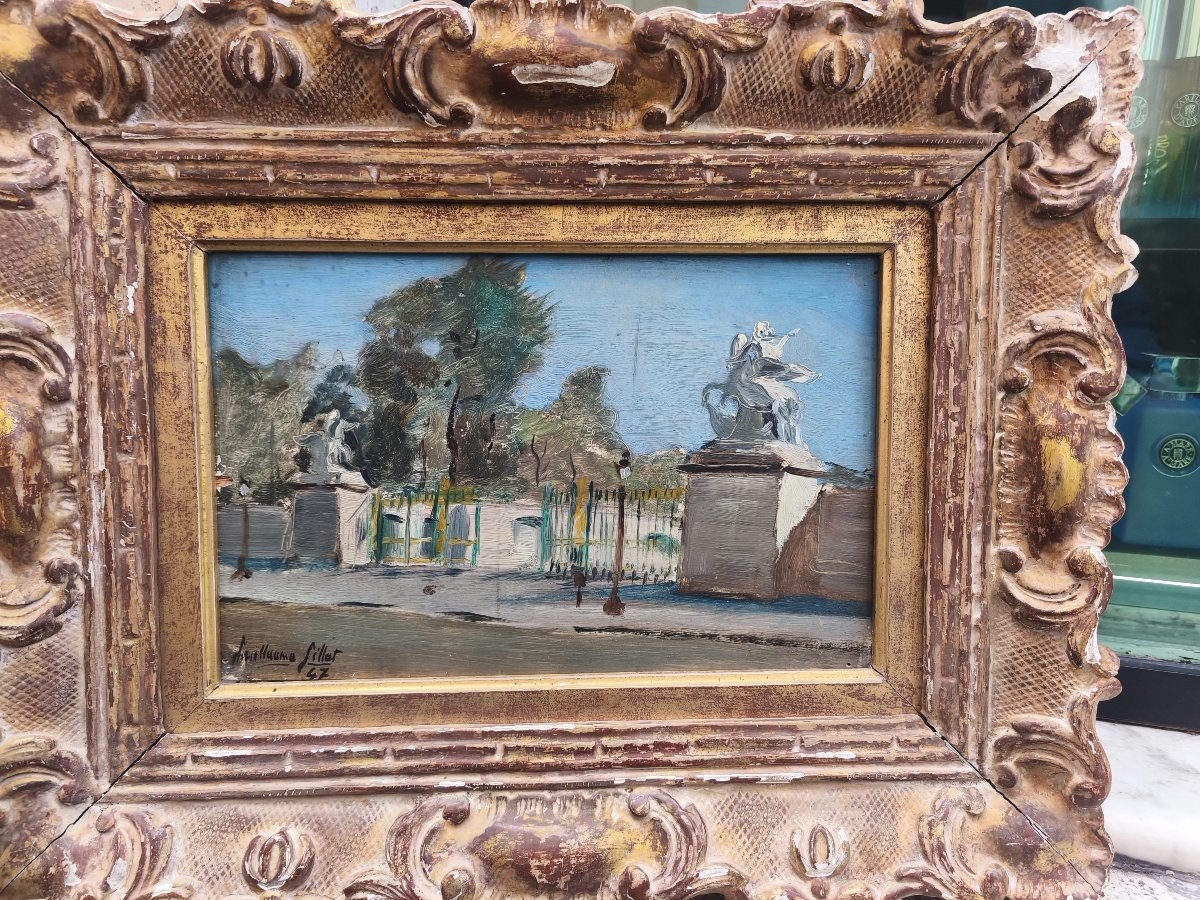
The work depicts one of Paris’s most iconic entrances, captured with an aesthetic that emphasizes the contrast between the clear sky and the solemnity of the monuments.
The entrance to the Jardin des Tuileries from the Place de la Concorde.
Horses of Marly (copies): In the foreground on the right stands the imposing pedestal with the equestrian statue (probably Mercury riding Pegasus). Gillet uses white and grays to convey a sense of monumentality
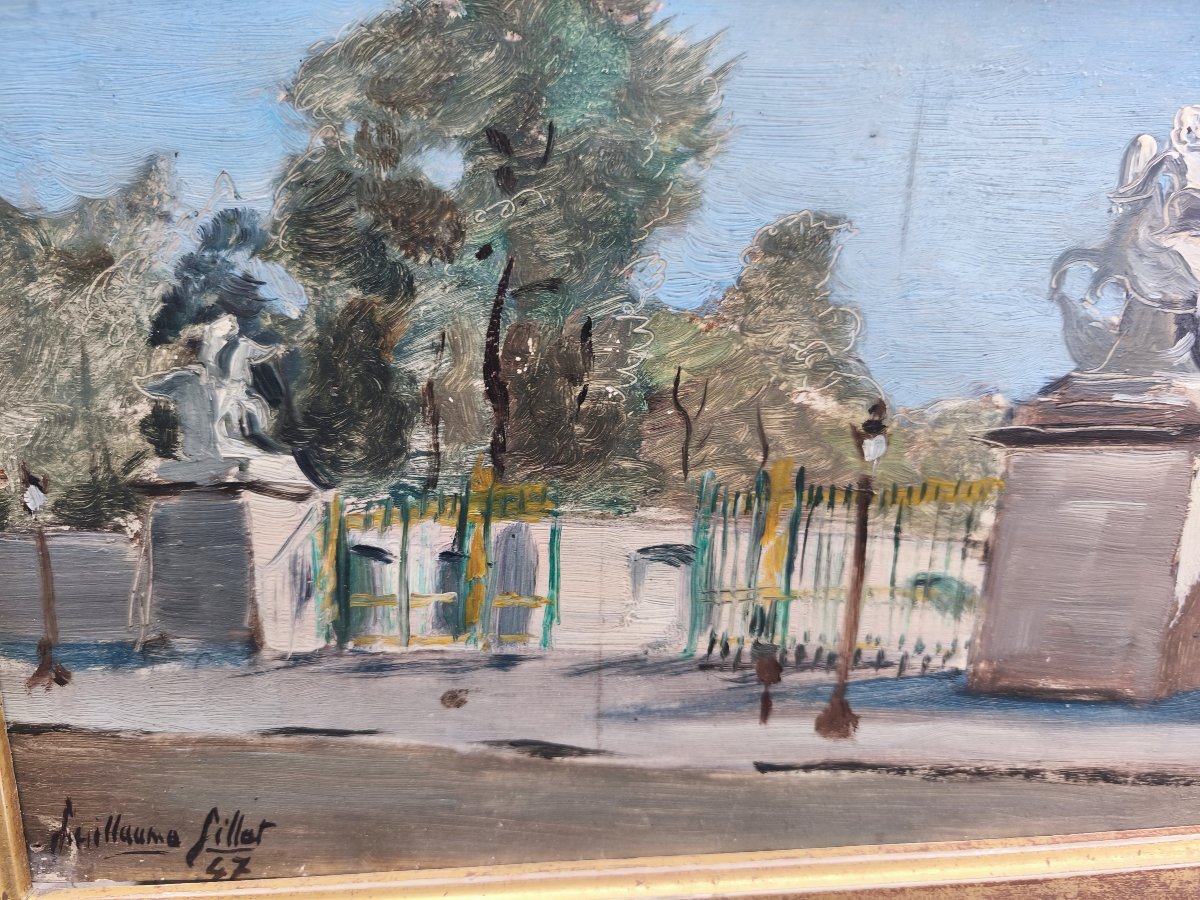
In the center, the vertical green and gold lines represent the garden’s famous gates, which guide the eye toward the cluster of trees in the background.
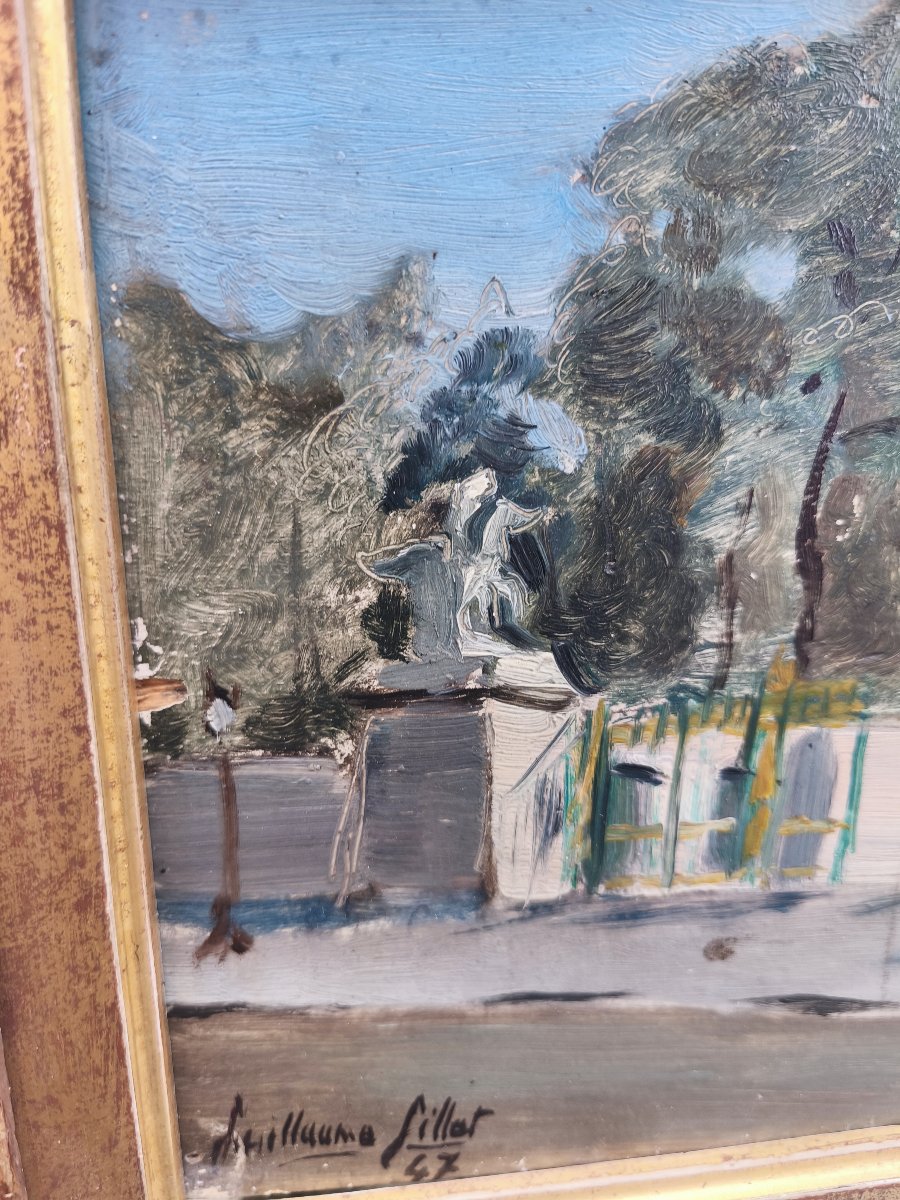
The sky is a deep blue, typical of windy Parisian days, which highlights the dark green of the vegetation and the ochre/earthy tones of the pavement.
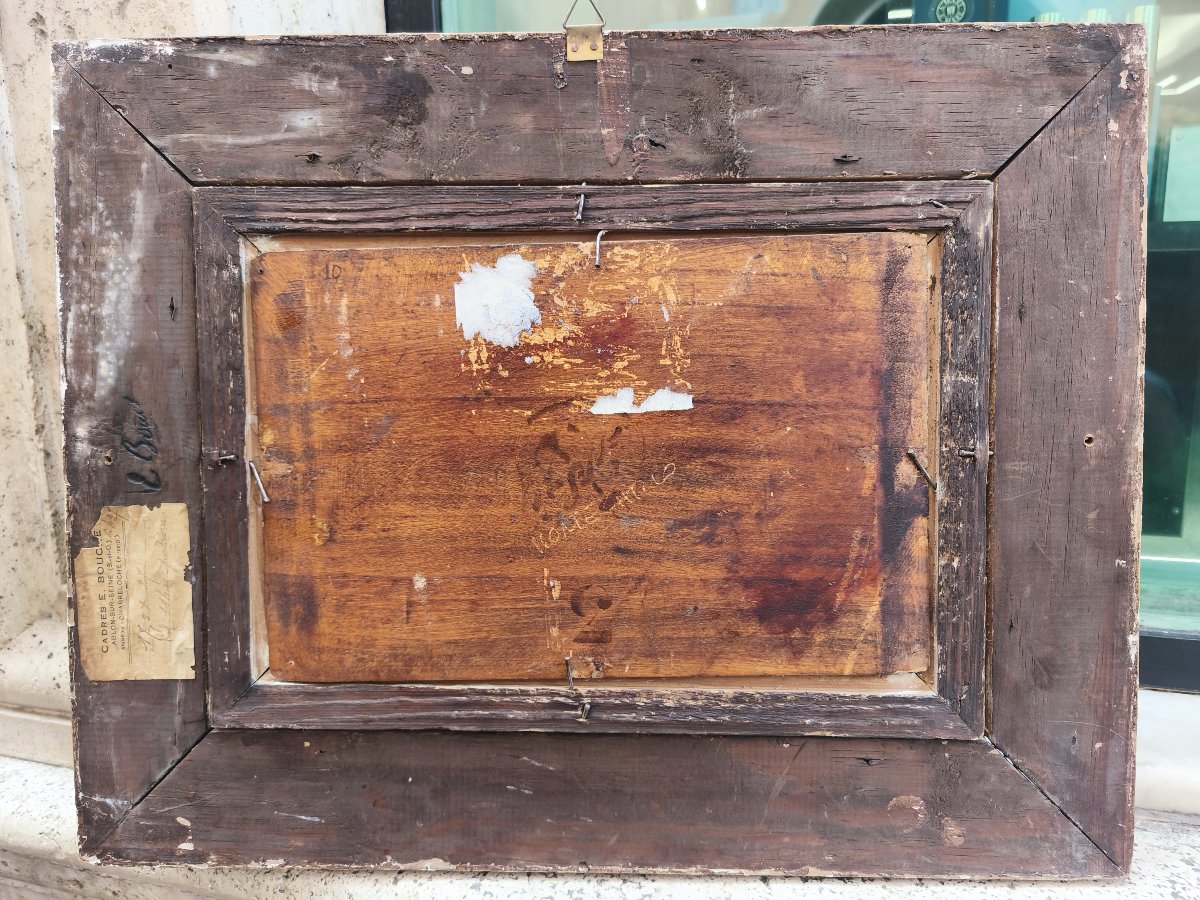
Oil on panel
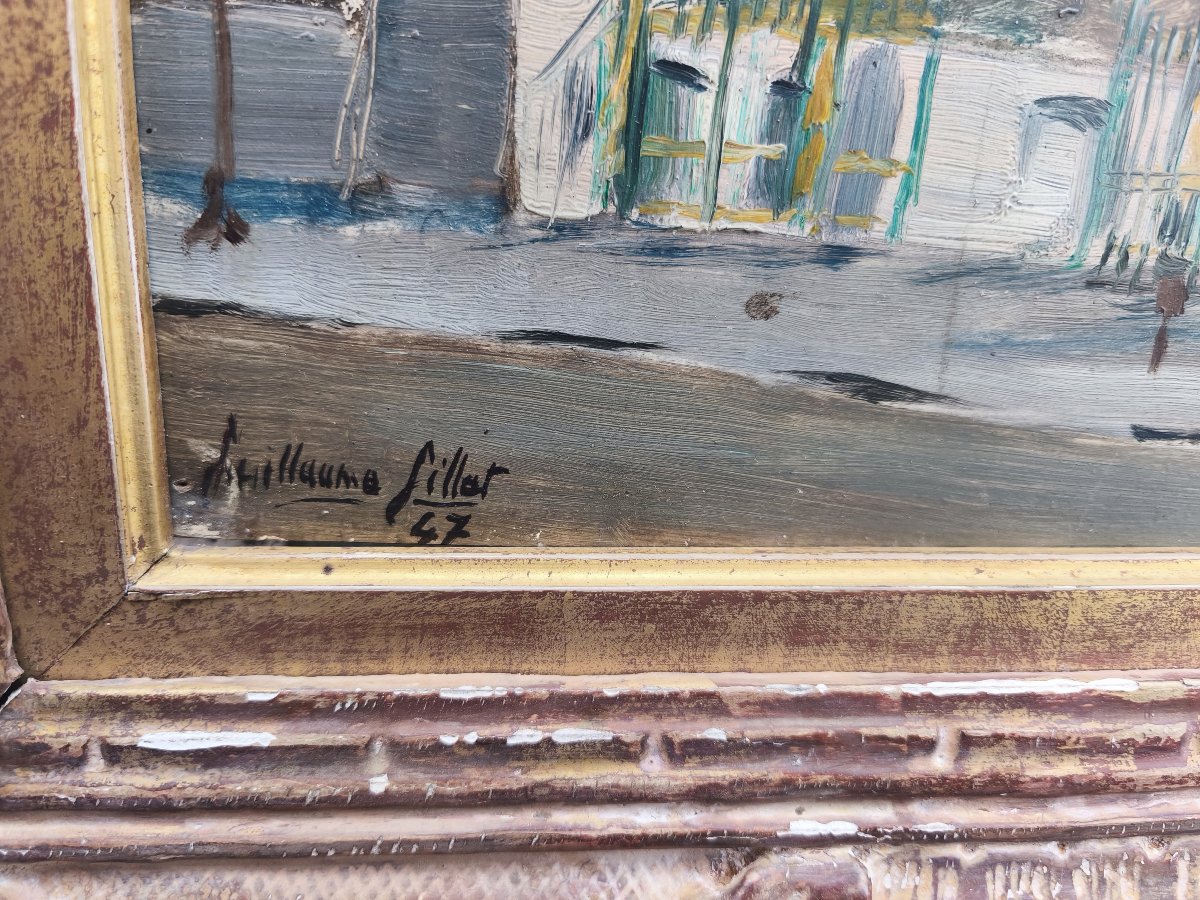
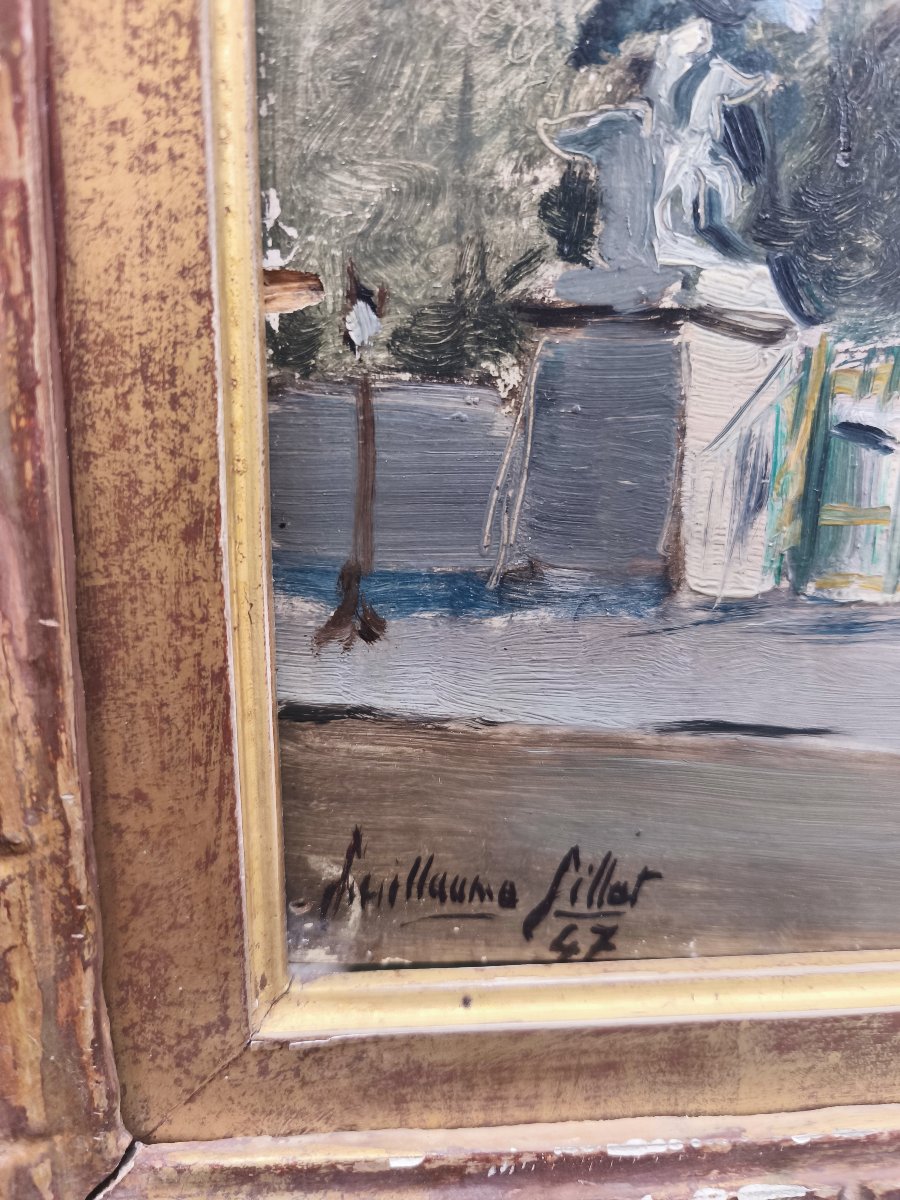
Bottom left: "Guillaume Gillet," followed by the date 47.
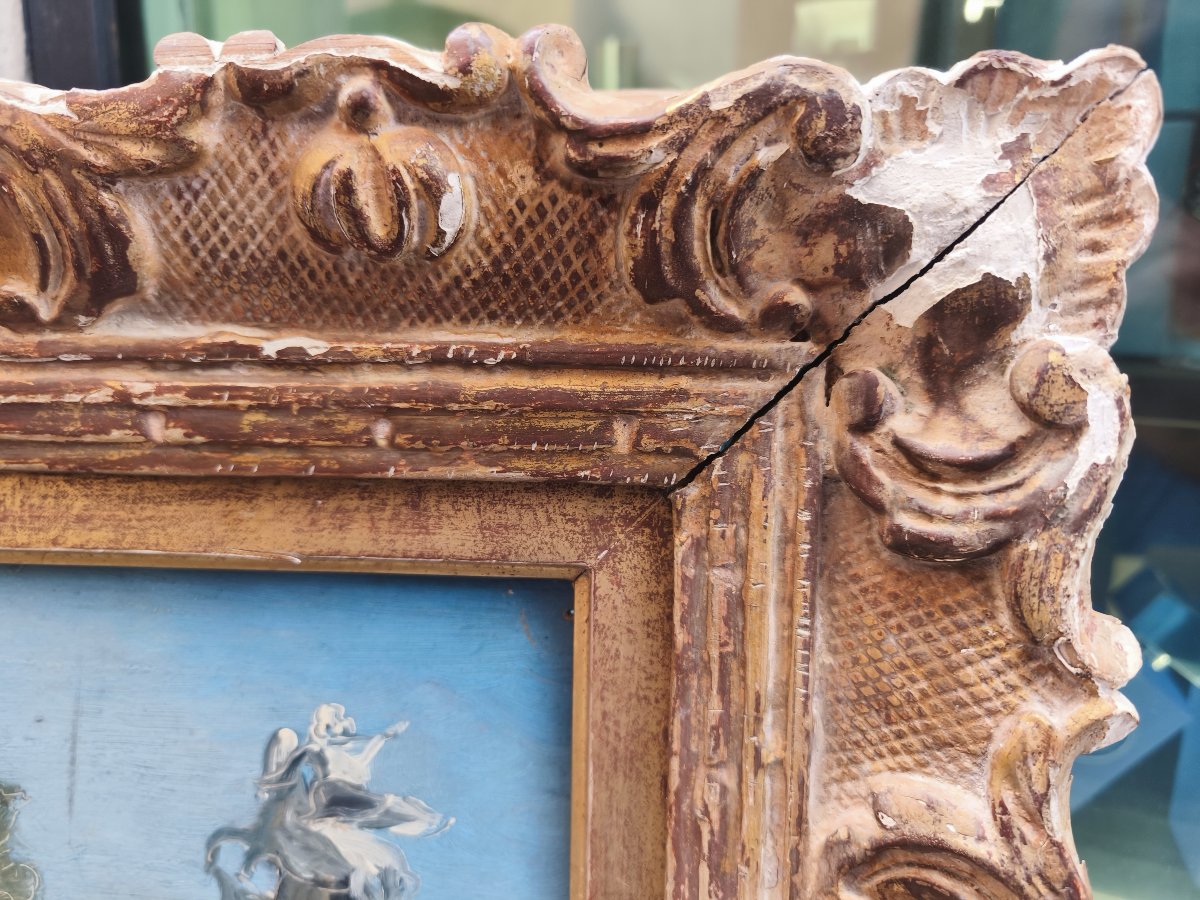
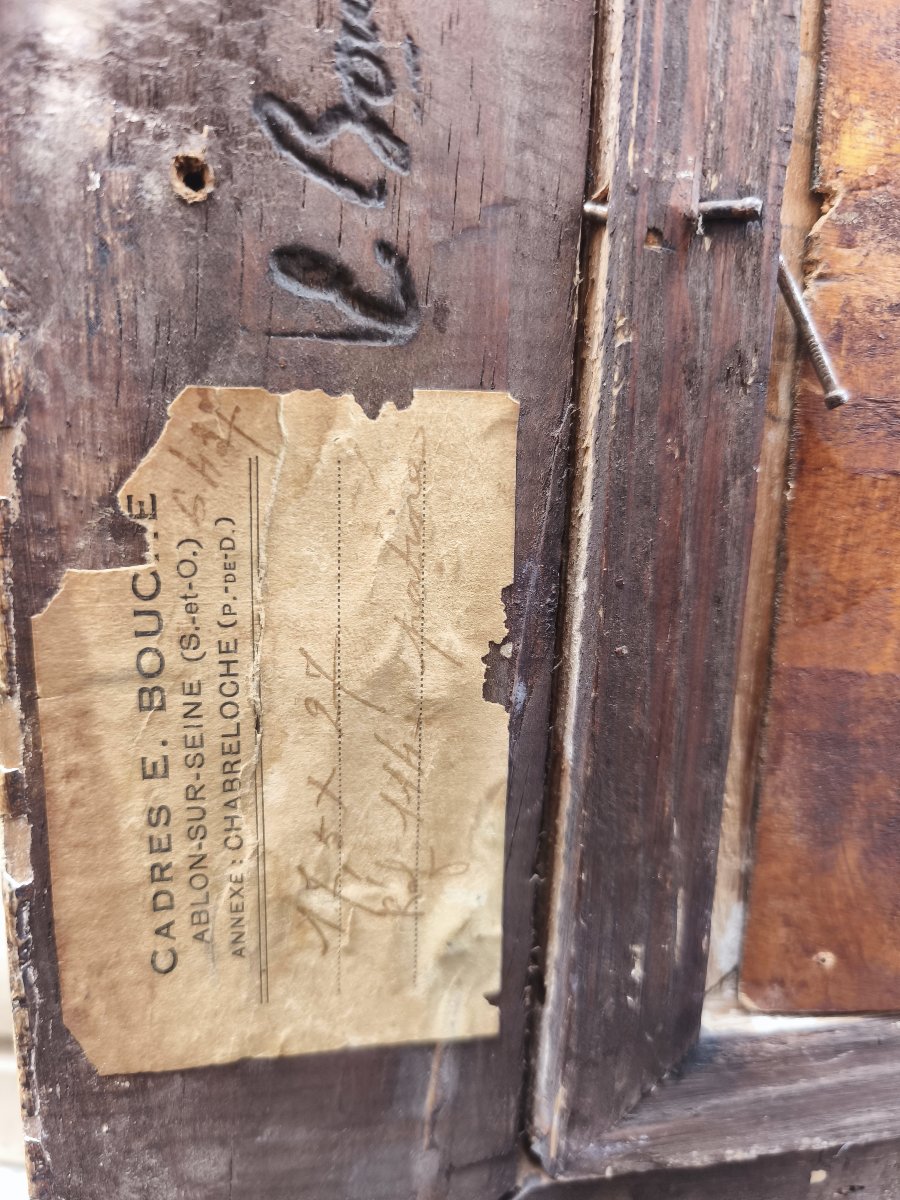
Louis XV/Rococo-style frame in carved and gilded wood. It shows signs of wear and missing gilding, which attest to its authenticity and age.
The painting is in good condition, although the frame requires conservative restoration to prevent further flaking.
This work holds particular value because it represents Gillet as a "painter-urban planner." Seeing how a man who would later design reinforced concrete cathedrals (such as the one in Royan) interpreted the classical monuments of Paris is of great interest to collectors of 20th-century art and architecture.
Guillaume Gillet was not only a world-renowned architect but also a multifaceted artist whose paintings served as a structural study for his spatial visions. Guillaume Gillet (1912–1987)
Guillaume Gillet is a monumental figure in 20th-century French culture. Although universally known as the architect who “rebuilt” postwar France (a member of the Académie des Beaux-Arts), his body of work as a painter is essential to understanding his sense of volume.
His approach is Post-Impressionist with Modernist influences. He uses bold, almost textural brushstrokes to define masses. He does not seek photographic detail, but rather the atmosphere and solidity of architectural elements.
Winner of the Premier Grand Prix de Rome in architecture (1946), he was able to blend the technical precision of drawing with the expressive freedom of oil painting. View of the Jardin des Tuileries
The work depicts one of Paris’s most iconic entrances, captured with an aesthetic that emphasizes the contrast between the clear sky and the solemnity of the monuments.
The entrance to the Jardin des Tuileries from the Place de la Concorde.
Horses of Marly (copies): In the foreground on the right stands the imposing pedestal with the equestrian statue (probably Mercury riding Pegasus). Gillet uses white and grays to convey a sense of monumentality
In the center, the vertical green and gold lines represent the garden’s famous gates, which guide the eye toward the cluster of trees in the background.
The sky is a deep blue, typical of windy Parisian days, which highlights the dark green of the vegetation and the ochre/earthy tones of the pavement.
Oil on panel
Bottom left: "Guillaume Gillet," followed by the date 47.
Louis XV/Rococo-style frame in carved and gilded wood. It shows signs of wear and missing gilding, which attest to its authenticity and age.
The painting is in good condition, although the frame requires conservative restoration to prevent further flaking.
This work holds particular value because it represents Gillet as a "painter-urban planner." Seeing how a man who would later design reinforced concrete cathedrals (such as the one in Royan) interpreted the classical monuments of Paris is of great interest to collectors of 20th-century art and architecture.
1 500 €
Period: 20th century
Style: Art Deco
Condition: Excellent condition
Material: Oil painting on wood
Length: 17
Width: 27
Reference (ID): 1771414
Availability: In stock
Print