THIS OBJECT WAS SOLD
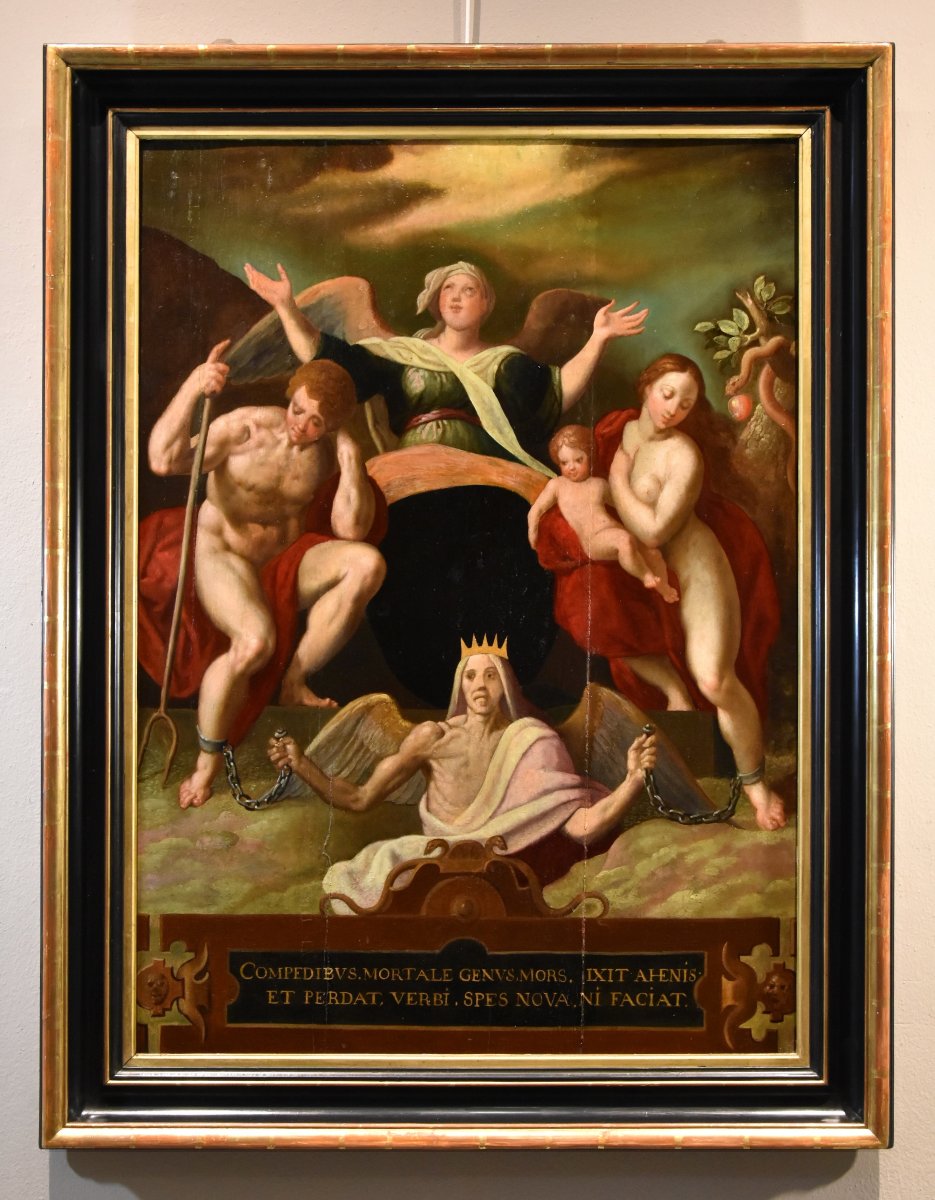
The Redemption Of Adam And Eve, Jacob De Backer (antwerp, 1555–1585)

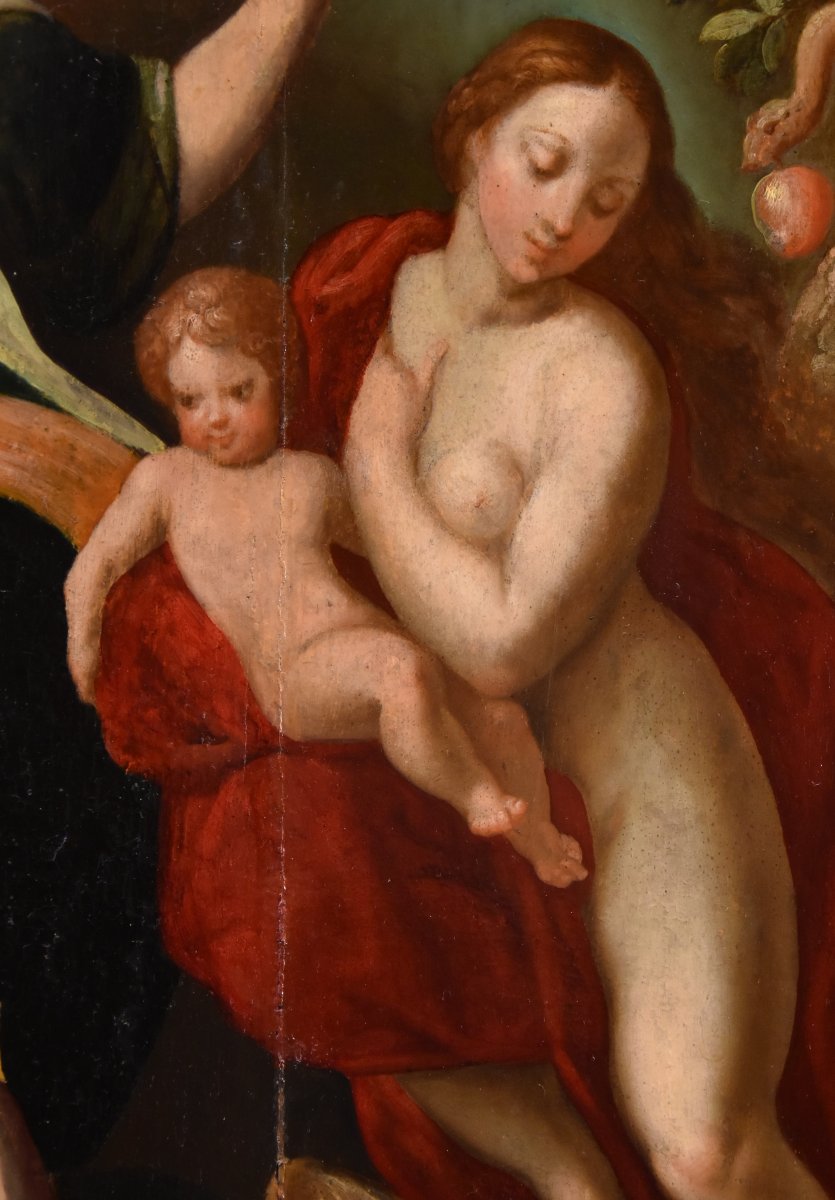
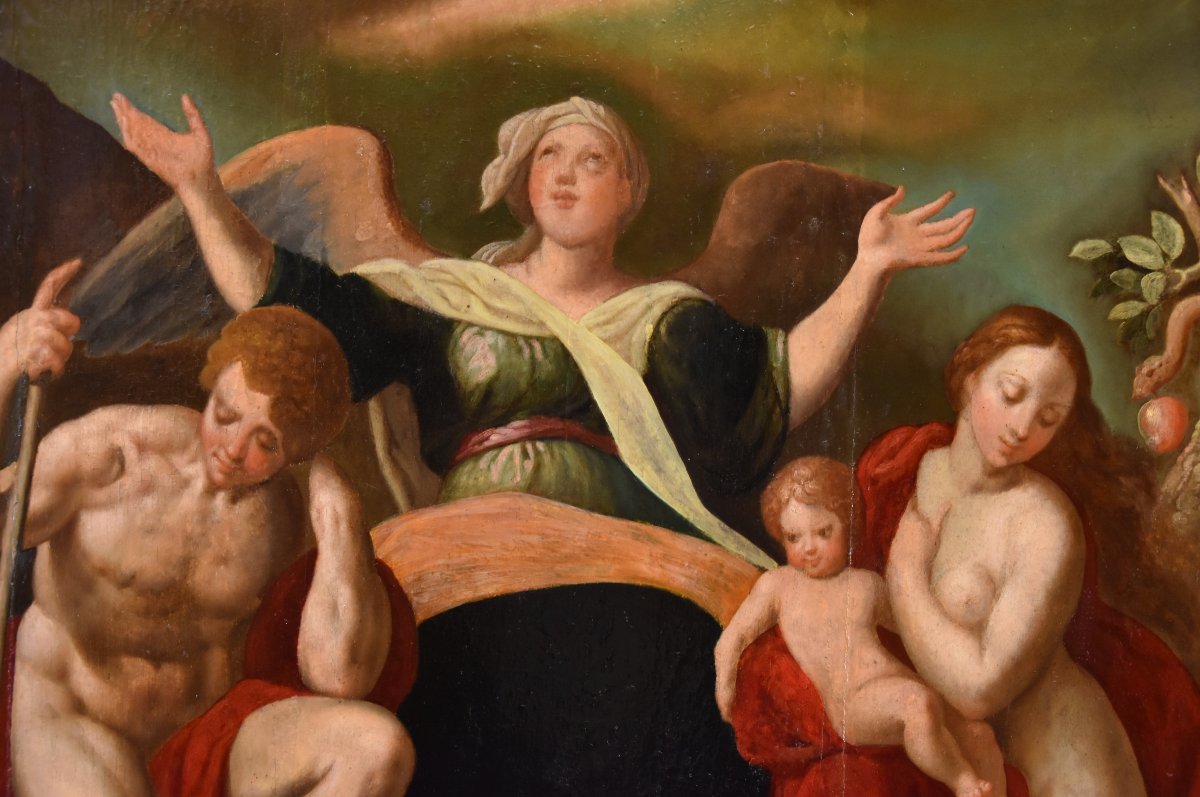
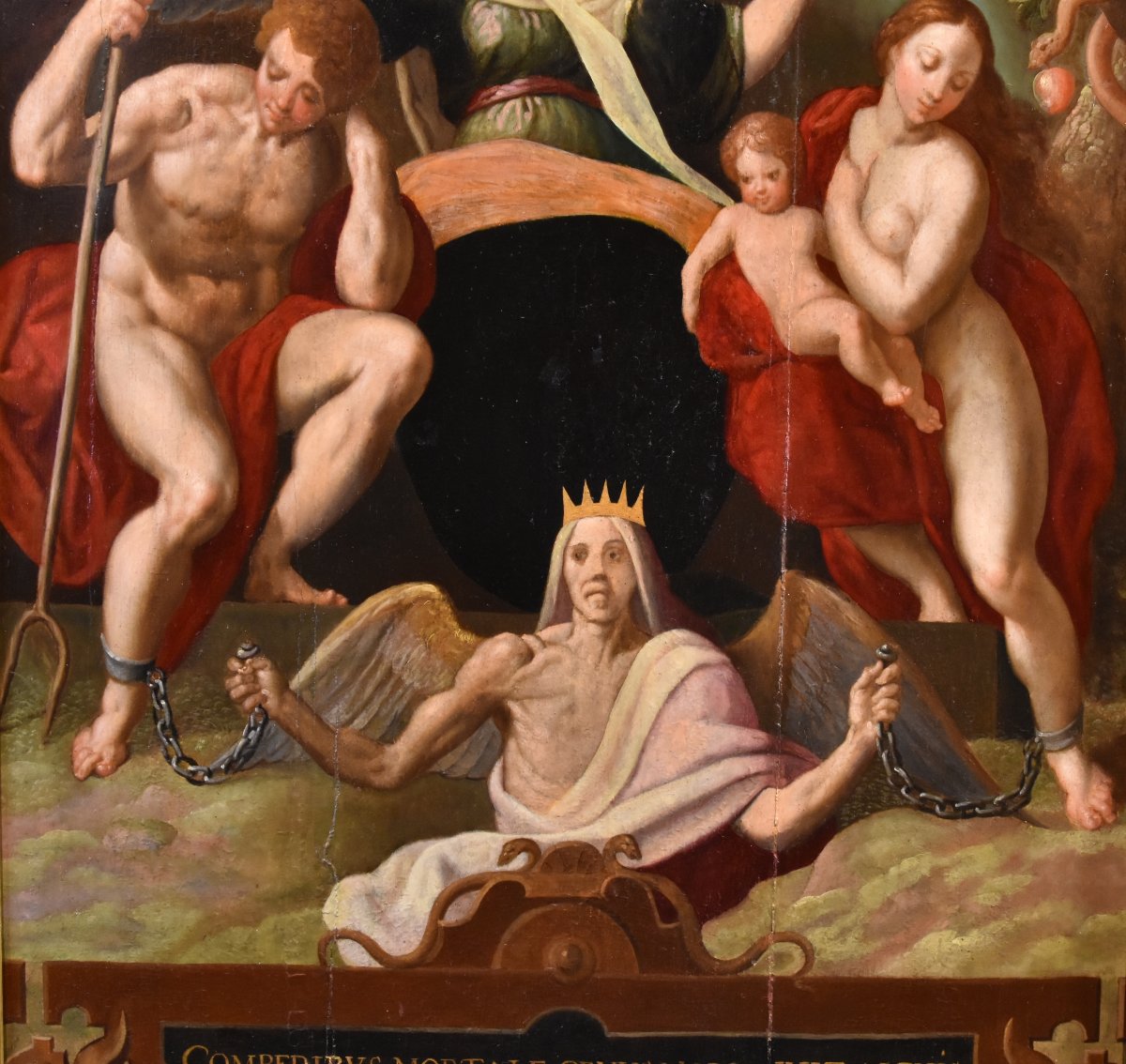
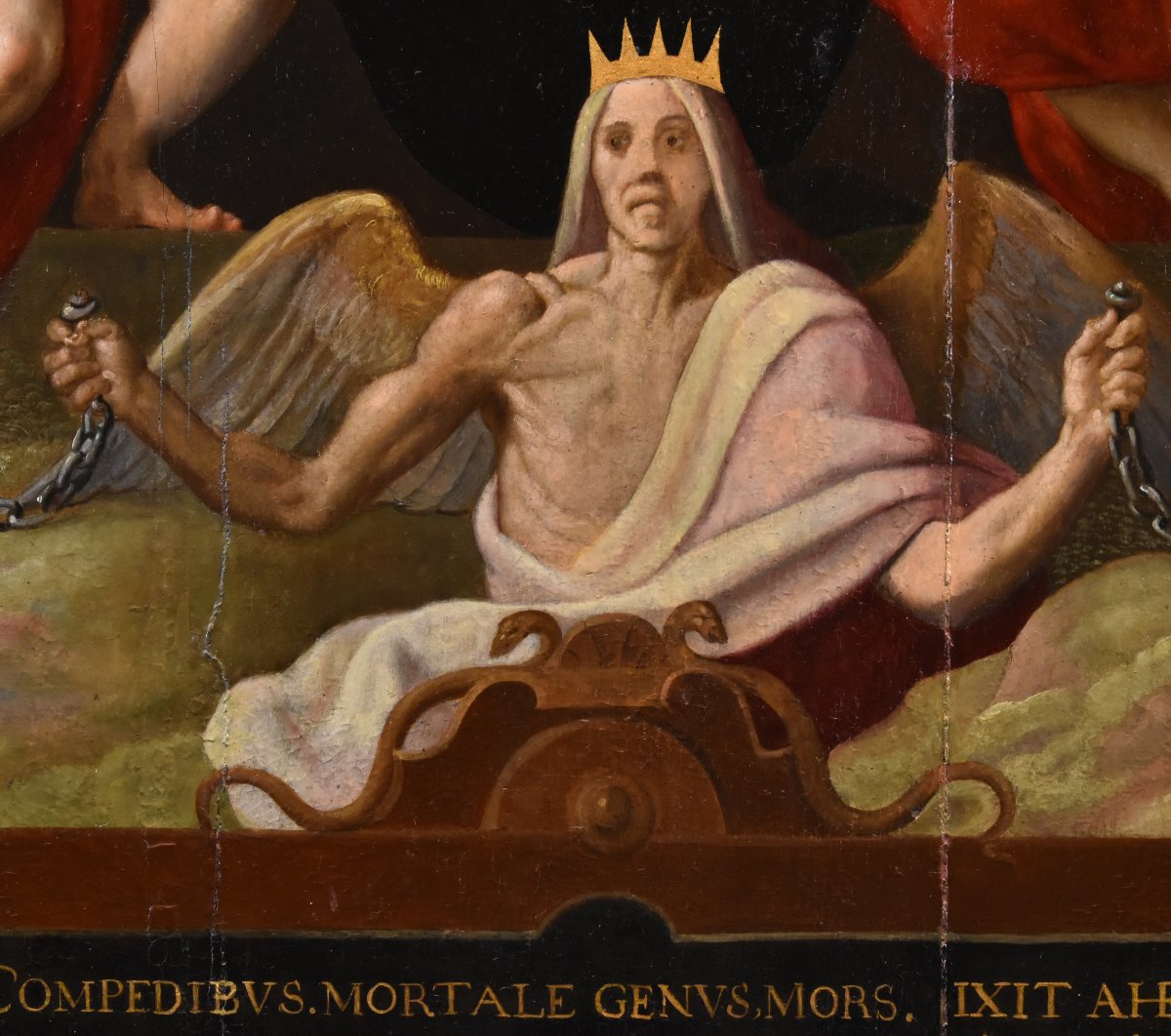


Jacob de Backer (Antwerp, c. 1555 – Antwerp, c. 1585)
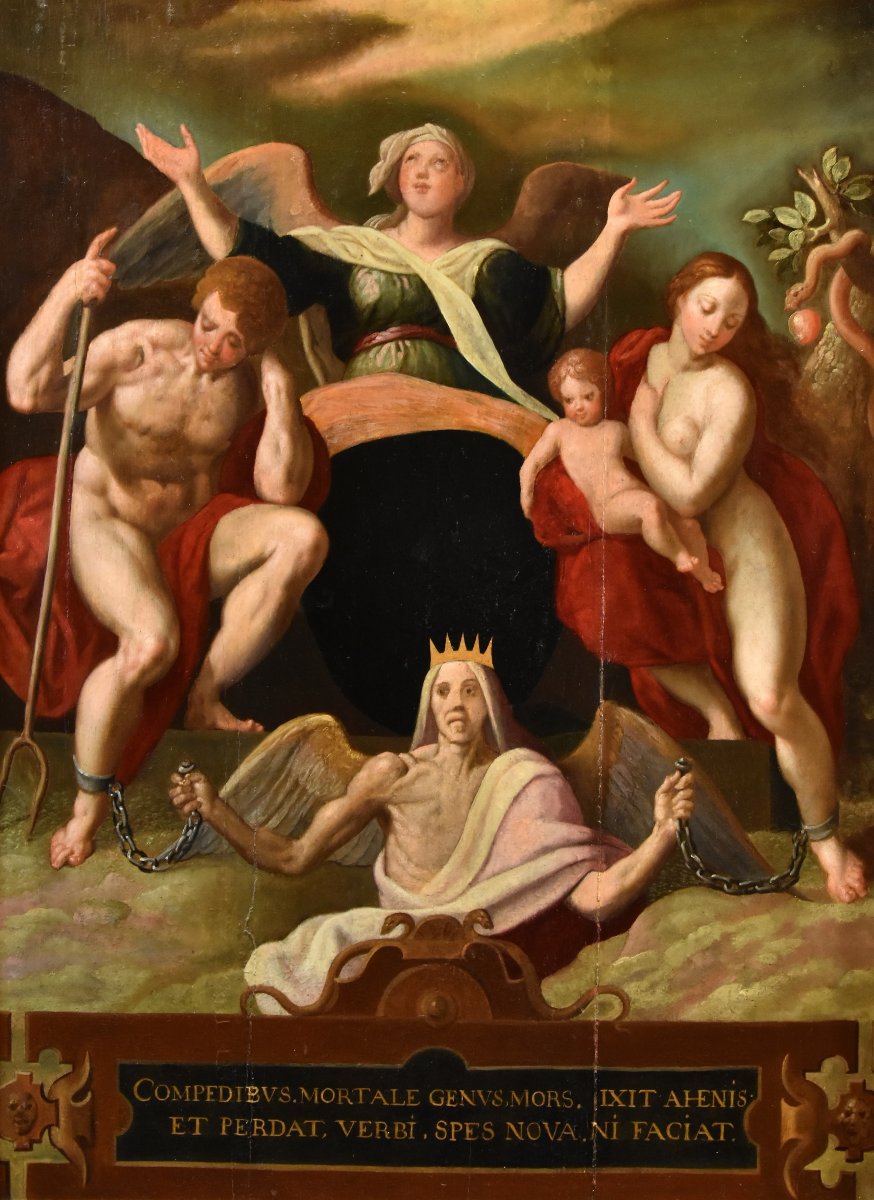
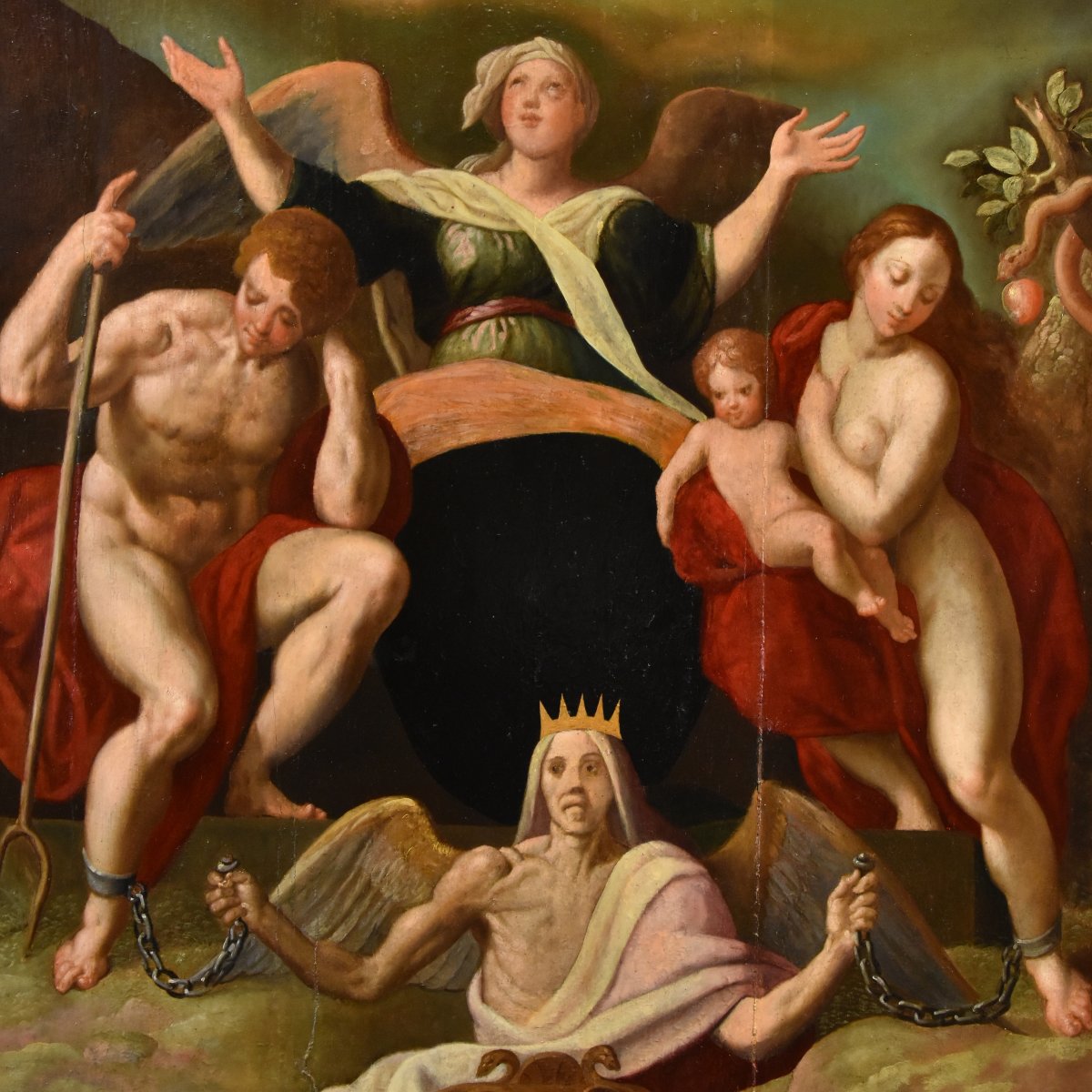
The Redemption of Adam and Eve after the Expulsion from Eden
Oil on oak panel (106 x 76 cm. - Framed 126 x 96 cm.)
The Garden of Eden, known as the Garden of Eden, was a place of perfection and happiness where all manner of delights grew; Adam and Eve were free to eat all the fruits that nature offered them, with the sole restriction that they not partake of the tree of the knowledge of good and evil.
However, Eve, tempted by the serpent (Genesis 3:1-5), disobeyed God’s command, ate the apple from that tree, and then persuaded Adam to do the same.
The work we present here depicts the consequences of this disobedience: their expulsion from Paradise and the transmission of original sin to all humanity.
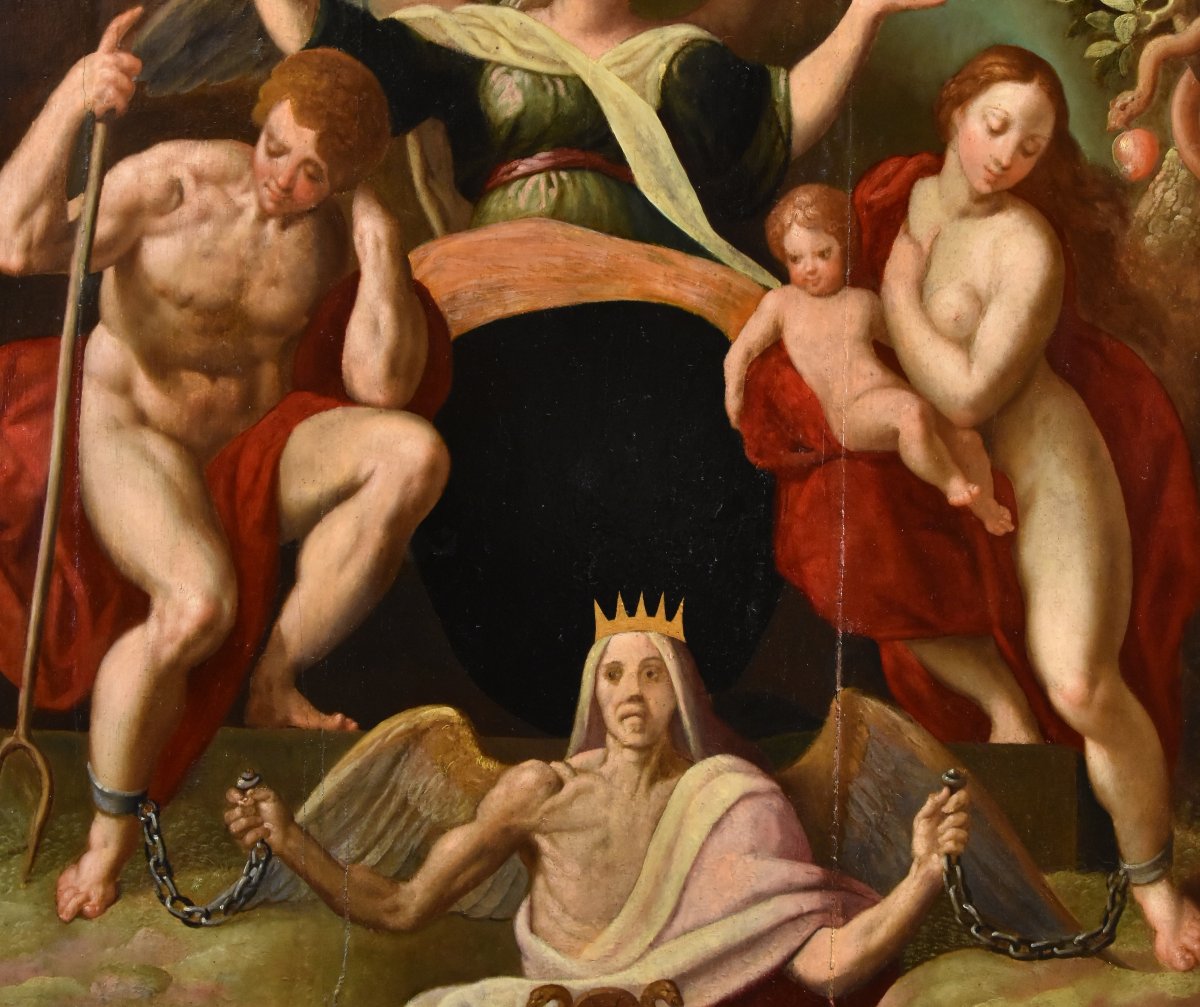
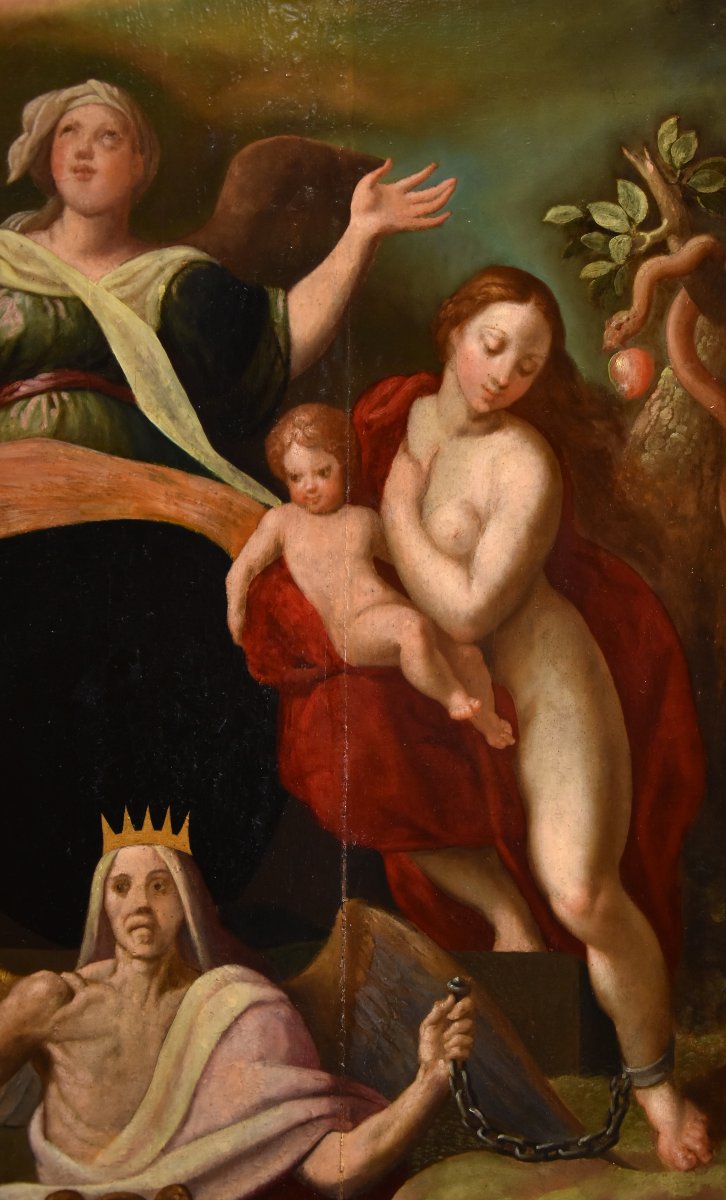
An extremely rare and fascinating theme, it depicts Adam and Eve here chained and held bound by the angel, symbolizing their spiritual death: this iconography plays a key role in Christian theology, reminding us of the consequences of sin and the consequent need for redemption.
Redemption is, in fact, the central theme of the painting: the large, majestic winged angel stands ready to save the two sinners, granting them the chance for redemption and to regain God’s grace.
The painting is attributed to Jacob de Backer (Antwerp 1555–1585), a Flemish painter active in the second half of the sixteenth century and one of the most important Mannerist masters of Antwerp, occupying a prominent position between the generation of Frans Floris, from whom he was strongly influenced, and that of Rubens.
The painting, clearly the product of a Northern European aesthetic, also demonstrates a significant awareness of Italian art, particularly the influence of late Florentine and Roman Mannerism, as evidenced by the works of Bronzino, Vasari, and Salviati. This aesthetic was also very much in tune with the prevailing taste at the Prague court of Holy Roman Emperor Rudolf II, and indeed the inventory of the emperor’s estate, drawn up after his death in 1612, lists four works by de Backer.
Many of his compositions, although religious in theme, deal with complex allegorical subjects, and this was interpreted as evidence that the artist had received a humanistic education and that his patrons came from Antwerp’s educated class.
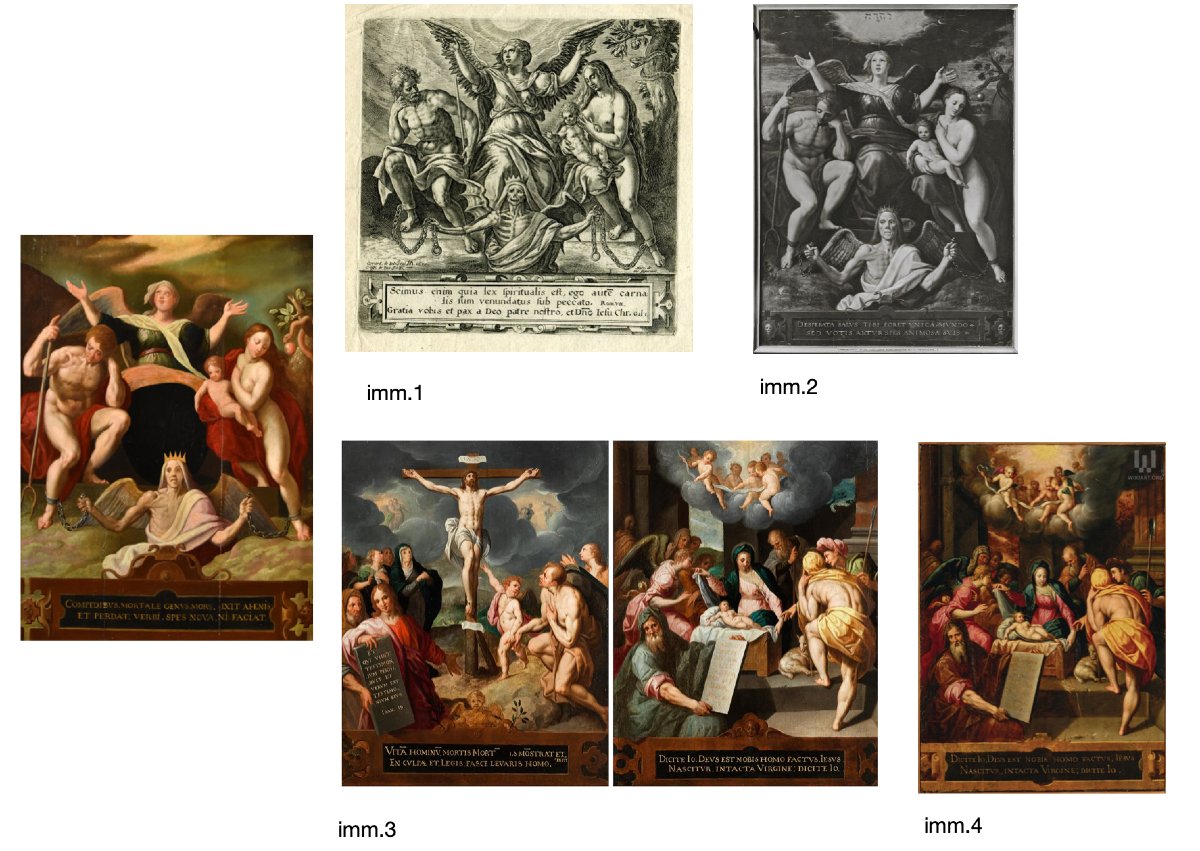
This work, in particular, is based on a now-lost painting by Mars de Vos, of which, however, an engraving has survived, titled precisely ‘Allegory of Redemption’ (fig. 1, https://wellcomecollection.org/works/pe52fbag). A painting derived from the original work is now in the Bayerische Staatsgemäldesammlungen (fig. 2: https://catalogo.fondazionezeri.unibo.it/scheda/fotografia/168240/).
Returning to our work, art historian Justus Müller Hofstede suggested in 1973 that the painting derived from a cycle of five allegorical works painted by De Backer depicting scenes from the life of Jesus (see: Justus Müller Hofstede, Jacques de Backer. Ein Vertreter der Florentinisch-Römischen Maniera in Antwerpen), which have appeared in various European auctions in recent years.
To complement the composition offered here, we can therefore mention as counterparts the pair of works ‘Nativity’ and ‘Crucifixion’ (fig. 3 Lempertz Cologne, Nov. 14, 2015, lot 1427: https://www.lempertz.com/en/catalogues/lot/1057-1/1427-jacob-de-backer.html), as well as an ‘Adoration of the Shepherds’ (fig. 4 Vienna Palais Dorotheum, Oct. 25, 2023, lot 31: https://www.dorotheum.com/en/l/8751569 ).
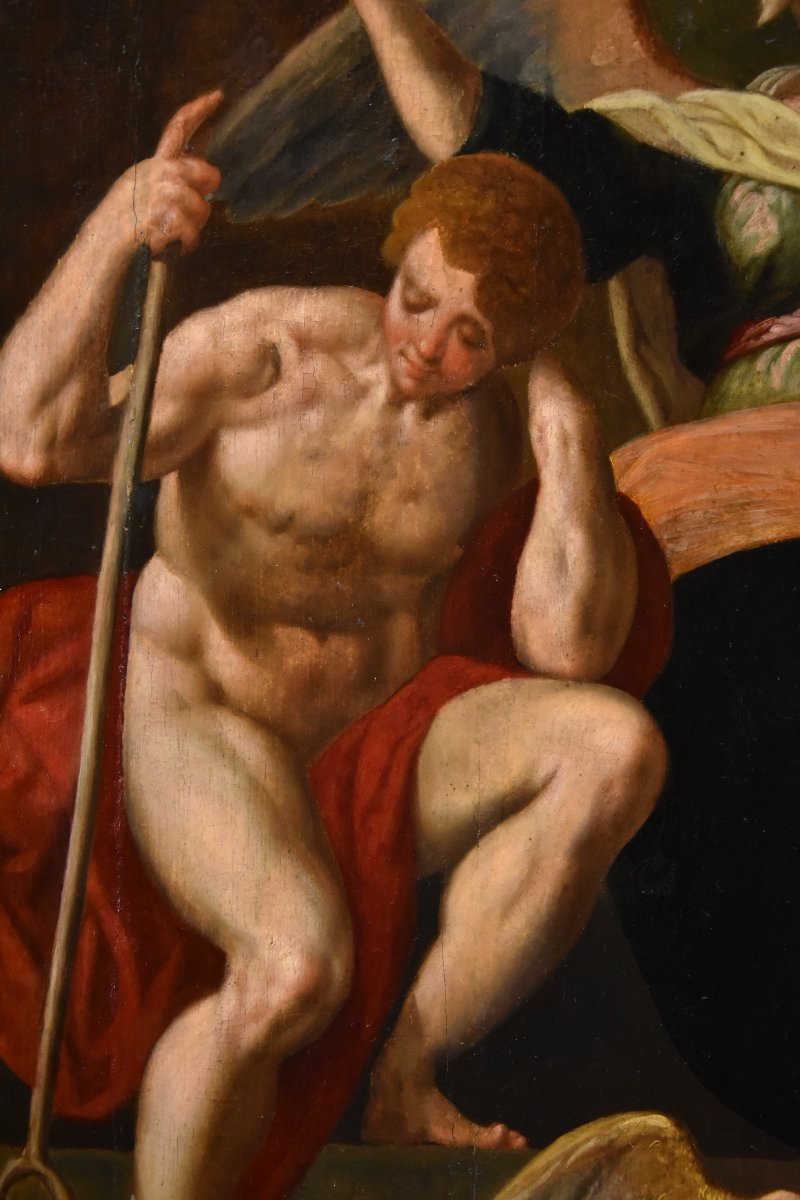
See image in detail
The painting is in good condition with some gaps between the panels.
ADDITIONAL INFORMATION:
The painting is sold complete with a pleasing frame and is accompanied by a certificate of authenticity and a descriptive iconographic sheet.
We handle and arrange the transport of purchased works, both within Italy and internationally, using professional and insured carriers.
If you would like to view this or other works in person, we would be delighted to welcome you to our new gallery in Riva del Garda, at Viale Giuseppe Canella 18. We look forward to seeing you!
Please contact us for any information or to arrange a visit; we will be happy to assist you.
Follow us on:
https://www.instagram.com/galleriacastelbarco/?hl=it
https://www.facebook.com/galleriacastelbarco/
Explore similar pieces and discover your ideal find:
religious paintings