

Japanese Urushi And Maki-e Lacquer Obidome In The Form Of A Double Gourd (hyōtan), Meiji
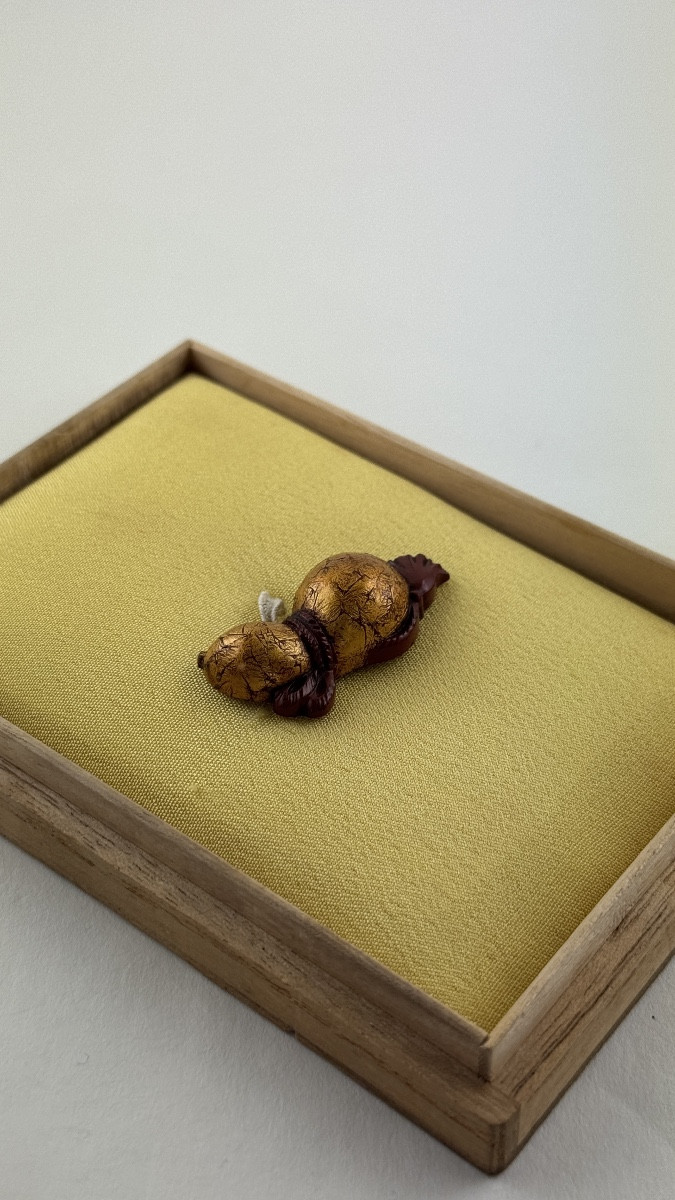
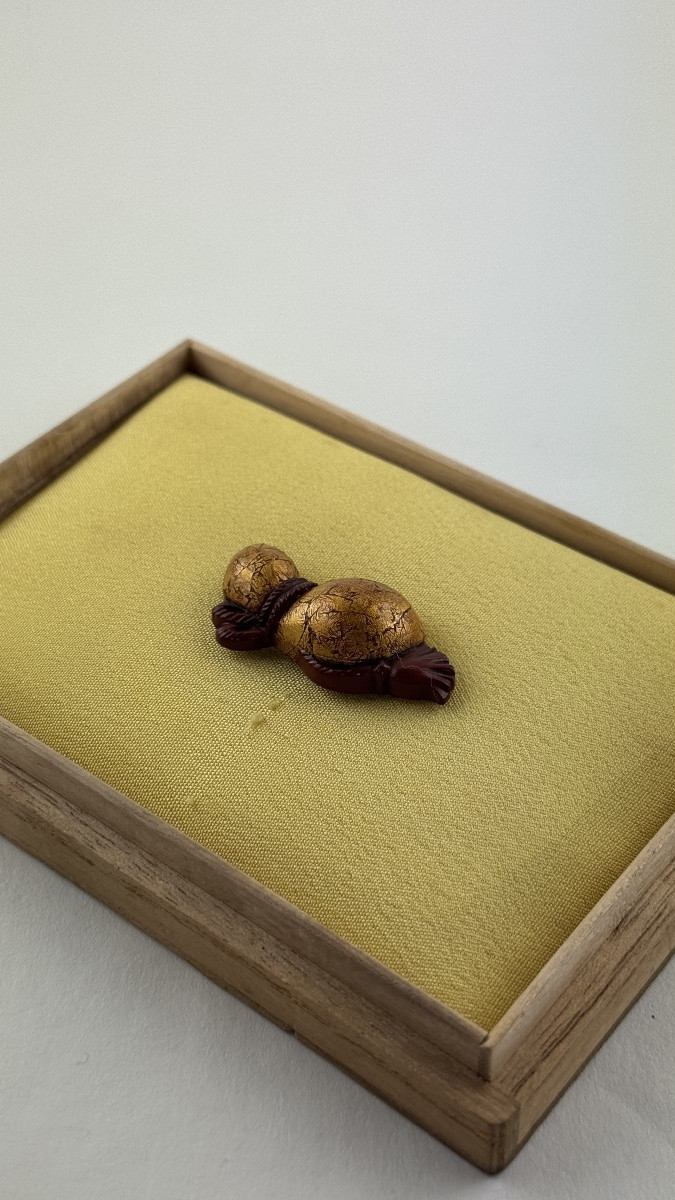
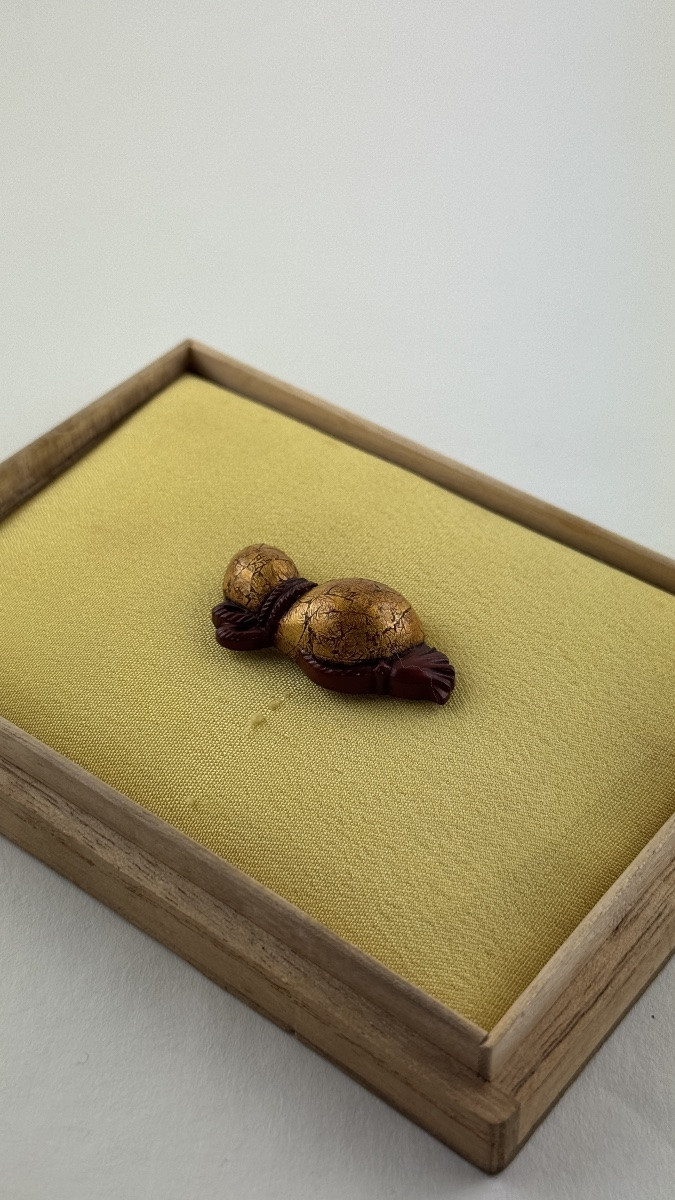
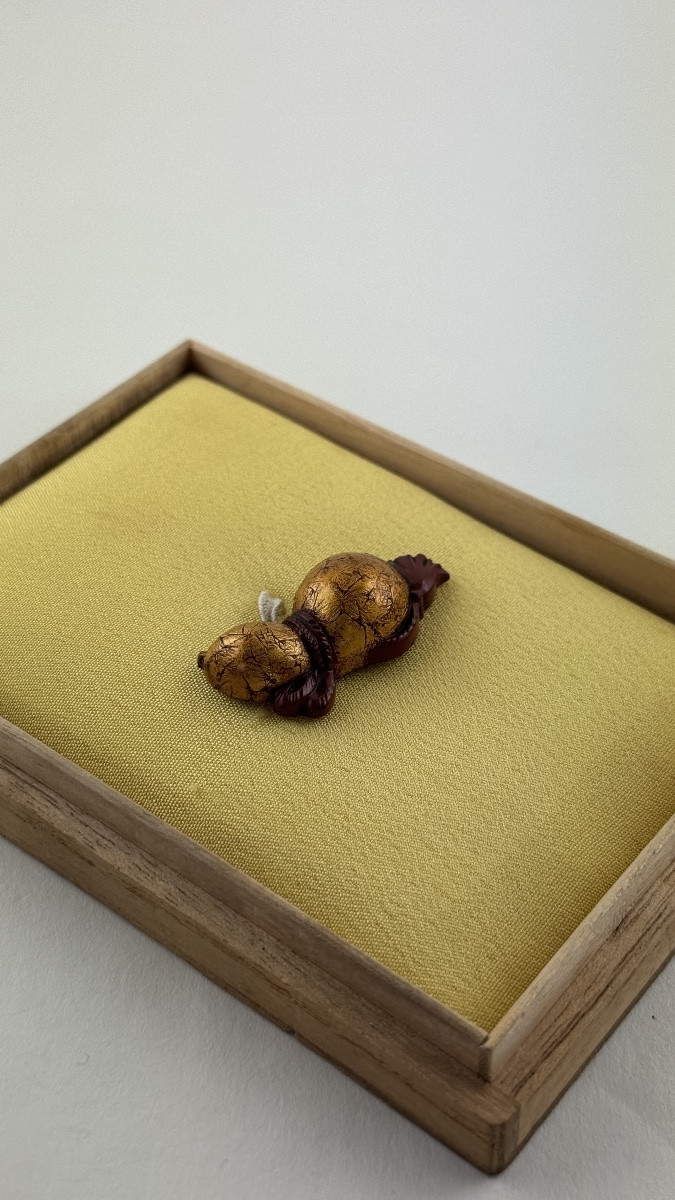
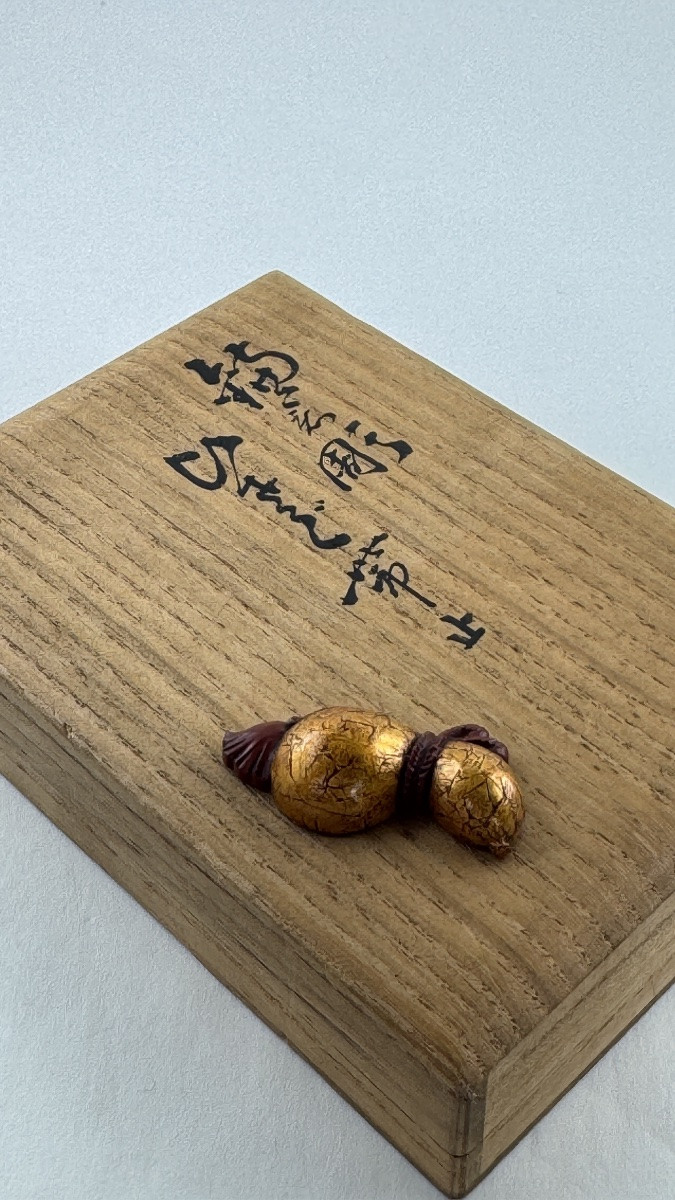
Elegant Japanese obidome depicting a sacred double gourd, or hyōtan, a traditional symbol of prosperity, protection and longevity in Japanese culture.
The piece features a remarkable deep reddish-brown urushi lacquer, enhanced with a golden crackled decoration evocative of certain maki-e and nashiji techniques. Under changing light, the surface reveals a beautiful depth and subtle tonal variations characteristic of fine antique lacquerwork.
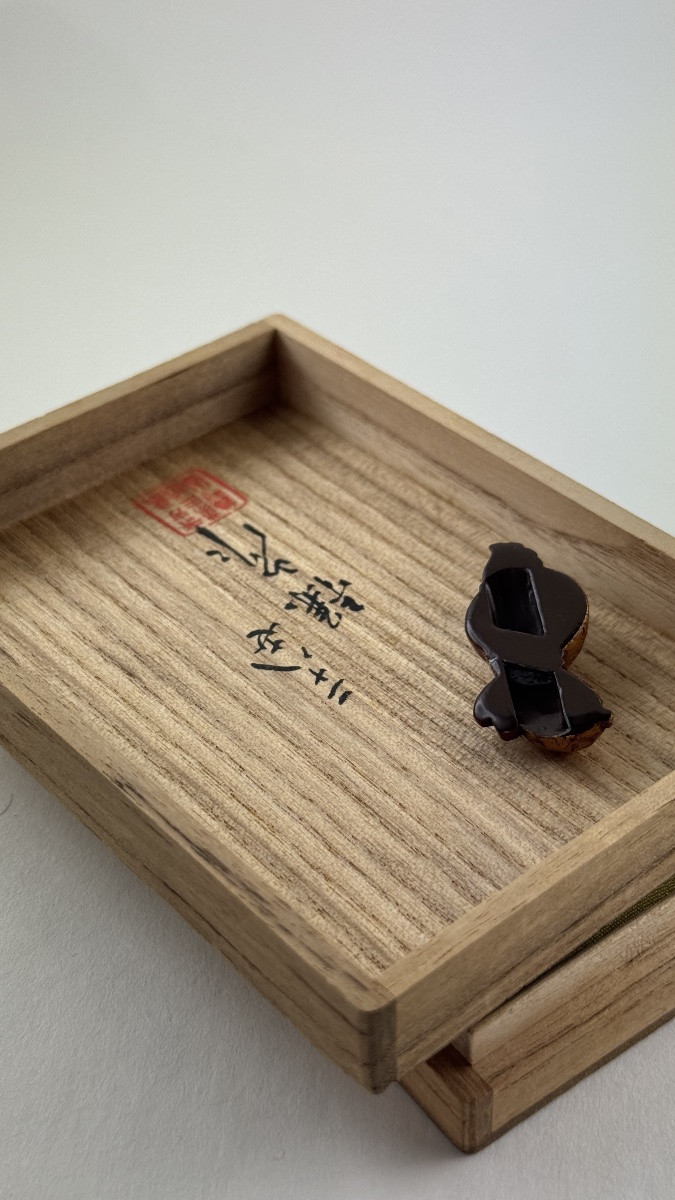
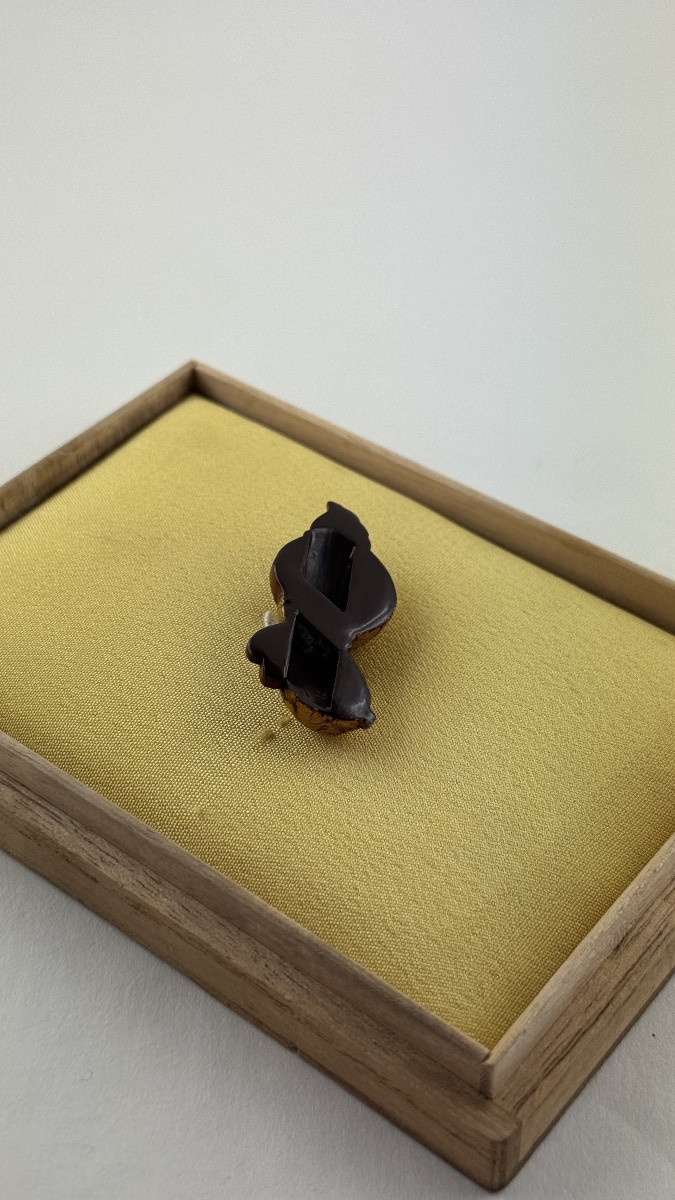
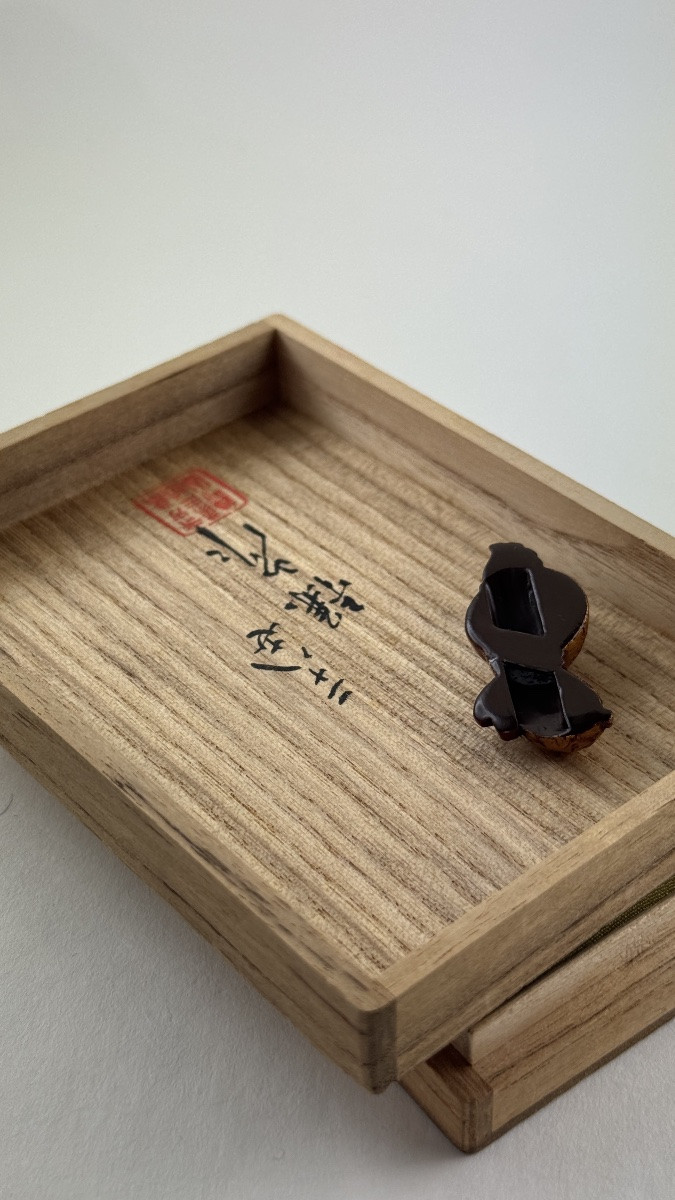
The reverse, carefully designed for the passage of the obi-jime cord, reflects refined craftsmanship and thoughtful construction.
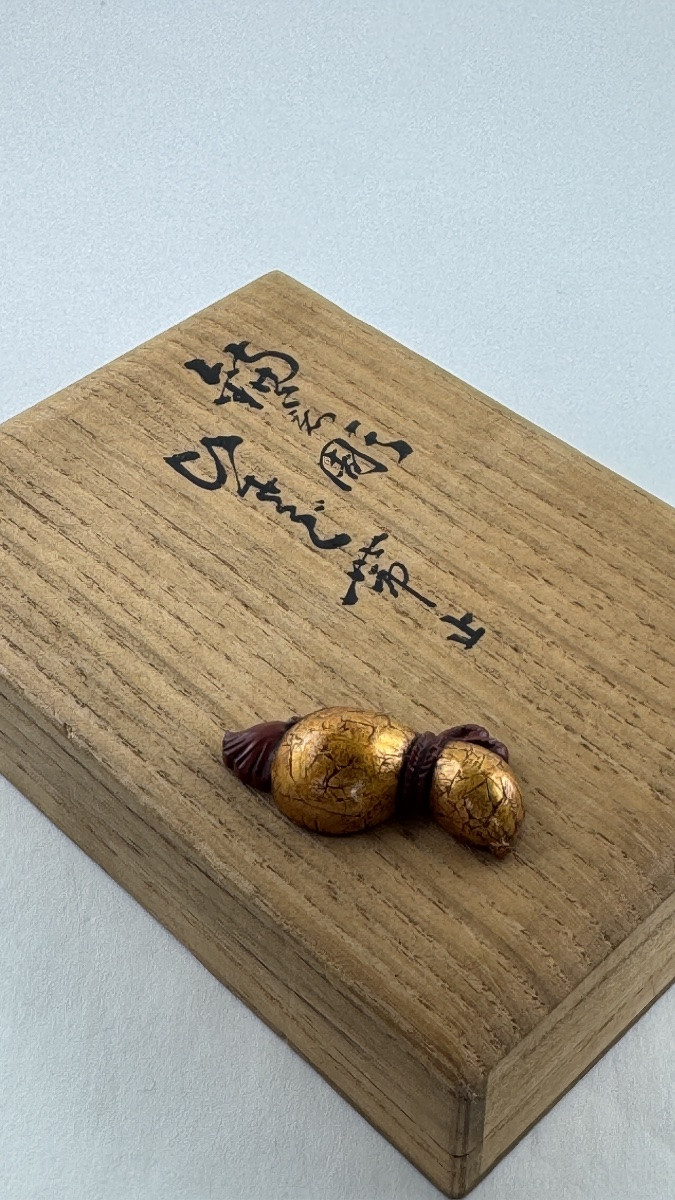
The obidome is preserved in its original signed and sealed tomobako wooden box. The inscription on the box notably includes the character hyō (瓢), meaning “gourd”, directly referring to the central motif of the piece, a traditional Japanese symbol of prosperity and protection.
A discreet yet highly sculptural object whose restrained aesthetic resonates strikingly with contemporary sensibilities.
Japan, Meiji period, late 19th century.
Dimensions:
4x2x1cms
Gallery Note:
What particularly appeals to us in this piece is its balance between tradition and modernity. The gourd motif belongs to one of the oldest layers of Japanese visual culture, yet its almost minimalist treatment gives it an unexpectedly contemporary presence.
The quality of the lacquer is essential here: in hand, the material reveals a depth and warmth difficult to capture in photographs. The amber translucency visible along the edges, the softness of the polish and the rich reddish-brown nuances all testify to genuine antique urushi work.
This is precisely the kind of Japanese object we enjoy presenting: modest in scale, quiet in appearance, yet possessing a true aesthetic intensity.
Period: 19th century
Style: Asian art
Condition: Excellent condition
Material: Lacquer
Reference (ID): 1767280
Availability: In stock