

The Little Holy Family, Follower Of Raphael, 17th Century
Artist: Suiveur De Raphaël
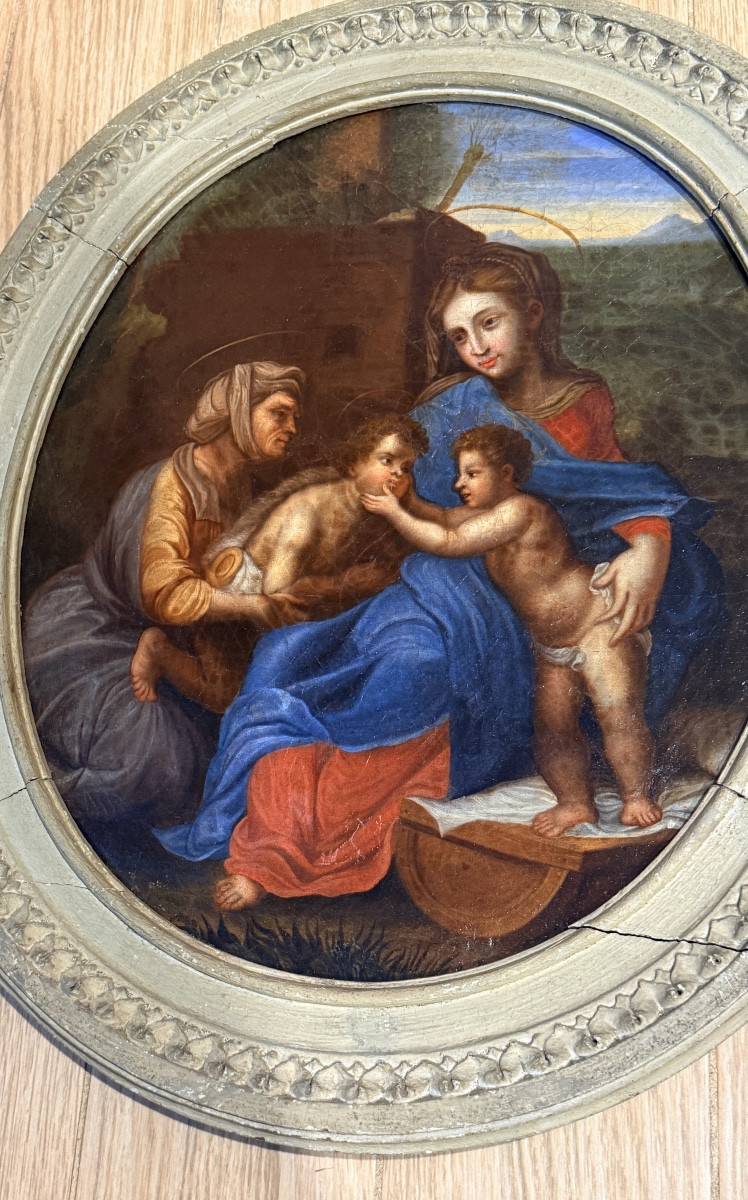
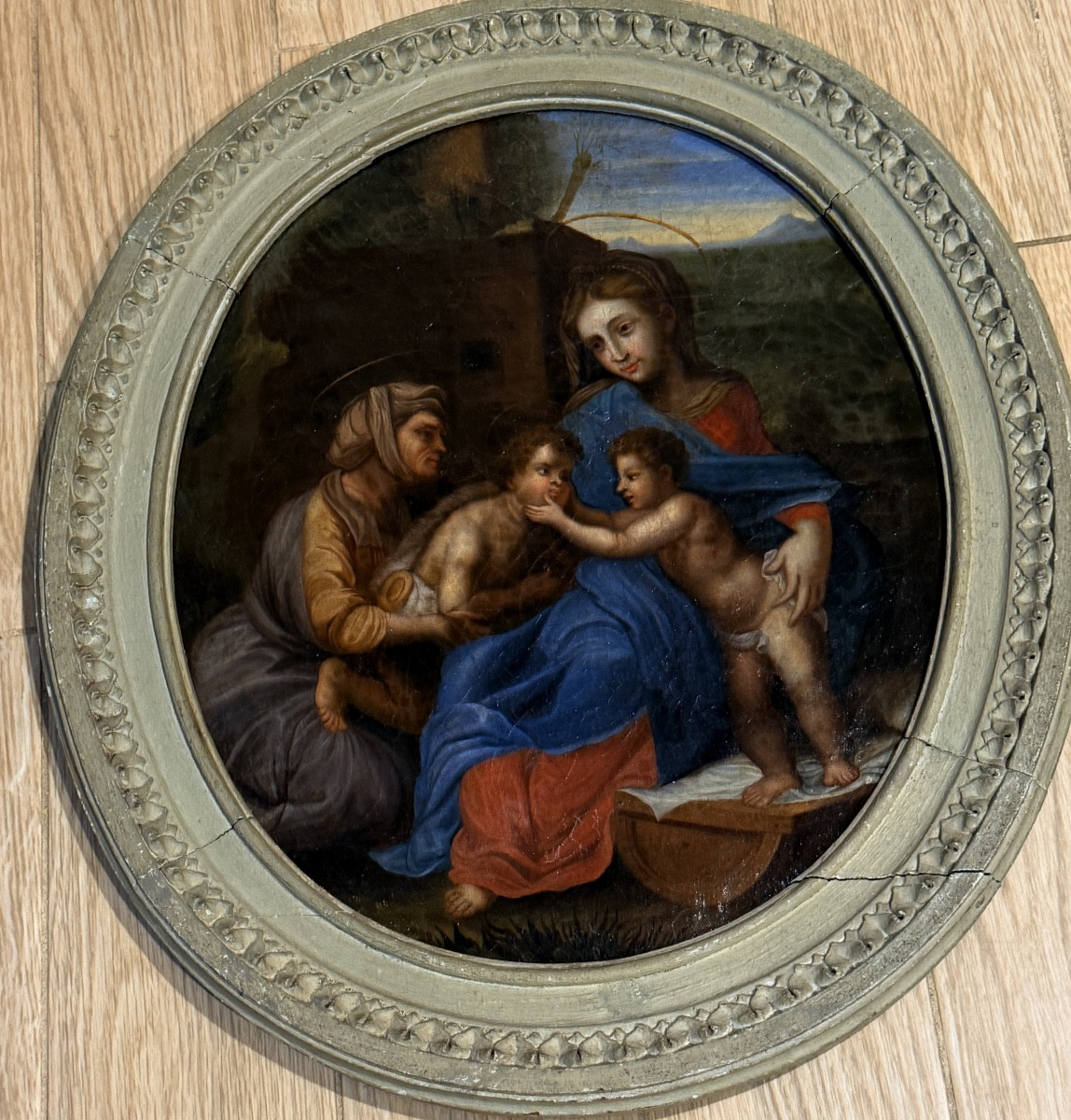
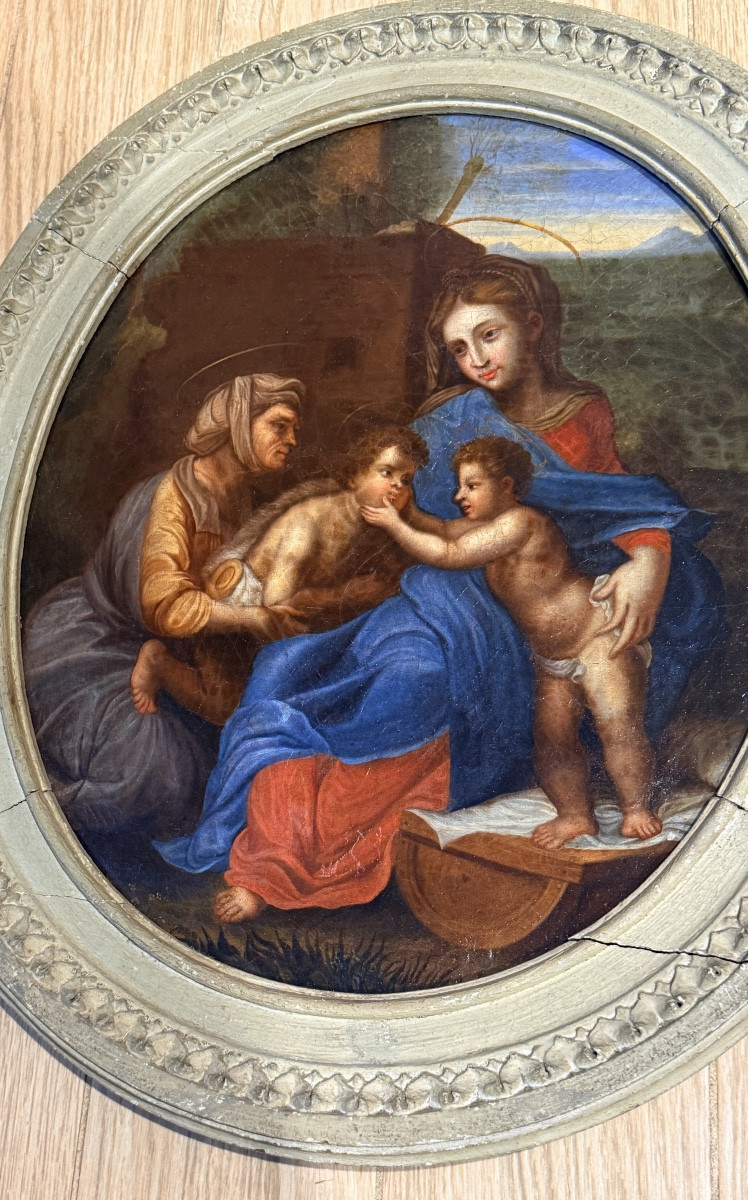
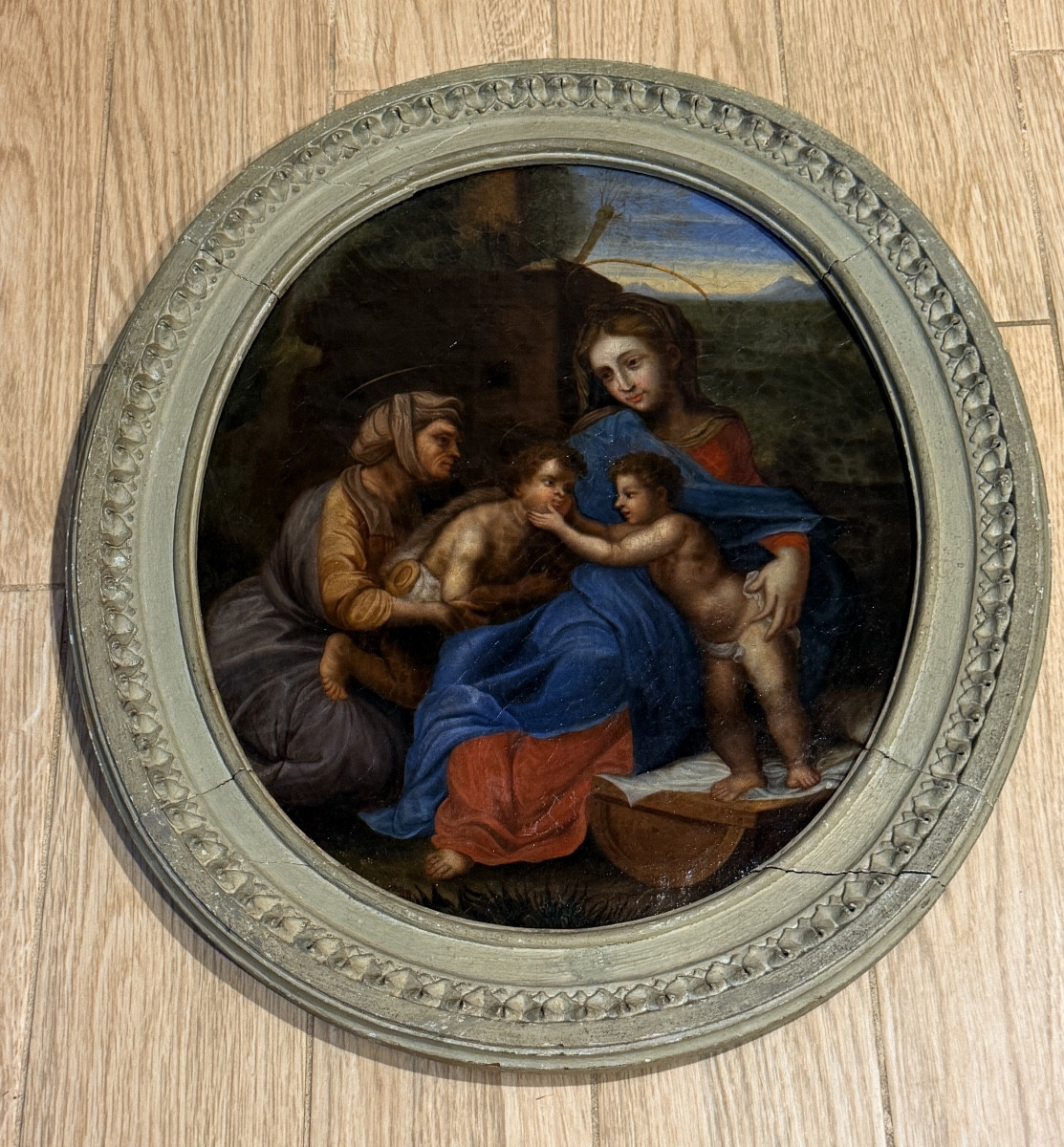
It is a circular religious composition, painted in oil on canvas or stretched on panel, representing the Virgin and Child with little Saint John the Baptist and Saint Elizabeth. The whole is part of the Italian tradition of the 17th century, strongly inspired by the models of Raphael and his workshop, hence the expression "sinder of Raphael".
Iconographic description
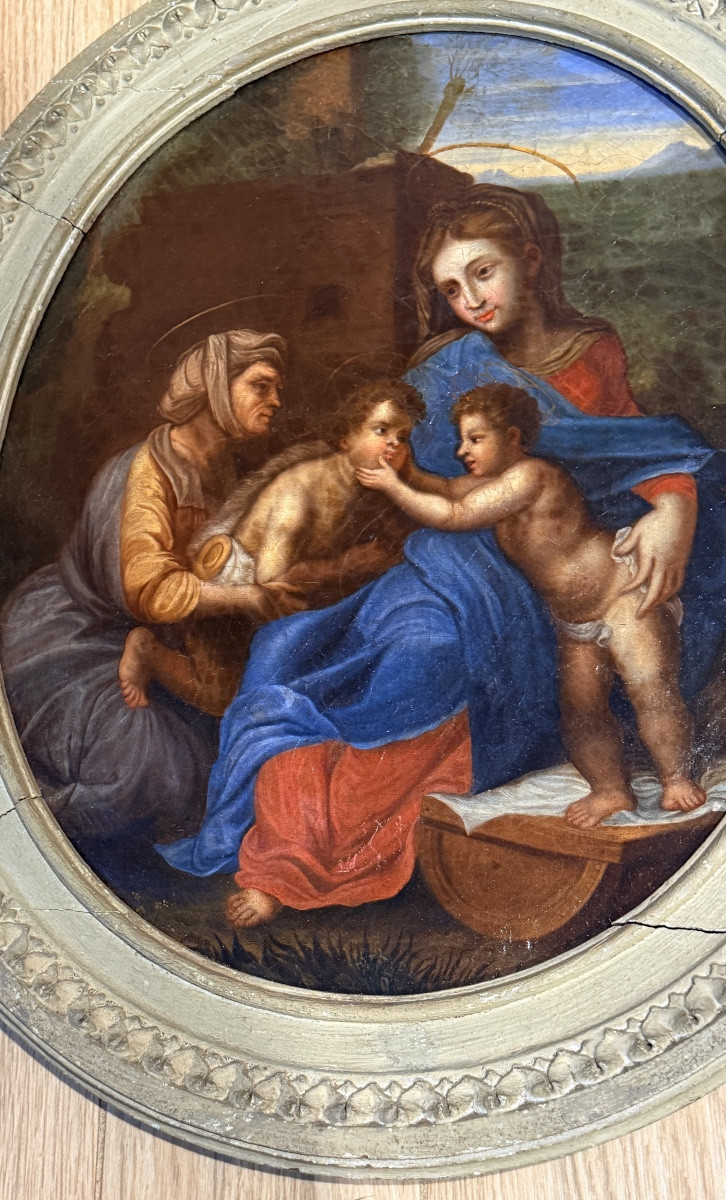
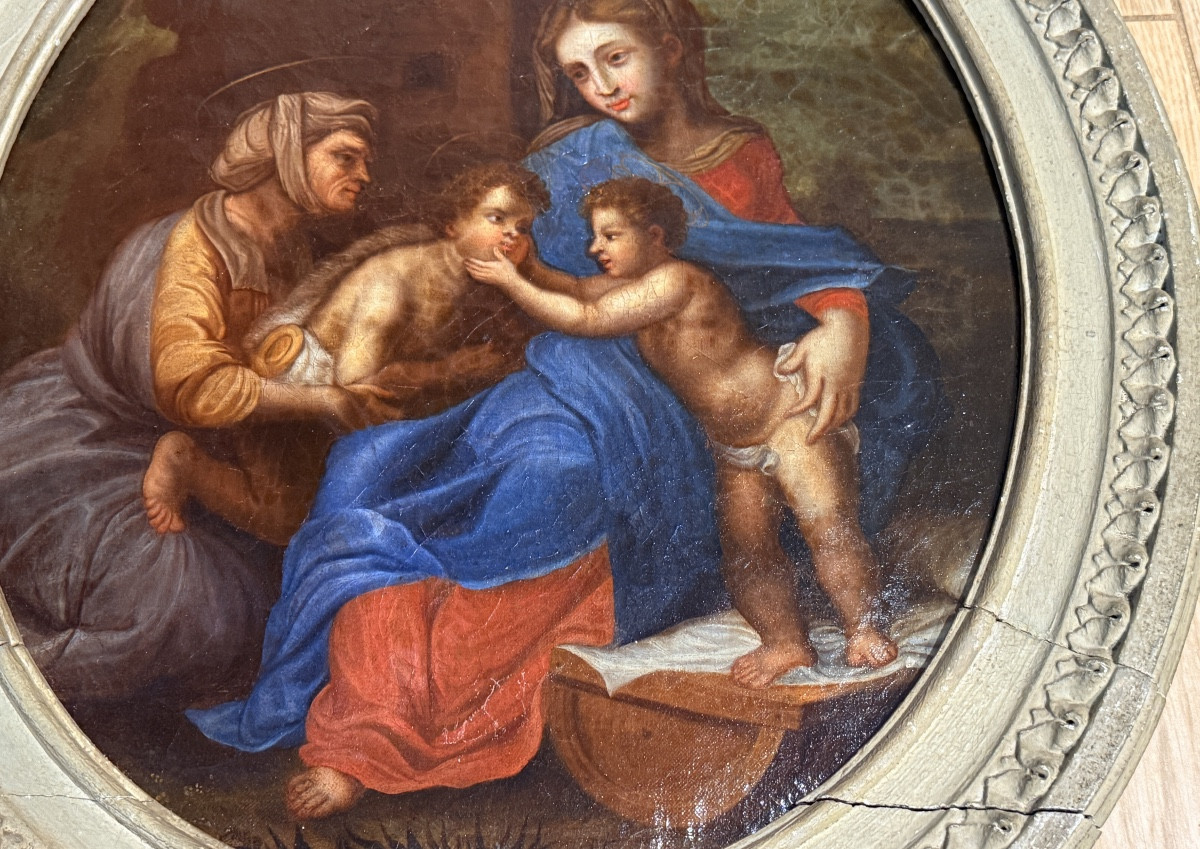
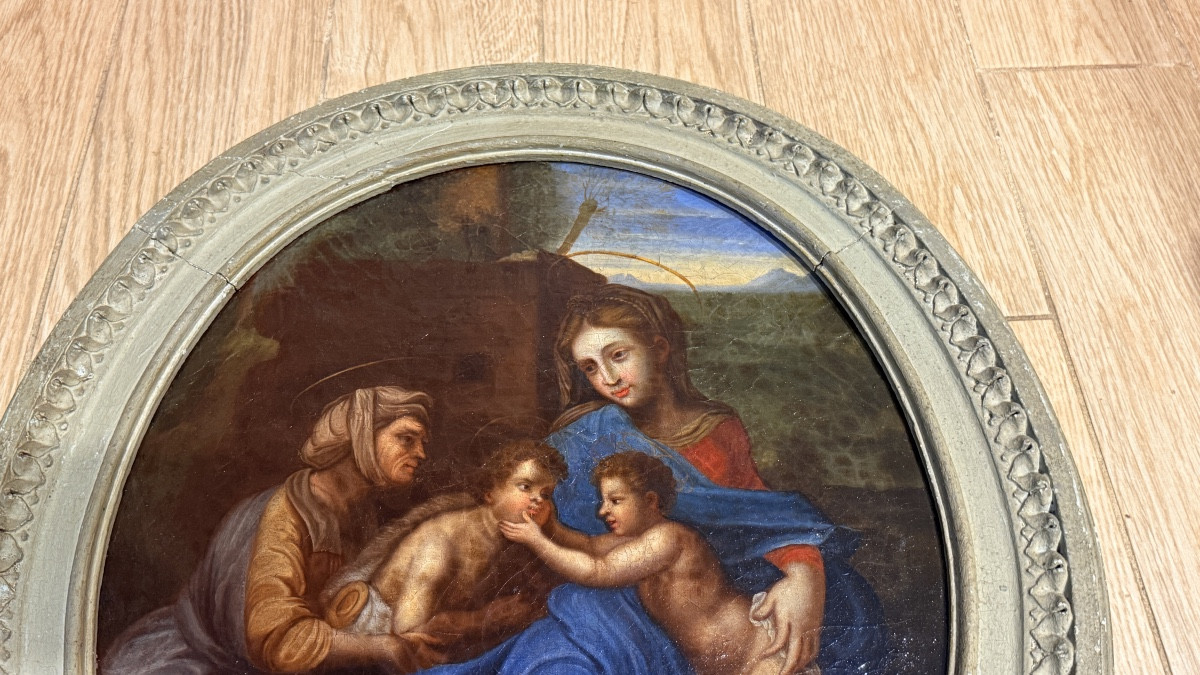
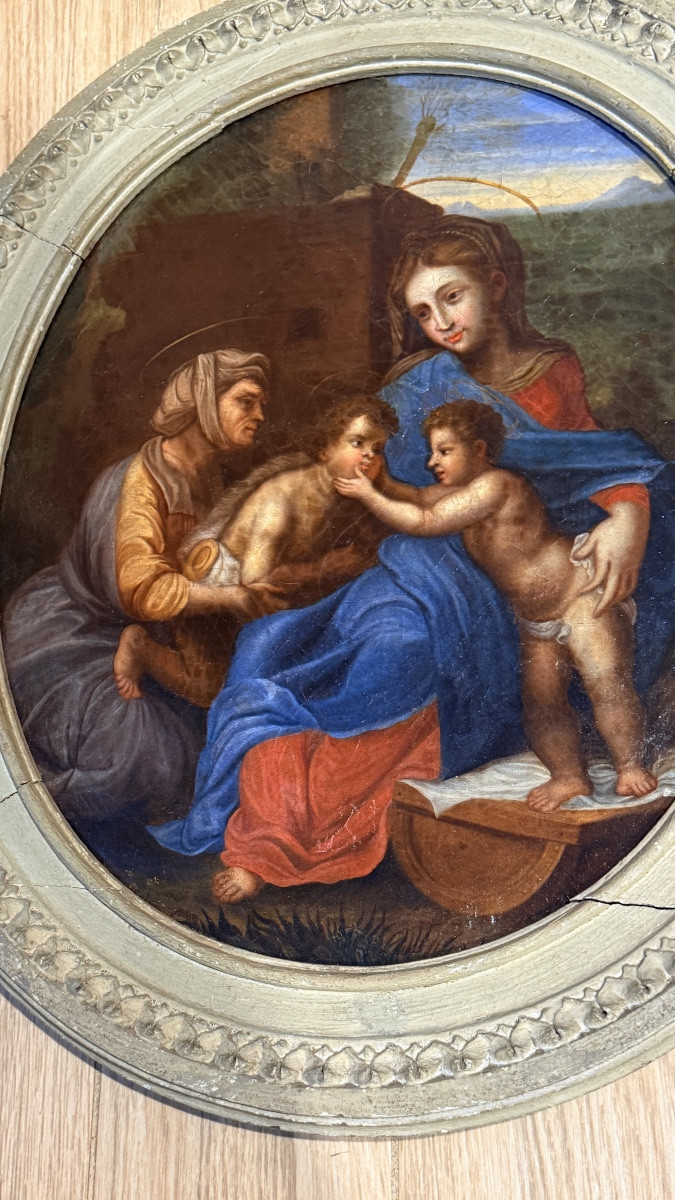
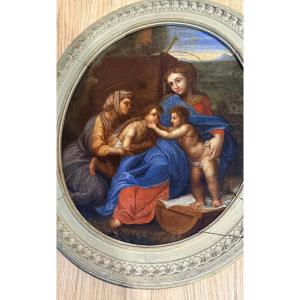
At the center of the stage, the Virgin Mary appears sitting in a calm and maternal attitude. She wears the traditional blue coat draped on a red red dress, symbolic colors of heavenly purity and sacrifice. His face, delicately inclined, expresses a meditative sweetness characteristic of the Raphaelesque school.
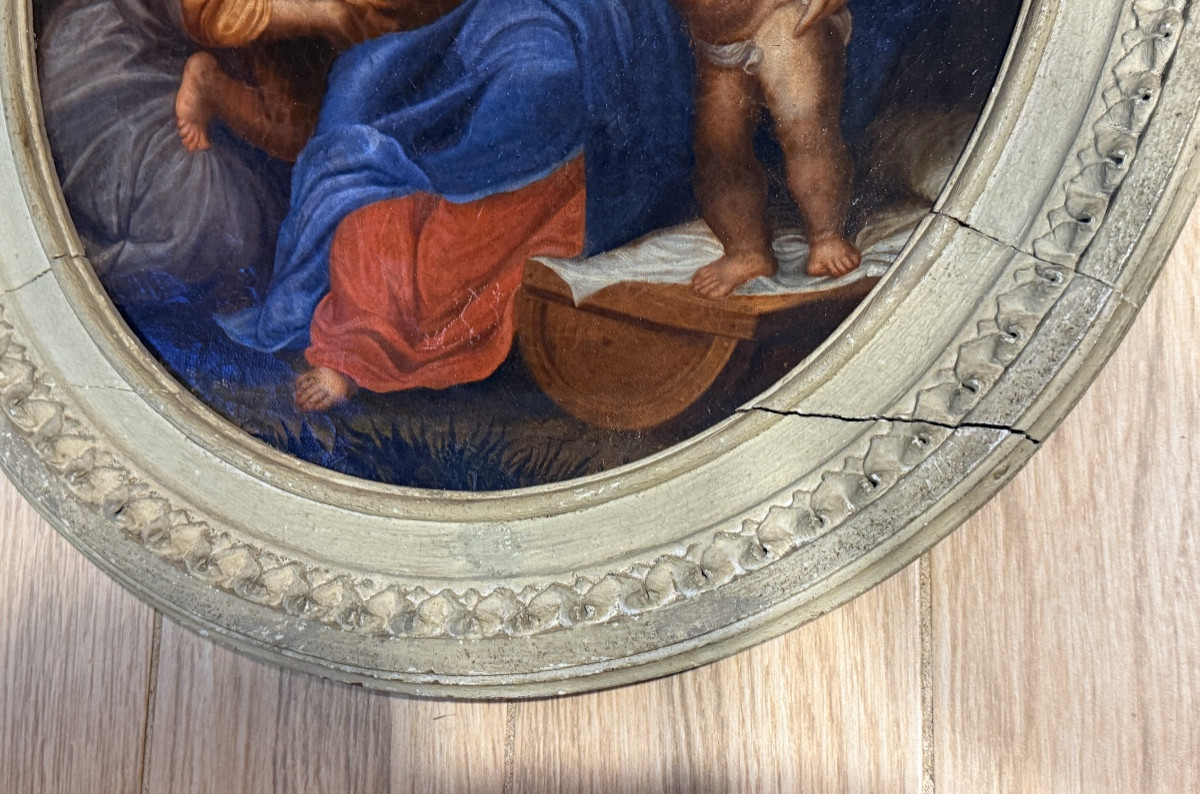
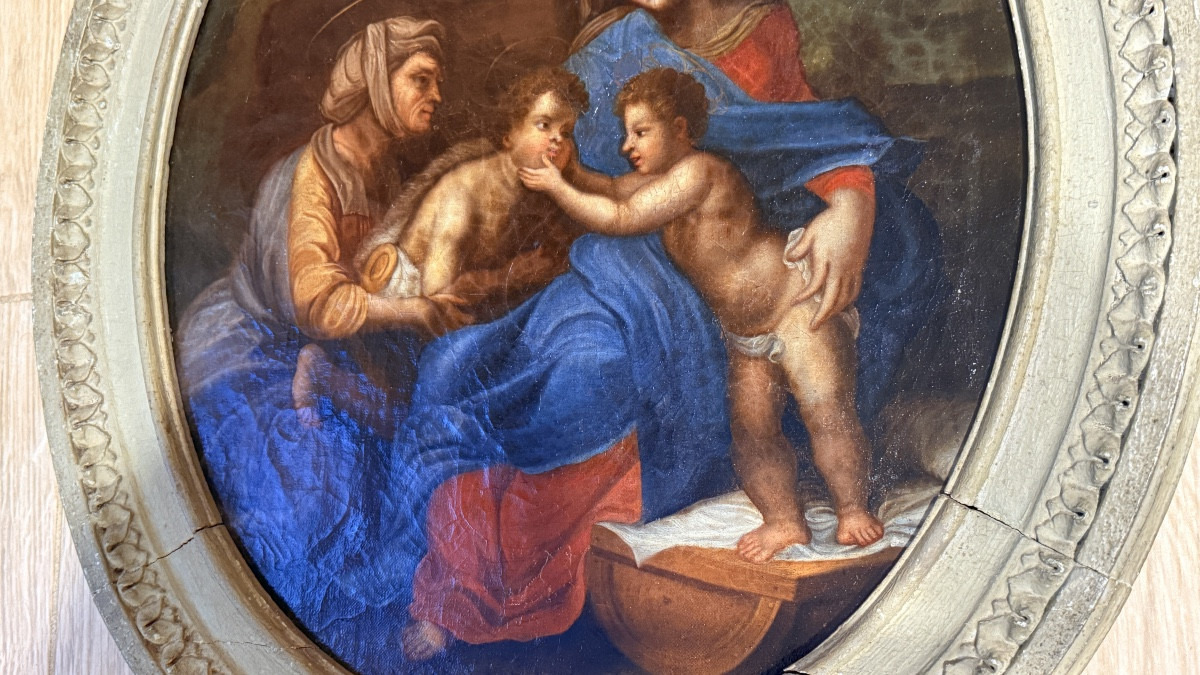
On the right, the Child Jesus, naked with the exception of a light white cloth, stands on a cushion or a small support covered with fabric. He reaches out to the young Saint John the Baptist in an affectionate and premonitory gesture. Little John, identifiable by his animal skin and his reed stick surmounted by a cross, is supported by an elderly figure placed on the left - probably Saint Elizabeth, his mother.
The dialogue of glances and gestures is the emotional heart of the composition: the two children exchange a tender contact while Marie contemplates the scene with serenity. This intimate interaction is typical of the devotional compositions inspired by the Madonnas of Raphael.
Composition and style
The painting adopts a tondo (circular) format, much appreciated in the Italian Renaissance and then taken up in the 17th century for domestic religious subjects. The pyramidal construction of the figures, the balance of the masses and the softness of the expressions are directly reminiscent of Raphael's inventions, especially his Florentine Madonnas.
The color is based on:
● deep and velvety blues,
● warm reds,
● luminous complexions modeled by a moderate chiaroscuro,
● a dark landscape background opening onto a mountainous horizon.
The treatment of faces remains idealized, with fine features and a search for harmony rather than dramatic realism.
Frame and support
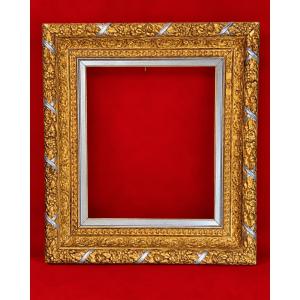
The molded circular frame seems posterior but old, probably 18th or 19th century, with repetitive decoration in relief. There are several visible slits and restorations on the frame.
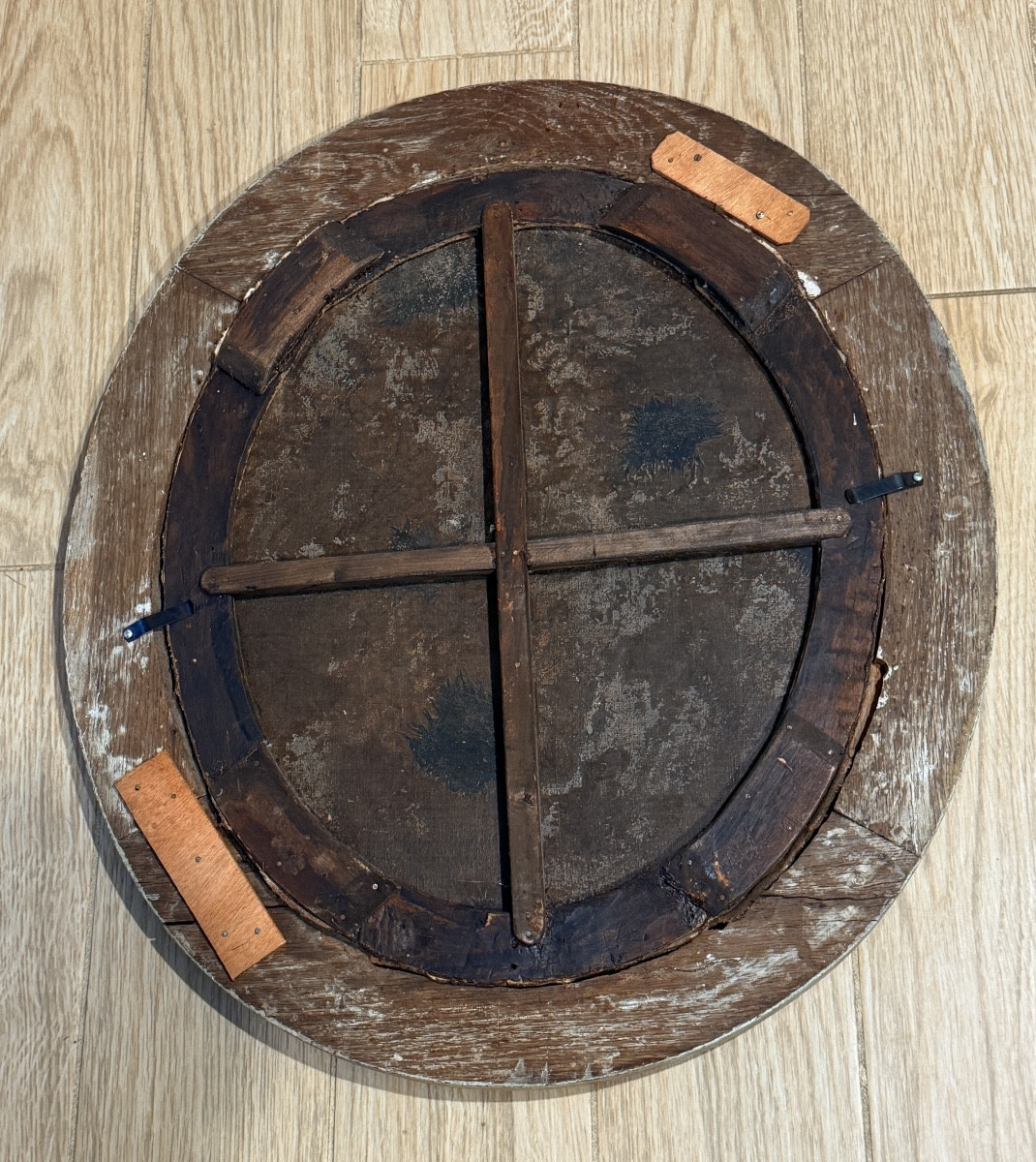
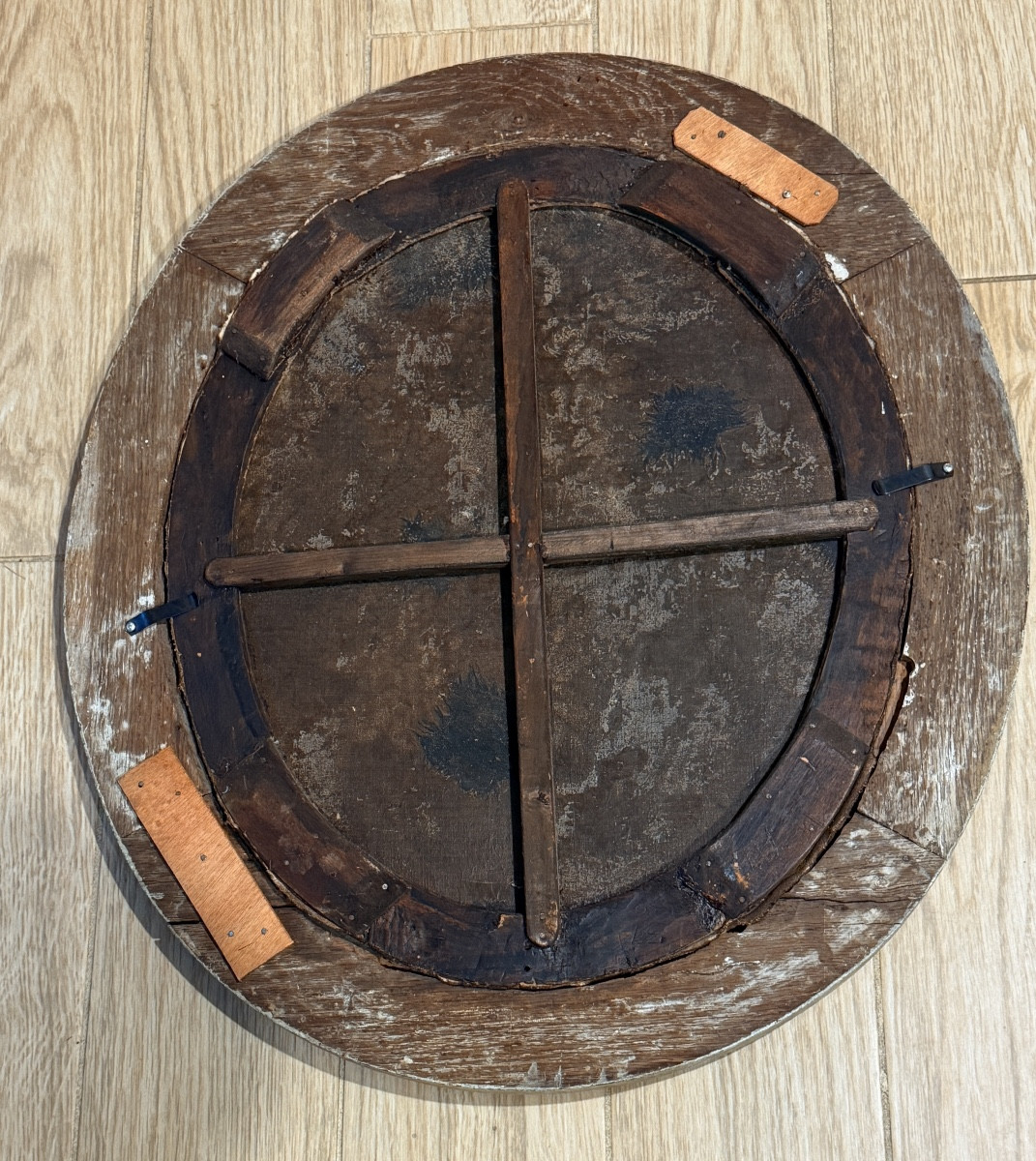
The reverse shows:
● an old cross reinforcement structure,
● an old oxidized canvas,
● traces of wear and moisture,
● consolidations of the chassis or perimeter panel.
The general state indicates an old work that has probably undergone old restorations.
Attribution and context
The expression "Raphael's follower" means that the artist is not Raphael himself but a painter working in his own way, often several decades after him. This work could highlight:
● either from a 17th century Italian workshop,
● either from a Franco-Italian or Spanish school influenced by the Italian Renaissance.
The composition evokes the many covers of Raphael's Madonnas disseminated by engraving and workshops from the 16th century.
General appreciation
This work has an elegant devotional character and a real decorative quality:
● beautiful chromatic harmony,
● balanced composition,
● soft and humanized expressions,
● very readable classic iconography.
Despite the cracks, the wear of the varnish and some visible restorations, it retains an authentic ancient charm typical of religious paintings inspired by the Italian Renaissance.
Iconographic description
At the center of the stage, the Virgin Mary appears sitting in a calm and maternal attitude. She wears the traditional blue coat draped on a red red dress, symbolic colors of heavenly purity and sacrifice. His face, delicately inclined, expresses a meditative sweetness characteristic of the Raphaelesque school.
On the right, the Child Jesus, naked with the exception of a light white cloth, stands on a cushion or a small support covered with fabric. He reaches out to the young Saint John the Baptist in an affectionate and premonitory gesture. Little John, identifiable by his animal skin and his reed stick surmounted by a cross, is supported by an elderly figure placed on the left - probably Saint Elizabeth, his mother.
The dialogue of glances and gestures is the emotional heart of the composition: the two children exchange a tender contact while Marie contemplates the scene with serenity. This intimate interaction is typical of the devotional compositions inspired by the Madonnas of Raphael.
Composition and style
The painting adopts a tondo (circular) format, much appreciated in the Italian Renaissance and then taken up in the 17th century for domestic religious subjects. The pyramidal construction of the figures, the balance of the masses and the softness of the expressions are directly reminiscent of Raphael's inventions, especially his Florentine Madonnas.
The color is based on:
● deep and velvety blues,
● warm reds,
● luminous complexions modeled by a moderate chiaroscuro,
● a dark landscape background opening onto a mountainous horizon.
The treatment of faces remains idealized, with fine features and a search for harmony rather than dramatic realism.
Frame and support
The molded circular frame seems posterior but old, probably 18th or 19th century, with repetitive decoration in relief. There are several visible slits and restorations on the frame.
The reverse shows:
● an old cross reinforcement structure,
● an old oxidized canvas,
● traces of wear and moisture,
● consolidations of the chassis or perimeter panel.
The general state indicates an old work that has probably undergone old restorations.
Attribution and context
The expression "Raphael's follower" means that the artist is not Raphael himself but a painter working in his own way, often several decades after him. This work could highlight:
● either from a 17th century Italian workshop,
● either from a Franco-Italian or Spanish school influenced by the Italian Renaissance.
The composition evokes the many covers of Raphael's Madonnas disseminated by engraving and workshops from the 16th century.
General appreciation
This work has an elegant devotional character and a real decorative quality:
● beautiful chromatic harmony,
● balanced composition,
● soft and humanized expressions,
● very readable classic iconography.
Despite the cracks, the wear of the varnish and some visible restorations, it retains an authentic ancient charm typical of religious paintings inspired by the Italian Renaissance.
950 €
Period: 17th century
Style: Rome and Antic Greece
Condition: Excellent condition
Material: Oil painting
Length: 68 cm
Width: 59,5 cm
Reference (ID): 1760030
Availability: In stock
Print