THIS OBJECT WAS SOLD
Vase With Samurai, Setsuzan, Kutani, Japan, Meiji Period (1868-1912).
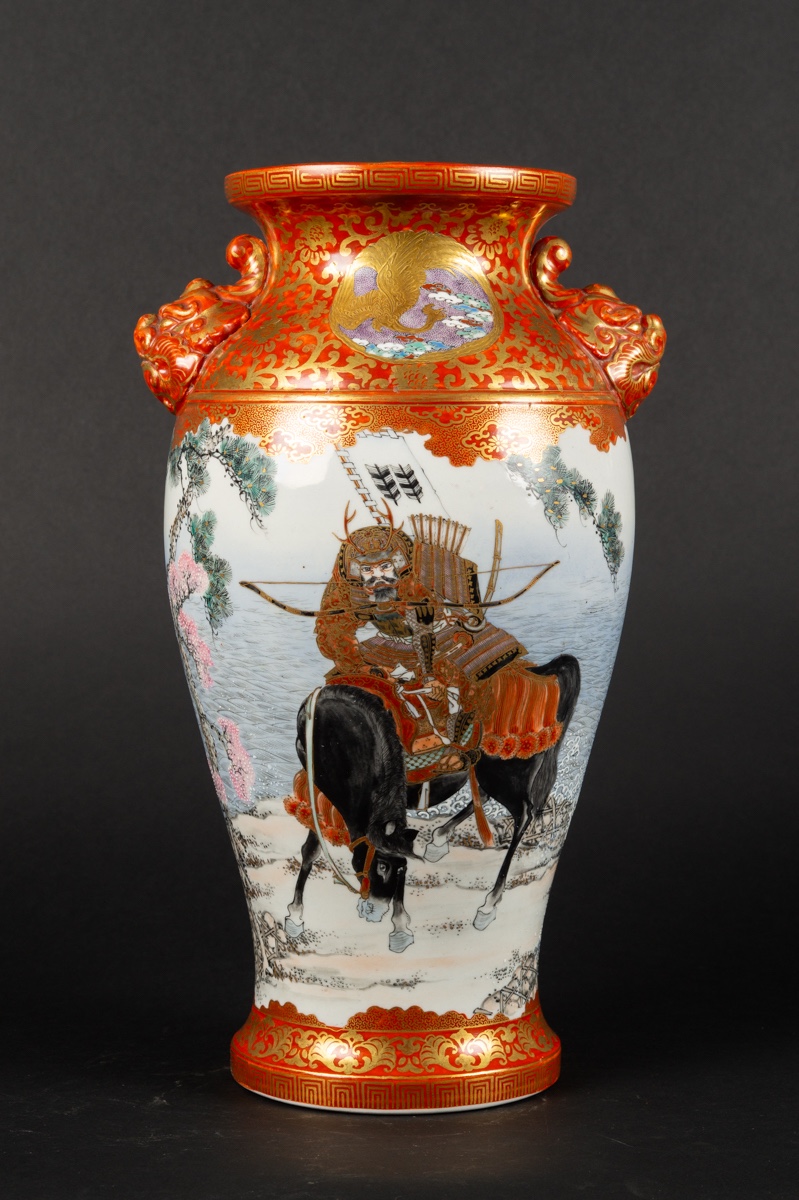
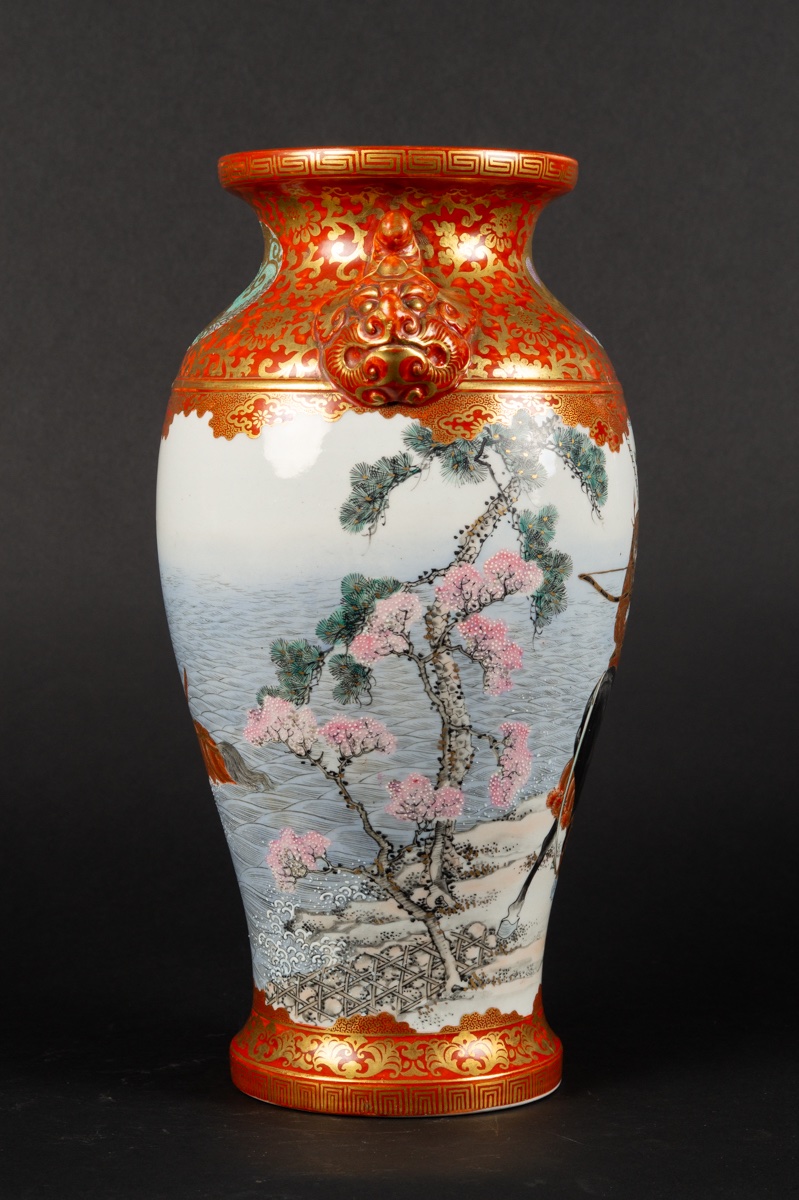
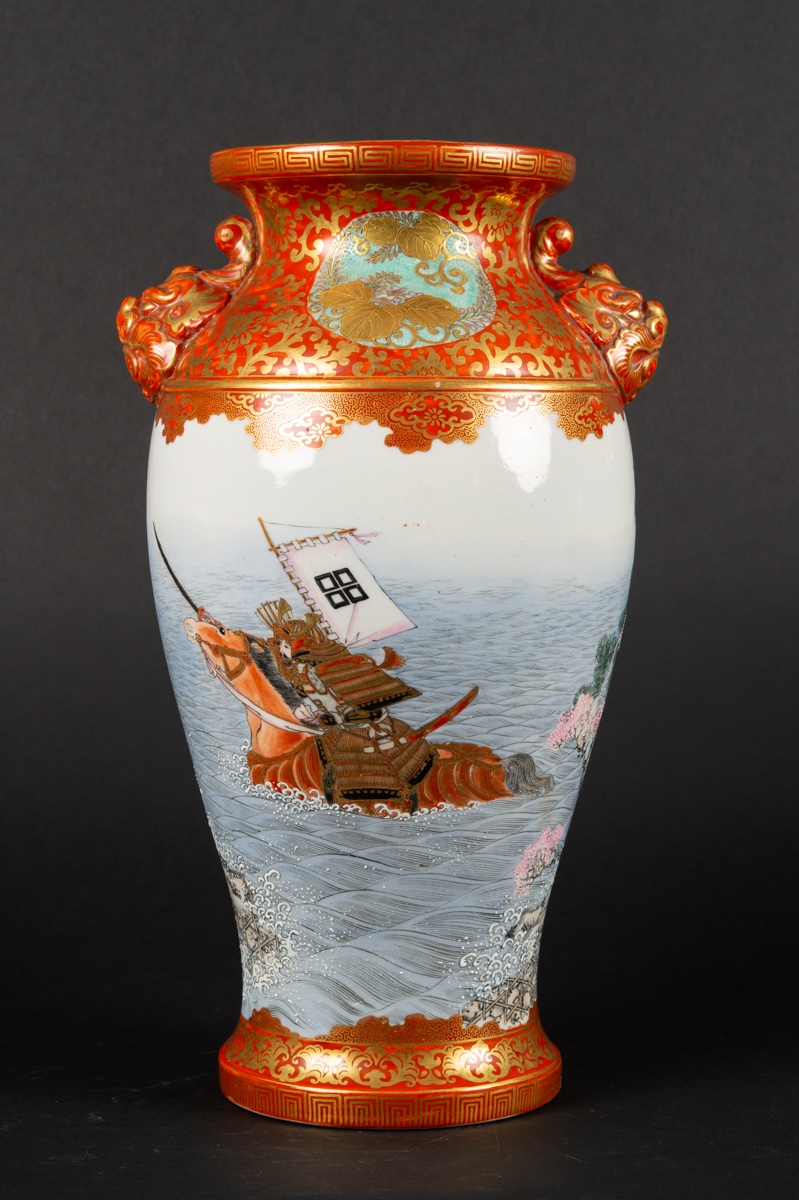
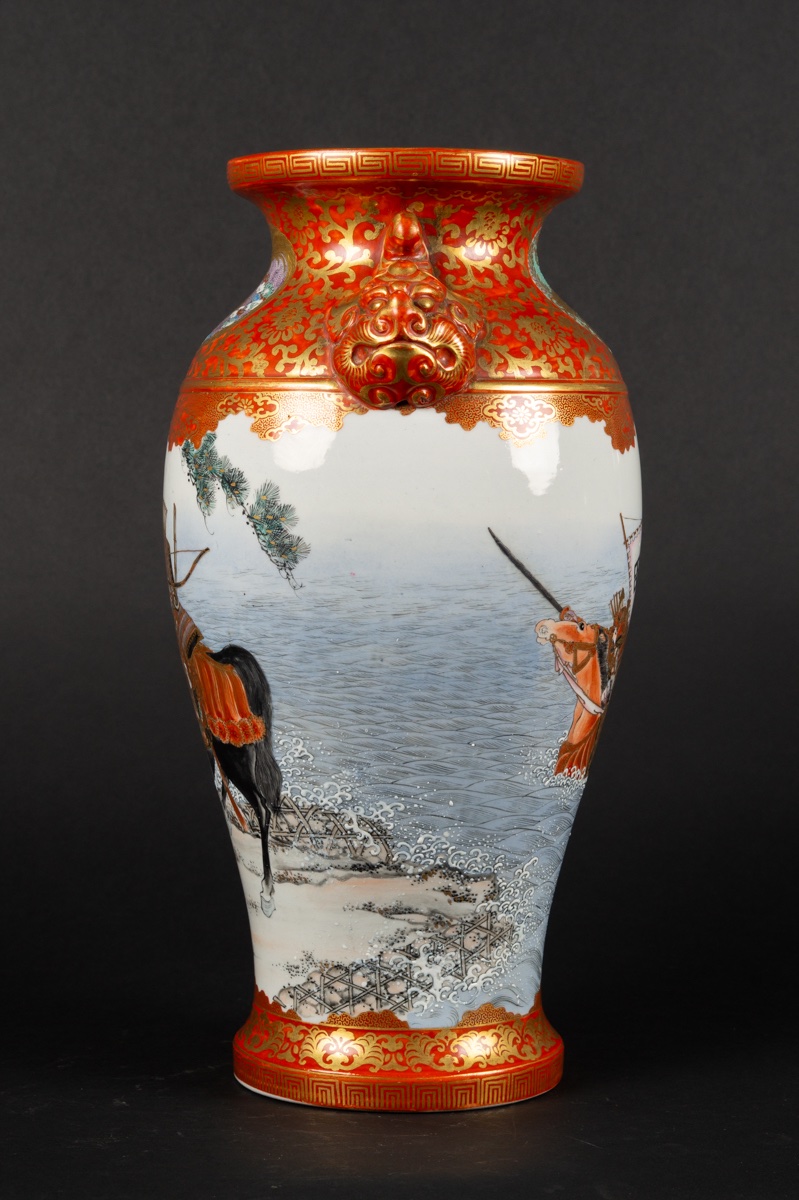
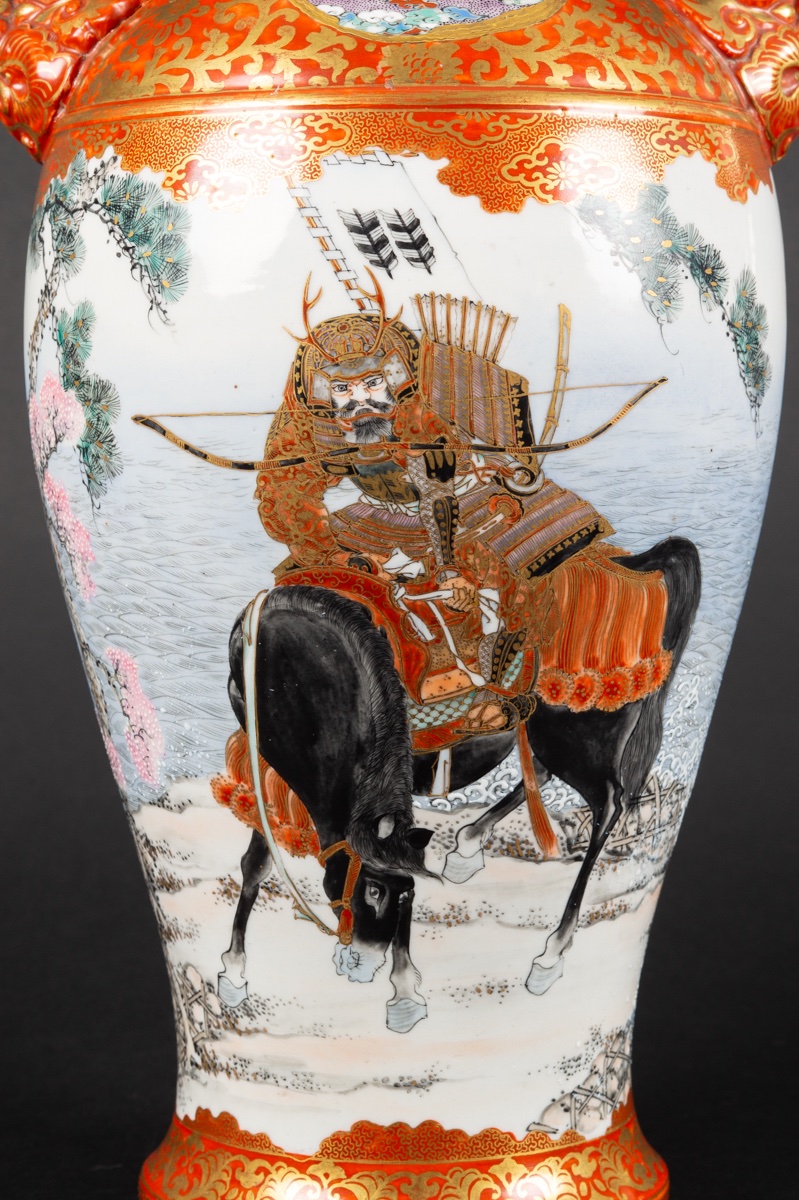
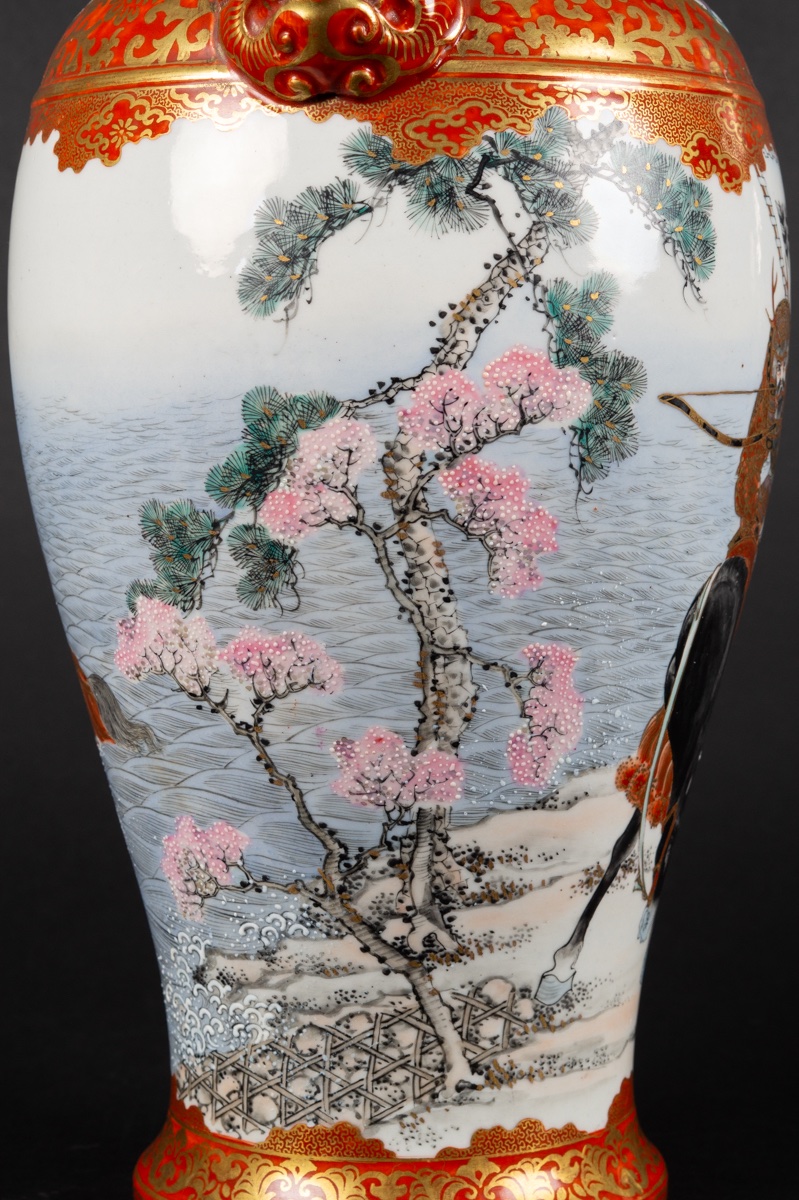
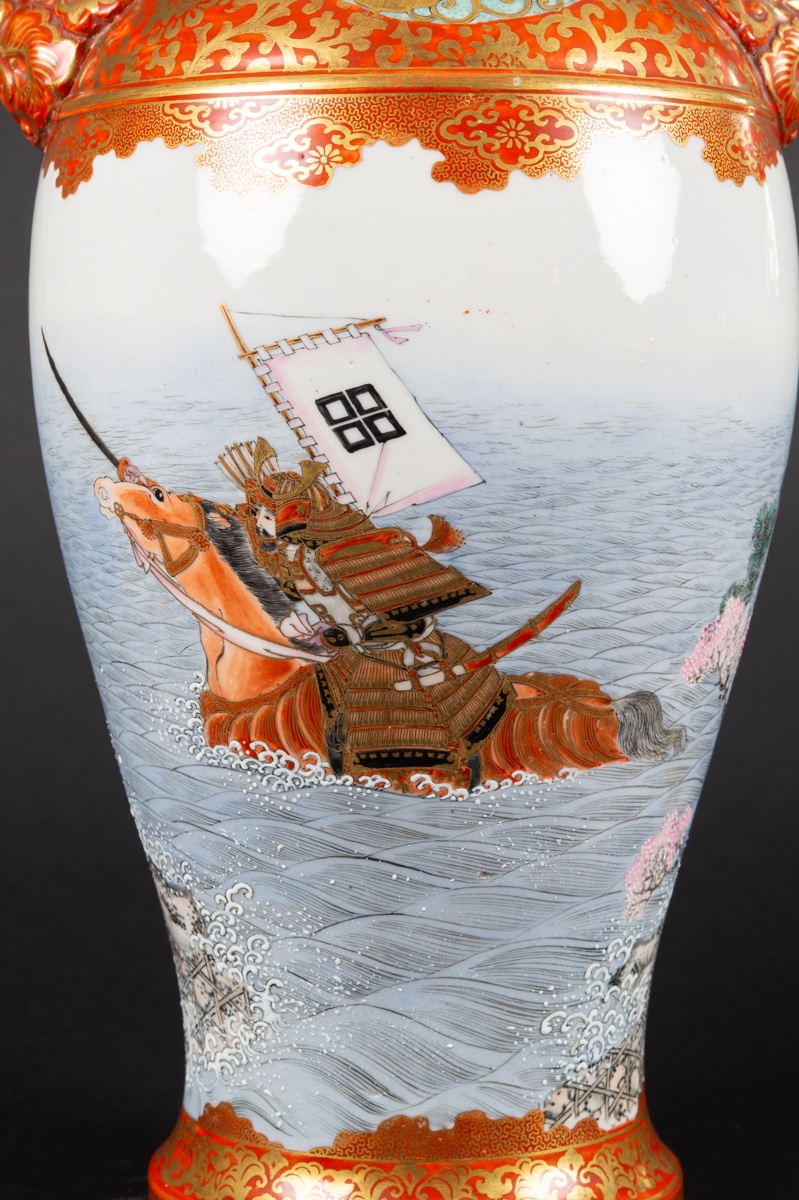
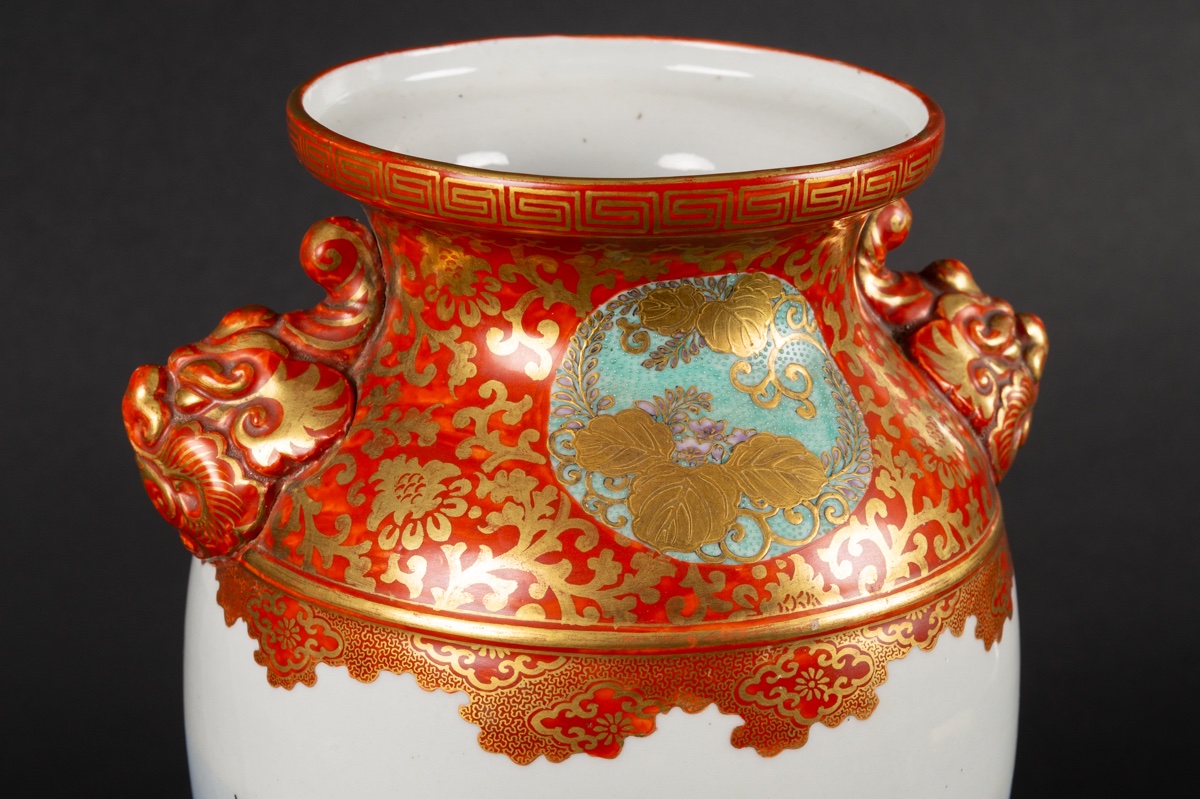
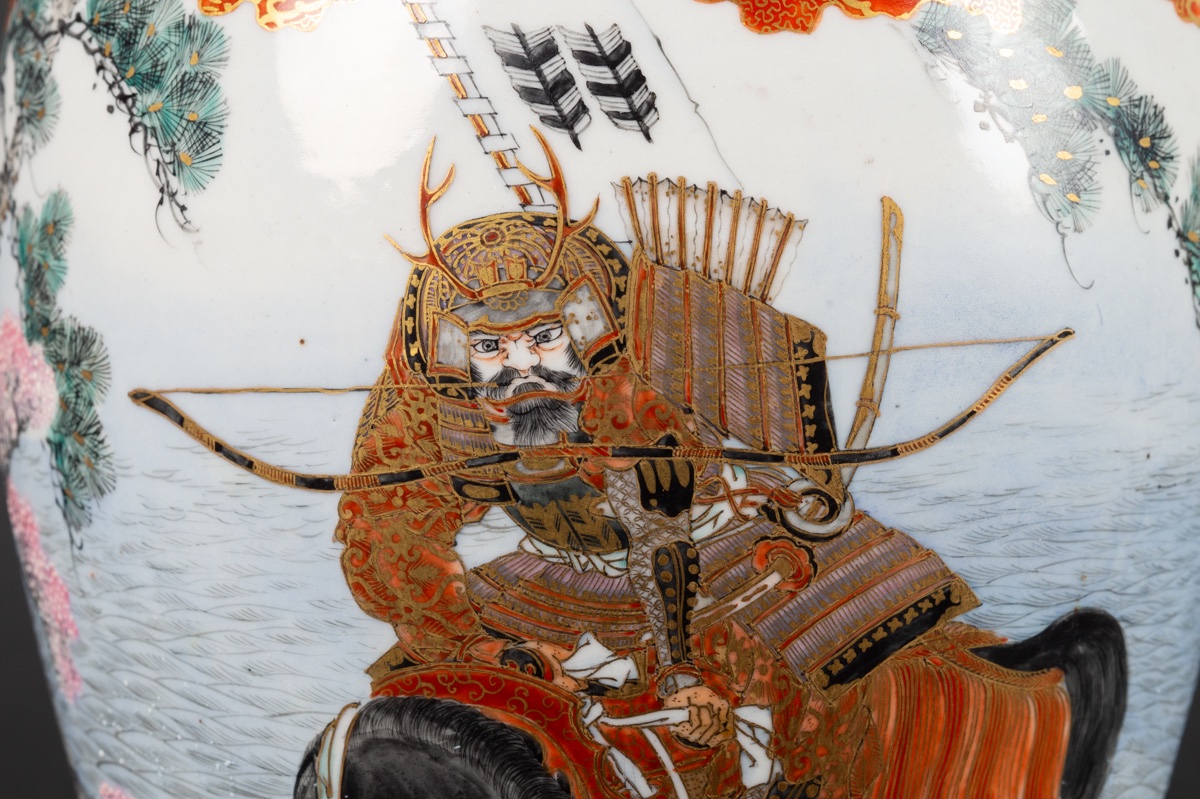
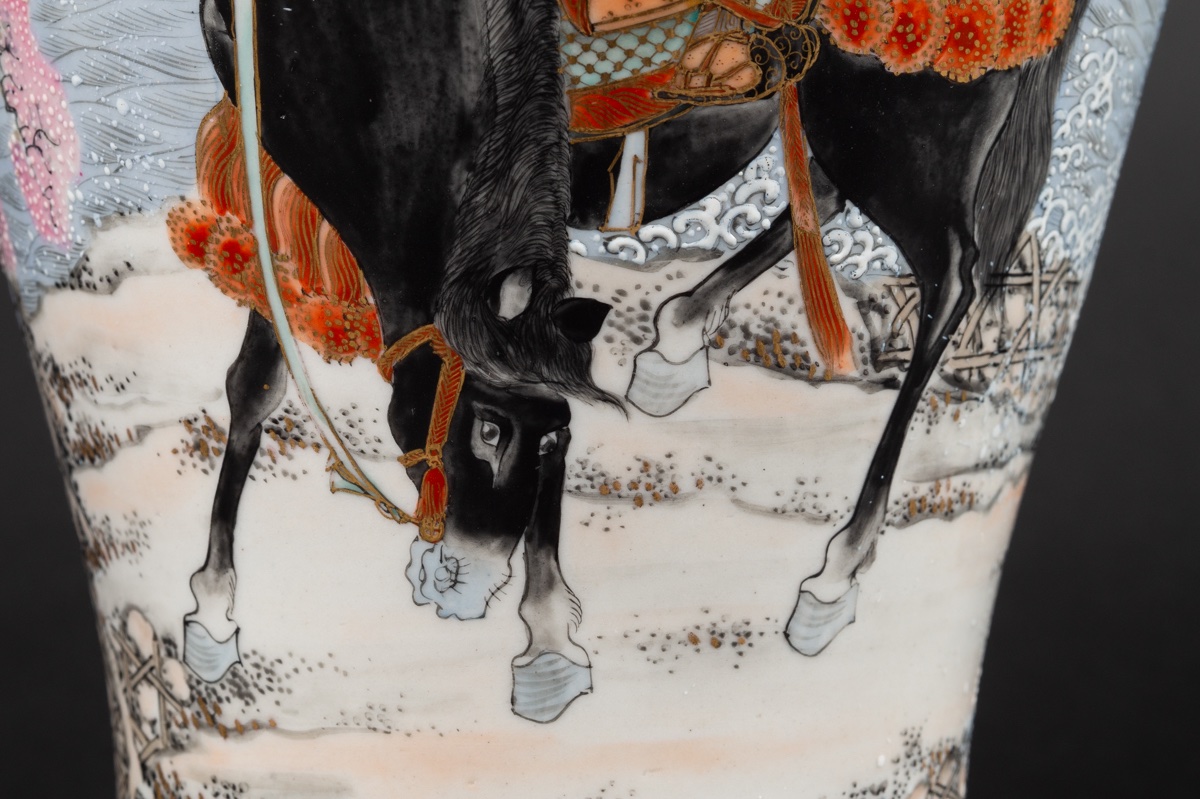
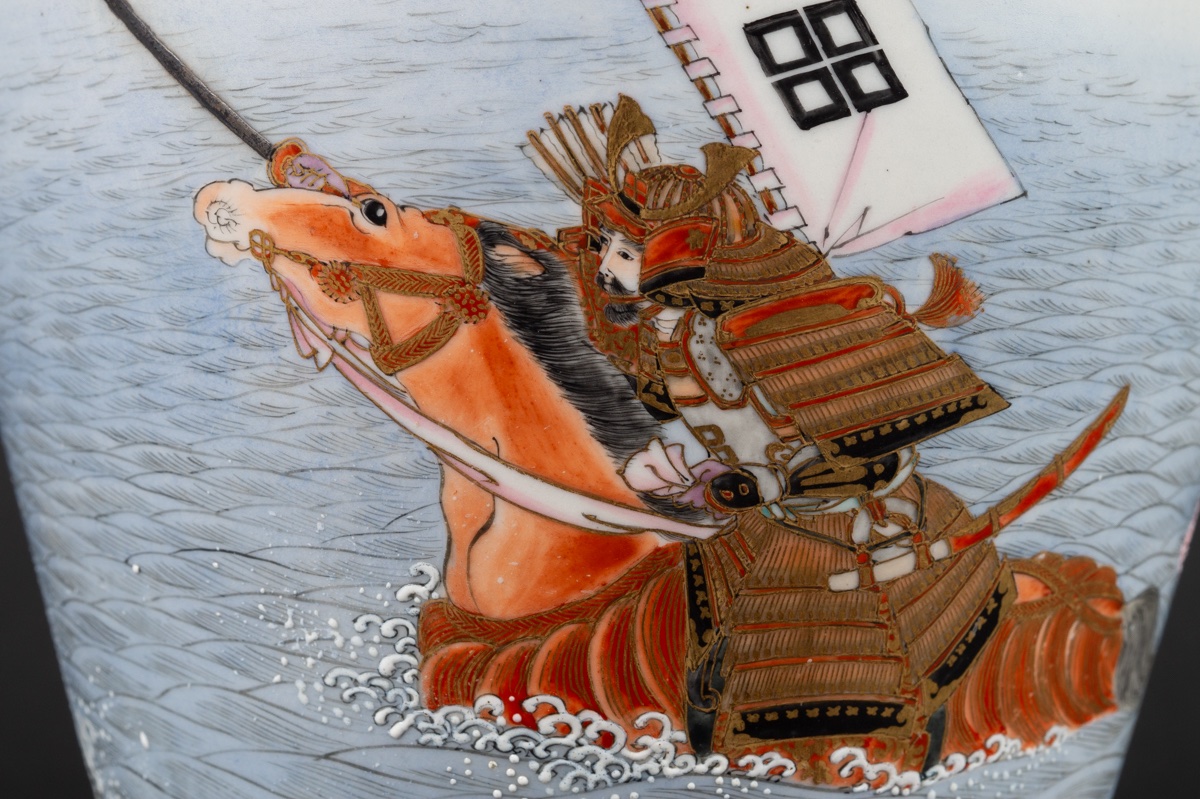
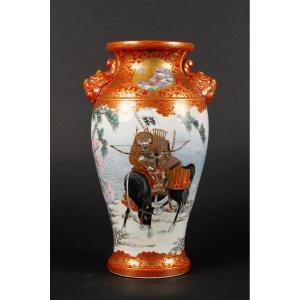


Japanese porcelain vase, hand-painted and gilded. Exceptional precision and attention to detail. On the front, we see a powerful samurai on a black horse. He is dressed in full ō-yoroi armor and wears a kabuto helmet with impressive horns (kuwagata) on his head. He holds a long bow (yumi). On the back, a second samurai on a brown horse crosses a stream. Over his shoulder floats a sashimono standard bearing the clan symbol (mon). The upper and lower parts of the vase are covered with a dense kinrande pattern (gilding on a red background), typical of Kutani luxury ceramics. The vegetation in the background (a pine tree symbolizing longevity and a cherry blossom tree - symbolizing the warrior's ephemeral life) lends the scene a philosophical depth. The handles of the vase are in the form of stylized Shishi lion heads.
Kutani, Japan, Meiji era (1868-1912).
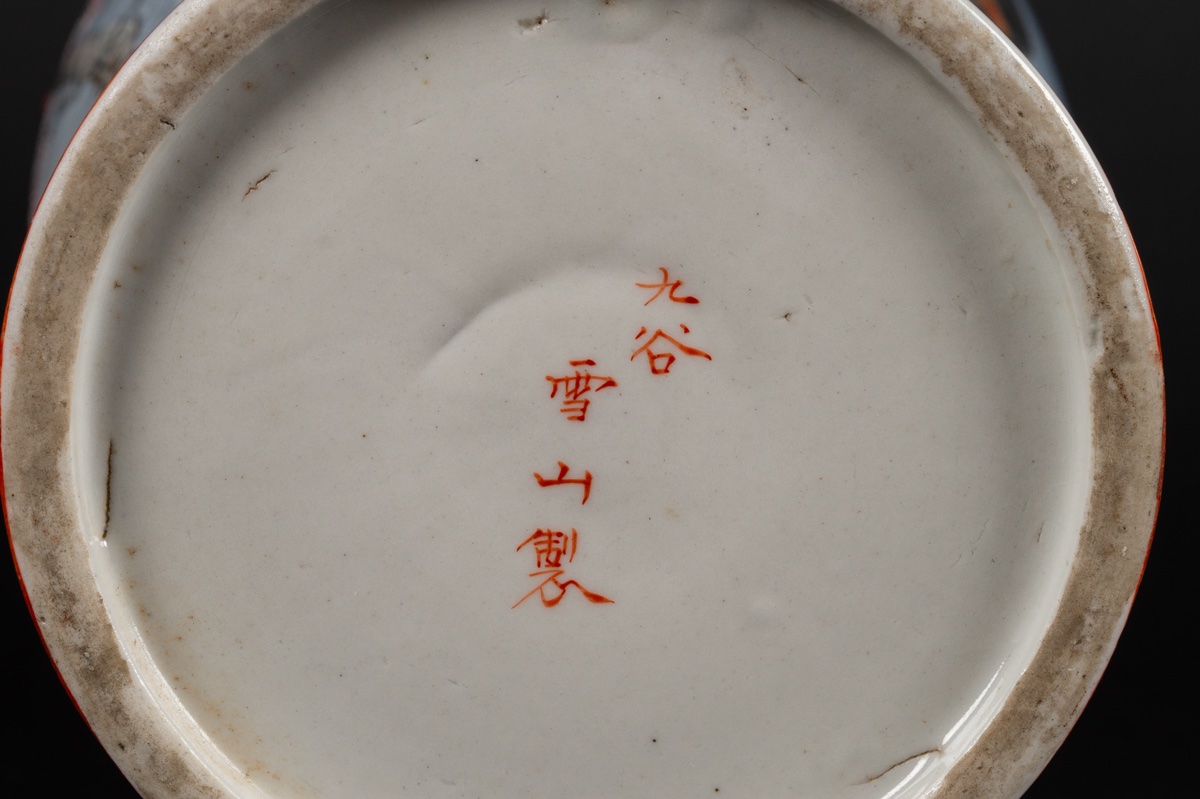
Signed: 九谷 (Kutani): the top two characters indicate the region and style of origin - the famous ceramics center of Ishikawa prefecture.
雪山製 (Setsuzan sei): the bottom characters indicate the name of the author or his workshop - Setsuzan. The suffix "sei" means "made by".
Height 34 cm, width 19 cm, depth 16 cm.
Very good condition.
Akamaru Setsuzan (1827-1897) - He was one of the most important masters, decorators and entrepreneurs of the golden age of ceramics in Kanazawa (the main center of the Kutani style) during the Meiji era. Even before the start of the Meiji era, in 1865, Setsuzan and another artist (Takayama Kozan) founded a factory bringing together talented decorators from the Nomi region, specializing in the aka-e (red enamel painting) technique. After a few years, he struck out on his own and opened his own large artistic workshop, which he christened Setsuzandō (雪山堂 - "Snowy Mountain Workshop"). At his peak, he personally trained and employed over 40 renowned porcelain painters. The high point of his career was the Great World's Fair in Chicago in 1893, where he personally represented Ishikawa Prefecture by exhibiting his most spectacular vases and porcelain pieces.
Free delivery within the European Union! I send parcels by insured courier (DPD or DHL). All items are carefully packed. Payment by international bank transfer. I will issue a certificate of authenticity on request.
Kutani, Japan, Meiji era (1868-1912).
Signed: 九谷 (Kutani): the top two characters indicate the region and style of origin - the famous ceramics center of Ishikawa prefecture.
雪山製 (Setsuzan sei): the bottom characters indicate the name of the author or his workshop - Setsuzan. The suffix "sei" means "made by".
Height 34 cm, width 19 cm, depth 16 cm.
Very good condition.
Akamaru Setsuzan (1827-1897) - He was one of the most important masters, decorators and entrepreneurs of the golden age of ceramics in Kanazawa (the main center of the Kutani style) during the Meiji era. Even before the start of the Meiji era, in 1865, Setsuzan and another artist (Takayama Kozan) founded a factory bringing together talented decorators from the Nomi region, specializing in the aka-e (red enamel painting) technique. After a few years, he struck out on his own and opened his own large artistic workshop, which he christened Setsuzandō (雪山堂 - "Snowy Mountain Workshop"). At his peak, he personally trained and employed over 40 renowned porcelain painters. The high point of his career was the Great World's Fair in Chicago in 1893, where he personally represented Ishikawa Prefecture by exhibiting his most spectacular vases and porcelain pieces.
Free delivery within the European Union! I send parcels by insured courier (DPD or DHL). All items are carefully packed. Payment by international bank transfer. I will issue a certificate of authenticity on request.
Explore similar pieces and discover your ideal find:
Porcelain Serveware