THIS OBJECT WAS SOLD
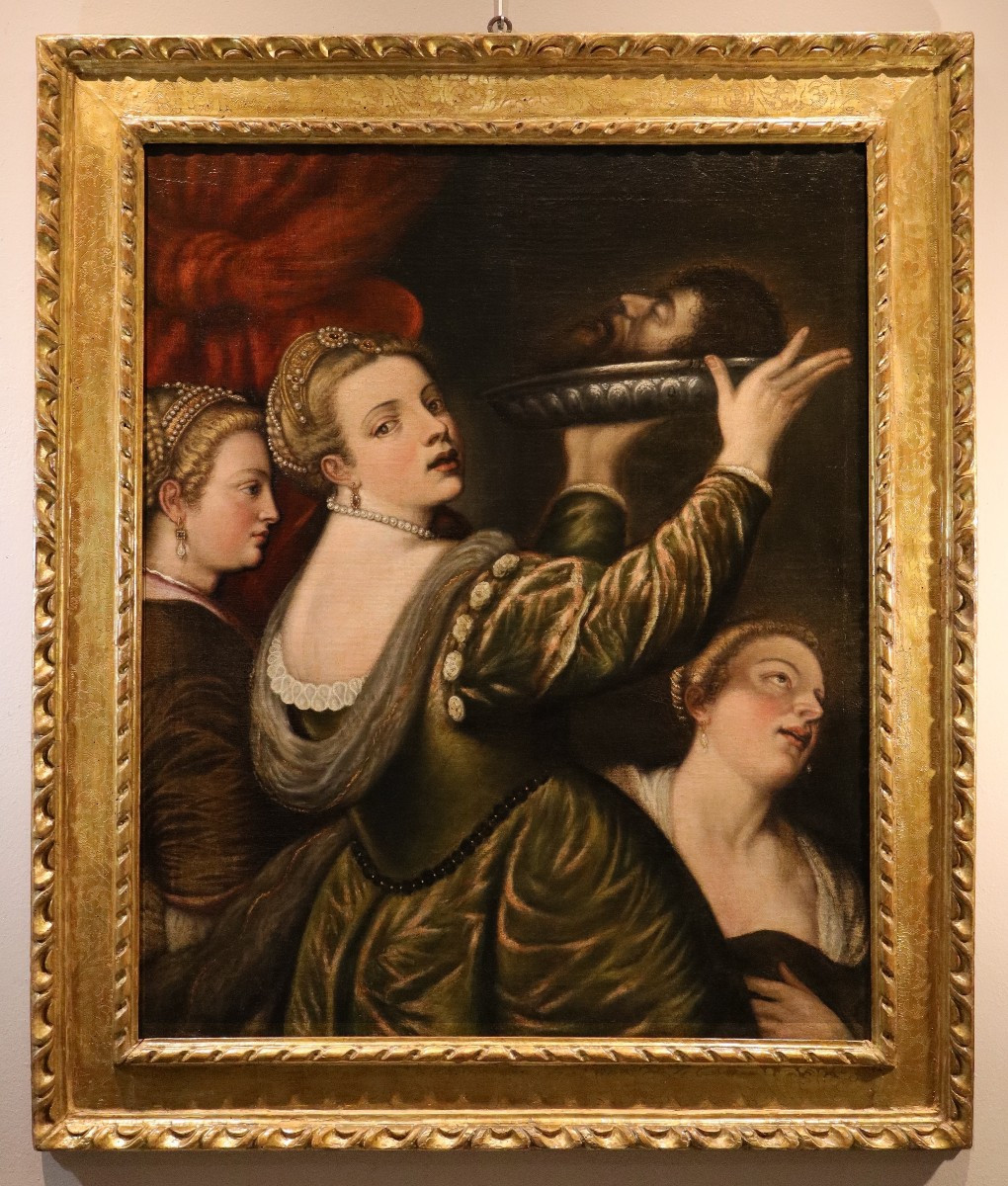
Salome With The Head Of John The Baptist, Titian (1490–1576) (attributed To / From The Workshop Of)


Tiziano Vecellio (Pieve di Cadore, 1490 – Venice, 1576)
School of / Attributed to
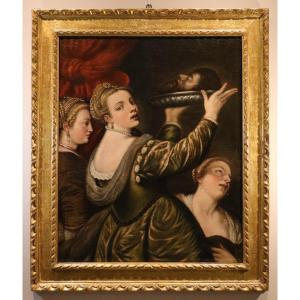
Salome with the Head of John the Baptist
Oil on canvas
116 x 99 cm.
In an antique frame: 144 x 121 cm.
Full details of the painting (click HERE)
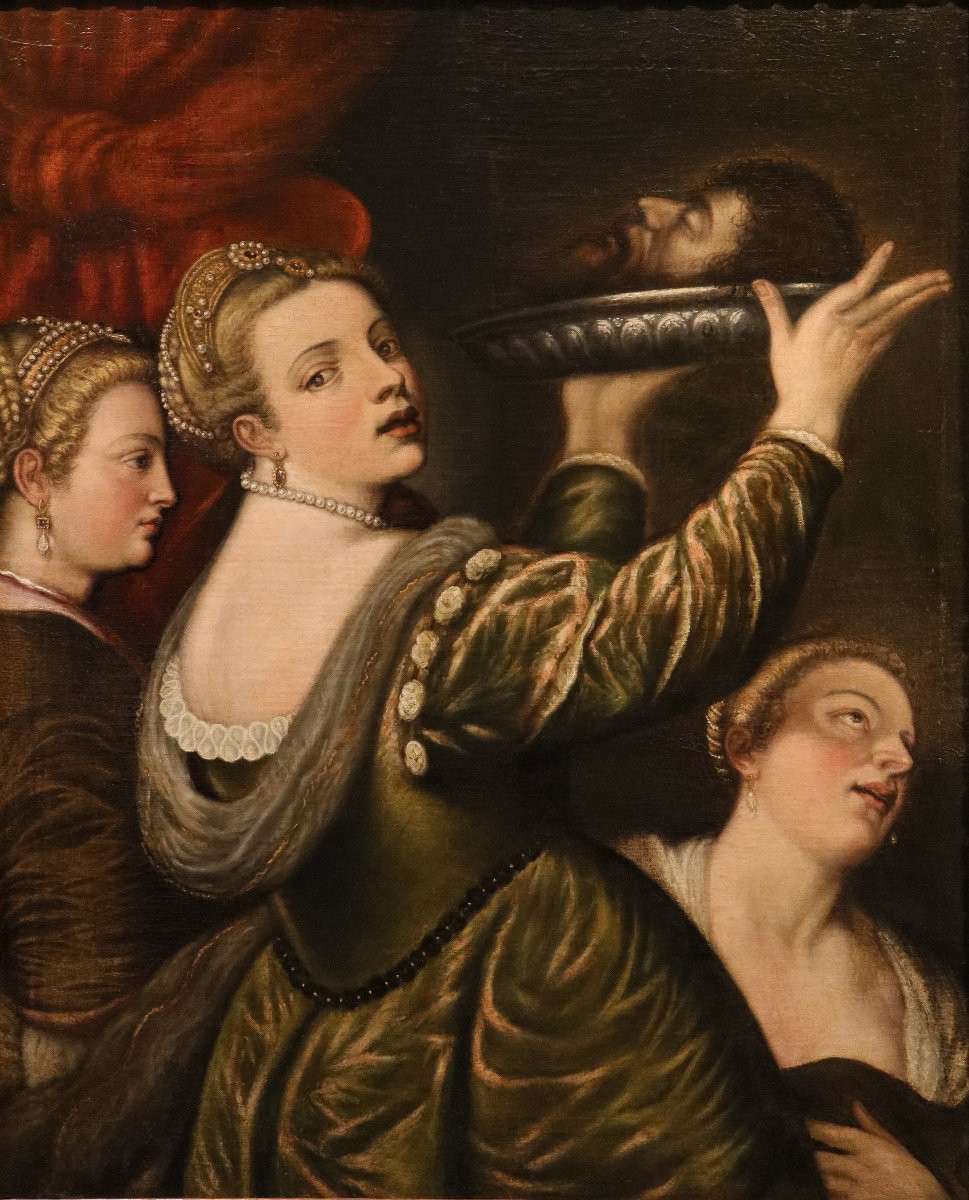
This work draws inspiration from Titian’s splendid painting ‘Salome with the Head of John the Baptist’, now housed in the Prado Museum in Madrid, a masterpiece from the Veronese master’s mature period, created around 1550.
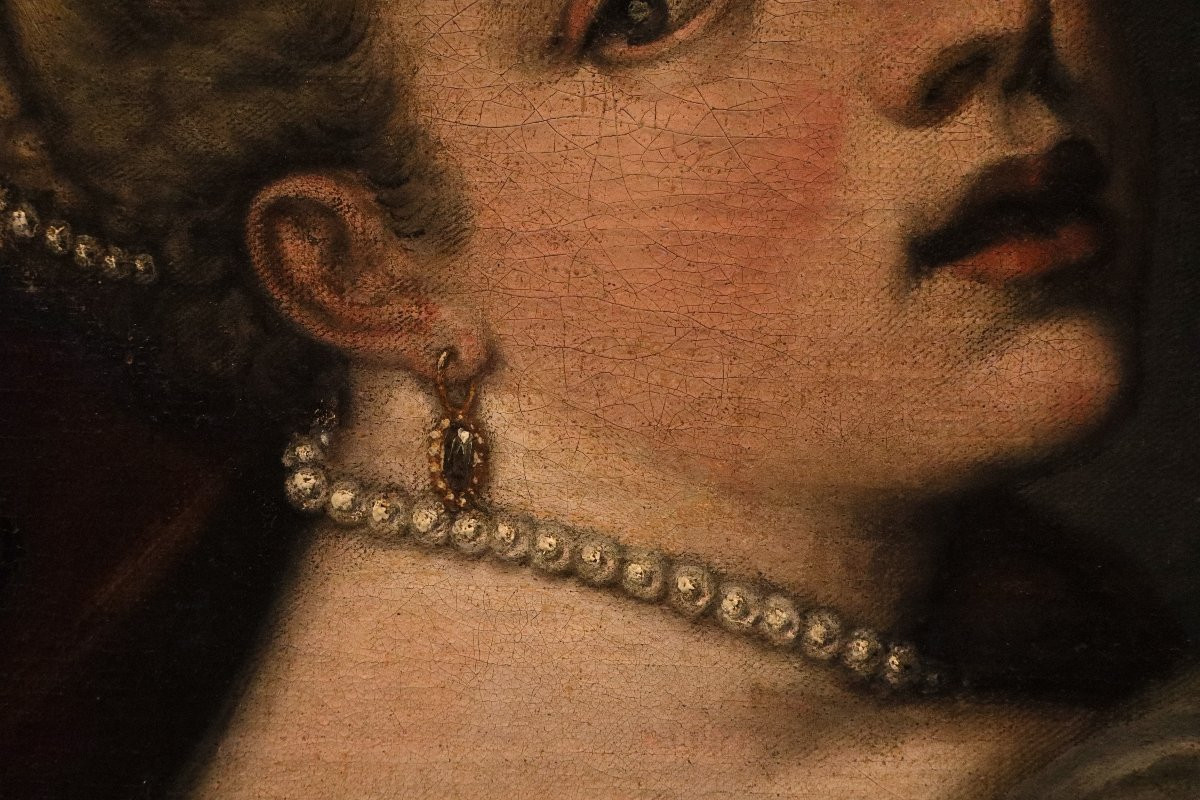
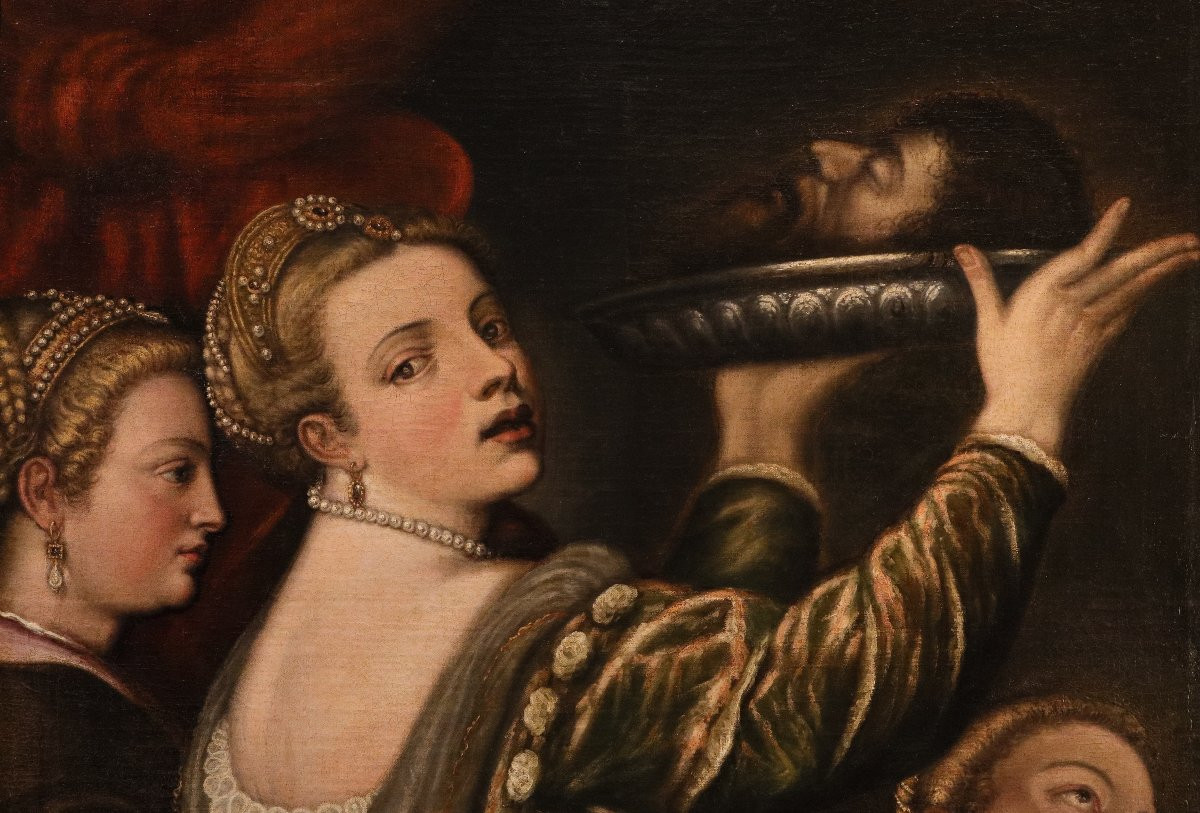
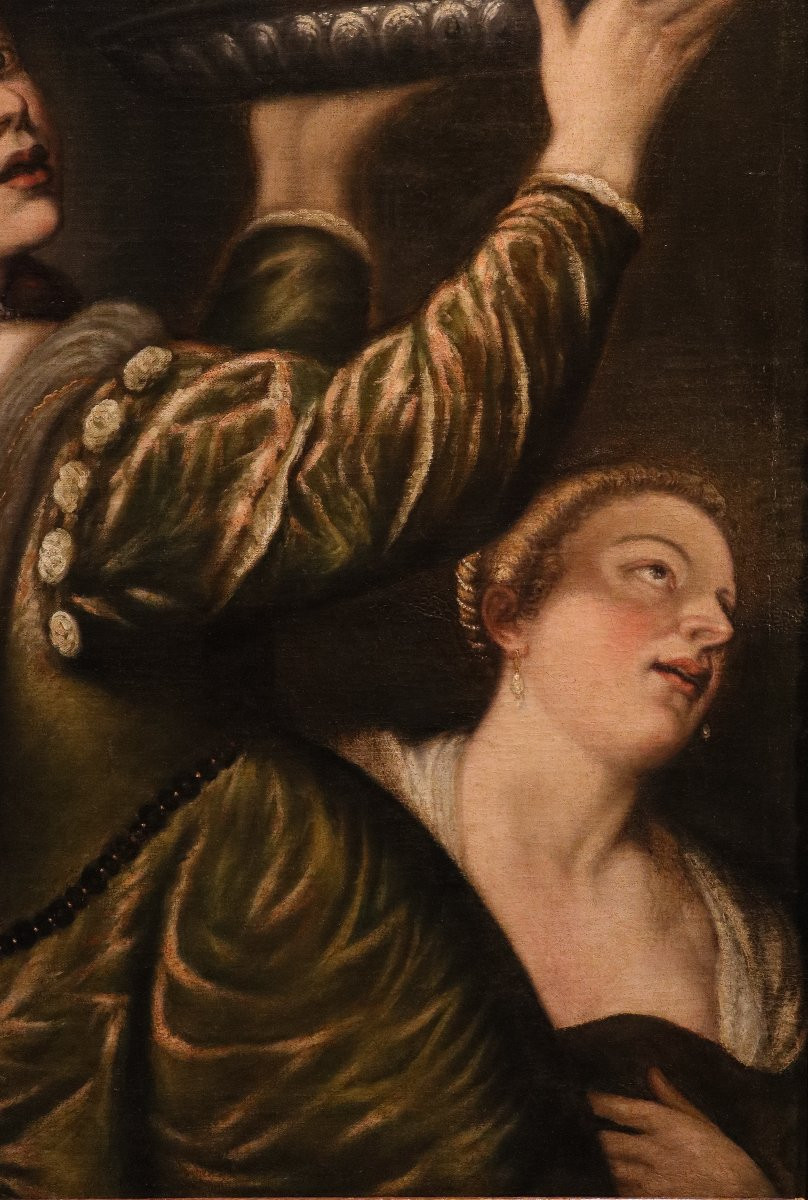
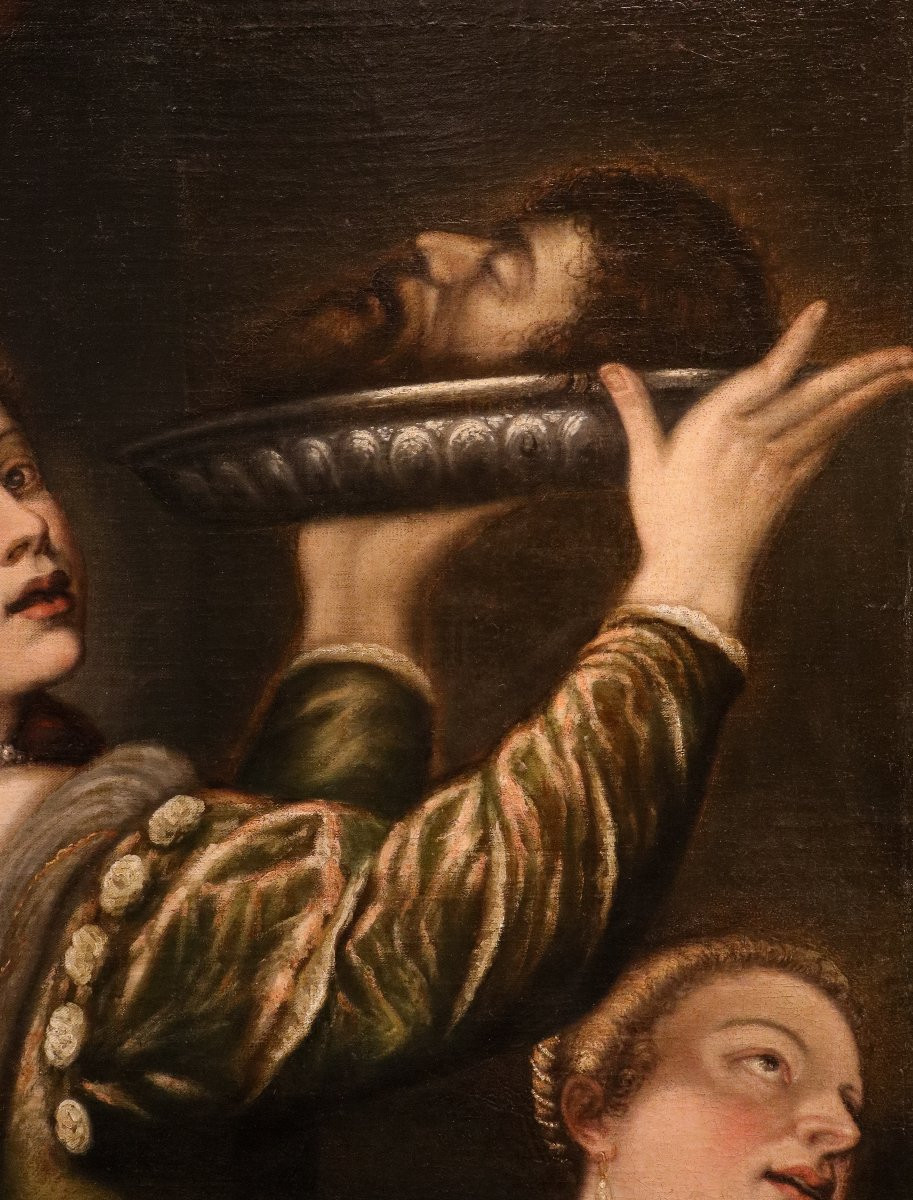
The beautiful Jewish princess Salome, daughter of Herodias and Herod Philip I, occupies the centre of the scene, portrayed with the features of a typical Venetian Renaissance beauty, wearing sumptuous 16th-century attire, with a red damask gown and wide white sleeves that emphasise her sensuality and movement.
She holds aloft a silver tray in a triumphant pose, upon which rests the severed head of St John the Baptist, illustrating a biblical passage from Matthew (14:1–11) and Mark (6:22–28). According to the biblical account, Salome obtained the head as a reward from King Herod, who was enchanted by the dance the young woman performed in his honour, at the instigation of her mother Herodias.
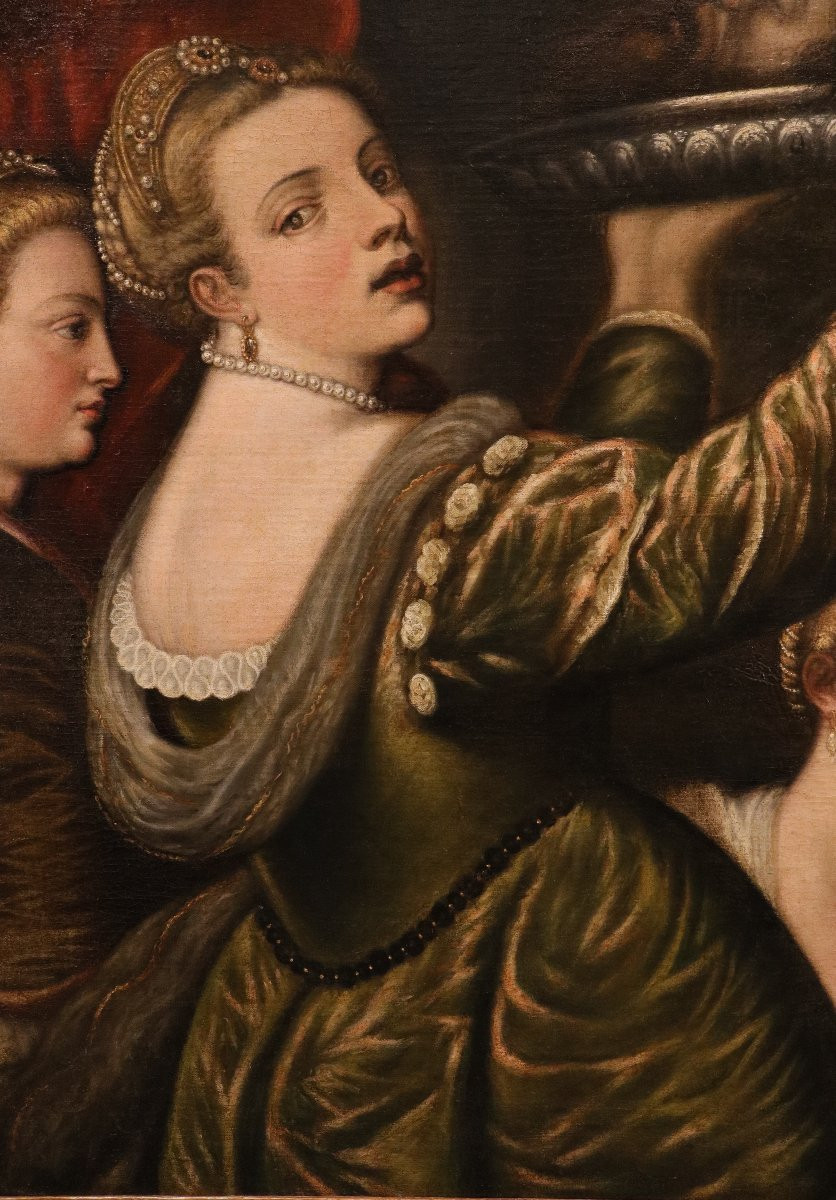
The compositional choice to direct Salome’s bewitching gaze straight towards us, the viewers of the painting, is exquisite, leaving us captivated by her sweetness and detachment from the episode in which she played the leading role: this stylistic choice transforms the biblical scene into a direct psychological encounter with the observer, evoking emotional involvement.
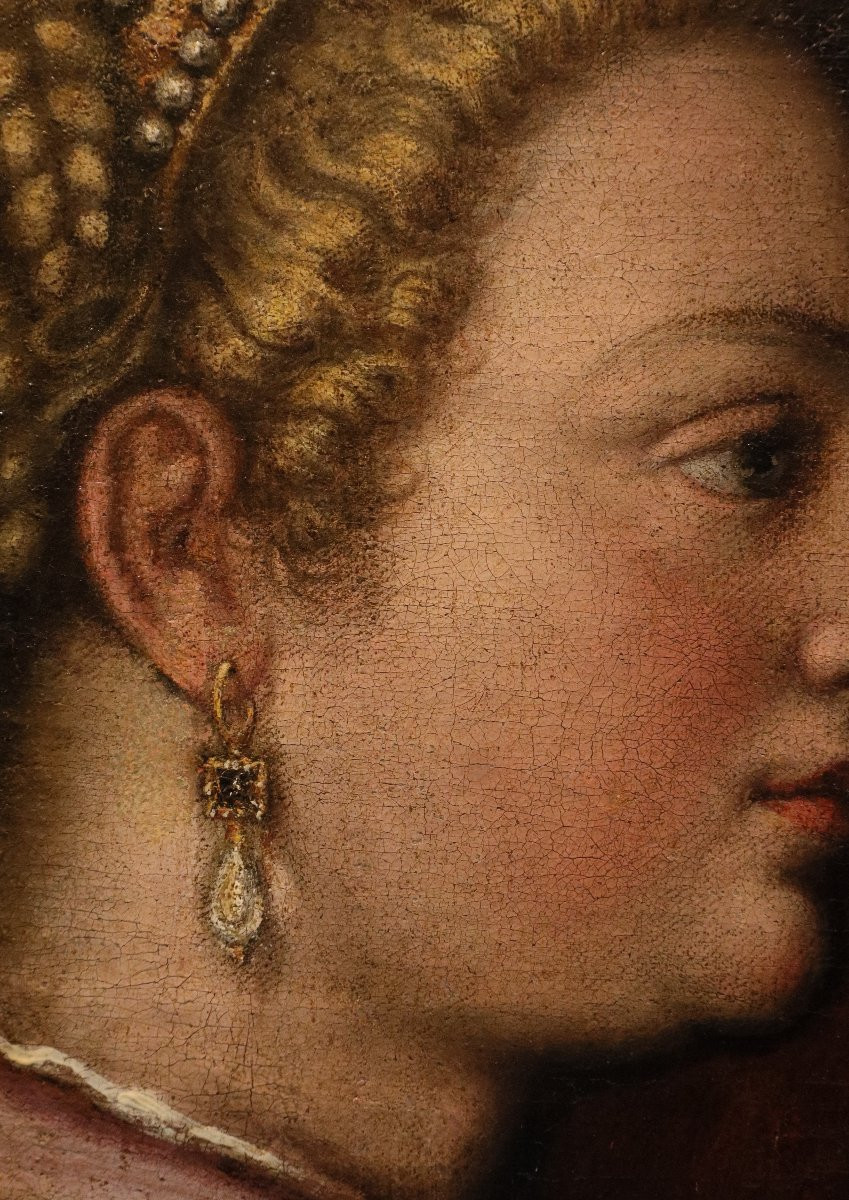
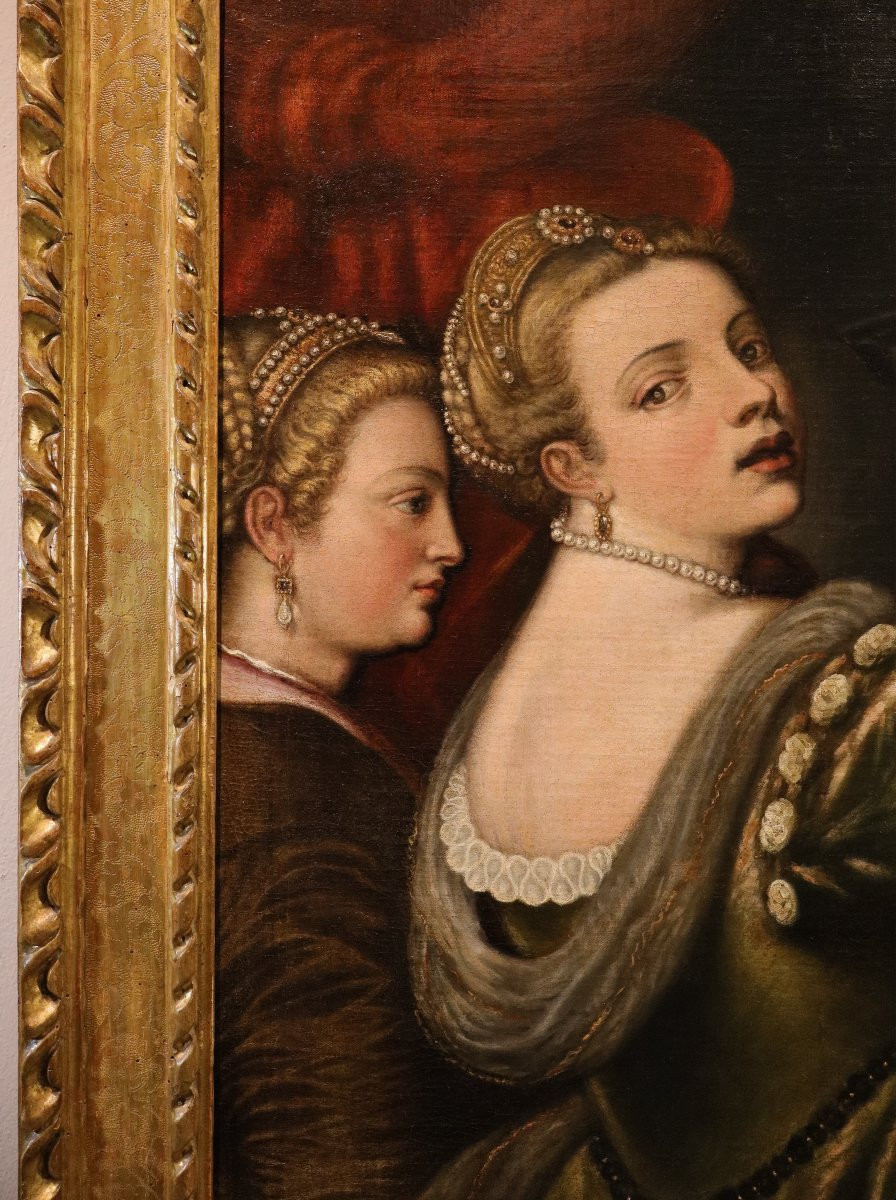
Returning to our painting, it is a fine work, in good condition, created by a follower or, more likely, by a painter from Titian Vecellio’s own workshop.
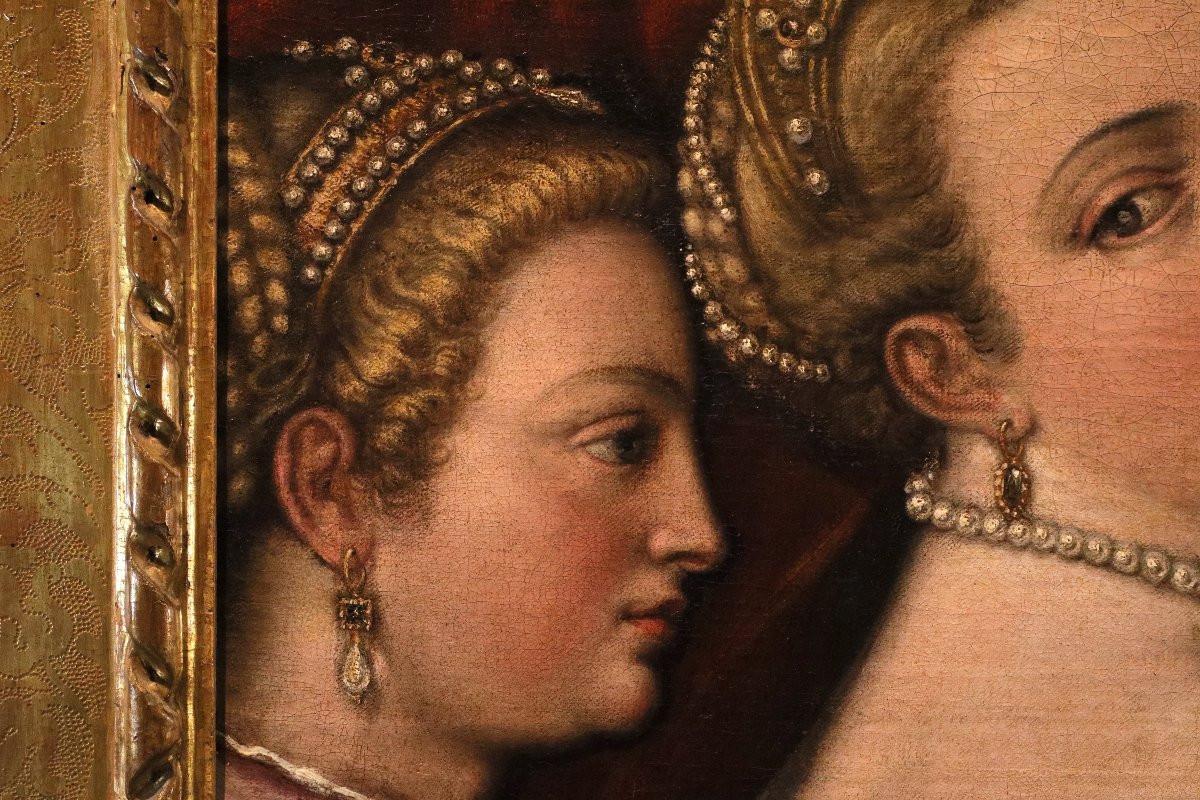
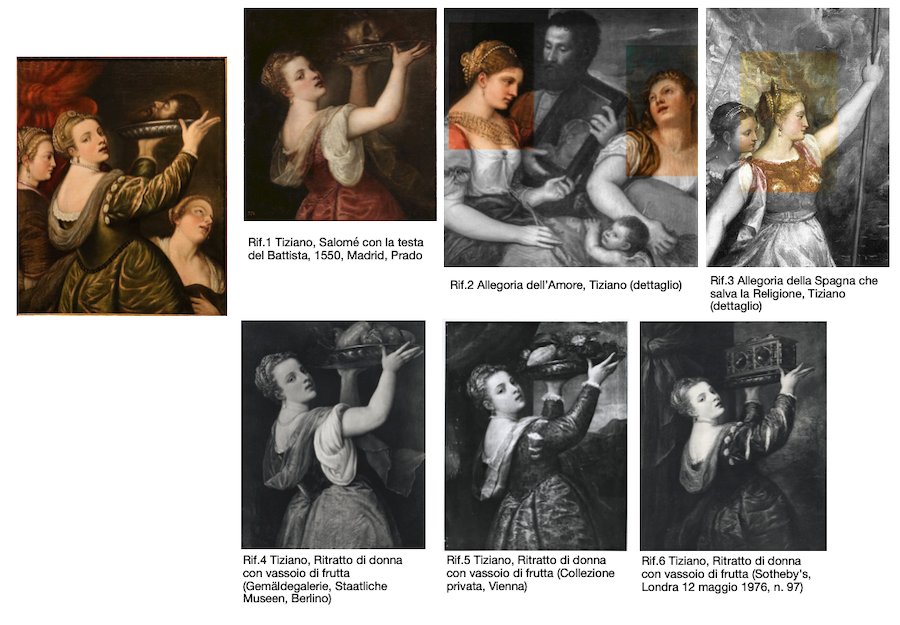
The composition is very interesting: it is not, in fact, a simple replica of a well-known painting by the master, but a synthesis of sources of inspiration; specifically, the figure of Salome draws on the famous painting that Titian produced around 1550 and which is now in the Prado Museum in Madrid (Ref. 1), whilst the figures of the two maidservants accompanying the protagonist are rendered in the most typical Titianesque style.
In particular, both the woman in profile on the left and the one looking upwards echo other female figures painted by Titian: we can find them, almost identical, in works such as the Allegory of Love (Titian, Wawel Royal Castle Collection, Kraków - Ref. 2), where both female prototypes appear, or in the Allegory of Spain Coming to the Aid of Religion (Titian, Museo del Prado, Madrid - Ref. 3).
The success of this composition is evident in the countless replicas and versions of highly variable quality from Titian’s workshop, often reworked in a secular key, in which case the head of John the Baptist is replaced with other decorative elements: for example, in the ‘Portrait of a Woman with a Fruit Tray’ (Gemäldegalerie, Staatliche Museen, Berlin, - Ref. 4), and in the ‘Portrait of a Young Woman with Fruit’ (Private collection, Vienna, - Ref. 5), in both of which the head of John the Baptist has given way to fruit arrangements, and the same applies to the ‘Portrait of a Young Woman with a Casket’ (Sotheby’s, London, 12 May 1976, no. 97, - Ref. 6).
Ref.1 Titian, Salome with the Head of John the Baptist, 1550, Madrid, Prado
https://www.museodelprado.es/en/the-collection/art-work/salome/0f359b90-2055-4326-bbbe-775dbfa7c504
Ref. 2. Titian, Allegory of Love (Wawel Royal Castle Collection, Kraków)
https://commons.wikimedia.org/wiki/File:Titian_-_Allegory_of_Love.jpg
Ref. 3 Titian, Allegory of Spain Coming to the Aid of Religion (Titian, Prado Museum, Madrid)
https://catalogo.fondazionezeri.unibo.it/scheda/opera/43645/
Ref. 4 Titian, Portrait of a Woman with a Fruit Tray (Gemäldegalerie, Staatliche Museen, Berlin)
https://catalogo.fondazionezeri.unibo.it/scheda/opera/45109/
Ref. 5 Titian, Portrait of a Young Woman with Fruit (Private collection, Vienna)
https://catalogo.fondazionezeri.unibo.it/scheda/opera/41936/
Ref. 6 Titian, Portrait of a Young Woman with a Casket (Sotheby’s, London, 12 May 1976, lot 97)
https://catalogo.fondazionezeri.unibo.it/scheda/opera/43491/
ADDITIONAL INFORMATION:
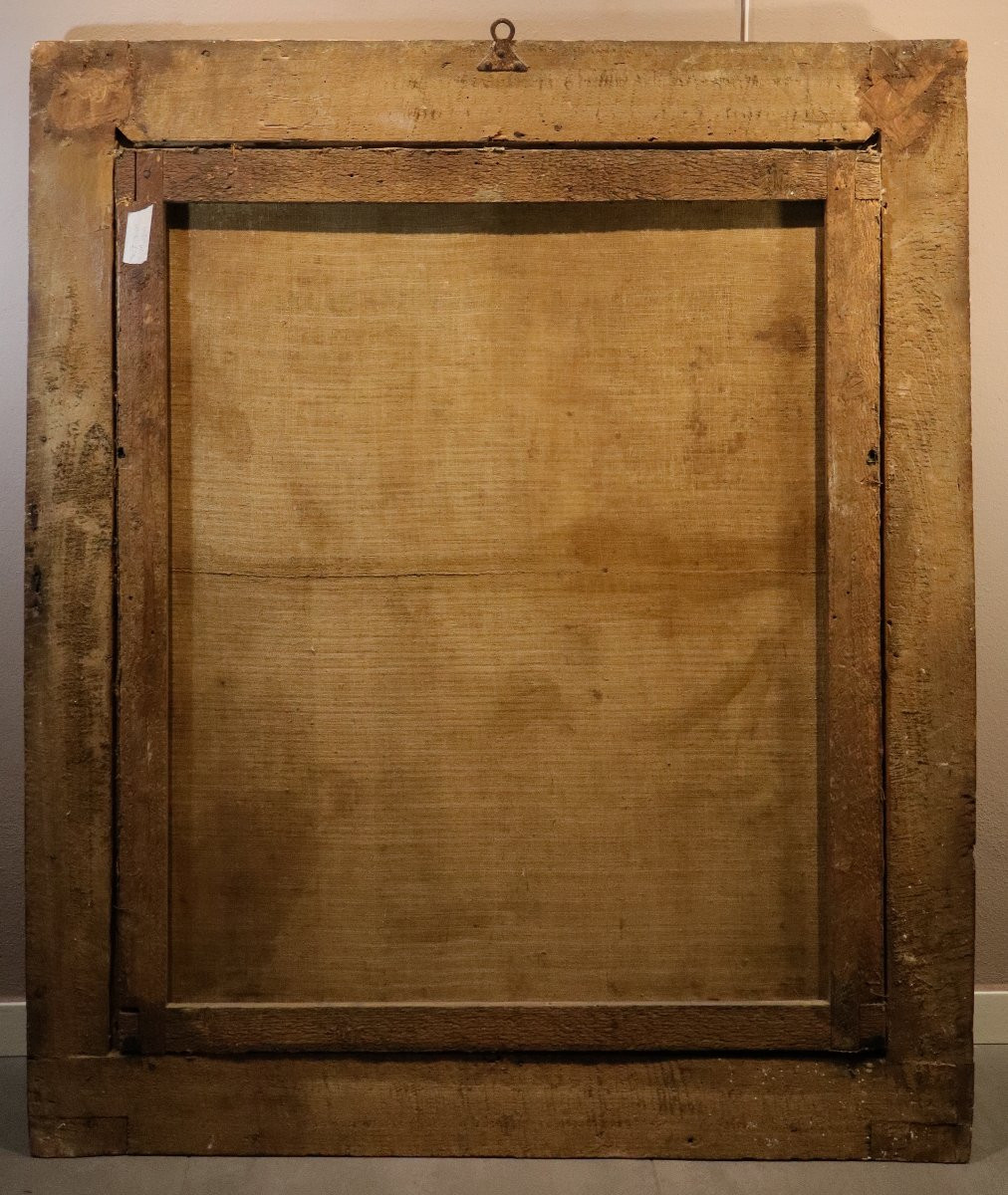
The work is complete with an antique frame that has undergone restoration and is sold accompanied by a certificate of authenticity and a descriptive iconographic sheet.
We arrange and organise the transport of purchased works, both within Italy and abroad, using professional and insured carriers.
It is also possible to view the painting at our gallery in Riva del Garda; we would be delighted to welcome you to view our collection of works.
Please feel free to contact us for any further information.
Follow us on:
https://www.instagram.com/galleriacastelbarco/?hl=it
https://www.facebook.com/galleriacastelbarco/
School of / Attributed to
Salome with the Head of John the Baptist
Oil on canvas
116 x 99 cm.
In an antique frame: 144 x 121 cm.
Full details of the painting (click HERE)
This work draws inspiration from Titian’s splendid painting ‘Salome with the Head of John the Baptist’, now housed in the Prado Museum in Madrid, a masterpiece from the Veronese master’s mature period, created around 1550.
The beautiful Jewish princess Salome, daughter of Herodias and Herod Philip I, occupies the centre of the scene, portrayed with the features of a typical Venetian Renaissance beauty, wearing sumptuous 16th-century attire, with a red damask gown and wide white sleeves that emphasise her sensuality and movement.
She holds aloft a silver tray in a triumphant pose, upon which rests the severed head of St John the Baptist, illustrating a biblical passage from Matthew (14:1–11) and Mark (6:22–28). According to the biblical account, Salome obtained the head as a reward from King Herod, who was enchanted by the dance the young woman performed in his honour, at the instigation of her mother Herodias.
The compositional choice to direct Salome’s bewitching gaze straight towards us, the viewers of the painting, is exquisite, leaving us captivated by her sweetness and detachment from the episode in which she played the leading role: this stylistic choice transforms the biblical scene into a direct psychological encounter with the observer, evoking emotional involvement.
Returning to our painting, it is a fine work, in good condition, created by a follower or, more likely, by a painter from Titian Vecellio’s own workshop.
The composition is very interesting: it is not, in fact, a simple replica of a well-known painting by the master, but a synthesis of sources of inspiration; specifically, the figure of Salome draws on the famous painting that Titian produced around 1550 and which is now in the Prado Museum in Madrid (Ref. 1), whilst the figures of the two maidservants accompanying the protagonist are rendered in the most typical Titianesque style.
In particular, both the woman in profile on the left and the one looking upwards echo other female figures painted by Titian: we can find them, almost identical, in works such as the Allegory of Love (Titian, Wawel Royal Castle Collection, Kraków - Ref. 2), where both female prototypes appear, or in the Allegory of Spain Coming to the Aid of Religion (Titian, Museo del Prado, Madrid - Ref. 3).
The success of this composition is evident in the countless replicas and versions of highly variable quality from Titian’s workshop, often reworked in a secular key, in which case the head of John the Baptist is replaced with other decorative elements: for example, in the ‘Portrait of a Woman with a Fruit Tray’ (Gemäldegalerie, Staatliche Museen, Berlin, - Ref. 4), and in the ‘Portrait of a Young Woman with Fruit’ (Private collection, Vienna, - Ref. 5), in both of which the head of John the Baptist has given way to fruit arrangements, and the same applies to the ‘Portrait of a Young Woman with a Casket’ (Sotheby’s, London, 12 May 1976, no. 97, - Ref. 6).
Ref.1 Titian, Salome with the Head of John the Baptist, 1550, Madrid, Prado
https://www.museodelprado.es/en/the-collection/art-work/salome/0f359b90-2055-4326-bbbe-775dbfa7c504
Ref. 2. Titian, Allegory of Love (Wawel Royal Castle Collection, Kraków)
https://commons.wikimedia.org/wiki/File:Titian_-_Allegory_of_Love.jpg
Ref. 3 Titian, Allegory of Spain Coming to the Aid of Religion (Titian, Prado Museum, Madrid)
https://catalogo.fondazionezeri.unibo.it/scheda/opera/43645/
Ref. 4 Titian, Portrait of a Woman with a Fruit Tray (Gemäldegalerie, Staatliche Museen, Berlin)
https://catalogo.fondazionezeri.unibo.it/scheda/opera/45109/
Ref. 5 Titian, Portrait of a Young Woman with Fruit (Private collection, Vienna)
https://catalogo.fondazionezeri.unibo.it/scheda/opera/41936/
Ref. 6 Titian, Portrait of a Young Woman with a Casket (Sotheby’s, London, 12 May 1976, lot 97)
https://catalogo.fondazionezeri.unibo.it/scheda/opera/43491/
ADDITIONAL INFORMATION:
The work is complete with an antique frame that has undergone restoration and is sold accompanied by a certificate of authenticity and a descriptive iconographic sheet.
We arrange and organise the transport of purchased works, both within Italy and abroad, using professional and insured carriers.
It is also possible to view the painting at our gallery in Riva del Garda; we would be delighted to welcome you to view our collection of works.
Please feel free to contact us for any further information.
Follow us on:
https://www.instagram.com/galleriacastelbarco/?hl=it
https://www.facebook.com/galleriacastelbarco/
Explore similar pieces and discover your ideal find:
religious paintings