THIS OBJECT WAS SOLD
Bordeaux Porcelain Cup - Verneuilh And Neveu Workshop - 18th Century
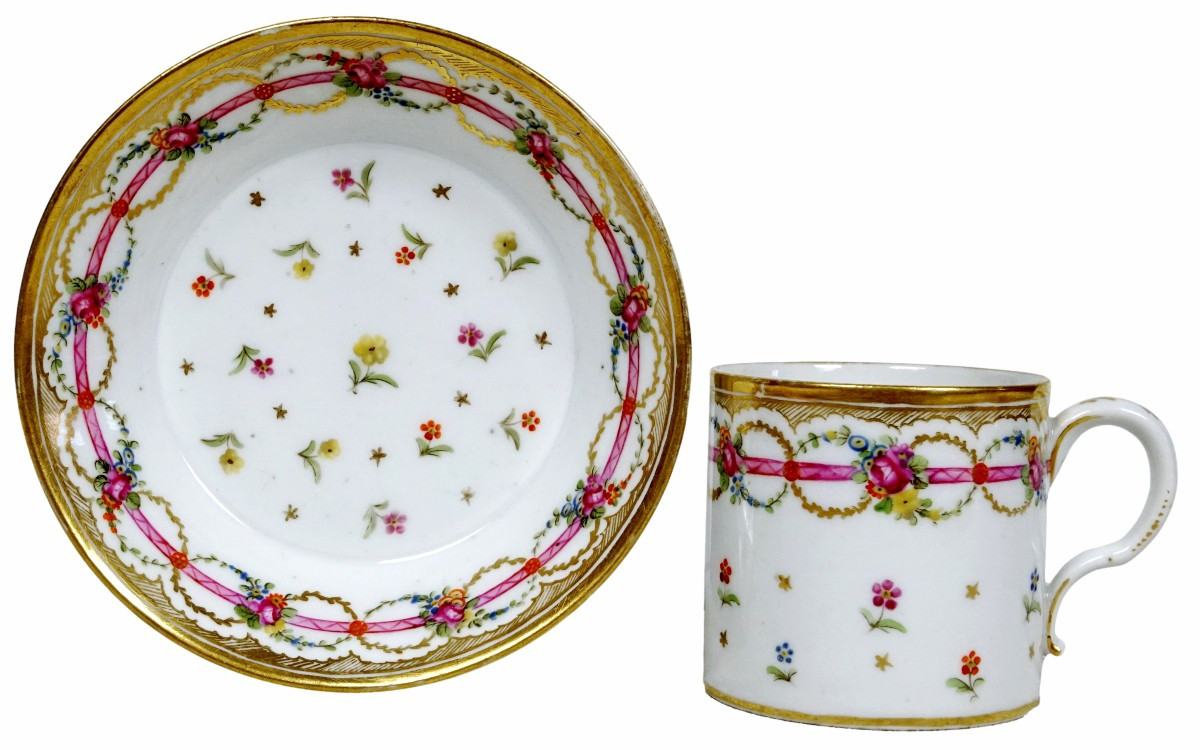
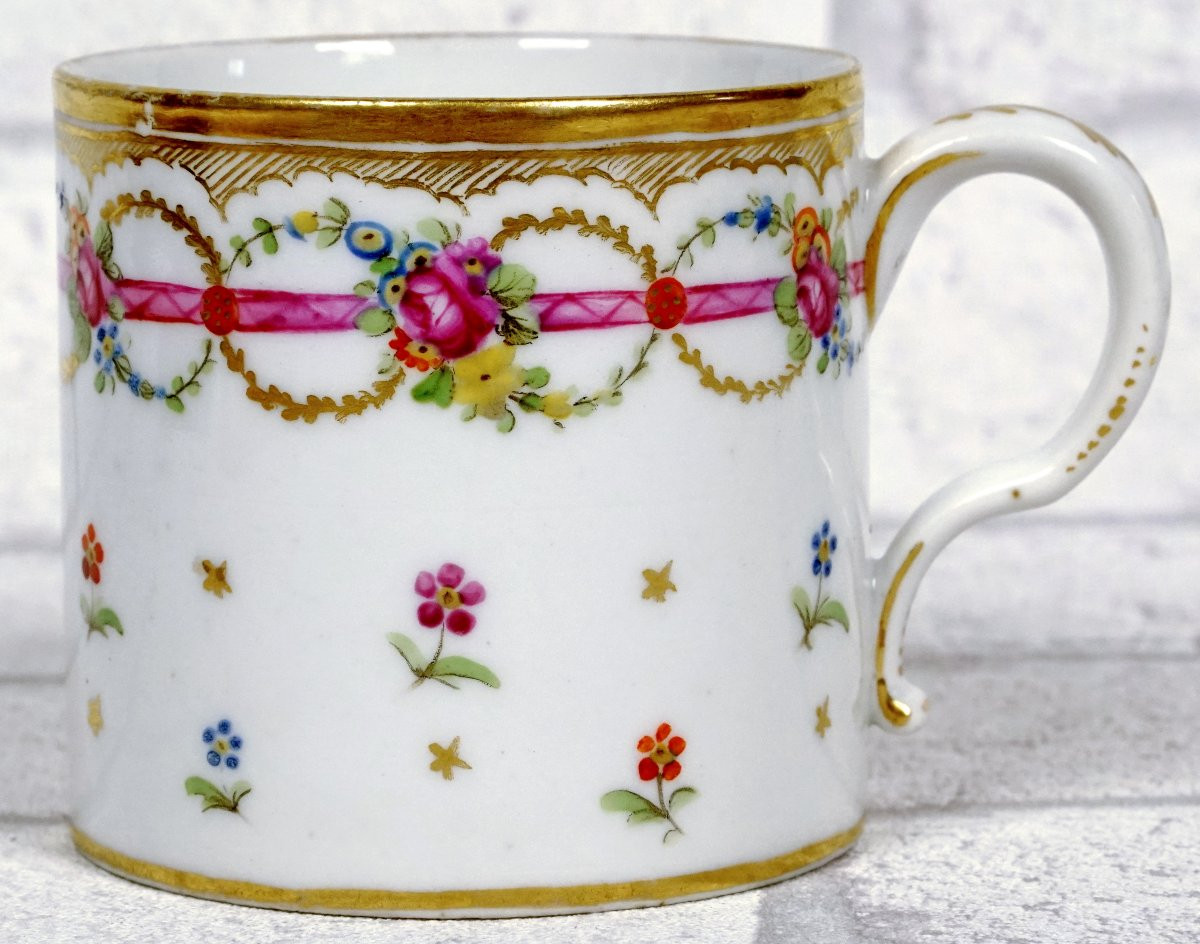
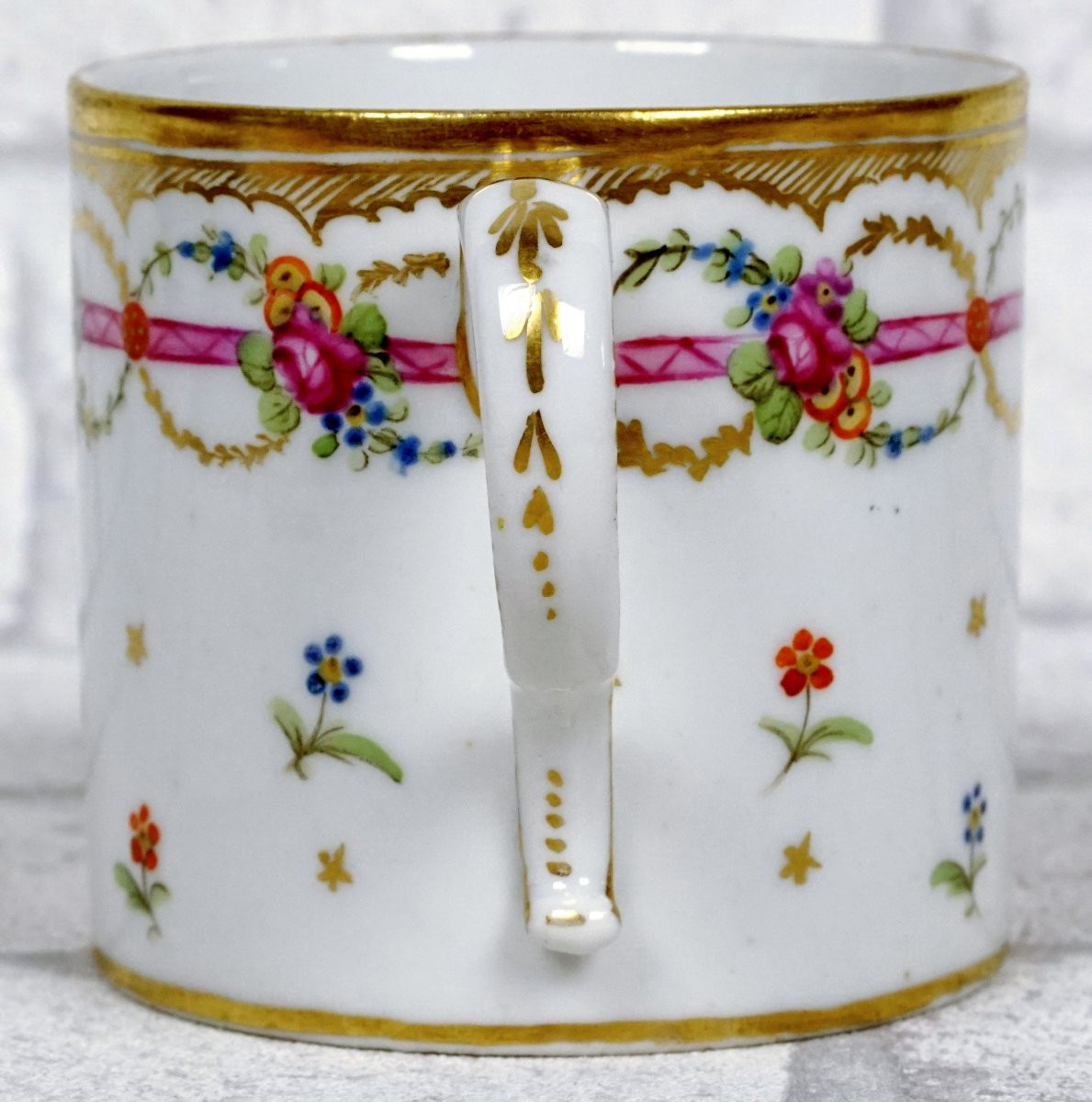
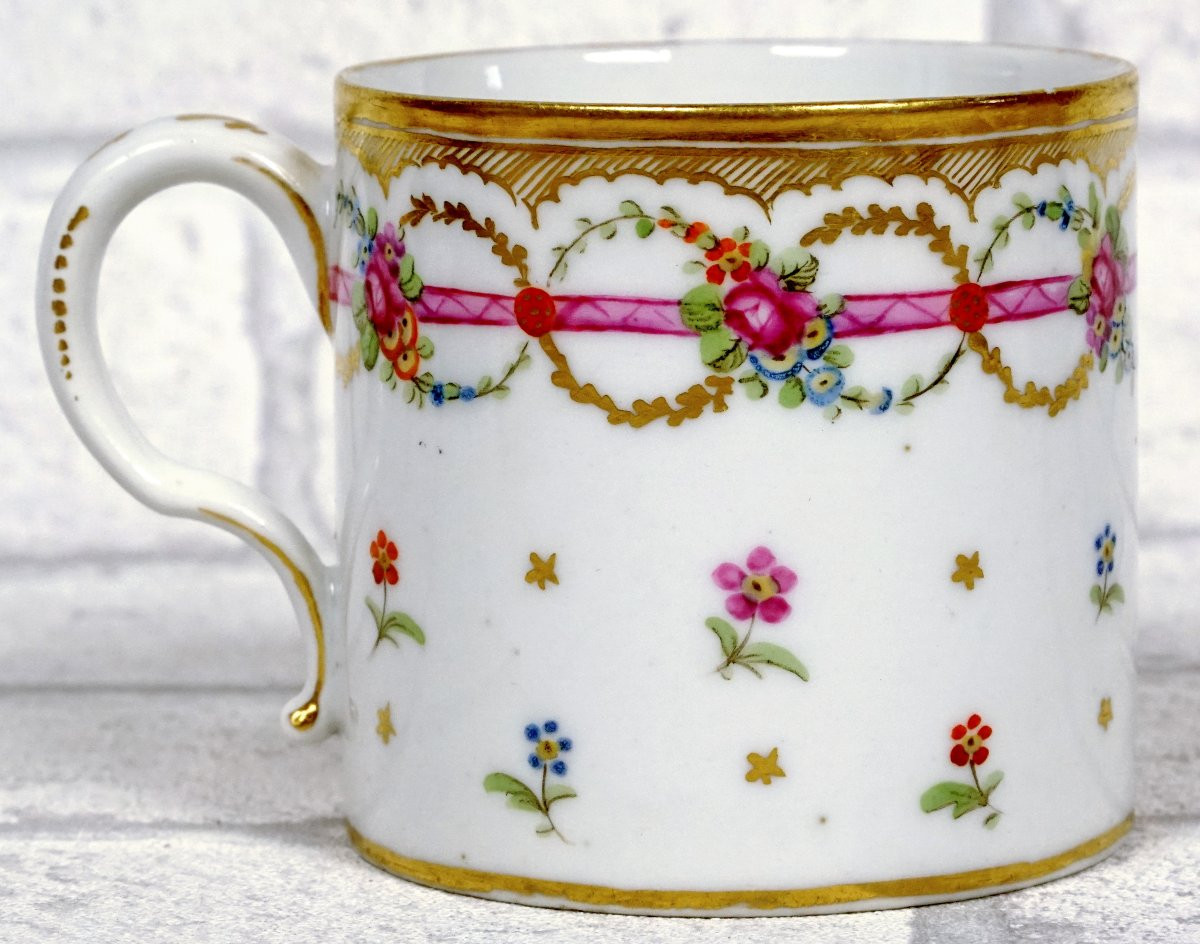
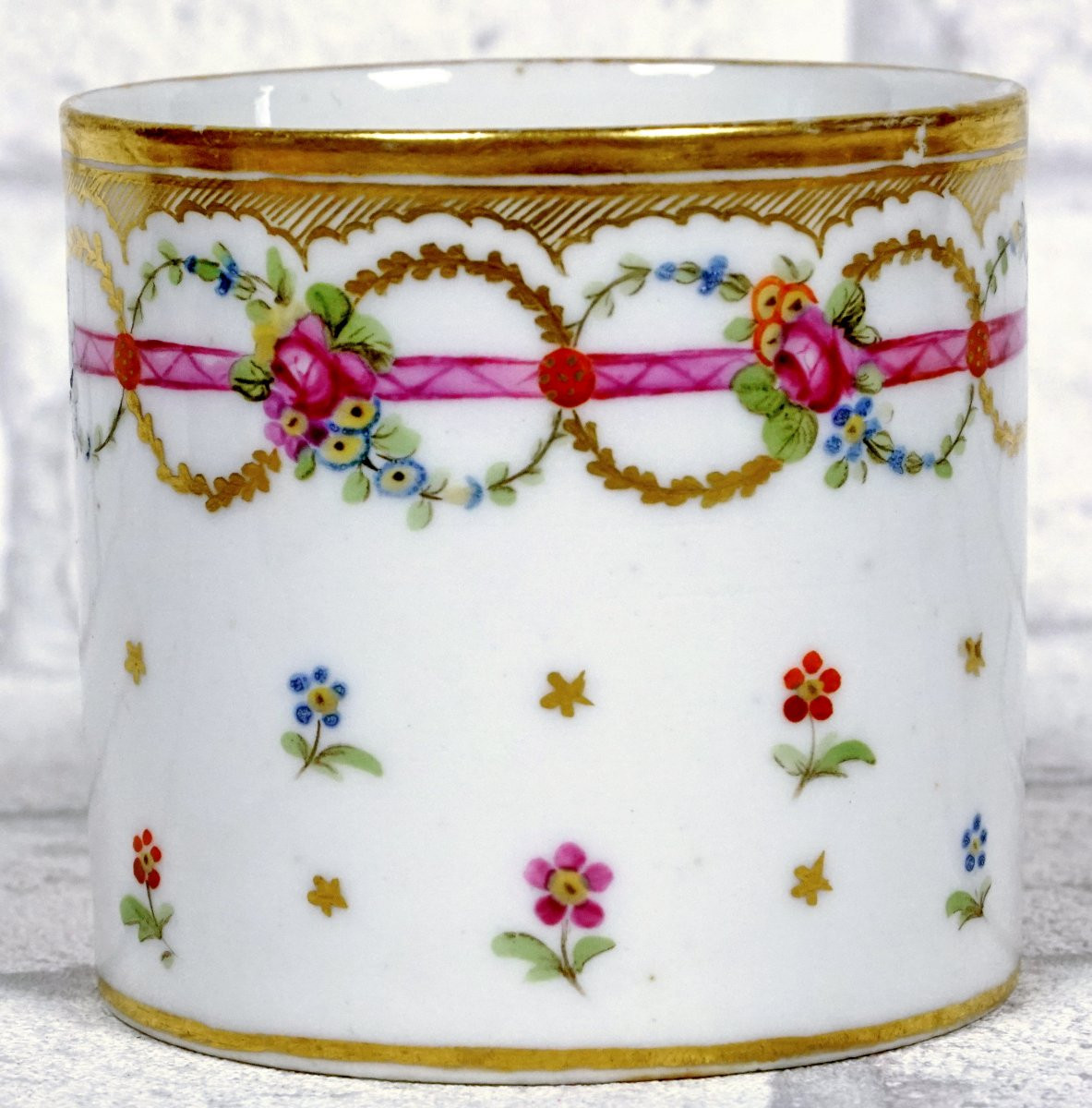
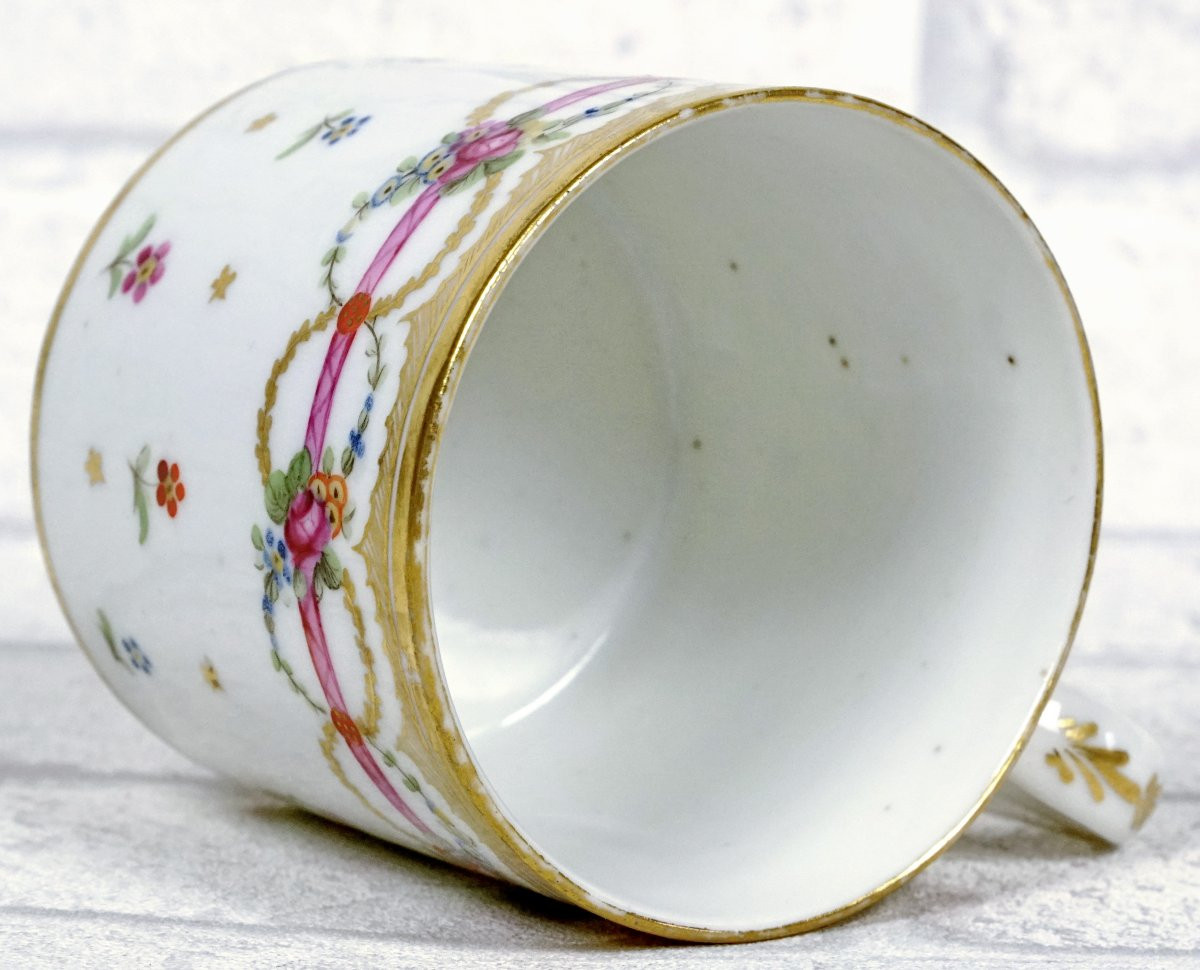
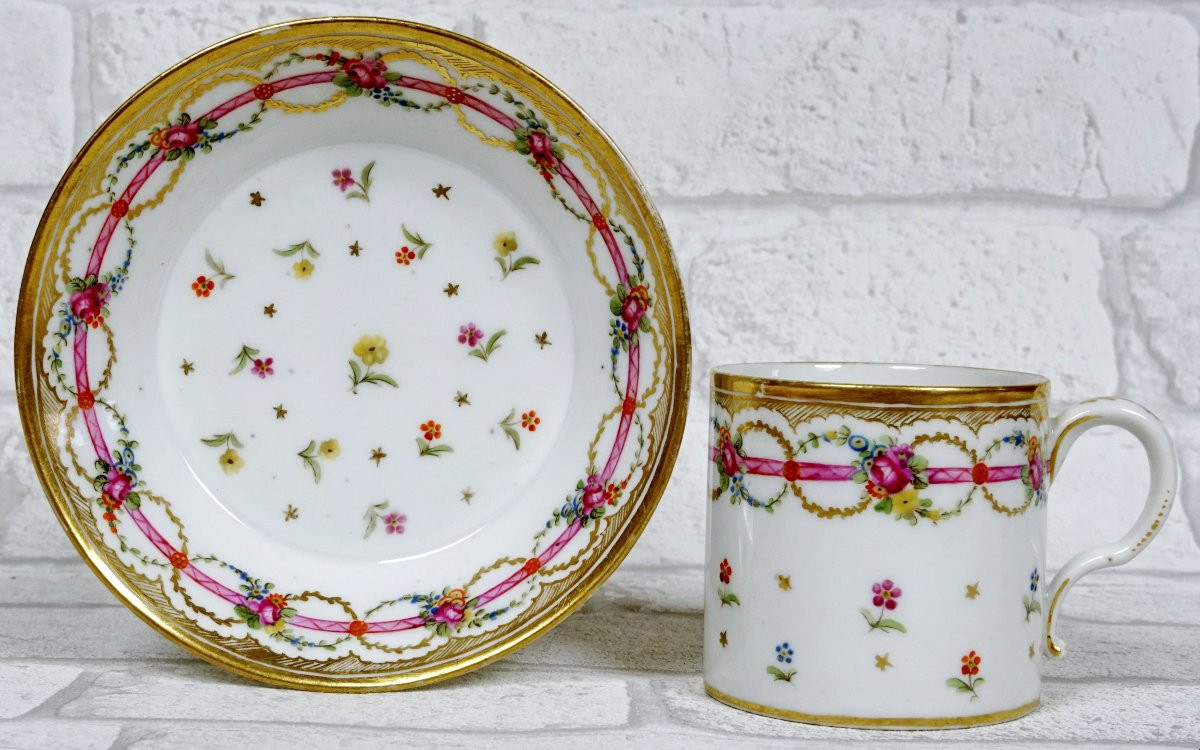
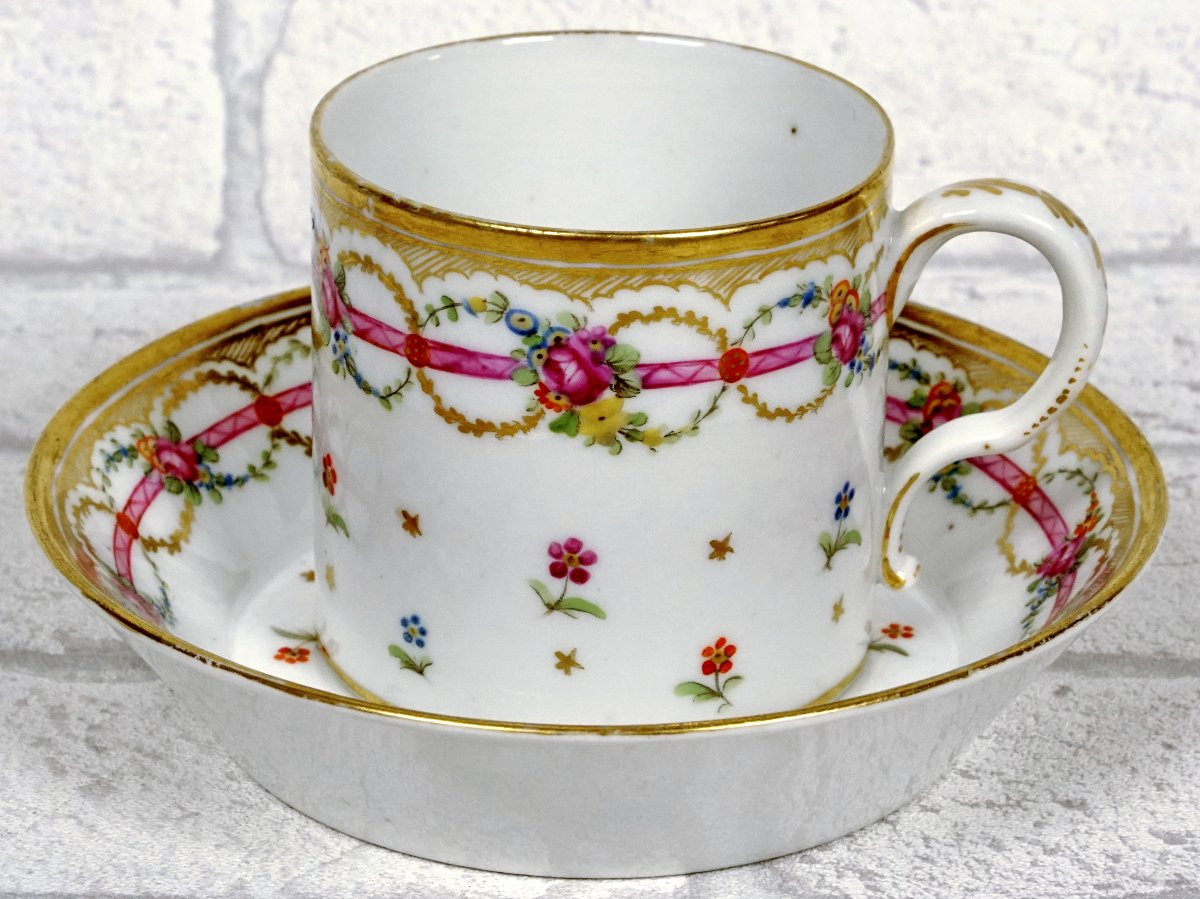


Litron-shaped, resting on a slight heel. Handle in the shape of a console foot.
HARDcorcelain.
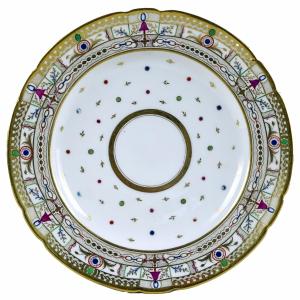
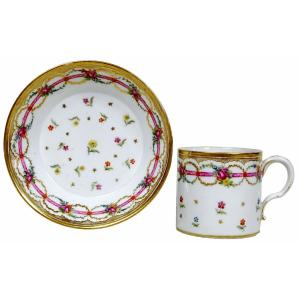
The cup and matching saucer feature a white background with polychrome decoration of a sowing of small flowers, in shades of pink, yellow, blue and green, accompanied by small scattered golden stars. The borders are highlighted with gold filets and an enrubannée frieze composed of a pink ribbon interlaced with garlands of flowers and gold scrolls, punctuated with small roses and florets.
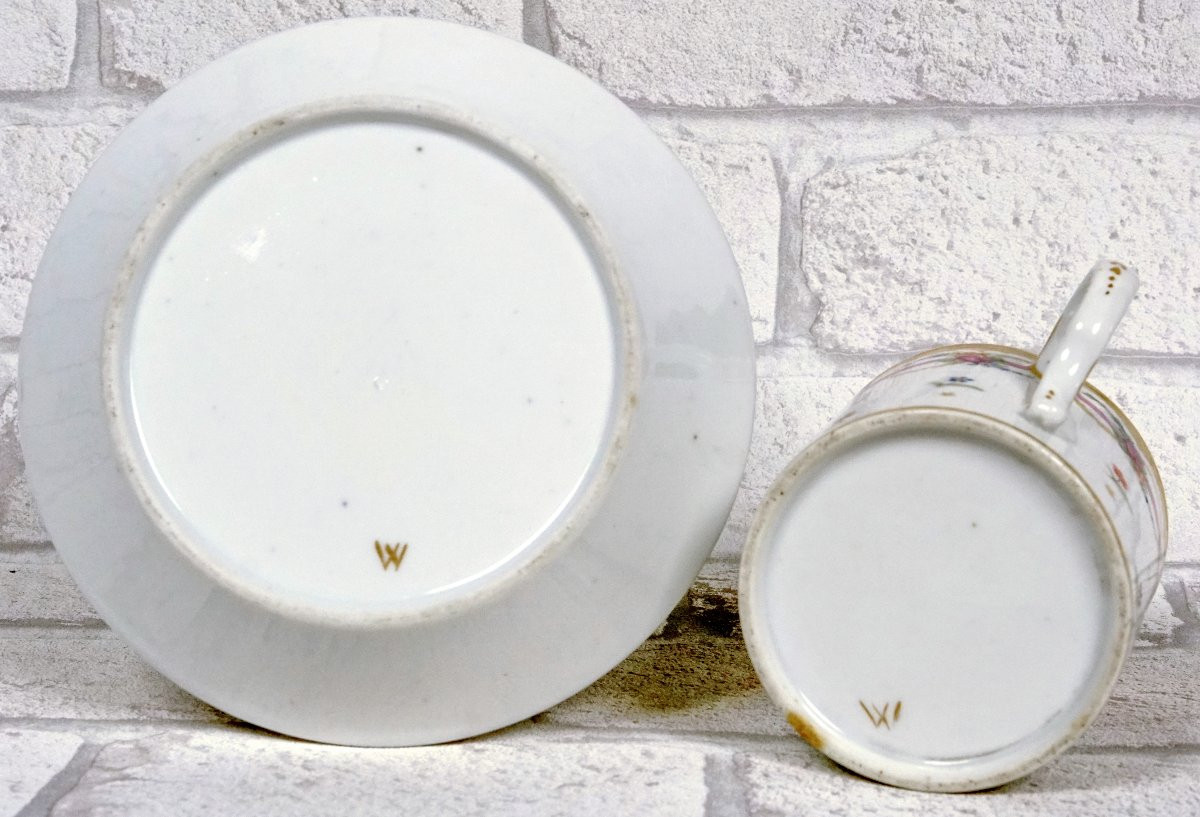
Mark(s) : Brush-painted in gold "VV",
Dimension(s) : Cup : Cup : Height 5.8 cm - Length 8.5 cm - Tureen. Diam. 12.5 cm,
Condition(s) : PERFECT CONDITION,
Epoque : XVIIIth.
BORDEAUX PORCELAIN
"VERNEUILH et NEUVEU" and NOT "Verneuilh et Vanier" but "ALLUAUD et VANIER
The naming of the Bordeaux porcelain factory is open to debate. Traditionally called "Verneuilh et Vanier", this name has been incorrect for many years.
No historical documentation confirms an association between the Verneuilhs and Michel Vanier. Research indicates that Pierre Verneuilh and his nephew Jean founded their own factory at Château des Terres de Bordes en Paludate, Bordeaux, in 1781. However, due to the mediocre quality of their production, they decided, in July 1787, to sublet the factory to Michel Vanier, an experienced porcelain maker from Valenciennes. According to a letter from Vanier to Alluaud dated November 10, 1787, the agreement stipulated that Vanier would produce white porcelain for the Verneuilhs, who would then buy these pieces to decorate in their Bordeaux workshops.
Faced with financial difficulties early on, six months after his arrival in Bordeaux, Vanier joined forces with François Alluaud of Limoges, his own supplier of earthenware, on January 1? 1788, in order to continue his white porcelain production. The decorated pieces resulting from this collaboration bear the mark "A.V." in bleu de grand feu, with or without the word "Bordeaux", meaning "Alluaud et Vanier". It is therefore impossible for Vanier to have been simultaneously associated with the Verneuilhs and Alluaud...
The pieces decorated by the Verneuilhs are marked with two "V "s, one next to the other or slightly overlapping, representing "Verneuilh et Neveu" (Pierre Verneuilh and his nephew Jean). Thus, the correct name of the factory is "VERNEUILH et NEVEU" and not "Verneuilh et Vanier", a misnomer widespread for many years.
In conclusion, although Michel Vanier played a significant role in porcelain production in Bordeaux, there is no evidence of a direct association between him and the Verneuilhs. The designation "VERNEUILH et NEVEU" therefore more accurately reflects the historical reality of the Verneuilh factory in Bordeaux between 1781 and 1786, after which it became solely a Bordeaux decoration workshop still called "VERNEUILH et NEUVEU" from 1787 to 179? (We don't know exactly when the Verneuilh decoration workshop ended). It should be noted that in 1793, the Verneuilhs were still purchasing stocks of Vanier's white porcelain, sold at auction following the closure of his factory in 1791. In addition, the Verneuilhs also purchased white porcelain from Parisian manufacturers such as Nast.
Ronan Lelandais
HARDcorcelain.
The cup and matching saucer feature a white background with polychrome decoration of a sowing of small flowers, in shades of pink, yellow, blue and green, accompanied by small scattered golden stars. The borders are highlighted with gold filets and an enrubannée frieze composed of a pink ribbon interlaced with garlands of flowers and gold scrolls, punctuated with small roses and florets.
Mark(s) : Brush-painted in gold "VV",
Dimension(s) : Cup : Cup : Height 5.8 cm - Length 8.5 cm - Tureen. Diam. 12.5 cm,
Condition(s) : PERFECT CONDITION,
Epoque : XVIIIth.
BORDEAUX PORCELAIN
"VERNEUILH et NEUVEU" and NOT "Verneuilh et Vanier" but "ALLUAUD et VANIER
The naming of the Bordeaux porcelain factory is open to debate. Traditionally called "Verneuilh et Vanier", this name has been incorrect for many years.
No historical documentation confirms an association between the Verneuilhs and Michel Vanier. Research indicates that Pierre Verneuilh and his nephew Jean founded their own factory at Château des Terres de Bordes en Paludate, Bordeaux, in 1781. However, due to the mediocre quality of their production, they decided, in July 1787, to sublet the factory to Michel Vanier, an experienced porcelain maker from Valenciennes. According to a letter from Vanier to Alluaud dated November 10, 1787, the agreement stipulated that Vanier would produce white porcelain for the Verneuilhs, who would then buy these pieces to decorate in their Bordeaux workshops.
Faced with financial difficulties early on, six months after his arrival in Bordeaux, Vanier joined forces with François Alluaud of Limoges, his own supplier of earthenware, on January 1? 1788, in order to continue his white porcelain production. The decorated pieces resulting from this collaboration bear the mark "A.V." in bleu de grand feu, with or without the word "Bordeaux", meaning "Alluaud et Vanier". It is therefore impossible for Vanier to have been simultaneously associated with the Verneuilhs and Alluaud...
The pieces decorated by the Verneuilhs are marked with two "V "s, one next to the other or slightly overlapping, representing "Verneuilh et Neveu" (Pierre Verneuilh and his nephew Jean). Thus, the correct name of the factory is "VERNEUILH et NEVEU" and not "Verneuilh et Vanier", a misnomer widespread for many years.
In conclusion, although Michel Vanier played a significant role in porcelain production in Bordeaux, there is no evidence of a direct association between him and the Verneuilhs. The designation "VERNEUILH et NEVEU" therefore more accurately reflects the historical reality of the Verneuilh factory in Bordeaux between 1781 and 1786, after which it became solely a Bordeaux decoration workshop still called "VERNEUILH et NEUVEU" from 1787 to 179? (We don't know exactly when the Verneuilh decoration workshop ended). It should be noted that in 1793, the Verneuilhs were still purchasing stocks of Vanier's white porcelain, sold at auction following the closure of his factory in 1791. In addition, the Verneuilhs also purchased white porcelain from Parisian manufacturers such as Nast.
Ronan Lelandais
Explore similar pieces and discover your ideal find:
Porcelain Serveware