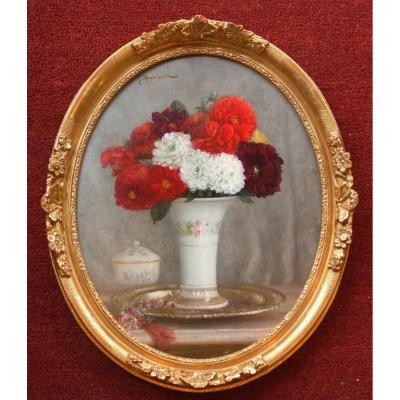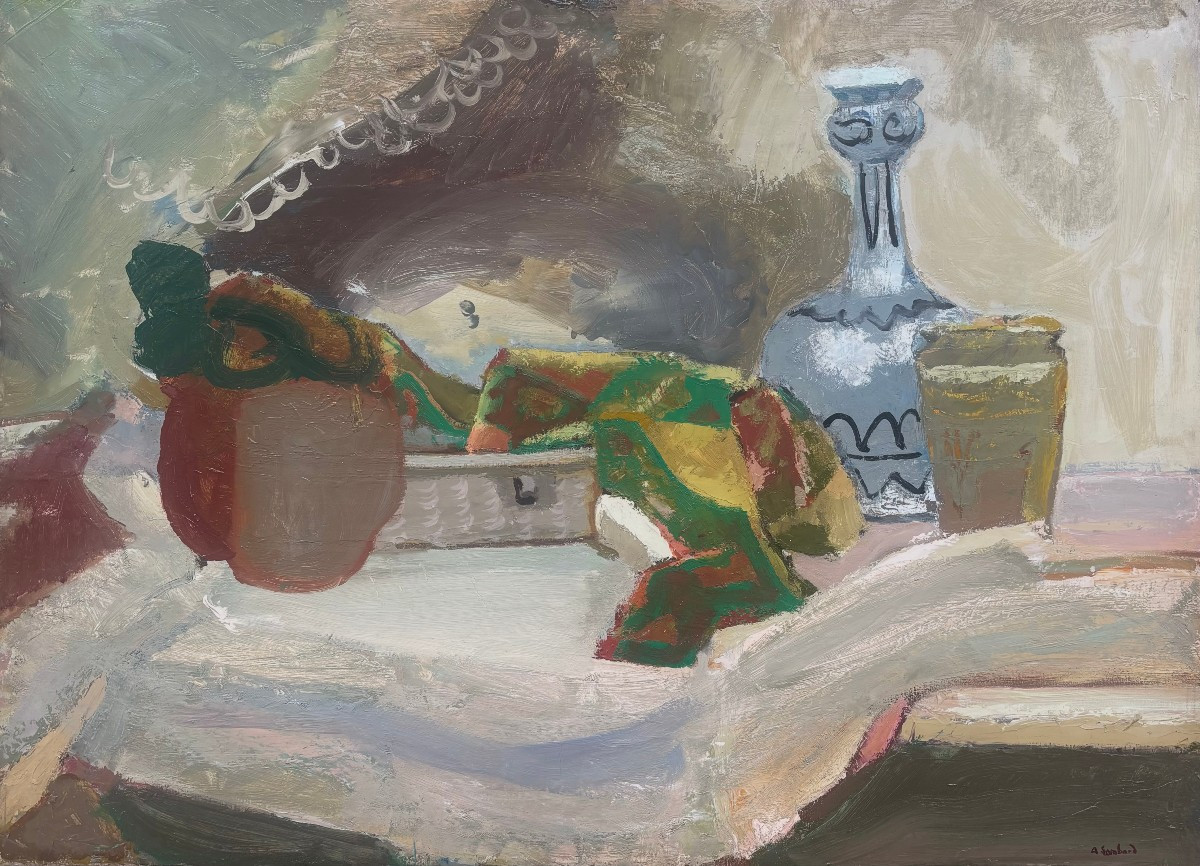
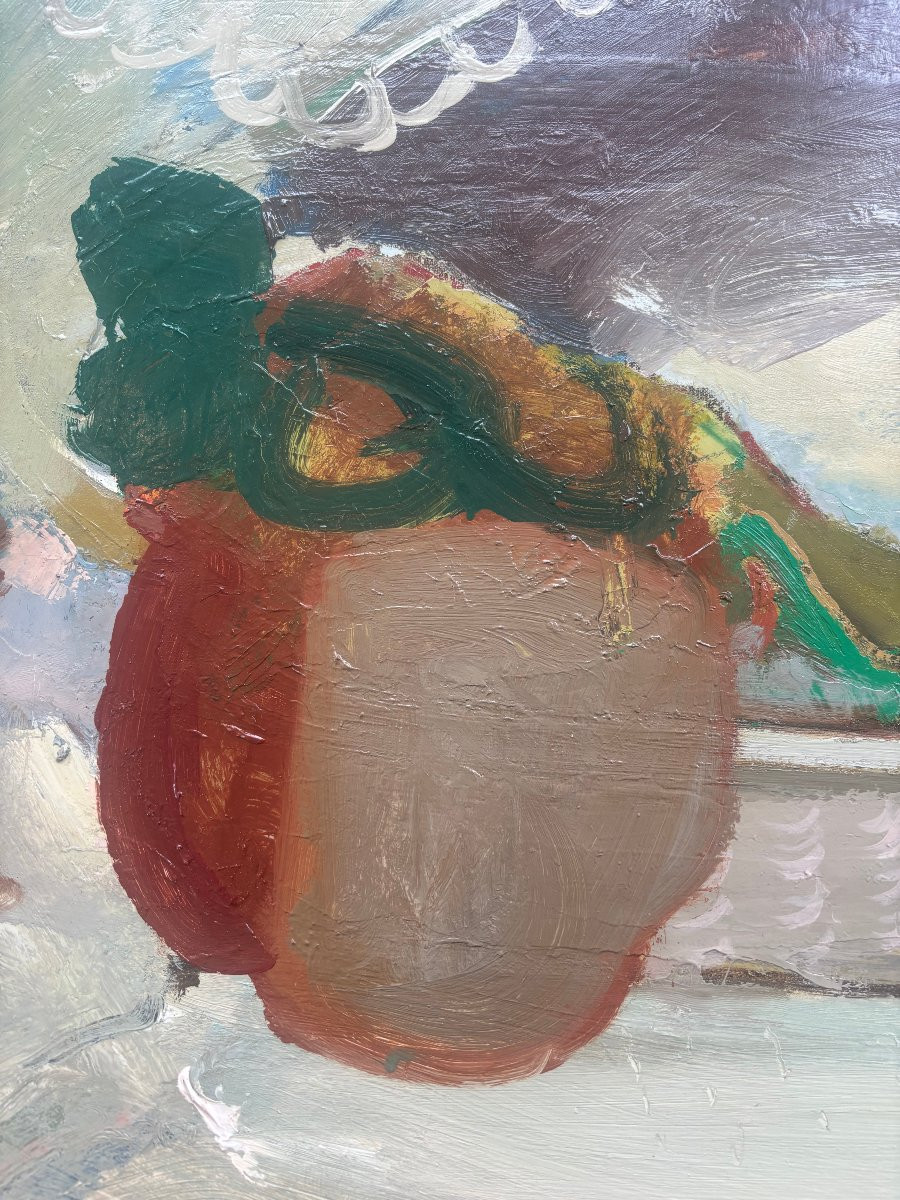
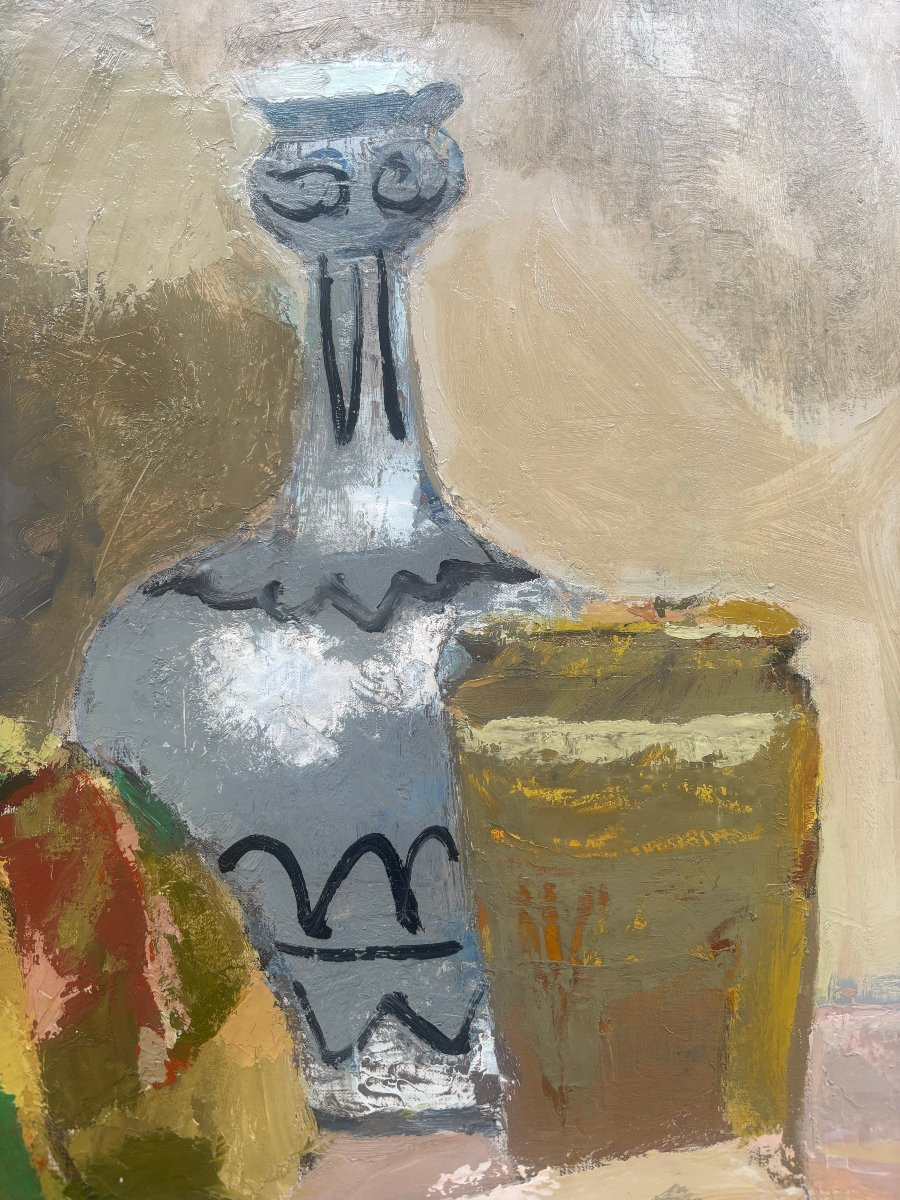
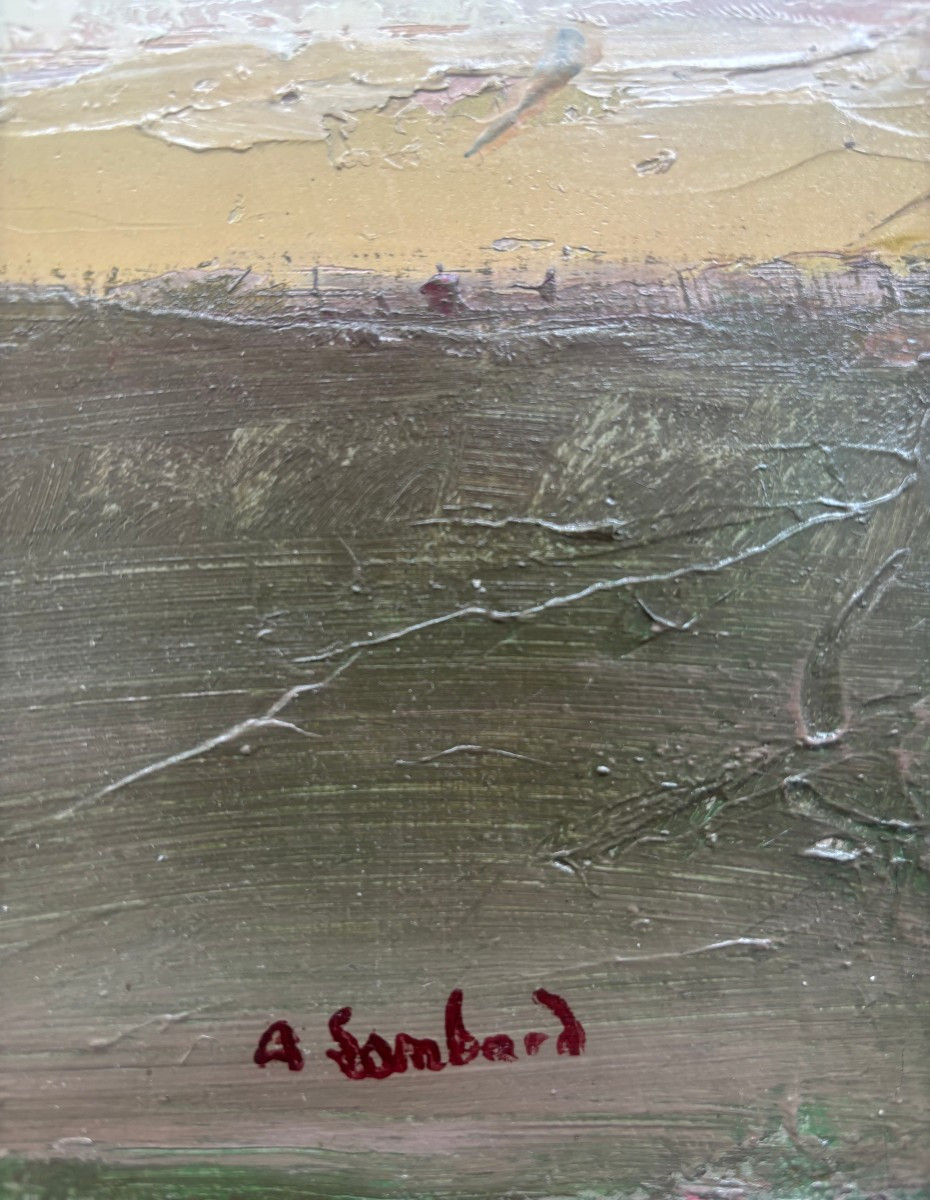
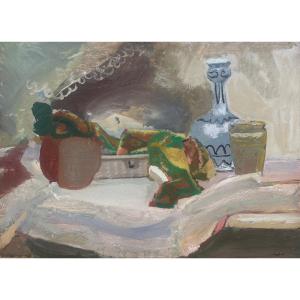


Alfred Lombard (1884-1973) - Still Life With Delft Vase, C. 1939
Artist: Alfred Lombard (1884-1973)
Alfred Lombard (1884-1973)
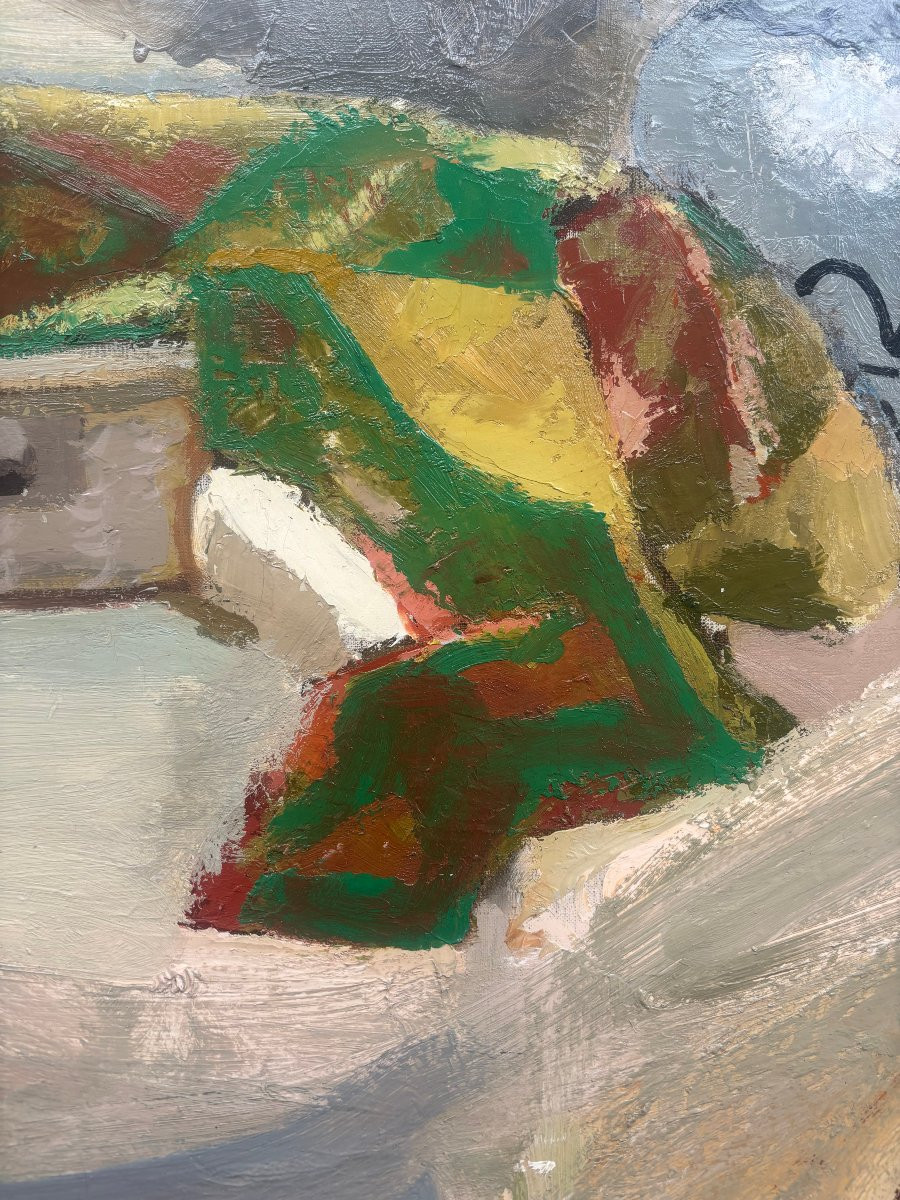
Still life with Delft vase, c. 1939
Oil on canvas, artist's studio stamp lower right
73 x 100 cm
Alfred Lombard: Free-spirited painter and pioneer of modernism in Provence
Born in Marseilles in 1884 to a bourgeois family, Alfred Lombard was an artist with a singular trajectory, deeply rooted in Provence but open to the avant-gardes of his time. Initially committed to studying history and literature to satisfy family expectations, he soon abandoned this path to follow his true calling: painting.
From the outset, he rejected rigid academicism and sought to learn through direct contact with works, artists and nature.
His artistic career began in Alphonse Moutte's studio, before asserting itself in total independence. Driven by an ideal of creative freedom, Lombard joined a generation of Provençal artists - Camoin, Verdilhan, Chabaud, Seyssaud - with whom he shared a desire to renew local art and break the region's cultural isolation. Together, they initiated a "Provençal renaissance" designed to put Marseille and the surrounding area on the national artistic map. This movement was embodied in the creation of the Salon de Provence in 1906 and, a few years later, in the Salons de Mai.
At the same time, Lombard quickly made a name for himself at the Parisian Salons, where he was recognized as one of the promising young Fauvist painters. He had two solo exhibitions at the prestigious Rosenberg (1914) and Druet (1925) galleries.
However, the artist rejected the commercial logic of the art world and chose to distance himself from it. In the 1920s, his style evolved: less flamboyant, more introspective, he explored still lifes and nudes in refined compositions, where color remained at the heart of his research. Then, in the 1930s, he turned to monumental decorative art, thanks in particular to his collaboration with architect Pierre Patout. Together, they designed prestigious decors such as those for the liners Atlantique (1931) and Normandie (1934). Lombard's approach continued into the 1970s, marked by an openness to abstraction and a constant questioning of the place of the artist and the creative gesture. Alfred Lombard died in Toulon in 1973.
His work remained confidential for a long time, but was rediscovered in the 1980s thanks to the commitment of his daughter, Claude Féral, and institutions such as the Musée de l'Annonciade and the Alexis Pentcheff gallery, which devoted a major retrospective to him in 2014. The publication in 2019 of a monograph and a catalog raisonné essay by Giulia Pentcheff consecrates this belated rediscovery. Today, Lombard emerges as an essential, if long-forgotten, figure of artistic modernity in Provence - a free, daring, unclassifiable painter who combined tradition, revolt and invention.
Discover more of this artist's work on the gallery's website: https://www.galeriepentcheff.fr/fr/peintre-alfred-lombard#Oeuvres
Still life with Delft vase, c. 1939
Oil on canvas, artist's studio stamp lower right
73 x 100 cm
Alfred Lombard: Free-spirited painter and pioneer of modernism in Provence
Born in Marseilles in 1884 to a bourgeois family, Alfred Lombard was an artist with a singular trajectory, deeply rooted in Provence but open to the avant-gardes of his time. Initially committed to studying history and literature to satisfy family expectations, he soon abandoned this path to follow his true calling: painting.
From the outset, he rejected rigid academicism and sought to learn through direct contact with works, artists and nature.
His artistic career began in Alphonse Moutte's studio, before asserting itself in total independence. Driven by an ideal of creative freedom, Lombard joined a generation of Provençal artists - Camoin, Verdilhan, Chabaud, Seyssaud - with whom he shared a desire to renew local art and break the region's cultural isolation. Together, they initiated a "Provençal renaissance" designed to put Marseille and the surrounding area on the national artistic map. This movement was embodied in the creation of the Salon de Provence in 1906 and, a few years later, in the Salons de Mai.
At the same time, Lombard quickly made a name for himself at the Parisian Salons, where he was recognized as one of the promising young Fauvist painters. He had two solo exhibitions at the prestigious Rosenberg (1914) and Druet (1925) galleries.
However, the artist rejected the commercial logic of the art world and chose to distance himself from it. In the 1920s, his style evolved: less flamboyant, more introspective, he explored still lifes and nudes in refined compositions, where color remained at the heart of his research. Then, in the 1930s, he turned to monumental decorative art, thanks in particular to his collaboration with architect Pierre Patout. Together, they designed prestigious decors such as those for the liners Atlantique (1931) and Normandie (1934). Lombard's approach continued into the 1970s, marked by an openness to abstraction and a constant questioning of the place of the artist and the creative gesture. Alfred Lombard died in Toulon in 1973.
His work remained confidential for a long time, but was rediscovered in the 1980s thanks to the commitment of his daughter, Claude Féral, and institutions such as the Musée de l'Annonciade and the Alexis Pentcheff gallery, which devoted a major retrospective to him in 2014. The publication in 2019 of a monograph and a catalog raisonné essay by Giulia Pentcheff consecrates this belated rediscovery. Today, Lombard emerges as an essential, if long-forgotten, figure of artistic modernity in Provence - a free, daring, unclassifiable painter who combined tradition, revolt and invention.
Discover more of this artist's work on the gallery's website: https://www.galeriepentcheff.fr/fr/peintre-alfred-lombard#Oeuvres
1 200 €
Period: 20th century
Style: Other Style
Condition: Excellent condition
Material: Oil painting
Length: 73
Width: 100
Reference (ID): 1752928
Availability: In stock
Print