THIS OBJECT WAS SOLD
Francois Cachoud (1866-1943) Night On Chanaz And The Savières Canal. Lyon, Chambéry, Savoie...
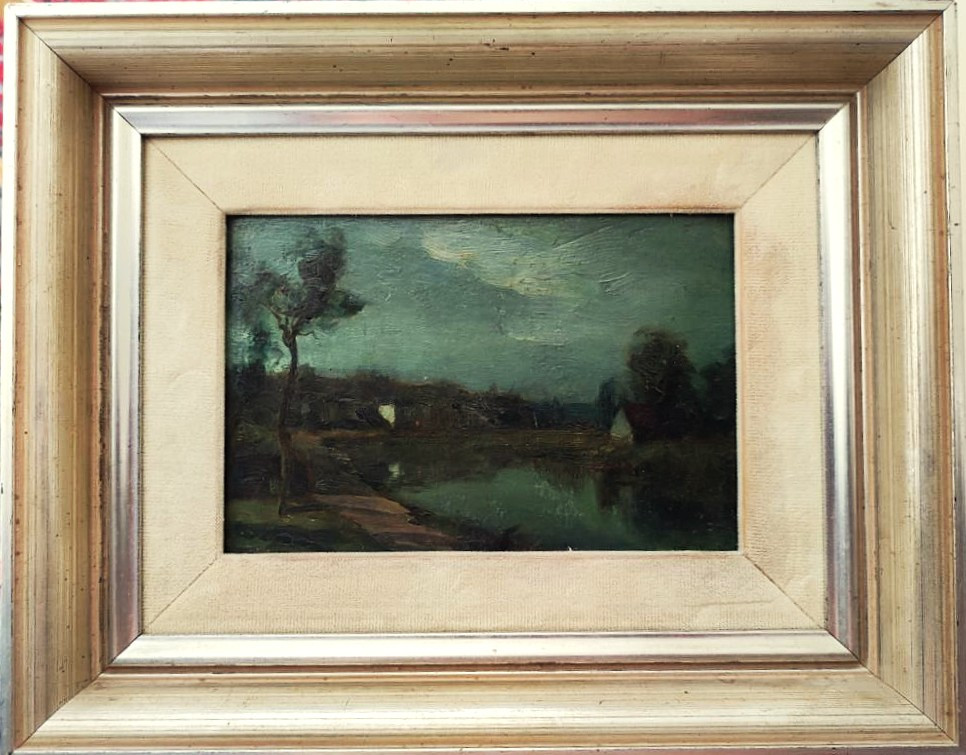
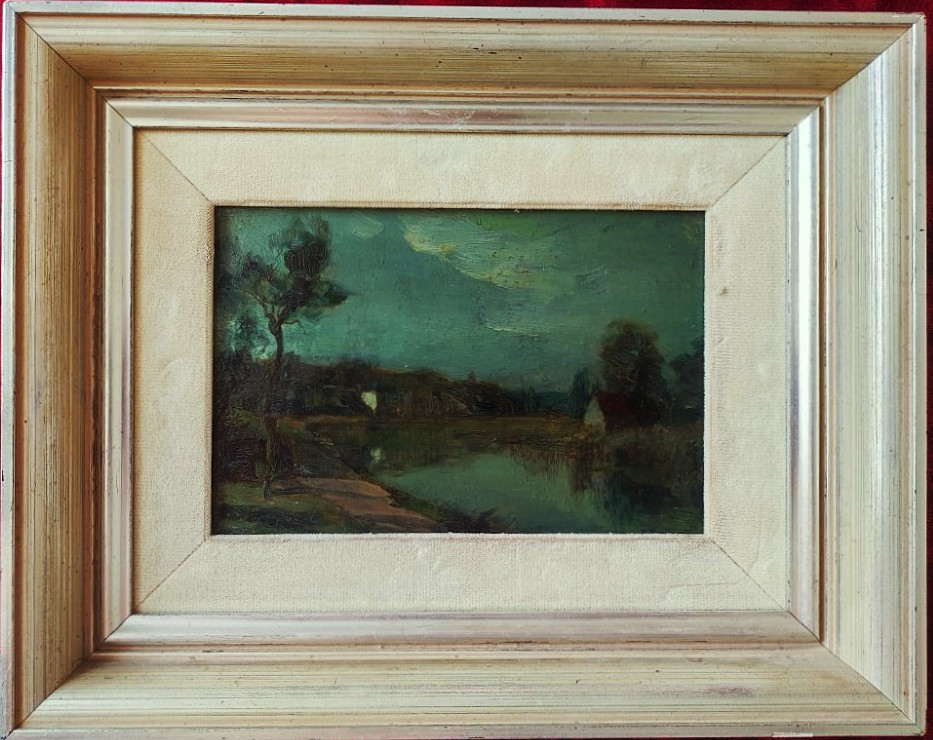
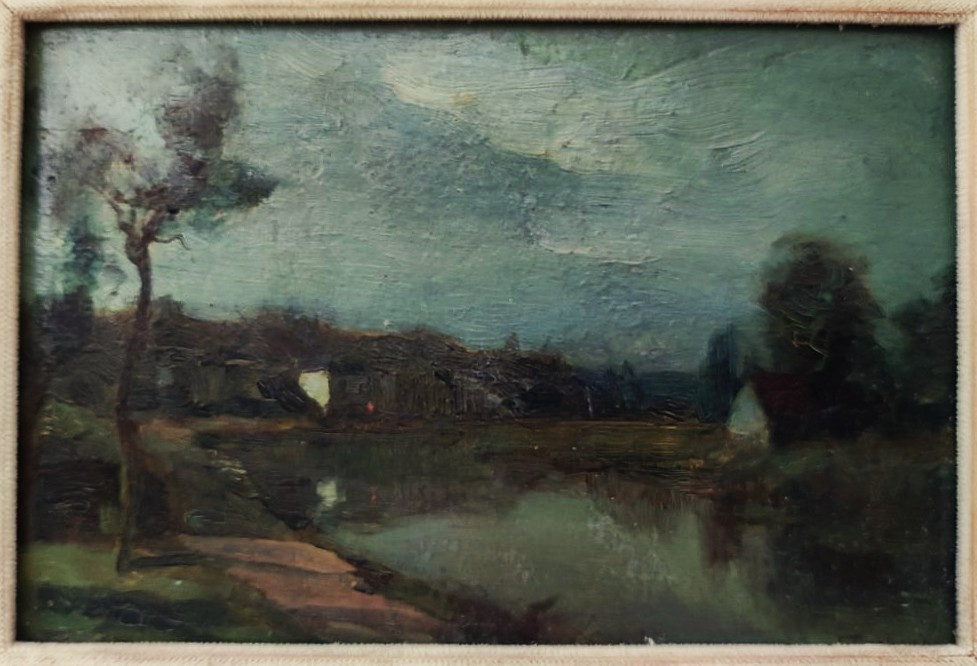
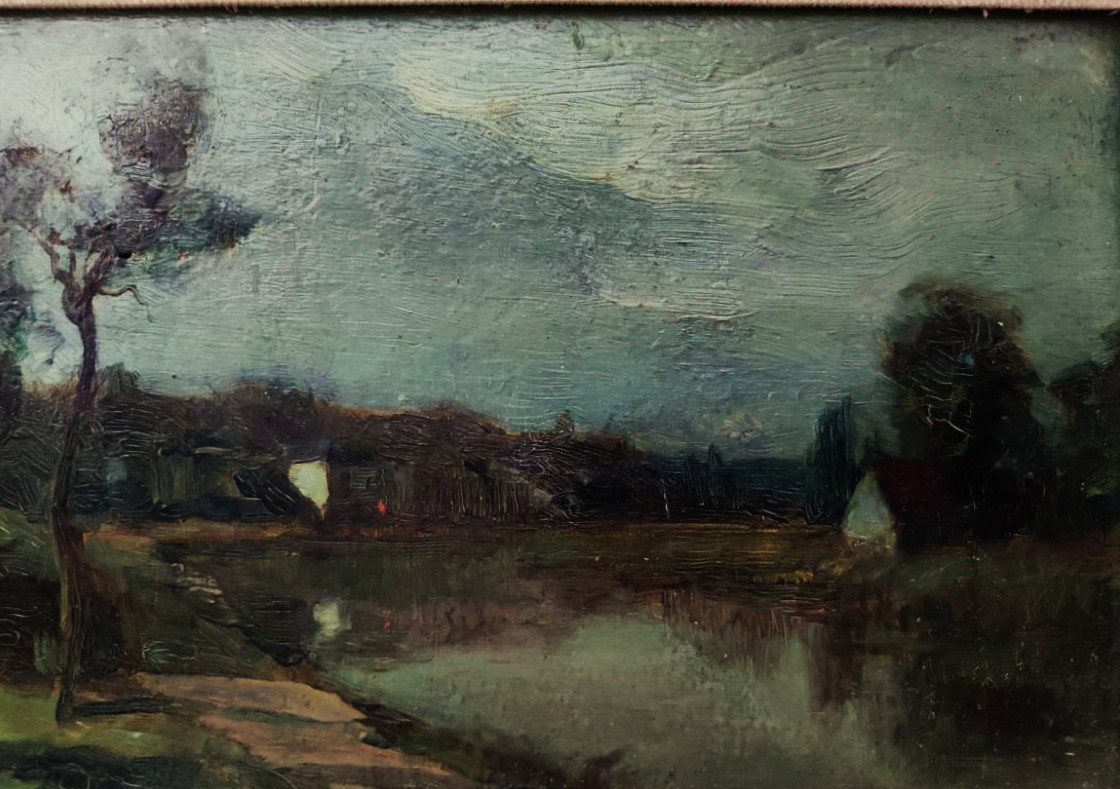
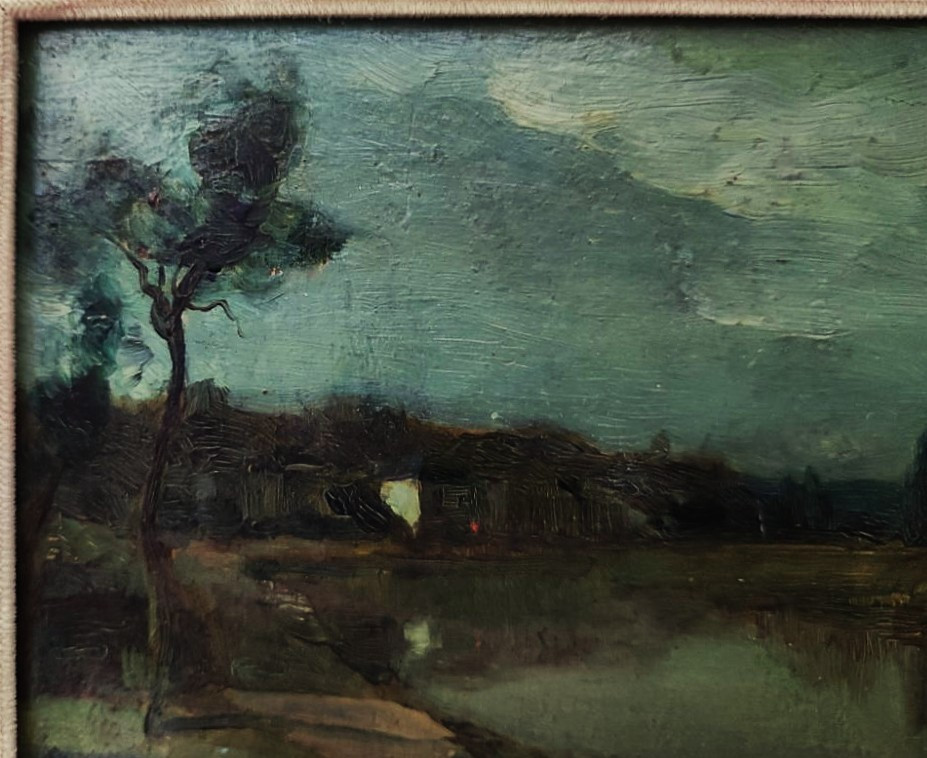
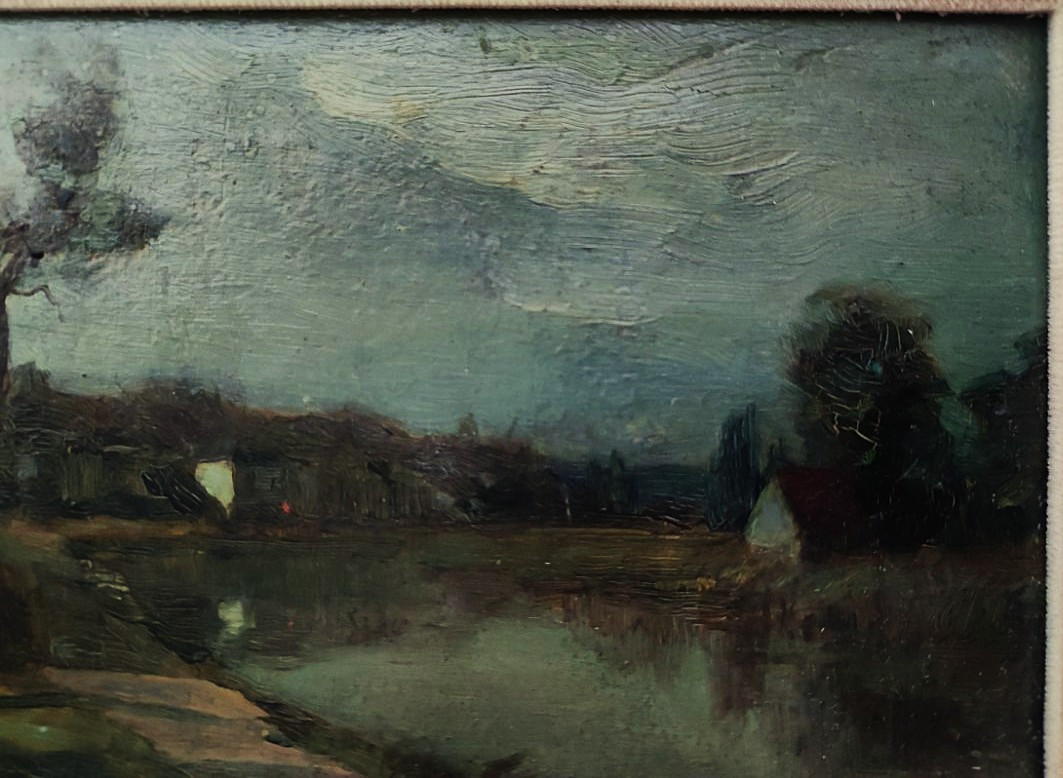
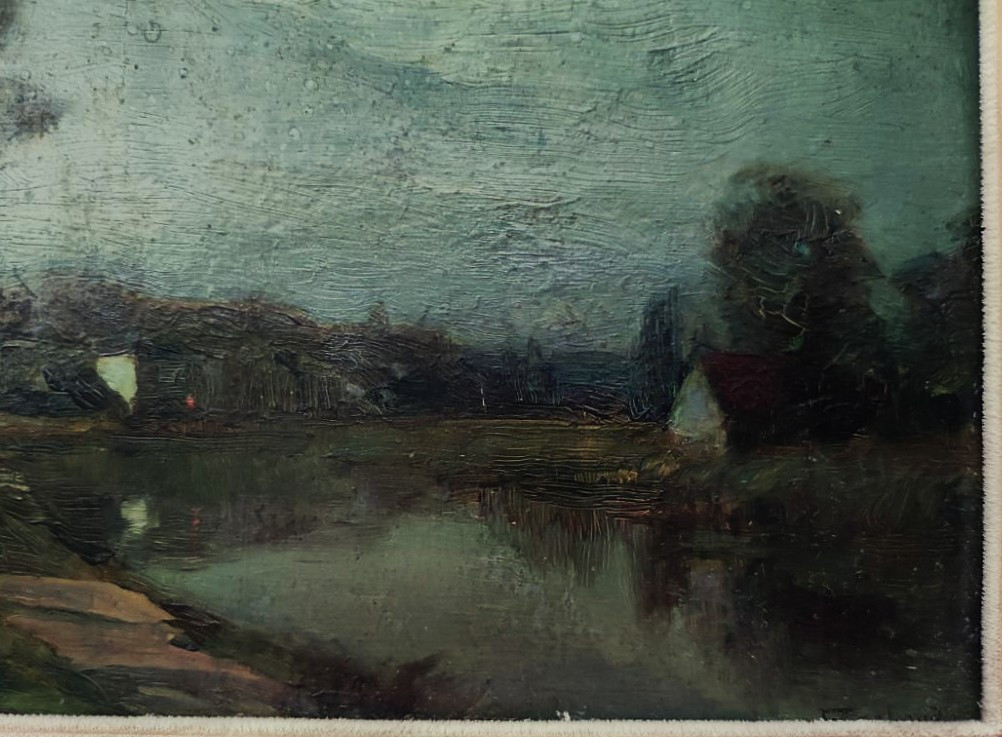
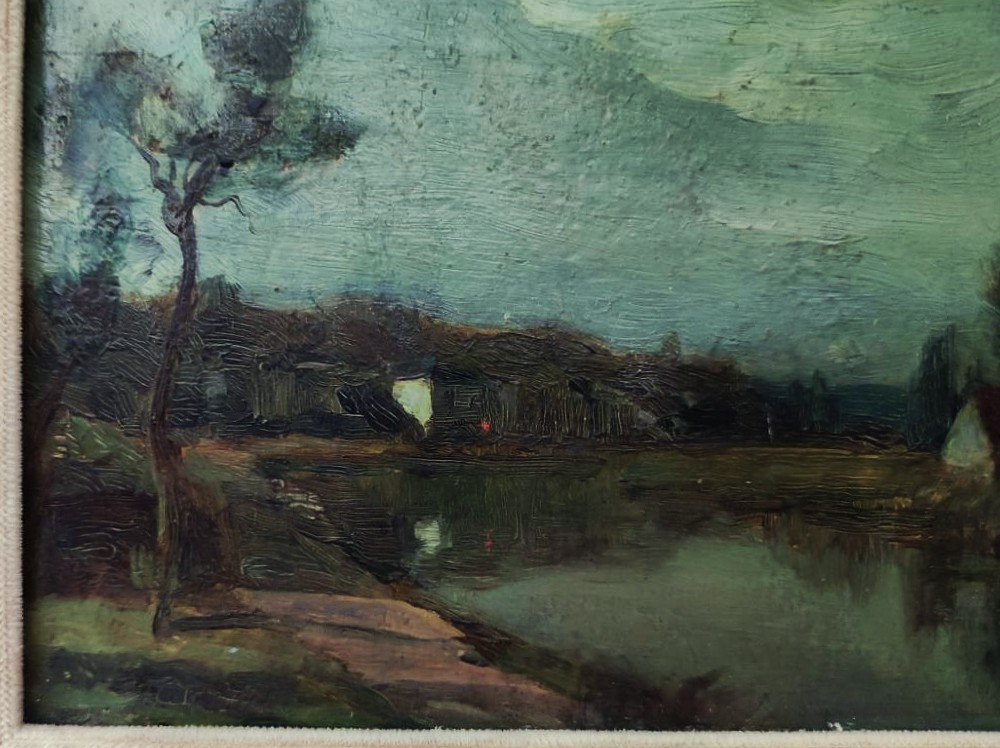
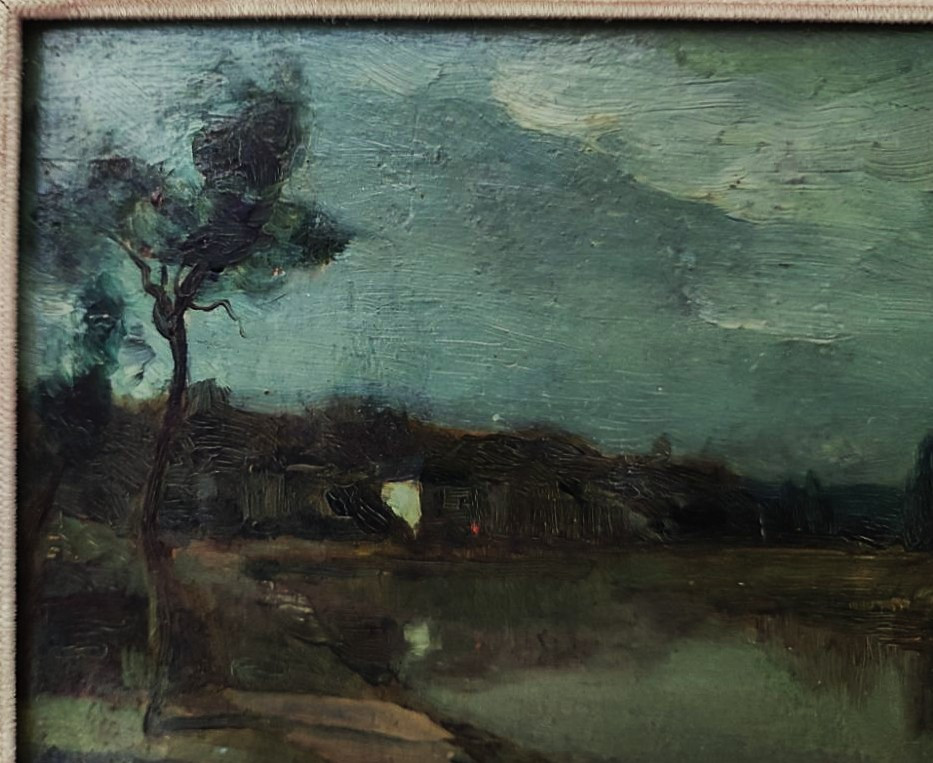
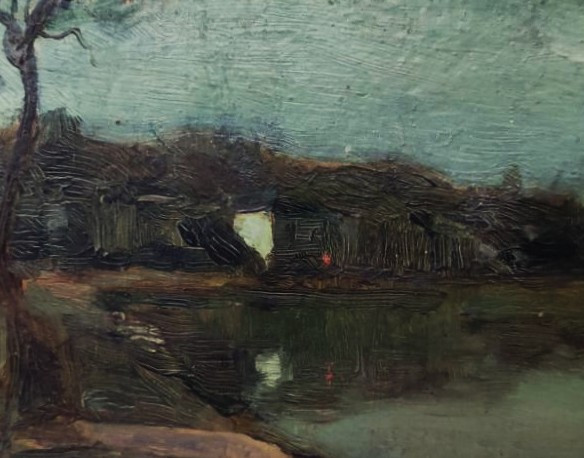
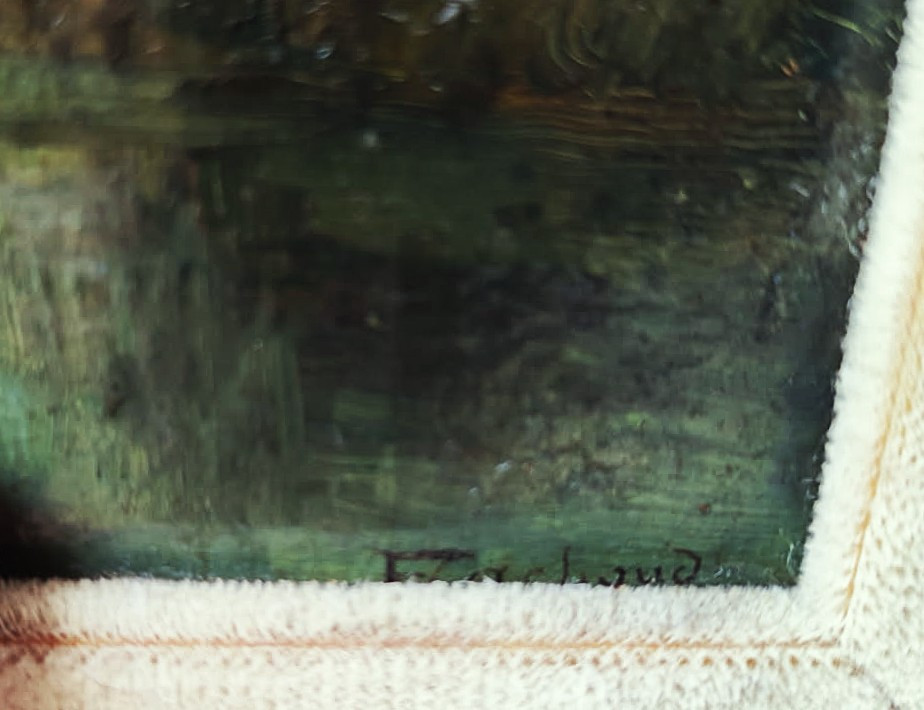
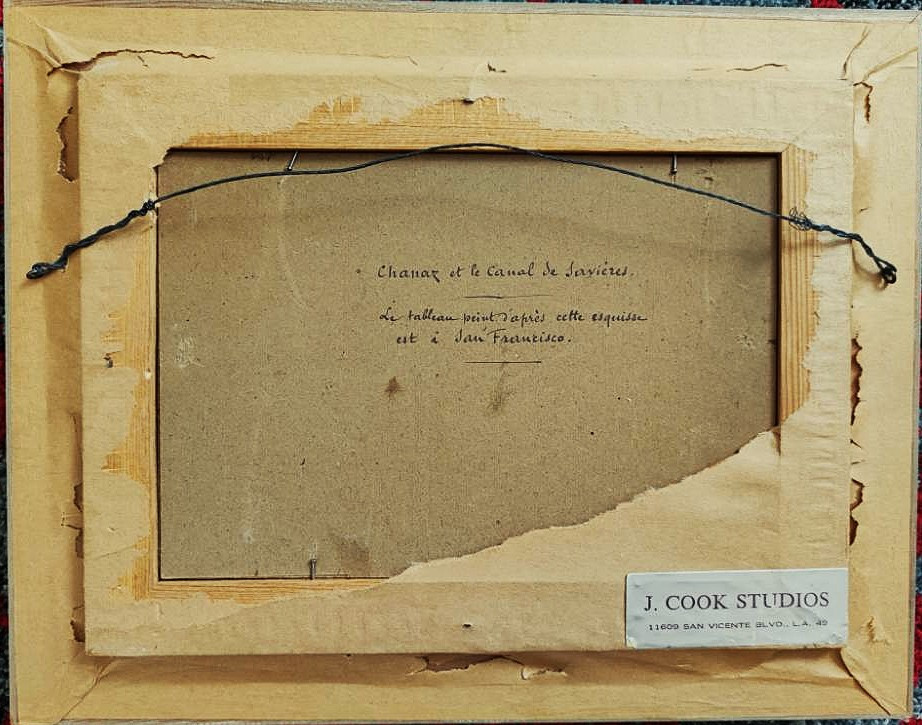
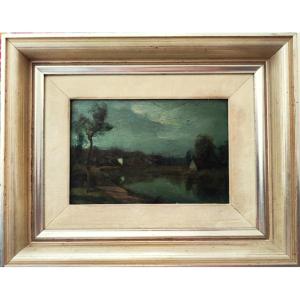


Superb small oil on cardboard by François Charles Cachoud depicting a night view of Chanaz and the Savières Canal, signed lower right and located on the back with the inscription "the painting based on this sketch is in San Francisco" and an old gallery label from Los Angeles. The painting measures 14 x 20.5 cm without the frame and 20 x 30.5 cm with the frame. The painting is in very good condition and comes in a very attractive modern frame with a silver patina. The work is guaranteed authentic. This is a magnificent study by François Cachoud, who painted Chanaz and the Savières Canal, located at the end of Lake Bourget in Savoy. Cachoud naturally paints it at night, capturing an atmosphere that was uniquely his own, using blues and grays, browns, dark greens, and here, a tiny but very subtle touch of red that simulates artificial light reflecting in the water—a small detail that enhances the captivating charm of this painting. François Cachoud needs no introduction. This painter of the Lyon school, now internationally renowned for his nocturnal scenes, is known as the Corot of the night. François Charles Cachoud, born October 23, 1866, in Chambéry (Savoie) and died January 29, 1943, in Saint-Alban-de-Montbel (Savoie), was a French painter renowned for his nighttime effects and chiaroscuro. His artistic principles are close to those of the Barbizon School. François-Charles Cachoud was born on October 23, 1866, in Chambéry. He was the son of a baker in the city. He began his apprenticeship as a painter under Benoît Molin at the Chambéry School of Painting. In 1883, he joined the Corps of Bridges and Roads, then attended the École des Beaux-Arts in Paris in 1889, thanks to a scholarship from the Savoie General Council. Settling in Paris, he lived at 120 Boulevard de la Chapelle. He resided in Montparnasse and shared the life of an artist in Paris with his friend, the Chambéry sculptor Mars Vallett (1869-1957). He became a student of Jules-Élie Delaunay and then, most notably, of Gustave Moreau. Mars Vallett became curator of the Chambéry Museum in 1904, then of the Charmettes Museum in 1907, and finally of the Musée Savoisien in 1940. His work ranges from landscapes and still lifes to intimate portraits. His use of night and chiaroscuro has made him famous. In 1889, he received the Guy Foundation Prize. In 1891, he exhibited at the Salon des Artistes Français, with his painting *Un effet de matin* (A Morning Effect), and received a prize from the Troyon Foundation for *À la nuit tombante, un bouvier et ses bœufs quittent les champs* (At Nightfall, a Herdsman and His Oxen Leave the Fields). The following year, he painted *Soleil couchant à Vanves* (Sunset at Vanves), which has since been bequeathed to the Chambéry Museum. In 1893, he received an honorable mention at the Salon des Artistes Français with *Une Matinée de septembre au lac d’Aiguebelette* (A September Morning at Lake Aiguebelette) and was awarded the prize of the Académie de Savoie, as was his friend, the watercolorist Ernest Filliard (1868-1933). In 1896, he submitted his painting *Soleil couchant, un coin de Chautagne* (Sunset, a Corner of Chautagne), exhibited at the Salon, to the Commission d’Instruction Publique (Commission of Public Instruction), chaired by Jules Daisay, curator of the museum. Also in 1896, he was awarded a 3rd class medal for his painting *Le Lac de Lamartine*, exhibited in 1900 at the decennial exhibition at the Grand Cercle in Aix-les-Bains and a bronze medalist at the 1900 Paris Universal Exposition. Married to Rosine Veleine, originally from Pas-de-Calais, he was also inspired by her landscapes, and *L'heure du grillon*, his work exhibited outside of competition at the 1902 Salon, was purchased by the American painter Thomas Alexander Harrison for the Philadelphia Museum of Art. Appointed painter to the Ministry of the Navy, he created the decorative panels for the ocean liner *La Savoie* in 1901 and produced advertising posters and decorative panels for the P.L.M. railway company. On March 5, 1903, he was elected to the Academy of Sciences, Fine Arts and Letters of Savoy with the academic title of Corresponding Member. It was only from 1905 onwards that his style shifted towards nocturnal rural scenes, such as the Nocturnes series from 1908, 1911, and 1914, exhibited at the Georges-Petit gallery in Paris. These works garnered critical acclaim and were subsequently acquired by museums. He was then nicknamed "The Corot of the Night," in reference to Jean-Baptiste Corot. He exhibited at the Salon des Artistes Français until 1940 and became a member of the committee. Around 1913, he formed a close friendship with Victor Charreton, a landscape painter of the Lyon school, who was also drawn to the effects of twilight. In 1910, his source of inspiration became his country house, Le Grillon, which he had built in Saint-Alban-de-Montbel, a village on the shores of Lake Aiguebelette, where he is buried. He won the gold medal at the Universal Exhibition in Paris in 1937 for one of his nocturnal landscapes, Clearing, Moonlit Night.
Explore similar pieces and discover your ideal find:
Landscapes