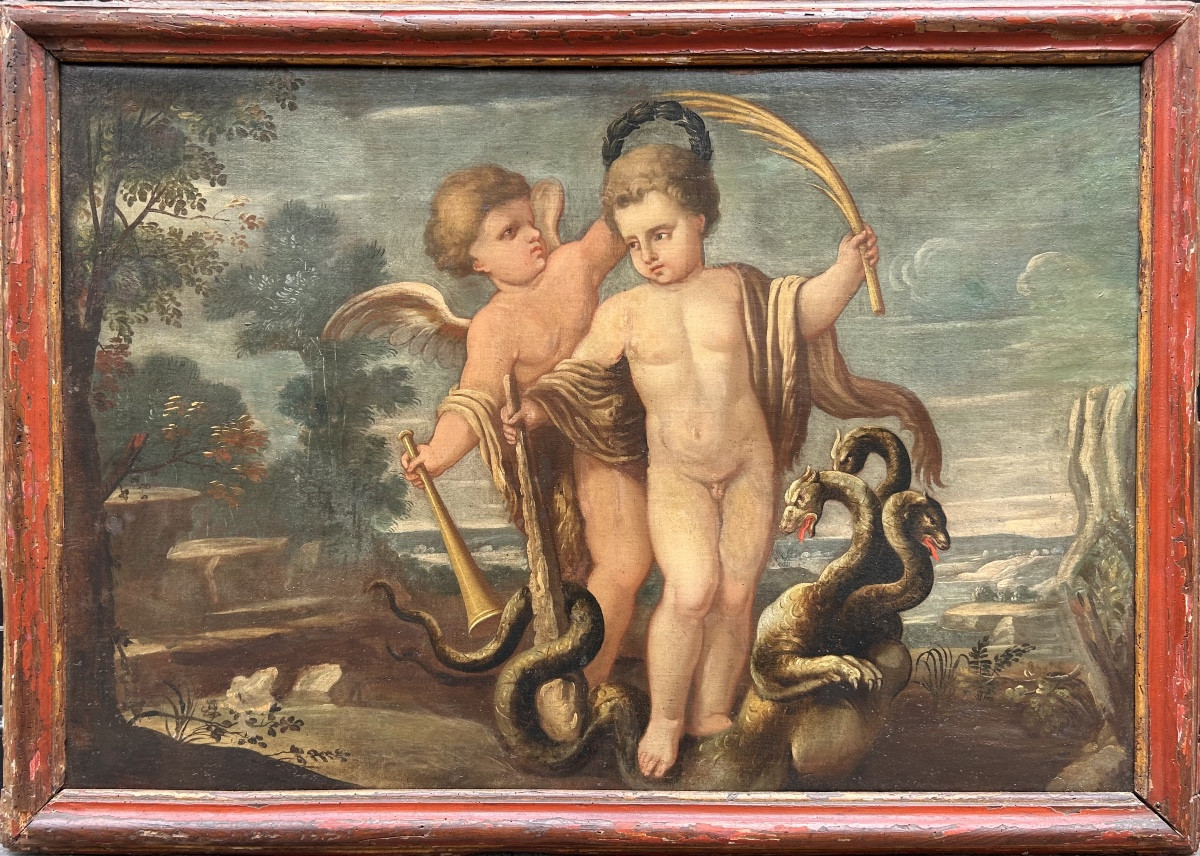
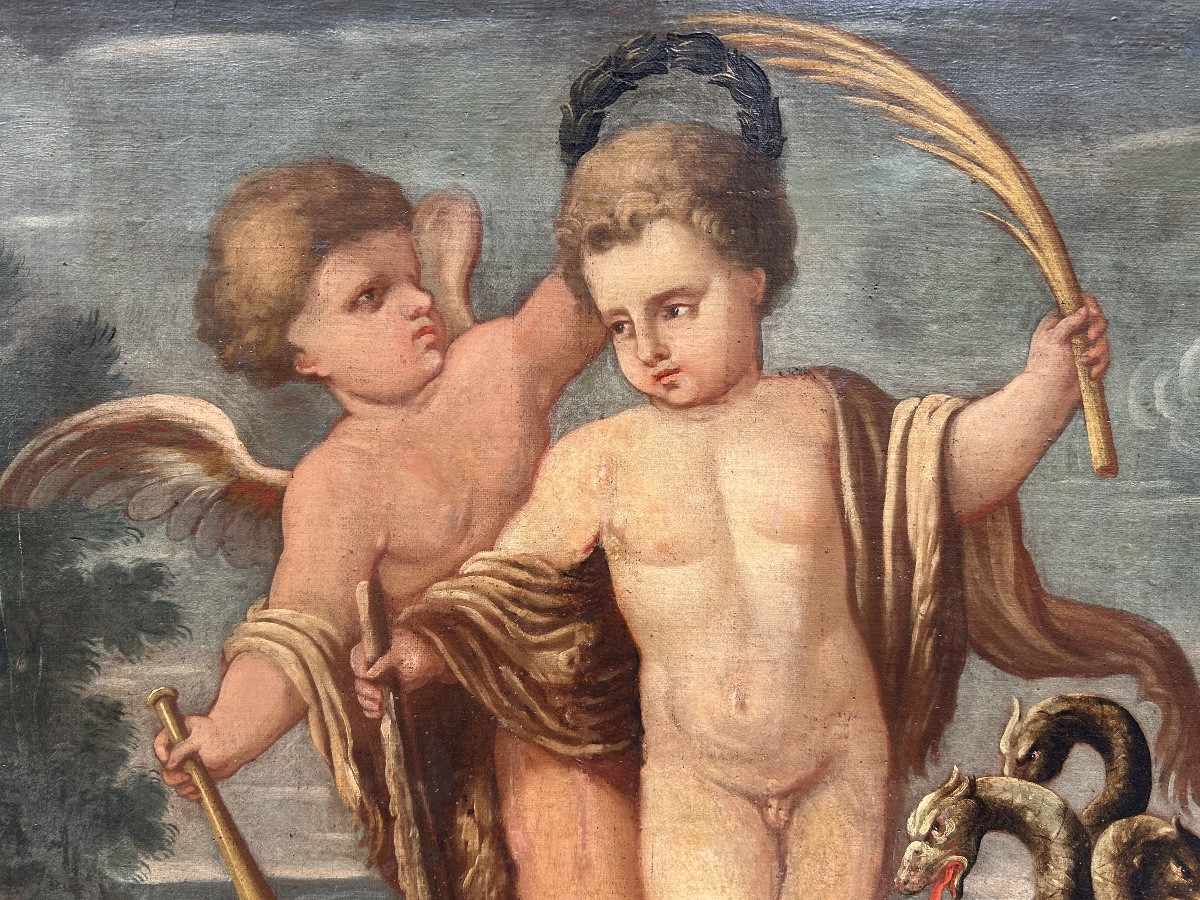
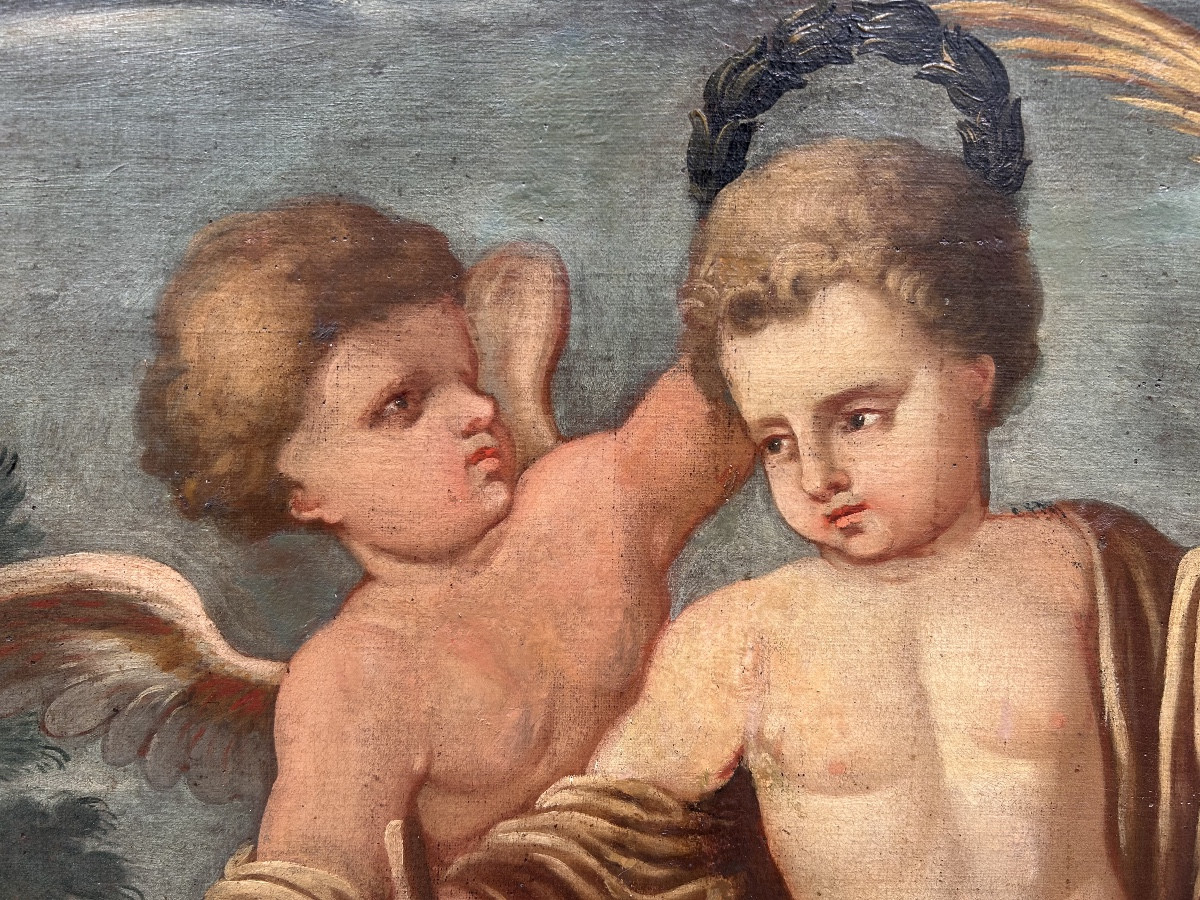
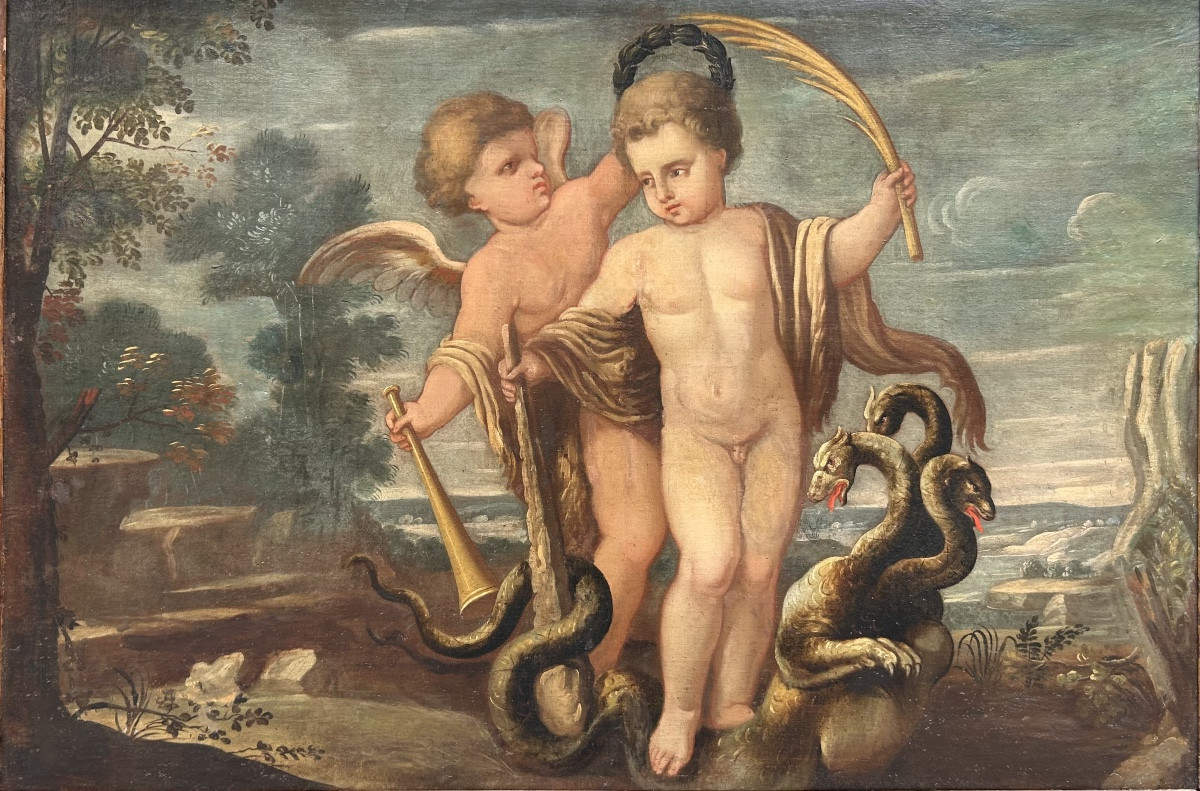


Allegories”, Early 18th Century "the Glory"
The most popular genre of painting in the 17th century, allegory enjoyed a spectacular boom and spread like wildfire through the cabinets of amateurs, but above all through the grand décor, which saw its apogee thanks to the countless construction sites for palaces and private mansions in France. In scholarly circles, it was fashionable to adorn the walls with these visual rebuses, the elucidation of which sharpened the sagacity of visitors.
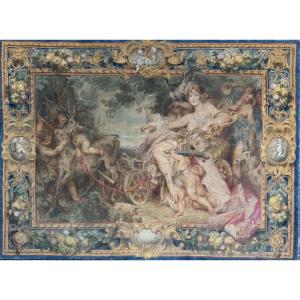
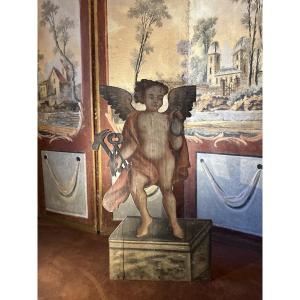
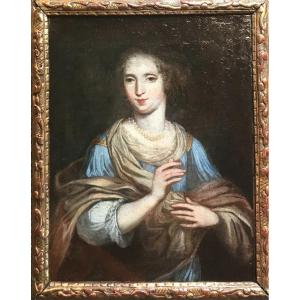
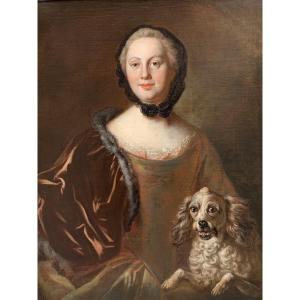
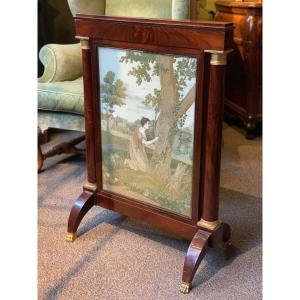
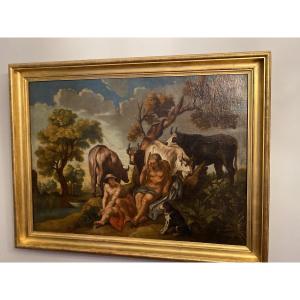
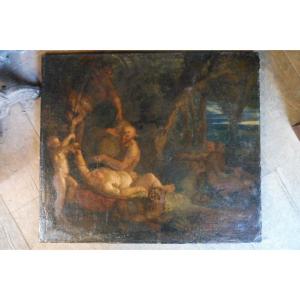
Set of three oil on canvas depicting allegories of Reason, Fidelity and Glory, frames in original polychrome carved wood.
From antiquity onwards, men have forged symbols in order to master disquieting concepts, such as time, death and earthly forces. This taste for symbolism has spawned a host of codified images, more or less easy to understand. This infatuation with allegory - that is, a human or animal figure holding attributes that evoke a concept or notion - culminated in the Baroque period. The humanists of the 17th century saw in these speaking images the realization of their ultimate ambition: to transcend matter and elevate the spirit.
While allegorical painting appears to us today to be essentially decorative, under the Ancien Régime it was invested with a profound significance, as it crystallized the moral principles essential to the elevation of the soul and to social organization. Hence the profusion of this painting in the spheres of power, particularly royal.
A veritable potpourri of references, allegorical language indiscriminately blends sources, whether religious, mythological, derived from popular wisdom or proverbial.
Italy
Early 18th century
Height: 90 cm
Width:125 cm
Period: 18th century
Style: Louis 14th, Regency
Condition: Good condition
Material: Oil painting
Reference (ID): 1748527
Availability: In stock