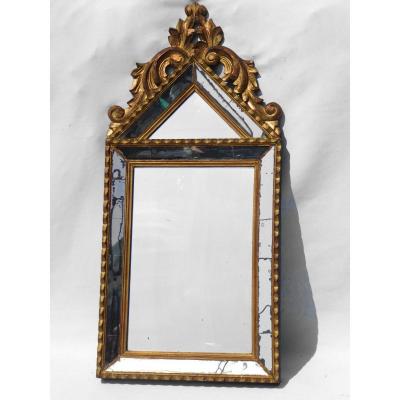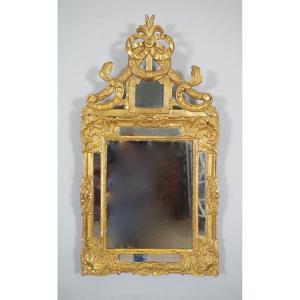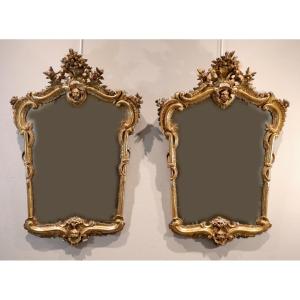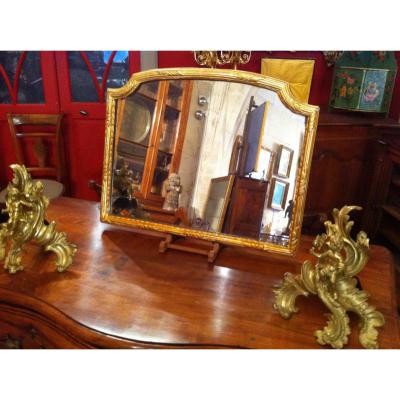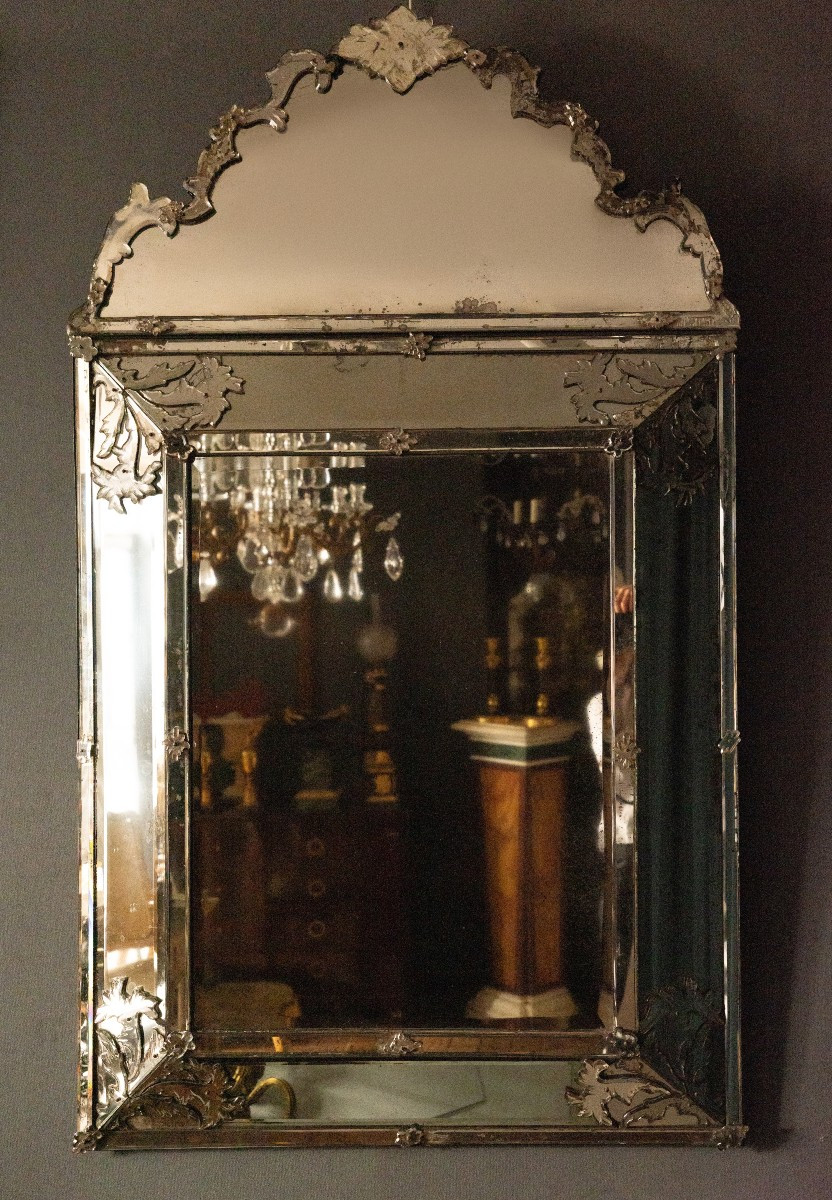
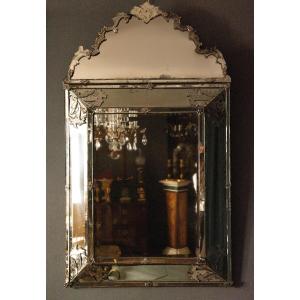


A Large 18th Century Crested English Cut-glass Mirror
A Large 18th Century Crested English Cut-Glass Mirror
Flint glass or lead glass, tin-mercury foiling
England
1700-1710
61 x 37 ½ in
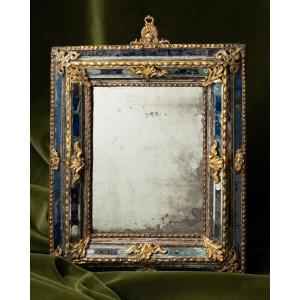
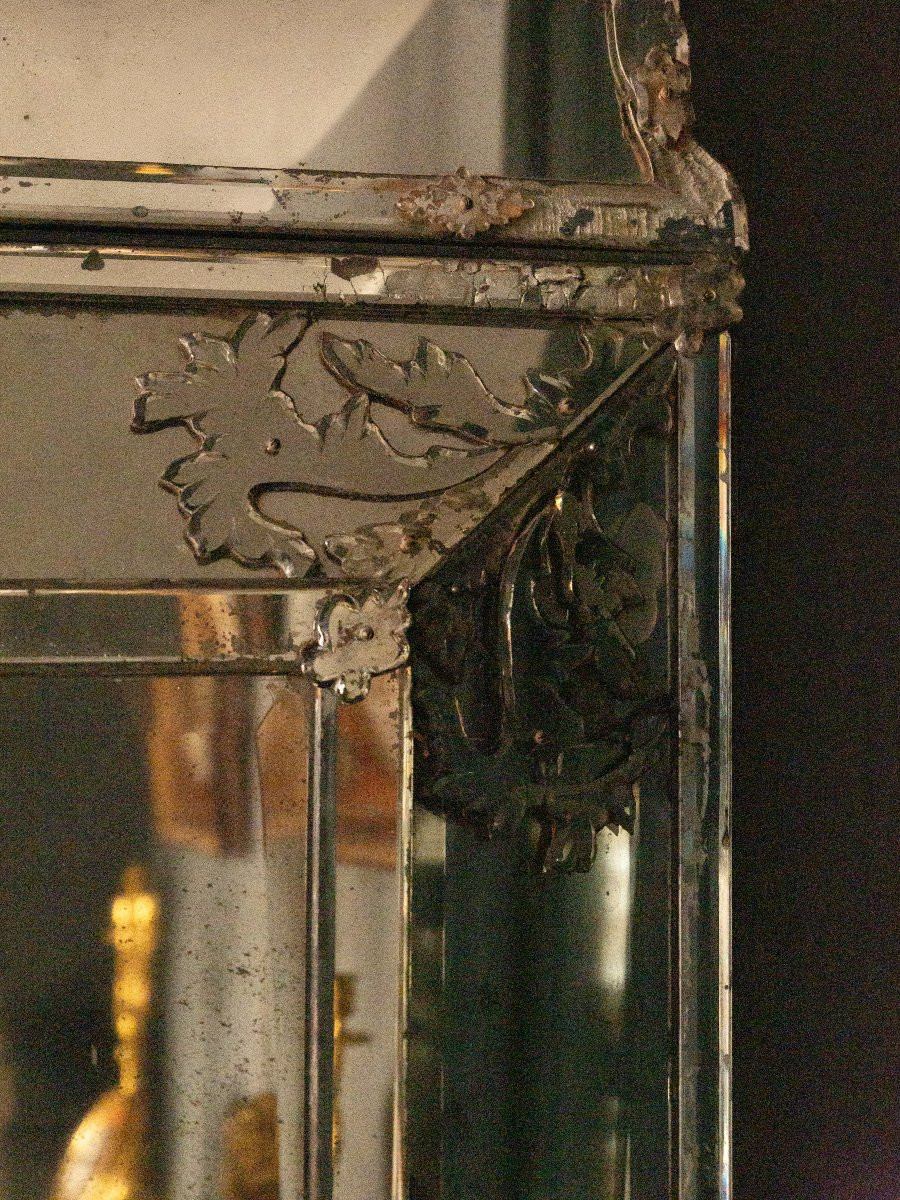
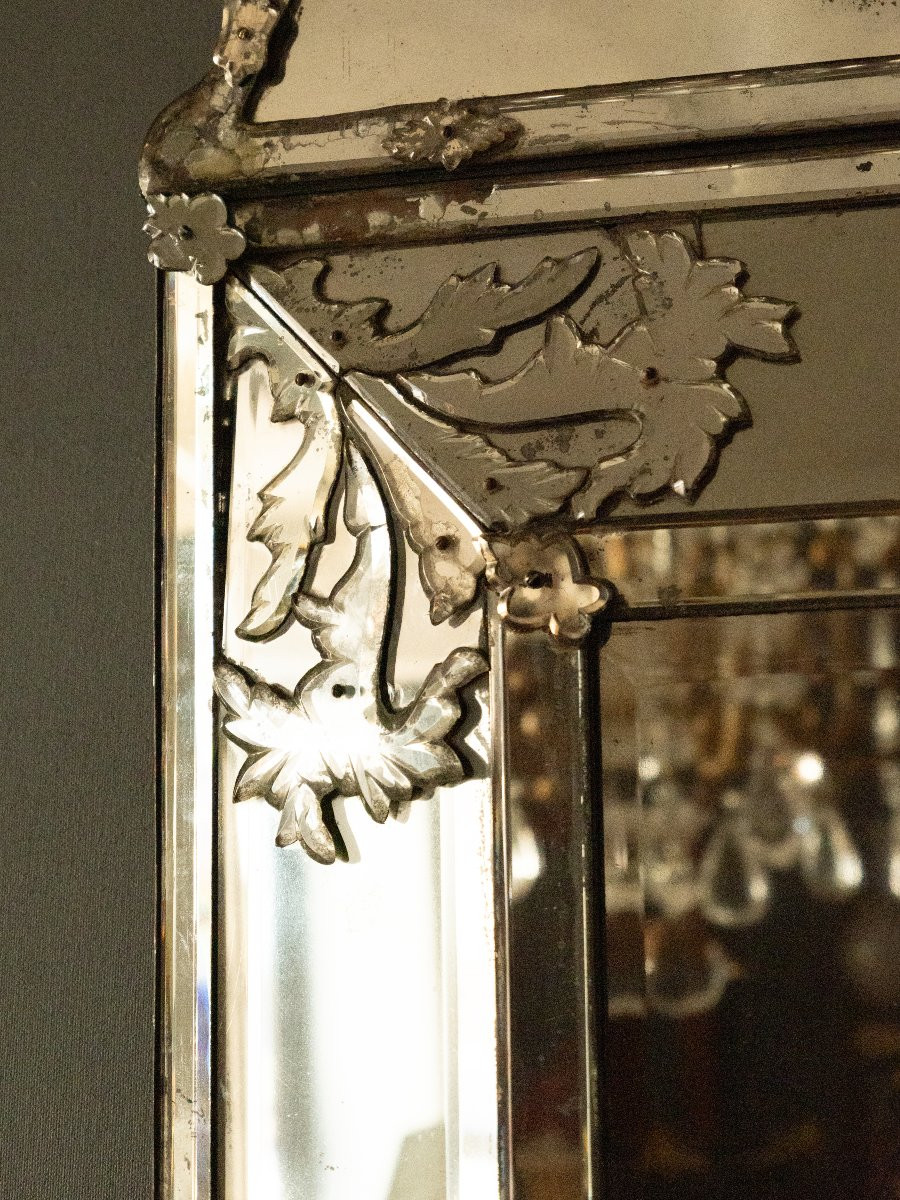
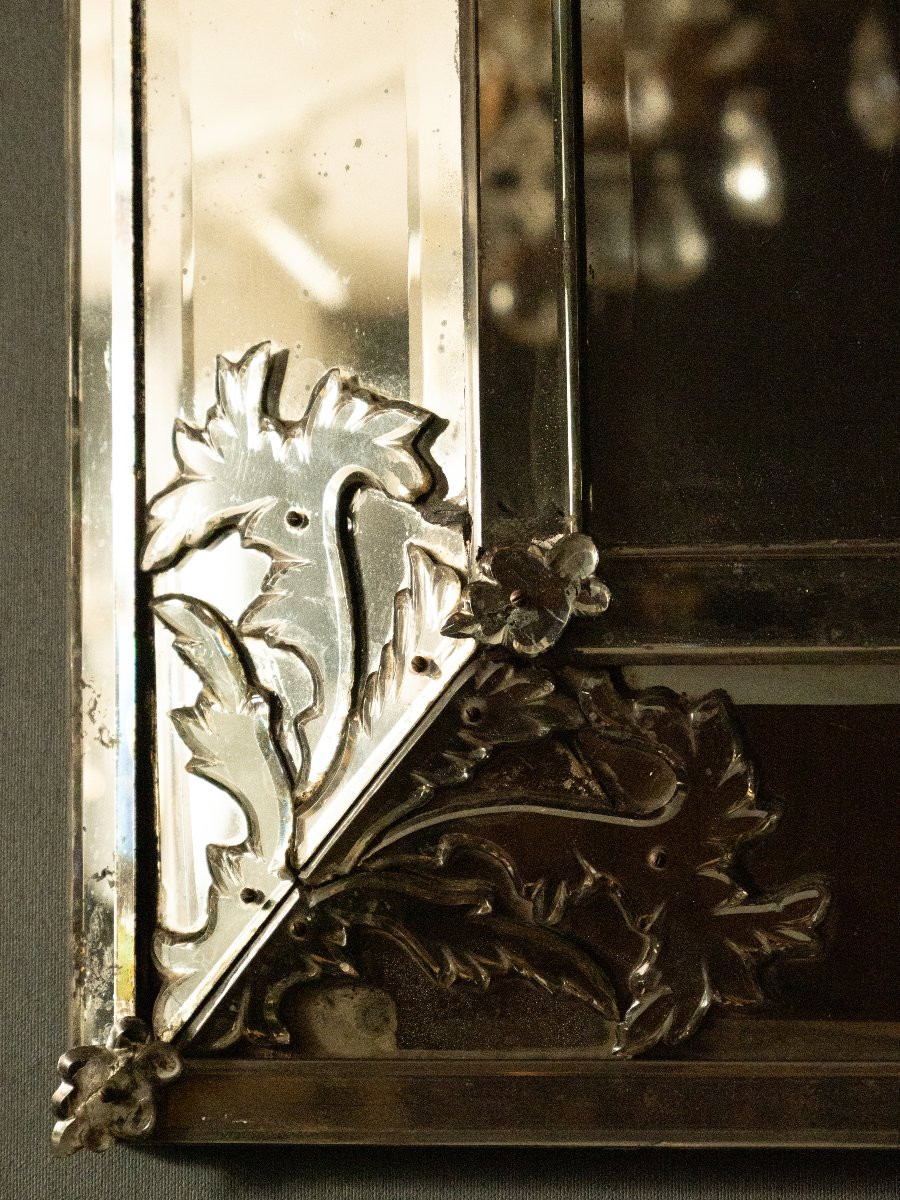
This sizable beveled and cut-glass mirror is of a type proven to be of English making, contrary to common belief. It is related to at least three documented princely ‘looking-glasses’ produced by John Gumley or his circle at Vauxhall in the very first years of the 18th century for the Dukes of Devonshire and of Buccleuch, and possibly for William III. The bevelling or diamonding of the cut-glass listels and elements is a native English technique, developed to accommodate the physical characteristics of Ravenscroft’s ‘flint glass’—thicker and less ductile, though much more robust than Venetian cristallo—enabling it to withstand deep bevelling and so-called diamond cutting. Furthermore, the degradation pattern visible on the glass is typical of so-called silvering, or foiling, using a tin-mercury amalgam, caused by the atmospheric-corrosion-induced formation of tin oxides. The ‘star’ effect, due to small holes formed between the glass and the amalgam, further confirms the age of this mirror, as this technique slowly fell into disuse after the invention of silvering by Justus von Liebig in 1835.
A few of the glass pieces in this mirror were replaced during a likely ancient restoration. Provenance : Victor Théophile Magnien, circa 1900.
Period: 18th century
Style: Louis 14th, Regency
Condition: Good condition
Material: Glass
Width: 95 cm
Height: 155 cm
Reference (ID): 1748305
Availability: In stock