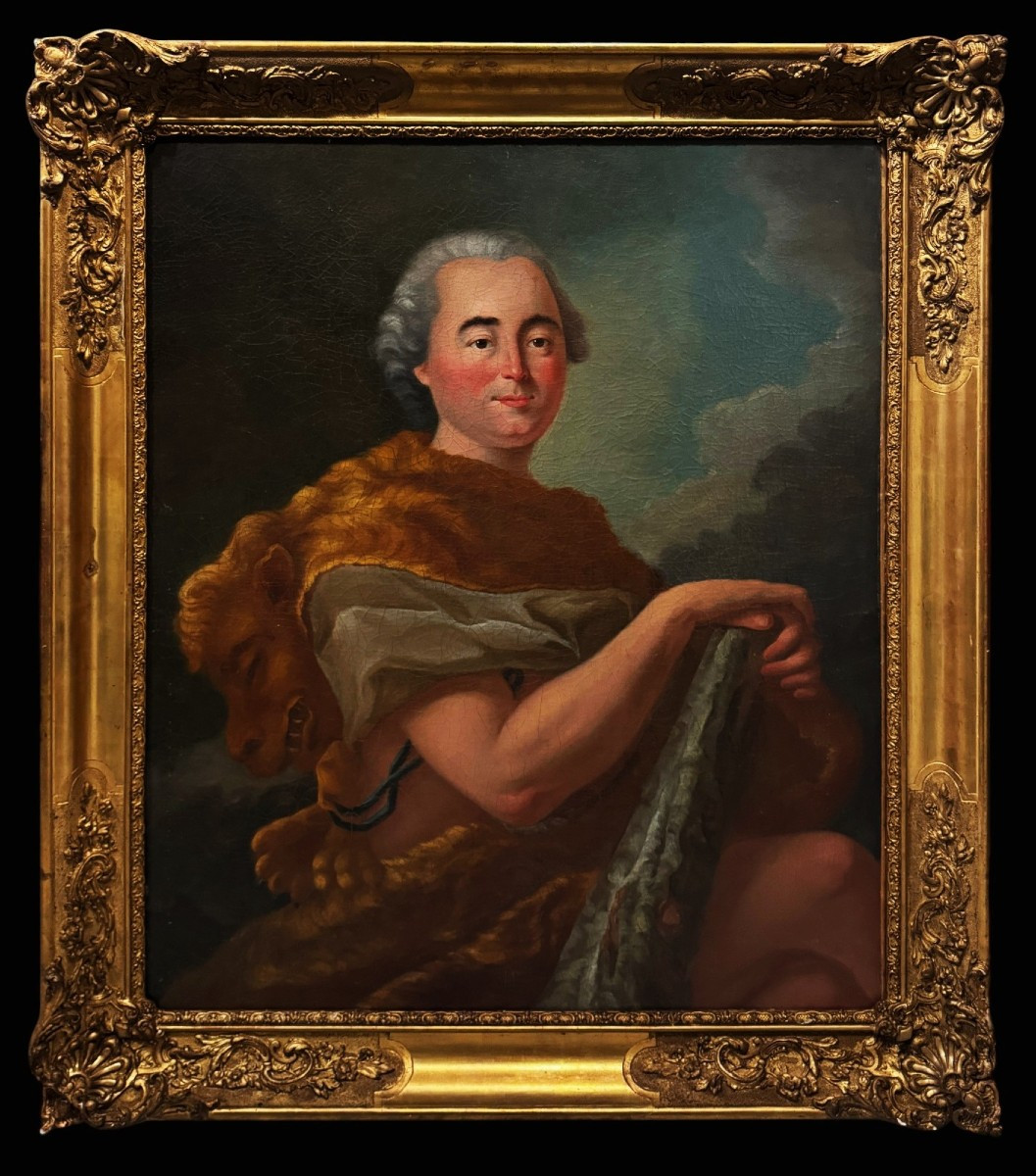
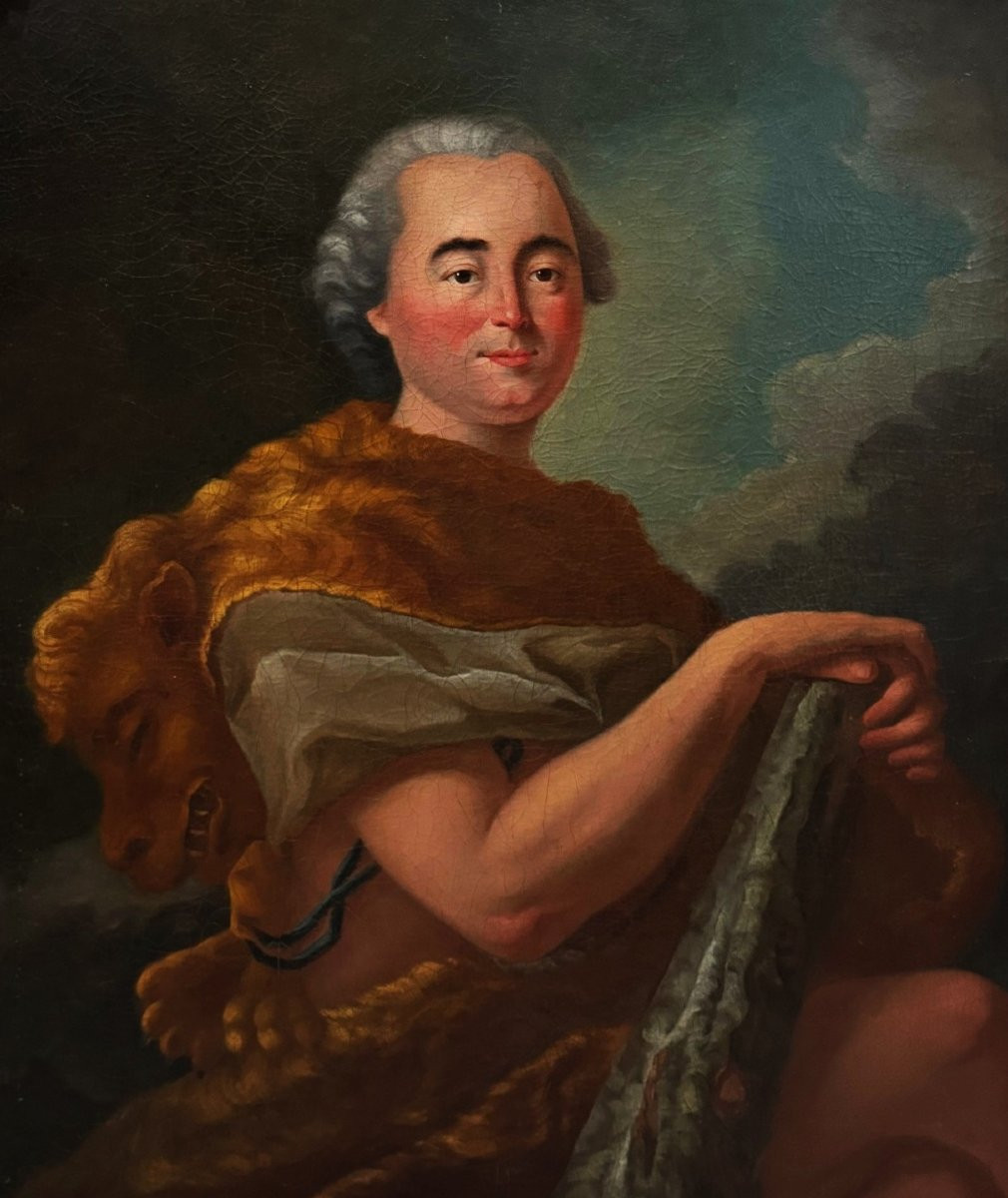
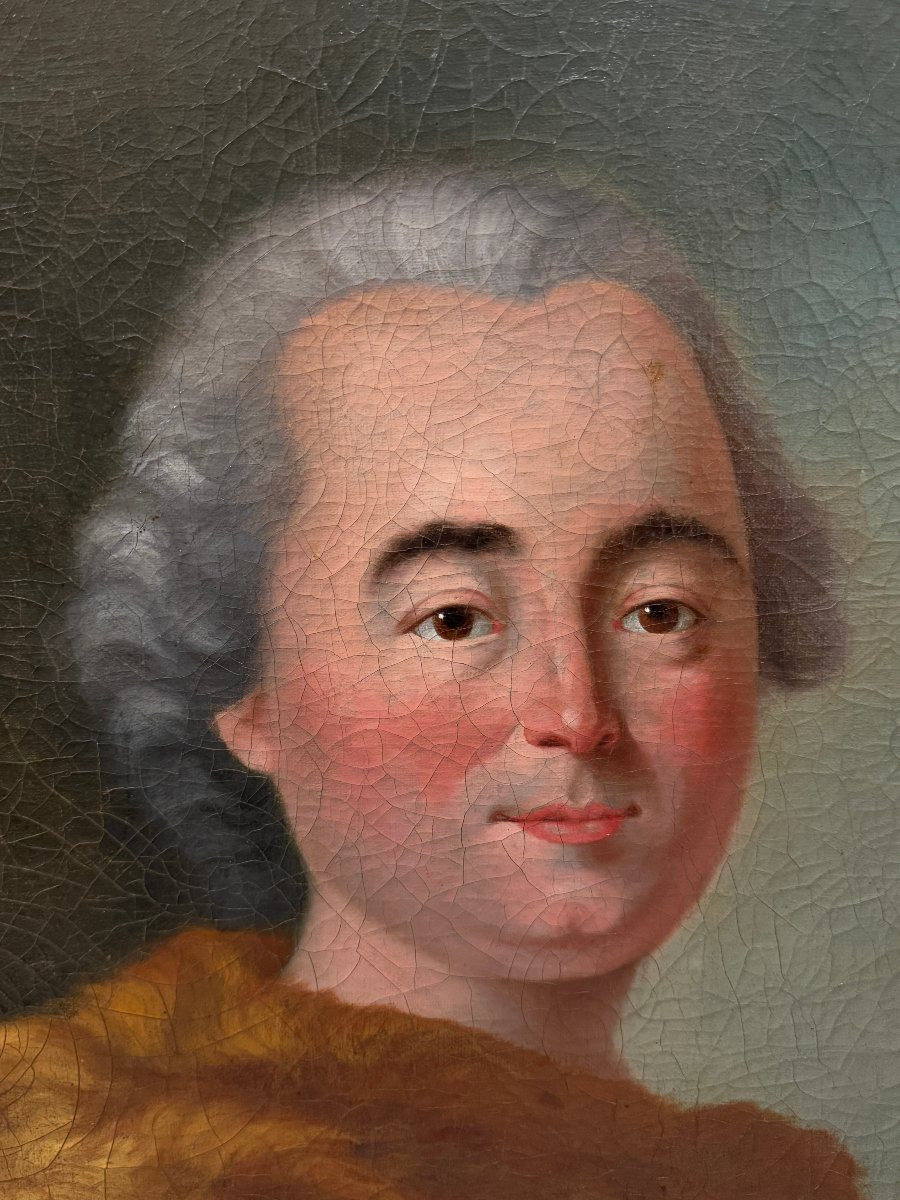


Rococo School (c. 1750) - Portrait Of A Gentleman Disguised As Hercules
- Oil on canvas. Carefully restored in the mid-twentieth century. Presented in an exquisite Napoleon III-style frame.
- During the reign of Louis XV, court portraiture abandoned crude realism in favor of mythological idealization and gallant sophistication. In this setting, the rococo gentleman presents himself as a salon Hercules, where the skin and club of the Nemean lion become decorative accessories contrasting with powdered faces and Alençon lace. This play of disguise, framed by pastel Arcadian landscapes, attenuates the ferocity of the classical hero into an aesthetic of serenity and studied elegance, characteristic of the influence of figures such as Madame de Pompadour.
More than a simple demonstration of physical strength, the use of heroic attributes functioned as a social manifesto of virtue and lineage, becoming part of the power narrative of the time. The transformation of mythology into a fashion code enabled the aristocrat to inscribe himself in a timeless history without forsaking the cosmopolitan frivolity of the French Grand Siècle. Ultimately, this artifice represents the apogee of the rococo spirit, where prestige was measured by the ability to transform the works of the demigod into an irresistible visual spectacle for the palatial life of Versailles.
- 78 x 97 cm / 96 x 115 cm with frame.
- During the reign of Louis XV, court portraiture abandoned crude realism in favor of mythological idealization and gallant sophistication. In this setting, the rococo gentleman presents himself as a salon Hercules, where the skin and club of the Nemean lion become decorative accessories contrasting with powdered faces and Alençon lace. This play of disguise, framed by pastel Arcadian landscapes, attenuates the ferocity of the classical hero into an aesthetic of serenity and studied elegance, characteristic of the influence of figures such as Madame de Pompadour.
More than a simple demonstration of physical strength, the use of heroic attributes functioned as a social manifesto of virtue and lineage, becoming part of the power narrative of the time. The transformation of mythology into a fashion code enabled the aristocrat to inscribe himself in a timeless history without forsaking the cosmopolitan frivolity of the French Grand Siècle. Ultimately, this artifice represents the apogee of the rococo spirit, where prestige was measured by the ability to transform the works of the demigod into an irresistible visual spectacle for the palatial life of Versailles.
- 78 x 97 cm / 96 x 115 cm with frame.
3 600 €
Period: 18th century
Style: Other Style
Condition: Excellent condition
Material: Oil painting
Reference (ID): 1745833
Availability: In stock
Print