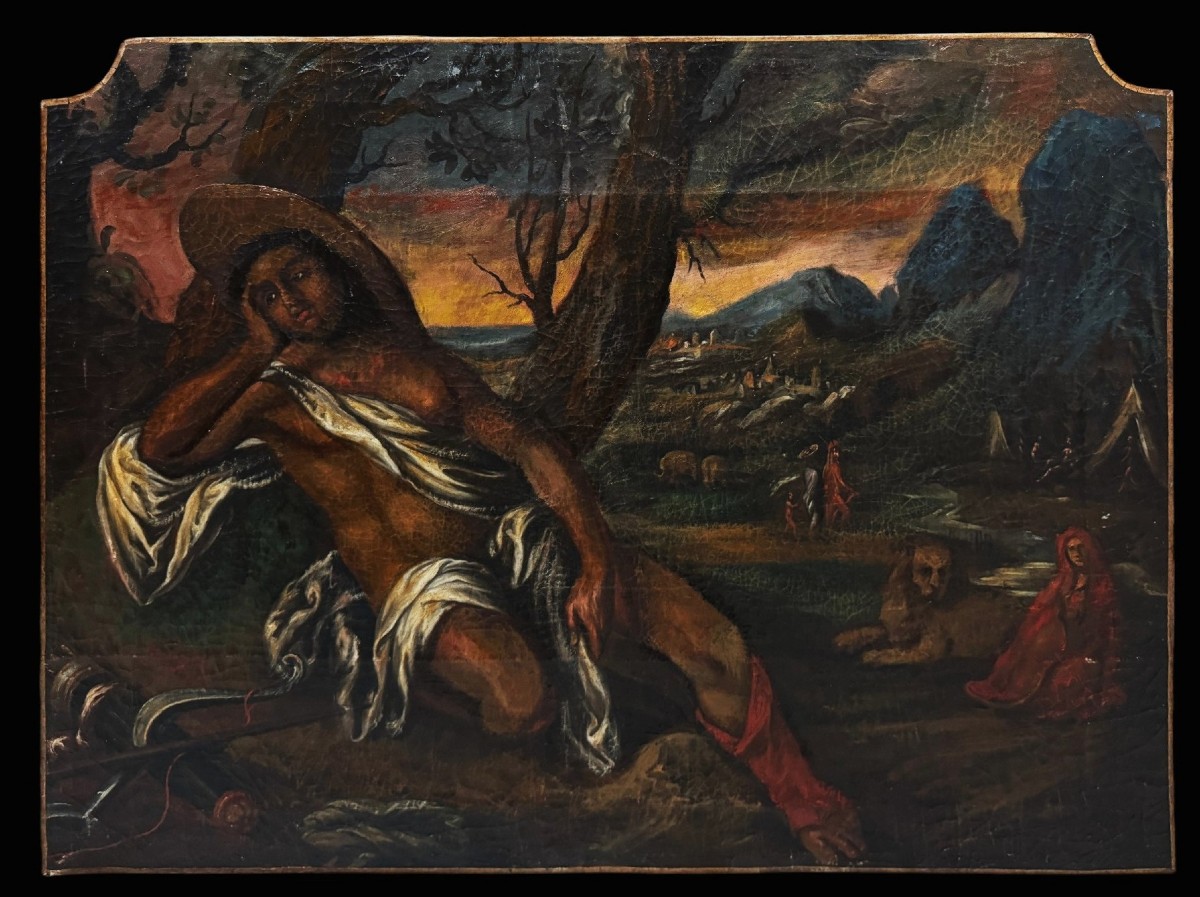
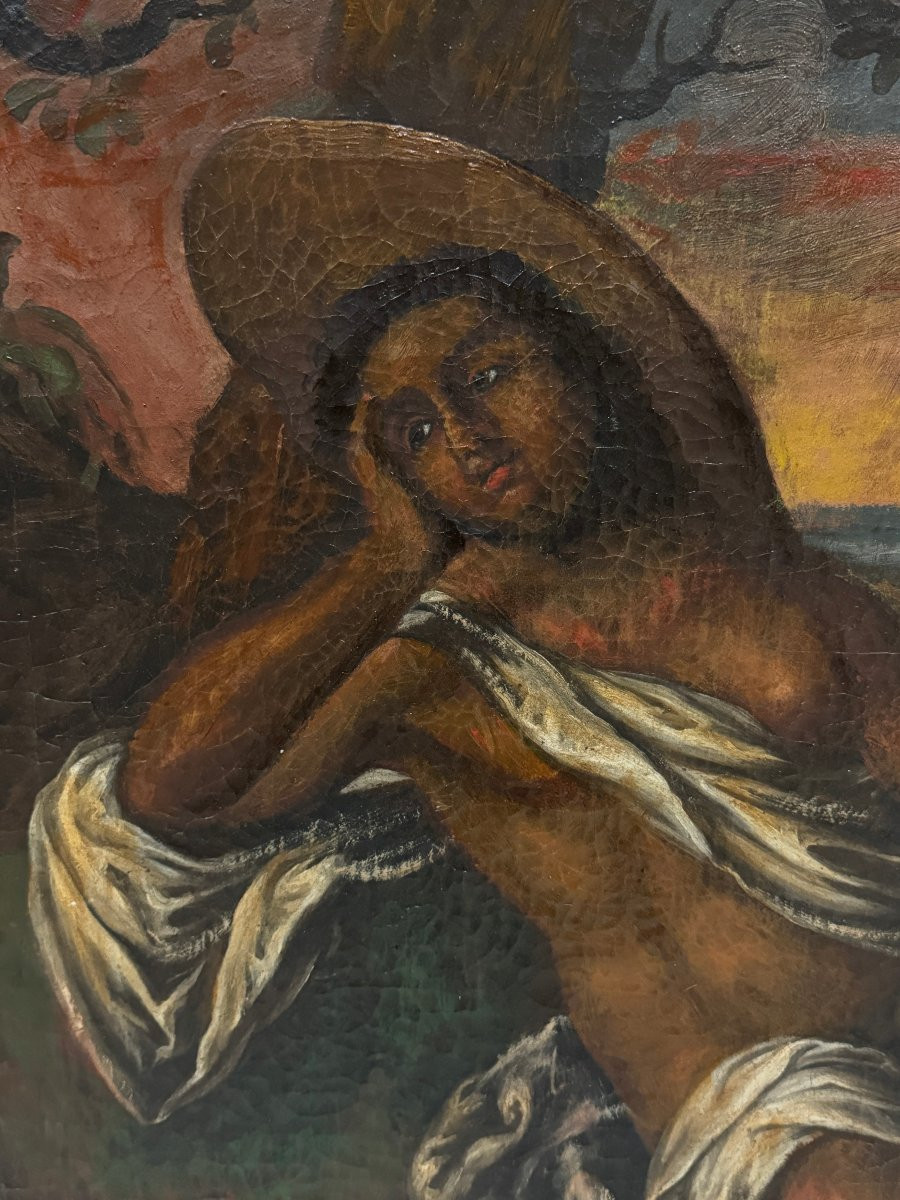
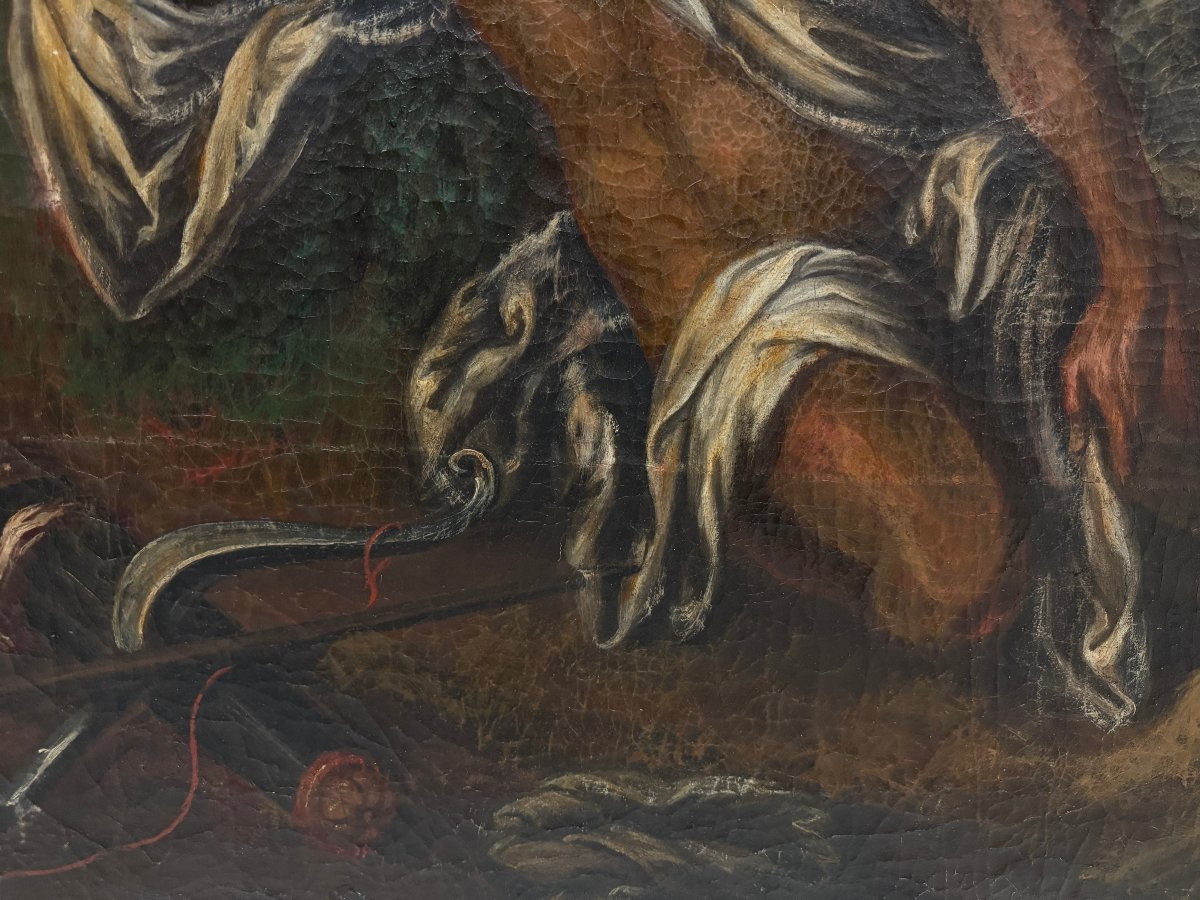


Roman School (circa 1720) - The Four Parts Of The World: An Allegory Of America
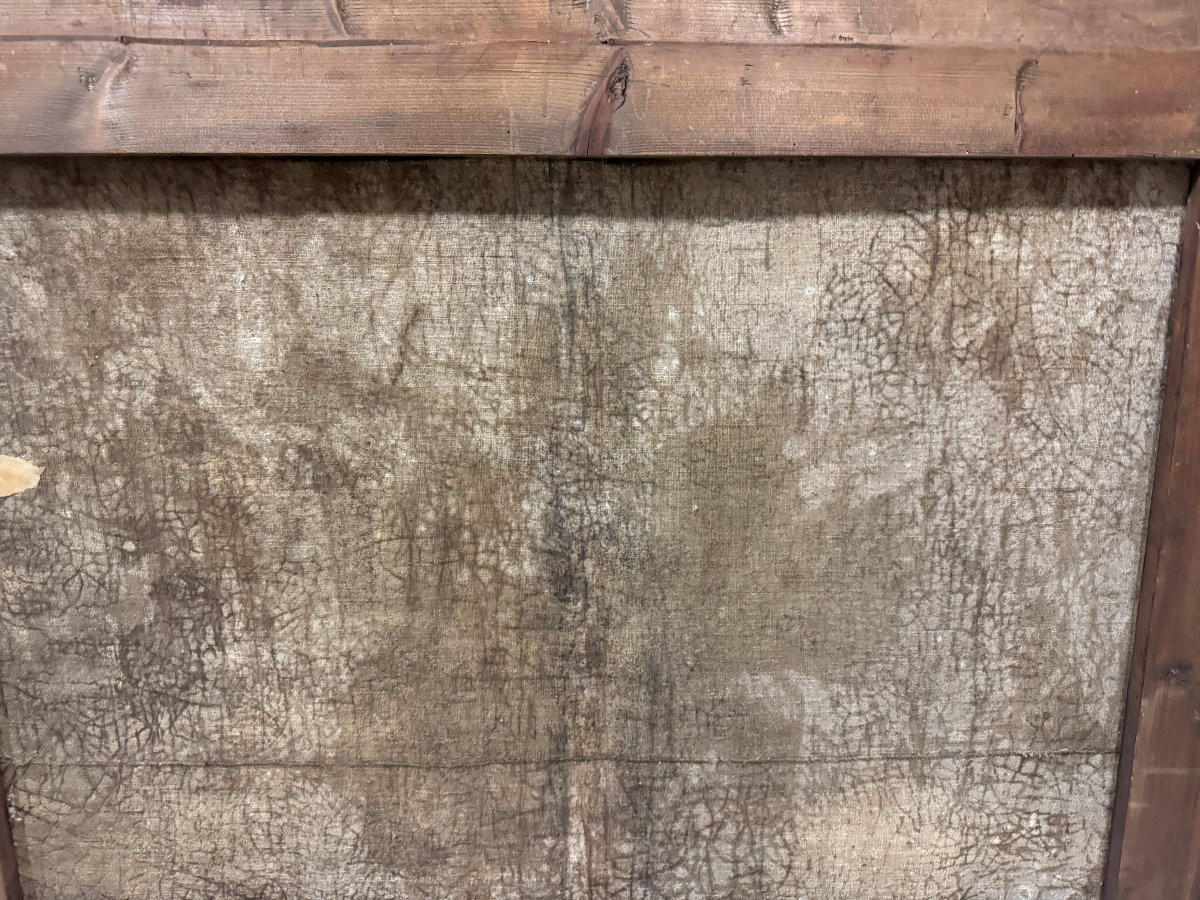
Oil on canvas. Original canvas. Rectangular format with lobed corners that give the painting a sumptuous, architectural allure.
The proliferation of allegorical engravings representing the four continents in the Age of Enlightenment was not a simple exercise in artistic taxonomy, but the visual codification of an expanding hegemony. In these works, Europe was generally personified as a sovereign figure surrounded by symbols of wisdom and power, while the other continents were presented as purveyors of exotic sensuality and inexhaustible resources. This iconography celebrated the nascent globalization of the colonial powers, where trade with China - perceived as an empire of technical refinement but moral stagnation - and the exploitation of spices and tropical luxury goods were integrated into a discourse of civilizational triumph. Engraving enabled the European intellectual elite to symbolically "own" the world, reducing the complexity of vast territories to a set of aesthetic attributes: porcelain, quetzal feathers or the aroma of coffee became the trophies of a world order that enlightened reason sought to organize and exploit.
However, behind this elegance of chisel and paper lay an ethical contradiction that the philosophy of the time attempted to resolve through the myth of the "good savage" or "gallant savages". This idealization made it possible to admire the purity of non-European peoples from a paternalistic distance, while justifying slavery in the name of a natural hierarchy of progress. While philosophers debated universal rights, the plantation economy and human trafficking were validated by the construction of the "Other" as a being in need of protection, or as a productive machine lacking the rational autonomy characteristic of European man. Thus, these allegories of the four continents acted as an instrument of intellectual propaganda: by representing Africa or America as fertile or barbaric figures, they anchored the idea that colonial domination was not merely an economic imperative due to the riches of the tropics, but an inescapable historical destiny dictated by the light of reason that only Europe claimed to possess.
- Image size unframed : 82 x 106 cm
The proliferation of allegorical engravings representing the four continents in the Age of Enlightenment was not a simple exercise in artistic taxonomy, but the visual codification of an expanding hegemony. In these works, Europe was generally personified as a sovereign figure surrounded by symbols of wisdom and power, while the other continents were presented as purveyors of exotic sensuality and inexhaustible resources. This iconography celebrated the nascent globalization of the colonial powers, where trade with China - perceived as an empire of technical refinement but moral stagnation - and the exploitation of spices and tropical luxury goods were integrated into a discourse of civilizational triumph. Engraving enabled the European intellectual elite to symbolically "own" the world, reducing the complexity of vast territories to a set of aesthetic attributes: porcelain, quetzal feathers or the aroma of coffee became the trophies of a world order that enlightened reason sought to organize and exploit.
However, behind this elegance of chisel and paper lay an ethical contradiction that the philosophy of the time attempted to resolve through the myth of the "good savage" or "gallant savages". This idealization made it possible to admire the purity of non-European peoples from a paternalistic distance, while justifying slavery in the name of a natural hierarchy of progress. While philosophers debated universal rights, the plantation economy and human trafficking were validated by the construction of the "Other" as a being in need of protection, or as a productive machine lacking the rational autonomy characteristic of European man. Thus, these allegories of the four continents acted as an instrument of intellectual propaganda: by representing Africa or America as fertile or barbaric figures, they anchored the idea that colonial domination was not merely an economic imperative due to the riches of the tropics, but an inescapable historical destiny dictated by the light of reason that only Europe claimed to possess.
- Image size unframed : 82 x 106 cm
2 500 €
Period: 18th century
Style: Other Style
Condition: Excellent condition
Material: Oil painting
Reference (ID): 1745722
Availability: In stock
Print