THIS OBJECT WAS SOLD
Certified Japanese Katana - Naohiro (suishinshi Masahide Lineage) - Taisho Era
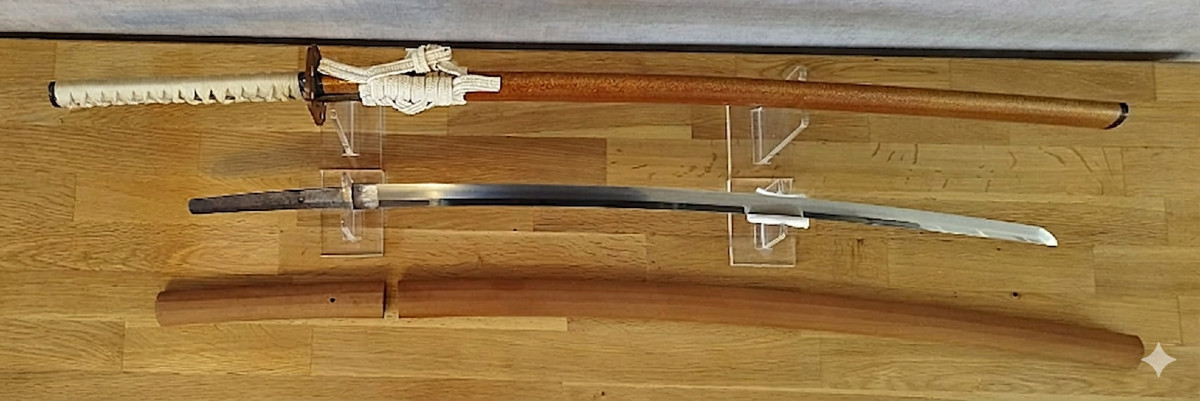
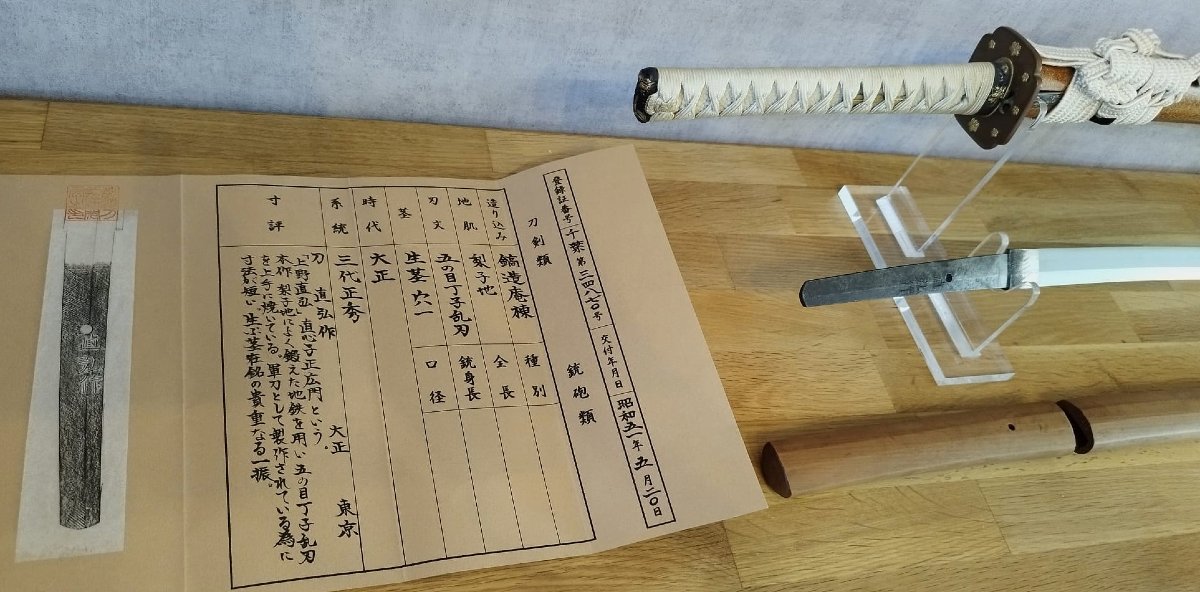
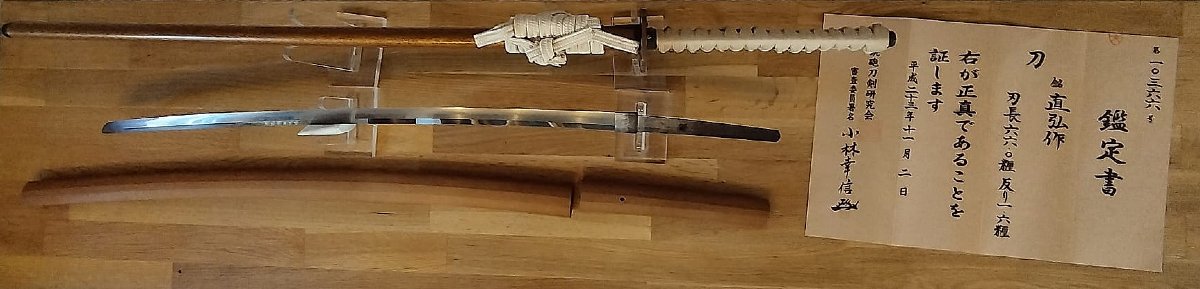
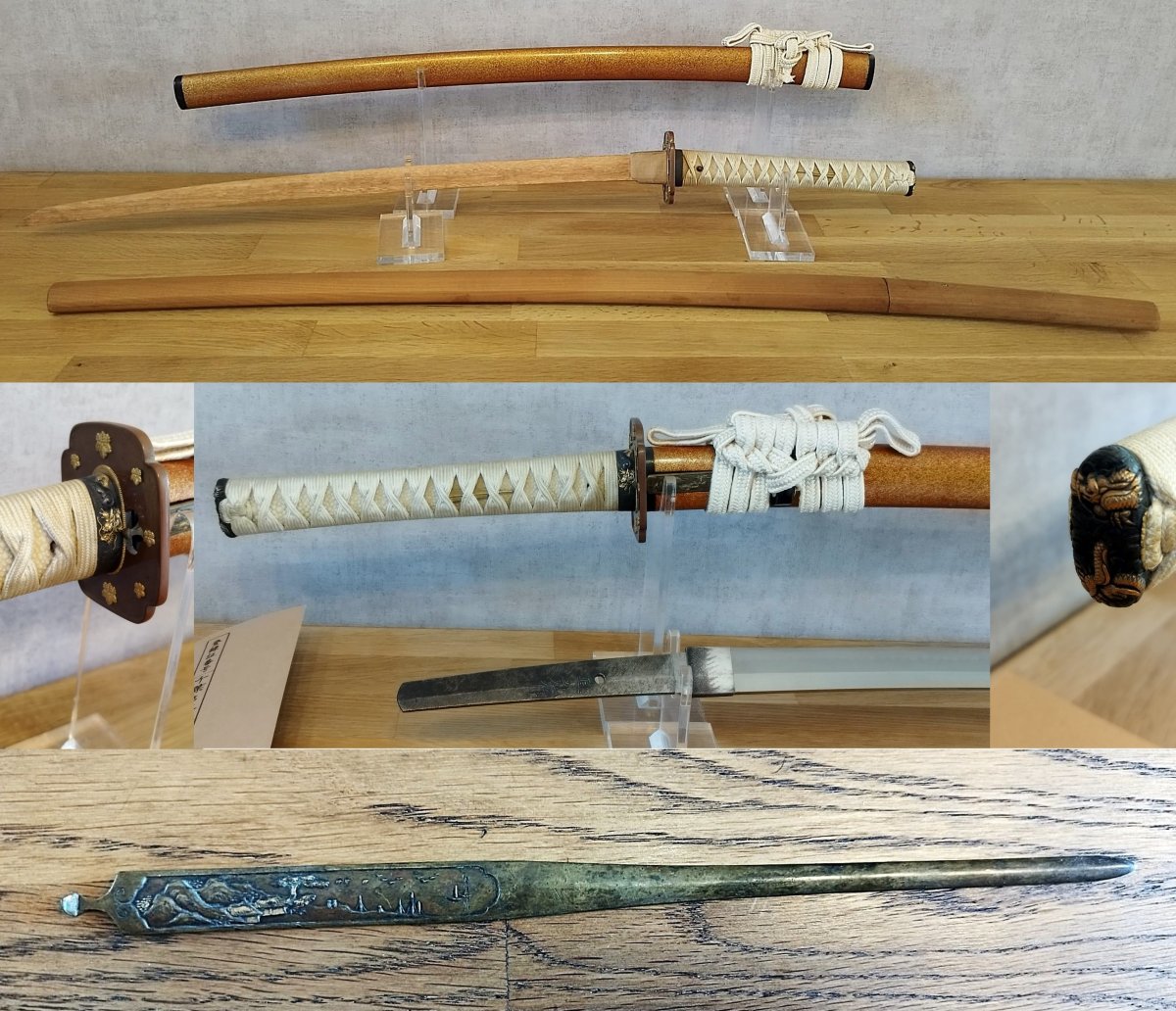
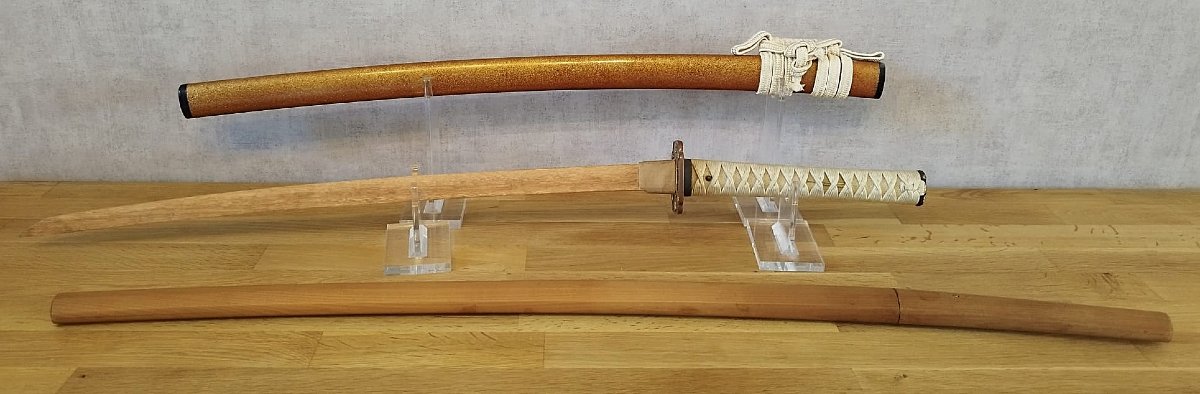
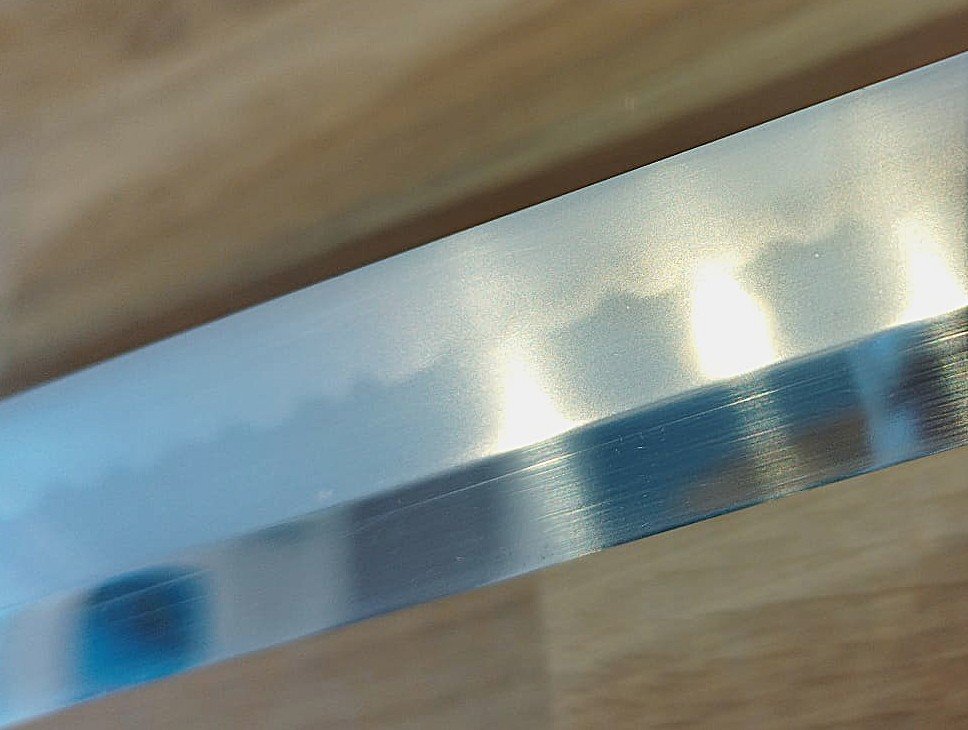
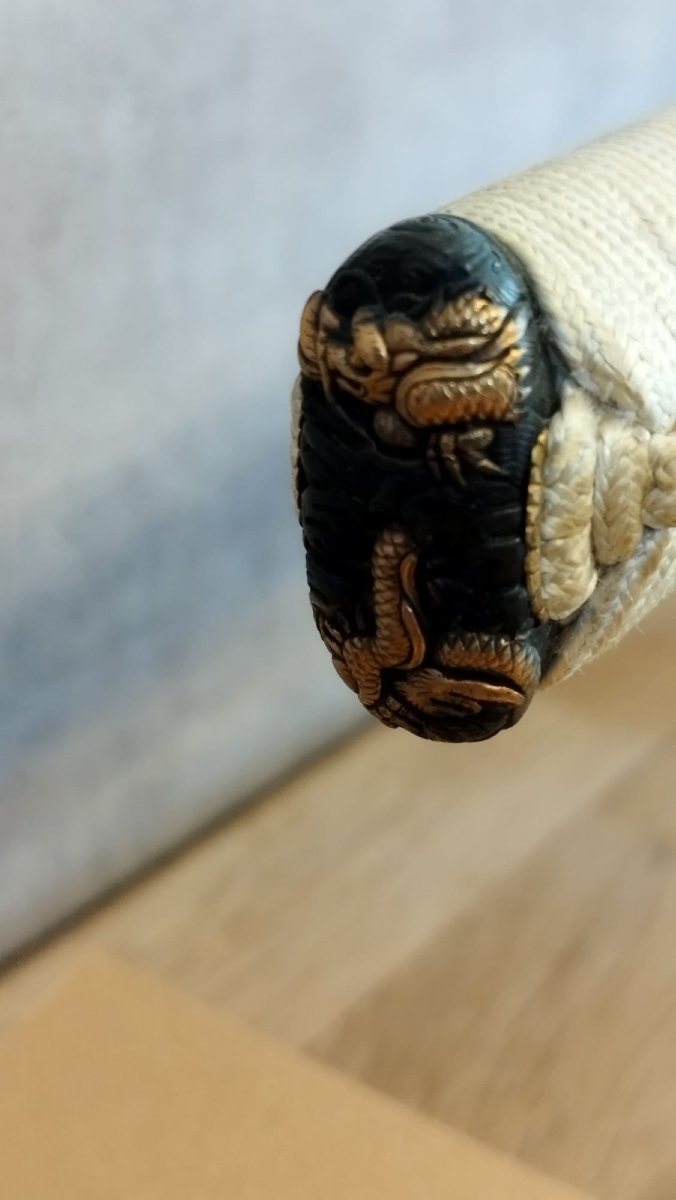
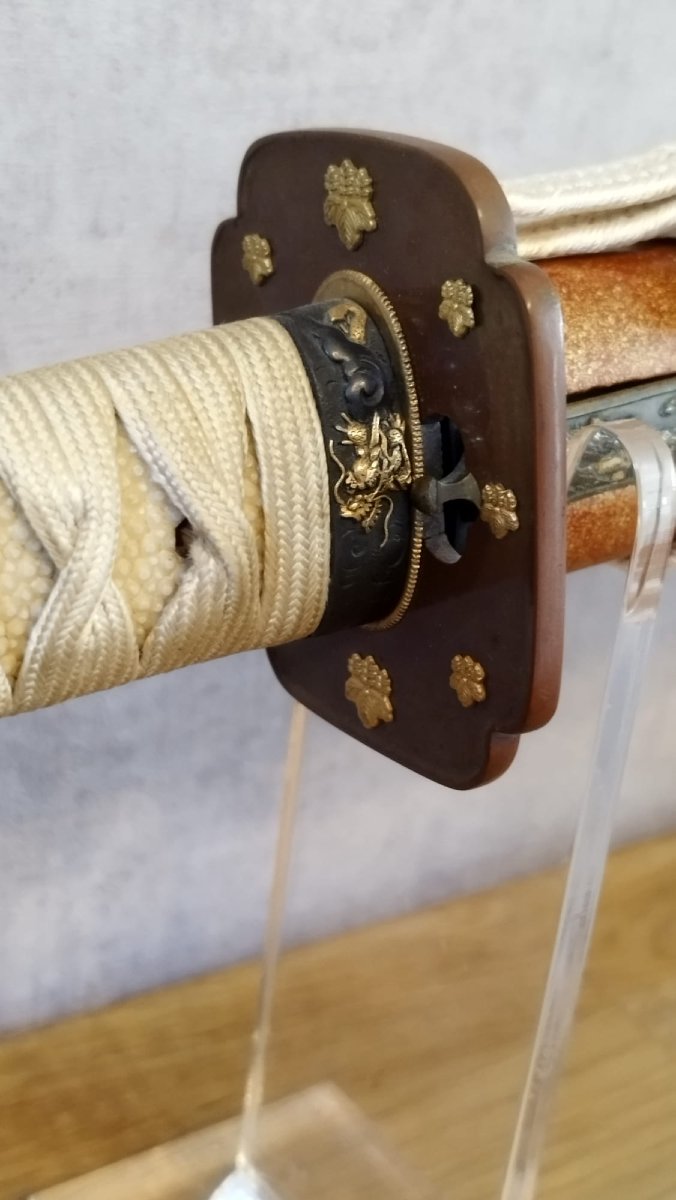
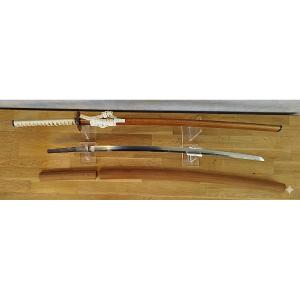


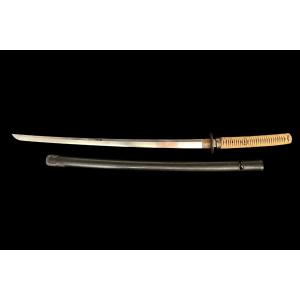
Magnificent complete set including a Katana from the Taisho era (1912-1926), a transition period between the Shinshinto (new swords) and Gendaito (modern swords) styles.
Sold excluding shipping costs
The blade is the work of NAOHIRO, a blacksmith from Tokyo, son of Naomitsu and descendant of the prestigious lineage of Suishinshi Masahide (the founder of the Shinshinto movement in the 19th century).
A set of such completeness (signed blade, two mounts, certificate of expertise, and the rare presence of a "Kogai" pin on a Katana) makes it a high-level investment and decorative piece.
BLADE CHARACTERISTICS:Type: Katana (Ubu-Nakago: original tang, not shortened).
Nagasa (Blade length): 66.9 cm (66.0 cm according to certificate).
Sugata (Shape): Shinogi-zukuri with Iori-mune (inverted V-shaped back ridge).
Sori (Curvature): Tori-Sori (centered) of 1.6 cm.
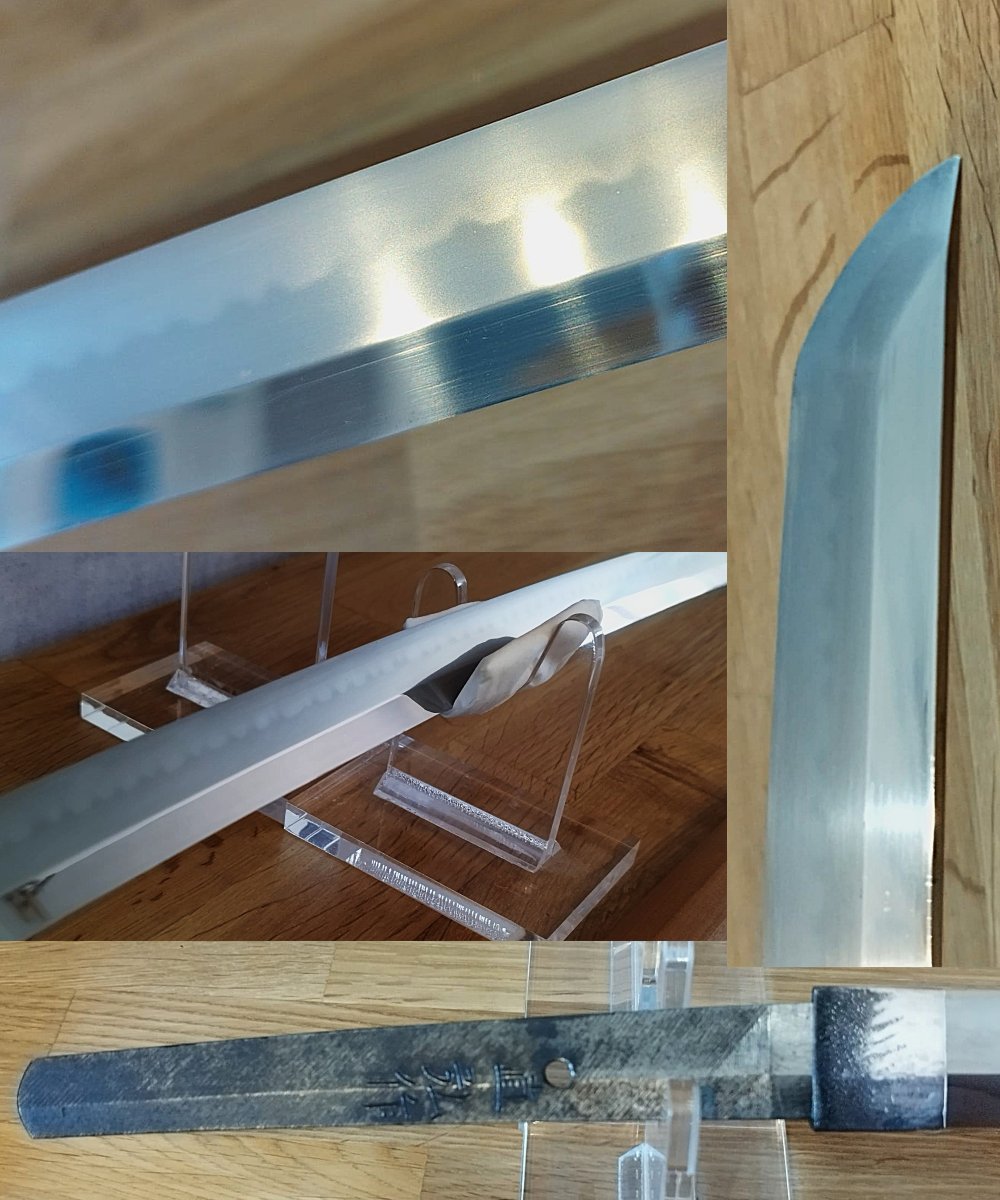
Hamon (Temper line): Gunome Choji Midare. A complex and aesthetic pattern in the shape of cloves and irregular waves.
Hada (Steel grain): Nashiji-hada. Fine and tight grain reminiscent of pear skin, testifying to high purity steel and expert forging.
Kissaki (Tip): Chu-kissaki (medium tip) with a Boshi (tip temper) in Ko-maru (small circle).
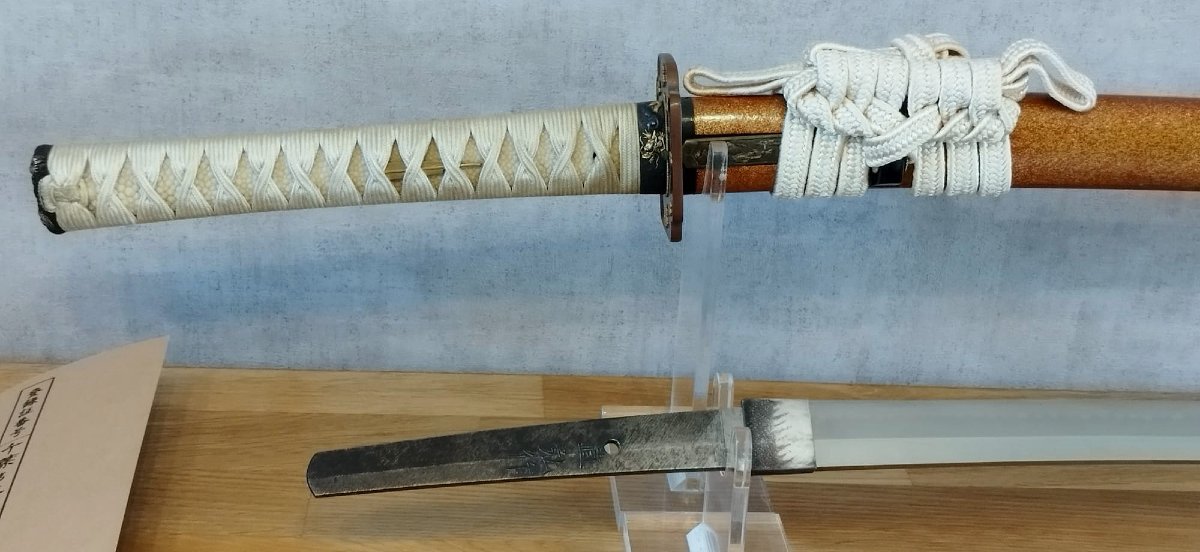
Nakago (Tang): Yasurime (file marks) in Suji-chigai. End in Kuri-jiri (chestnut shape).
Signature (Mei): 直弘作 (Naohiro Saku), meaning "Made by Naohiro."
The set is presented with two complete mounts:
1. Koshirae (Formal Mount)
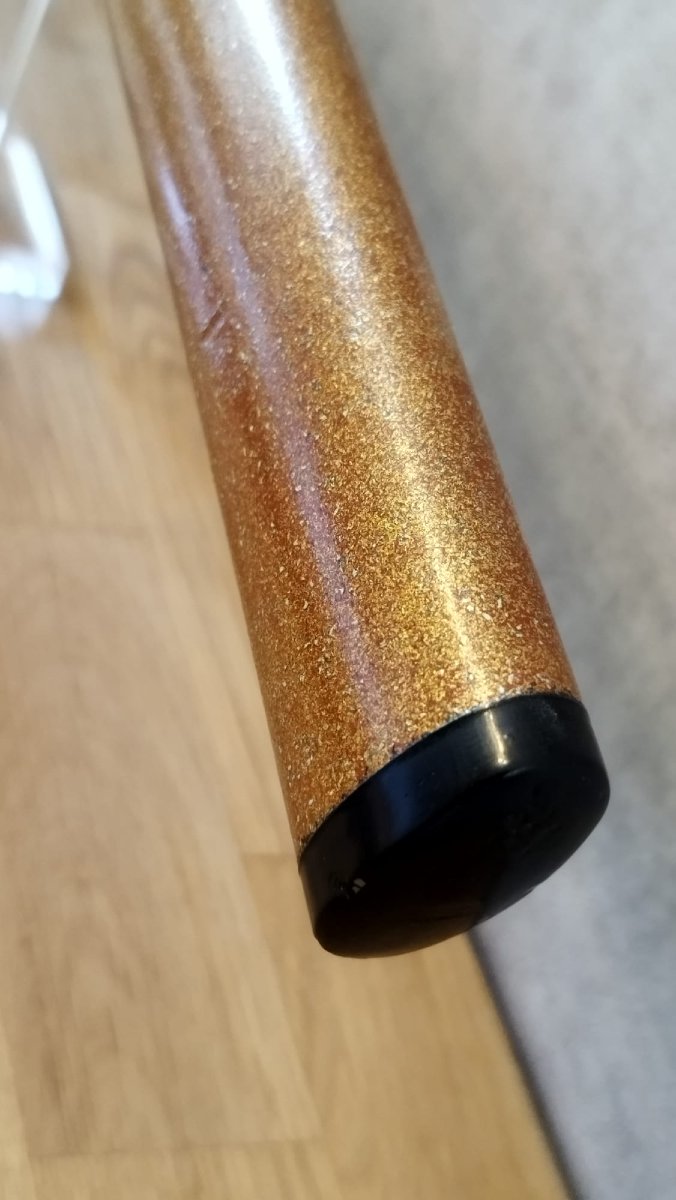
Saya (Scabbard): Nashi-ji finish, gold lacquered.
Tsuka (Handle): High-quality white ray skin (Same), ivory silk braiding (in Tsumami-maki style).
Tosogu (Ornaments):
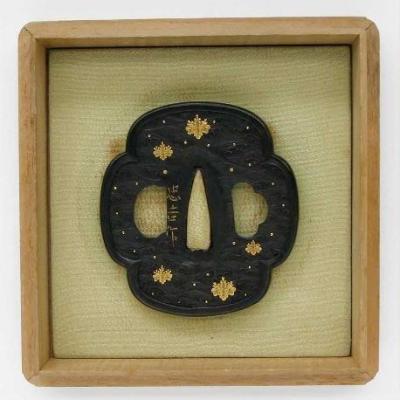
Tsuba (Guard): Patinated iron with gold-inlaid floral decor.
Kashira (Pommel): Golden dragon motif in high relief on a black background.
Kogai (Pin): Alloy decorated with a traditional lakeside landscape (boat, mountains, and pines).
2. Shirasaya (Resting Mount)
Protective scabbard made of raw magnolia wood, allowing for optimal preservation of the blade protected from oxidation.
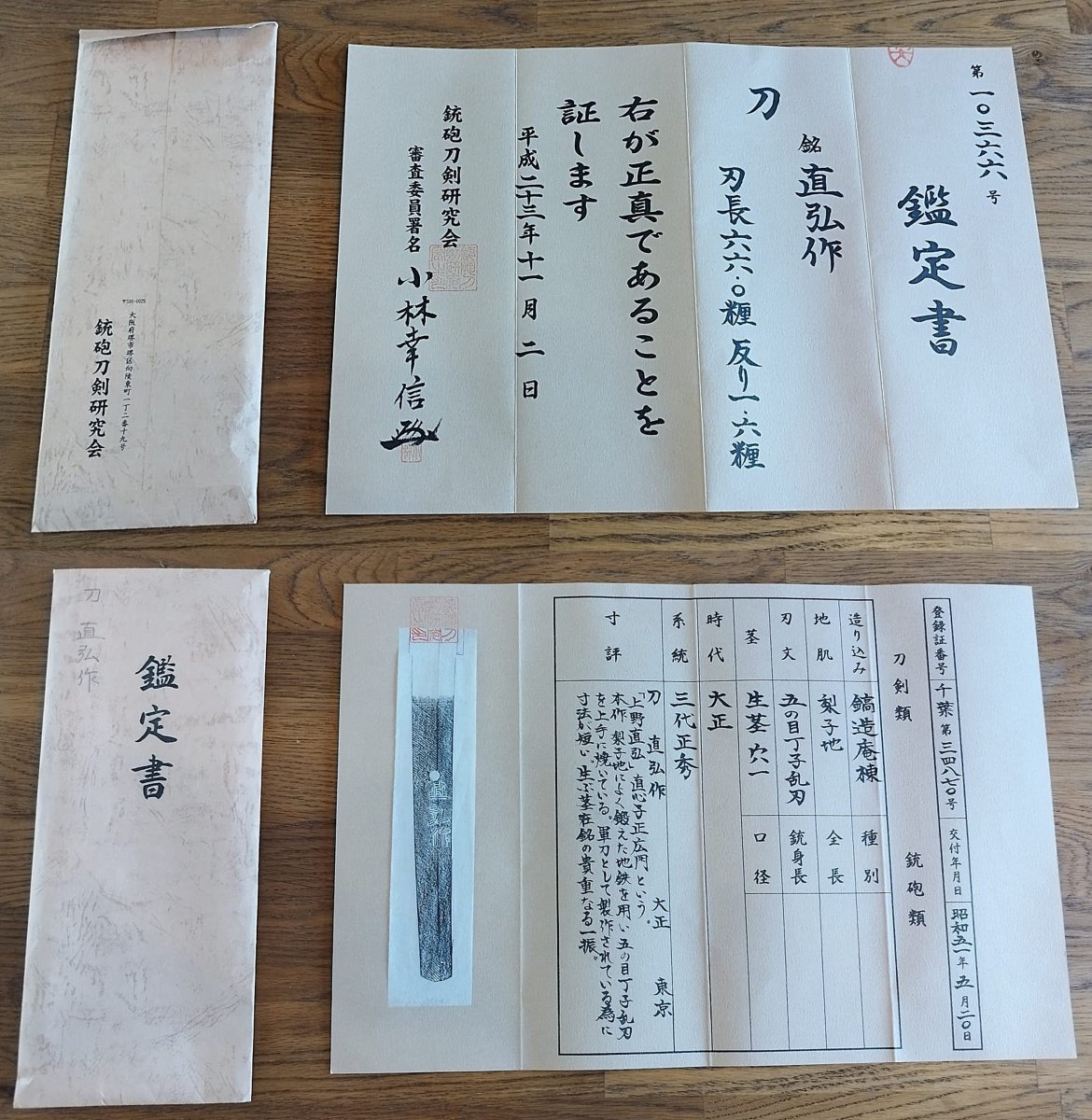
The sword is accompanied by its Kantei-sho certificate of authenticity No. 10366 issued by the Jūhō Tōken Kenkyūkai (Osaka).
Certificate text: "We hereby certify that the sword signed Naohiro saku is authentic (Shoshin)."
Expert's comment: The expert emphasizes that the blacksmith Naohiro perfectly mastered the technique of his father Naomitsu to produce this Choji pattern. The blade has retained its original dimensions, which strengthens its heritage value.
Registration: Chiba Prefectural License No. 34870 (1977).
Polishing: Exceptional condition, performed in Japan (presence of Nagashi on the tang).
Moto-Haba: 23 mm / Saki-Haba: 18 mm.
Moto-Kasane: 6.5 mm / Saki-Kasane: 5.5 mm.
Weight: Perfect balance for practice or display.
The Suishinshi Masahide ConnectionThe certificate mentions "3rd generation Masahide" (三代 正秀).Suishinshi Masahide was the greatest sword theorist of the end of the Edo era. He decreed that blacksmiths should stop making purely decorative blades and return to robust and efficient forging methods.
The blacksmith, Naohiro (Taisho era, 1912-1926), worked in this tradition. His father, Naomitsu, was a direct disciple of the Masahide lineage. Owning a blade from this school is owning a piece of the Japanese sword renaissance.
Explore similar pieces and discover your ideal find:
Edged Weapons