THIS OBJECT WAS SOLD
Spain. Antique Half Cup Sword. Iohanis Hollich. 17th Century
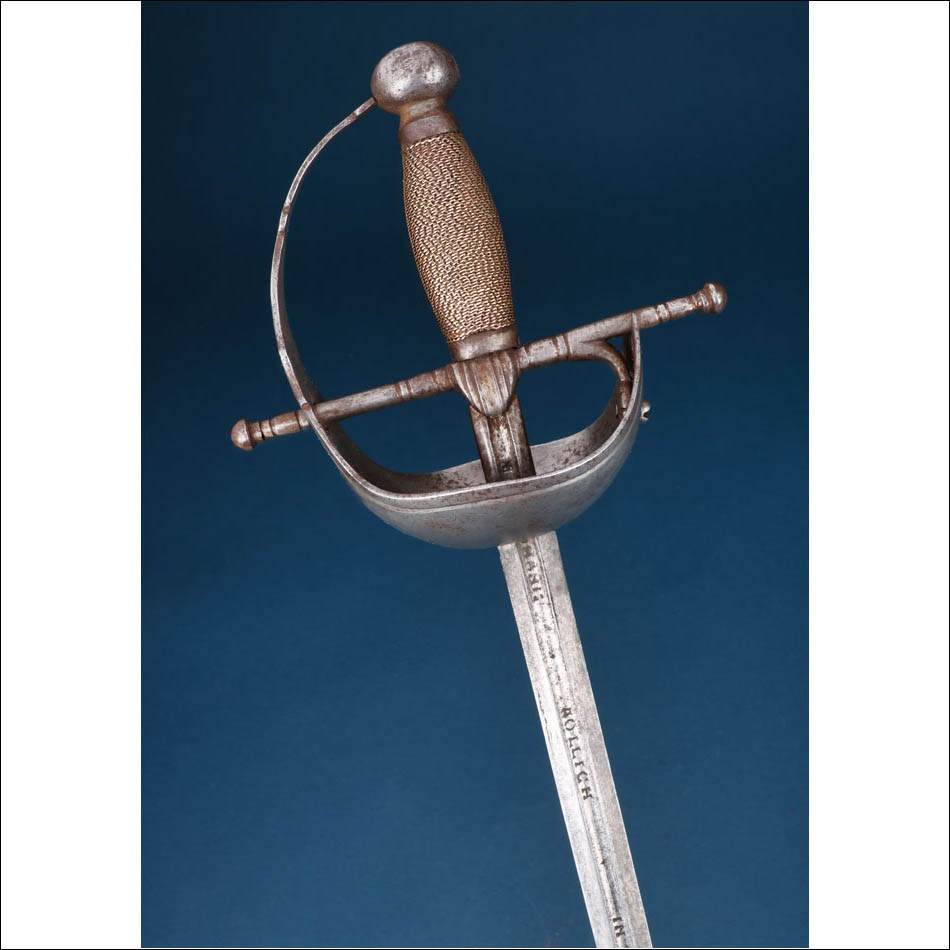

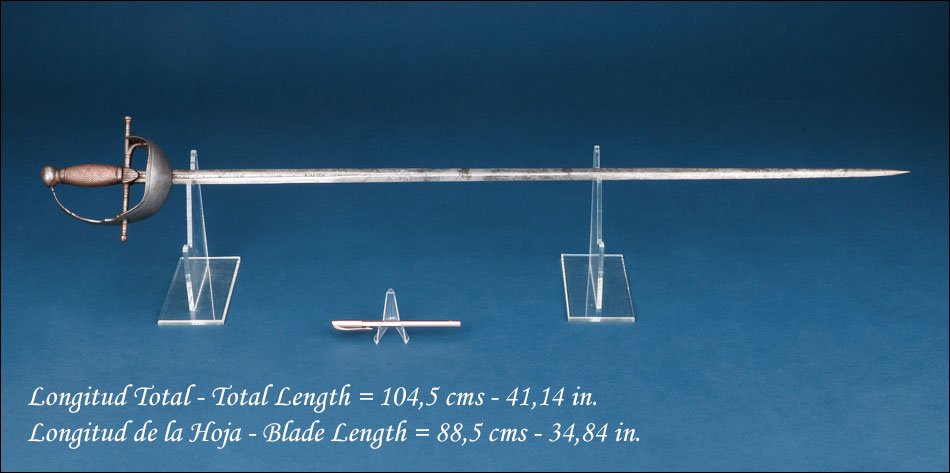
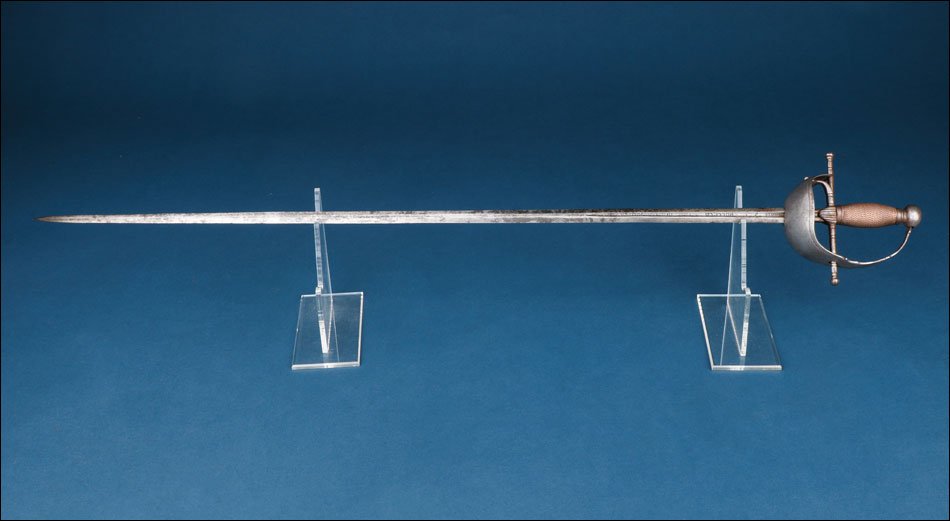



Antique Spanish half cup sword datable to the 17th century, representative of one of the most characteristic forms of civil and military armament of Baroque Spain. This is a piece of notable typological coherence, with elegant proportions and solid construction, conceived for real use in fencing and personal defence. Its elongated and balanced silhouette corresponds to the functional models developed in the Iberian Peninsula during this period, when the sword served both as a combat instrument and as a symbol of social prestige.
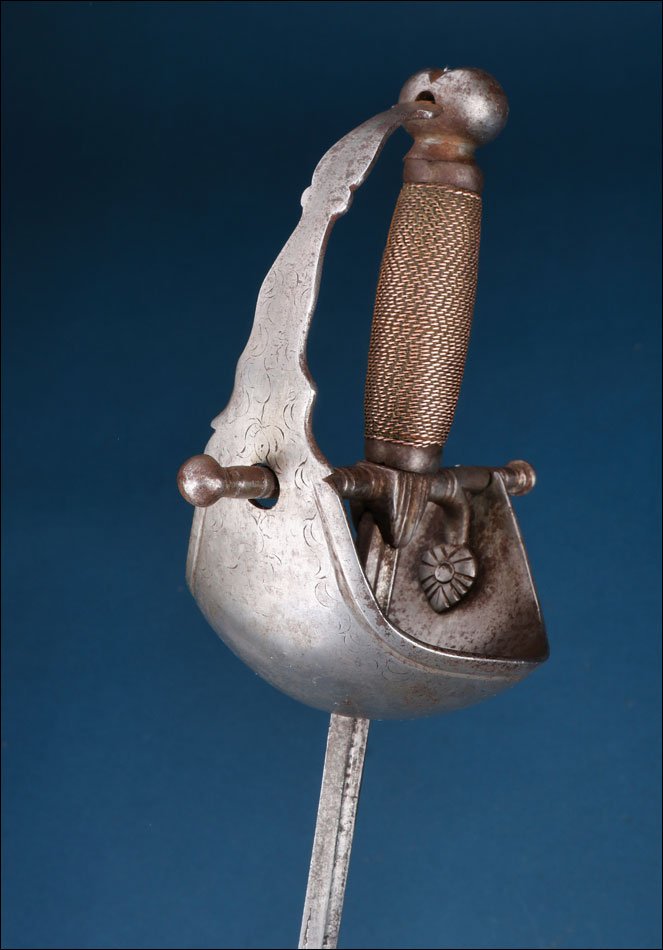
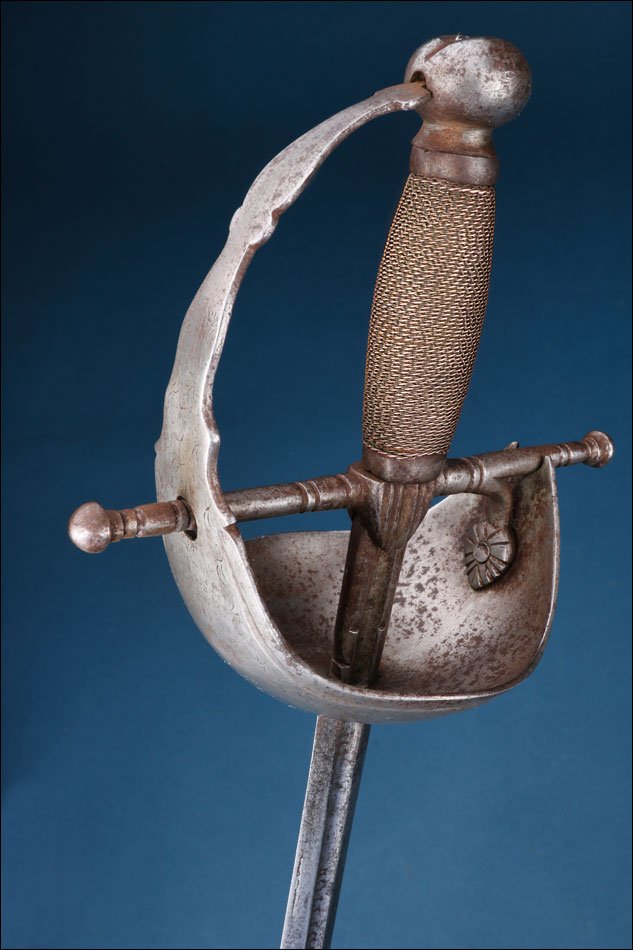
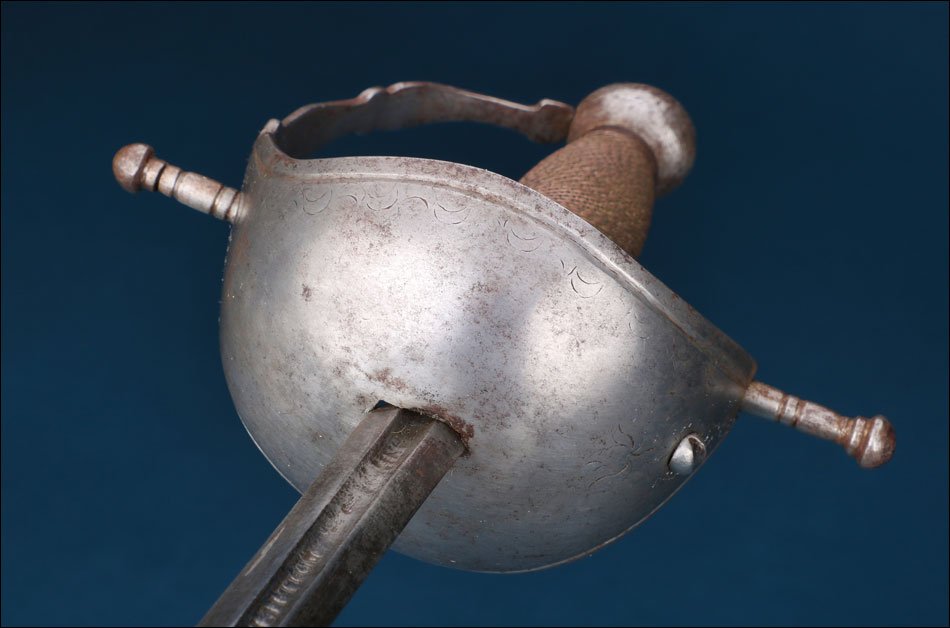
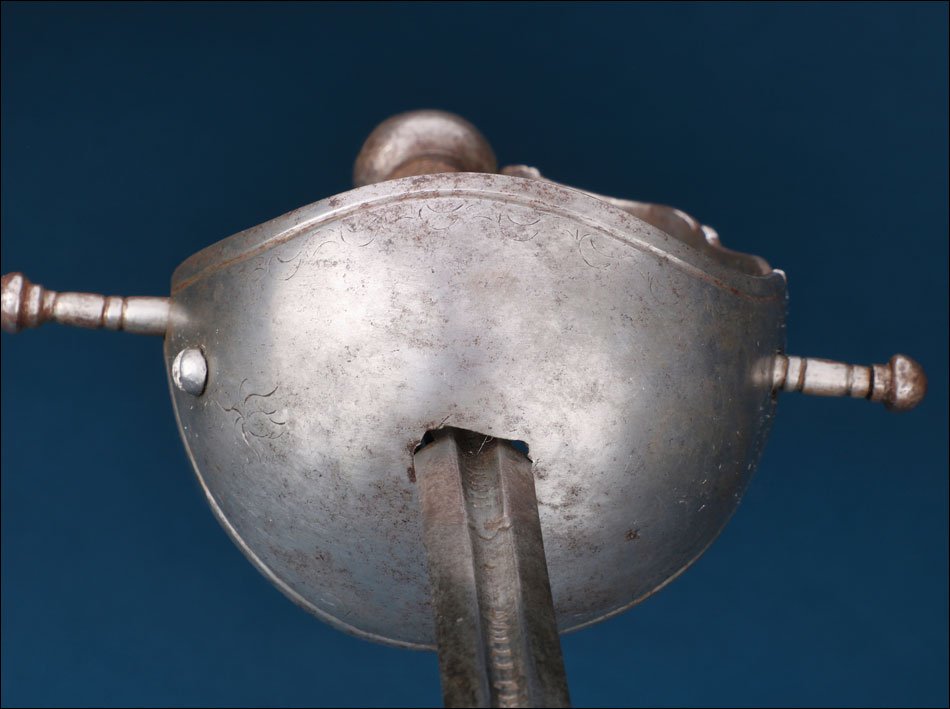
The guard is formed by a steel half cup partially enclosing the hand, offering effective protection without sacrificing lightness. It presents a robust and well defined configuration, with slight engraved decoration on the exterior composed of simple vegetal motifs, worn but still clearly visible. The ensemble is completed by a curved knuckle guard, straight quillons with turned terminals and a globular pommel, all elements consistent with Spanish tradition of the 17th century. The grip is covered with braided metal wire, preserving a firm and functional texture that improves handling and enhances the visual character of the weapon.
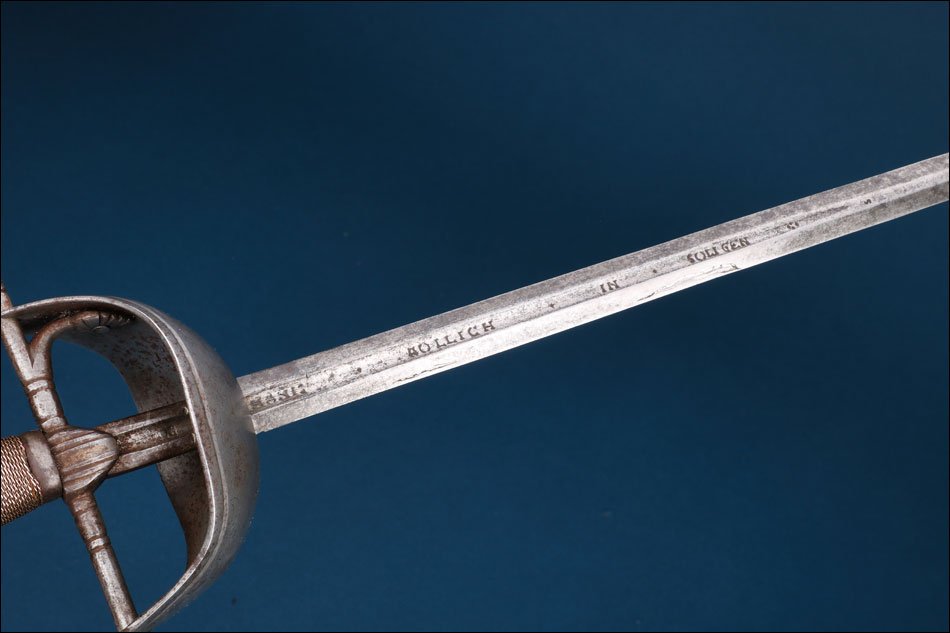
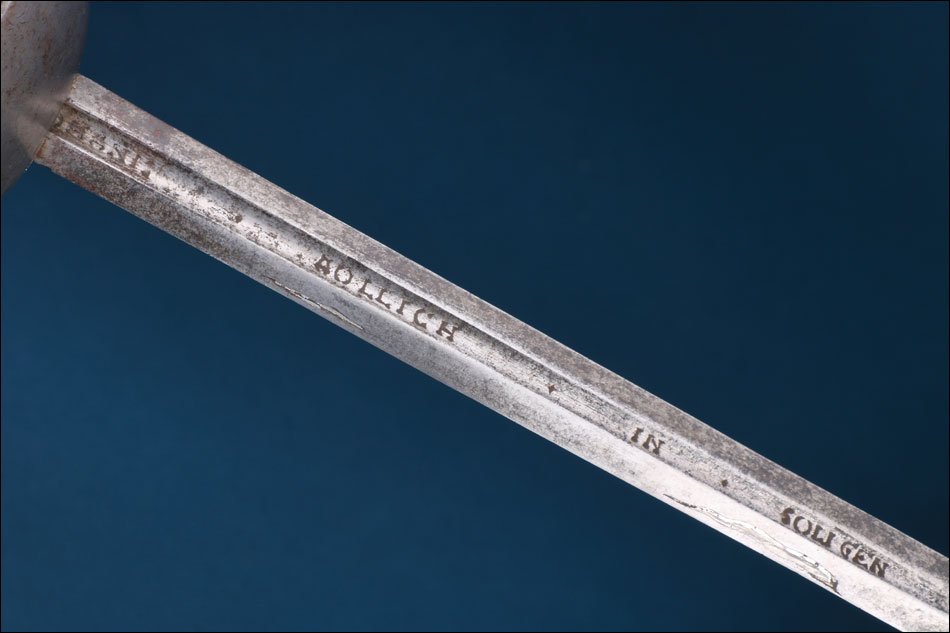
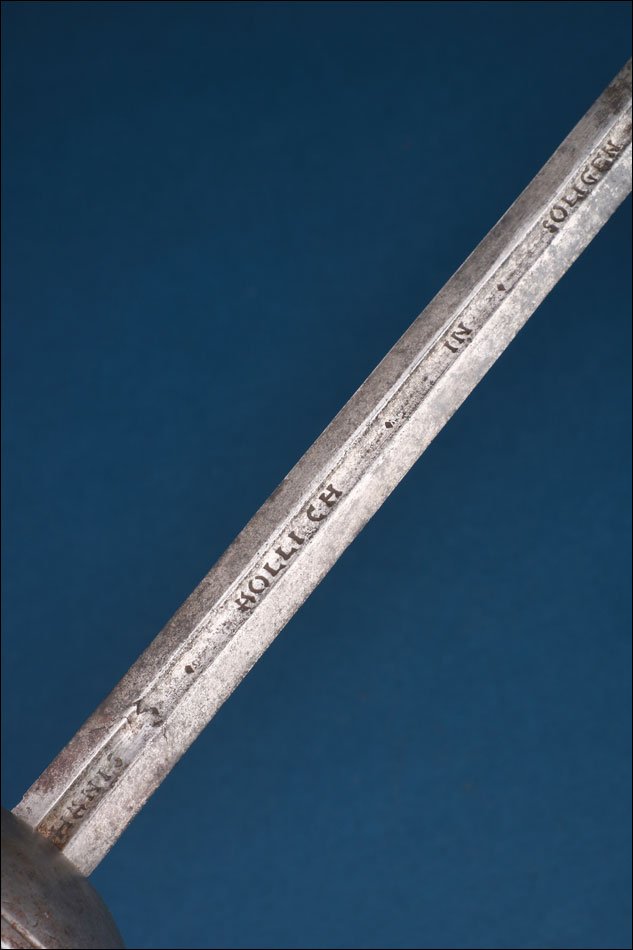
The blade is straight and slender, with a central fuller and proportions typical of thrust oriented swords. On one side appears the inscription “Iohanis Hollich in Solingen”, indicating manufacture in one of the most prestigious metallurgical centres of Europe. Such blades were commonly found on high quality Spanish swords, reflecting a widespread practice of the period, namely the combination of Spanish hilts with German blades, resulting from established trade networks and the technical reputation of German workshops.
The sword remains in very good overall condition, with a homogeneous patina consistent with its age and without interventions affecting its authenticity. It does not retain its scabbard, a common circumstance in swords of this chronology due to the perishable nature of the original materials. The structural integrity of the weapon allows clear appreciation of its historical design and typological value.
Its rarity within the current market makes it particularly attractive for collectors. The good state of preservation allows full enjoyment of its historical presence. The blade signature adds documentary interest and value to the ensemble. An authentic 17th century piece, rare on the market and with a signed blade, immediately adding historical prestige to any serious collection.
Measurements. 104.5 cm (41.14 in). Blade. 88.5 cm (34.84 in).
History of Spanish Half Cup Swords
Half cup swords constitute a fundamental typology within the evolution of Spanish edged weapons between the 16th and 17th centuries. Emerging as a development from the complex Renaissance loop guards, these swords incorporated a more compact and effective protection for the hand through a metal shell partially covering the fingers. This solution improved structural resistance, simplified manufacture and increased safety in combat, particularly in the context of thrust oriented fencing predominant at the time.
During the 17th century, half cup swords became widely diffused in Spain in both civil and military contexts. Their use was linked to the daily wearing of the sword as a symbol of status, honour and social belonging, as well as to its practical function in situations of personal defence. Spanish sword making centres developed hilts of notable technical and aesthetic quality, adapted to local tastes and requirements.
At the same time, many of these swords incorporated blades manufactured in Germany, especially in the Solingen region. German workshops enjoyed great reputation for the quality of their steels and the specialization of their craftsmen, favouring the export of blades intended to be mounted in other countries. This combination of Spanish hilt and German blade constitutes today a characteristic feature of numerous original swords of the period, reflecting the technical and commercial exchanges of early modern Europe.
The guard is formed by a steel half cup partially enclosing the hand, offering effective protection without sacrificing lightness. It presents a robust and well defined configuration, with slight engraved decoration on the exterior composed of simple vegetal motifs, worn but still clearly visible. The ensemble is completed by a curved knuckle guard, straight quillons with turned terminals and a globular pommel, all elements consistent with Spanish tradition of the 17th century. The grip is covered with braided metal wire, preserving a firm and functional texture that improves handling and enhances the visual character of the weapon.
The blade is straight and slender, with a central fuller and proportions typical of thrust oriented swords. On one side appears the inscription “Iohanis Hollich in Solingen”, indicating manufacture in one of the most prestigious metallurgical centres of Europe. Such blades were commonly found on high quality Spanish swords, reflecting a widespread practice of the period, namely the combination of Spanish hilts with German blades, resulting from established trade networks and the technical reputation of German workshops.
The sword remains in very good overall condition, with a homogeneous patina consistent with its age and without interventions affecting its authenticity. It does not retain its scabbard, a common circumstance in swords of this chronology due to the perishable nature of the original materials. The structural integrity of the weapon allows clear appreciation of its historical design and typological value.
Its rarity within the current market makes it particularly attractive for collectors. The good state of preservation allows full enjoyment of its historical presence. The blade signature adds documentary interest and value to the ensemble. An authentic 17th century piece, rare on the market and with a signed blade, immediately adding historical prestige to any serious collection.
Measurements. 104.5 cm (41.14 in). Blade. 88.5 cm (34.84 in).
History of Spanish Half Cup Swords
Half cup swords constitute a fundamental typology within the evolution of Spanish edged weapons between the 16th and 17th centuries. Emerging as a development from the complex Renaissance loop guards, these swords incorporated a more compact and effective protection for the hand through a metal shell partially covering the fingers. This solution improved structural resistance, simplified manufacture and increased safety in combat, particularly in the context of thrust oriented fencing predominant at the time.
During the 17th century, half cup swords became widely diffused in Spain in both civil and military contexts. Their use was linked to the daily wearing of the sword as a symbol of status, honour and social belonging, as well as to its practical function in situations of personal defence. Spanish sword making centres developed hilts of notable technical and aesthetic quality, adapted to local tastes and requirements.
At the same time, many of these swords incorporated blades manufactured in Germany, especially in the Solingen region. German workshops enjoyed great reputation for the quality of their steels and the specialization of their craftsmen, favouring the export of blades intended to be mounted in other countries. This combination of Spanish hilt and German blade constitutes today a characteristic feature of numerous original swords of the period, reflecting the technical and commercial exchanges of early modern Europe.
Explore similar pieces and discover your ideal find:
Edged Weapons