THIS OBJECT WAS SOLD
Spain. Antique Shell Guard Sword With German Blade And Inscription. 17th–18th C.
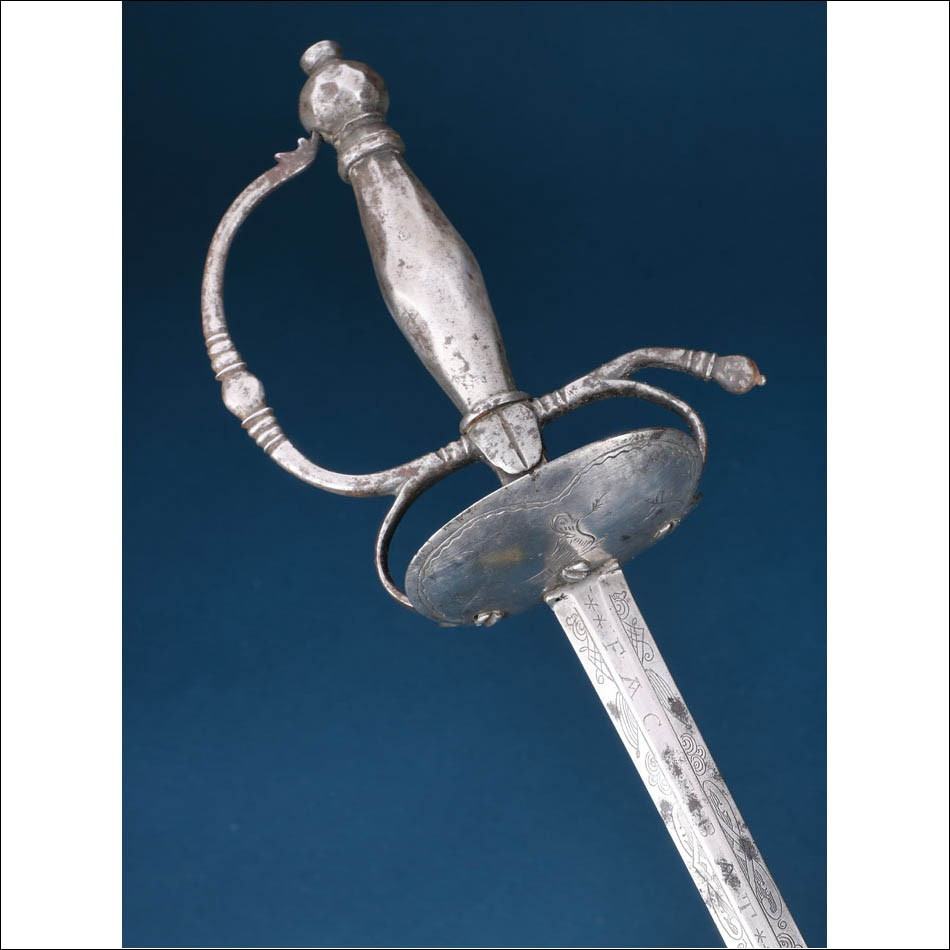
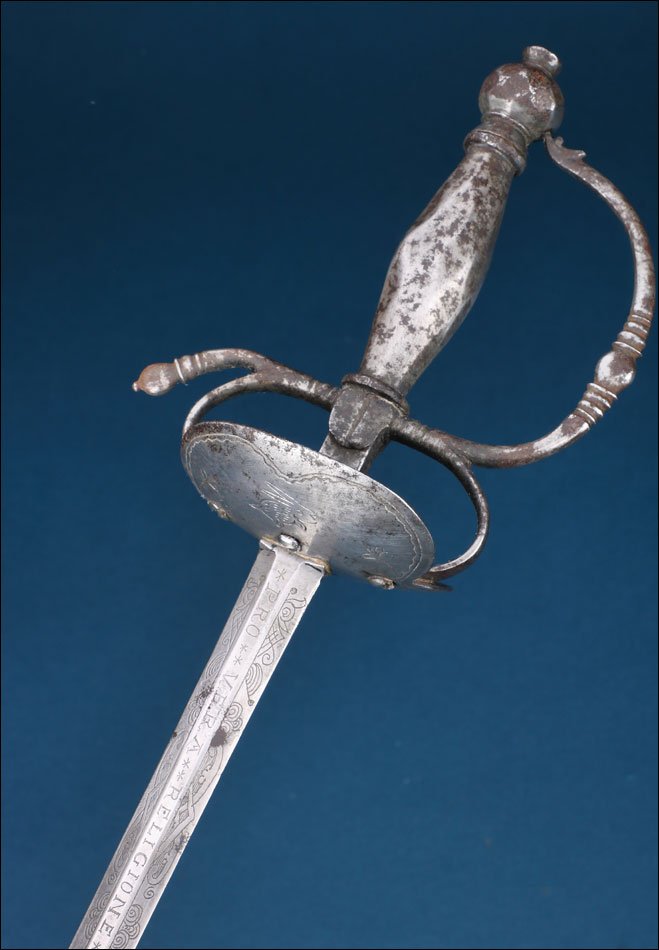
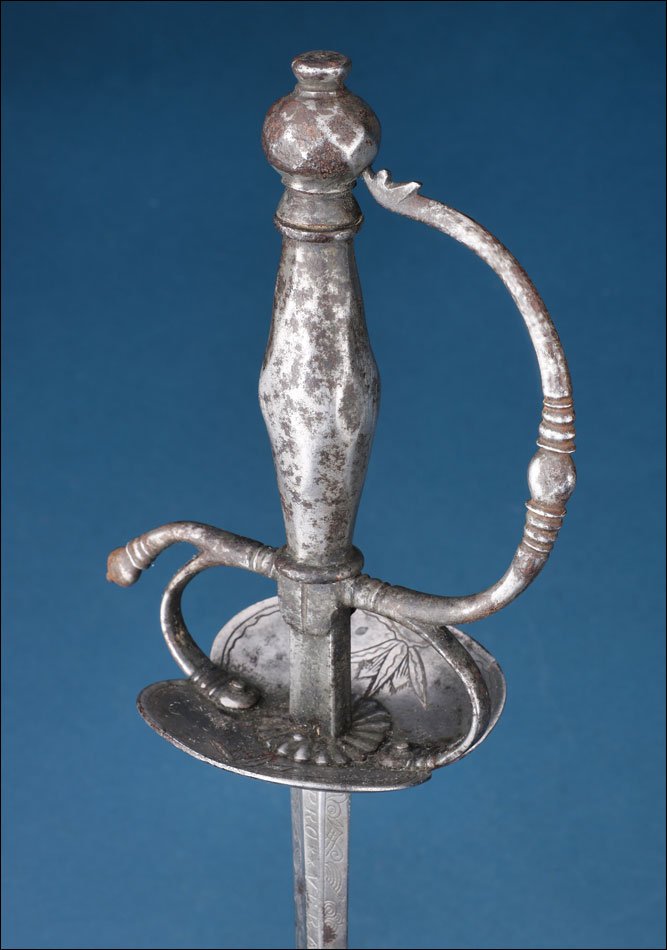



Antique and very attractive shell guard sword for the Spanish market, datable to the late 17th century and early 18th century, notable both for the quality of its execution and for the presence of a German-made blade, a common feature in prestigious edged weapons destined for Spain at the time. This is a piece of clear historical character, conceived within the context of European Baroque fencing and military culture.
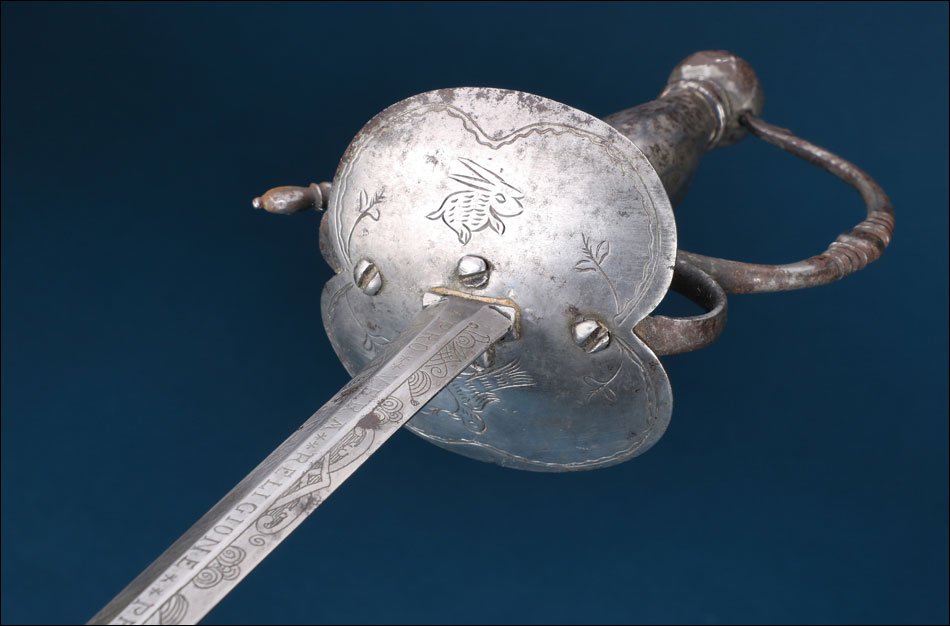
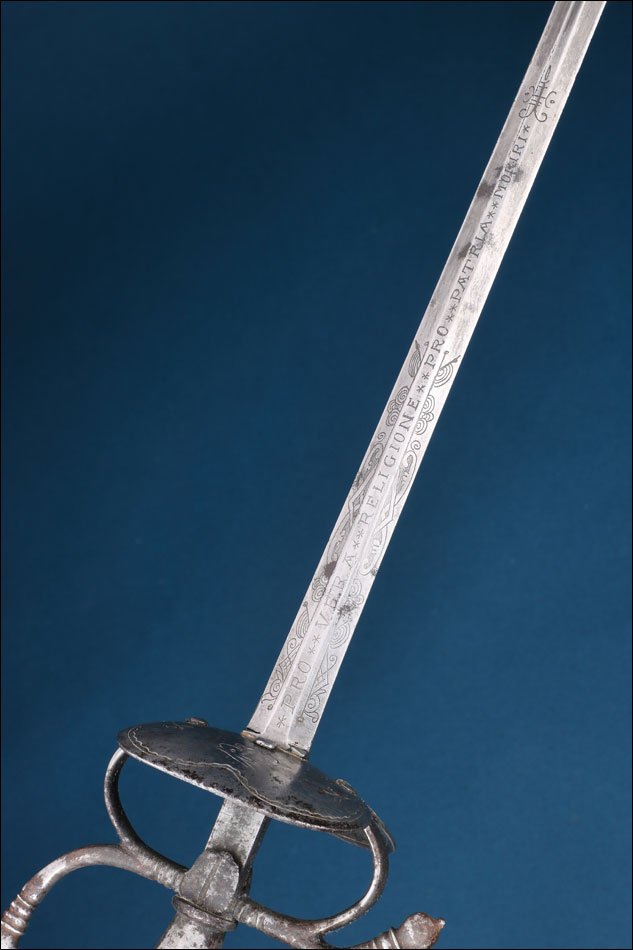
The guard is made of iron and features the characteristic shell system, a solution that preceded the full cup hilt and provided effective protection without sacrificing lightness or elegance. The shell shows symbolic and decorative engravings. On one side a bird is represented and on the other a hare or rabbit, iconographic motifs frequently found in the ornamental repertoire of the 17th century. Inside there is incised vegetal decoration, discreet but of notable aesthetic and typological interest. The ensemble is completed by a curved knuckle guard and an ovoid faceted pommel of clear Baroque inspiration.
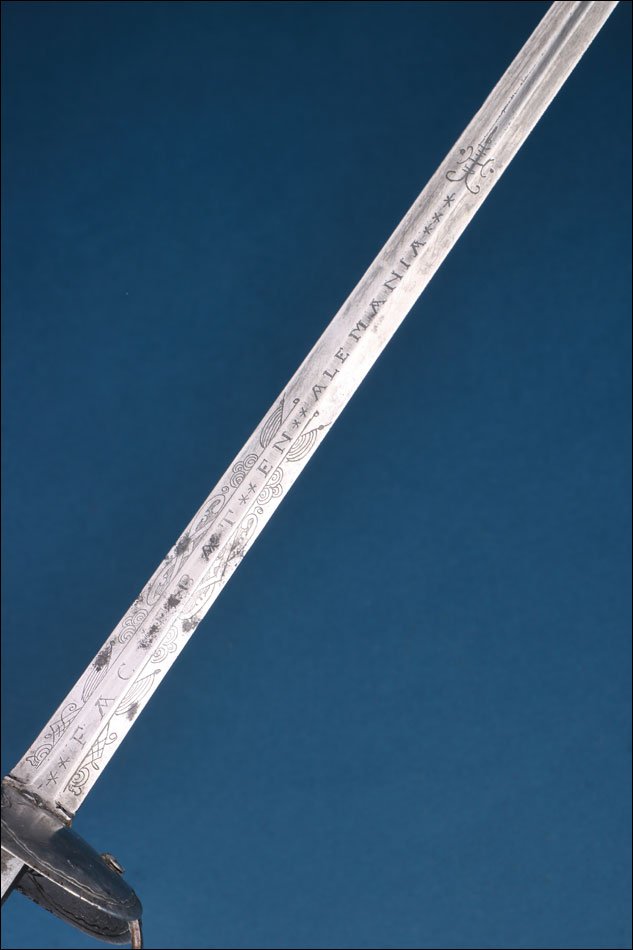
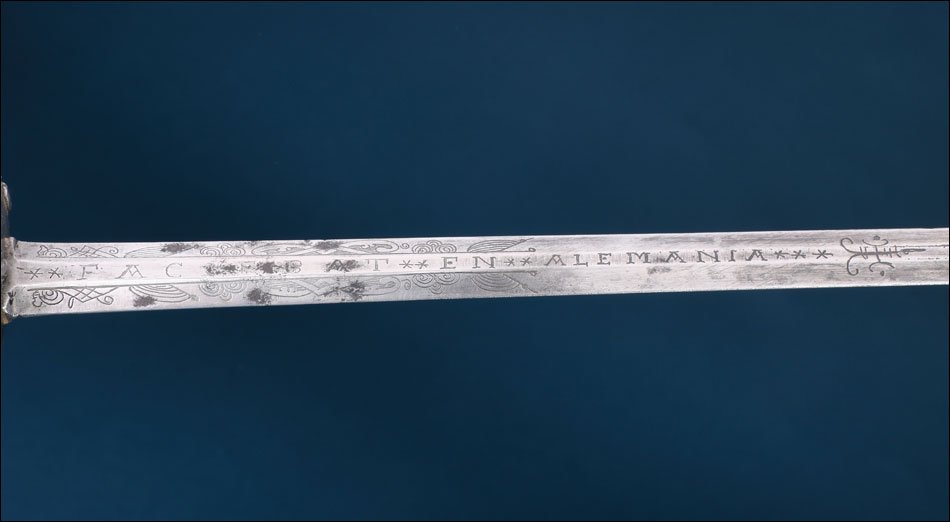
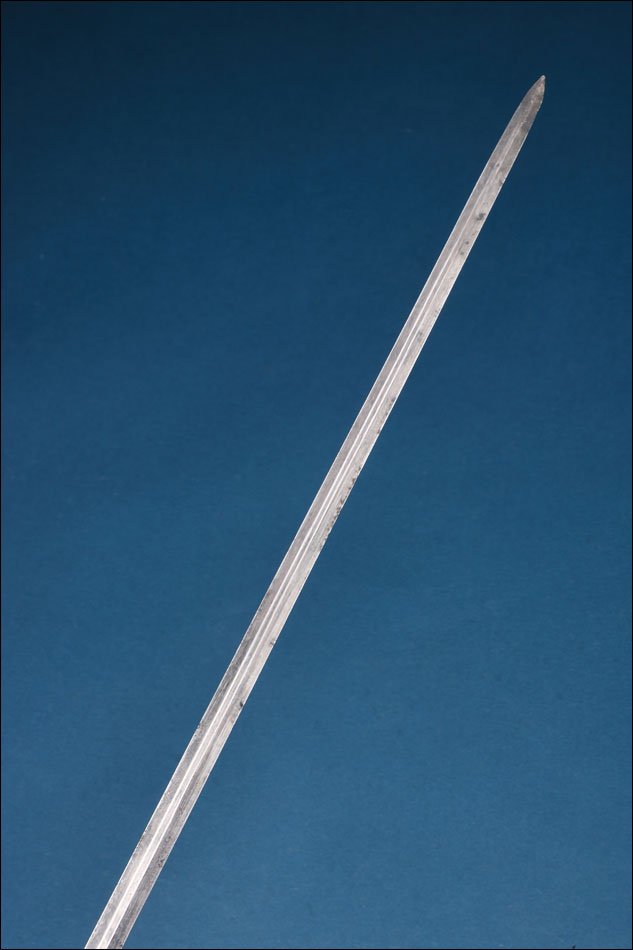
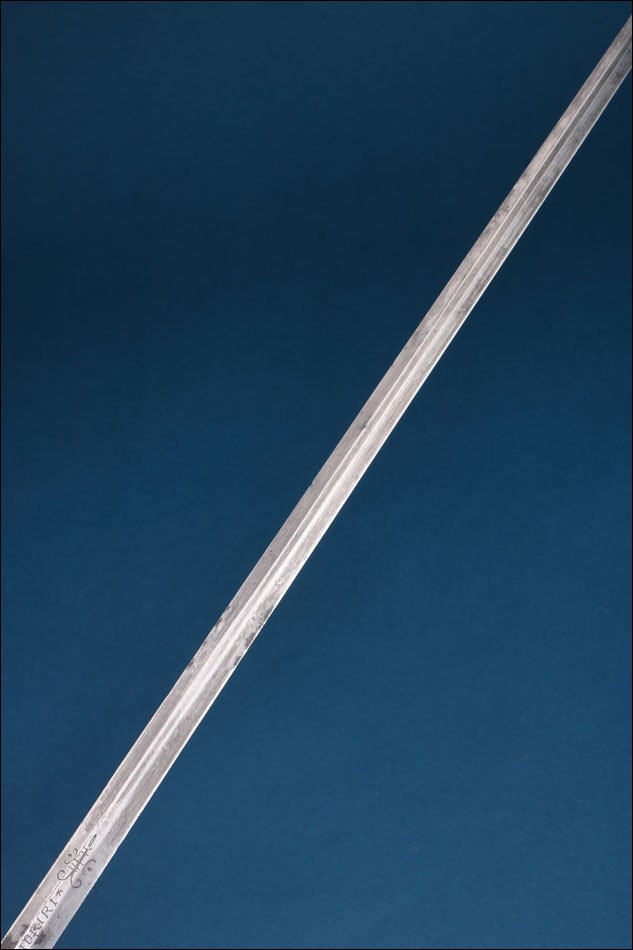
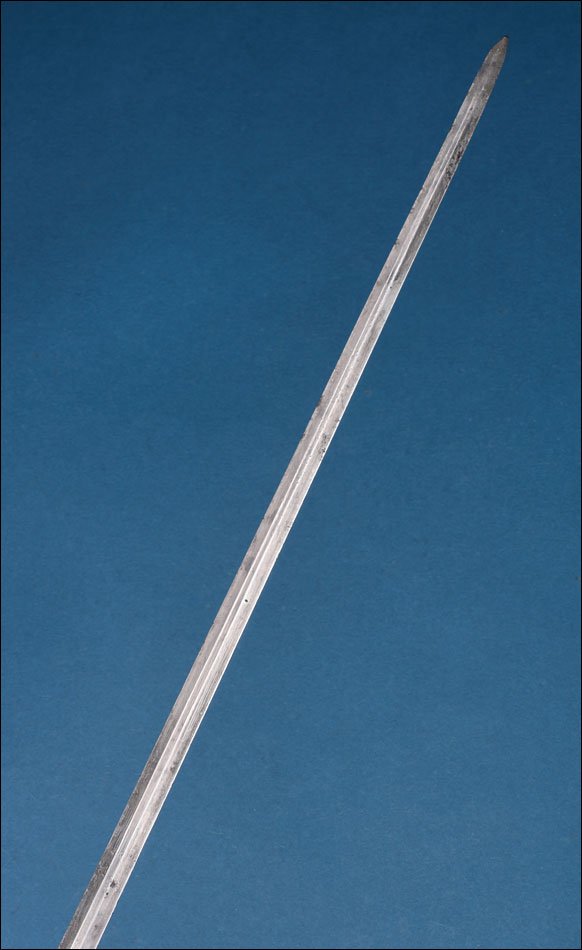
The blade is straight and slender, with a section appropriate for the intended use of this type of sword. It bears longitudinal decorative engravings and two inscriptions of great historical interest. On one face appears the phrase “FACIEBAT EN ALEMANIA”, a Latin formula indicating its manufacture in German territory, probably in production centres such as Solingen, closely linked to the supply of blades for the Spanish market. On the other face appears the motto “PRO VERA RELIGIONE PRO PATRIA MORIRI”, an expression of deep ideological content that may be translated as “To die for the true religion and for the fatherland”, reflecting the cultural and spiritual context in which these weapons were conceived.
The sword is preserved in very good overall condition, with patina consistent with its age and without alterations. The engravings remain legible and the ensemble retains its structural integrity, significantly enhancing its appeal to collectors specialised in European historical arms. It does not retain its scabbard, a common circumstance in pieces of this chronology due to the perishable nature of the organic materials originally used in their manufacture.
A relatively uncommon piece on the market due to its early typology within hand-protecting swords. It stands out for the presence of a German blade with inscriptions and for its symbolic decoration on the guard. Its authenticity, condition and historical character make it a highly interesting addition to any collection of militaria or antique weaponry.
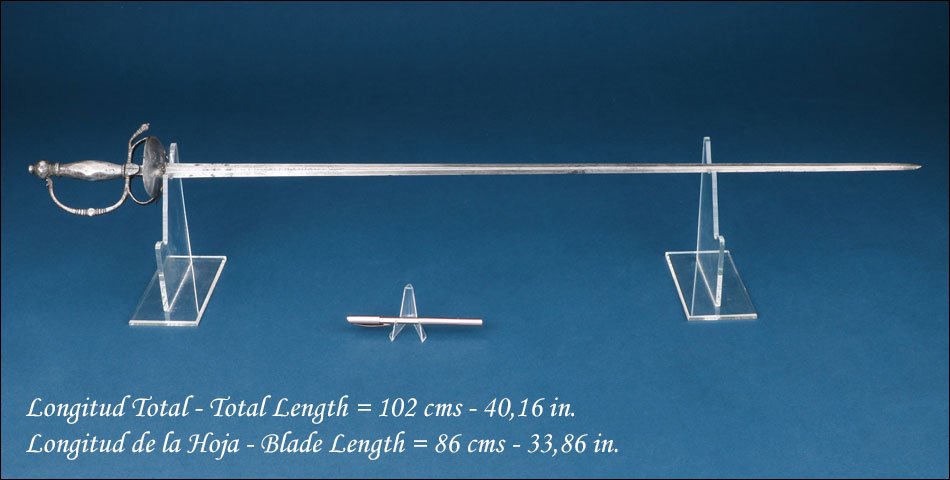
Measurements. 102 cm (40.16 in). Blade. 86 cm (33.86 in).
History of the Shell Guard Sword
Shell guard swords represent an evolutionary phase in the development of the European rapier, chronologically situated between the complex swept hilts of the Renaissance and the consolidation of the full cup hilt characteristic of the Hispanic sphere. Emerging in the 16th century and widely disseminated during the 17th century, these guards represented a technical solution aimed at improving hand protection without excessively increasing the weight of the weapon.
In the Spanish context, this type of sword enjoyed notable acceptance in both civil and military environments, being especially associated with the practice of fencing and with daily wear by members of the nobility, officers and other privileged social groups. The presence of German-made blades reflects the reputation of Central European metallurgical centres, which from the Late Middle Ages supplied numerous European markets through well-established commercial networks.
The religious and patriotic inscriptions engraved on the blades reflect the ideological climate of early modern Europe, marked by confessional conflicts and by the development of emerging political identities. This type of weapon fulfilled not only practical functions but also acted as a symbol of status, honour and cultural belonging. With the gradual evolution of combat techniques and the appearance of more enveloping forms of guard, shell guard swords were progressively replaced by more advanced models, remaining today as material testimony to a key stage in the history of edged weapons.
The guard is made of iron and features the characteristic shell system, a solution that preceded the full cup hilt and provided effective protection without sacrificing lightness or elegance. The shell shows symbolic and decorative engravings. On one side a bird is represented and on the other a hare or rabbit, iconographic motifs frequently found in the ornamental repertoire of the 17th century. Inside there is incised vegetal decoration, discreet but of notable aesthetic and typological interest. The ensemble is completed by a curved knuckle guard and an ovoid faceted pommel of clear Baroque inspiration.
The blade is straight and slender, with a section appropriate for the intended use of this type of sword. It bears longitudinal decorative engravings and two inscriptions of great historical interest. On one face appears the phrase “FACIEBAT EN ALEMANIA”, a Latin formula indicating its manufacture in German territory, probably in production centres such as Solingen, closely linked to the supply of blades for the Spanish market. On the other face appears the motto “PRO VERA RELIGIONE PRO PATRIA MORIRI”, an expression of deep ideological content that may be translated as “To die for the true religion and for the fatherland”, reflecting the cultural and spiritual context in which these weapons were conceived.
The sword is preserved in very good overall condition, with patina consistent with its age and without alterations. The engravings remain legible and the ensemble retains its structural integrity, significantly enhancing its appeal to collectors specialised in European historical arms. It does not retain its scabbard, a common circumstance in pieces of this chronology due to the perishable nature of the organic materials originally used in their manufacture.
A relatively uncommon piece on the market due to its early typology within hand-protecting swords. It stands out for the presence of a German blade with inscriptions and for its symbolic decoration on the guard. Its authenticity, condition and historical character make it a highly interesting addition to any collection of militaria or antique weaponry.
Measurements. 102 cm (40.16 in). Blade. 86 cm (33.86 in).
History of the Shell Guard Sword
Shell guard swords represent an evolutionary phase in the development of the European rapier, chronologically situated between the complex swept hilts of the Renaissance and the consolidation of the full cup hilt characteristic of the Hispanic sphere. Emerging in the 16th century and widely disseminated during the 17th century, these guards represented a technical solution aimed at improving hand protection without excessively increasing the weight of the weapon.
In the Spanish context, this type of sword enjoyed notable acceptance in both civil and military environments, being especially associated with the practice of fencing and with daily wear by members of the nobility, officers and other privileged social groups. The presence of German-made blades reflects the reputation of Central European metallurgical centres, which from the Late Middle Ages supplied numerous European markets through well-established commercial networks.
The religious and patriotic inscriptions engraved on the blades reflect the ideological climate of early modern Europe, marked by confessional conflicts and by the development of emerging political identities. This type of weapon fulfilled not only practical functions but also acted as a symbol of status, honour and cultural belonging. With the gradual evolution of combat techniques and the appearance of more enveloping forms of guard, shell guard swords were progressively replaced by more advanced models, remaining today as material testimony to a key stage in the history of edged weapons.
Explore similar pieces and discover your ideal find:
Edged Weapons