THIS OBJECT WAS SOLD
Spain. Antique Lantern Knife With Scabbard. Albacete, 19th Century
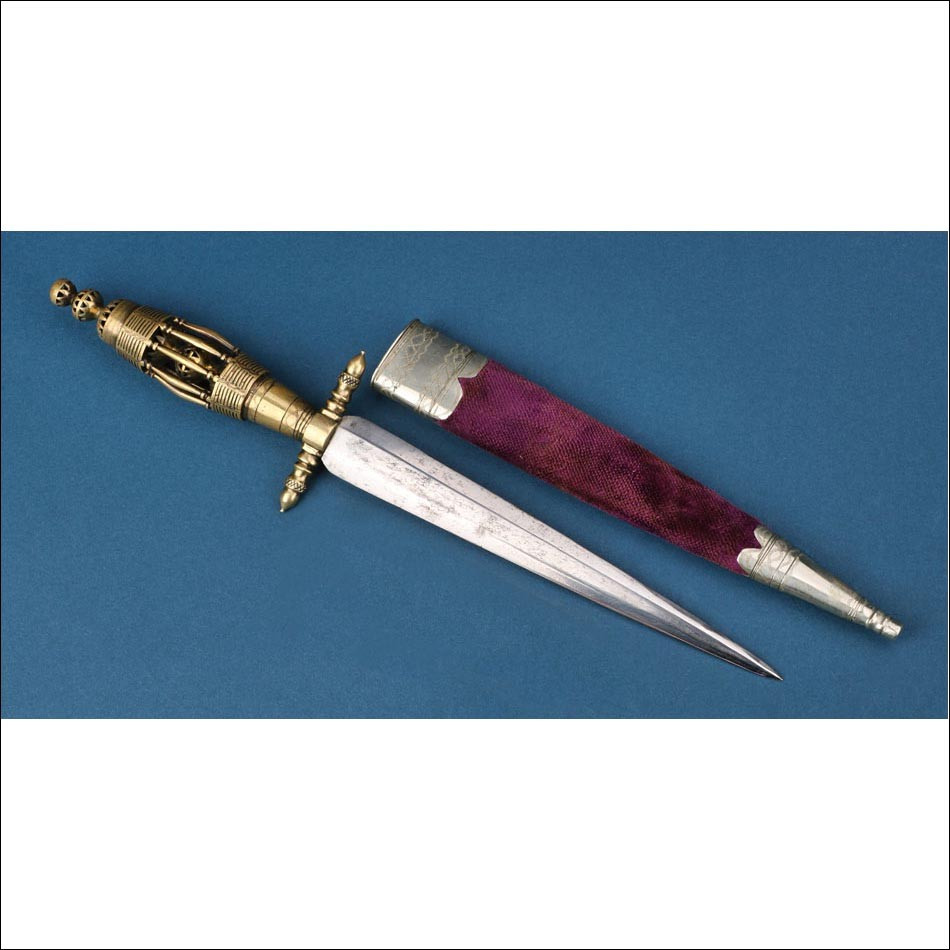
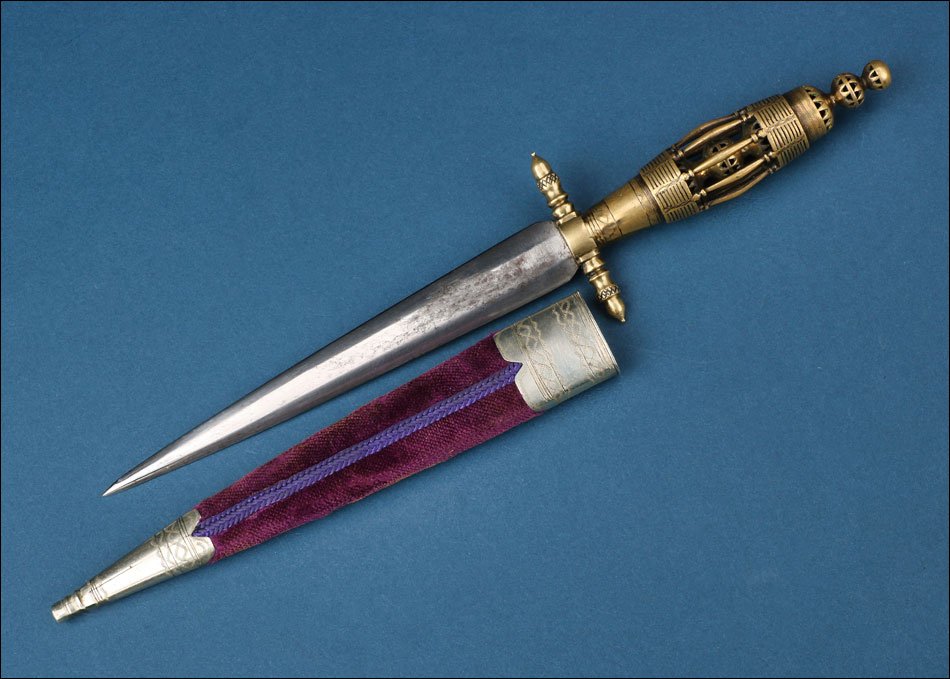
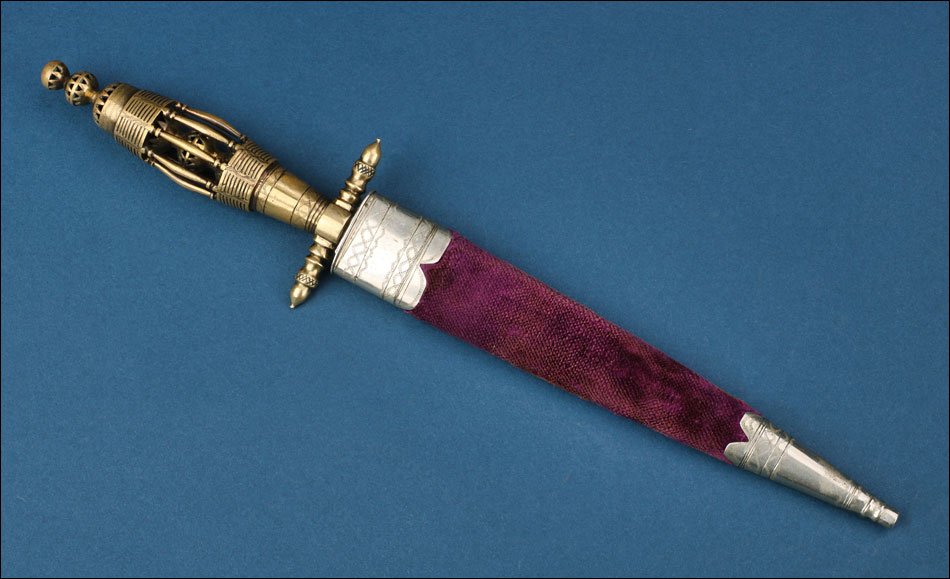
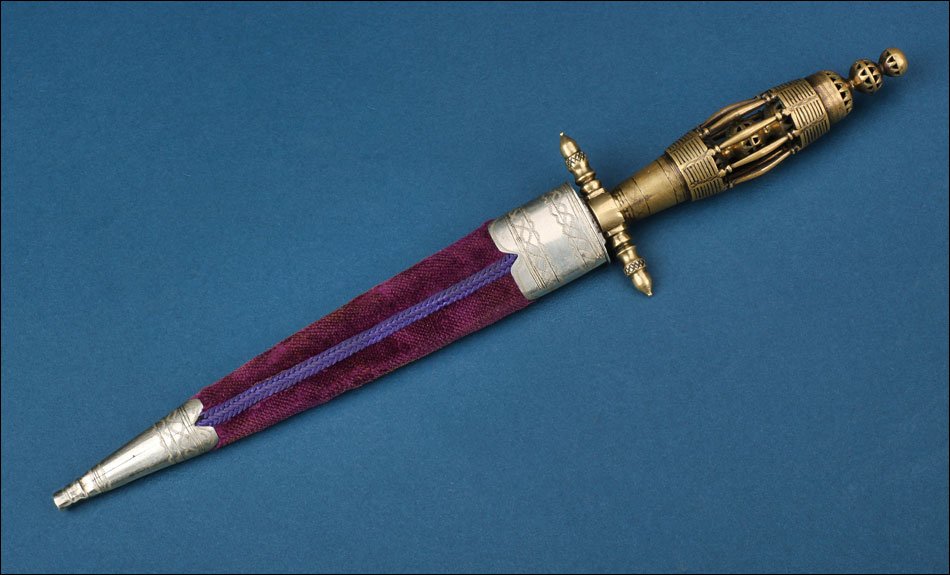




Interesting and rare antique Spanish knife known as a “lantern knife,” attributable to the cutlery tradition of Albacete and datable to the second half of the 19th century, circa 1870. This type of edged weapon represents one of the most distinctive typologies within Spanish popular production.
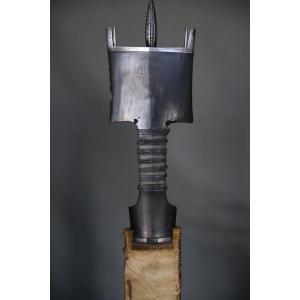
The hilt, made of brass, features the characteristic openwork structure with spherical elements inside, traditionally known as “lanterns,” a defining feature that gives this typology its name. The technical complexity of its construction and its formal originality make these knives particularly sought after within the field of specialized Spanish historical cutlery collecting.
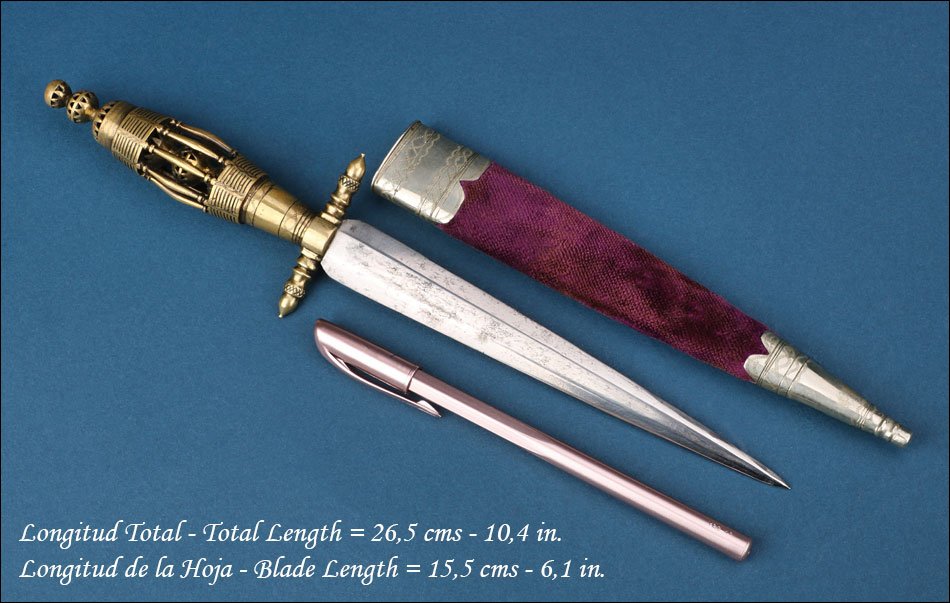
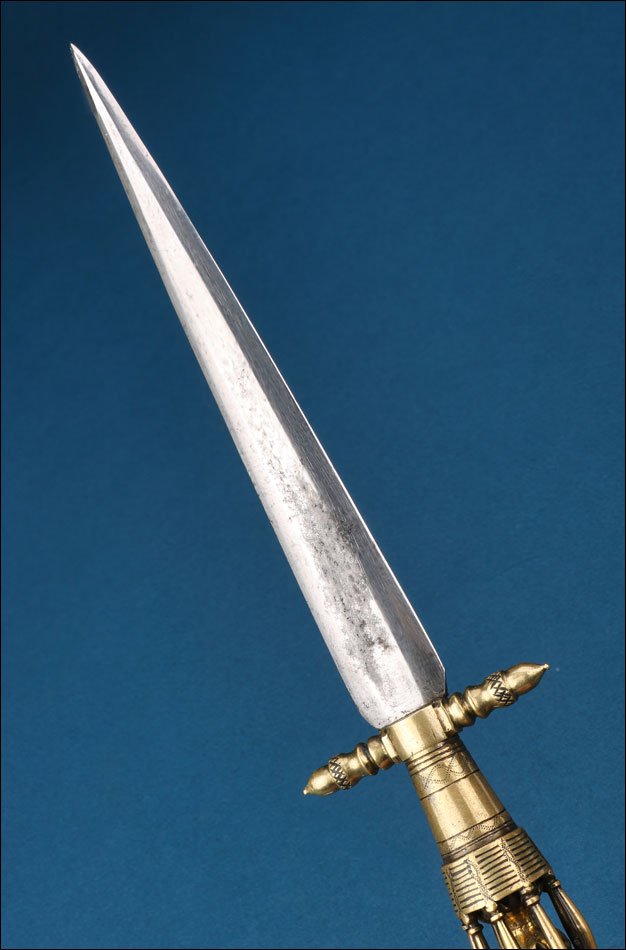
The blade, triangular in section and double-edged, incorporates a central longitudinal fuller that lightens the overall structure and reflects functional solutions typical of popular cutlery of the period. Its slender silhouette and sober execution reinforce the practical and defensive character of the weapon, conceived for everyday civilian use.
The knife retains its period scabbard, covered in textile material with metal mounts. The fresh condition of the covering suggests the possibility of a historical renewal of the textile, a relatively common circumstance in this type of antique piece. In any case, the ensemble maintains full typological and aesthetic coherence.
Overall condition is excellent, with even patina and wear consistent with age, without significant structural alterations. The quality of workmanship, typological rarity and presence of the scabbard make this example particularly attractive on the international market.
Lantern knives represent a unique manifestation of 19th-century Albacete craftsmanship and are today highly appreciated for their ethnographic, technical and collectible value.
A rare piece of strong historical character and remarkable visual impact.
Measurements: 26.5 cm (10.4 in). Blade: 15.5 cm (6.1 in).
History of Lantern Knives
During the 19th century, the city of Albacete became one of Spain’s principal cutlery centers, developing a diverse production that ranged from utilitarian tools to personal defense weapons. Within this context, particularly creative typologies emerged, such as the so-called lantern knives, characterized by hilts incorporating spherical structures, both external and internal, of ornamental nature.
These pieces reflect the combination of functionality and formal experimentation typical of Spanish popular cutlery, where the artisan’s technical skill was expressed both in mechanical construction and aesthetic design. Today, they form a specialized collecting field due to their rarity and manufacturing complexity.
The hilt, made of brass, features the characteristic openwork structure with spherical elements inside, traditionally known as “lanterns,” a defining feature that gives this typology its name. The technical complexity of its construction and its formal originality make these knives particularly sought after within the field of specialized Spanish historical cutlery collecting.
The blade, triangular in section and double-edged, incorporates a central longitudinal fuller that lightens the overall structure and reflects functional solutions typical of popular cutlery of the period. Its slender silhouette and sober execution reinforce the practical and defensive character of the weapon, conceived for everyday civilian use.
The knife retains its period scabbard, covered in textile material with metal mounts. The fresh condition of the covering suggests the possibility of a historical renewal of the textile, a relatively common circumstance in this type of antique piece. In any case, the ensemble maintains full typological and aesthetic coherence.
Overall condition is excellent, with even patina and wear consistent with age, without significant structural alterations. The quality of workmanship, typological rarity and presence of the scabbard make this example particularly attractive on the international market.
Lantern knives represent a unique manifestation of 19th-century Albacete craftsmanship and are today highly appreciated for their ethnographic, technical and collectible value.
A rare piece of strong historical character and remarkable visual impact.
Measurements: 26.5 cm (10.4 in). Blade: 15.5 cm (6.1 in).
History of Lantern Knives
During the 19th century, the city of Albacete became one of Spain’s principal cutlery centers, developing a diverse production that ranged from utilitarian tools to personal defense weapons. Within this context, particularly creative typologies emerged, such as the so-called lantern knives, characterized by hilts incorporating spherical structures, both external and internal, of ornamental nature.
These pieces reflect the combination of functionality and formal experimentation typical of Spanish popular cutlery, where the artisan’s technical skill was expressed both in mechanical construction and aesthetic design. Today, they form a specialized collecting field due to their rarity and manufacturing complexity.
Explore similar pieces and discover your ideal find:
Edged Weapons