

Magic Stone
Artist: Ile D’ambrym, Archipel Du Vanuatu
Magic Stone
Ambrym Island, Archipelago of Vanuatu
Dimensions: 24 cm x 15 cm
9,4 in. x 6 in.
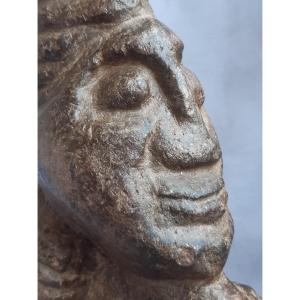
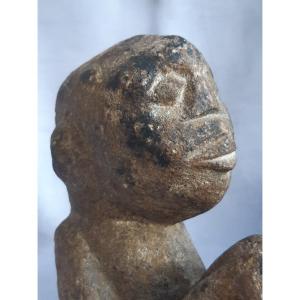
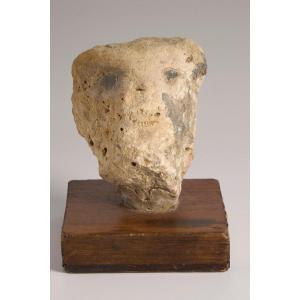
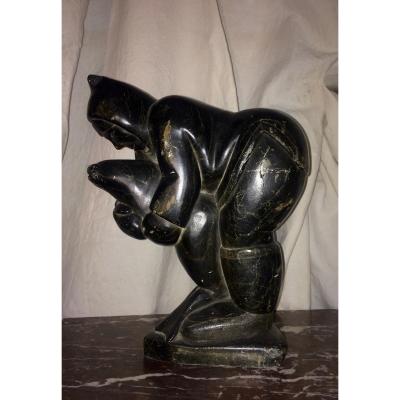
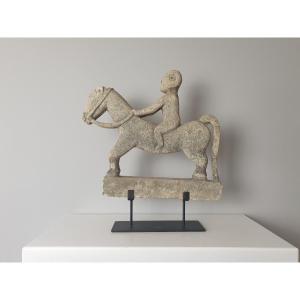
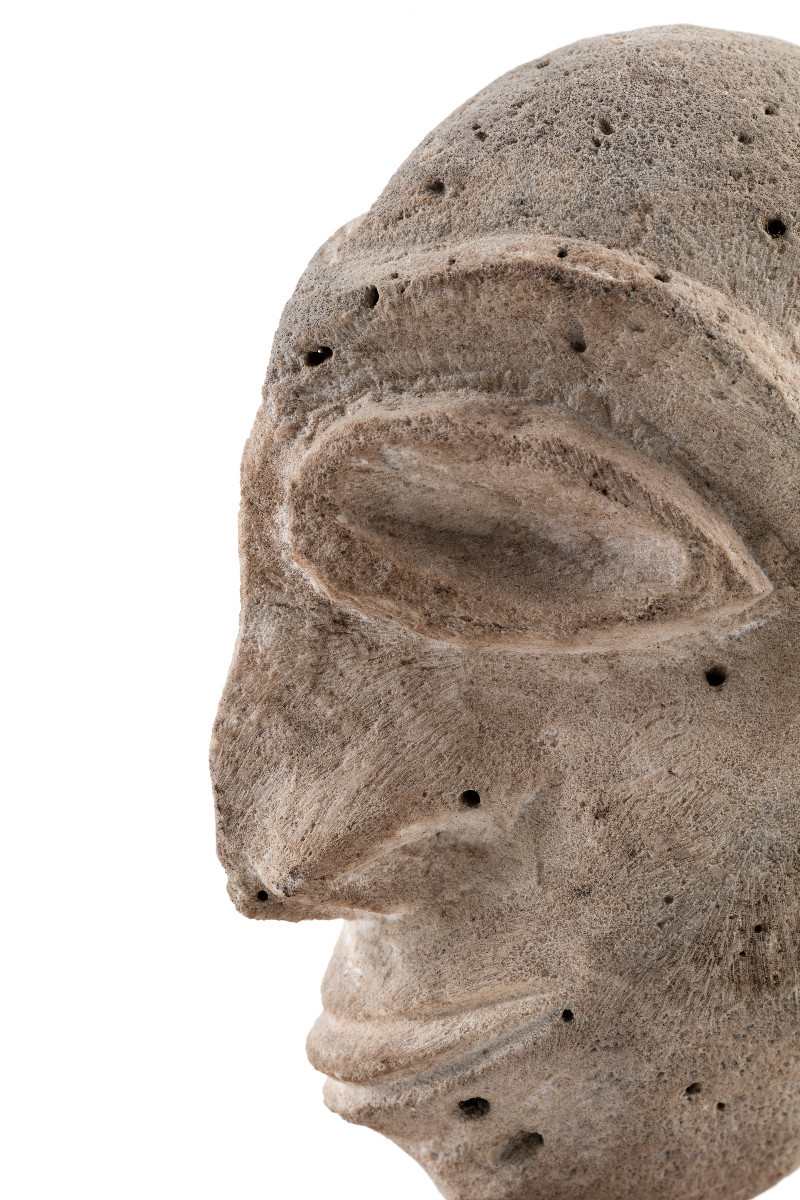
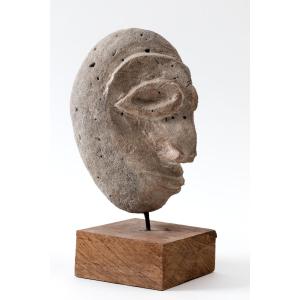
A magic stone (müyü ne bu) from Ambrym Island (Vanuatu), carved from volcanic tuff, is considered an exceptional object, both artistic and spiritual.
In Ambrym culture, these stones possess beneficial powers: they influence nature, protect crops, and promote prosperity. This particular stone is used to facilitate the purchase of pigs, which are essential to local society. Pigs, especially castrated males with curved tusks, serve as currency, symbols of wealth and social prestige, and play a central role in trade and rituals.
The stone is associated with a spirit named Lengnangoulong, a mythical being with magical powers and a connection to pigs. According to legend, he devoured these animals and was hunted down several times before being killed. After his death, his spirit manifested and gave birth to this stone, which allowed its owners to become rich and influential. Magic stones are still widely used in Vanuatu, although they are now carefully hidden, particularly since religious missions attempted to interpret them as malevolent. Tradition generally attributes beneficial effects to them: bringing rain or sunshine, protecting crops, ensuring fertility and growth for both people and animals, and so on.
This type of stone, called müyü ne bu in northern Ambrym, helps its owner when buying pigs, especially castrated males with well-developed tusks. These pigs occupy a vital economic and cultural place: they constitute a veritable currency, sometimes described as "living money."
Their value depends on the curvature of their tusks, which can take six to eight years to form a complete loop (called bumto). These animals serve as a benchmark for setting prices and allow men to attain high social ranks (called maghé), enhancing their prestige in the world of the living and, sometimes, in the world of the ancestors.
In this context, possessing a magic stone confers a decisive advantage in transactions: it influences the seller and allows for better prices. Exchanges thus become a veritable "battle between stones," each seeking to prevail over the other.
Reference to the book " Sculptures Afrique Asie Oceanie Ameriques" Musee du Quai Branly Ed. Reunion des musees nationaux 2000 p 269-273
950 €
Period: 20th century
Style: Tribal Art
Condition: Good condition
Material: Stone
Height: 24 cm
Depth: 15 cm
Reference (ID): 1736690
Availability: In stock
Print