THIS OBJECT WAS SOLD
E.galle (1846-1904)-crocus Bleus, Cup. Between 1898-1904


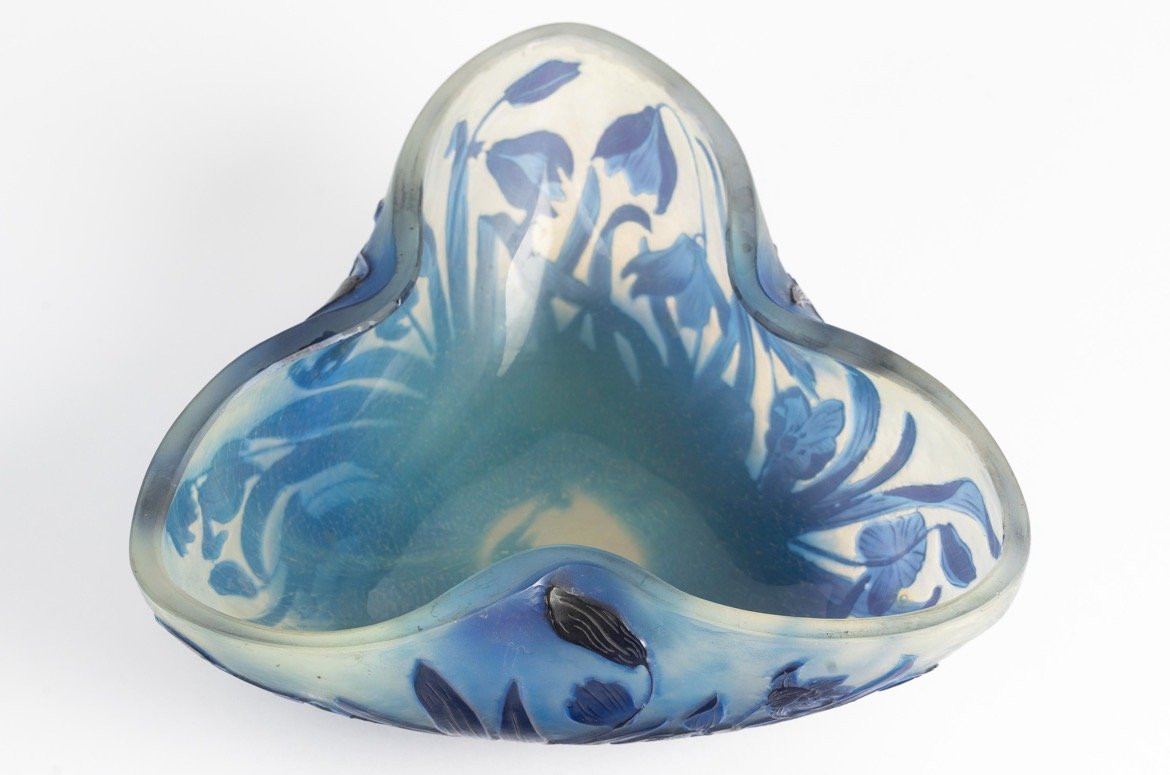

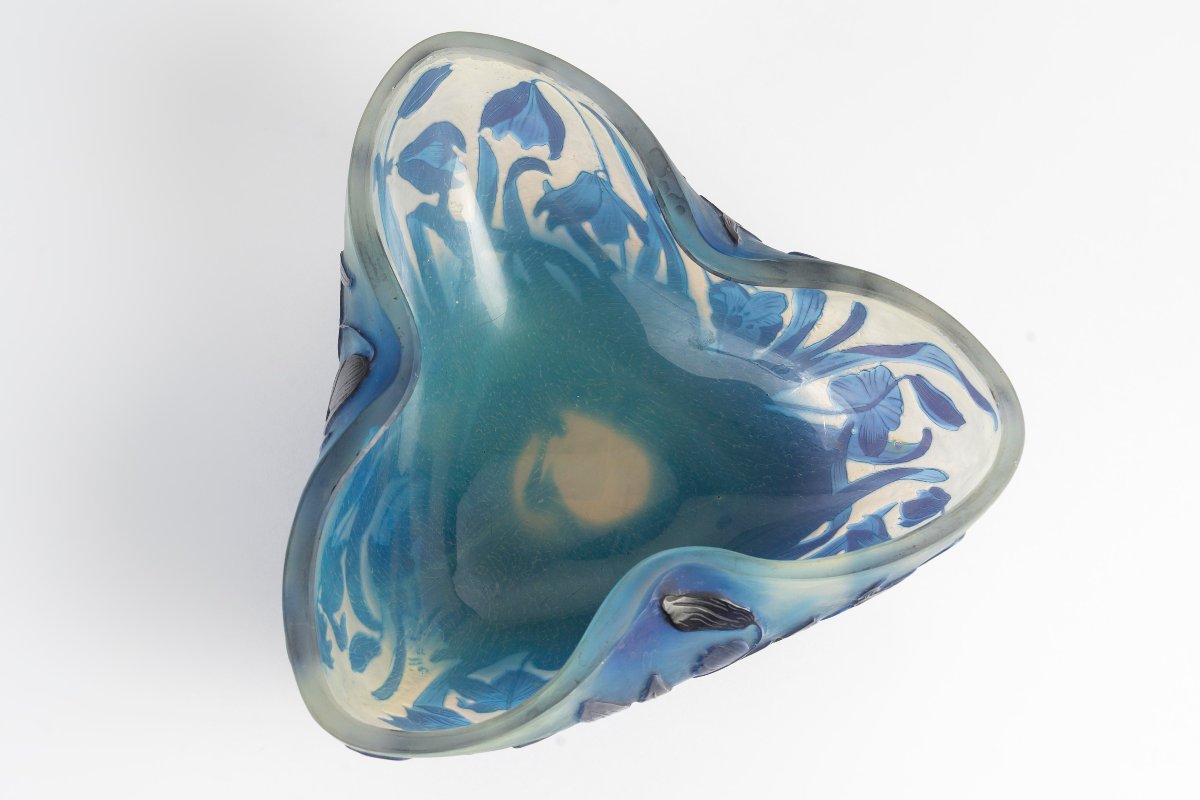
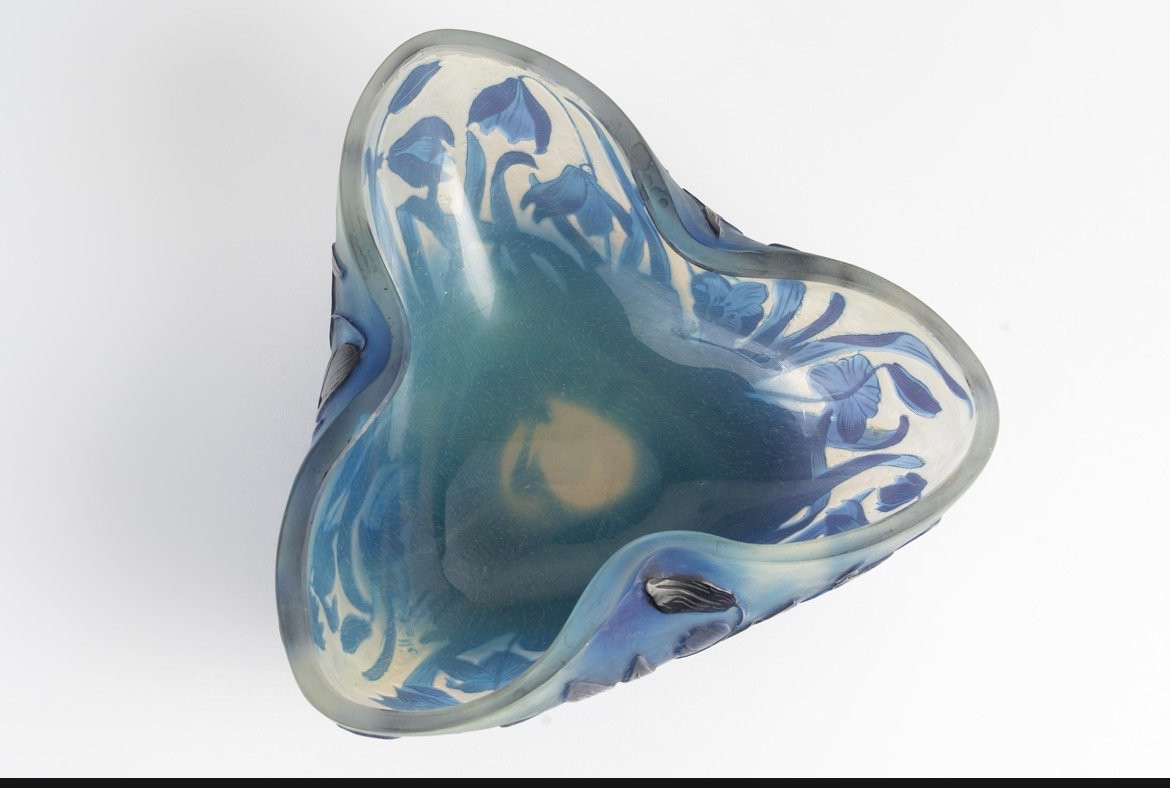
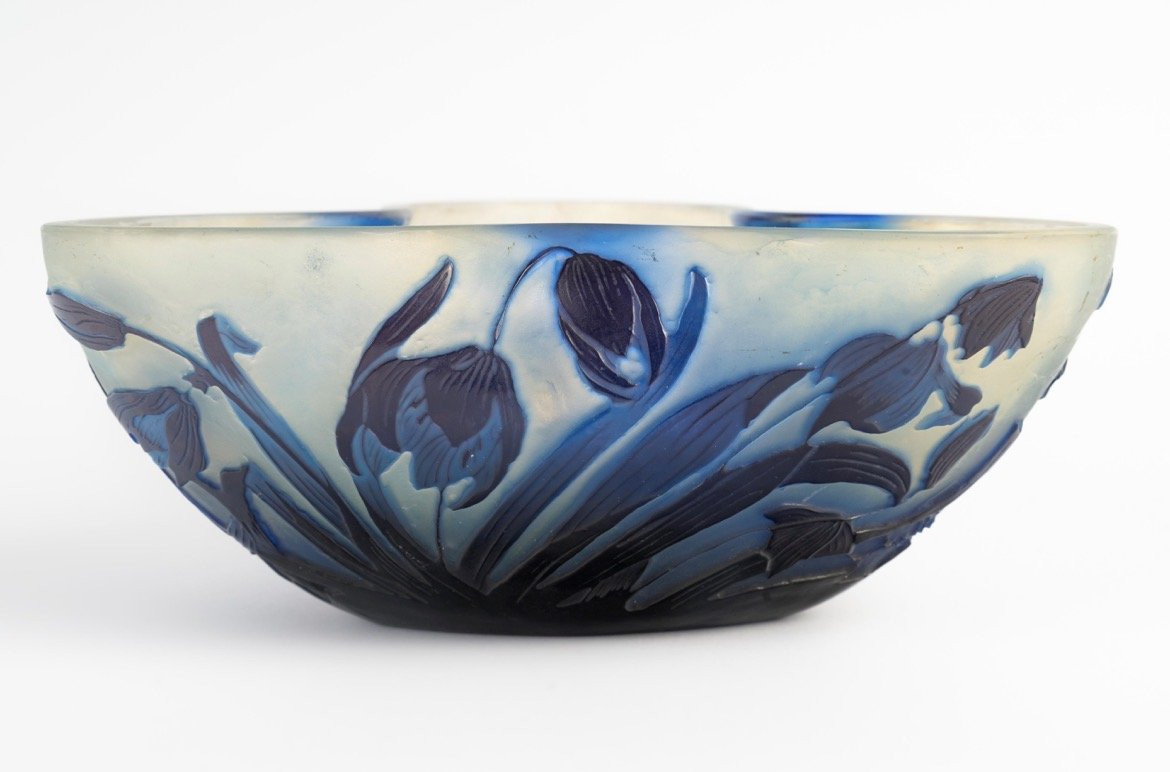
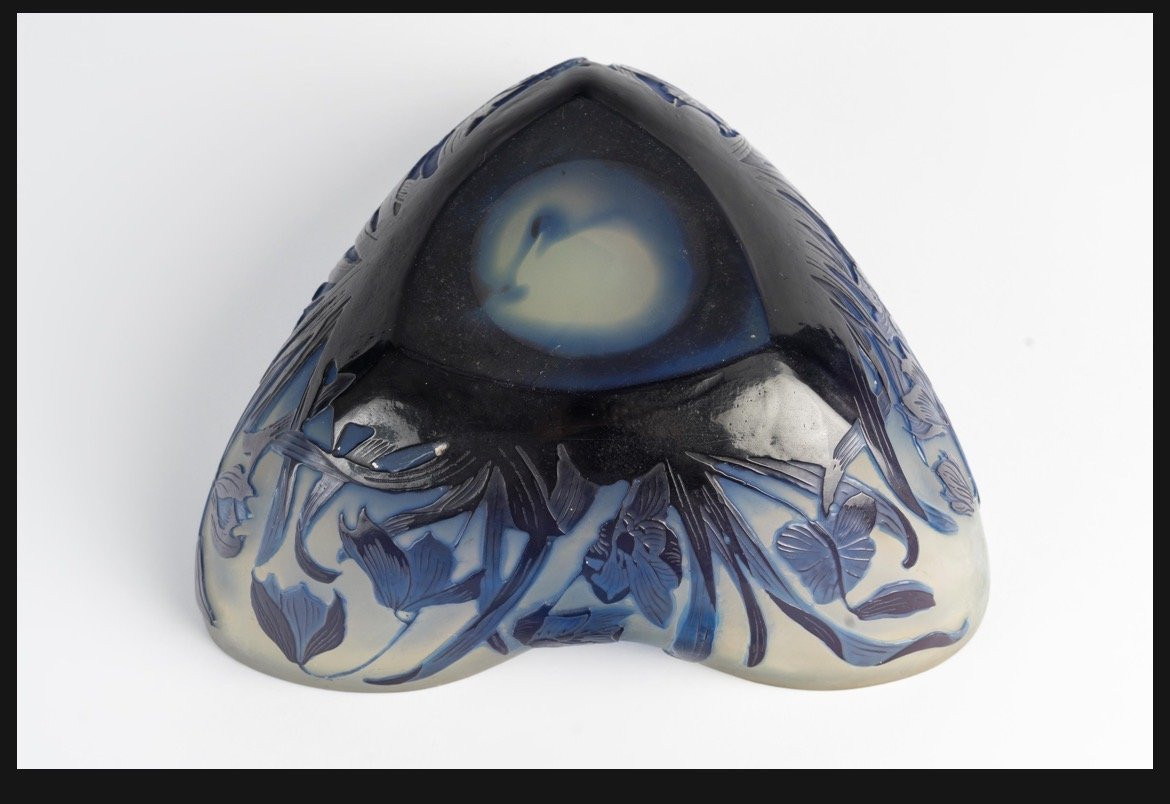

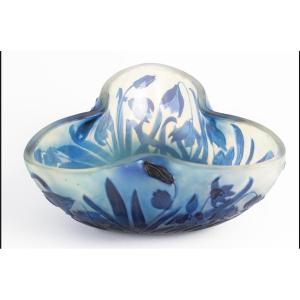


Emile GALLE (Nancy, 1846-1904). Crocus dishBetween 1898-1904.Exquisitesmall, circular bowl with hot-molded, three-lobed rims in multi-layered glasswith refined, acid-etched floral cameo decoration,on a satin-finish milky ground with bewitching opaline reflectionsspring inflorescences of Crocus (Crocus vernus alpin) with leafyleafy stems, buds and corollas with half-open or open petalsin subtle shades of violet-blue, lightly ringed with black.of black. The lower part and base of the triangular, curvilinear shapewith curvilinear sides shaded in deeper shades of dark blue.Signed "Gallé" in reserve, acid-etchedin the lower part of the floral design.CROCUSES, SPRING'S FIRST SMILES"A beautifulbeautiful thing doesn't die without having purified something else," saysMaeterlinck, who believes in the magical virtue of Beauty, the element soto create warmth and goodness.
This is the naive language of theWinter Crocus and Alpine Colchicumof the Alps", wrote the master glass artist frommaster glass artist Emile Gallé (1846-1904), who, in the same collectionwho, in the same collection, as a seasoned botanist continually dazzled by the beautiesNature, recounted: (among) "the surprises, the unexpected revelationsunexpected revelations, the charming whims of Alpine flora" " thatthat "this nature, at once riotous and severe", "offers"."which take us over a hundred meters up into the ruins of thePraetorium built by the Roman general Valerius", "the botanistwill be able to gather with one hand, in a single bouquet, at the Safran des Neiges,the purple corollas and golden pistils of Crocus Sativus and Crocus Vernus".
Subtlesubtle design, both in terms of the elegance of its profilesthe graceful shape of a corolla, as well as its suggestive chromatic palette combiningdiaphaneity (of snowy peaks) and fragile bursts of color (of the radiant balletthis tiny ornamental piece with its symbolic significance - associated with Nature'sNature's Spring awakening, the Crocus flower is a messenger ofmessenger of Joy and Gaiety - crystallizes the sensitive and inventiveand inventive art of Emile Gallé, recognized as "one of the most importantin the decorative arts at the dawn of the twentieth century".One ofGallé's adages to appreciate: "Nature contains the secret of glass.secret of glass; all you have to do is open your eyes and your heart".
*Emile Gallé, Ecrits pour l'Art:Horticulture, arts décoratifs, notices d'expositions (1884-1904), Paris:1914, pp. 3, 202
Marks and signature: Acid-etched "Gallé" cameo signaturein the lower part of the floral design.Materials: acid-etched multi-layered glass.
Dimensions: H.: 7 cm: -Diam.:16 cmProvenance: Private collection in Paris.Work of the Ecole de Nancy. Art Nouveau period,Between1898-1904In perfect condition. No restoration;
This is the naive language of theWinter Crocus and Alpine Colchicumof the Alps", wrote the master glass artist frommaster glass artist Emile Gallé (1846-1904), who, in the same collectionwho, in the same collection, as a seasoned botanist continually dazzled by the beautiesNature, recounted: (among) "the surprises, the unexpected revelationsunexpected revelations, the charming whims of Alpine flora" " thatthat "this nature, at once riotous and severe", "offers"."which take us over a hundred meters up into the ruins of thePraetorium built by the Roman general Valerius", "the botanistwill be able to gather with one hand, in a single bouquet, at the Safran des Neiges,the purple corollas and golden pistils of Crocus Sativus and Crocus Vernus".
Subtlesubtle design, both in terms of the elegance of its profilesthe graceful shape of a corolla, as well as its suggestive chromatic palette combiningdiaphaneity (of snowy peaks) and fragile bursts of color (of the radiant balletthis tiny ornamental piece with its symbolic significance - associated with Nature'sNature's Spring awakening, the Crocus flower is a messenger ofmessenger of Joy and Gaiety - crystallizes the sensitive and inventiveand inventive art of Emile Gallé, recognized as "one of the most importantin the decorative arts at the dawn of the twentieth century".One ofGallé's adages to appreciate: "Nature contains the secret of glass.secret of glass; all you have to do is open your eyes and your heart".
*Emile Gallé, Ecrits pour l'Art:Horticulture, arts décoratifs, notices d'expositions (1884-1904), Paris:1914, pp. 3, 202
Marks and signature: Acid-etched "Gallé" cameo signaturein the lower part of the floral design.Materials: acid-etched multi-layered glass.
Dimensions: H.: 7 cm: -Diam.:16 cmProvenance: Private collection in Paris.Work of the Ecole de Nancy. Art Nouveau period,Between1898-1904In perfect condition. No restoration;
Explore similar pieces and discover your ideal find:
Cameo Glass