THIS OBJECT WAS SOLD
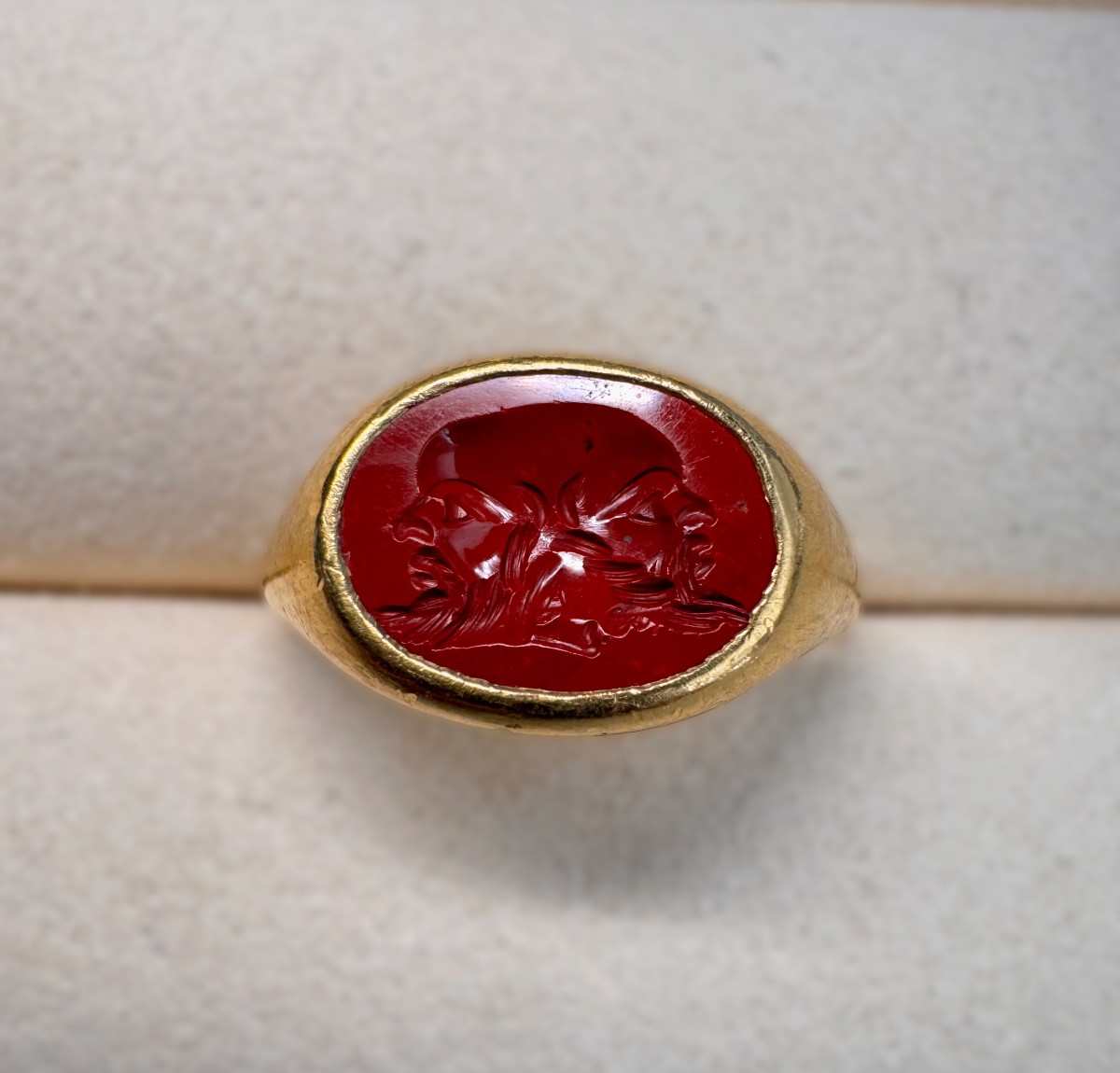
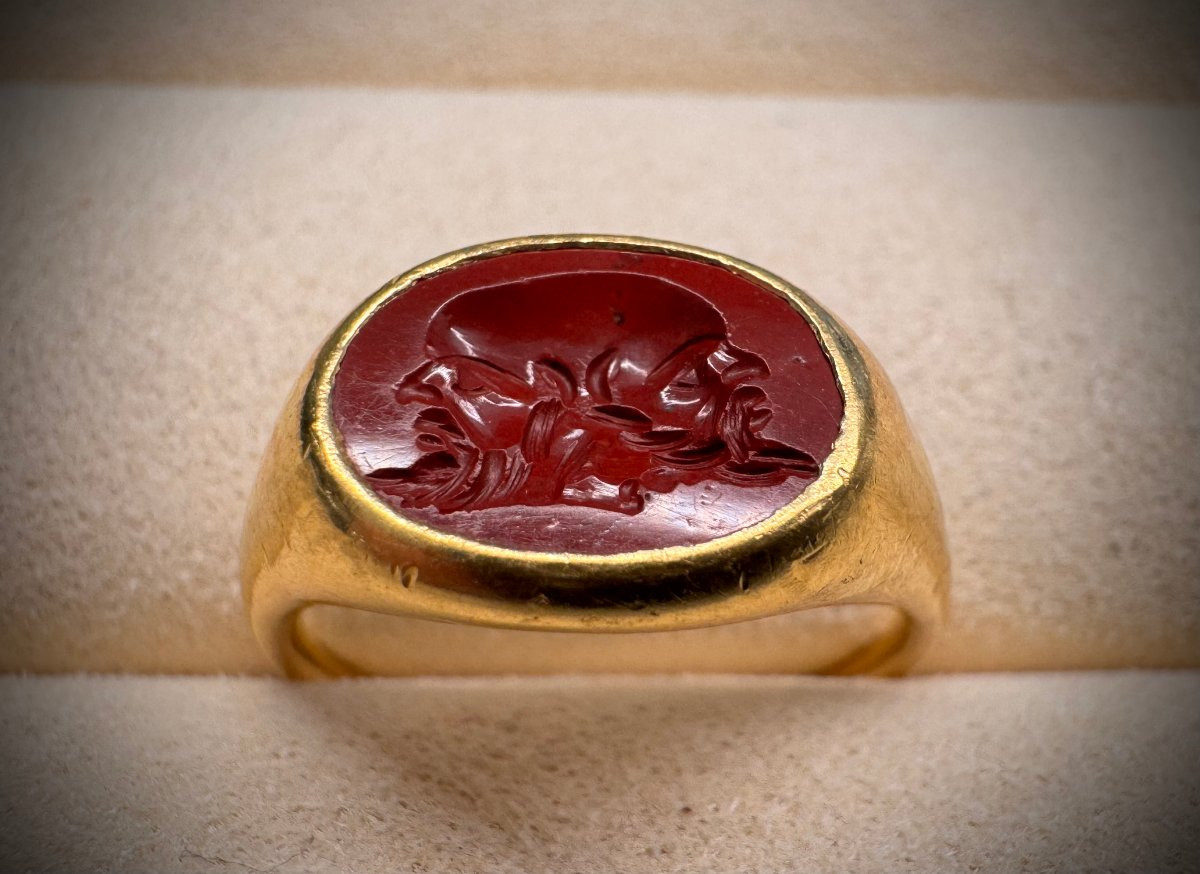
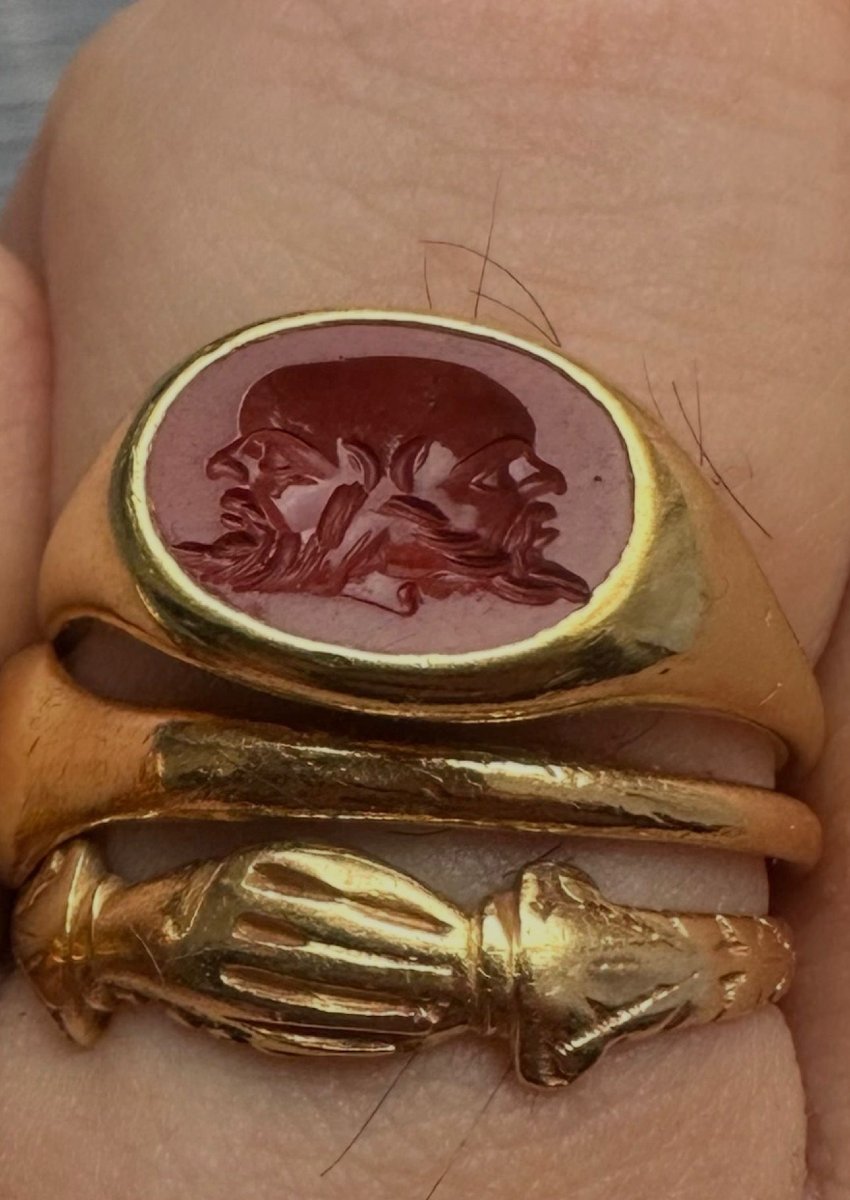
A 22ct Gold Ring Set With A Roman Intaglio On Red Jasper. Gryllos.



Stone: Red jasper
Intaglio dimensions: 8 × 10 mm
Weight: 6.24 g
TDD 56 | UK O½ (modifiable)
Mounting: 22K gold, later
Intaglio: Roman art, 1st-2nd century
Fine-engraved red jasper intaglio set in a later 22K gold signet ring mounting. The stone is engraved with a gryllos - a fantastic composite device formed by the lateral junction of three heads: two figures of Silenus framing a central head of a bearded man. The three faces emerge from each other in perfect continuity, sharing beard and hair in an intertwined mass of deeply incised, expressive strands. The engraving is executed with confident, flowing strokes characteristic of workshop production in the Imperial period, with a strong contrast between the polished red background and the deeply incised figural detail.
The gryllos (from Greek γρύλλος) was among the most enduring apotropaic devices of ancient glyptics, believed to ward off the evil eye and confer protection on its wearer. Composite heads incorporating silenic types - with their association with Dionysian protection, liminality and the repelling of evil forces - are particularly well attested in the 1st and 2nd centuries AD, and represent a category of gem that is both talismanic and aesthetically sophisticated.
The gold mount, of later workmanship, is of high-title gold construction.
Intaglio dimensions: 8 × 10 mm
Weight: 6.24 g
TDD 56 | UK O½ (modifiable)
Mounting: 22K gold, later
Intaglio: Roman art, 1st-2nd century
Fine-engraved red jasper intaglio set in a later 22K gold signet ring mounting. The stone is engraved with a gryllos - a fantastic composite device formed by the lateral junction of three heads: two figures of Silenus framing a central head of a bearded man. The three faces emerge from each other in perfect continuity, sharing beard and hair in an intertwined mass of deeply incised, expressive strands. The engraving is executed with confident, flowing strokes characteristic of workshop production in the Imperial period, with a strong contrast between the polished red background and the deeply incised figural detail.
The gryllos (from Greek γρύλλος) was among the most enduring apotropaic devices of ancient glyptics, believed to ward off the evil eye and confer protection on its wearer. Composite heads incorporating silenic types - with their association with Dionysian protection, liminality and the repelling of evil forces - are particularly well attested in the 1st and 2nd centuries AD, and represent a category of gem that is both talismanic and aesthetically sophisticated.
The gold mount, of later workmanship, is of high-title gold construction.
Explore similar pieces and discover your ideal find:
rings