

Two Roman Engravings The Circus Maximus And The Circus Of Caracalla By Marco Sadeler, 1606
Artist: Sadeler Marco
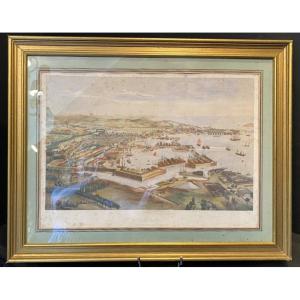
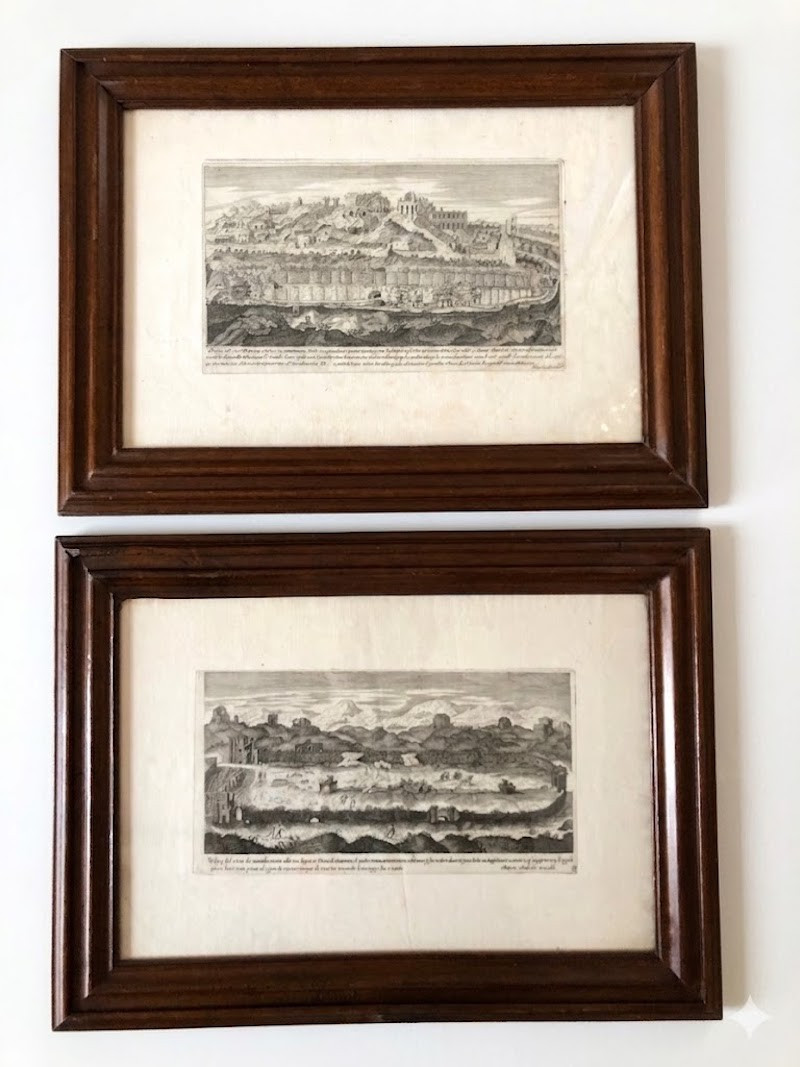
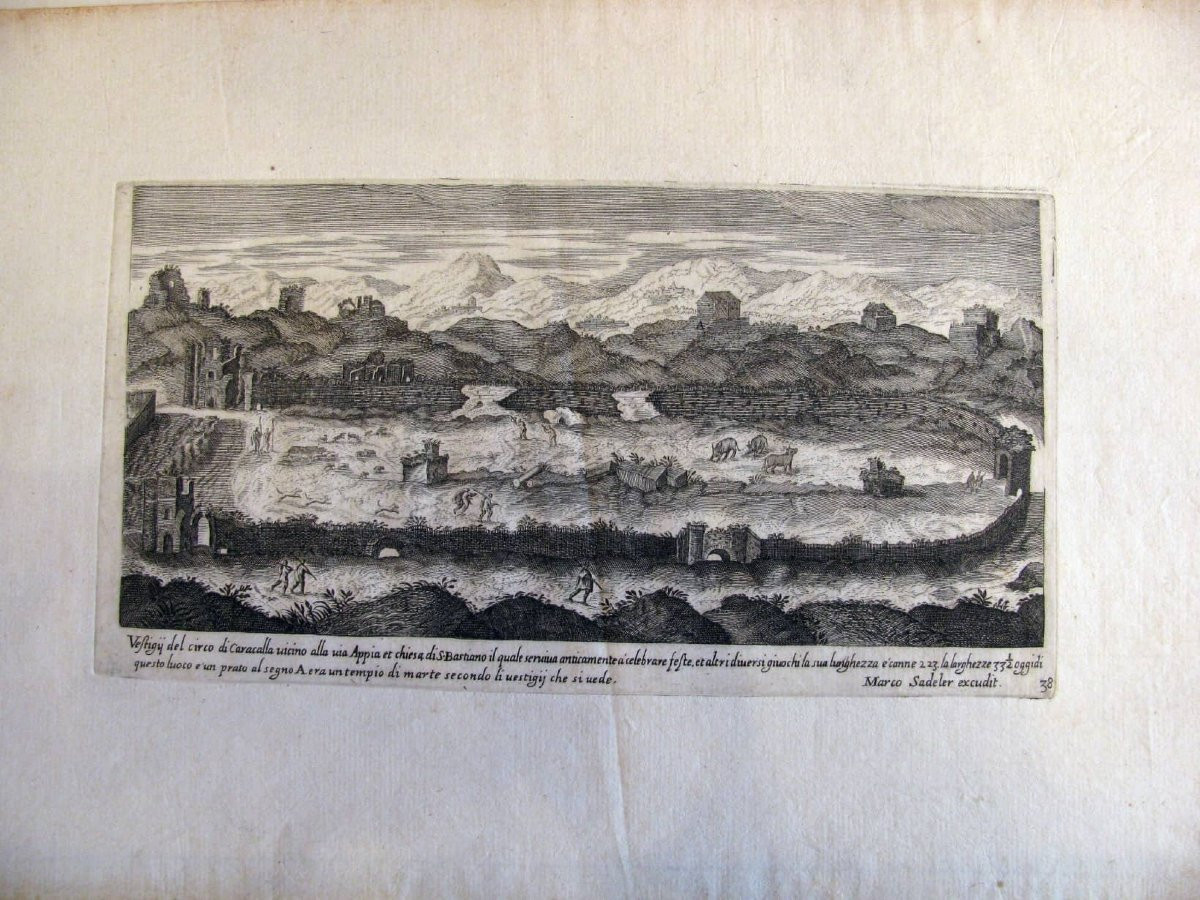
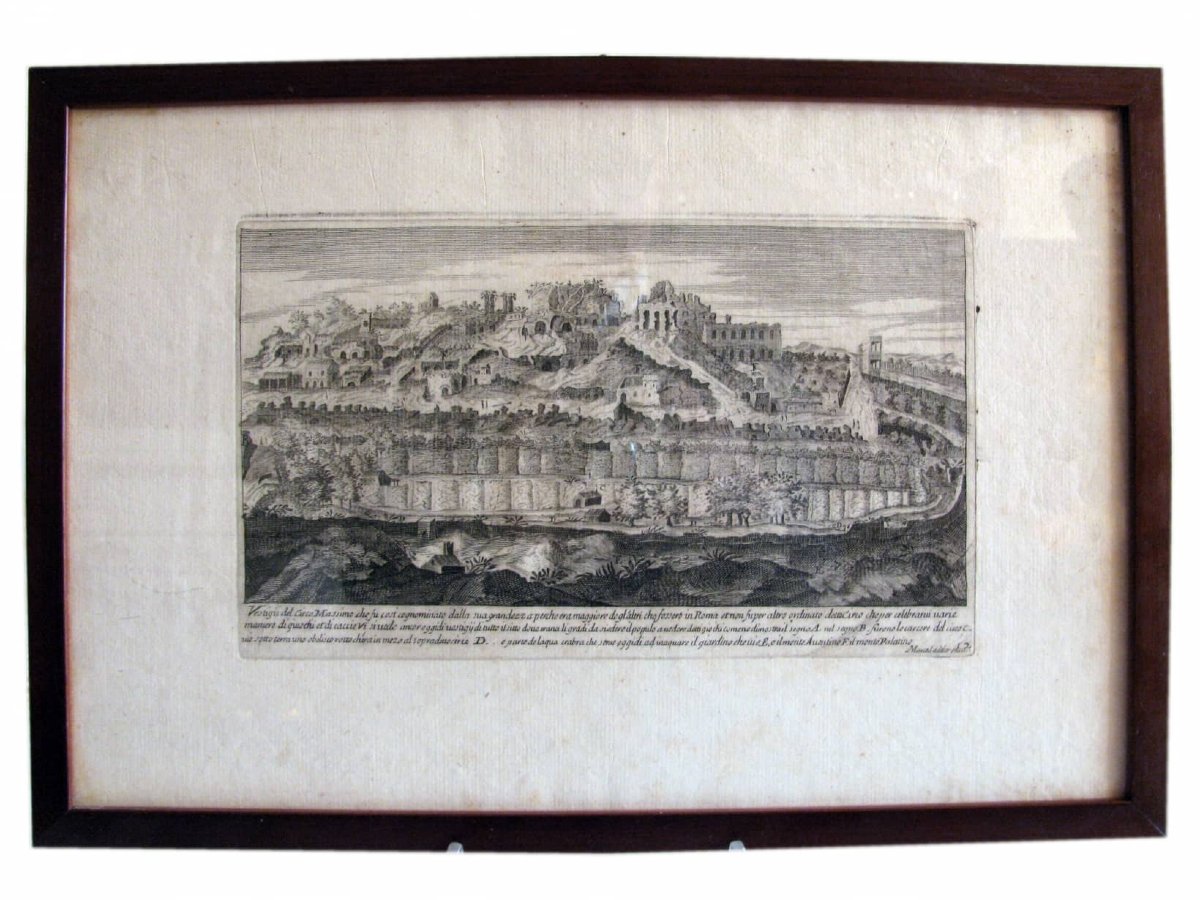
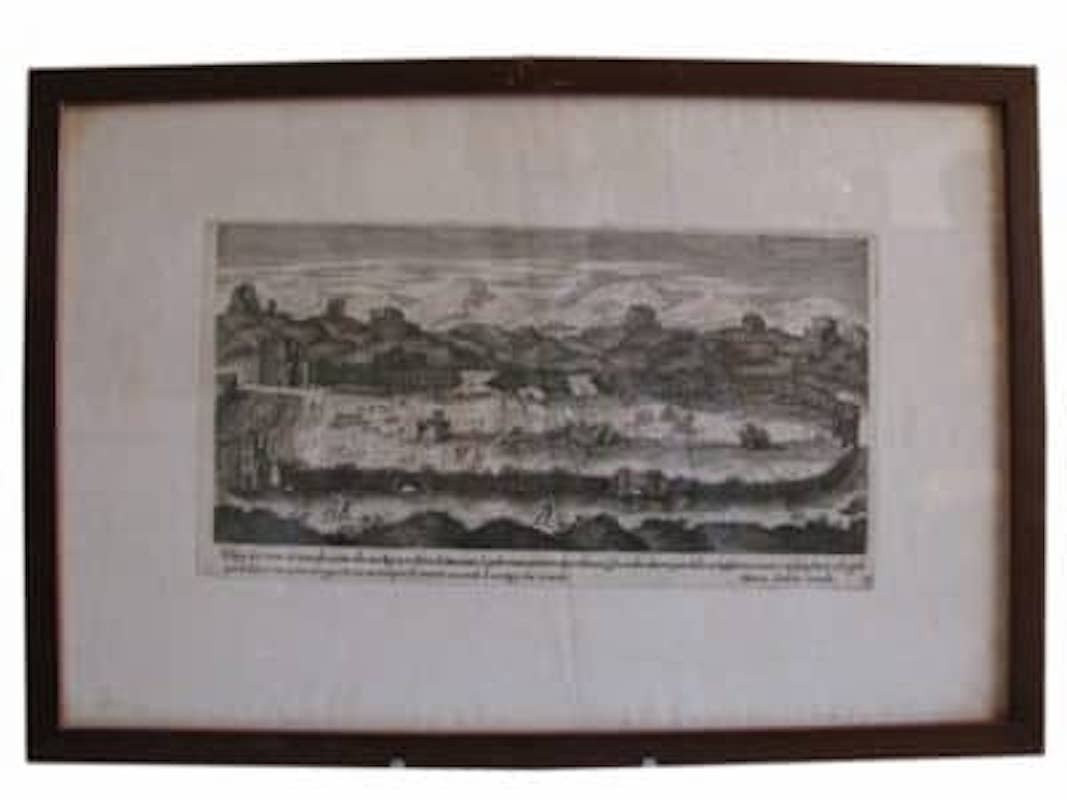
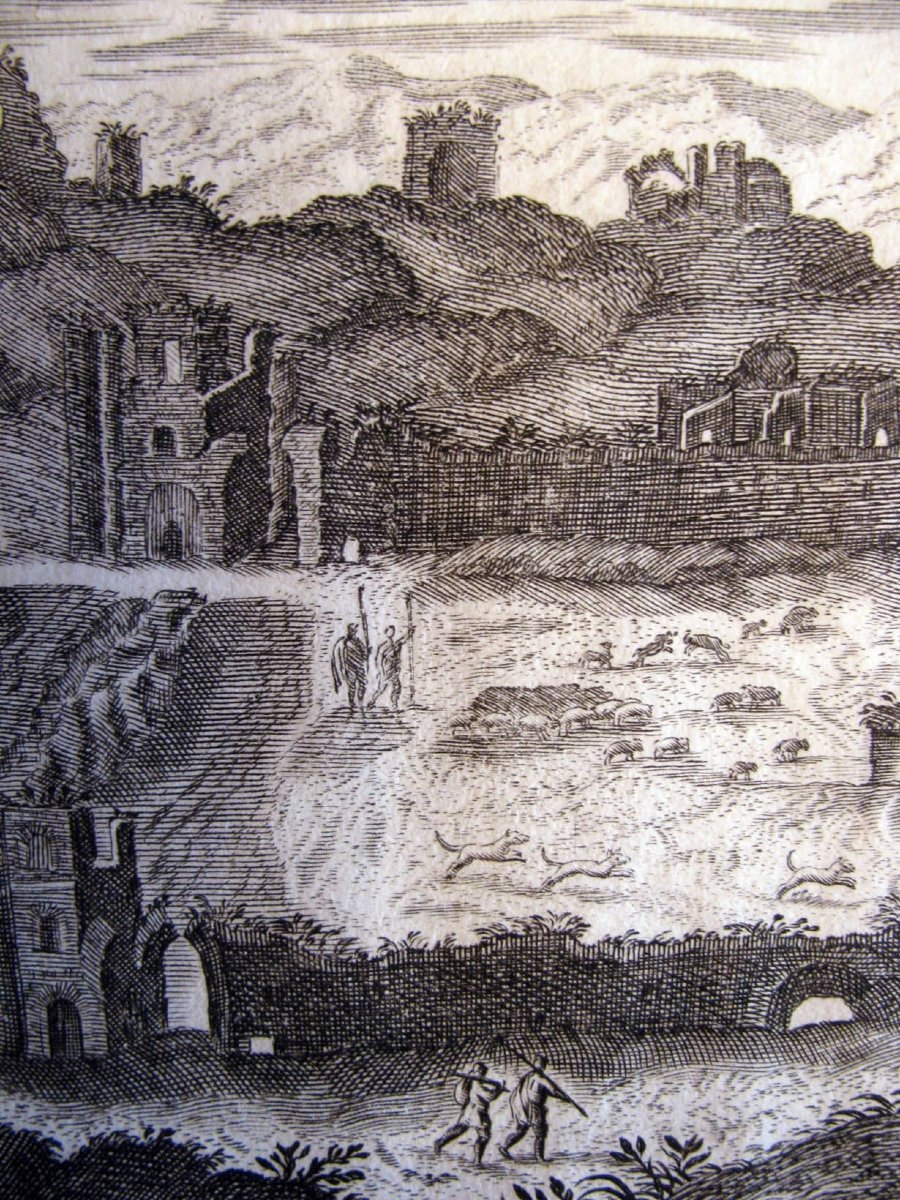
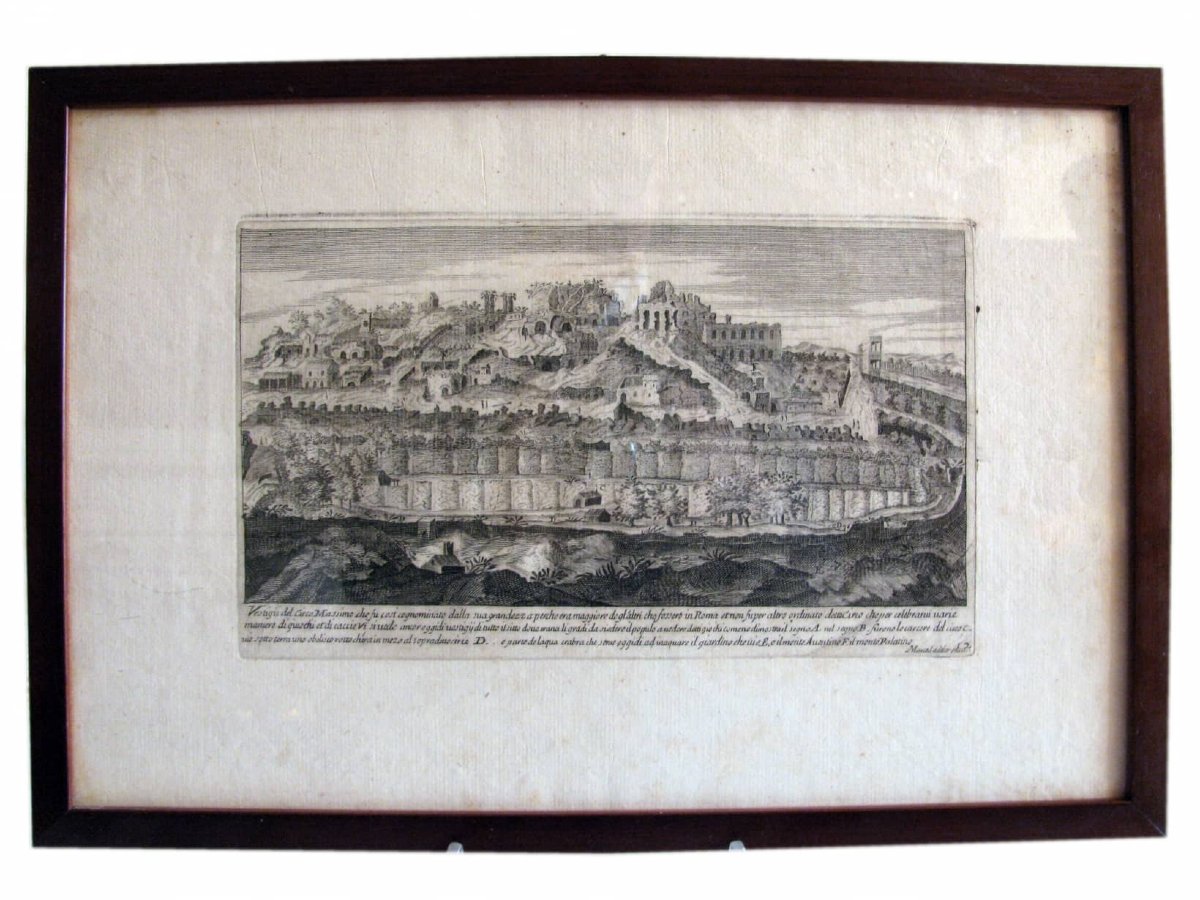
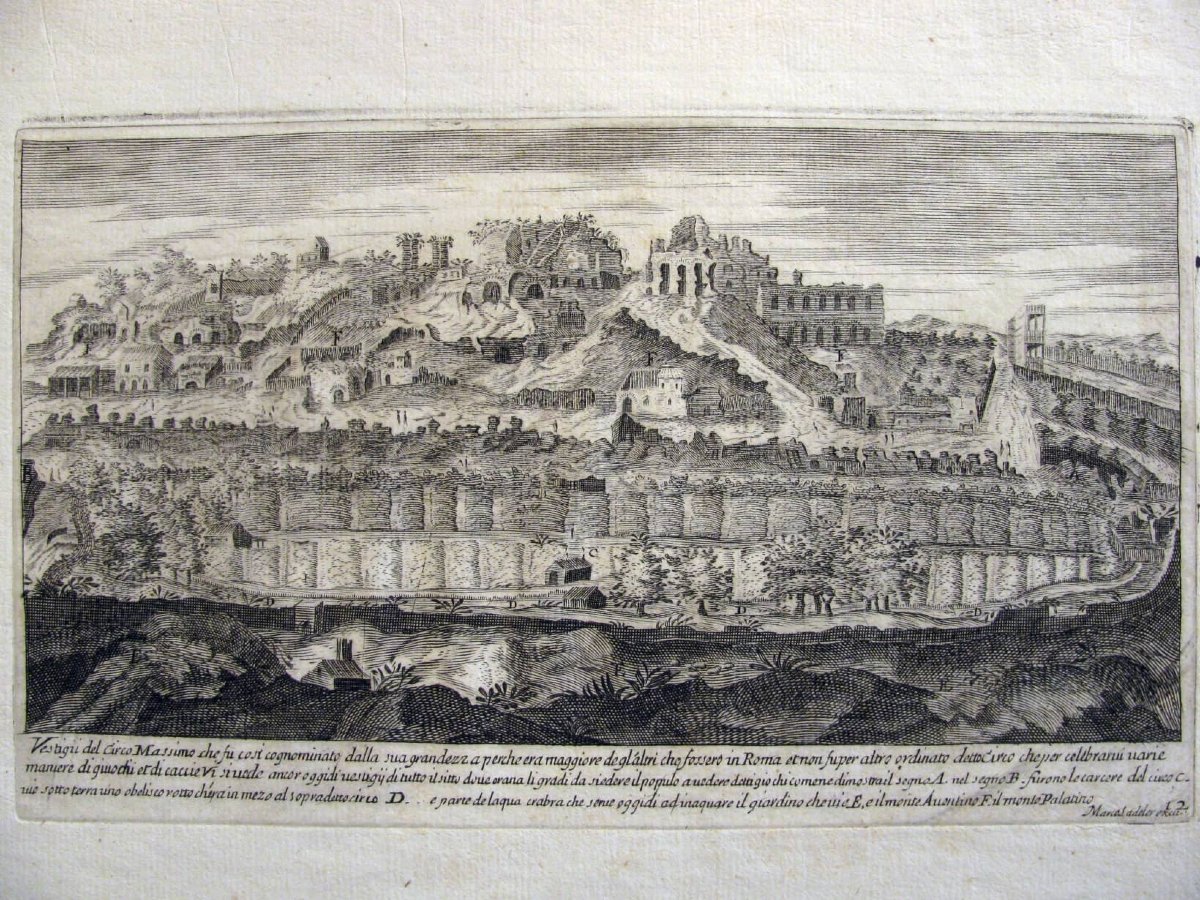
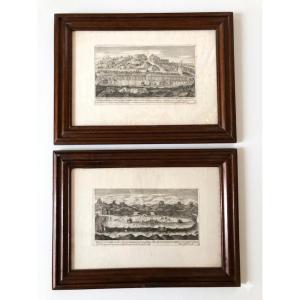
A pair of engravings depicting views of Rome, the Circus of Caracalla and the Circus Maximus – Marco Sadeler (1606) – from *Vestigi delle Antichità di Roma*.
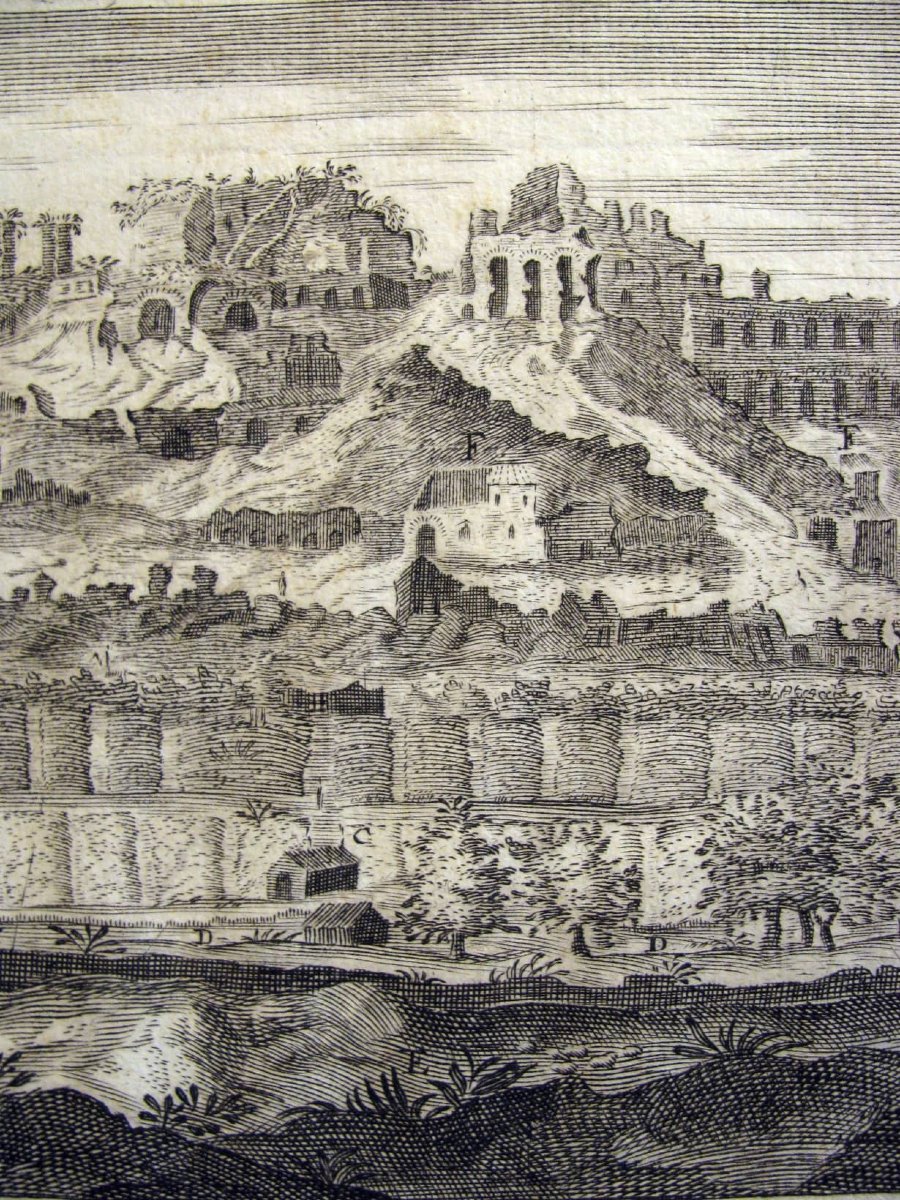
The author emphasises that the name ‘Maximus’ derives purely from the monumental dimensions of the structure, which far surpassed the other Roman circuses, venues dedicated to games and hunts. The work highlights the ‘features’ of the site:
The stands for the people, the carceres, or starting gates for the chariots, the underground passages, the broken obelisk (the Obelisk of Flaminius or that of Constantius II, which were found broken before being moved by the Popes (respectively in Piazza del Popolo and at San Giovanni in Laterano).
It also mentions the Acqua Crabra, a stream, and the hills of the valley between the Aventine and the Palatine.
The view of the Circus of Caracalla (Circus of Maxentius), situated near the Via Appia and the Church of San Sebastiano, depicts the remains of the ancient site used for festivals and games, accurately measuring its historical dimensions (223 cubits in length).
These rare burin engravings are taken from the famous series “Vestigi delle Antichità di Roma, Tivoli, Pozzuolo et altri luoghi” (Remains of Antiquities in Rome, Tivoli, Pozzuoli and Other Places), published in Prague in 1606 by Sadeler.
Technical and Historical Details
Artist: Marco Sadeler.
Date: 1606.
Technique: Burin engraving on paper.
Provenance: Inspired by the works of Stefano Du Pérac, Sadeler’s work adds a distinctive naturalistic touch and includes thirteen plates not found in the original French edition.
Subject: Roman archaeology and 17th-century landscape painting.
They are in good condition, with wide margins, set in walnut frames.
These 17th-century antique prints represent a significant iconographic collection for enthusiasts of the Grand Tour.
The author emphasises that the name ‘Maximus’ derives purely from the monumental dimensions of the structure, which far surpassed the other Roman circuses, venues dedicated to games and hunts. The work highlights the ‘features’ of the site:
The stands for the people, the carceres, or starting gates for the chariots, the underground passages, the broken obelisk (the Obelisk of Flaminius or that of Constantius II, which were found broken before being moved by the Popes (respectively in Piazza del Popolo and at San Giovanni in Laterano).
It also mentions the Acqua Crabra, a stream, and the hills of the valley between the Aventine and the Palatine.
The view of the Circus of Caracalla (Circus of Maxentius), situated near the Via Appia and the Church of San Sebastiano, depicts the remains of the ancient site used for festivals and games, accurately measuring its historical dimensions (223 cubits in length).
These rare burin engravings are taken from the famous series “Vestigi delle Antichità di Roma, Tivoli, Pozzuolo et altri luoghi” (Remains of Antiquities in Rome, Tivoli, Pozzuoli and Other Places), published in Prague in 1606 by Sadeler.
Technical and Historical Details
Artist: Marco Sadeler.
Date: 1606.
Technique: Burin engraving on paper.
Provenance: Inspired by the works of Stefano Du Pérac, Sadeler’s work adds a distinctive naturalistic touch and includes thirteen plates not found in the original French edition.
Subject: Roman archaeology and 17th-century landscape painting.
They are in good condition, with wide margins, set in walnut frames.
These 17th-century antique prints represent a significant iconographic collection for enthusiasts of the Grand Tour.
1 200 €
Period: 17th century
Style: Other Style
Condition: Good condition
Material: Paper
Width: 47
Height: 35
Depth: 2
Reference (ID): 1733071
Availability: In stock
Print