
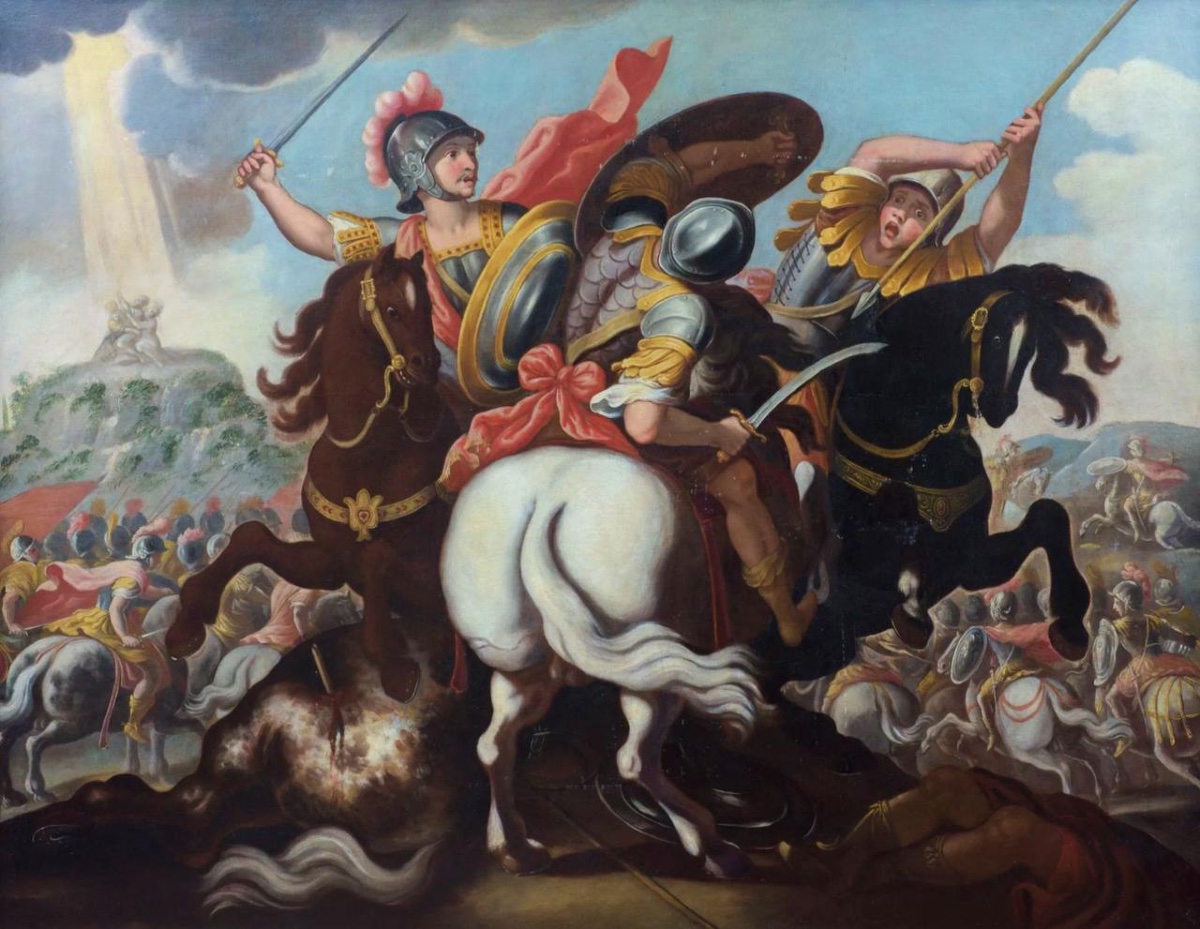



Antonio Tempesta (circle Of) (1555-1639) - The Clash Of The Knights 172.5 X 222 Cm
Artist: Circolo Antonio Tempesta
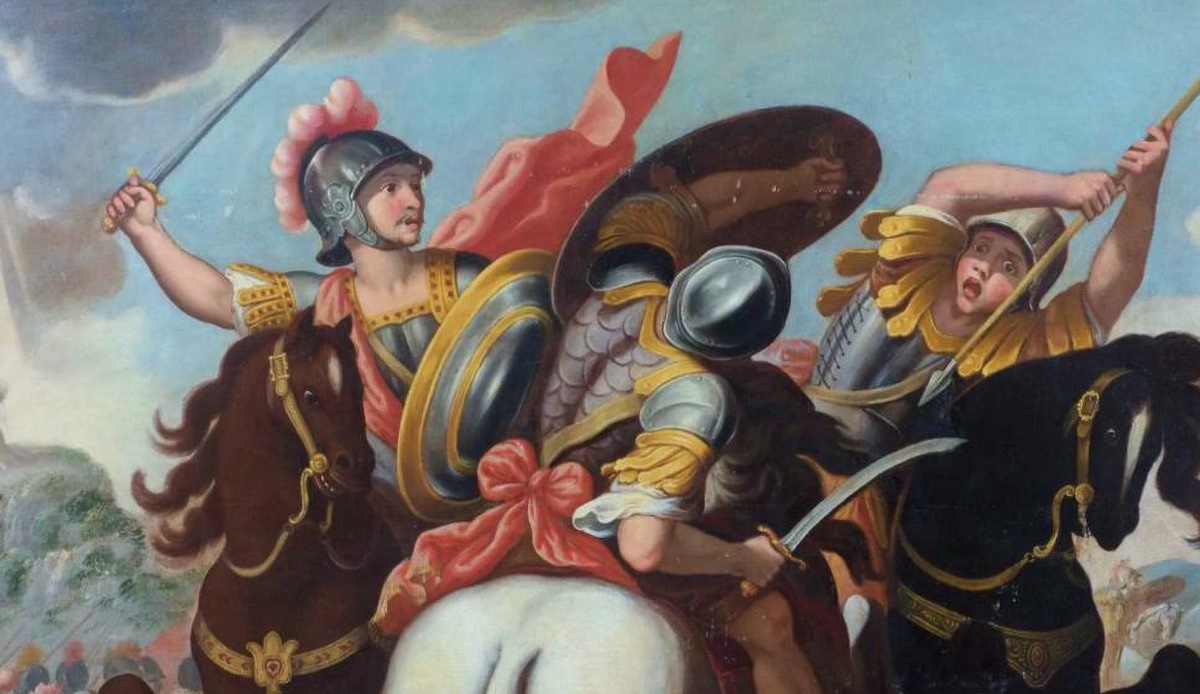
Antonio Tempesta (circle of) (1555-1639) - The Clash of the Knights Oil on canvas, 172.5 x 222 cm This work, dating from the beginning of the Baroque period, nevertheless presents obvious references to the language of late Mannerism. The composition is characterized by a marked narrative dynamism and a mastery of chiaroscuro, which contribute to accentuating the drama and expressive tension of the scene. Based on its stylistic characteristics and compositional approach, the artist likely came from the workshop of Antonio Tempesta, one of the greatest interpreters of historical and narrative painting of the late 16th and early 17th centuries. The work is presented in a contemporary 17th-century setting. Antonio Tempesta (Florence, 1555 – Rome, August 5, 1630), Italian painter and engraver, active at the beginning of the Baroque period. He began his apprenticeship in the workshop of the Mannerist master Santi di Tito, then in that of the Flemish painter Giovanni Stradano, based in Florence. Stradano was close to Giorgio Vasari's circle and had participated in the vast project to decorate the Studiolo of Francis I in the Palazzo Vecchio. Tempesta was admitted to the Accademia del Disegno in Florence on December 8, 1576, but soon settled in Rome, where he forged connections with the Dutch community in the papal city. Along with Matthijs Bril, he was commissioned by Pope Gregory XIII to paint a panel depicting the Translation of the Relics of Saint Gregory of Nazianzus (1572) and other religious scenes for the loggias on the third floor of the Vatican Palace. Among his other important works are the frescoes in the Villa Lante at Bagnaia (Palazzina Gambara, 1578–79), depicting fishing and hunting scenes in majestic landscapes, which demonstrate the Northern influence on his style. From 1579 to 1583, he participated in the decoration of the Palazzo Farnese in Caprarola, notably the Scala Regia. He also worked on the frescoes of the Villa d'Este in Tivoli and created designs for tapestries. In 1623, he was admitted to the Academy of Saint Luke in Rome. However, Tempesta is best known for his work as an engraver. By his death, he had produced more than 1,800 engravings. His scenes from the Old Testament and his engravings for Ovid's Metamorphoses were highly regarded. The most ambitious commission he undertook as an engraver was the illustration of the Batovorum cum Romanis Bellum, in collaboration with the Flemish painter Otto van Veen (or Vaenius), court painter to Alessandro Farnese.
16 500 €
Period: 16th century
Style: Other Style
Condition: Good condition
Material: Oil painting
Width: 222cm
Height: 172,5cm
Depth: 9cm
Reference (ID): 1732481
Availability: In stock
Print