





Heriz Iranian Rug 330 X 225 Cm
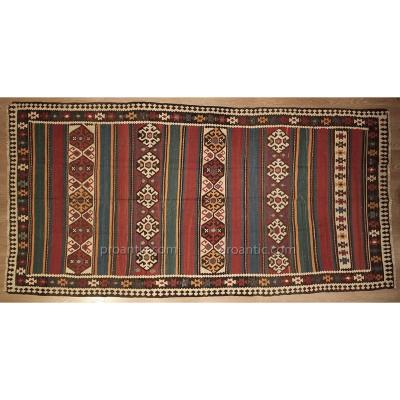
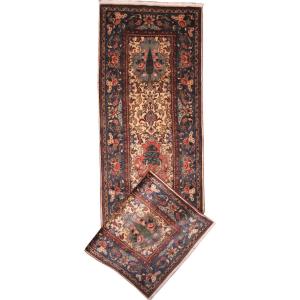
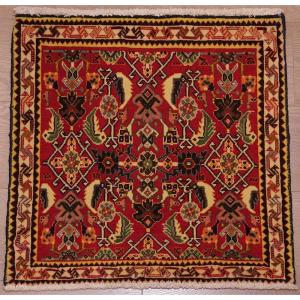
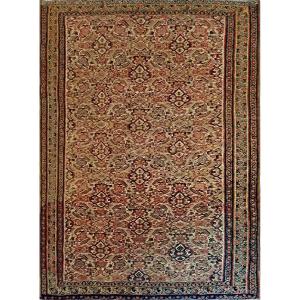
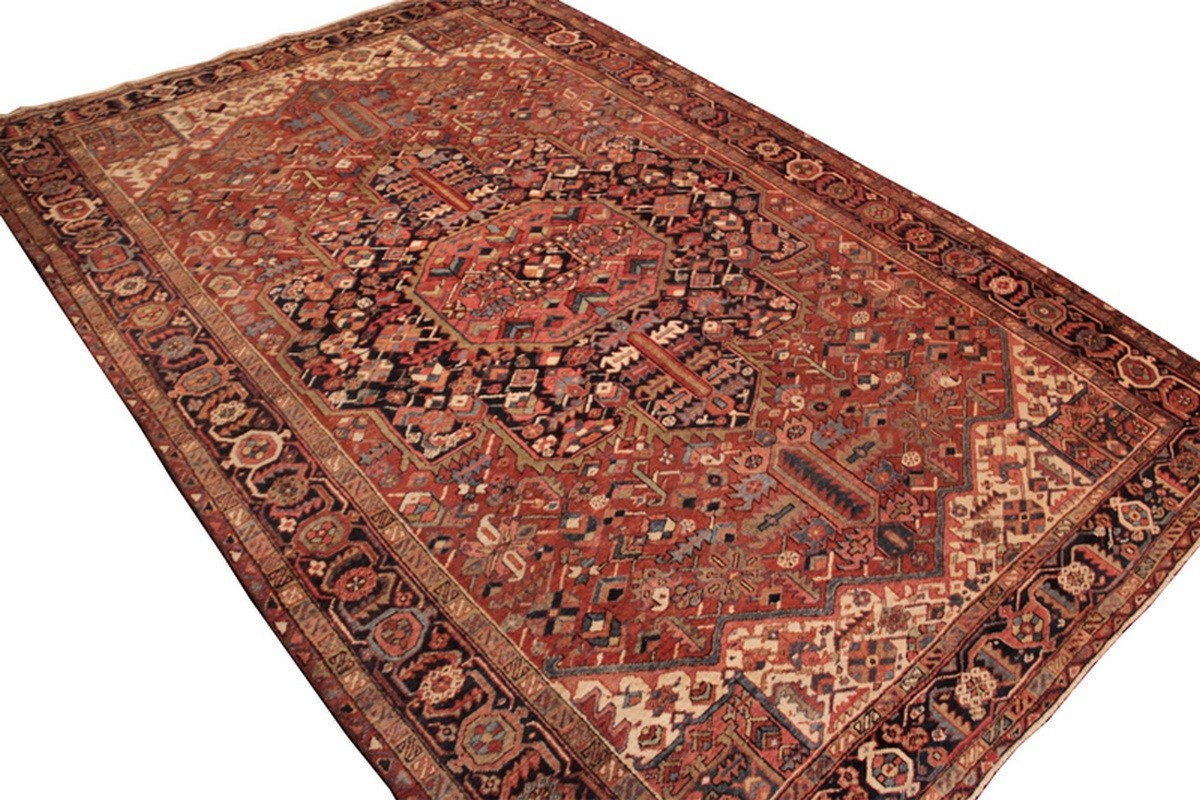
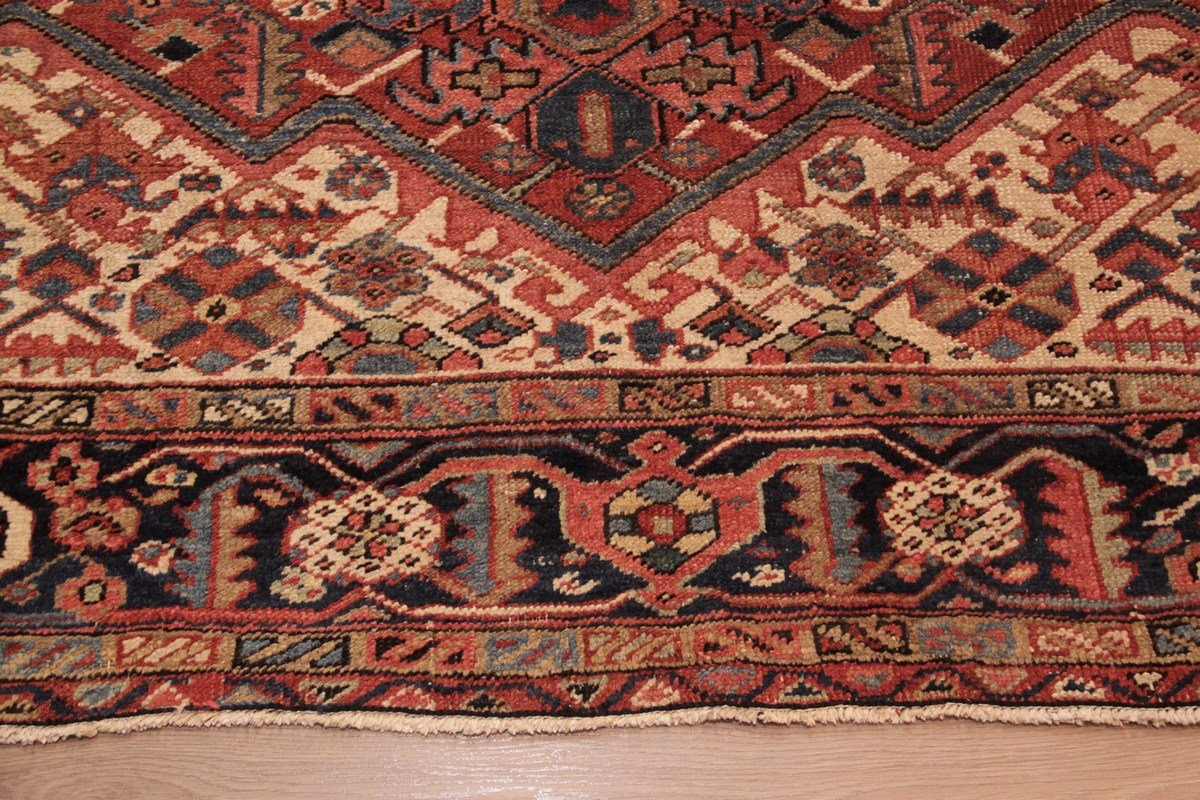
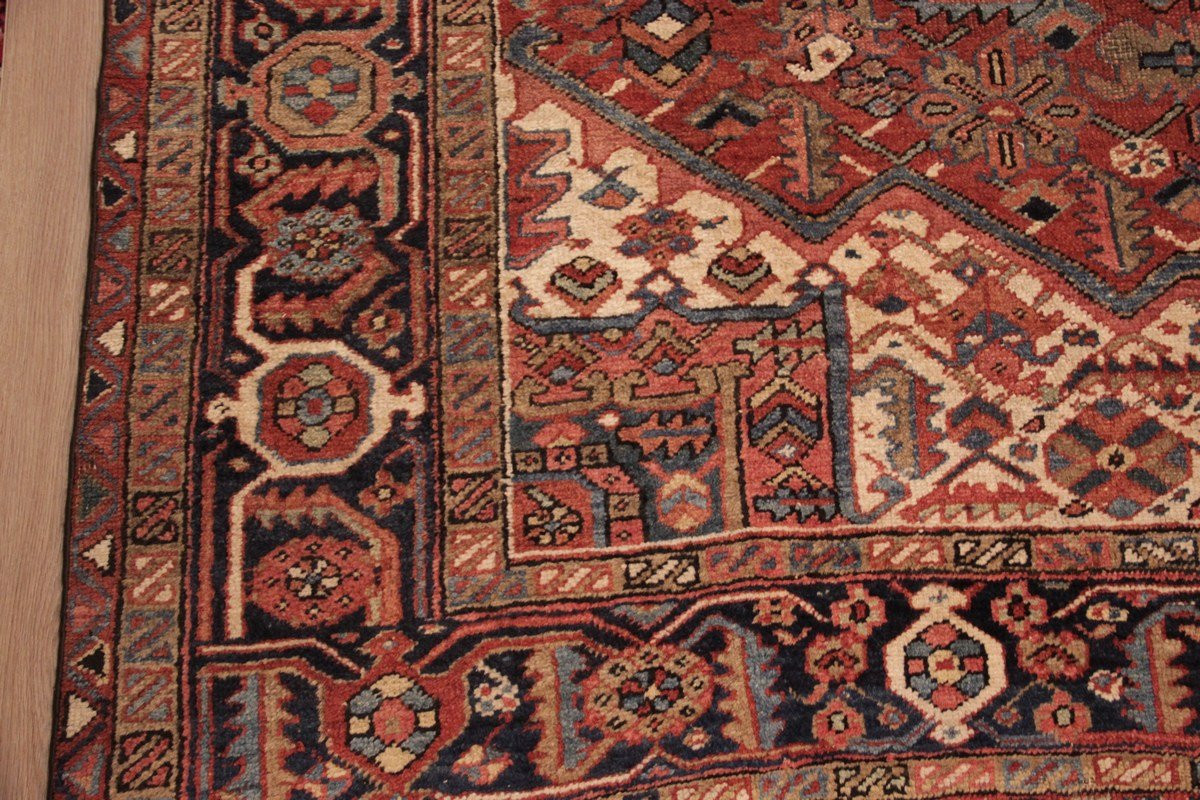
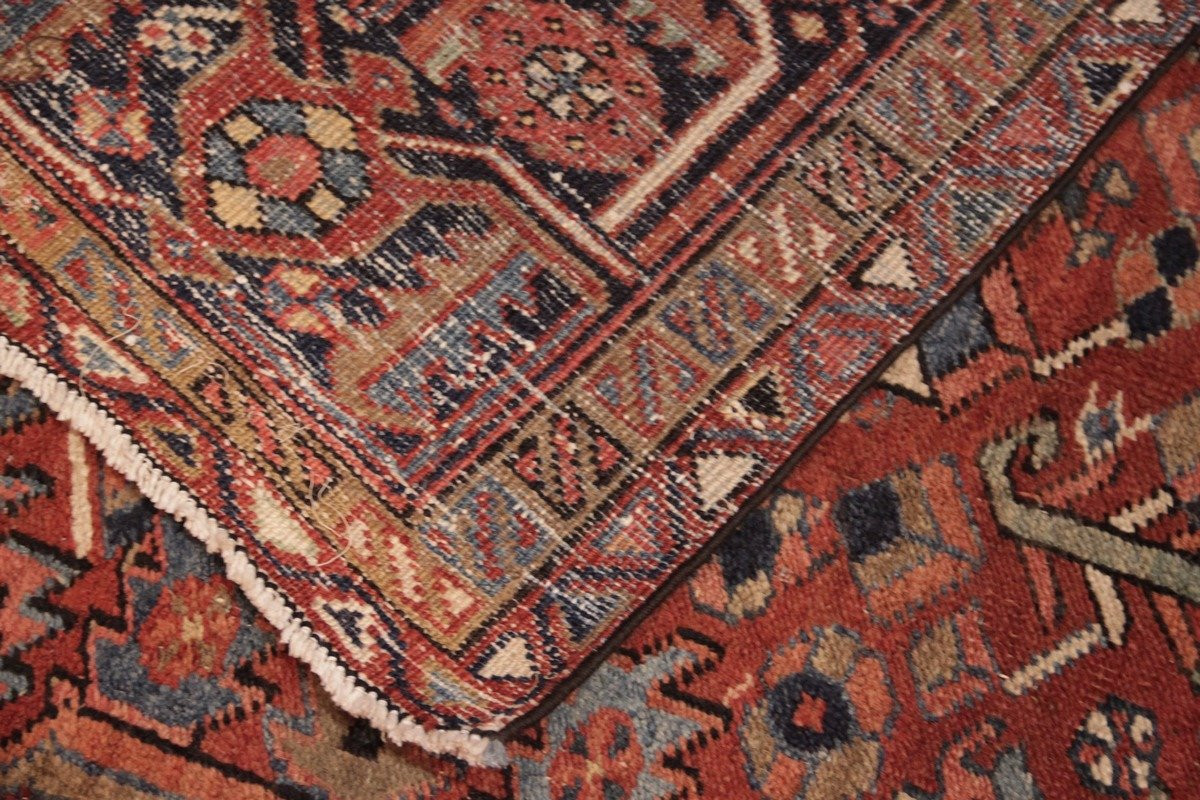
Iranian wool rug, cotton warp and weft, circa 1920. Normal wear and tear for its age, but the rug remains sturdy. The borders and end stitches have been restored.
Located in Iranian Azerbaijan, east of Tabriz, Heriz is a town that brings together the production of neighboring villages such as Ahar, Goravan, Serapi, and Bakhshayesh. Heriz rugs are renowned for their strength and durability, thanks to the excellent quality of the wool and the Turkbaff knot. Heriz rugs with geometric designs and central medallions are inspired by a family tradition. At the end of the 19th century, merchants from Tabriz commissioned large-scale rugs to be woven in Heriz, giving them a more refined look. Despite this shift, many weavers refused to use cartoons and instead relied on traditional designs or "vaghirehs" (designs). During this period and until the beginning of the First World War, silk carpets were also produced. They are now very rare and highly sought after.
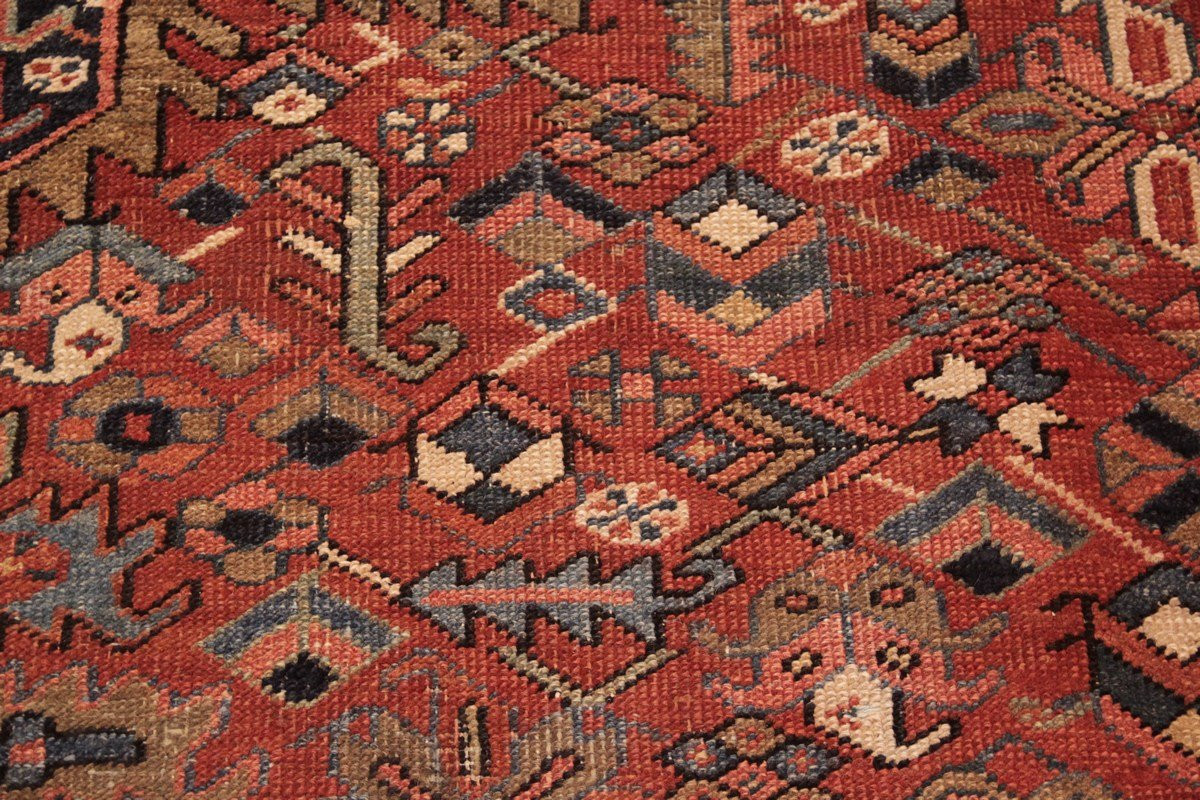
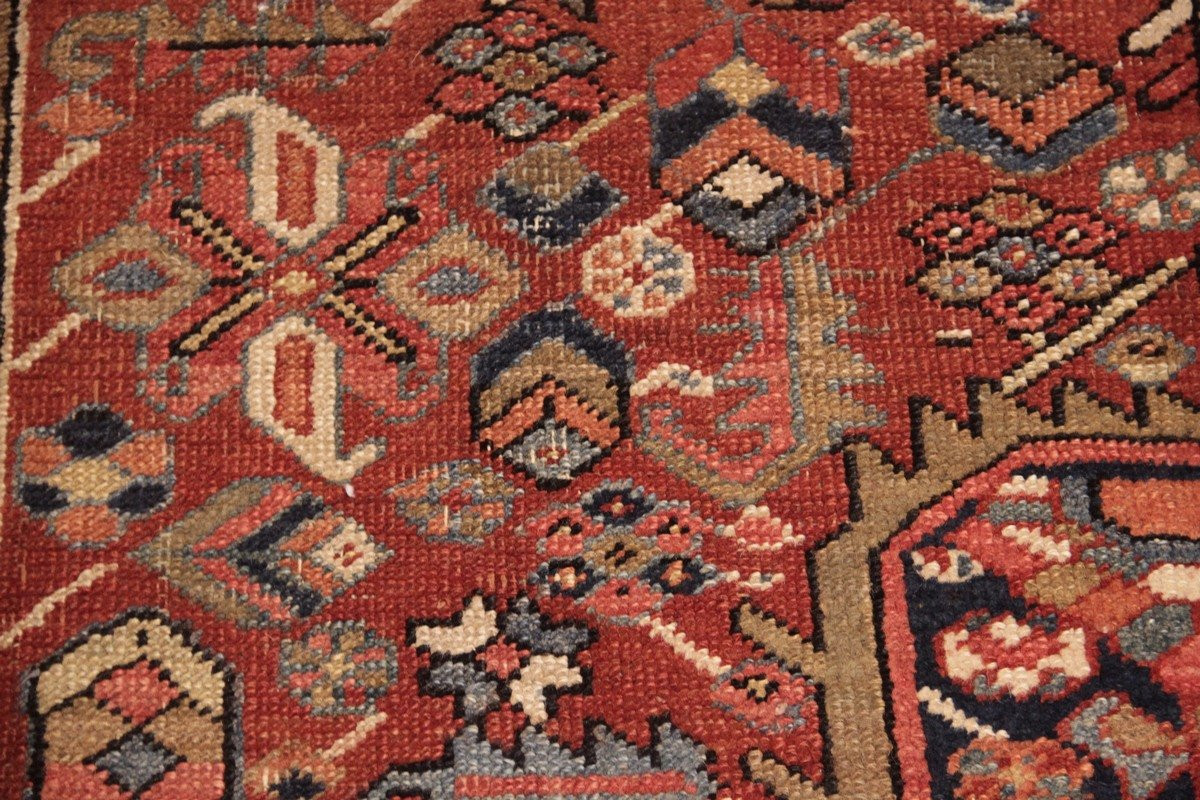
This authentic traditional heriz features a central medallion whose octagonal 'heart' represents the Universe. Various motifs are found within, such as boteh*, eight-pointed Median stars, and göl (flowers). The main border repeats a göl and boteh motif, framed by two smaller borders with the 'S'** motif. A beautiful balance of coppery and patinated colors.
*Boteh: An ancient motif with various meanings. It can represent the transformation of Zoroaster into a cypress tree, a symbol of eternity, but also into a drop of water, a palm frond, or a tree. The term boteh means "flowering bush" in Persian. There is a similarity to yin and yang.
** The 'S' motif originally represents a two-headed dragon, which could be seen on ancient Persian, Chinese, and Celtic bronzes.
Free Chronopost delivery for France and Europe. Feel free to contact us by phone or email. (We ship our rugs and kilims via Chronopost or Colissimo, at our expense (up to 30 kg) in mainland France and Europe.)
Located in Iranian Azerbaijan, east of Tabriz, Heriz is a town that brings together the production of neighboring villages such as Ahar, Goravan, Serapi, and Bakhshayesh. Heriz rugs are renowned for their strength and durability, thanks to the excellent quality of the wool and the Turkbaff knot. Heriz rugs with geometric designs and central medallions are inspired by a family tradition. At the end of the 19th century, merchants from Tabriz commissioned large-scale rugs to be woven in Heriz, giving them a more refined look. Despite this shift, many weavers refused to use cartoons and instead relied on traditional designs or "vaghirehs" (designs). During this period and until the beginning of the First World War, silk carpets were also produced. They are now very rare and highly sought after.
This authentic traditional heriz features a central medallion whose octagonal 'heart' represents the Universe. Various motifs are found within, such as boteh*, eight-pointed Median stars, and göl (flowers). The main border repeats a göl and boteh motif, framed by two smaller borders with the 'S'** motif. A beautiful balance of coppery and patinated colors.
*Boteh: An ancient motif with various meanings. It can represent the transformation of Zoroaster into a cypress tree, a symbol of eternity, but also into a drop of water, a palm frond, or a tree. The term boteh means "flowering bush" in Persian. There is a similarity to yin and yang.
** The 'S' motif originally represents a two-headed dragon, which could be seen on ancient Persian, Chinese, and Celtic bronzes.
Free Chronopost delivery for France and Europe. Feel free to contact us by phone or email. (We ship our rugs and kilims via Chronopost or Colissimo, at our expense (up to 30 kg) in mainland France and Europe.)
3 150 €
Period: 20th century
Style: Other Style
Condition: Condition of use
Material: Wool
Length: 330 cm
Width: 225 cm
Reference (ID): 1732151
Availability: In stock
Print